The Strategic Implementation of Fractional CO2 Laser Resurfacing: A Clinical and Commercial Blueprint for Aesthetic Practices
Executive Summary The global aesthetic landscape is currently navigating a profound paradigm shift. Patient demographics are increasingly demanding high-efficacy, non-surgical interventions that deliver surgical-grade structural tissue rejuvenation without the prohibitive downtime and complication risks associated with traditional incisional procedures. At the forefront of this technological renaissance is Carbon Dioxide (CO2) laser resurfacing. As patient demand for transformative skin rejuvenation accelerates, leading medical aesthetic clinics are recognizing that integrating premium ablative technologies is no longer optional—it is a commercial imperative.
This comprehensive whitepaper, developed by Cocoon Laser, deconstructs the hardware logic, histological mechanisms, and ten core clinical and commercial benefits of fractional CO2 laser resurfacing. Furthermore, it serves as a definitive B2B procurement guide for medical directors and clinic operators seeking to elevate their clinical armamentarium with advanced aesthetic laser equipment capable of driving substantial clinical outcomes and exponential revenue growth.
Part I: The Physics and Histological Mechanisms of CO2 Laser Technology
Before evaluating the clinical and commercial benefits, aesthetic providers must fundamentally understand the biophysics driving CO2 laser efficacy. Operating at an infrared wavelength of 10,600nm, the CO2 laser utilizes intracellular and extracellular water as its primary chromophore. Because human skin is composed of approximately 70% water, the 10,600nm wavelength boasts an exceptionally high absorption coefficient within dermal and epidermal tissues.
When the laser energy is delivered to the skin, it is instantly absorbed by the tissue water, rapidly heating it past the boiling point to achieve instantaneous tissue vaporization (ablation).
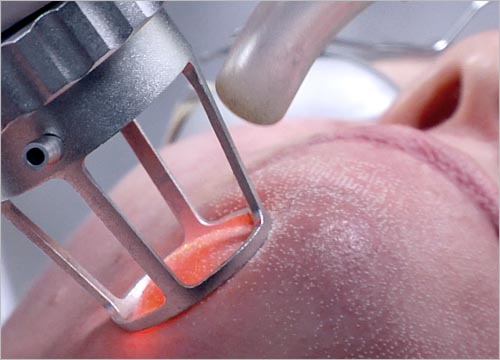
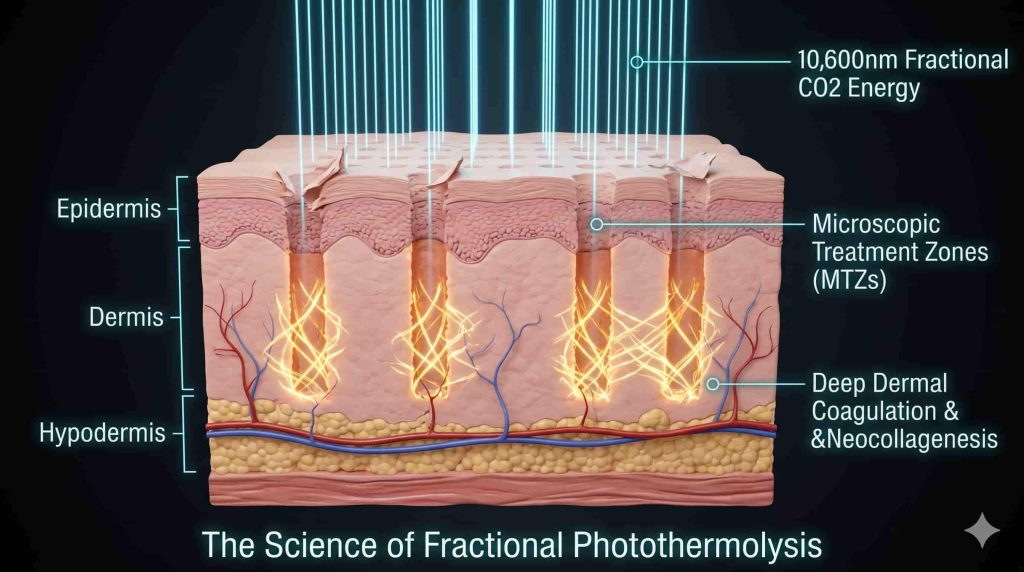
The true revolutionary leap in modern CO2 systems, such as those engineered by Cocoon Laser, is the implementation of fractional photothermolysis. Instead of ablating 100% of the epidermal surface, a computerized scanner divides the laser beam into microscopic columns of energy. These are known as Microscopic Treatment Zones (MTZs).
Each MTZ creates a precise column of tissue vaporization surrounded by a zone of thermal coagulation. Crucially, microscopic “islands” of completely healthy, untreated tissue remain intact between these columns. This remaining viable tissue acts as a biological reservoir, initiating a rapid re-epithelialization process and drastically reducing patient downtime. The combination of epidermal ablation (for surface texture and pigmentation) and deep dermal coagulation (which denatures existing collagen and triggers the wound-healing cascade) provides the dual-action rejuvenation that makes fractional CO2 the undisputed gold standard in anti-aging.
Part II: The 10 Clinical and Commercial Imperatives of CO2 Laser Integration
The integration of a highly engineered fractional CO2 laser platform provides aesthetic practices with a versatile tool capable of addressing a multitude of complex dermatological indications. Below is a rigorous analysis of the ten primary benefits that define its clinical superiority and commercial viability.
1. Advanced Resolution of Atrophic and Hypertrophic Acne Scarring
Acne vulgaris often leaves behind severe textural deformities, including ice pick, boxcar, and rolling scars, which are notoriously resistant to topical treatments and superficial chemical peels. Fractional CO2 laser resurfacing physically breaks down the dense, fibrotic scar tissue anchoring the skin downward. The thermal injury stimulates fibroblast proliferation and the synthesis of Type III collagen, which eventually remodels into stronger Type I collagen. This process effectively elevates depressed scars and smooths the topography of the skin. Commercially, the acne scar demographic represents a highly motivated patient base with strong lifetime value (LTV) and exceptional treatment compliance.
2. Profound Eradication of Rhytids and Dermal Laxity
Intrinsic aging and chronological degradation lead to a thinning epidermis and a fragmented dermal extracellular matrix (ECM). Patients seeking to avoid surgical rhytidectomy (facelifts) turn to CO2 lasers for their unmatched tissue-tightening capabilities. The thermal coagulation zone created by the laser forces immediate collagen contraction, yielding instant tightening, followed by months of sustained neocollagenesis and elastogenesis. This drastically softens deep, static wrinkles and restores structural firmness. For aesthetic clinics, this provides a highly lucrative alternative to continuous, high-volume neurotoxin and dermal filler injections.
3. Normalization of Dyschromia and Uneven Skin Tone
Melanin irregularities, whether triggered by post-inflammatory hyperpigmentation (PIH) or hormonal shifts (melasma), are effectively targeted through epidermal vaporization. By physically ablating the stratum corneum and portions of the epidermis where excess melanin is trapped, the CO2 laser forces the rapid turnover of keratinocytes. The newly generated skin emerges with a normalized, unified, and radiant tone. Offering predictable pigmentation resolution allows clinics to market comprehensive “glass skin” protocols that command premium pricing.
4. Reversal of Actinic Damage and Photoaging
Cumulative ultraviolet (UV) exposure results in solar elastosis, actinic keratoses, and generalized photoaging. Because actinic keratoses are precancerous lesions, the superficial ablation provided by a CO2 laser not only delivers aesthetic improvement but also serves a prophylactic dermatological function by destroying these mutated cells. Once the initial post-treatment erythema resolves, patients are left with an entirely resurfaced, profoundly healthier cutaneous profile.
5. Optimized Patient Downtime Parameters
Historically, fully ablative CO2 resurfacing required extensive postoperative wound care and upwards of three to four weeks of strict social downtime. Modern fractional delivery systems have revolutionized the risk-to-reward ratio. By leaving the stratum corneum intact bridging the MTZs, re-epithelialization typically occurs within 48 to 72 hours. While microscopic epidermal necrotic debris (MENDs) may be present, the average total social downtime is reduced to approximately five to nine days. This optimized recovery window drastically expands the total addressable market (TAM), making the procedure accessible to working professionals who cannot afford prolonged absences.
6. Extended Longevity of Clinical Outcomes
Unlike superficial esthetic treatments (such as microdermabrasion or standard facials) that provide transient results lasting only weeks, fractional CO2 laser resurfacing alters the fundamental architecture of the skin. The initial inflammatory phase transitions into a proliferative phase, and finally a remodeling phase that continues for three to six months post-procedure. The structural enhancements in dermal thickness and elasticity can persist for several years, depending on the patient’s lifestyle and UV protection habits. This high-impact longevity builds immense patient trust and establishes the clinic’s reputation for clinical excellence.
7. Unprecedented Demographic Versatility
A superior B2B CO2 laser system is not a rigid, single-use tool; it is a highly customizable workstation. Advanced software interfaces allow practitioners to meticulously adjust parameters including pulse duration, energy density (mJ/MTZ), spot size, and fractional coverage density. This means the device can be tuned to perform a light, superficial “laser peel” for a younger patient seeking pre-event glow, or a deep, aggressive structural remodeling protocol for severe elastosis. While extreme caution and specific parameter adjustments are required for darker skin types (Fitzpatrick IV-VI) to mitigate PIH risks, the sheer adaptability of the technology maximizes the clinic’s patient funnel.
8. Enhanced Thermal Control and Patient Comfort
While aggressive energy delivery is necessary for results, patient comfort drives clinical retention. Modern systems are engineered to deliver ultra-short pulses that are faster than the tissue’s thermal relaxation time (TRT). This means the laser vaporizes the target tissue instantly without allowing the heat to conduct laterally into surrounding pain receptors unnecessarily. When combined with compounded topical anesthetics and integrated clinical cooling systems, the procedure is highly tolerable. Most patients characterize the sensory experience as a tolerable, rapid snapping sensation, ensuring they are not deterred from completing a multi-session protocol.
9. Precision Target Acquisition via Intelligent Scanning
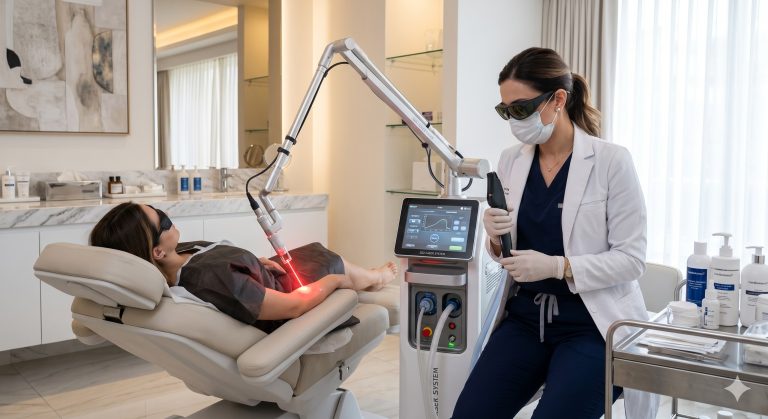
Computerized scanner technology is a hallmark of premium medical aesthetic lasers. Practitioners can select various algorithmic patterns (squares, circles, triangles, or free-form shapes) to perfectly match the anatomical contours of the face, neck, or décolletage. Furthermore, randomized delivery sequences prevent bulk heat accumulation in a single quadrant. This localized precision allows the clinician to perform highly targeted therapies—such as treating periorbital rhytids or perioral “smoker’s lines”—without unnecessarily treating adjacent, unaffected tissues.
10. Psychosocial Efficacy and Patient Confidence
The ultimate metric of aesthetic success is the psychosocial transformation of the patient. Severe dermatological conditions, particularly active acne, residual scarring, and premature aging, carry a profound psychological burden, often manifesting as clinical anxiety and reduced self-esteem. By providing definitive, highly visible structural improvements, CO2 laser resurfacing acts as a catalyst for elevated psychological wellbeing. For the clinic, highly satisfied, confident patients become powerful organic brand ambassadors, driving referral traffic and lowering patient acquisition costs (PAC).
Part III: The B2B Procurement Decision Matrix
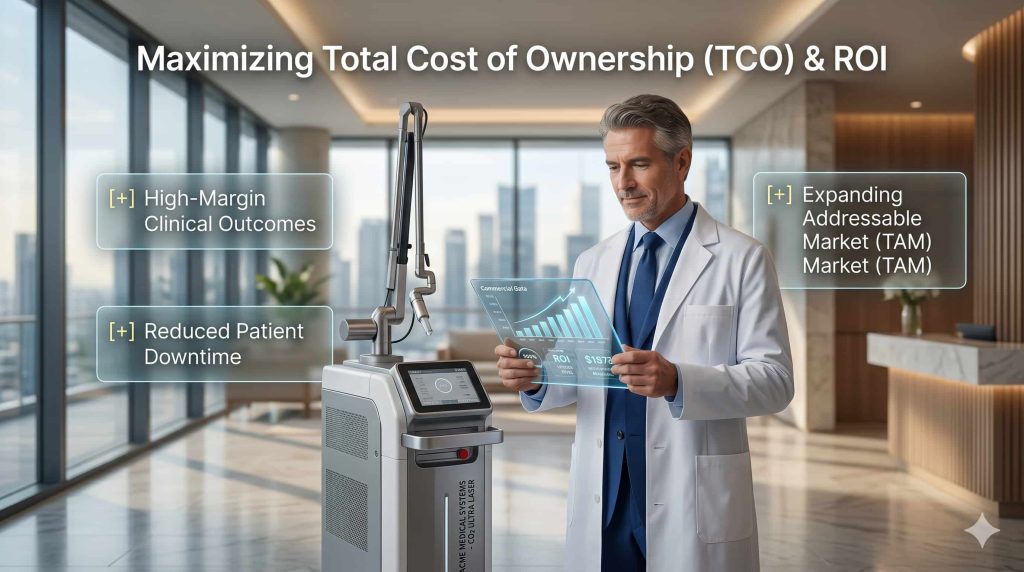
For a medical aesthetic practice, capital equipment procurement must be evaluated through a rigorous commercial lens. Incorporating a high-end fractional CO2 system requires a strategic assessment of ROI, Total Cost of Ownership (TCO), and operational reliability.
- Revenue Acceleration: The CO2 laser operates at a high average ticket price. Given the profound clinical results, practices can charge premium rates. Furthermore, it creates opportunities for highly profitable combination therapies (e.g., combining fractional CO2 with post-procedure topical Exosomes or Platelet-Rich Plasma to accelerate healing).
- Consumables and TCO: When evaluating B2B aesthetic technology, the consumable model is a critical variable. Premium systems engineered by Cocoon Laser are designed to minimize recurring per-treatment consumable costs, ensuring that the gross margin per procedure remains extraordinarily high, accelerating the timeline to complete capital amortization.
- Comprehensive Portfolio Synergy: A robust aesthetic clinic requires a multi-modality approach. A top-tier CO2 laser perfectly complements other capital equipment. For example, a clinic might utilize diode laser hair removal systems for body treatments, Q-switched Nd:YAG platforms for tattoo removal and deep dermal pigmentation, and fractional CO2 for ultimate facial surface reconstruction. This cohesive ecosystem of devices ensures that every aesthetic concern can be met in-house.
Part IV: Cocoon Laser – Engineering the Future of Aesthetic Resurfacing
As patient demand for aggressive, effective skin resurfacing continues its upward trajectory, leading clinics are meticulously auditing their technology portfolios. To capture high-net-worth patient demographics, clinics must invest in technologies that seamlessly bridge the gap between clinical excellence and robust commercial returns.
Cocoon Laser is a globally trusted provider of advanced energy-based devices, engineering systems designed specifically to help aesthetic clinics scale their operations and clinical outcomes with absolute confidence. Our fractional CO2 platforms represent the apex of laser physics, featuring unparalleled beam quality, highly intuitive user interfaces, and the rugged reliability required for high-volume clinical environments.
By integrating Cocoon Laser systems into your practice, you are not merely purchasing hardware; you are investing in a comprehensive clinical partnership. We provide the extensive clinical training, operational support, and advanced engineering necessary to ensure your practice remains at the vanguard of the aesthetic medicine industry.
Conclusion
The data and clinical evidence are unequivocal: fractional CO2 laser resurfacing remains the ultimate intervention for comprehensive skin rejuvenation, bridging the efficacy gap between superficial therapies and invasive surgery. By understanding the intricate biology of photothermolysis and leveraging the ten core benefits outlined above, medical aesthetic practitioners can deliver life-changing results to their patients.
Simultaneously, through strategic B2B procurement and alignment with industry leaders like Cocoon Laser, clinic owners can construct a highly profitable, scalable, and clinically unassailable business model. The future of anti-aging is precision-engineered, data-driven, and highly ablative. Equip your practice to meet that future today.
If you need more information, please click “Contact Us”.
If you want to obtain more information, please follow our official website and Facebook.