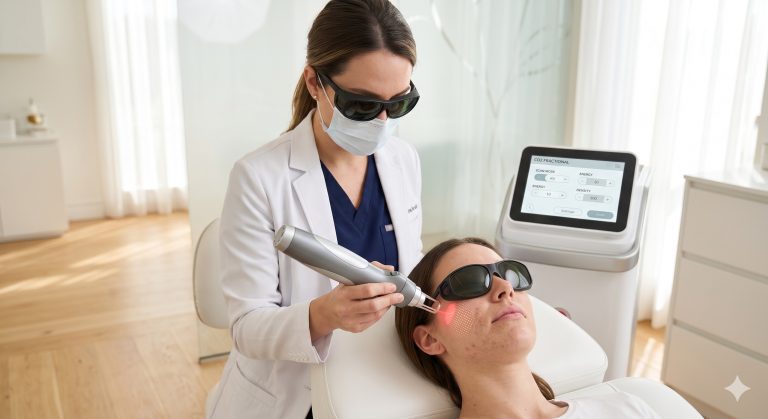
The 2026 “Hardcore” CO2 Fractional Laser Deep-Dive: Decoding Skin Resurfacing Tech & Selection Guide
In the realm of medical aesthetics, if Pico lasers are the precise snipers for pigmentation, the CO2 Fractional Laser is the heavy artillery for skin reconstruction. For decades, the 10600nm wavelength has remained the undisputed gold standard for treating severe acne scars, deep wrinkles, and overall skin resurfacing. However, the gap between a premium CO2 laser and a basic entry-level machine is massive—dictating not only clinical efficacy but also the risk of severe complications like hyperpigmentation (PIH) or prolonged downtime.
This article dives deep into the hardcore parameters of the CO2 fractional laser segment. We will pit the flagship Cocoon CO2 4D against industry benchmarks (like the Lumenis UltraPulse concept) to bypass the marketing fluff and help clinic owners and medspa operators select a device that guarantees both safety and high ROI.
I. Summary
This post aims to reveal the true clinical capabilities of modern CO2 lasers through an unfiltered parameter comparison, focusing on the critical balance between tissue ablation (vaporization) and coagulation (thermal heating).
- The Core Technology: Why the laser tube type (RF Metal vs. Glass) is the single most important factor in your purchasing decision.
- The Hardcore Matchup: An in-depth analysis of the Cocoon CO2 4D (featuring a premium RF metal tube and versatile 4D applications) versus traditional high-peak-power benchmarks.
- Selection Insights: Specs like wattage alone don’t tell the whole story. Pulse duration control, scanner precision, and multi-disciplinary applications (fractional, surgical, vaginal) are the ultimate drivers of clinic profitability.

II. Why Do We Need a “Hardcore” Comparison?
Maximizing Clinic ROI: A premium CO2 laser isn’t just for acne scars. With the right parameters and handpieces, it becomes a multi-disciplinary workstation covering surgical cutting, skin tightening, and intimate wellness.
Avoiding Complications: CO2 lasers are highly ablative. A cheap device with unstable energy output can cause excessive thermal damage, leading to severe erythema and post-inflammatory hyperpigmentation (PIH), especially in darker skin types.
Separating Toys from Tools: Many low-cost machines use outdated glass tubes that cannot produce the ultra-short pulses required for true fractional resurfacing. You need to know how to identify top-tier hardware.
III. What Are the True “Hardcore” Parameters?
When evaluating a CO2 fractional laser, look past the outer shell and scrutinize these foundational metrics:
Spot Size & Scanner Precision: A spot size of 0.1mm to 0.12mm is ideal. It creates microscopic treatment zones (MTZs) deep in the dermis while leaving intact bridges of skin for rapid healing.
Laser Tube Generator (RF Metal vs. Glass): RF (Radio Frequency) metal tubes provide stable, uniform energy with extremely fast rise and fall times. Glass tubes are cheaper but suffer from energy degradation and longer pulse tails (causing unwanted heat damage).
Power (Wattage): Typically ranging from 30W to 60W in aesthetic clinics. Higher power allows for faster tissue vaporization without lingering thermal spread.
Pulse Duration (Ultra-Pulse Mode): The ability to deliver energy in microseconds. The pulse duration must be shorter than the Thermal Relaxation Time (TRT) of the skin to ablate tissue cleanly without burning surrounding areas.
IV. The Skin Resurfacing Track: The Ultimate Showdown of Ablation vs. Coagulation
4.1 Technical Principles
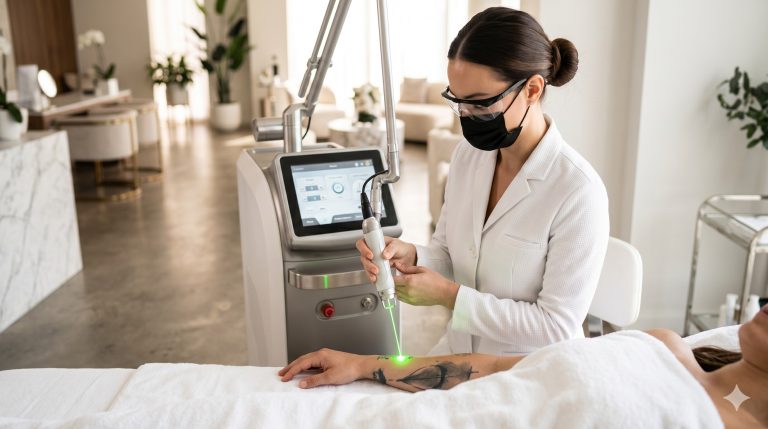
The CO2 laser operates at 10600nm, a wavelength highly absorbed by water (which makes up 70% of our skin). When fired in a fractional pattern, it vaporizes columns of tissue (ablation) while creating a controlled zone of heat around the column (coagulation). The ablation removes scars and wrinkles, while the coagulation shrinks collagen fibers and stimulates profound neocollagenesis.
4.2 Hardcore Device Matchup: Cocoon CO2 4D vs. Industry Gold Standards
Let’s look at how the flagship Cocoon model stacks up in the high-end market (data referenced from core clinical requirements, see Table 1 below):
| Core Parameter | Cocoon CO2 4D | Traditional High-End Benchmark | Clinical Significance & Deep Analysis |
| Laser Tube Type | Premium RF Metal Tube (Coherent) | RF Metal Tube | RF tubes ensure a “square wave” energy profile. The energy spikes instantly and drops instantly, preventing the “charring” effect common in cheap glass tubes. |
| Power Output | 40W / 60W (Optimized) | 60W+ | 40W-60W is the sweet spot for aesthetic clinics, offering enough power for rapid fractional scanning and precise surgical excision. |
| Pulse Energy & Mode | Ultra-Pulse / Continuous / Fractional | Ultra-Pulse / CW | Ultra-Pulse mode is mandatory for acne scars. It delivers high peak energy in fractions of a millisecond, punching deep into the dermis safely. |
| Spot Size | 0.1mm (Micro-beam) | 0.12mm | A smaller spot size (0.1mm) penetrates deeper with less surface disruption, meaning faster recovery times and less crusting for the patient. |
| Application Modes | Fractional + Surgical + Vaginal (4D) | Mostly Fractional + Surgical | The Cocoon CO2 4D includes a dedicated 360° emission handpiece for vaginal tightening, turning one device into a comprehensive revenue generator. |
V. Deep Analysis & Clinical Significance
As seen in the technical breakdown, the Cocoon CO2 4D is engineered around the concept of absolute control over thermal damage. The beating heart of this device is its imported RF Metal Tube.
Why is this so critical? When treating deep atrophic acne scars (like ice pick or boxcar scars), the laser needs to ablate tissue deep into the reticular dermis. If the laser uses a cheap glass tube, the energy delivery is sluggish. It slowly heats the tissue before vaporizing it, resulting in a wide zone of coagulation (a burn). This leads to a 2-week downtime, severe swelling, and a massive risk of hyperpigmentation.
By utilizing a high-end RF metal tube, the Cocoon CO2 4D outputs an ultra-short, high-peak-power pulse. It vaporizes the target tissue instantly, leaving a razor-thin, controlled coagulation zone that is just enough to stimulate collagen remodeling and stop bleeding, but not enough to cause excessive inflammation. Furthermore, its ultra-fine 0.1mm spot size ensures the micro-wounds close rapidly, cutting patient downtime by nearly half compared to older generation CO2 lasers.
The Verdict: If your clinic caters to patients demanding dramatic results for acne scars, severe photoaging, and surgical excisions, but you need to manage their downtime and safety strictly, a premium RF-tube device is non-negotiable. To explore the versatile handpieces of the CO2 4D, visit the Cocoon Laser official website.
VI. Hardcore Parameter Comparison Table
Table 1: Deep Parameter Comparison of Premium CO2 Fractional Lasers
| Parameter | Cocoon CO2 4D | Typical Entry-Level CO2 |
| Generator Tech | RF Metal Tube (USA Coherent) | DC Glass Tube |
| Lifespan | > 5 – 7 Years (Refillable) | 1 – 2 Years (Fragile) |
| Spot Size | 0.1 mm (High Precision) | > 0.2 mm (Higher surface damage) |
| Scan Shapes | 7+ Shapes (Square, Circle, Triangle, etc.) | Basic Shapes |
| Working Modes | Fractional, Normal (Surgical), Gynaecology | Fractional Only |
| Downtime | Moderate (4-7 Days) | High (7-14 Days) |
VII. FAQs
A: Intimate wellness and vaginal tightening are among the fastest-growing sectors in medical aesthetics. The Cocoon CO2 4D comes equipped with a specialized 360° emission probe that utilizes the CO2’s thermal effect to stimulate collagen in the vaginal mucosa, allowing you to tap into a highly profitable demographic without buying a separate machine.
Q: Is a CO2 Fractional Laser safe for darker skin types (Fitzpatrick IV-VI)?
A: Traditional continuous-wave CO2 lasers are very risky for darker skin due to thermal spread. However, an advanced RF-tube CO2 laser like the Cocoon CO2 4D, when used on low-density, short-pulse duration settings, can safely treat darker skin types with proper pre-and post-care protocol.
Q: Why should I care if the tube is RF Metal or Glass if the wattage is the same?
A: Wattage is just raw power; how that power is delivered is what matters. An RF metal tube delivers power instantly and shuts off instantly (a square wave). A glass tube ramps up slowly and ramps down slowly, meaning it “cooks” the skin around the target area. RF means less pain, less downtime, and better results.
Q: How does the Vaginal/Gynaecology mode increase ROI?
VIII. Conclusion: Selection Insights for Hardcore Resurfacing
When it comes to CO2 lasers, taking shortcuts on hardware will directly harm your patients and your clinic’s reputation. The technical gap between a glass tube and an RF metal tube is the difference between a high-risk tool and a precision medical instrument.
- Focus on the Engine: The RF metal tube in the Cocoon CO2 4D ensures precise ablation and controlled thermal damage, which is the holy grail of skin resurfacing.
- Versatility is Profitability: A machine that can seamlessly switch between treating severe acne scars, excising skin tags, and performing non-invasive vaginal rejuvenation offers a vastly superior ROI.
- Partner with an Original Manufacturer: Purchasing advanced lasers requires ongoing support, training, and reliable parts.
To secure a hardcore CO2 device solution that elevates your clinic’s clinical capabilities and bottom line, explore the full specifications of the CO2 4D on the Cocoon Laser website.
If you need more information, please click “Contact Us”.
If you want to obtain more information, please follow our official website and Facebook.