Professional Laser Hair Removal Machine: Clinic Buying Guide
A professional laser hair removal machine is a major equipment investment for a clinic, med spa, or aesthetic practice. Choosing the right platform requires more than comparing power ratings or selecting the machine with the longest specification sheet.
Professional hair removal equipment includes several technology categories, including diode laser, Alexandrite laser, Nd:YAG laser, and intense pulsed light systems. Each uses different wavelengths or light-delivery methods and may fit different treatment strategies, patient populations, workflows, and budgets.
This guide explains the main types of professional laser hair removal equipment, compares their technologies and wavelengths, discusses professional machine prices, and provides a practical framework for clinics evaluating a new hair removal platform.
Quick Answer
The best professional laser hair removal machine depends on the clinic’s patient population, treatment volume, budget, and preferred technology. Diode laser systems are widely used for professional hair reduction and may use 808–810nm alone or combine wavelengths such as 755nm, 808nm, 940nm, and 1064nm. Alexandrite systems commonly operate around 755nm, while long-pulsed Nd:YAG systems commonly use 1064nm. IPL uses filtered broad-spectrum pulsed light rather than a laser wavelength.
For clinics comparing equipment, wavelength is only one part of the decision. Cooling, fluence and pulse controls, spot size, treatment speed, handpiece ergonomics, reliability, service requirements, training, warranty, and regulatory status should all be evaluated.
Clinics specifically interested in diode technology can also read our best diode laser hair removal machine guide for a more focused comparison of professional diode systems.

What Is a Professional Laser Hair Removal Machine?
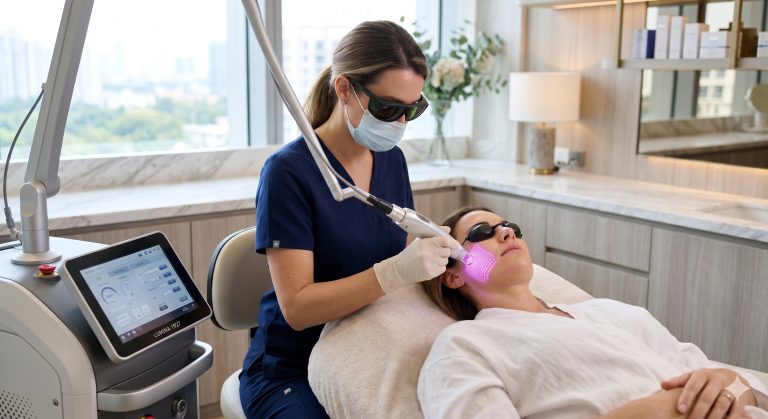
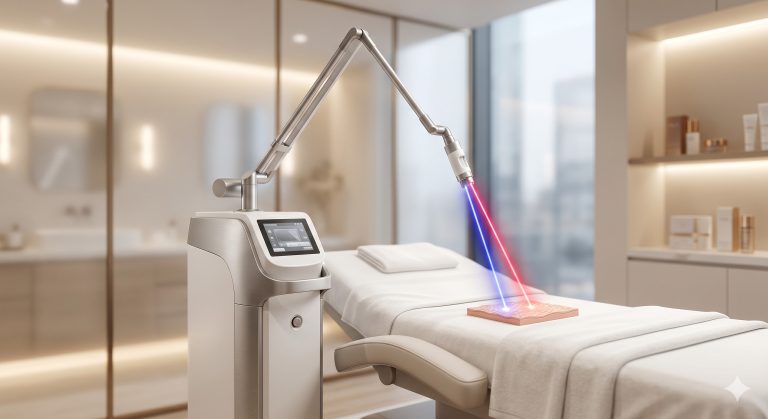
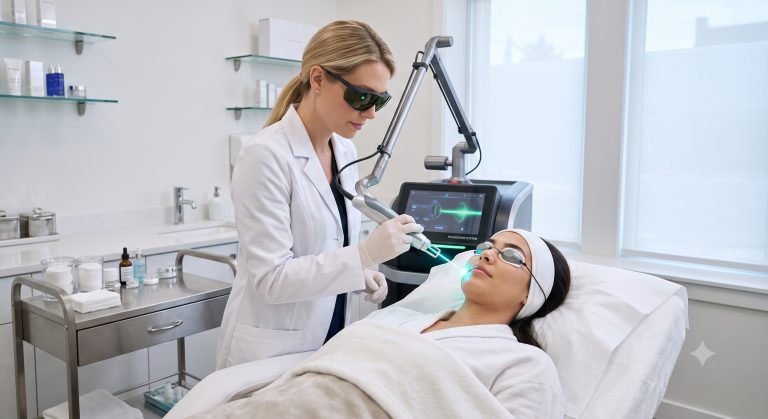
A professional laser hair removal machine is equipment designed for trained operators in clinics, med spas, medical aesthetic practices, or other professional treatment environments.
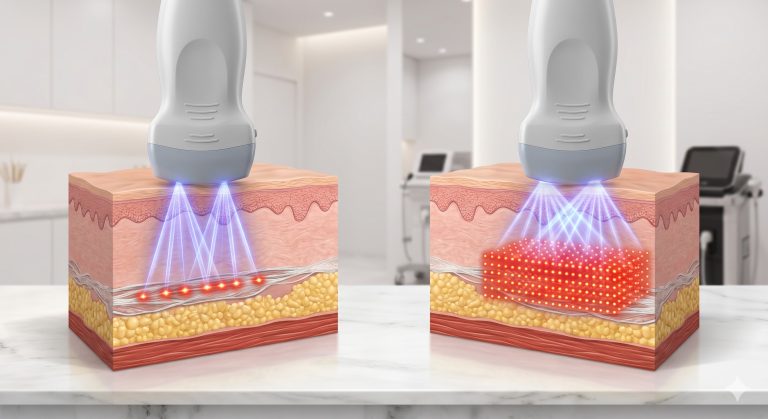
Laser hair reduction is based on delivering optical energy that can be preferentially absorbed by melanin associated with the hair. Absorbed energy is converted into heat, producing a controlled thermal effect in targeted follicular structures.
The basic concept is commonly associated with selective photothermolysis, but real-world treatment involves more than wavelength alone. Hair color and thickness, skin characteristics, fluence, pulse duration, spot size, cooling, treatment interval, and device design all influence the process.
Hair also progresses through different stages of the growth cycle. Because individual hairs are not all in the same stage at the same time, professional hair reduction is generally performed as a series of treatments rather than a single session.
Professional Equipment Is Not the Same as a Home Device
The term “laser hair removal machine” is now used online for both clinic-grade systems and consumer products, but the two categories should not be treated as interchangeable.
Professional platforms are designed around trained operators, repeated appointments, broader parameter control, clinic workflow, and professional equipment support. Consumer devices are designed for personal use and generally operate within more restricted parameters.
Types of Professional Laser Hair Removal Machines
When clinics search for a professional hair removal machine, they may encounter several technologies marketed for hair reduction. The most important distinction is the underlying light source and wavelength configuration.
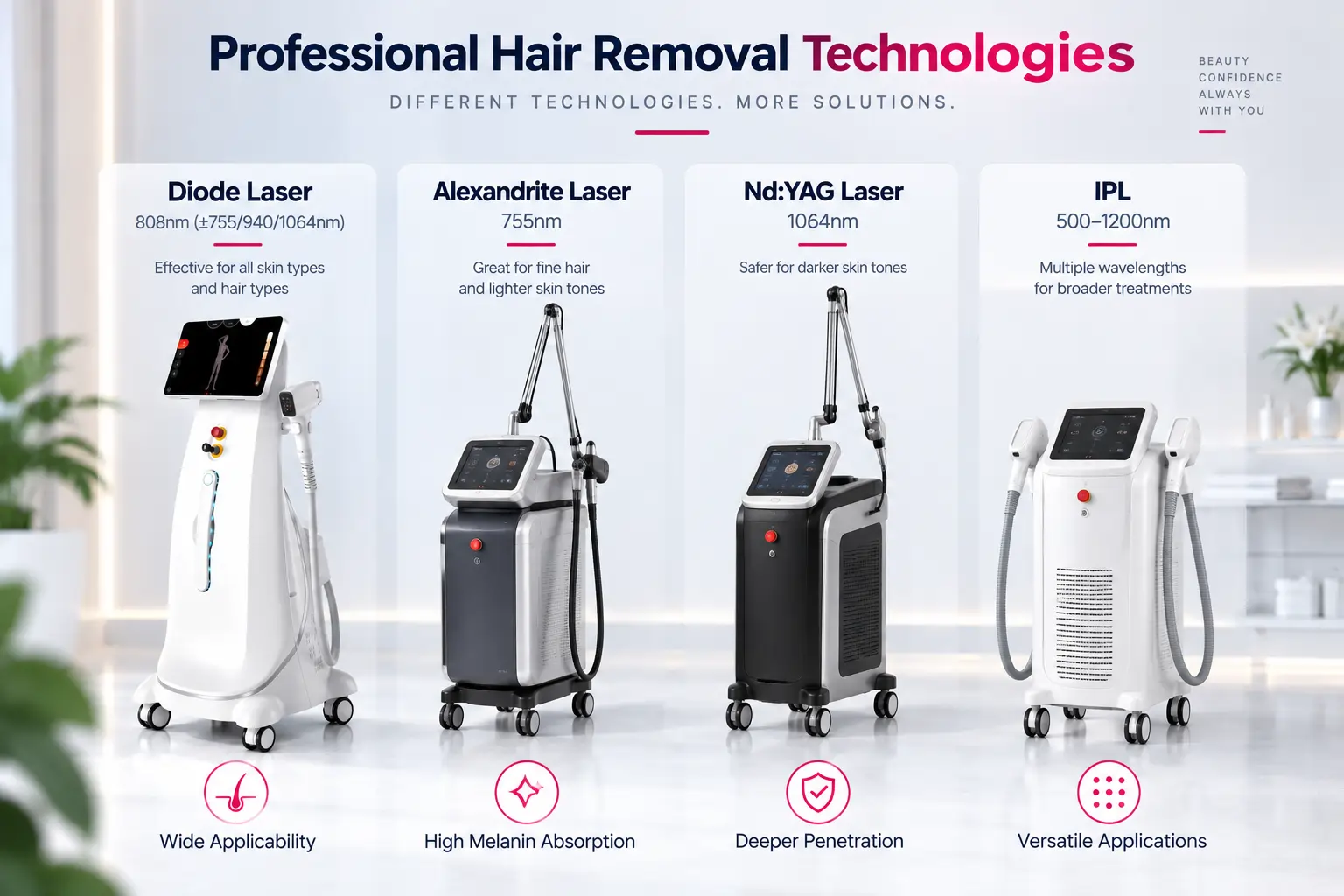
Four categories are especially important when comparing professional systems: diode laser, Alexandrite laser, Nd:YAG laser, and IPL.
1. Diode Laser Hair Removal Machine
The diode laser hair removal machine is one of the most widely recognized categories of professional hair removal equipment. Diode systems use semiconductor laser technology and are commonly associated with wavelengths around 808nm or 810nm.
Modern professional systems may also combine multiple diode wavelengths. Configurations can include 755nm, 808nm, 940nm, and 1064nm within a single platform.
Professional diode machines frequently integrate contact cooling and may provide different treatment-window sizes to support clinic workflows.
Clinics considering this technology can see our dedicated professional diode laser machine comparison for a more detailed buying guide.
2. Alexandrite Laser Hair Removal Machine
Alexandrite laser systems commonly operate at approximately 755nm. This wavelength has relatively strong interaction with melanin and has an established role in professional laser hair reduction.
Because melanin is also present in the epidermis, appropriate patient selection, parameters, cooling, and professional assessment are important. Buyers should evaluate the capabilities and intended use of the specific Alexandrite system rather than applying wavelength characteristics as universal treatment rules.
Alexandrite technology is often found in established professional laser platforms and may also be combined with another laser technology in multi-wavelength systems.
3. Nd:YAG Laser Hair Removal Machine
Long-pulsed Nd:YAG systems used for professional hair reduction commonly operate at 1064nm. Compared with shorter wavelengths, 1064nm generally has lower relative melanin absorption and deeper optical penetration.
These characteristics make 1064nm an important wavelength when clinics compare professional laser technologies, particularly when considering a broad patient population.
However, wavelength alone does not determine suitability or outcome. Device design, pulse duration, fluence, cooling, patient characteristics, and professional treatment protocols remain important.
4. IPL Hair Removal Machine
IPL stands for intense pulsed light. Unlike Alexandrite, Nd:YAG, or diode lasers, IPL is not a laser. It generates broad-spectrum pulsed light and uses filtering to deliver selected wavelength ranges.
Professional IPL platforms can support hair reduction and may also provide additional aesthetic applications depending on the device and its intended uses. This versatility can make IPL attractive to practices that want a broader treatment menu from one platform.
Clinics should not assume that “laser” and “IPL” are interchangeable terms. Their light sources, wavelength delivery, pulse characteristics, and equipment architecture differ.
Professional Laser Hair Removal Machine Comparison
The following table provides a high-level comparison of the major professional laser hair removal equipment categories. Individual machines can differ substantially, so the table should be used as a technology overview rather than a universal treatment recommendation.
| Technology | Typical Wavelength | Light Source | Key Buying Consideration |
|---|---|---|---|
| Diode Laser | 808/810nm or multi-wavelength configurations | Semiconductor laser | Wavelengths, cooling, spot size, handpiece, workflow |
| Alexandrite | 755nm | Alexandrite laser | Patient population, pulse controls, cooling, workflow |
| Nd:YAG | 1064nm | Nd:YAG laser | Patient population, fluence, pulse width, cooling |
| IPL | Filtered broad spectrum | Intense pulsed light | Filters, applications, pulse controls, cooling |
No row in this table is automatically “best.” The appropriate technology depends on what the clinic needs the equipment to accomplish and the specifications of the individual platform.
What Wavelength Is Best for Professional Laser Hair Removal?
There is no single best laser hair removal wavelength for every patient, clinic, or device. Different wavelengths have different optical characteristics, and their practical use depends on the complete treatment system.
| Wavelength | Common Association | General Characteristic |
|---|---|---|
| 755nm | Alexandrite / selected diode platforms | Relatively stronger melanin interaction |
| 808–810nm | Diode laser | Balance between melanin interaction and penetration |
| 940nm | Selected multi-wavelength diode platforms | Additional absorption and penetration characteristics |
| 1064nm | Nd:YAG / selected diode platforms | Lower relative melanin absorption and deeper penetration |
Buyers should be careful with claims such as “755nm is always best” or “1064nm is always safer.” Those statements remove the device, parameters, cooling, treatment technique, and individual patient characteristics from the decision.
For equipment purchasing, the more useful question is: Which wavelength strategy best matches the clinic’s intended applications and patient population?
Single-Wavelength vs Multi-Wavelength Hair Removal Machines
Professional equipment has increasingly moved beyond simple single-wavelength comparisons. Some systems remain focused on one established wavelength, while others combine multiple wavelengths within the same platform.
A single-wavelength system can provide a focused and well-established architecture. A multi-wavelength system may provide broader wavelength coverage, but that does not automatically make it the superior machine.
Clinics should evaluate:
- How the wavelengths are generated and delivered
- Whether the wavelength combination is relevant to the clinic’s needs
- Available fluence and pulse controls
- Spot-size options
- Cooling performance
- Treatment workflow
- Reliability and service requirements
In other words, wavelength count should be treated as one specification, not a quality score.
Professional Diode Laser Hair Removal Machine: When Does It Make Sense?
Diode technology is particularly relevant to clinics looking for a dedicated professional hair-reduction platform. It is widely associated with 808–810nm technology, integrated contact cooling, and treatment handpieces designed around repeated professional use.
Multi-wavelength diode platforms can extend this architecture by combining wavelengths such as 755nm, 808nm, 940nm, and 1064nm.
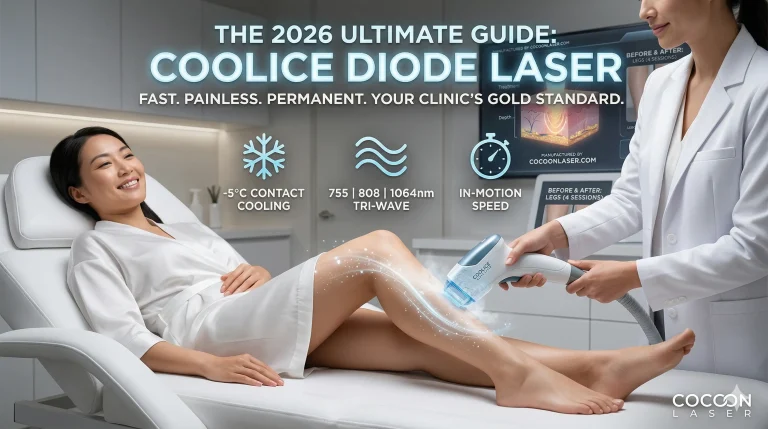
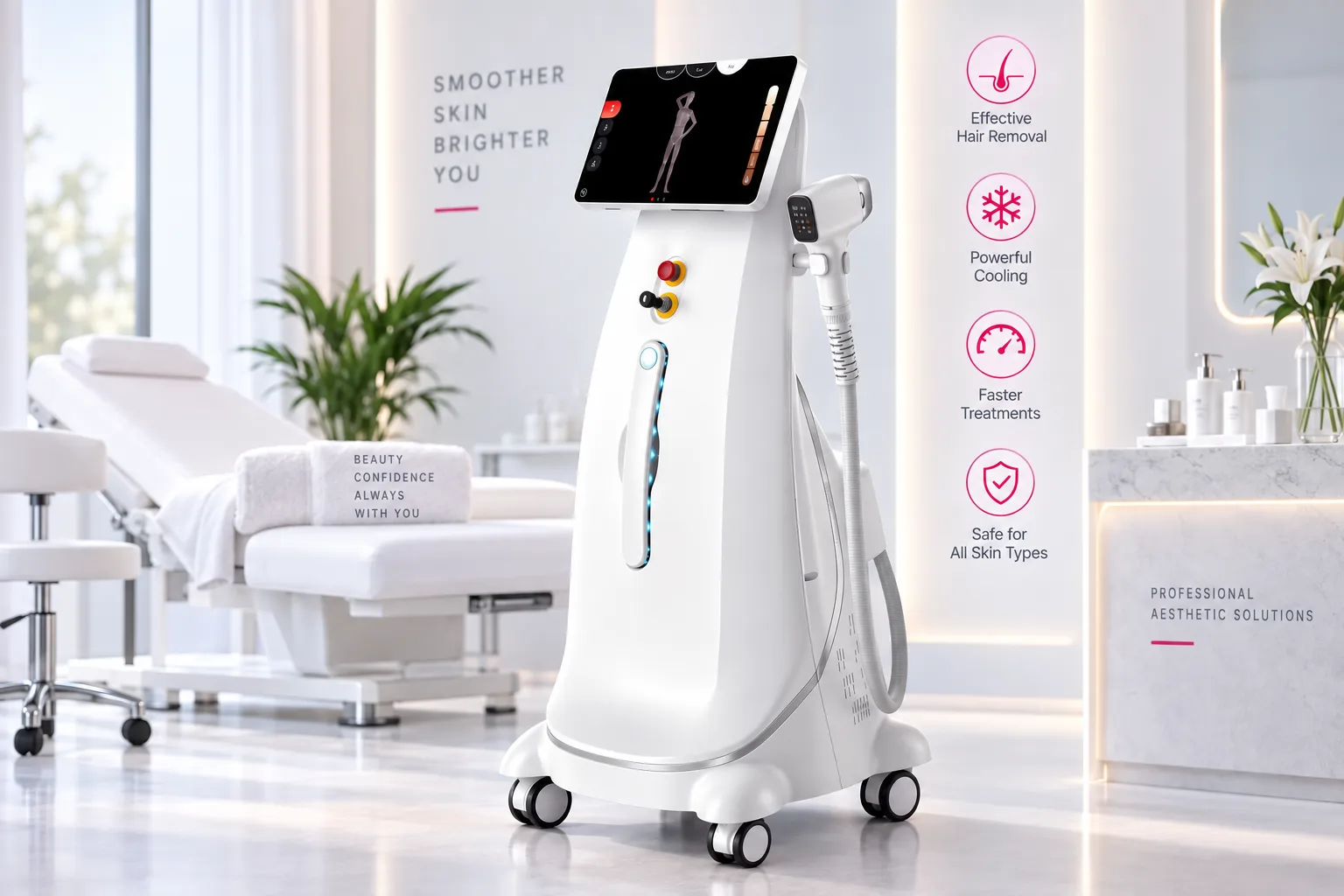
For example, Cocoon Laser’s COOLICE platform uses a 755nm / 808nm / 940nm / 1064nm configuration together with multiple treatment spot sizes and an integrated professional cooling architecture.
COOLICE is therefore one option for clinics looking specifically for a multi-wavelength diode system. It should still be compared according to the same criteria as other professional equipment: wavelength configuration, cooling, treatment windows, workflow, ownership requirements, and support.
View COOLICE Professional Diode Laser Hair Removal Machine
For a detailed diode-specific comparison, see our Best Diode Laser Hair Removal Machines for Clinics guide.
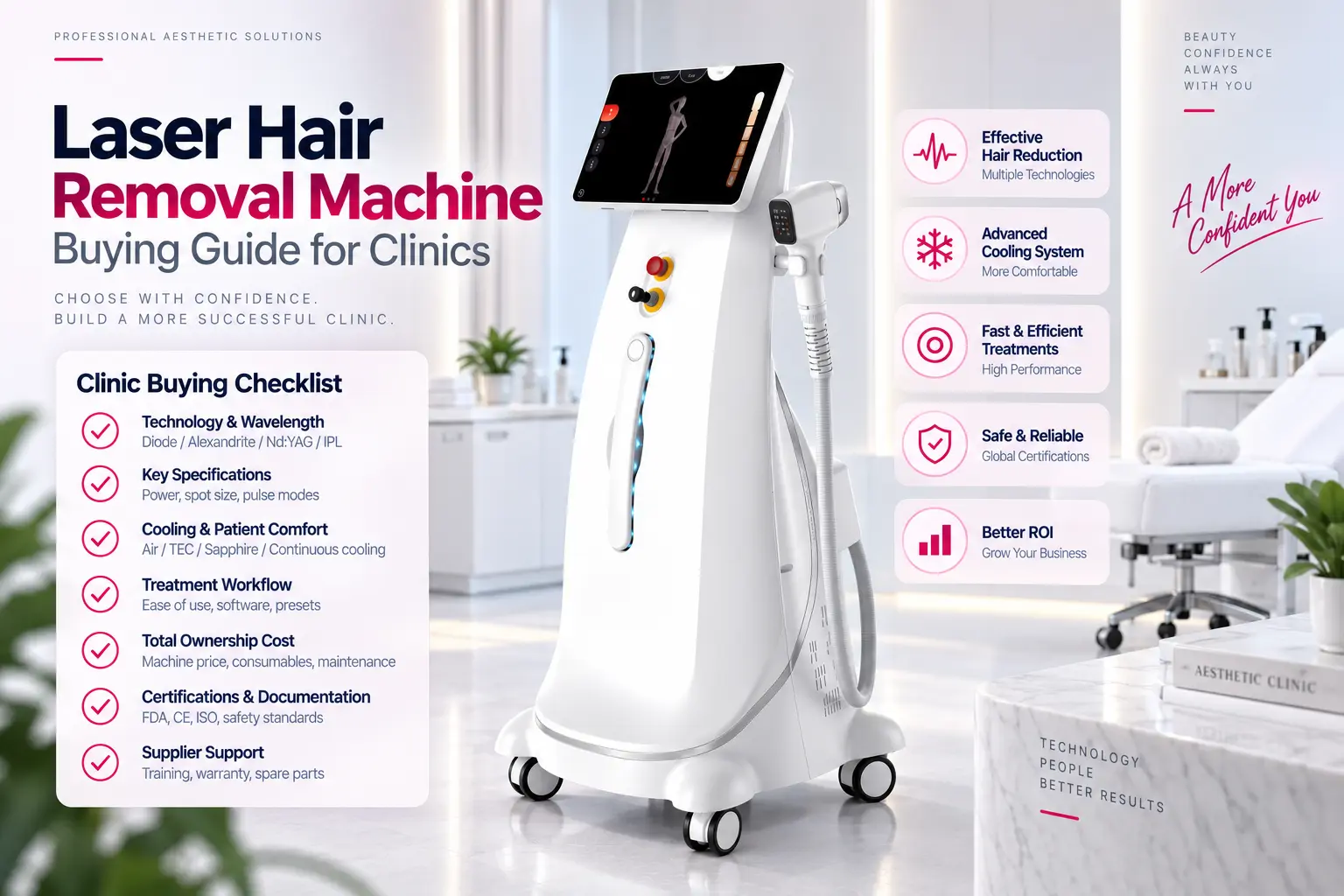
What Should Clinics Look for in Professional Laser Hair Removal Equipment?
Once a clinic has narrowed down the technology category, the next step is evaluating individual machines. This is where many buying decisions become more complicated.
Wavelength and Technology
Start by identifying the actual light source and wavelength configuration. Do not rely solely on product names such as “ice laser,” “SHR laser,” or “multi-wave laser.” Ask what technology is physically inside the machine.
Fluence and Pulse Duration
Professional systems should provide documented treatment parameters. Maximum power alone does not explain how energy is delivered to the treatment area.
Spot Size
Large treatment windows can improve coverage of areas such as legs and backs, while smaller spot options can improve flexibility for confined areas. Clinics should consider their actual treatment mix.
Cooling
Cooling can influence epidermal thermal management and treatment comfort. Compare the cooling architecture and its ability to remain stable during normal professional operation rather than selecting equipment solely by the lowest advertised temperature.
Treatment Speed
Treatment speed depends on the interaction between spot size, repetition rate, available energy settings, cooling, treatment technique, and operator workflow. No single specification describes real-world treatment speed.
Handpiece Ergonomics
In a busy clinic, operators may hold a treatment handpiece for hours. Weight, balance, cable flexibility, grip, treatment-window visibility, and cooling design can affect daily usability.
Reliability and Maintenance
Ask about expected component life, preventive maintenance, handpiece service, replacement costs, spare-parts availability, and typical troubleshooting procedures.
Training and Technical Support
Equipment support should be evaluated before the purchase. Buyers should understand what training is available, how warranty claims are handled, whether remote diagnostics are available, and how replacement components are supplied.
Documentation and Regulatory Requirements
Requirements differ by device and jurisdiction. Verify the documentation, intended use, operator requirements, and other applicable rules for the exact machine and market in which it will be used.
Best Professional Laser Hair Removal Machine for Different Practices
The best professional laser hair removal machine depends heavily on the environment in which it will operate. A large dedicated laser center and a small med spa should not necessarily make the same equipment decision.
For High-Volume Laser Hair Removal Clinics
High-volume practices should give extra weight to treatment speed, large treatment windows, handpiece ergonomics, sustained cooling, reliability, expected component life, and service response time.
For Med Spas
Med spas may prioritize a balance between professional performance, versatility, treatment comfort, ease of operation, footprint, and equipment investment.
For Small Aesthetic Practices
Smaller practices should be cautious about buying more machine than their expected treatment volume can justify. Reliability, practical capabilities, manageable ownership costs, and supplier support may matter more than the longest feature list.
For Multi-Service Aesthetic Clinics
Clinics that want to offer multiple light-based services may evaluate whether a dedicated laser hair removal platform or a more versatile IPL-based system better matches their treatment menu.
For Distributors and OEM Buyers
Professional distributors may also need to evaluate manufacturing capacity, OEM and ODM options, branding, interface languages, documentation, training, spare parts, warranty procedures, and long-term technical support.
Professional Laser Hair Removal Machine vs At-Home Devices
A professional laser hair removal machine should not be directly compared with a consumer device simply because both are marketed for hair reduction. They are designed for different users, operating environments, treatment workflows, and levels of parameter control.
| Factor | Professional Hair Removal Machine | At-Home Device |
|---|---|---|
| Primary User | Trained professional | Consumer |
| Environment | Clinic, med spa, professional practice | Personal home use |
| Technology | Diode, Alexandrite, Nd:YAG, IPL and other professional platforms | Consumer laser or IPL depending on device |
| Parameter Control | Professional treatment settings | Generally simplified |
| Treatment Window | Designed around professional workflow | Usually optimized for personal use |
| Cooling | May include professional thermal-management systems | Varies significantly by product |
| Usage Pattern | Multiple appointments and repeated operation | Individual personal sessions |
| Purchase Decision | Performance, reliability, support, compliance, ROI | Price, convenience, ease of use |
Clinics should therefore evaluate professional equipment according to professional requirements rather than using consumer product reviews as purchasing benchmarks.
If you are researching personal-use diode technology instead, see our best 810nm diode laser hair removal device at home guide.
How Much Does a Professional Laser Hair Removal Machine Cost?
Professional laser hair removal machine prices vary significantly because “professional hair removal equipment” covers several different technologies, configurations, manufacturers, and service models.
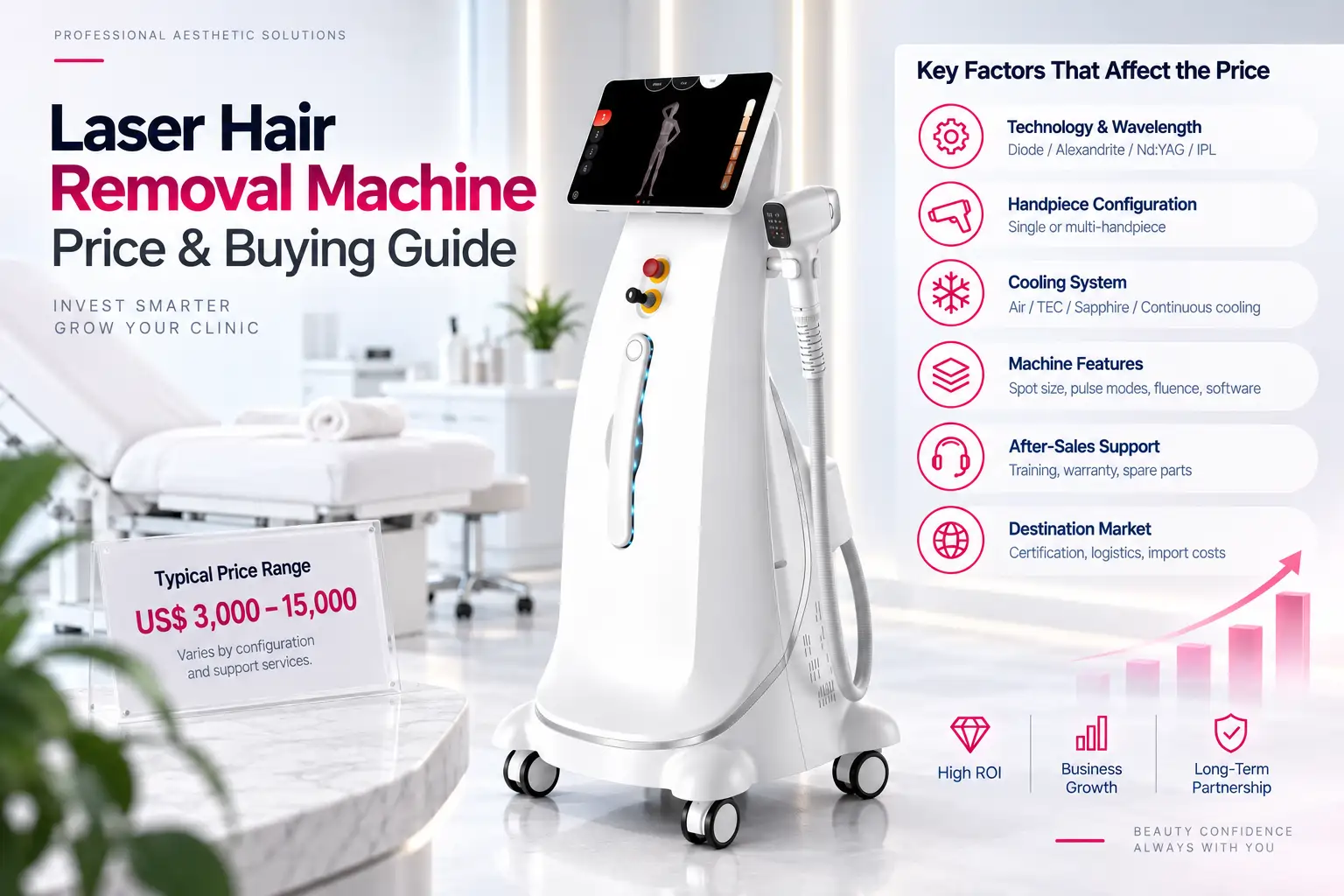
As a broad market reference, professional equipment may range from several thousand dollars for entry-level systems to $50,000 or considerably more for premium branded laser platforms. These figures should be treated as general market ranges rather than quotations for any particular machine.
| Equipment Category | Broad Price Reference | What Can Affect the Price? |
|---|---|---|
| Entry-Level Professional Equipment | Approximately $3,000–$10,000 | Basic configuration, technology, support level, manufacturer |
| Mid-Range Professional Equipment | Approximately $10,000–$30,000 | Higher-specification platform, cooling, handpieces, support |
| Premium Professional Laser Systems | Approximately $30,000–$100,000+ | Brand, laser architecture, applications, service network, market |
The professional laser hair removal machine price should never be evaluated independently of the machine configuration. Two systems with similar external designs can contain substantially different optical, electrical, cooling, and laser components.
What Affects Professional Laser Hair Removal Machine Cost?
- Laser or light-source technology
- Number and type of wavelengths
- Laser module configuration
- Fluence and pulse-control capabilities
- Spot sizes and treatment-window options
- Cooling architecture
- Handpiece design and expected service life
- User interface and software
- Manufacturing and quality-control processes
- Training and technical documentation
- Warranty coverage
- Spare parts and after-sales service
- Shipping and installation requirements
- Destination-market requirements
For this reason, a clinic comparing a $7,000 machine with a $15,000 machine should first determine whether the quotations actually include comparable technologies, handpieces, accessories, warranty, training, and support.
Professional Laser Hair Removal Machine for Sale: What to Check Before Buying
Buyers searching for a professional laser hair removal machine for sale will find systems from manufacturers, distributors, equipment dealers, and online marketplaces. Product appearance alone provides very little information about the quality or suitability of the equipment.
Before requesting a final quotation, clinics should verify the following.
1. What Technology Is Actually Inside the Machine?
Determine whether the system uses diode laser, Alexandrite, Nd:YAG, IPL, or another light source. Marketing names such as “ice laser,” “SHR,” or “multi-wave” should not replace a clear technical description.
2. What Are the Actual Wavelengths?
Ask for the exact wavelength configuration. For diode systems, determine whether the machine uses 808nm, 810nm, or a multi-wavelength combination.
3. What Treatment Parameters Are Available?
Request complete technical specifications including fluence, pulse-width range, repetition rate, spot sizes, and available treatment modes where applicable.
4. How Does the Cooling System Work?
Ask how cooling is generated, where cooling occurs, how temperature is monitored, and whether performance can remain stable during repeated professional operation.
5. What Is the Expected Handpiece Service Life?
For systems with consumable or service-limited handpiece components, ask how service life is measured, what happens when the expected interval is reached, and how much replacement or servicing costs.
6. What Does the Warranty Actually Cover?
A warranty period means little without knowing which components are covered, which are excluded, who pays shipping, and how repairs are handled when the clinic and manufacturer are in different countries.
7. Are Spare Parts Available?
Ask whether commonly required replacement components are stocked and how quickly they can be supplied. Equipment downtime can be more expensive than the replacement part itself.
8. What Training and Technical Support Are Included?
Clarify whether the supplier provides operating guidance, technical training, troubleshooting, remote support, manuals, and maintenance information.
9. Does the Exact Machine Meet Your Market Requirements?
Documentation and regulatory requirements differ by product and jurisdiction. Verify the exact model and intended destination market instead of assuming that a supplier-wide statement applies to every device.
How to Choose a Laser Hair Removal Machine for Your Clinic
Choosing a laser hair removal machine for a clinic becomes easier when the practice defines its requirements before comparing equipment.
Step 1: Define Your Primary Treatment Goal
Determine whether hair reduction will be the machine’s primary purpose or whether the practice wants a platform supporting several light-based aesthetic applications.
A clinic focused heavily on hair removal may prefer a dedicated laser platform. A practice wanting a broader menu may also investigate professional IPL systems.
Step 2: Understand Your Patient Population
Consider the range of skin characteristics, hair characteristics, and treatment areas commonly seen in the practice. This can help determine which wavelength strategy deserves closer evaluation.
Step 3: Choose the Technology Category
Decide whether diode, Alexandrite, Nd:YAG, IPL, or another platform best fits the clinic’s intended services. Only then should individual machines be compared.
Step 4: Compare Complete Specifications
Create a standardized comparison sheet containing wavelengths, fluence, pulse width, repetition rate, spot sizes, cooling, handpiece details, power requirements, dimensions, and other relevant specifications.
Step 5: Evaluate Daily Workflow
Think beyond the brochure. Consider treatment speed, operator ergonomics, interface usability, patient turnover, cooling stability, cleaning, maintenance, and how the machine fits physically into the treatment room.
Step 6: Calculate Total Cost of Ownership
Purchase price is only the starting point. Include shipping, financing, maintenance, replacement handpieces, consumable components, spare parts, downtime, training, warranty, and expected useful service life.
Step 7: Compare Suppliers
A strong machine paired with weak technical support can still create operational problems. Compare response times, warranty procedures, technical knowledge, spare-parts availability, training, and communication.
Step 8: Verify Requirements Before Purchase
Check applicable device, operator, facility, and treatment requirements in the jurisdiction where the machine will be installed and used.
Laser Hair Removal Machine for Med Spa: What Matters Most?
A laser hair removal machine for a med spa may need to balance clinical workflow with business considerations differently from a large dedicated laser center.
Important factors can include:
- Available treatment-room space
- Expected number of daily appointments
- Patient population
- Treatment-window flexibility
- Operator training
- Treatment comfort and cooling
- Ease of operation
- Equipment acquisition cost
- Maintenance requirements
- Warranty and technical support
A smaller med spa should not automatically purchase the highest-specification platform available. The better investment is usually the machine whose capabilities can be consistently utilized by the practice.
Commercial Laser Hair Removal Machine: What Matters for High-Volume Use?
A commercial laser hair removal machine used in a busy treatment center may operate through multiple appointments every day. Under these conditions, workflow and reliability become particularly important.
High-volume buyers should pay close attention to:
- Large-area treatment efficiency
- Spot-size options
- Repetition rate under usable treatment settings
- Cooling stability during extended operation
- Handpiece weight and ergonomics
- Expected laser or handpiece service life
- Maintenance procedures
- Replacement-part availability
- Technical response time
A specification that saves only a few minutes per treatment can become commercially meaningful when multiplied across a large number of monthly appointments.
Is a Professional Laser Hair Removal Machine a Good Investment?
Whether a professional hair removal platform is financially attractive depends on utilization rather than purchase price alone.
A simple starting point is:
Expected treatment revenue − equipment and operating costs = contribution toward equipment payback and profit
A clinic can estimate potential utilization using:
- Average treatment price
- Average appointments per day
- Working days per month
- Treatment-package structure
- Expected utilization rate
- Operator cost
- Marketing and customer-acquisition cost
- Financing or equipment payment
- Maintenance and handpiece costs
- Expected downtime
For example, a machine with a lower purchase price may not provide the lowest total ownership cost if frequent service interruptions reduce appointment capacity. Conversely, an expensive premium platform is not automatically a better investment if the clinic cannot generate sufficient treatment volume.
Clinics should build their own forecast using realistic local treatment prices and utilization assumptions rather than relying on generic ROI promises from equipment sellers.
Common Mistakes When Buying Professional Laser Hair Removal Equipment
Choosing a Machine by Power Rating Alone
A large wattage number does not explain fluence, pulse width, spot size, repetition rate, cooling, or sustained treatment performance.
Assuming More Wavelengths Always Mean Better Performance
A multi-wavelength architecture can be useful, but wavelength count is not a substitute for good engineering or an appropriate clinical workflow.
Comparing Only the Purchase Price
Clinics should compare total ownership cost, including maintenance, replacement components, training, warranty, support, and potential downtime.
Ignoring Cooling Performance
Cooling should be evaluated as part of the complete thermal-management system rather than by a single minimum-temperature number.
Ignoring the Handpiece
Handpiece ergonomics, spot sizes, expected service life, replacement cost, and cooling can directly affect daily operation.
Buying Before Verifying Support
Clinics should understand the warranty process, technical support, replacement-part availability, and troubleshooting procedures before making the final payment.
Ignoring Local Requirements
Professional laser and light-based treatments may be subject to different rules depending on location. Buyers should verify applicable requirements for the device and intended use before purchase.
Frequently Asked Questions
What is a professional laser hair removal machine?
A professional laser hair removal machine is equipment designed for trained operators in clinics, med spas, aesthetic practices, or other professional treatment environments. Technologies can include diode laser, Alexandrite laser, Nd:YAG laser, and IPL.
What is the best professional laser hair removal machine?
The best professional laser hair removal machine depends on the clinic’s patient population, treatment volume, preferred technology, budget, and workflow. Buyers should compare wavelength or light source, cooling, treatment parameters, spot size, reliability, service, and total ownership cost.
Which type of laser hair removal machine is best for a clinic?
Diode, Alexandrite, and Nd:YAG technologies all have established roles in professional hair reduction, while IPL provides a non-laser light-based alternative. The appropriate technology depends on the clinic’s intended services, patient population, equipment specifications, and operating model.
Is diode laser good for professional hair removal?
Diode laser is widely used in professional hair reduction. Systems commonly use wavelengths around 808–810nm, while some professional platforms combine multiple wavelengths. Machine quality should be evaluated using the complete system rather than wavelength alone.
What is the difference between diode, Alexandrite, and Nd:YAG hair removal?
The technologies differ primarily in laser source and wavelength. Alexandrite systems commonly use 755nm, diode systems commonly use approximately 808–810nm or multi-wavelength configurations, and long-pulsed Nd:YAG systems commonly use 1064nm. These wavelength differences affect optical absorption and penetration characteristics.
Is IPL a laser hair removal machine?
No. IPL uses broad-spectrum intense pulsed light that is filtered into selected wavelength ranges. A true laser generates a more specific laser wavelength or wavelength configuration.
How much does a professional laser hair removal machine cost?
As a broad market reference, professional equipment may start around $3,000–$10,000 for entry-level systems, approximately $10,000–$30,000 for mid-range equipment, and $30,000–$100,000 or more for premium professional laser platforms. Actual pricing varies substantially by technology, manufacturer, configuration, service, and market.
What should I look for in a professional laser hair removal machine for sale?
Verify the technology, wavelengths, fluence, pulse controls, repetition rate, spot sizes, cooling, handpiece design, expected service life, warranty, spare-parts availability, training, technical support, and documentation applicable to the exact machine.
What wavelength is best for professional laser hair removal?
There is no universal best wavelength. 755nm, 808–810nm, and 1064nm have different optical characteristics and are used in different professional laser platforms. The appropriate wavelength strategy depends on the device, patient characteristics, treatment parameters, cooling, and professional assessment.
Is a professional laser hair removal machine better than an at-home device?
They are designed for different purposes. Professional machines are built around trained operators, clinic workflows, broader parameter controls, and repeated professional use, while home devices are designed for personal consumer operation.
Can a med spa use a professional laser hair removal machine?
This depends on the laws and requirements of the jurisdiction in which the med spa operates. Device, facility, operator, and treatment requirements should be verified locally before purchasing or operating professional laser equipment.
Final Verdict: Choosing the Right Professional Laser Hair Removal Machine
There is no single professional laser hair removal machine that is automatically the best choice for every clinic. The right equipment depends first on technology and wavelength strategy, and then on the quality of the individual platform.
Diode laser systems are an important option for clinics focused on professional hair reduction. Alexandrite and Nd:YAG systems provide other established laser approaches, while IPL can be attractive to practices seeking a broader light-based platform.
Regardless of technology, buyers should compare the complete system: wavelengths, fluence, pulse controls, spot sizes, cooling, treatment speed, handpiece ergonomics, reliability, maintenance, warranty, documentation, training, and technical support.
For clinics specifically interested in diode technology, our best diode laser hair removal machine guide provides a more detailed comparison of single- and multi-wavelength professional diode platforms.
Clinics considering a multi-wavelength diode system can also review COOLICE , Cocoon Laser’s professional 755nm / 808nm / 940nm / 1064nm diode platform.