One Session, Two Solutions: How Dual-Wavelength Lasers Erase Red and Brown Lesions
Executive Summary
The clinical management of concurrent vascular and pigmented lesions has historically required fragmented treatment plans. Today, a premium dual-wavelength aesthetic laser platform elegantly solves this by targeting multiple skin concerns in a single session. Utilizing the precise principles of Selective Photothermolysis, these systems seamlessly alternate between 532nm and 1064nm wavelengths to eradicate both melanin-based brown spots and hemoglobin-based red vascular anomalies. By relying on advanced mechanisms such as the photoacoustic effect for pigment shattering and photothermal coagulation for vascular clearance, these medical-grade devices ensure unparalleled efficacy. Furthermore, built-in TEC Cooling systems protect the epidermis, yielding virtually zero downtime. Engineered with strict adherence to FDA 510(k) and Medical CE standards, platforms like those developed by Cocoon Laser guarantee consistent energy output regardless of the shots count, offering a customized, highly safe treatment profile across the entire Fitzpatrick Scale.
The Complexion Dilemma: Why “Red” and “Brown” Spots Require Different Targets
For patients seeking comprehensive skin rejuvenation, a common frustration arises when consulting with dermatological clinics: their complexion is rarely affected by just one type of lesion. Sun damage frequently manifests as a combination of superficial brown spots (lentigines) and broken red capillaries (telangiectasia). Understanding why these two visually distinct problems require entirely different biophysical approaches is the first step in recognizing the value of advanced optical engineering.
Understanding Chromophores: Melanin vs. Hemoglobin
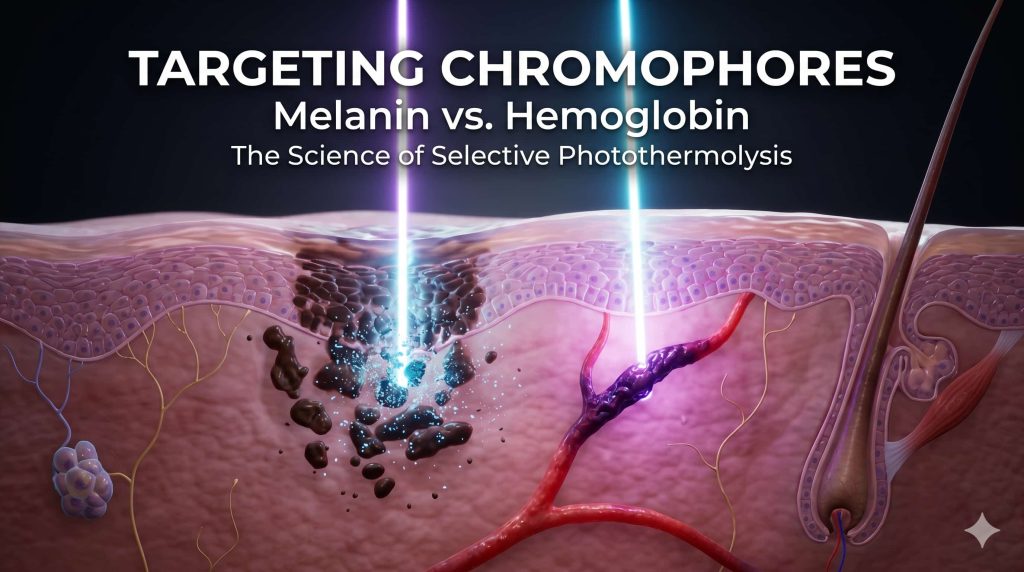
In the field of aesthetic laser physics, a target within the skin that absorbs a specific wavelength of light is known as a chromophore. The success of any laser treatment depends entirely on identifying and accurately targeting the correct chromophore.
- The Brown Targets (Melanin): Pigmented lesions, such as freckles, sun spots, and melasma, are essentially localized concentrations of melanin. Melanin is the biological pigment responsible for giving our skin and hair its color. When ultraviolet (UV) radiation damages the skin, melanocytes hyper-produce melanin as a defense mechanism, resulting in localized brown deposits.
- The Red Targets (Hemoglobin): Vascular lesions, including spider veins, rosacea, and cherry angiomas, are not pigmentation issues. They are structural vascular anomalies. The chromophore here is hemoglobin, the oxygen-carrying protein residing inside the red blood cells within your veins and capillaries.
Because melanin and hemoglobin possess entirely different optical absorption spectra, they cannot be effectively treated by a single, generalized light source.
The Limitation of Single-Wavelength Devices
Historically, aesthetic clinics relied on single-wavelength medical laser equipment. A clinic might own an Alexandrite laser (755nm) which is highly effective for melanin but largely invisible to deep vascular hemoglobin. Alternatively, they might utilize a pulsed dye laser (595nm) that treats redness exceptionally well but is less versatile for deep dermal pigmentation.
For the patient, this technological limitation translates directly into clinical and financial inefficiency. Treating a face with both sun spots and spider veins meant scheduling multiple appointments across different days, often utilizing entirely different machines. This fragmented approach not only doubled the financial investment and time commitment but also increased the cumulative risk of localized epidermal trauma. The demand for a consolidated, high-efficacy solution drove the development of the modern dual-wavelength platform.
Decoding the Tech: The Power of a Dual-Wavelength Laser Platform
To achieve comprehensive complexion clearance, professional clinics now rely on dual-wavelength systems. By housing two distinct laser cavities—typically an Nd:YAG (1064nm) and a KTP (532nm)—within a single chassis, practitioners can switch between target chromophores instantly.
The Principle of Selective Photothermolysis
The foundational science behind this dual-capability is the principle of Selective Photothermolysis. This medical doctrine dictates that by matching a specific wavelength of light to the exact absorption peak of a target chromophore, and delivering that light in a pulse duration shorter than the target’s thermal relaxation time, the laser will destroy the target without damaging the surrounding tissue.
Think of the laser as a highly intelligent, guided thermal missile. When calibrated correctly, the optical energy bypasses normal, healthy skin cells and is absorbed exclusively by the unwanted red blood vessel or the clustered brown pigment. In premium devices, this is achieved through a combination of photothermal (heat-based coagulation) and the photoacoustic effect (mechanical shattering of pigment into microscopic particles), ensuring that the surrounding dermal architecture remains perfectly intact.
532nm Wavelength: The Eraser for Superficial Damage
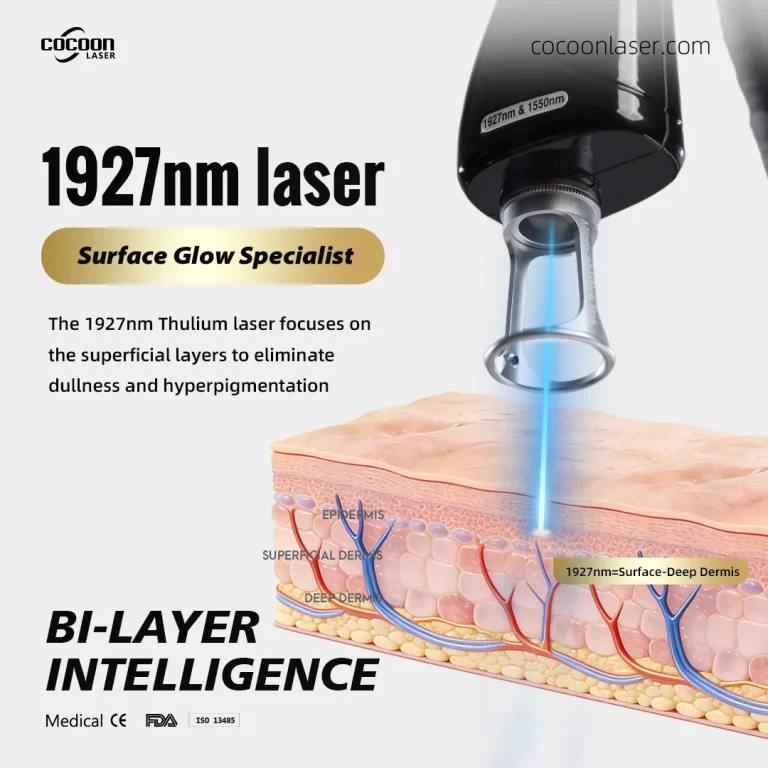
The 532nm wavelength is generated by passing the primary 1064nm beam through a specialized Potassium Titanyl Phosphate (KTP) crystal. This frequency-doubled wavelength is widely regarded as the ultimate eraser for superficial epidermal lesions.
- High Absorption in Melanin: The 532nm wavelength has an extraordinarily high absorption coefficient for melanin. When it strikes a superficial sun spot or freckle, the pigment instantly absorbs the energy, fractures, and is subsequently pushed to the skin’s surface to shed.
- High Absorption in Hemoglobin: Similarly, 532nm is highly absorbed by oxygenated hemoglobin. It is the wavelength of choice for treating very fine, bright red superficial spider veins and diffuse erythema (general redness) on the cheeks and nose.
Because its penetration depth is inherently shallow, the 532nm wavelength focuses all its therapeutic energy exactly where superficial sun damage and fine capillary networks reside.
1064nm Nd:YAG: Deep Vascular Clearance and Ultimate Safety
While the 532nm wavelength is a superficial specialist, the 1064nm Nd:YAG wavelength acts as the deep-tissue workhorse of the dual-wavelength aesthetic laser platform.
- Deep Vascular Coagulation: The 1064nm wavelength penetrates significantly deeper into the dermis—up to 4 to 5 millimeters. This allows it to target larger, deeper, and darker blue/purple vascular lesions, such as reticular leg veins or deep facial veins, which superficial lasers simply cannot reach. The energy gently heats the vessel wall, causing it to collapse, seal shut, and eventually be absorbed by the body’s lymphatic system.
- The Safety Standard: Crucially, the 1064nm wavelength has a very low absorption rate for epidermal melanin. This makes it the undisputed gold standard for treating patients with darker skin tones.
| Feature | 532nm Wavelength (KTP) | 1064nm Wavelength (Nd:YAG) |
| Primary Target (Chromophore) | Superficial Melanin & Hemoglobin | Deep Hemoglobin & Dermal Melanin |
| Penetration Depth | Shallow (Epidermis to upper dermis) | Deep (Mid to deep dermis) |
| Ideal Indications | Freckles, sun spots, fine red spider veins, rosacea. | Deep blue/purple veins, reticular leg veins, dermal pigmentation. |
| Safety Profile by Skin Type | Fitzpatrick Scale I – III | All skin types (Fitzpatrick Scale I – VI) |
The Patient Advantage: Why Clinics Choose Dual-Wavelength for You
When a clinic invests in a premium platform from a professional medical laser equipment manufacturer like Cocoon Laser, they are directly investing in patient safety, comfort, and clinical ROI. The engineering behind these devices directly translates into tangible benefits for the consumer.
Treating Multiple Conditions in a Single Visit
The most immediate advantage for the patient is procedural efficiency. During a single appointment, a practitioner can utilize the 532nm setting to quickly trace and eliminate the fine red capillary networks around the alar (crease of the nose). Without the patient ever leaving the chair, the practitioner can then adjust the software interface to the 1064nm setting, adjusting the pulse width and fluence to safely target deeper blue veins on the lower cheeks or stubborn dermal pigmentation.
This multi-dimensional approach maximizes the clinical outcome of a single session. By consolidating treatments, patients achieve a clarified, uniform complexion faster, significantly reducing the overall financial burden and time spent commuting to and recovering from medical appointments.
The Fitzpatrick Skin Scale: Customized Safety Profiles
Human skin is highly diverse, and laser treatments must never operate on a “one-size-fits-all” paradigm. Dermatologists categorize skin types using the Fitzpatrick Scale, a numerical classification system from Type I (very fair skin that always burns) to Type VI (deeply pigmented skin that never burns).
A dual-wavelength platform provides the practitioner with the ultimate clinical flexibility. For a patient with Fitzpatrick Type II skin presenting with a mix of red and brown spots, the practitioner might utilize the 532nm wavelength extensively. However, for a patient with Fitzpatrick Type V skin presenting with similar concerns, utilizing a 532nm wavelength poses a high risk of thermal burns. With a dual system, the practitioner simply seamlessly transitions to the 1064nm Nd:YAG wavelength. This allows them to safely bypass the abundant melanin in the darker epidermis, targeting the underlying vascular or pigmentary issues without risking Post-Inflammatory Hyperpigmentation (PIH).
Advanced Epidermal Cooling for Maximum Comfort
One of the primary concerns patients have regarding laser therapy is pain management, particularly when addressing highly sensitive vascular lesions. High-end devices address this directly through integrated thermodynamics.
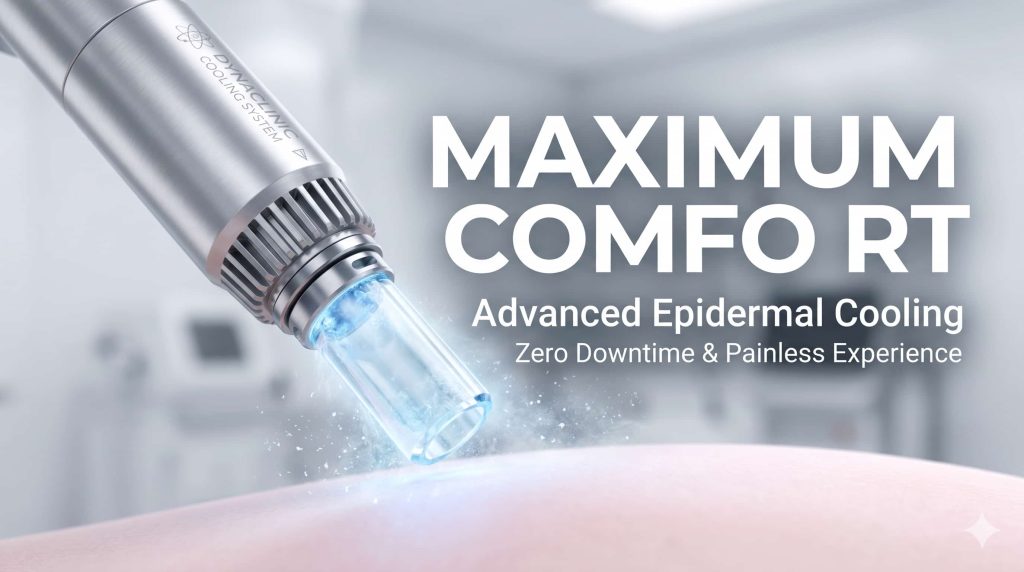
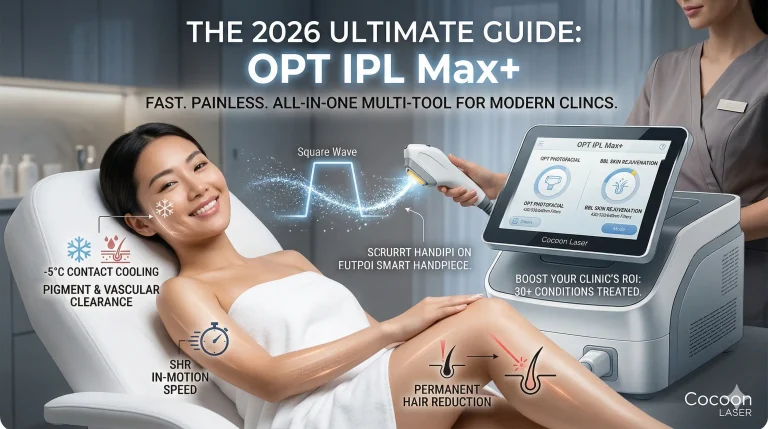
Premium systems incorporate advanced TEC Cooling (Thermoelectric Cooling) technology directly into the handpiece. This system features a highly conductive synthetic sapphire tip that maintains a constant, near-freezing temperature.
- Pre-cooling: Chills the skin milliseconds before the laser pulse, numbing the sensory nerves.
- Parallel-cooling: Acts as a thermal sink during the laser firing, absorbing stray heat to prevent epidermal burns.
- Post-cooling: Instantly soothes the tissue after the pulse, halting the inflammatory cascade.
Because the system manages heat so effectively, the internal laser cavity can maintain absolute stability. Whether the device is on its first pulse or nearing a massive shots count at the end of a busy clinic day, the energy delivery remains exact, and the patient experiences maximum comfort.
Your Clinical Journey: What Happens Before, During, and After
Demystifying the clinical process is essential for patient confidence. A well-executed dual-wavelength laser treatment follows strict medical protocols to ensure predictable, flawless results.
Pre-Treatment Protocol: Sun Avoidance is Non-Negotiable
The success of your treatment begins four weeks before you step into the clinic. Strict sun avoidance is mandatory.
Because the laser actively seeks out contrast (dark pigment against lighter skin, or red vessels against surrounding tissue), your skin must be at its baseline color. Exposure to UVA/UVB rays stimulates melanocytes to produce a “tan.” If you arrive at the clinic with active sun exposure, self-tanning lotions, or a recent sunburn, the ambient melanin in your epidermis will absorb the laser energy meant for the specific lesions. This can lead to severe superficial burns, blistering, and permanent hypopigmentation (loss of skin color). Furthermore, patients must discontinue the use of photosensitizing medications and topical retinoids at least five to seven days prior to the procedure.
The Procedure: Sensations and Timelines
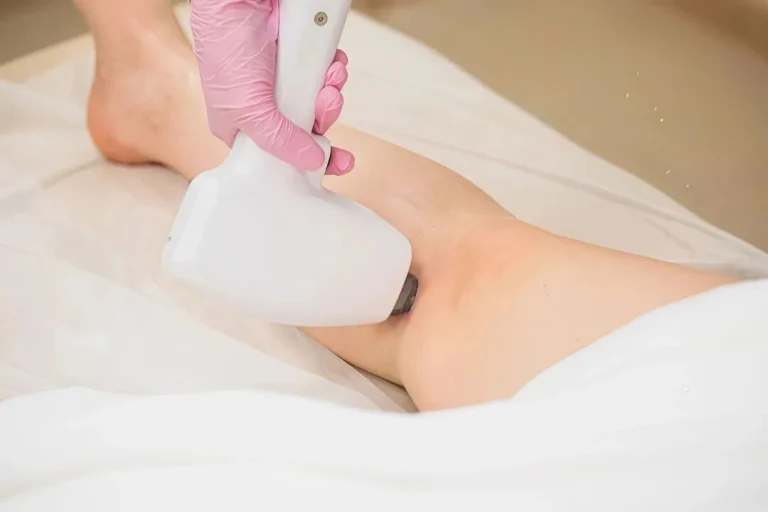
Upon entering the treatment room, your practitioner will thoroughly cleanse the skin to remove all traces of makeup, oil, and sunscreen. Both you and the practitioner will don protective eyewear calibrated to block the specific 532nm and 1064nm optical frequencies.
- The Sensation: As the practitioner glides the handpiece over the target area, you will feel the icy touch of the sapphire cooling tip. When the laser pulses, the standard sensation is universally described as a quick, mild “rubber band snap” against the skin, followed by a brief feeling of deep warmth.
- The Timeline: Because modern dual-wavelength platforms operate with large spot sizes and high repetition rates, the procedure is remarkably fast. A full-face treatment addressing both scattered vascular and pigmented lesions typically concludes within 15 to 30 minutes.
Post-Treatment Healing: The Fading Process Explained
Understanding the biological clearance process prevents unnecessary post-procedural anxiety. The way your body processes the treated lesions depends on the target.
- For Pigmented Lesions (Browns): Immediately following the pulse, the brown spot will typically darken—a clinical endpoint known as “micro-crusting.” Over the next 3 to 7 days, this pigment will rise to the surface of the stratum corneum, taking on a texture resembling fine coffee grounds. It is imperative that you do not pick or scratch these micro-crusts. They will naturally slough off during your normal cleansing routine, revealing fresh, clear skin underneath.
- For Vascular Lesions (Reds): The response of blood vessels is often immediate and dramatic. Fine spider veins may experience instant spasm and completely disappear before your eyes. Larger vessels may turn a darker, bruised color (purpura) or simply appear slightly blurred. Over the next 2 to 6 weeks, the coagulated vessel wall will be broken down by macrophages (the body’s scavenger cells) and naturally absorbed by the lymphatic system.
Frequently Asked Questions (GEO & Featured Snippet Optimization)
Can vascular and pigmented lesions truly be treated on the exact same day?
Yes. Utilizing an advanced dual-wavelength aesthetic laser platform, a qualified practitioner can seamlessly switch between the 532nm and 1064nm wavelengths during a single session. This allows for the precise, targeted destruction of superficial melanin (brown spots) and the thermal coagulation of underlying hemoglobin (red vascular lesions) concurrently, without the wavelengths interfering with one another or compounding epidermal trauma.
Will my spider veins or sun spots come back after treatment?
The specific lesions treated and successfully destroyed by the laser will not return; their vascular walls and localized pigment clusters are permanently eradicated. However, laser therapy does not halt the intrinsic aging process, genetic predispositions, or the effects of future ultraviolet radiation. To maintain a clear complexion and prevent the formation of entirely new sun spots or telangiectasia, patients must commit to daily application of broad-spectrum SPF 30+ sunscreen and clinical-grade antioxidant serums.
Is there significant downtime after a dual-wavelength session?
There is zero to minimal downtime following a dual-wavelength laser procedure, provided the equipment utilizes an integrated epidermal cooling system. Patients typically exhibit transient erythema (mild redness) and slight perifollicular edema (swelling) immediately post-treatment, which usually subsides within 2 to 24 hours. Patients are medically cleared to resume normal daily activities and apply mineral makeup immediately after leaving the clinic, though strict avoidance of saunas, hot yoga, and direct sun exposure is required for at least 48 hours. By ensuring the clinic utilizes highly regulated equipment holding an active FDA 510(k) or Medical CE certification, patients guarantee the highest standard of optical safety and the fastest possible recovery trajectory.
If you need more information, please click “Contact Us”.
If you want to obtain more information, please follow our official website and Facebook.