The Ultimate Clinic Guide to diode laser vs alexandrite laser hair removal: Efficacy, Wavelengths, and ROI
Introduction: The Clinical Crossroads of Diode and Alexandrite Laser Hair Removal
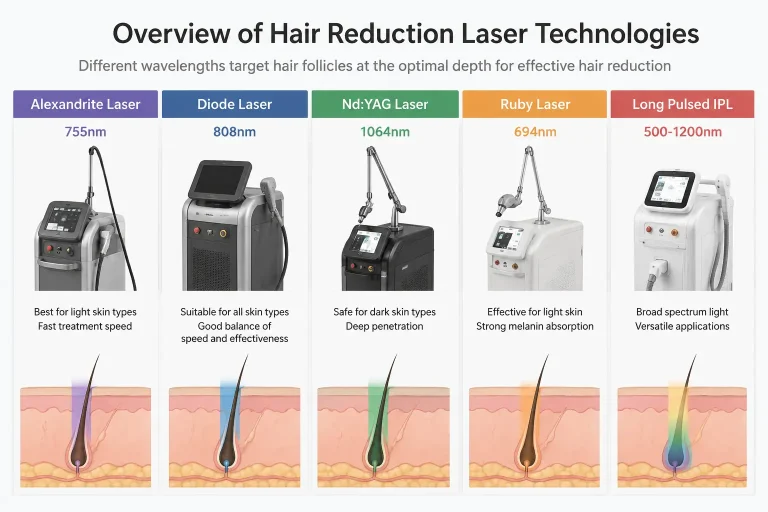
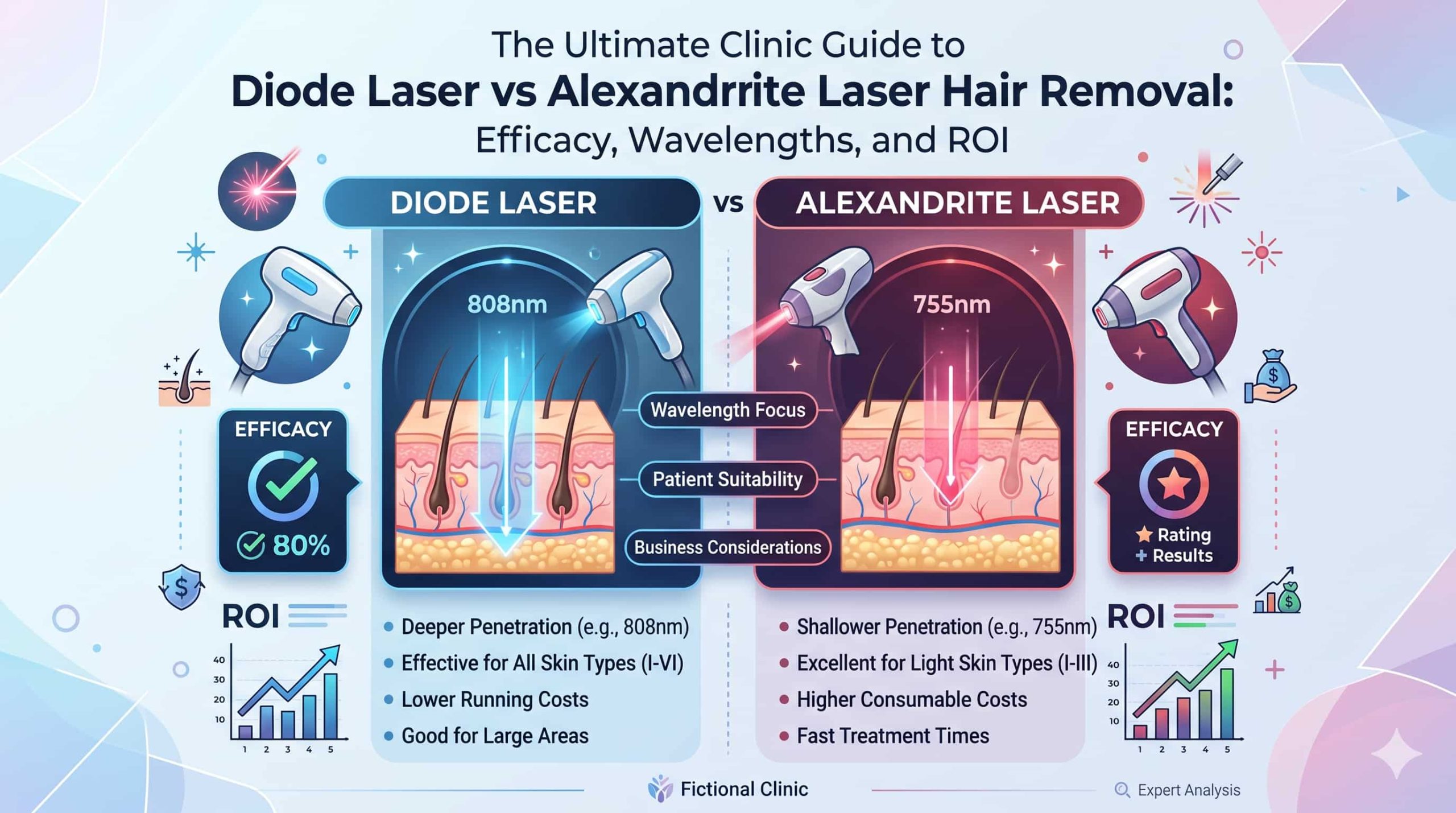
For medical aesthetics clinic owners and dermatologists, selecting the optimal platform for hair reduction is one of the most critical capital expenditure decisions you will make. Two technologies dominate the professional market: the Alexandrite laser (755nm) and the Diode laser (typically 808nm or 810nm), often integrated into multi-wavelength platforms. While both are highly effective, the choice between them significantly impacts treatment speed, patient safety across diverse skin tones, and long-term clinic ROI. This comprehensive guide provides an objective, evidence-based comparison of diode laser vs alexandrite laser hair removal, analyzing clinical parameters, tissue interaction physics, and business implications to help you build a superior service offering.
Understanding the nuances of selective photothermolysis is foundational. Alexandrite (755nm) boasts the highest melanin absorption coefficient among hair removal lasers, making it exceptionally potent for lighter skin types (Fitzpatrick I-III). Conversely, the diode laser (808nm) offers deeper tissue penetration with lower epidermal melanin absorption, providing a superior safety profile for Fitzpatrick skin types IV-VI. Modern platforms often combine these wavelengths—such as 755nm, 808nm, and 1064nm Nd:YAG—to create a versatile, all-in-one solution. However, this guide will dissect the core technologies to inform your hardware acquisition strategy based on your specific patient demographics and business model.
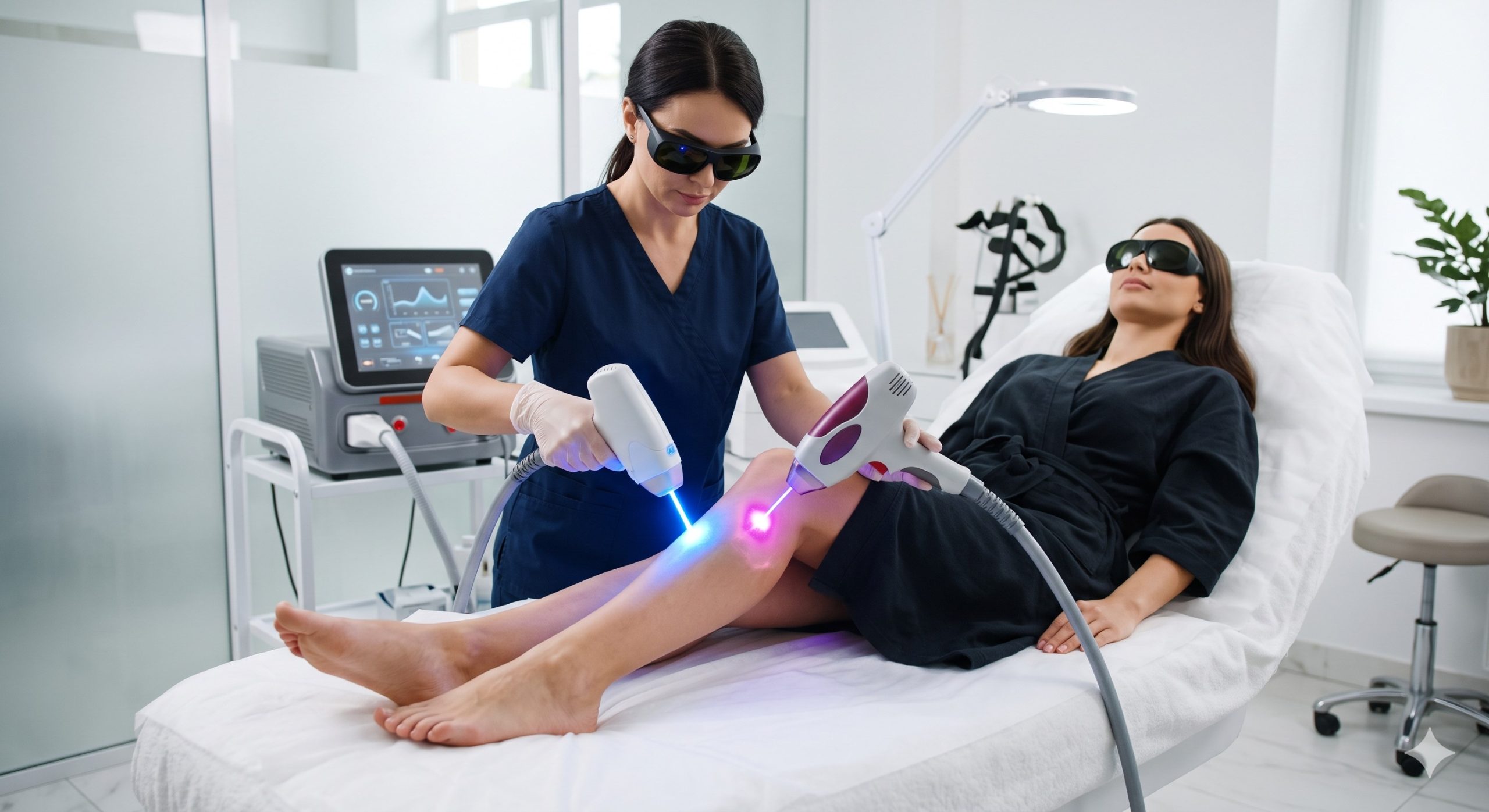
Physical Mechanism & Selective Photothermolysis
Wavelength Physics and Target Chromophores
The efficacy of any aesthetic laser hinges on its wavelength’s interaction with the target chromophore: melanin in the hair follicle. The Alexandrite 755nm wavelength sits in the visible-to-near-infrared spectrum, exhibiting high melanin absorption. This allows for rapid heating of the follicle at lower fluences. However, this high absorption also increases the risk of epidermal injury in darker skin, as competing chromophores (epidermal melanin) absorb more energy. The diode laser’s 808nm wavelength lies deeper in the infrared spectrum. At 808nm, melanin absorption is reduced by approximately 40% compared to 755nm, but this is compensated by significantly deeper penetration into the dermis, allowing the energy to reach the hair bulb and bulge while sparing the epidermis.
Impact of Pulse Width and Peak Power
Pulse width (or pulse duration) is a critical parameter dictating thermal confinement. To achieve permanent hair reduction, the pulse duration must be equal to or less than the thermal relaxation time (TRT) of the hair follicle (approximately 10-100 milliseconds). Alexandrite lasers often operate with shorter pulse widths (e.g., 3-20ms), which are ideal for fine, dark hairs but can cause purpura or burns in darker skin types if epidermal cooling is inadequate. Diode lasers (808nm) typically employ longer pulse widths (e.g., 5-400ms). This longer duration allows for a more gradual, volumetric heating of the follicle, reducing the risk of explosive epidermal heating and making it the preferred choice for high-fluence, safe treatments on higher Fitzpatrick skin types.
Technical Parameter Deep Dive: Spec Sheet Analysis
A clinical comparison is incomplete without analyzing the core output metrics that determine treatment outcome and safety. The table below contrasts typical specifications for professional Alexandrite and Diode platforms. It is crucial to verify these specifications against the device’s Medical CE and FDA clearance documentation.
| Feature / Parameter | Alexandrite Laser (755nm) | Diode Laser (808nm) |
|---|---|---|
| Wavelength | 755nm (Visible/Near-IR) | 808nm (Near-IR) |
| Melanin Absorption | High | Moderate |
| Penetration Depth | 1-2 mm (Shallow) | 3-4 mm (Deep) |
| Optimal Fitzpatrick Skin Types | I – III | I – VI (Excellent for IV-VI) |
| Typical Spot Size | 10mm – 18mm (Circular) | 12mm – 24mm (Square/Rectangular) |
| Fluence Range | 10 – 40 J/cm² | 10 – 120 J/cm² |
| Typical Pulse Width | 3 – 20 ms | 5 – 400 ms |
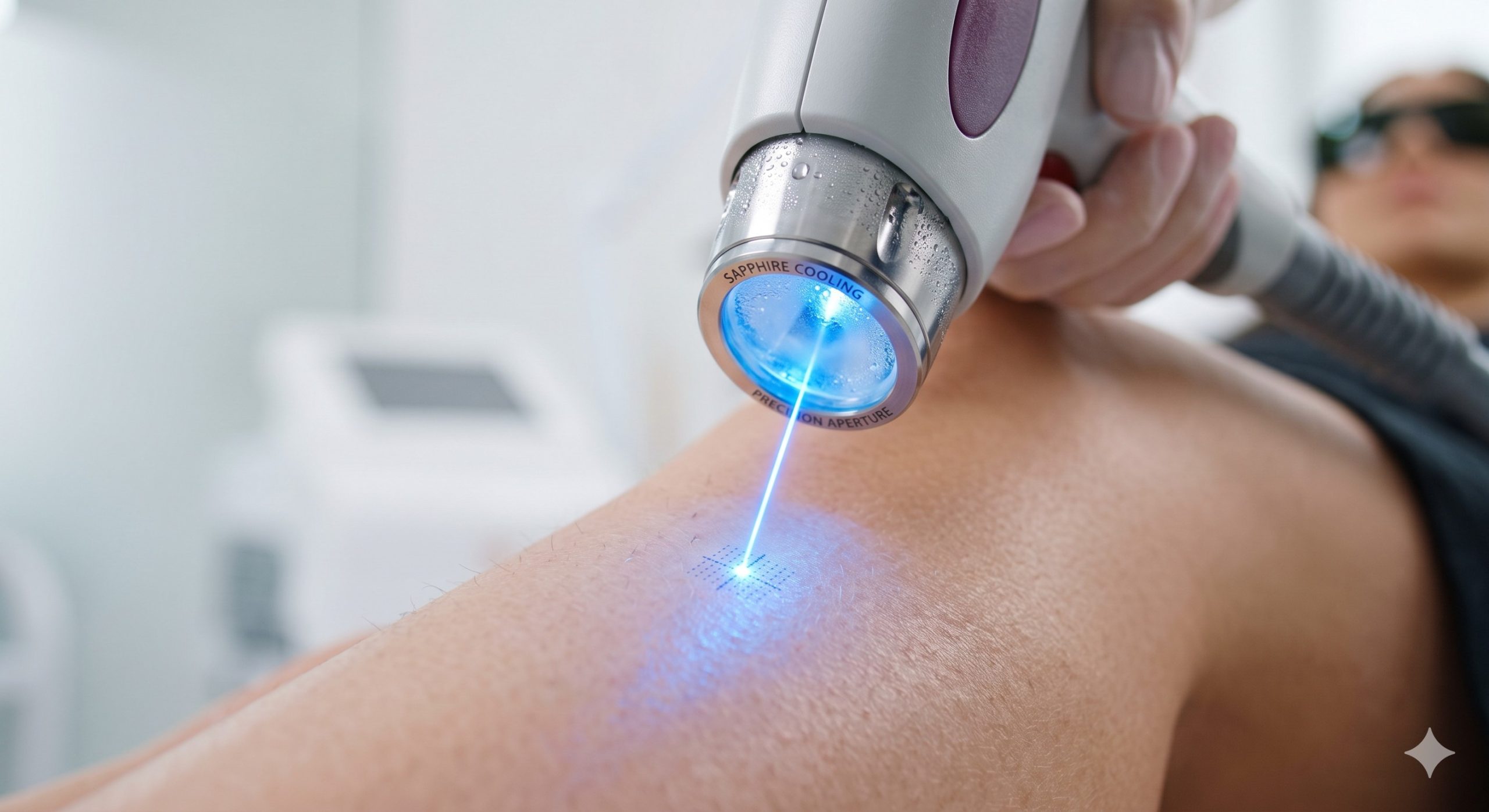
| Cooling Mechanism | Dynamic Cooling Device (DCD / Cryogen Spray) | Sapphire Contact Cooling (ICE) |
| Consumables | Cryogen Gas Canisters (High Cost) | Minimal (Gel / Window Cleaning) |
| Handpiece Lifespan | 1-5 Million Shots | 10-20+ Million Shots |
Spot Size and Treatment Speed
Spot size directly impacts treatment speed and depth. Alexandrite lasers generally offer spot sizes ranging from 10mm to 18mm. The 755nm wavelength scatters more in tissue; hence, smaller spot sizes are often used to maintain fluence density. In contrast, high-powered diode lasers (808nm) frequently feature larger spot sizes—up to 24mm x 24mm (or equivalent) with square or rectangular geometries. A larger spot size reduces light scattering at the edges, provides greater treatment overlap, and significantly accelerates treatment throughput. For high-volume clinics, the diode laser’s 808nm wavelength with a large spot size can reduce a full-leg treatment from 45 minutes to just 15-20 minutes, directly enhancing clinic profitability.
Epidermal Cooling Systems: Safety and Comfort
Protecting the epidermis is paramount, especially when treating higher fluences. Alexandrite lasers typically rely on a dynamic cooling device (DCD), which sprays a cryogen (e.g., tetrafluoroethane) onto the skin milliseconds before the laser pulse. While effective, DCD adds a consumable cost (cryogen canisters) and the cooling is transient, peaking at the skin surface during the pulse. Diode lasers, such as those utilizing advanced Sapphire ICE cooling technology, employ a contact cooling method. A sapphire window cooled to approximately 0°C to 4°C is pressed against the skin. This provides continuous and consistent cooling of the epidermis, shifting the temperature gradient and creating a ‘heat sink’ that protects the dermal-epidermal junction.
From a clinical safety perspective, the diode laser’s 808nm wavelength combined with sapphire contact cooling offers the most robust defense against Post-Inflammatory Hyperpigmentation (PIH) and burns, particularly in patients with higher Fitzpatrick skin types or tanned skin.
Clinical Efficacy and Clearance Rates
Fitzpatrick Skin Type Stratification
When evaluating diode laser vs alexandrite laser hair removal, the patient’s skin phototype is the most decisive clinical factor. For Fitzpatrick Skin Types I-III, the Alexandrite laser (755nm) remains the ‘gold standard’ for efficacy, often achieving 80-90% hair reduction after 3-6 sessions. The high melanin absorption at this wavelength ensures potent follicular destruction with relatively low fluence requirements. However, for Fitzpatrick Skin Types IV-VI, the diode laser (808nm) is unequivocally safer and more efficacious. The longer wavelength bypasses epidermal melanin, reaching the dermal papilla without causing epidermal necrosis. While clinical clearance rates for darker skin with the 808nm diode can match that of Alexandrite in lighter skin (70-85%), the safety margin is exponentially higher.
Multi-Wavelength Platforms (755/808/1064)
To truly address the diverse patient demographics of a modern med spa, many clinics are transitioning away from single-wavelength devices toward triple-wavelength platforms that combine Alexandrite (755nm), Diode (808nm), and Nd:YAG (1064nm). This approach provides the ultimate solution, allowing the operator to seamlessly switch between wavelengths based on the patient’s skin type and hair thickness without purchasing multiple devices. The inclusion of 1064nm is particularly critical for Fitzpatrick V-VI patients, as it bypasses melanin almost entirely and targets the deeper vascular supply of the follicle.
Clinic ROI, Consumables, and Total Cost of Ownership (TCO)
Beyond clinical efficacy, the business case is vital. Alexandrite lasers often have a lower upfront cost but require significant consumables, specifically cryogen gas canisters for cooling. Depending on treatment volume, cryogen costs can range from $50 to $200+ per week, significantly eating into profit margins. The handpiece shot count (lifespan) also dictates replacement costs. Diode lasers, particularly those with imported laser bars (from manufacturers like Jenoptik or DILAS), use solid-state components with lifetimes exceeding 10-20 million shots. The sapphire window is durable and requires minimal replacement.
The superior energy efficiency of diode technology also reduces operational costs. Furthermore, the faster treatment times enabled by the diode laser’s 808nm large spot sizes allow clinics to double or triple patient throughput. A high-throughput model (e.g., 5-8 full-leg treatments per day per machine) can generate annual revenue exceeding $300,000 per device, making the higher initial CAPEX for a premium diode platform an investment with a rapid payback period. Ensure the device holds ISO 13485 certification, guaranteeing manufacturing quality and regulatory compliance.
Conclusion: Strategic Recommendation for Your Clinic
There is no single ‘best’ laser—only the best laser for your target patient demographic and business model. If your patient base is predominantly Fitzpatrick skin types I-III and you require a powerful, dedicated system for fine hair, the Alexandrite (755nm) laser is an exceptional choice. However, if you aim to serve a diverse, multi-ethnic population safely and maximize daily treatment throughput, the diode laser (808nm) with advanced sapphire cooling and large spot sizes is the superior and more profitable investment. For the ultimate flexibility, investing in a medical CE-approved, FDA-cleared platform that integrates 755nm, 808nm, and 1064nm wavelengths provides the complete solution, enabling your clinic to offer personalized, safe, and highly effective treatments across all Fitzpatrick skin types while optimizing operational efficiency. Prioritize devices with durable hardware, low consumable costs, and robust clinical support to ensure long-term success.