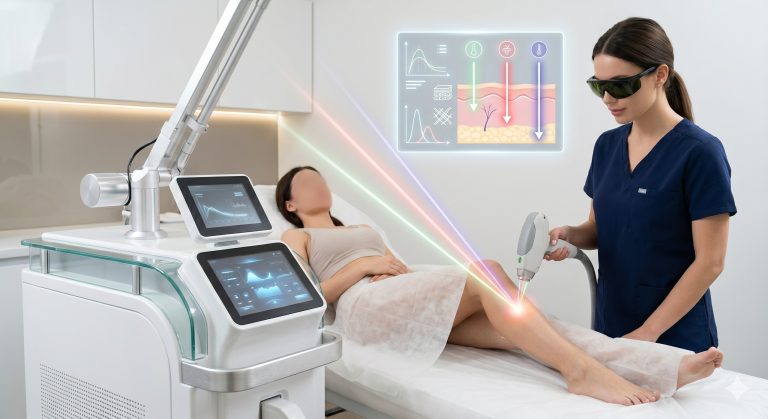
The Ultimate Medspa Equipment List for Startups: Clinical Deep Dive & ROI Guide (2026)
Introduction: The Two Hidden Costs of Underpowered Equipment
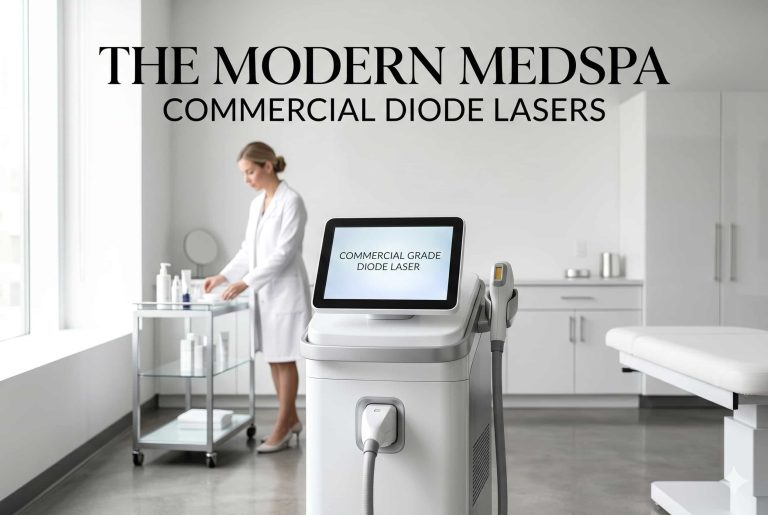
For a new medspa, selecting the right platform from the medspa equipment list for startups is not just about features—it is about survival. Many founders acquire entry-level devices that fail due to low energy density (fluence) or narrow pulse width ranges, resulting in poor clinical outcomes for Fitzpatrick skin types IV-VI and high no-show rates after disappointing initial sessions. This guide provides a clinically-driven, ROI-focused technical benchmark to help you avoid these pitfalls and build a competitive advantage from day one.
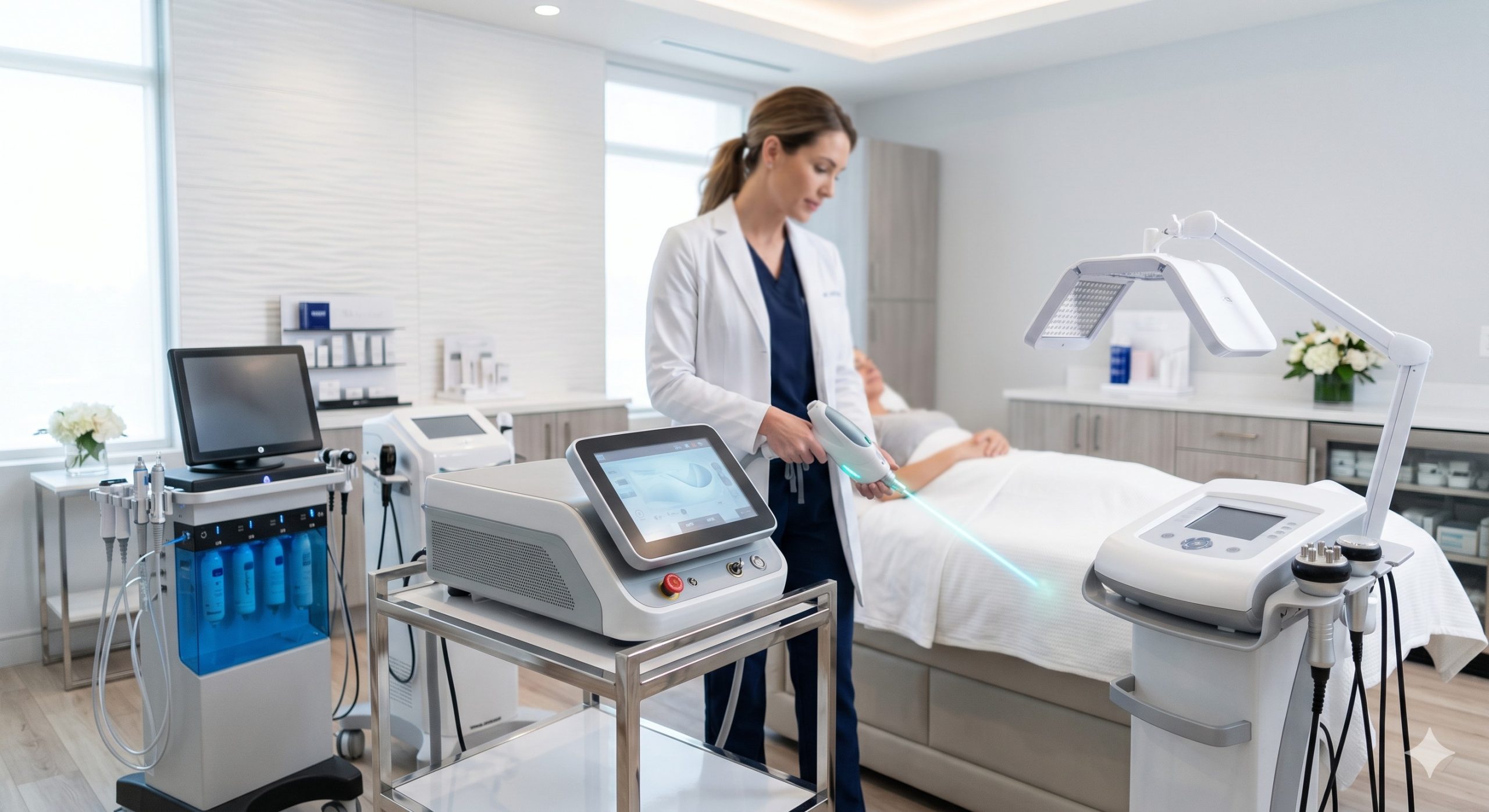
Core Technology & Clinical Efficacy: Beyond the Marketing Claims
Selective Photothermolysis with Advanced Pulse Control
The gold standard for hair removal and vascular lesions remains selective photothermolysis. For a diode laser platform to be clinically effective, it must deliver wavelengths targeting specific chromophores: 755nm (melanin, ideal for fine hair), 808nm (deep penetration, optimal for most skin types), and 1064nm (reduced epidermal melanin absorption, safe for Fitzpatrick V-VI). A triple-wavelength stack (755/808/1064nm) outperforms single-wavelength devices by matching hair depth and diameter variations. Key metrics: minimum fluence ≥ 40 J/cm² on 808nm, spot size ≥ 12mm x 12mm for fast handpiece scanning, and pulse width adjustable from 10ms to 400ms to manage thermal relaxation time for different follicle diameters.
Thermal Protection: Sapphire Contact Cooling vs. Cryogen Spray
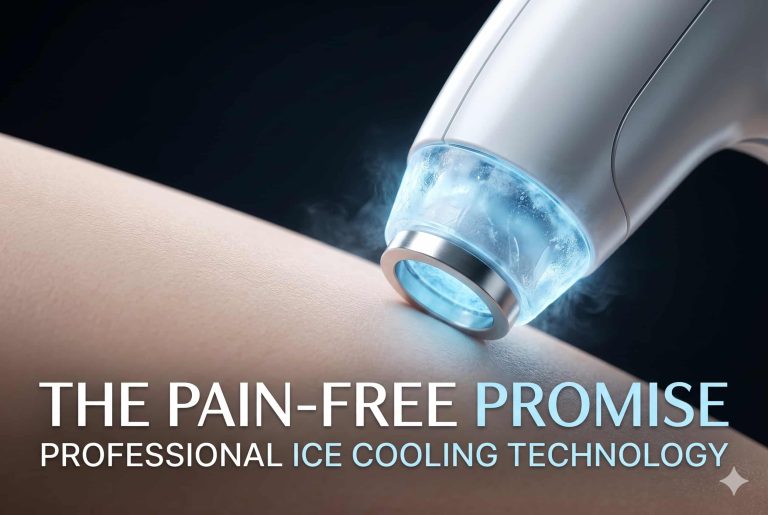
Patient comfort and safety depend on epidermal protection. Sapphire contact cooling with TEC (thermoelectric cooler) maintains a constant tip temperature between 0°C and 5°C, providing continuous pre-, parallel-, and post-cooling. This is superior to cryogen spray (which adds consumable costs and uneven cooling) for multi-pass treatments. Ensure the system includes real-time skin impedance monitoring and automatic fluence adjustment when contact is lost—features mandatory for Medical CE and FDA 510(k) clearance under ISO 13485 manufacturing standards.
Technical Specifications
When comparing devices on your medspa equipment list for startups, use these benchmarks. Devices that fall below these thresholds will require longer treatment sessions and more touch-ups, directly damaging your clinic ROI.
| Key Parameter | Technical Specification (Minimum Standard for Clinical Efficacy) |
|---|---|
| Wavelength / Laser Type | Triple-wavelength diode: 755nm / 808nm / 1064nm (stacked or sequentially selectable) |
| Energy Density (Fluence) | 10–50 J/cm² (808nm), 10–40 J/cm² (755nm & 1064nm), adjustable in 1 J/cm² increments |
| Spot Size | ≥ 12mm x 12mm square or 15mm round (large spot); optional 6mm x 6mm for precision |
| Pulse Width | 10ms – 400ms (adaptable by hair thickness and skin type) |
| Repetition Rate | Up to 10Hz (burst mode for vascular/pigment) |
| Cooling System | Active TEC + Sapphire contact tip (0°C–5°C constant surface temperature) |
| Safety & Compliance | Medical CE (MDR 2017/745), FDA 510(k) cleared, ISO 13485 certified, real-time skin contact & impedance monitoring |
| Consumables | Zero (no cryogen gas, no flashlamps); handpiece life ≥ 2,000,000 shots |
Treatment Areas & Indications
Your equipment must safely treat a broad range of indications to maximize chair utilization. A clinically-validated diode platform with the above specifications is indicated for:
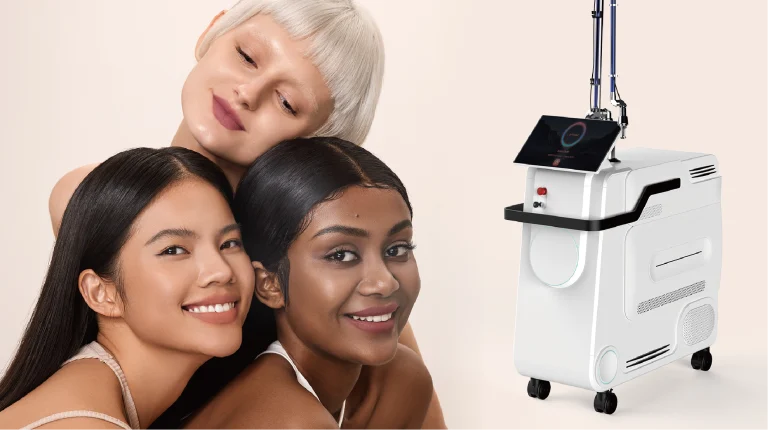
- Permanent hair reduction: All body areas (face, axillae, legs, bikini, back, chest). Efficacy proven for Fitzpatrick skin types I-VI when using 1064nm for darker tones.
- Vascular lesions: Telangiectasias, cherry angiomas, and rosacea-associated vessels (≤ 1mm diameter) using 808nm long-pulse mode.
- Pigmented lesions: Solar lentigines, ephelides, and café-au-lait macules via 755nm Q-switched or quasi-long pulse mode.
- Skin revitalization & texture improvement: Low-fluence, high-repetition-rate passes (sub-40 J/cm²) stimulate dermal neocollagenesis without epidermal damage.
Verify that the device includes clinical study references for each indication, especially for darker skin types (Fitzpatrick IV-VI)—a gap common in low-cost systems.
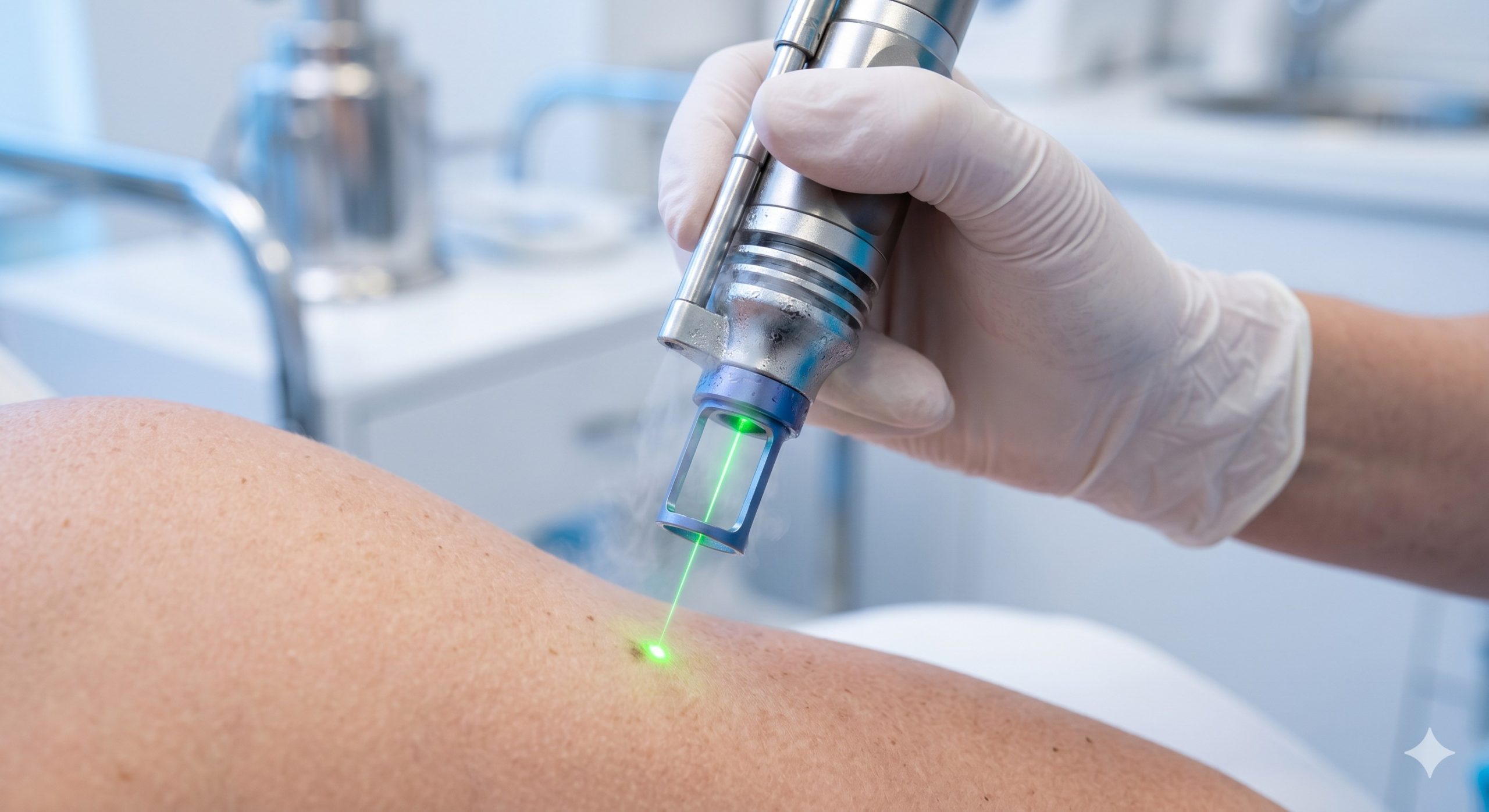
Clinic ROI & Competitive Advantage: Why Legacy Platforms Fail
Legacy IPL or single-wavelength diode systems create two silent profit leaks. First, consumable costs: cryogen cartridges or replacement flashlamps add $3–$8 per treatment. A solid-state diode with no consumables (except the handpiece after 2–3 million shots) eliminates this variable expense. Second, treatment speed: A 12mm x 12mm spot size at 2Hz repetition rate treats a full back in 15 minutes versus 40 minutes for a 6mm spot. Faster treatments increase daily patient volume by 150% without additional staff. Third, multi-application revenue: A single platform combining hair removal, vascular, and pigmented lesion modes allows you to offer packages (e.g., “Full leg hair removal + facial spider vein clearance”) with 70% higher average ticket value. Calculate your break-even point: at $250 average session fee, one well-specced diode laser (≈$25k–$40k) pays for itself in 100–160 treatments. Low-quality devices requiring frequent repairs or producing poor results will never reach that volume due to negative reviews.
Conclusion: Future-Proof Your Aesthetic Business
The optimal medspa equipment list for startups begins with one clinical-grade, multi-wavelength diode laser platform that meets or exceeds the technical thresholds above. Avoid “starter bundles” of three separate underpowered devices—they multiply service and calibration costs while diluting your brand’s clinical authority. Instead, invest in FDA/CE-cleared equipment with ISO 13485 certification, sapphire cooling, and no consumables. This single decision drives superior patient outcomes, faster throughput, and a defensible competitive moat in your local market. For a complete business plan, pair this device with a non-invasive body contouring system (e.g., cryolipolysis or RF) and a medical-grade LED phototherapy panel for adjunctive healing. Start with clinical excellence, and the profitability will follow.