A Dermatologist’s Guide to How many sessions for diode laser hair removal: Spot Sizes, Fluence, and Tissue Interaction
Introduction: The Number One Patient Question in Medical Aesthetics
For practicing dermatologists and clinic owners, fielding the question how many sessions for diode laser hair removal is a daily occurrence. However, quoting a generic number (e.g., “6-8 sessions”) without clinical context is a disservice to both the patient and the clinic’s reputation for precision medicine. The accurate answer depends on a dynamic interplay of wavelength (808nm vs. 755nm/1064nm), fluence (J/cm²), pulse width (ms), spot size (mm²), and the patient’s Fitzpatrick Skin Type. This guide provides the dermatologist-level protocol to predict and achieve >85% hair reduction efficiently, maximizing both patient satisfaction and clinic throughput.
Why Diode Technology Dictates Treatment Counts
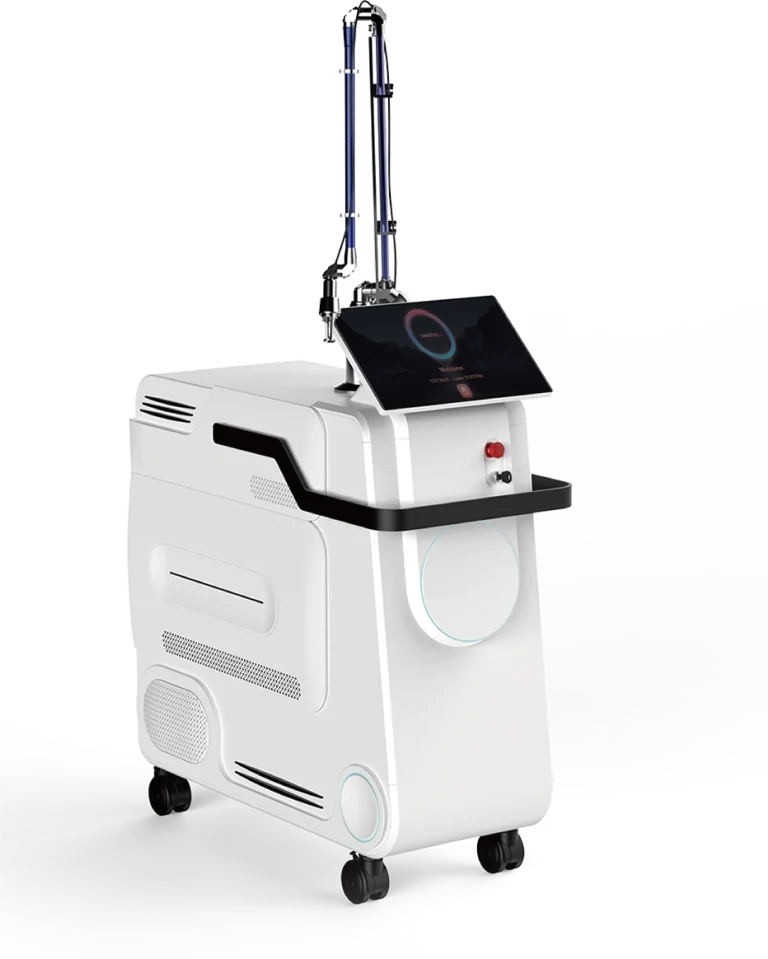
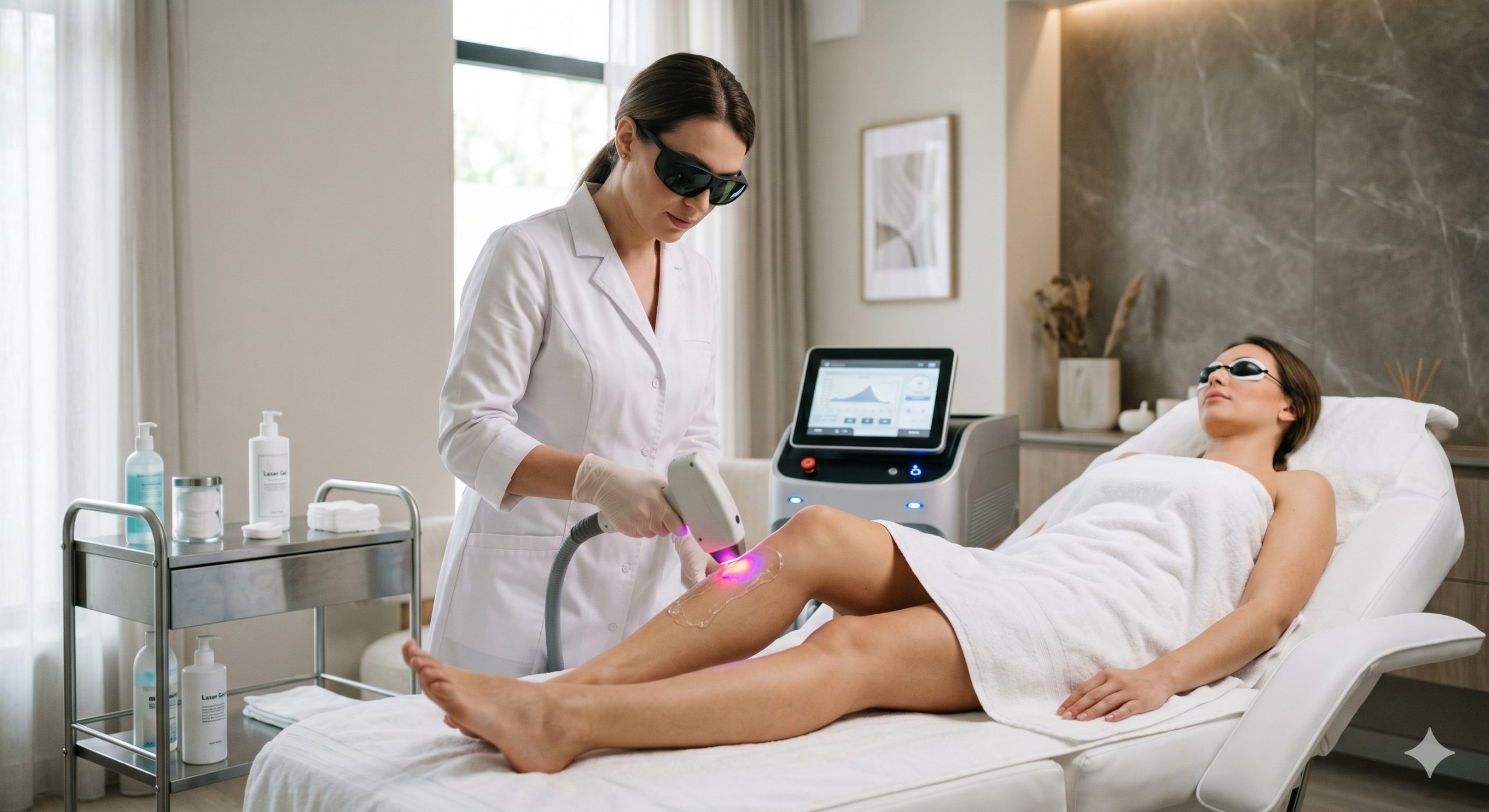
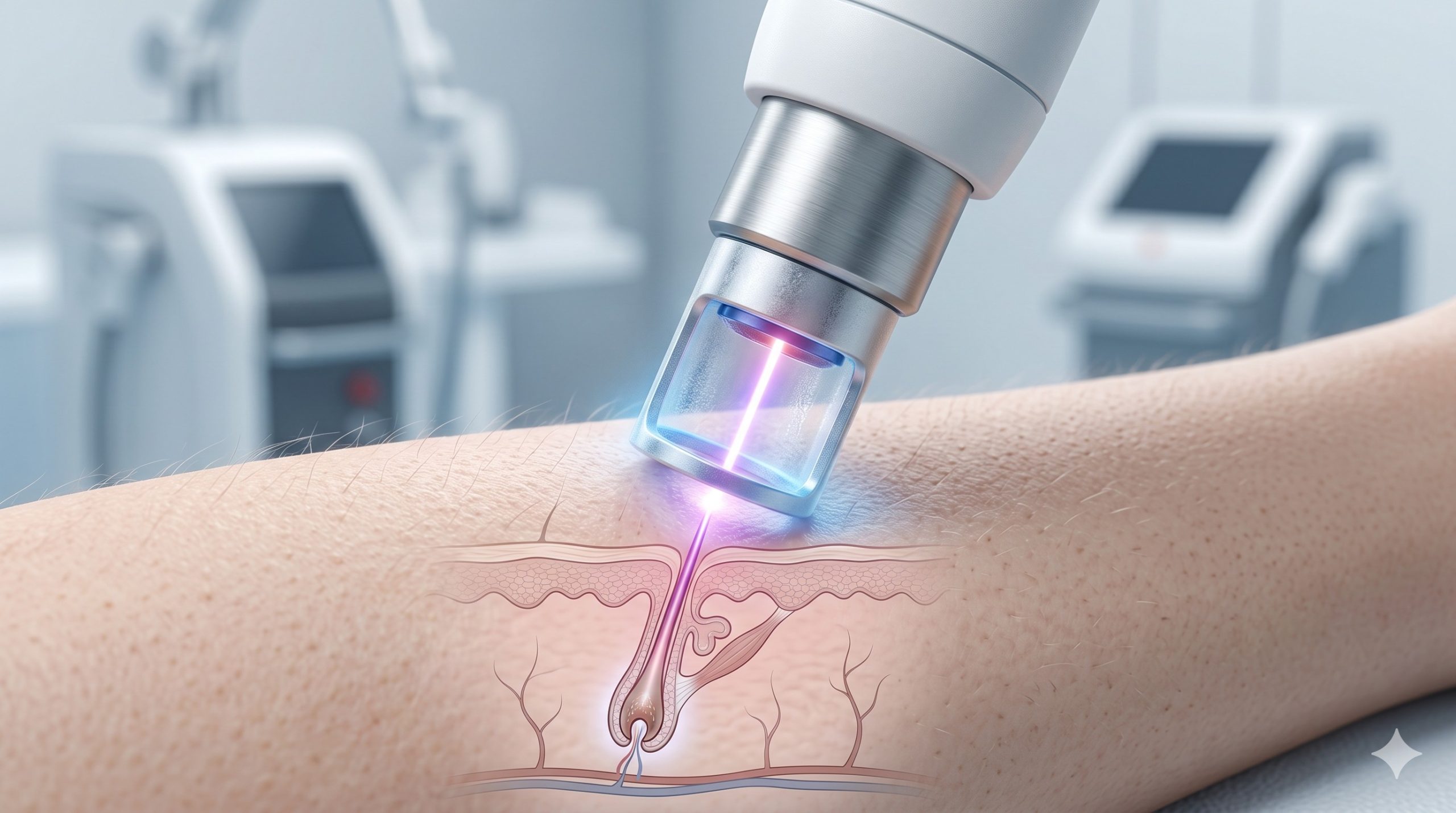
Unlike Intense Pulsed Light (IPL) or Alexandrite-only systems, modern diode laser hair removal systems (typically 808nm +/- 755nm/1064nm) offer a superior balance of melanin absorption and deep dermal penetration. The gold standard for medical use is a medical CE and FDA-cleared device utilizing ISO 13485 certified manufacturing. The technology leverages selective photothermolysis: targeting melanin in the hair follicle bulb while sparing the epidermis. To achieve clinical endpoint (perifollicular edema and erythema) in fewer sessions, the device must maintain a fluence of 10-40 J/cm² with a spot size of 12x12mm or larger – larger spots increase penetration depth by reducing scatter.
Critical Parameters That Reduce Total Sessions
- Wavelength Synergy: Tri-wavelength (755nm / 808nm / 1064nm) allows simultaneous targeting of fine, coarse, and deep follicles. 755nm for light fine hair; 1064nm for deep follicular units in darker skin.
- Pulse Width: 10-400ms. Shorter pulses (10-30ms) for small dark hairs; longer pulses (100-400ms) for larger diameter terminal hairs to ensure thermal relaxation time is matched.
- Repetition Rate: >10Hz. Faster rates reduce treatment time, allowing higher patient volume without compromising contact cooling efficiency.
| Key Parameter | Technical Specification (Medical Grade) |
|---|---|
| Wavelength / Laser Type | Triple Wavelength: 755nm + 808nm + 1064nm Diode Laser |
| Cooling System | Sapphire Contact Cooling (-5°C to +5°C) with TEC module |
| Spot Size | 15mm x 15mm (Standard), 12mm x 30mm (Sliding mode) |
| Energy Density / Fluence | 10 – 40 J/cm² (Adjustable per Fitzpatrick) |
| Pulse Width | 10 – 400 ms (Adaptive thermal relaxation time) |
| Repetition Rate | Up to 10 Hz |
| FDA / CE Status | FDA K182322 & Medical CE 0123 |
| ISO Standard | ISO 13485:2021 Certified Manufacturing |
Fitzpatrick Skin Typing: A Quantitative Protocol
To answer how many sessions for diode laser hair removal, segment your population by skin type. For Fitzpatrick I-III, higher fluence (up to 40 J/cm²) with 755nm/808nm yields visible clearance in 4-6 sessions. For Fitzpatrick IV-VI, the 1064nm wavelength is mandatory to avoid epidermal burns. Expect 8-12 sessions due to higher melanin competition, but with modern Sapphire ICE contact cooling (maintaining epidermal temperature at 5-10°C), you can safely deliver therapeutic fluence.
Treatment Intervals: The Biological Clock
The hair cycle is the non-negotiable variable. Diode lasers only affect anagen-phase follicles. Therefore, spacing sessions 4-6 weeks for facial hair and 6-8 weeks for body hair ensures you target new anagen growth. Clinics promising complete removal in 3 sessions are ignoring biology; evidence-based medicine dictates a minimum of 6 sessions for most anatomical sites, with annual touch-ups for hormonal areas.
Clinic Efficiency & ROI Implications of Session Counts
From a business consultancy perspective, accurate forecasting of how many sessions for diode laser hair removal directly drives CapEx and OpEx. A high-power diode laser (e.g., 2000W peak power) with a 15x15mm spot size reduces treatment time for a full leg from 45 minutes to 18 minutes. This increases daily patient capacity by 150%. The lifetime cost of ownership includes handpiece shot lifespan (typically 2-5 million shots for imported laser bars). At $150 average session price, a clinic needs to execute 10,000+ sessions to see strong ROI. Therefore, investing in a device that achieves results in 6 sessions (vs. a legacy device needing 12) doubles your patient throughput and referral rate.
Conclusion: The Clinical Verdict
There is no single number for how many sessions for diode laser hair removal, but the dermatologist’s answer is: 6-10 sessions for 80-90% permanent reduction, adjusted for skin type, hair coarseness, and hormonal influence. The critical decision for clinic owners is to select an FDA / Medical CE diode platform with tri-wavelength capability, sapphire contact cooling, and spot sizes ≥12mm. Standardize your treatment protocols per Fitzpatrick type, and you will transform patient expectations into predictable, profitable outcomes.