Pico Laser for Acne Scars Before and After FAQ: Clinic Investment & Clinical Expectations
Overview
For aesthetic clinics and dermatologists, understanding the clinical reality and investment value of a Pico laser for acne scars is critical. This FAQ addresses pre-sales technical assessments and post-sales operational protocols, focusing on verifiable ‘before and after’ outcomes, patient safety across all skin types, and long-term device profitability.
Frequently Asked Questions
Q1: How many Pico laser sessions are typically required to see significant improvement in acne scars before and after photos?
Most patients require 3 to 6 sessions spaced 4 to 6 weeks apart to achieve 50-80% improvement in atrophic acne scars. The exact number depends on scar depth (boxcar, rolling, or icepick) and the Pico laser’s energy density (typically 0.5-2.0 J/cm²). Clinical ‘before and after’ documentation shows visible textural smoothing after the second session, with maximal collagen remodeling visible 3 months post-final treatment. For deep icepick scars, combining Pico with subcision yields superior results.
Q2: Is the Pico laser for acne scars safe for Fitzpatrick skin types IV, V, and VI (darker skin tones)?
Yes, the Pico laser is safe and effective for all Fitzpatrick skin types (I-VI) when equipped with a 1064nm wavelength and advanced contact cooling. Unlike nanosecond lasers, the picosecond pulse duration (450-750ps) generates predominantly photoacoustic rather than photothermal energy, drastically reducing post-inflammatory hyperpigmentation (PIH) risk. Clinical protocol requires performing a test spot at lower fluence (0.3-0.5 J/cm²) and using a minimum 6-8mm spot size to ensure epidermal protection for darker skin types.
Q3: What is the typical handpiece shot lifespan and consumable replacement schedule for a Pico laser used daily for acne scars?
The premium Pico laser handpiece delivers 10 million to 30 million guaranteed shots before requiring replacement, depending on the manufacturer (imported laser bars from Jenoptik or Lumentum). At a busy clinic performing 10-15 acne scar treatments daily at 2000-3000 shots per session, the handpiece lifespan ranges from 18 to 36 months. Consumables include: distilled water for the circulation system (replace weekly), sapphire contact cooling tips (inspect for cracks every 500 sessions), and energy calibration tools (annual replacement). No flashlamps or expensive gain media are required.
Q4: What specific acne scar types respond best to Pico laser treatment based on clinical before and after evidence?
Rolling and boxcar scars respond best (70-85% improvement), while icepick scars require combination therapy for optimal results. The photoacoustic shockwave from Pico laser breaks down fibrotic septae beneath rolling scars, stimulating neocollagenesis without surface ablation. For boxcar scars with defined edges, a diffractive lens array (DLA) handpiece creates Laser-Induced Optical Breakdown (LIOB) zones, remodeling dermal matrix over 3-6 months. Icepick scars show only 30-40% improvement with Pico alone; clinic protocols pair Pico with TCA CROSS or punch excision for complete clearance.
Q5: What is the real-world ROI and payback period for a clinic investing in a Pico laser for acne scars?
The average clinic achieves full ROI within 6 to 10 months based on 12-15 acne scar treatments per week. Calculation: Pico laser investment ($35,000-$65,000 for a premium medical CE-certified device). Average procedure fee per session = $400-$600 (U.S. market). Consumable cost per session = $8-$15 (water, cooling tip wear, electricity). Gross profit per session = $385-$585. At 50 sessions per month, monthly gross profit = $19,250-$29,250. Payback period = 1.8 to 3.4 months excluding overhead; including operator time and marketing, 6-10 months. Long-term, the device generates 5-7 years of revenue with minimal consumable expenditure.
Q6: What maintenance and cooling system protocols ensure consistent Pico laser performance for acne scar treatments?
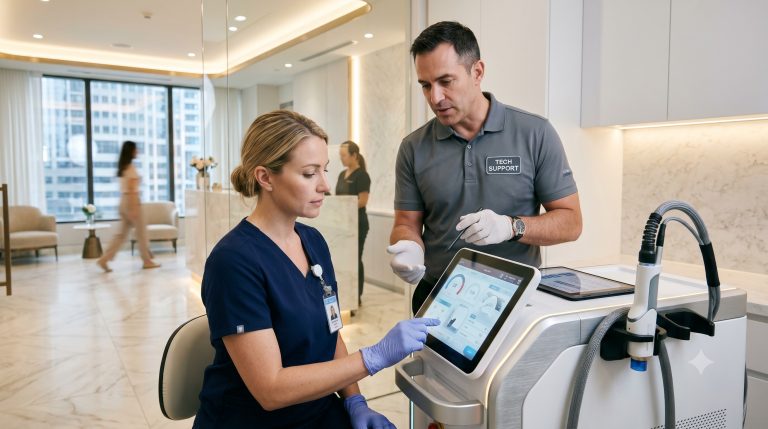
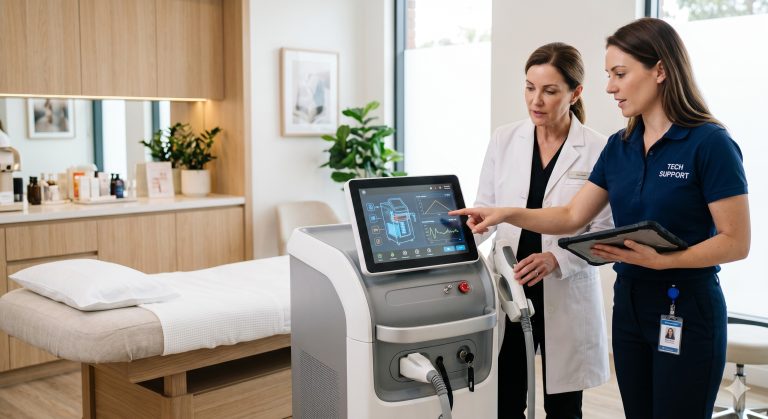
Daily and weekly maintenance is critical for energy stability. Daily: Check deionized water level (ensure pump operates at 1.5-2.5 L/min flow rate), inspect sapphire cooling tip for residue using alcohol wipes, and perform a shot count verification. Weekly: Flush the closed-loop water circulation system to remove micro-bubbles, which affect thermal regulation (cooling should maintain epidermis at 5-10°C). Monthly: Use an external energy meter to confirm output variance <±5% from set fluence. Every 6 months: Professional calibration of the 1064nm and 532nm wavelengths using a spectrometer. Failure to maintain water quality causes fiber optic degradation and inconsistent spot-to-spot energy delivery.
Q7: What technical compliance certifications should a clinic verify before purchasing a Pico laser for acne scars?
A medical-grade Pico laser must hold valid Medical CE (Class IIb or III, per EU 2017/745), FDA 510(k) clearance for acne scar indication, and ISO 13485:2016 manufacturing certification. Specifically request the Certificate of Conformity showing indication ‘treatment of atrophic acne scars’—many devices are cleared only for tattoo removal or pigmentation, off-label for scars. Also verify laser safety class (Class 4 with full interlock system), IEC 60825-1 compliance, and RoHS certification for consumables. Without these, your medical malpractice insurance may be voided.
Q8: Can the Pico laser be combined with other modalities in a single acne scar treatment workflow?
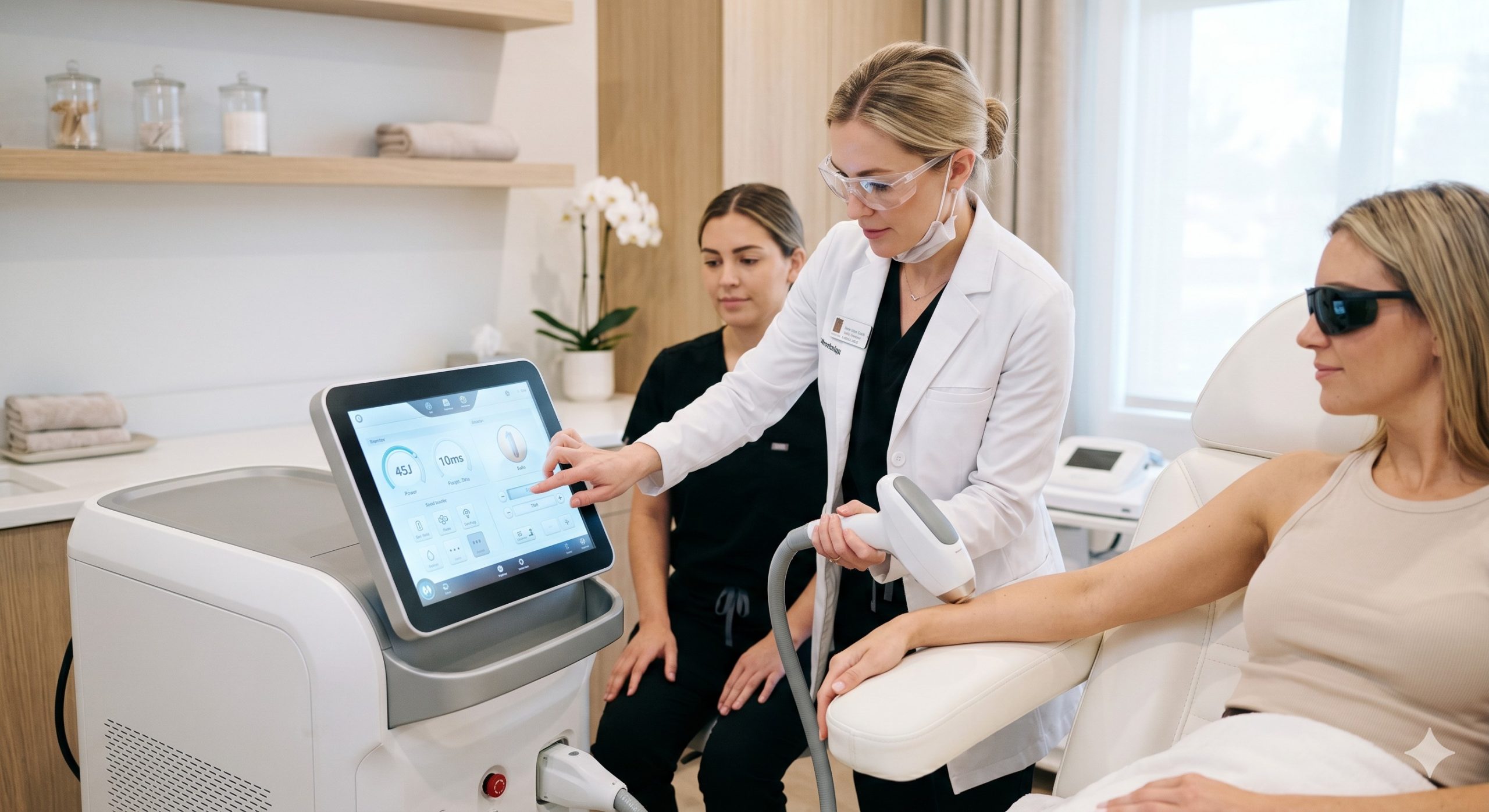
Yes, the optimal clinical workflow is Pico laser followed by RF microneedling or PRP in the same session, separated by 30 minutes of cooling. Standard protocol: First, pass Pico laser (1064nm, 0.8 J/cm², 6mm spot size, 5Hz) to create LIOB vacuoles and break down scar tissue. Then apply topical numbing (30 min). Finally, perform RF microneedling (1-2mm depth, 0.5-1.0W) or inject PRP to amplify collagen production. Do NOT reverse the order—RF heating before Pico causes unpredictable scattering. This combination reduces total required sessions from 6 to 4, increasing clinic revenue per patient by 35%.