How Do Hair Reduction Laser Machines Work?
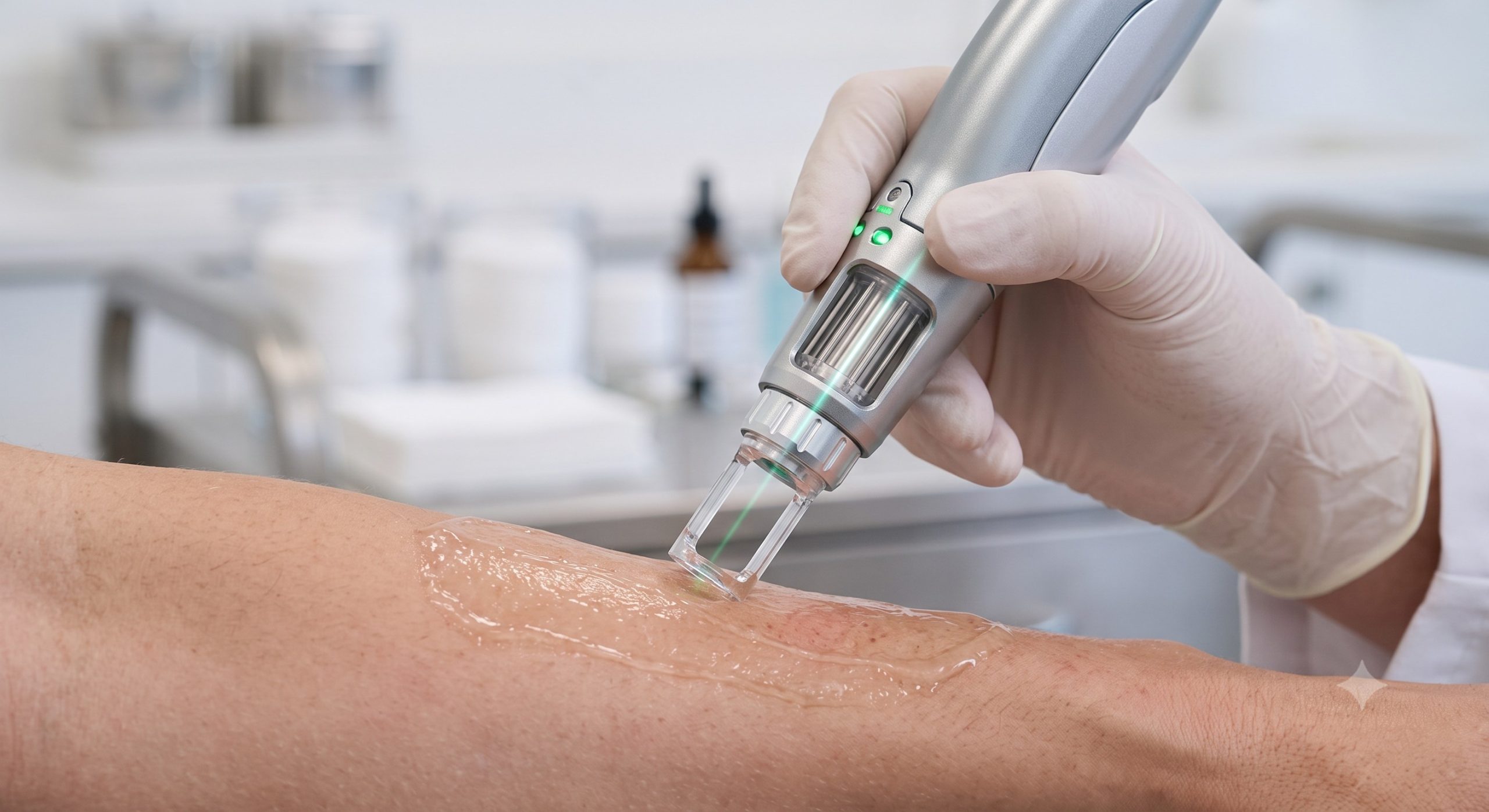
Hair reduction laser machines work by delivering controlled light energy into hair follicles. Melanin inside the hair absorbs this energy and converts it into heat, which damages the follicular structures responsible for future hair growth while limiting unnecessary thermal exposure to the surrounding skin.
The process appears straightforward, but treatment performance depends on several interacting factors, including wavelength, pulse duration, fluence, spot size, cooling technology, skin type, hair color, follicle depth, and the stage of the hair growth cycle. This guide explains the science behind professional laser hair reduction and helps clinics, distributors, and medical aesthetic equipment buyers understand how different technologies target hair safely and efficiently.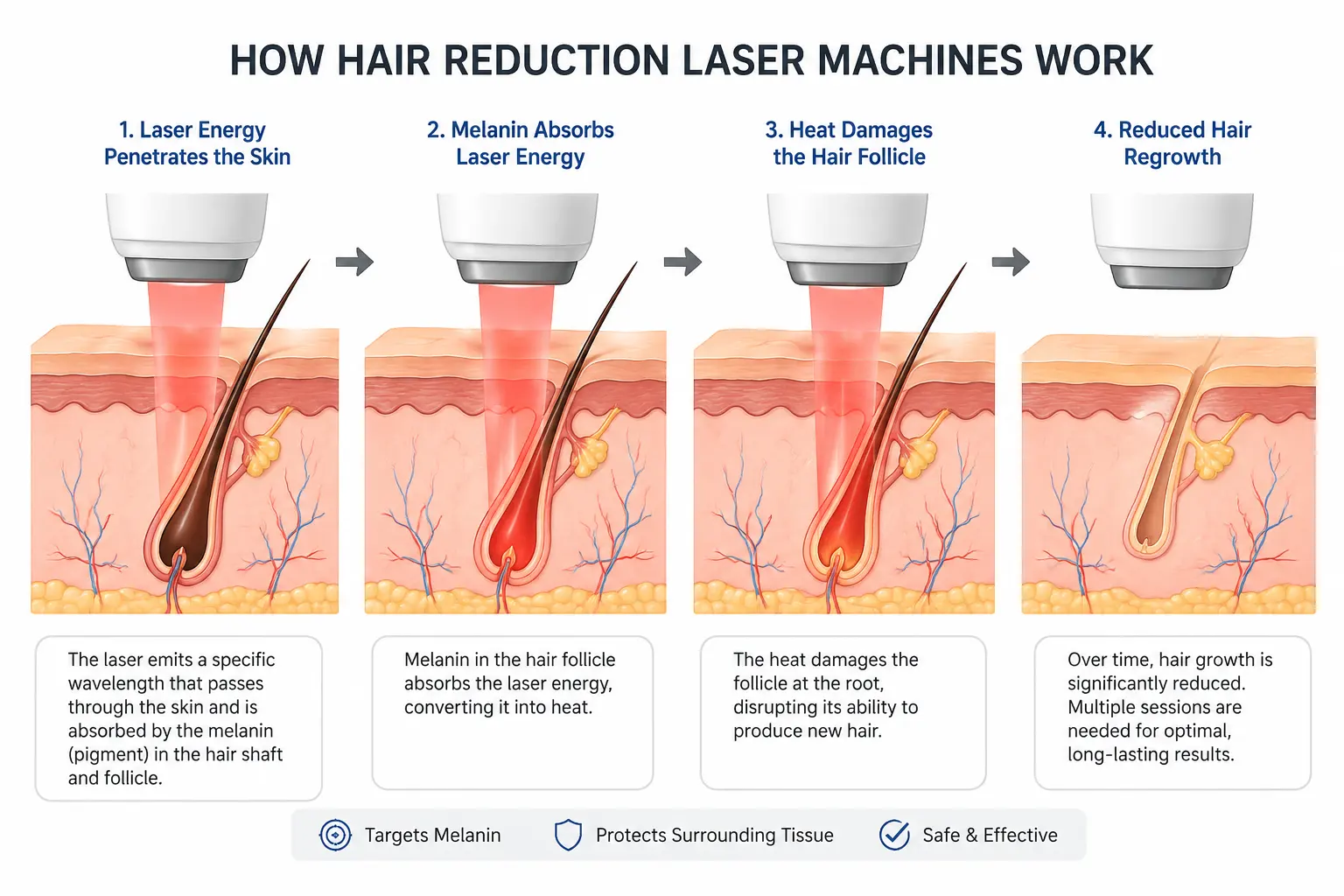
What Are Hair Reduction Laser Machines?
Hair reduction laser machines are professional light-based devices designed to reduce unwanted hair by targeting structures within the hair follicle. They are commonly used in dermatology clinics, medical aesthetic centers, plastic surgery practices, medical spas, and specialist hair removal clinics. Unlike shaving or depilatory products, which remove hair above the skin surface, laser systems deliver energy below the epidermis toward the hair shaft and follicular growth structures. Repeated treatments can progressively reduce the density, thickness, and rate of future hair growth. Professional systems may use a single wavelength, several combined wavelengths, or broad-spectrum pulsed light. Common technologies include:- 755nm Alexandrite laser
- 808nm diode laser
- 940nm diode laser
- 1064nm Nd:YAG or diode laser
- Multi-wavelength diode laser systems
- IPL, OPT, and SHR platforms
What Is the Basic Working Principle of Laser Hair Reduction?
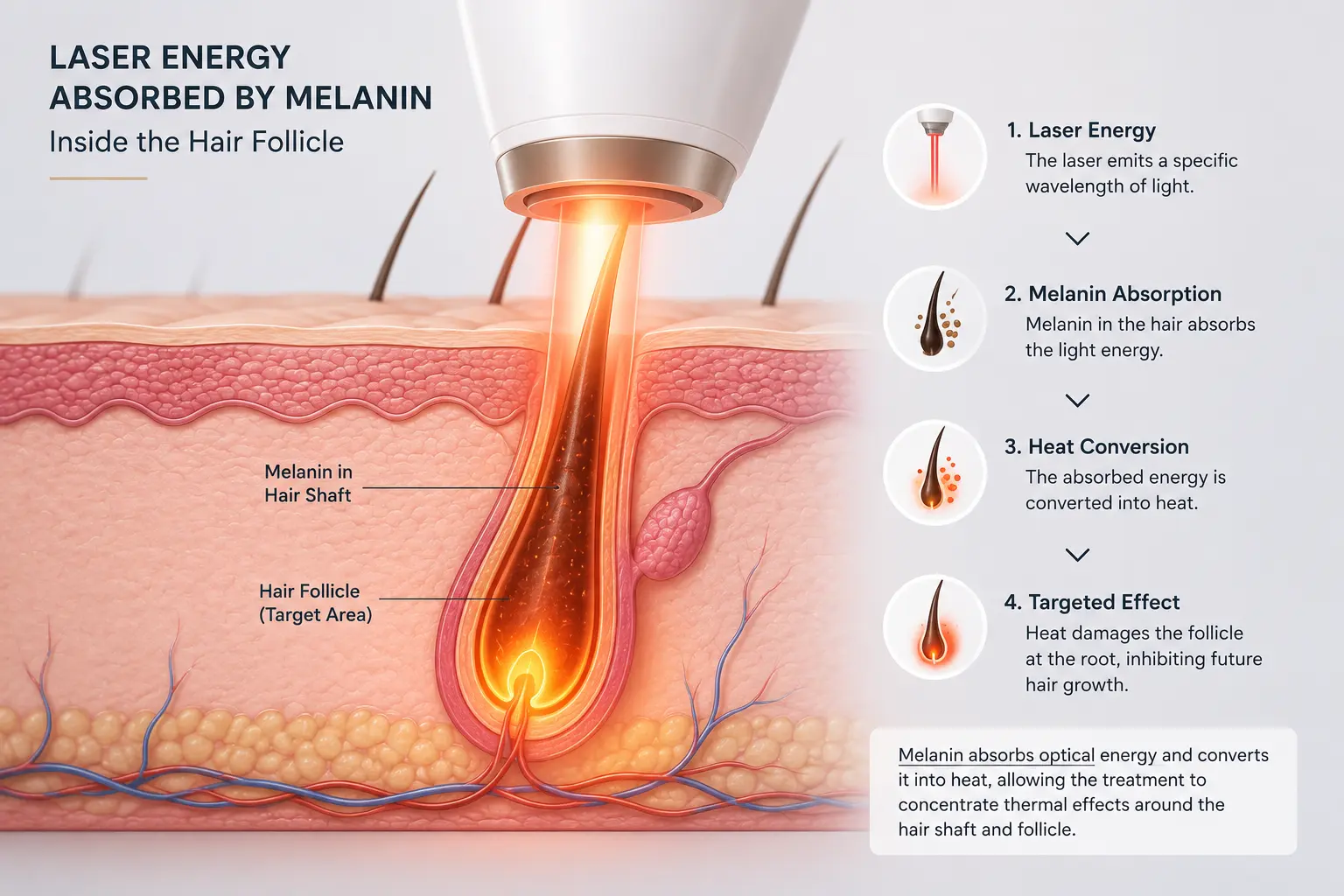
The basic working principle is controlled optical heating. A laser or intense pulsed light system emits a pulse of energy toward the skin. Melanin within the hair absorbs part of this energy and converts it into heat. The generated heat travels along the hair shaft toward the follicle. When sufficient thermal energy reaches the follicular growth structures, their ability to produce new hair can be reduced. The objective is not to heat the entire treatment area equally. Instead, the device should preferentially heat the pigmented hair while limiting unnecessary exposure to surrounding epidermal tissue.- The device generates a controlled pulse of optical energy.
- The light passes through the epidermis.
- Melanin in the hair absorbs the selected wavelength.
- Absorbed energy is converted into heat.
- Heat is transferred toward the follicle and associated growth structures.
- Cooling helps protect the skin surface.
- The treated follicle may produce finer, slower-growing, or less visible hair.
Why Is Melanin Important in Laser Hair Reduction?
Melanin is the pigment responsible for much of the color in hair and skin. In laser hair reduction, it acts as the primary chromophore, meaning it absorbs selected wavelengths of light and converts them into thermal energy. Dark, coarse hair generally contains more melanin than fine or lightly colored hair. As a result, it often absorbs laser energy more efficiently. Blonde, gray, white, and some red hairs may respond less predictably because they contain less of the target pigment. Skin also contains melanin. This creates an important clinical challenge: the device must deliver enough energy to the hair while limiting excess heating of epidermal pigment. Wavelength selection, pulse duration, fluence, cooling, and operator technique therefore become especially important when treating darker Fitzpatrick skin types.What Role Does Laser Wavelength Play?
Wavelength affects how deeply the energy penetrates and how strongly it is absorbed by melanin. Shorter wavelengths generally have stronger melanin absorption, while longer wavelengths usually penetrate more deeply and interact less strongly with epidermal pigment.| Wavelength | Typical Characteristic | Common Use |
|---|---|---|
| 755nm | High melanin absorption and relatively superficial targeting | Fine or lighter hair on lighter skin types |
| 808nm | Balanced melanin absorption and penetration | General professional hair reduction |
| 940nm | Deeper penetration and complementary follicle targeting | Medium-depth or thicker hair |
| 1064nm | Lower epidermal melanin absorption and deeper penetration | Darker skin types and deeper coarse hair |
Why Is Cooling Essential?
Cooling helps protect the epidermis while allowing therapeutic energy to reach the follicle. It can also improve patient comfort and support more consistent treatment during longer sessions. Professional machines may use contact cooling, sapphire cooling, air cooling, water circulation, semiconductor TEC cooling, or combinations of several methods. A well-designed cooling system does not replace correct parameter selection. It works together with wavelength, pulse duration, fluence, spot size, and treatment technique. COOLICE uses air cooling, water cooling, double TEC semiconductor cooling, and an annular cooling chip, with a specified cooling range from −15°C to 0°C.How Does Selective Photothermolysis Make Laser Hair Reduction Possible?
The scientific foundation of modern laser hair reduction is a principle known as selective photothermolysis . Introduced in the early 1980s, this concept describes how carefully selected laser energy can heat a specific biological target while minimizing thermal effects on surrounding tissue. In hair reduction treatments, the target is not the skin itself—it is the melanin contained within the hair shaft and follicle . By selecting an appropriate wavelength, pulse duration, and energy level, the laser concentrates heat where it is needed while helping preserve the surrounding epidermis.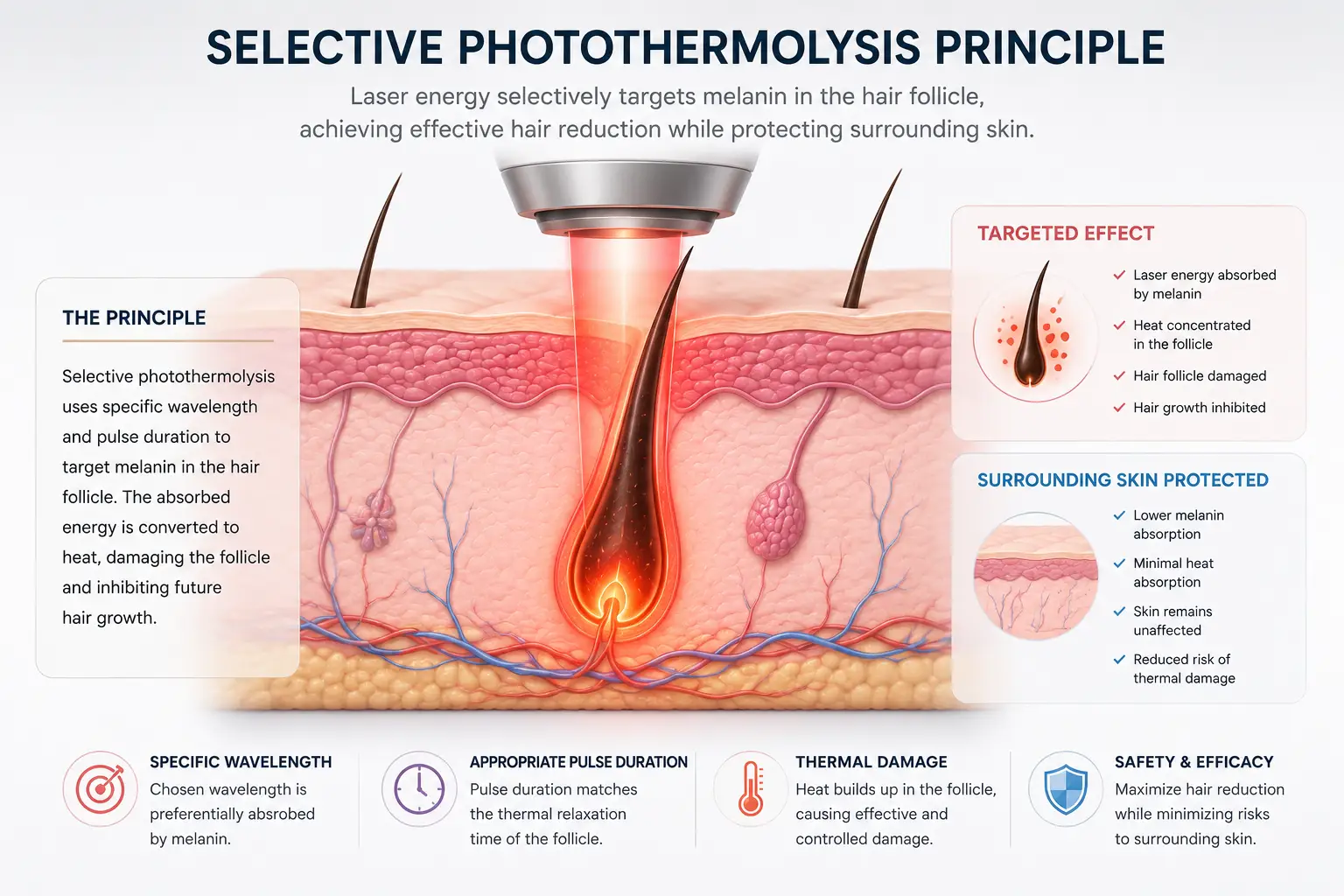
- Laser wavelength
- Pulse duration
- Energy density (fluence)
- Spot size
- Cooling performance
- Patient skin type
- Hair thickness and density
Why Does the Hair Growth Cycle Matter?
One of the most common questions from both patients and clinic owners is why laser hair reduction requires multiple treatment sessions. The answer lies in the natural biology of hair growth. Hair follicles do not all grow simultaneously. At any given moment, different follicles are in different stages of activity, and only a proportion contain actively growing hair capable of efficiently absorbing laser energy.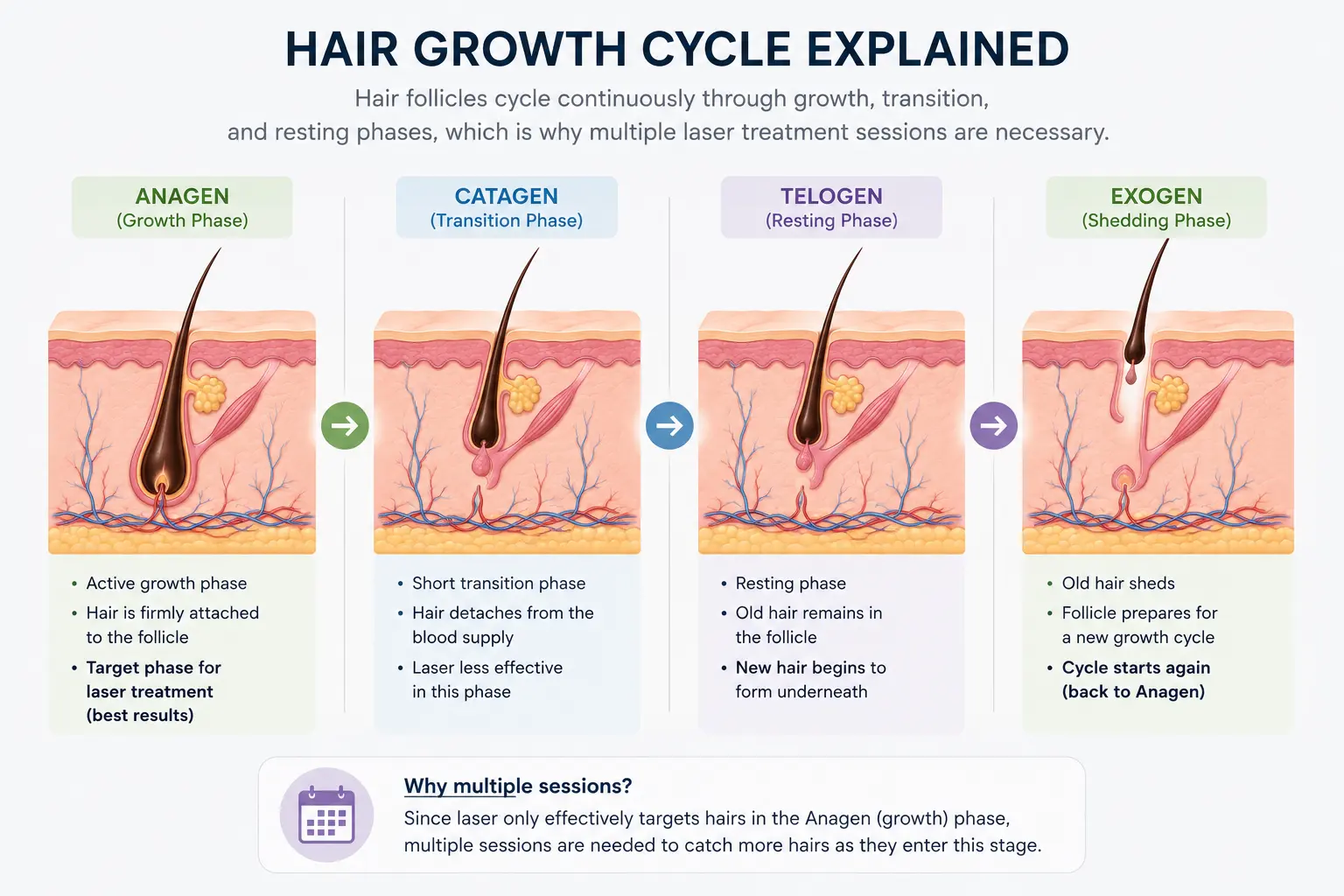
| Growth Phase | Description | Laser Response |
|---|---|---|
| Anagen | Active growth phase with strong connection between hair shaft and follicle. | Highest treatment effectiveness. |
| Catagen | Transition phase where follicular activity decreases. | Reduced laser effectiveness. |
| Telogen | Resting phase before natural shedding and new growth. | Minimal response. |
Why Are Multiple Treatment Sessions Needed?
Laser treatment does not permanently affect every follicle during a single appointment. Instead, each session targets the population of hairs currently in the anagen phase. Over time, additional follicles transition into active growth, allowing subsequent treatments to progressively reduce hair density and slow future growth. The number of sessions varies depending on several factors, including:- Hair color
- Hair thickness
- Treatment area
- Hormonal influences
- Patient age
- Skin phototype
- Laser technology used
How Do Energy and Pulse Duration Affect Treatment?
Successful laser hair reduction depends on more than wavelength selection. Operators must also balance fluence (energy density), pulse duration, repetition rate, and spot size to deliver sufficient heat while maintaining patient safety and comfort.Fluence (Energy Density)
Fluence describes how much laser energy is delivered to a specific treatment area. Insufficient energy may reduce treatment effectiveness, while excessive energy can increase the risk of unwanted thermal effects.Pulse Duration
Pulse duration determines how long the laser delivers energy during each pulse. Matching pulse duration to follicle characteristics helps improve energy absorption while reducing unnecessary heat diffusion.Spot Size
Larger spot sizes generally allow deeper penetration and faster coverage of large treatment areas such as the legs or back, while smaller spot sizes improve precision in areas including the upper lip or chin.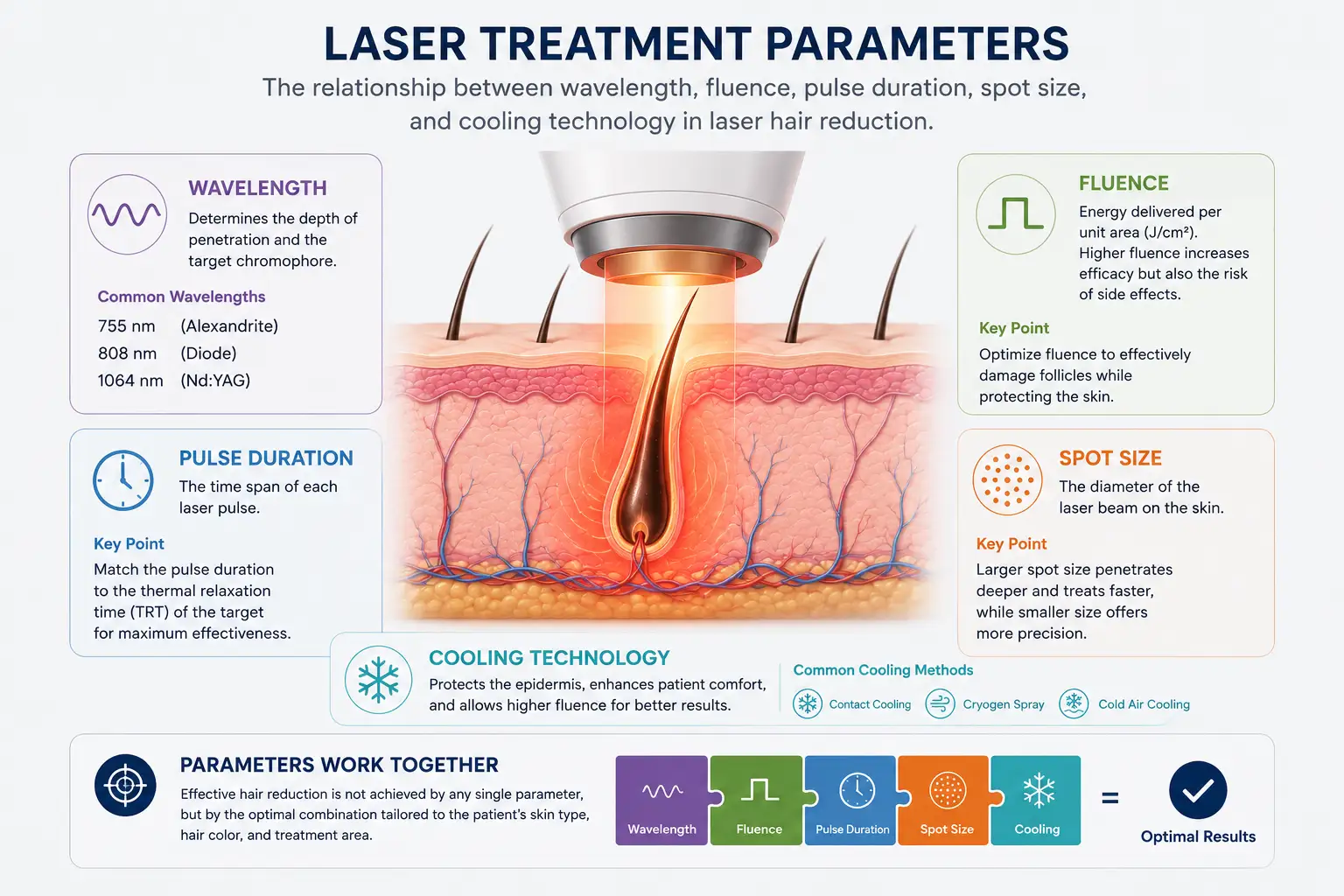
How Does Skin Type Influence Laser Hair Reduction?
Fitzpatrick skin type is an important consideration when selecting treatment parameters. Because darker skin contains more epidermal melanin, clinicians often adjust wavelength selection, energy settings, and cooling strategies to maintain an appropriate balance between effectiveness and safety. Longer wavelengths such as 1064nm generally exhibit lower epidermal melanin absorption and may therefore be selected for patients with darker skin types. Multi-wavelength diode platforms provide additional flexibility by allowing operators to tailor treatments according to different clinical situations. Regardless of technology, patient assessment, conservative parameter selection, and operator training remain essential components of safe and effective laser practice.How Do Different Hair Reduction Technologies Work?
Although all professional hair reduction systems are designed to reduce unwanted hair through light-based energy, they do not operate in exactly the same way. Different wavelengths interact differently with melanin, penetrate to different depths, and are better suited for specific skin types and treatment goals. Understanding these differences helps clinics choose equipment that matches their patient population while helping distributors and OEM buyers evaluate the strengths of different platforms.How Does a Diode Laser Work?
Diode laser technology is currently one of the most widely adopted solutions for professional hair reduction. Most systems operate around 808nm , while advanced platforms combine several wavelengths to improve versatility across different treatment indications. The diode laser emits coherent light that penetrates through the epidermis and is preferentially absorbed by melanin inside the hair shaft. The absorbed energy is converted into heat and transferred toward the follicle, where it disrupts structures responsible for future hair growth.Why Is 808nm So Popular?
- Balanced melanin absorption
- Suitable penetration depth for most follicles
- Compatible with a wide range of skin types
- Efficient treatment of medium and coarse hair
- High treatment speed with large spot sizes
- Works effectively with advanced cooling systems
How Does an Alexandrite Laser Work?
Alexandrite laser systems operate at a wavelength of 755nm . This wavelength exhibits strong melanin absorption, making it particularly effective for fine, dark hair in lighter skin phototypes. Because epidermal melanin also absorbs 755nm efficiently, careful patient selection and parameter adjustment are important when treating individuals with darker skin.How Does an Nd:YAG Laser Work?
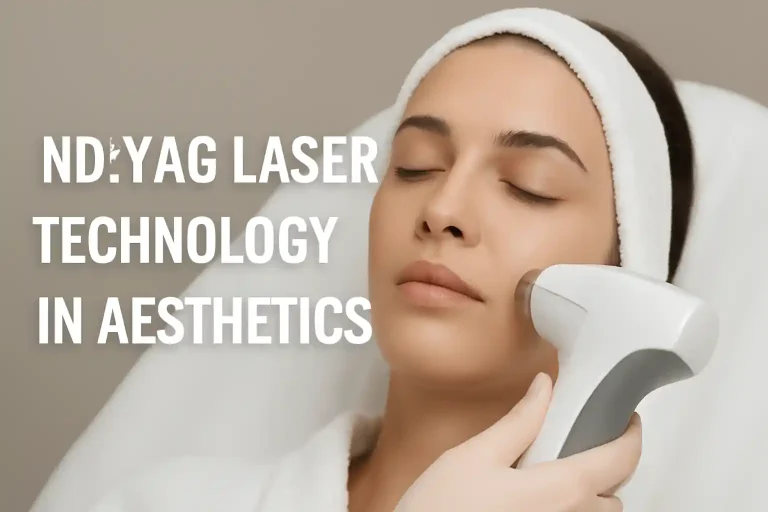
Nd:YAG laser systems typically operate at 1064nm . Compared with shorter wavelengths, they penetrate deeper into tissue while exhibiting lower absorption by epidermal melanin. This characteristic allows clinicians to treat darker skin types more conservatively while still delivering energy to deeper hair follicles. Although treatment may require different parameter settings than Alexandrite or diode systems, Nd:YAG technology remains an important option for clinics serving diverse patient populations.How Do IPL, OPT, and SHR Systems Work?
Unlike true laser systems, IPL (Intense Pulsed Light) devices emit a broad spectrum of filtered light rather than a single coherent wavelength. Different filters are used to target specific chromophores depending on the intended treatment. Modern platforms often incorporate technologies such as OPT (Optimal Pulse Technology) and SHR (Super Hair Removal) , which improve pulse stability and treatment comfort through controlled energy delivery. Because IPL systems are not limited to a single wavelength, they are commonly selected by clinics seeking a multifunction platform capable of performing hair reduction alongside skin rejuvenation, pigmentation management, vascular treatments, and acne therapy.Technology Comparison
| Technology | Typical Wavelength | Main Characteristics | Common Clinical Use |
|---|---|---|---|
| Diode Laser | 808nm / Multi-Wavelength | Balanced absorption and penetration | General professional hair reduction |
| Alexandrite | 755nm | High melanin absorption | Lighter skin with darker hair |
| Nd:YAG | 1064nm | Deep penetration with lower epidermal absorption | Darker skin phototypes |
| IPL / OPT / SHR | Broad Spectrum | Filtered pulsed light with multifunction capability | Hair reduction and other aesthetic treatments |
Why Are Multi-Wavelength Hair Reduction Systems Becoming More Popular?
Hair characteristics vary considerably between patients and even between different areas of the same body. A single wavelength may perform exceptionally well in one situation but be less suitable in another. Multi-wavelength platforms combine complementary wavelengths within one device, giving clinicians greater flexibility to adjust treatment according to hair depth, thickness, skin phototype, and anatomical location.- 755nm supports superficial and finer hair.
- 808nm provides balanced performance for routine treatments.
- 940nm contributes additional penetration for selected follicles.
- 1064nm offers deeper penetration with reduced epidermal melanin absorption.
What Factors Influence Hair Reduction Results?
Professional laser systems provide predictable long-term hair reduction only when appropriate technology, treatment parameters, and patient selection are combined. Clinical outcomes vary because hair biology differs significantly between individuals. Experienced practitioners evaluate multiple variables before each treatment rather than applying identical settings to every patient.Hair Color
Dark hair usually responds more efficiently because it contains higher concentrations of melanin. Blonde, gray, white, and some red hair may respond less predictably due to lower pigment content.Hair Thickness
Coarse hair generally absorbs more laser energy than fine hair, allowing more effective thermal transfer toward the follicle.Skin Type
Skin phototype influences wavelength selection, pulse duration, cooling strategy, and energy settings. Darker skin typically requires more conservative treatment parameters to minimize unnecessary epidermal heating.Hormonal Factors
Endocrine conditions, hormonal fluctuations, and certain medications may influence hair regrowth patterns. Individual treatment plans should therefore be based on ongoing clinical assessment rather than fixed treatment schedules.Why Is Laser Safety So Important?
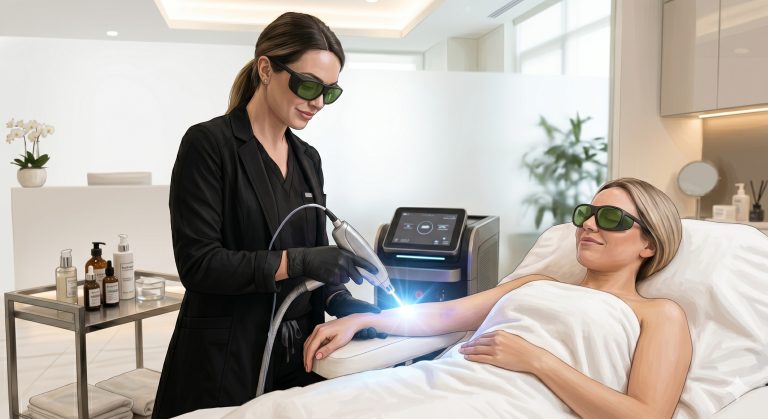
Modern hair reduction laser machines incorporate multiple safety features, but equipment design alone cannot ensure safe treatment. Appropriate patient assessment, operator training, protective eyewear, and correct parameter selection remain essential.- Wear wavelength-appropriate laser eye protection.
- Evaluate patient suitability before treatment.
- Select parameters according to skin type and hair characteristics.
- Verify cooling performance before each session.
- Follow manufacturer operating procedures.
- Provide appropriate post-treatment care instructions.
Common Questions About How Hair Reduction Laser Machines Work
Do laser hair reduction machines destroy hair follicles?
Professional laser treatments are designed to damage follicular structures responsible for future hair growth through controlled thermal energy. The extent of reduction varies according to hair biology, treatment parameters, and individual response.Why doesn’t laser treatment remove every hair after one session?
Only follicles in the active anagen phase efficiently absorb laser energy. Because hair grows in cycles, additional sessions are required to target follicles that become active later.Can all skin types receive laser hair reduction?
Modern diode and Nd:YAG-based systems may be used across a broad range of Fitzpatrick skin types when appropriate wavelengths and treatment parameters are selected by qualified healthcare professionals.Why do professional systems include advanced cooling?
Cooling improves patient comfort, helps protect the epidermis, and supports consistent treatment during longer procedures. It complements—rather than replaces—proper parameter selection.References
- American Society for Laser Medicine and Surgery (ASLMS)
- ANSI Z136.3 – Safe Use of Lasers in Health Care
- IEC 60825 – Safety of Laser Products
- ISO 13485 – Medical Devices Quality Management Systems
- Peer-reviewed literature on selective photothermolysis and laser hair reduction