The Ultimate Clinic Guide to The Future of Medical Aesthetic Devices in 2026: Efficacy, Wavelengths, and ROI
Clinic Pain Points: The 2025-2026 Efficiency Ceiling
As we approach 2026, the medical aesthetics industry faces a critical juncture. Legacy platforms using outdated diode technology (e.g., 808nm only) and inferior IPL systems are creating a treatment efficacy ceiling, leading to patient retention issues and suboptimal clinical clearance rates. The primary pain point for high-volume Med Spas and dermatology clinics is no longer just device cost, but the total cost of ownership (TCO) and the ability to treat the full spectrum of Fitzpatrick Skin Types I-VI safely. This guide provides a data-driven roadmap for 2026 device acquisition, focusing on selective photothermolysis precision, operational throughput, and maximizing ROI.
Physical Mechanism Deep Dive: Selective Photothermolysis in 2026
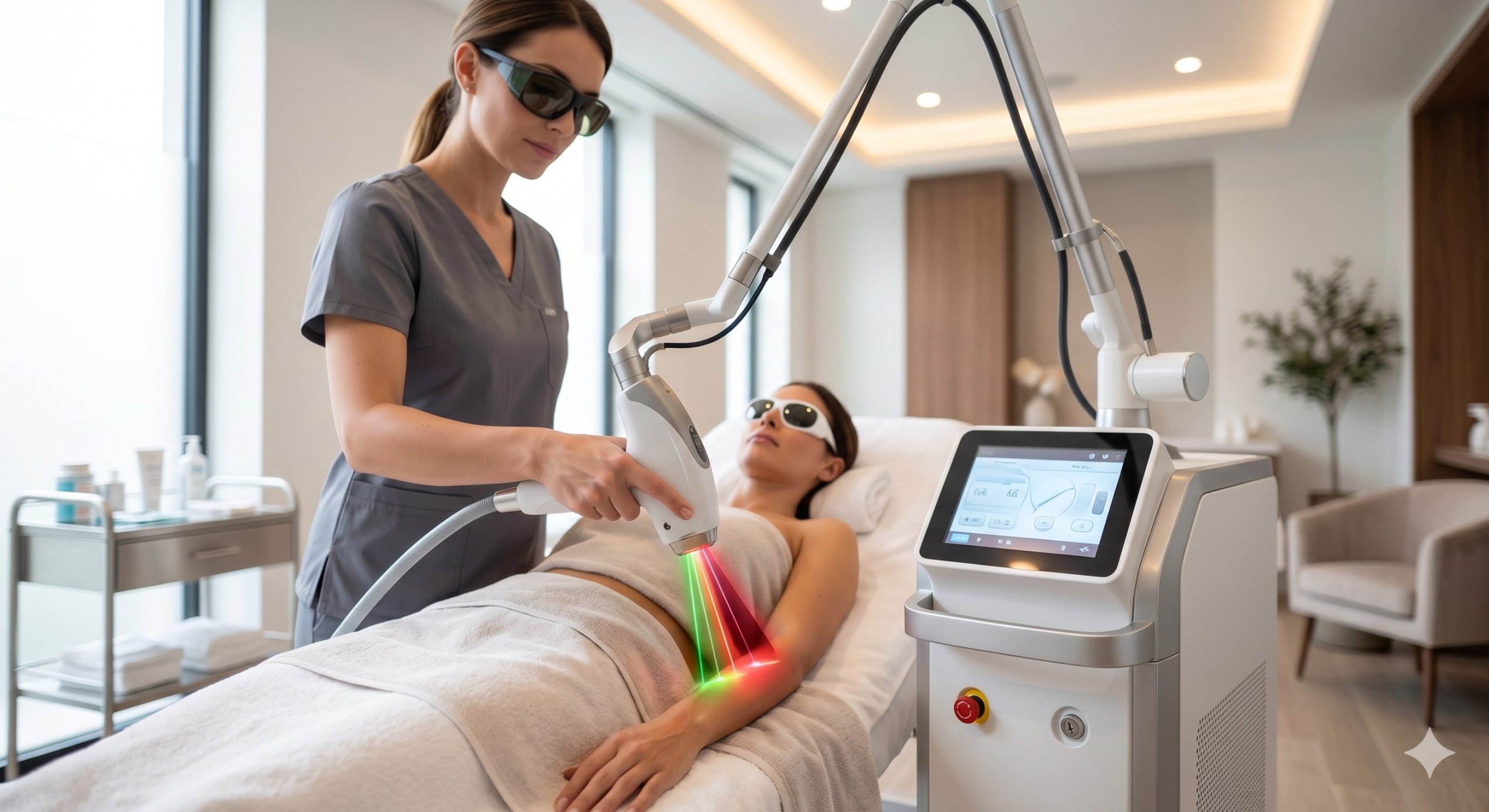
The future lies in multi-wavelength synergy. Next-generation devices are moving beyond single diodes to integrated systems leveraging 755nm (for superficial melanin/pigment and fine hair), 808nm (the gold standard for deep, volumetric heating of the hair follicle), and 1064nm (for deep vascular lesions and dark Fitzpatrick Skin Types IV-VI). This tri-laser architecture ensures a chromophore agnostic approach. Key metrics to demand include Fluence (Energy Density) up to 120 J/cm² and adjustable Pulse Width ranging from 5ms to 300ms, allowing operators to manage thermal relaxation time precisely.
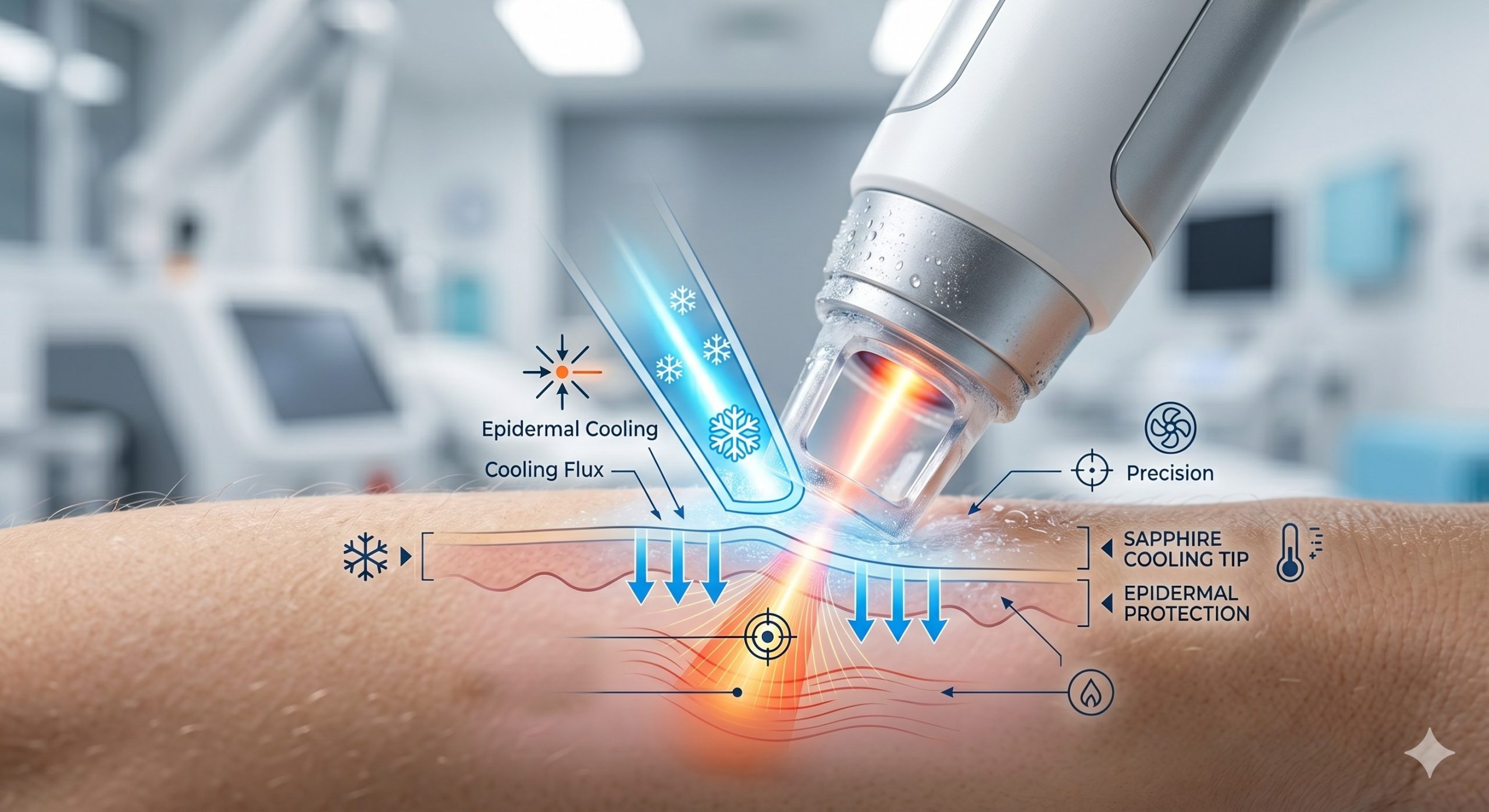
Epidermal Protection & Cooling Systems
Sapphire ICE contact cooling is now the clinical baseline. In 2026, expect to see advanced thermoelectric coolers (TEC) maintaining a skin surface temperature of 1°C to 4°C continuously, independent of the spot size used. This protects the stratum corneum while allowing high fluence delivery to the target dermal papilla. Without this, treating higher fluences for resistant hair or deeper vessels is clinically unsafe.
| Key Parameter | 2026 Medical Aesthetic Device Benchmark |
|---|---|
| Wavelength / Laser Type | Triple-Wavelength Diode Laser (755nm / 808nm / 1064nm) |
| Fluence (Energy Density) | Up to 120 J/cm² (Clinically adjustable per depth) |
| Pulse Width Range | 5ms to 300ms (Selective Photothermolysis optimization) |
| Cooling System | Sapphire ICE Contact Cooling with TEC (1°C to 4°C continuous) |
| Spot Size | ≥ 300 mm² (e.g., 15mm x 15mm square or 20mm circular) |
| Frequency / Throughput | ≥ 10 Hz (High-speed vacuum-assisted optional) |
| Certification Standard | Medical CE (MDR), FDA 510(k) Clearance, ISO 13485 |
| Handpiece Durability | ≥ 30 million shots (Imported laser bar, no consumable lamps) |
High-Throughput Clinic ROI: Operationalizing Advanced Metrics
Treatment Speed & Large Spot Sizes
To maximize profitability, evaluate the large spot size capability. Devices offering a 15mm x 15mm square spot (or 20mm circular) with high frequency (e.g., 10Hz) reduce full-leg treatment time from 45 minutes to under 15 minutes. This directly increases daily patient throughput, turning a capital expense into a revenue accelerator.
Consumables & Lifetime Cost of Ownership
New regulatory pressures (Medical CE MDR, FDA QMSR) demand ISO 13485 certified handpieces with documented shot lifespans. Premium OEMs are now rating diode laser bars for 30+ million shots, drastically lowering the cost-per-shot. Avoid legacy systems requiring consumable IPL flashlamps, which represent a significant recurring OpEx trap.
Indications & Fitzpatrick Scale Strategy
The future device must demonstrate clinical clearance rates >85% by session 3 for all hair types when using the correct parameter protocol. For pigment correction (lentigos, solar lentigo), use 755nm with short pulse width (5-10ms) and moderate fluence (8-14 J/cm²). For vascular lesions (telangiectasias), 1064nm with longer pulse width (30-40ms) is superior. The versatile platform integrates these seamlessly via a smart UI, reducing the learning curve for certified laser operators.
Executive Verdict: 2026 Clinical Procurement Action Plan
Clinics must prioritize Medical CE and FDA 510(k) clearance for full-body indications. The 2026 benchmark is a triple-wavelength (755/808/1064nm) diode laser with integrated Sapphire ICE cooling, a spot size >300mm², and validated energy output stability. This configuration ensures the highest ROI by treating the widest demographic, minimizing consumable costs, and delivering verifiable results that build a premium clinic reputation.