Decoding the Al Derma-V: The Next-Generation Dual-Wavelength Platform for Vascular and Pigmentary Excellence
Executive Summary
In the rapidly evolving landscape of medical aesthetic devices, dermatology clinics and medspas demand versatile, high-efficacy platforms that minimize patient downtime while maximizing return on investment (ROI). The Al Derma-V represents a paradigm shift in non-invasive skin treatments, integrating high-power 532nm and 1064nm wavelengths into a single, comprehensive system. Engineered for precision, this platform addresses a broad spectrum of vascular lesions, pigmented lesions, and global skin rejuvenation, setting a new clinical standard for efficacy, safety, and operational efficiency in modern aesthetic practices.
What is the Al Derma-V?
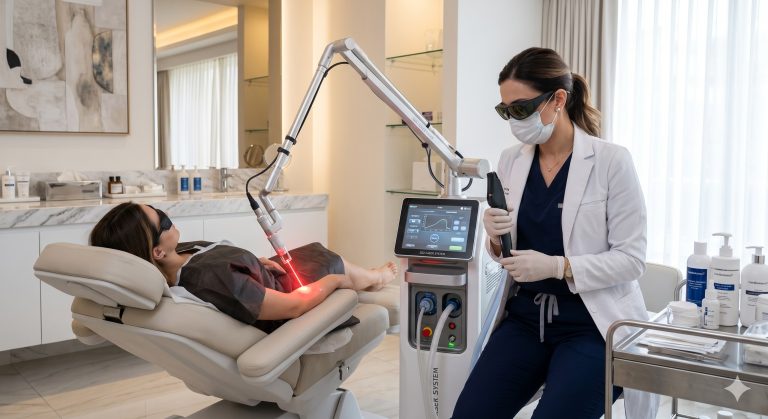
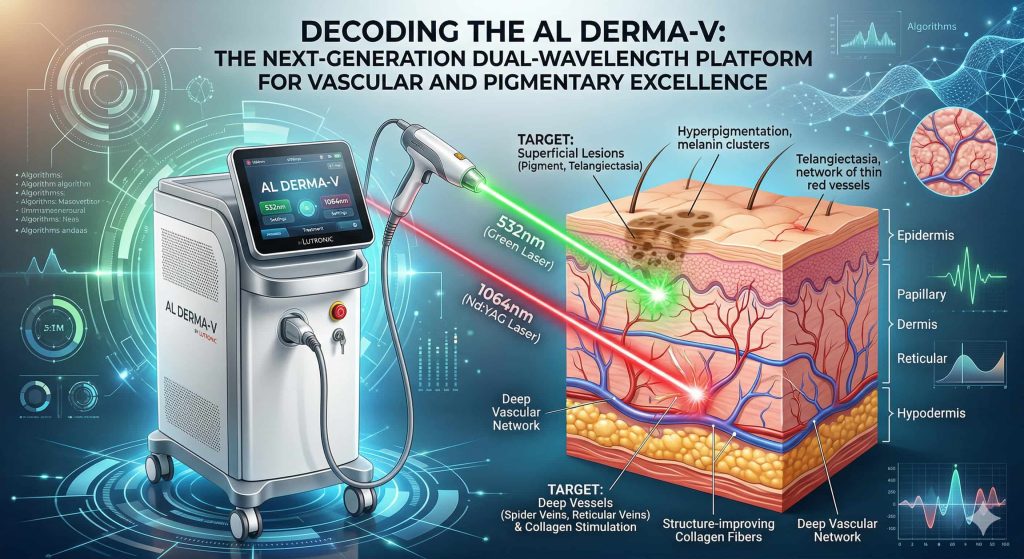
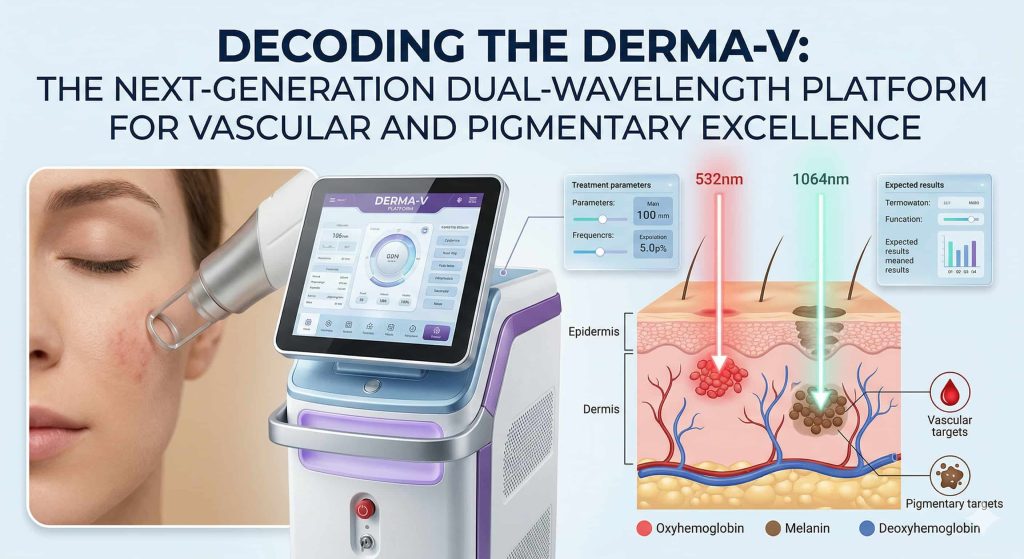
The Al Derma-V is an advanced, dual-wavelength solid-state laser system. It operates on the principle of selective photothermolysis, delivering precise optical energy to targeted chromophores (hemoglobin and melanin) without damaging surrounding healthy tissue.
Unlike conventional single-purpose lasers, the Al Derma-V synergizes two of the most clinically validated wavelengths in dermatology:
- 532nm (Green Light): Highly absorbed by oxyhemoglobin and melanin, making it the gold standard for superficial vascular lesions (e.g., rosacea, telangiectasia) and epidermal pigmented lesions (e.g., solar lentigines, ephelides).
- 1064nm (Nd:YAG): Characterized by deeper tissue penetration and lower melanin absorption, this wavelength is optimal for deeper vascular structures (e.g., leg veins, venous lakes), hair removal in darker skin types (Fitzpatrick IV-VI), and deep dermal collagen remodeling.
Supported by state-of-the-art integrated cooling and variable pulse duration capabilities, the Al Derma-V provides practitioners with the exact biomechanical control needed to customize treatments for diverse patient phenotypes.
Why Integrate the Al Derma-V into Your Clinical Practice?
For B2B buyers, clinic directors, and dermatologists, investing in capital equipment requires a clear clinical and financial justification. Here is why the Al Derma-V stands out:
- Unmatched Clinical Versatility: By replacing the need for separate Pulsed Dye Lasers (PDL) and standalone Nd:YAG systems, the Al Derma-V consolidates clinical capabilities. It treats everything from port-wine stains to generalized erythema and benign pigmented lesions.
- Superior Hemoglobin Absorption: The 532nm wavelength offers a significantly higher absorption coefficient for oxyhemoglobin compared to traditional 595nm PDL systems, resulting in more effective clearance of superficial vessels with fewer treatment sessions.
- Elimination of Consumable Bottlenecks: Traditional PDLs often require expensive dye changes and toxic consumable management. The solid-state engineering of the Al Derma-V eliminates these recurring costs, drastically improving the lifetime ROI of the device.
- Advanced Epidermal Protection: High-fluence treatments require exceptional thermal management. The Al Derma-V utilizes a sophisticated cryogenic or contact cooling mechanism that fires precisely before, during, or after the laser pulse, ensuring patient comfort and preventing thermal injury to the epidermis.
How the Al Derma-V Works: The Clinical Mechanism
The efficacy of the Al Derma-V lies in its sophisticated energy delivery mechanisms:
- Variable Sequential Pulsing (VSP): The system allows for the manipulation of pulse widths—from sub-millisecond to long-pulse durations. For micro-vessels, a short pulse rapidly heats and coagulates the target. For larger vessels, a longer pulse ensures uniform heating across the vessel wall, adhering strictly to the target’s Thermal Relaxation Time (TRT).
- Sub-Purpuric Treatments: A historical limitation of vascular lasers (like PDL) is the inevitable post-treatment purpura (bruising), which leads to significant social downtime. The Al Derma-V’s precise pulse control allows for gradual heating of the vessel, resulting in endothelial wall collapse (coagulation) rather than vessel rupture, achieving clinical endpoints without purpura.
- Neo-collagenesis Activation: When utilizing the 1064nm wavelength with specific micro-pulsing protocols, the laser gently heats the papillary dermis. This bulk heating triggers a natural wound-healing cascade, stimulating fibroblast activity and resulting in new collagen and elastin production for overall skin rejuvenation.
Technical Comparison: Al Derma-V vs. Traditional Pulsed Dye Laser (PDL)
To fully understand the clinical positioning of the Al Derma-V, it is essential to compare its specifications against the historical standard for vascular treatments.
| Feature / Parameter | Al Derma-V (Dual-Wavelength) | Traditional PDL (595nm) |
| Wavelengths | 532nm & 1064nm | 595nm (Single) |
| Primary Target | Superficial/Deep Vascular, Pigment, Rejuvenation | Superficial Vascular (High Purpura Risk) |
| Penetration Depth | Variable (Superficial to Deep Dermis) | Superficial |
| Post-Treatment Purpura | Extremely Low (Sub-purpuric protocols) | High (Often an expected clinical endpoint) |
| Consumables Required | None (Solid-State Laser) | Dye Kits, Toxic Waste Disposal |
| Fitzpatrick Skin Types | I – VI (Using 1064nm for darker types) | I – III (High risk of PIH on darker skin) |
| Clinic ROI | High (Multi-indication, zero dye costs) | Moderate (High maintenance & running costs) |
Frequently Asked Questions (FAQs)
Q1: How does the dual-wavelength capability optimize treatment times?
A: The integration of 532nm and 1064nm allows practitioners to address multi-layered dermal issues in a single session. For example, a patient presenting with both superficial telangiectasia (treated with 532nm) and deeper reticular veins (treated with 1064nm) can be managed without switching devices, streamlining patient flow and increasing clinic throughput.
Q2: Is the Al Derma-V safe for darker skin types (Fitzpatrick IV-VI)?
A: Yes. While the 532nm wavelength is highly absorbed by melanin and generally reserved for lighter skin types, the 1064nm Nd:YAG wavelength has a very low melanin absorption profile. This allows the 1064nm energy to bypass the epidermal melanin safely, making it highly effective for treating vascular lesions and performing skin rejuvenation on darker skin phenotypes without the risk of Post-Inflammatory Hyperpigmentation (PIH).
Q3: What makes the Al Derma-V a better business investment than maintaining older vascular lasers?
A: Beyond superior clinical outcomes, the business case centers on operational expenditure (OpEx). Older vascular platforms often rely on consumable dyes that degrade, require frequent calibration, and involve hazardous waste protocols. The Al Derma-V’s solid-state architecture provides consistent, reliable power with zero dye consumables, stabilizing profit margins per treatment.
Conclusion
For medical aesthetic practices aiming to elevate their standard of care, adopting multi-modal, highly engineered platforms is no longer optional—it is a competitive necessity. The Al Derma-V bridges the gap between patient demand for zero-downtime procedures and the clinical requirement for absolute precision. By offering unmatched wavelength versatility, superior thermal management, and robust ROI economics, it stands as a cornerstone technology for modern dermatology.
To explore how the integration of advanced medical laser technologies can transform your clinical offerings and business scalability, discover the full range of professional aesthetic solutions at https://www.cocoonlaser.com/. Partnering with a premier supplier ensures access not only to cutting-edge equipment but also to the clinical training and technical support necessary to lead in the aesthetic market.