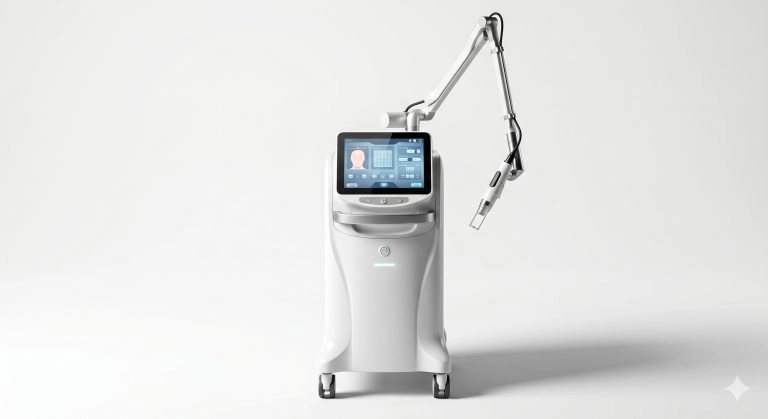
Fractional CO2 Laser Before and After: Results & Timeline
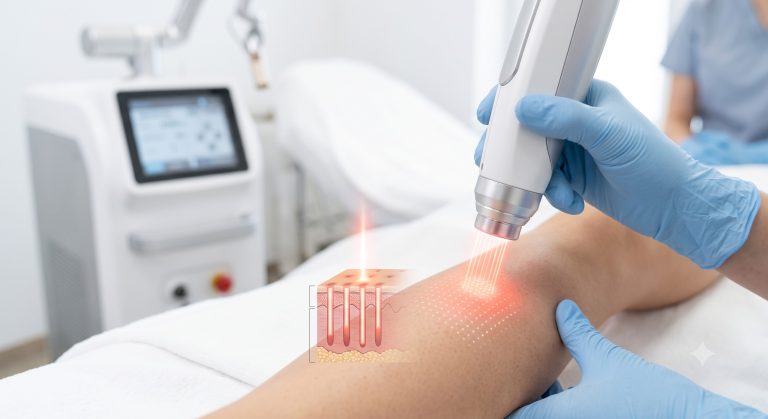
Fractional CO2 laser before and after results are often used to evaluate changes in acne scars, wrinkles, uneven skin texture, and other signs of skin damage. By creating controlled microscopic treatment zones, fractional CO2 laser resurfacing initiates a healing response that may support gradual improvements in skin appearance.
However, treatment outcomes are not identical for every patient. Skin type, scar characteristics, treatment parameters, the number of sessions, and individual healing responses all influence the final appearance.
This guide explores fractional CO2 laser before and after results, different clinical applications, expected improvement timelines, and the factors that should be considered when evaluating treatment photographs.
Quick Answer: What Do Fractional CO2 Laser Before and After Results Look Like?
Fractional CO2 laser treatment may improve the appearance of selected acne scars, fine lines, wrinkles, and uneven skin texture through controlled ablative resurfacing and subsequent tissue remodeling.
Initial changes may become visible after the skin surface heals, while further improvements can develop over the following weeks and months as collagen remodeling continues.
The degree of improvement depends on the original skin condition, scar depth, treatment intensity, treatment frequency, and individual response. Multiple sessions may be considered for certain concerns.
Before-and-after photographs should be evaluated using consistent lighting, camera angles, facial expressions, and photography conditions. Individual results vary, and no specific outcome can be guaranteed.
Fractional CO2 Laser Before and After Photos
Before-and-after photography provides a visual way to assess changes following fractional CO2 laser resurfacing.
Depending on the treatment indication, photographs may document changes in acne scar depth and visibility, skin texture, fine lines, and other surface irregularities.
The following clinical categories illustrate the types of results that practitioners may evaluate. Actual patient photographs should be used to document clinical outcomes rather than simulated images.
Fractional CO2 Laser for Acne Scars: Before and After
Atrophic acne scars are among the commonly treated concerns in fractional CO2 laser resurfacing. The treatment creates controlled microscopic ablative zones that initiate tissue repair and subsequent dermal remodeling.
Improvements may include a less noticeable appearance of selected depressed scars and smoother overall skin texture.
However, acne scar morphology is important. Rolling scars, boxcar scars, and ice-pick scars have different structural characteristics and may respond differently to resurfacing.
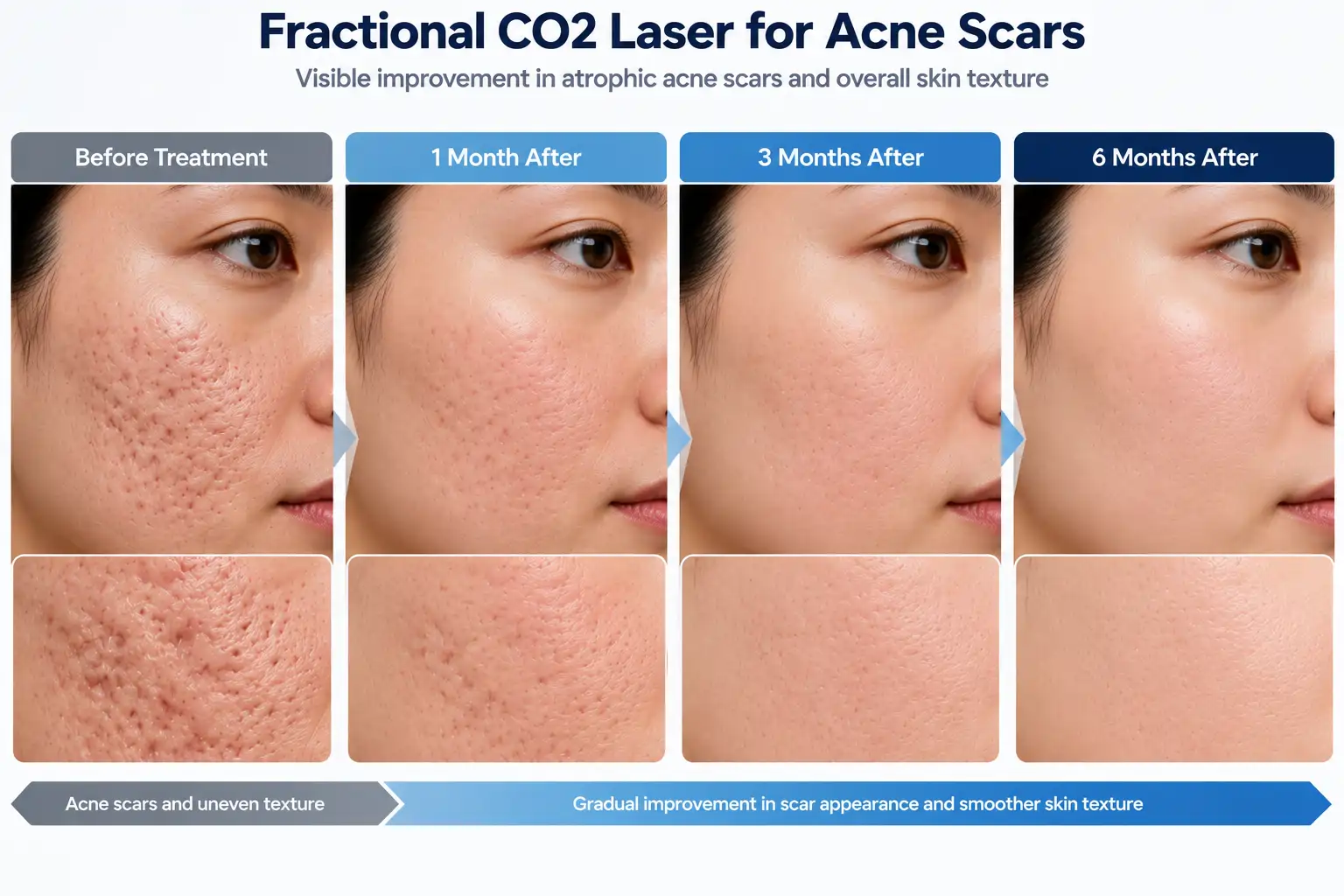
Patients with deeper or tethered scars may require additional procedures as part of a comprehensive acne scar treatment plan.
Learn more in our detailed guide: CO2 Laser for Acne Scars .
Fractional CO2 Laser for Fine Lines and Wrinkles: Before and After
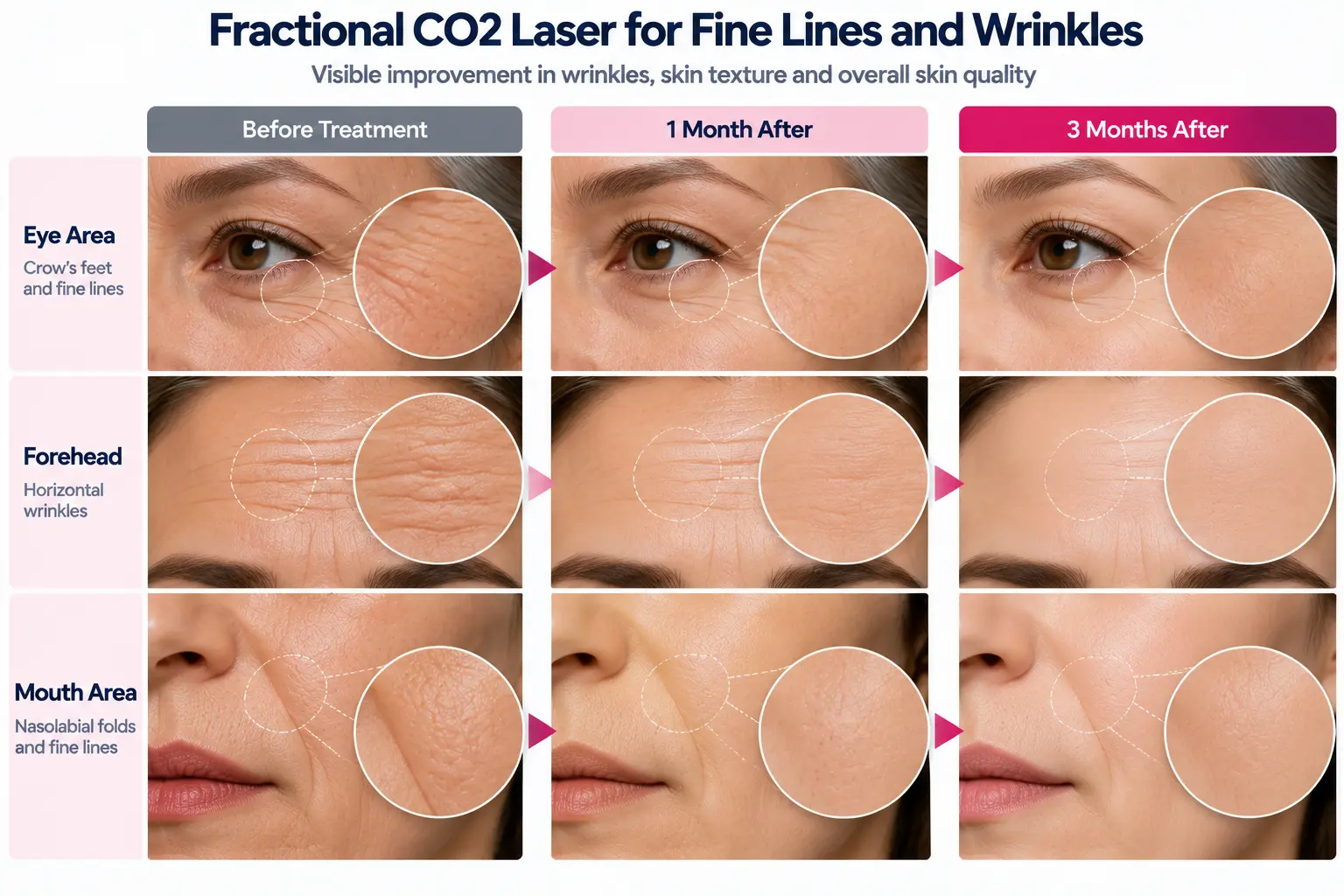
Fractional CO2 laser resurfacing may improve selected fine lines and wrinkles, particularly those associated with photoaging and changes in skin texture.
Controlled tissue ablation and thermal effects initiate a healing response that may contribute to gradual collagen remodeling.
Treatment results depend on wrinkle depth, anatomical location, skin condition, and treatment parameters.
Fractional CO2 Laser for Skin Texture: Before and After
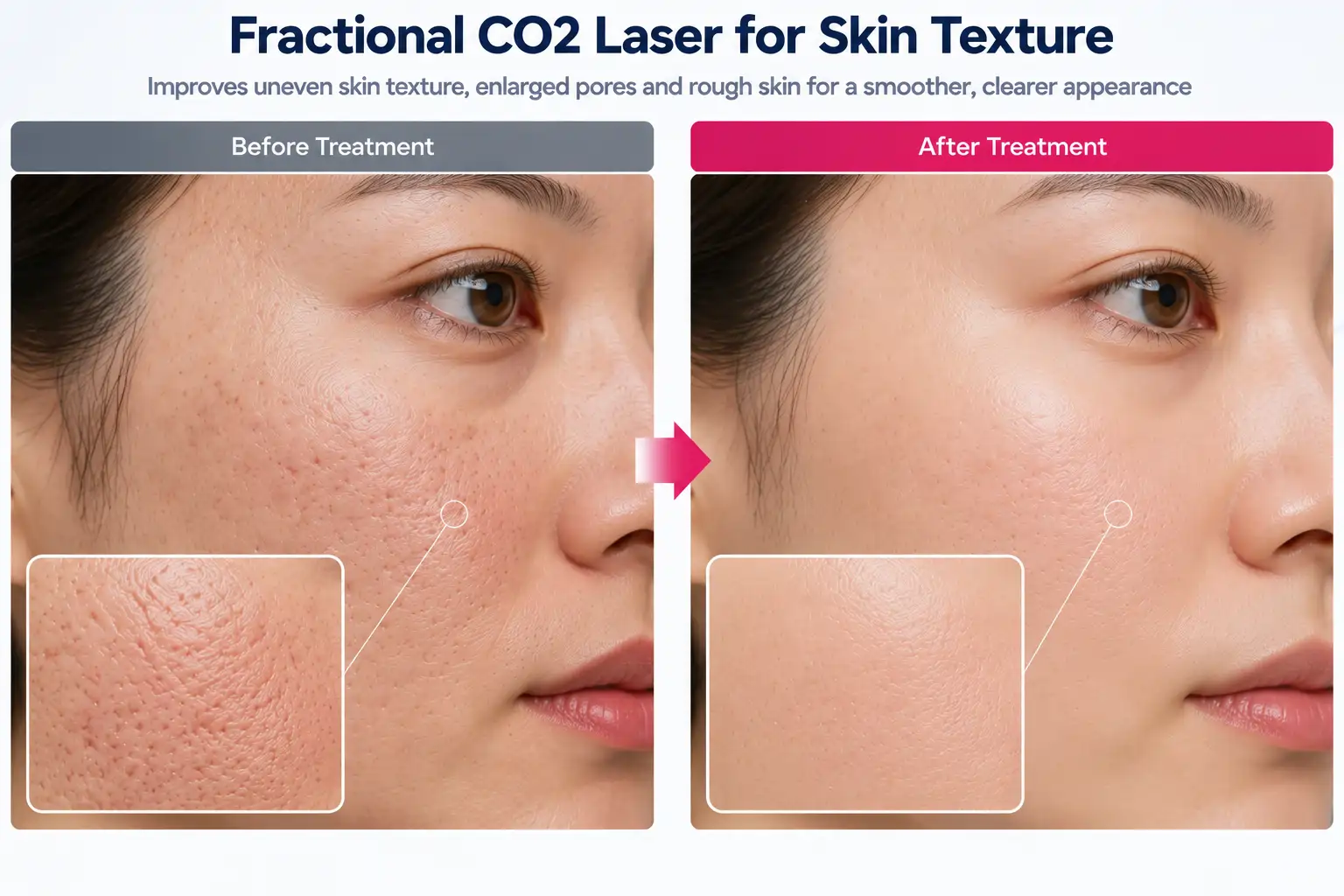
Uneven skin texture, enlarged pores, and rough surface irregularities are other concerns that may be addressed through fractional CO2 laser resurfacing.
Treatment-related tissue renewal and remodeling may contribute to a smoother-looking skin surface. The degree of visible improvement varies according to the original condition and treatment approach.
Fractional CO2 Laser for Sun-Damaged Skin
Chronic ultraviolet exposure can contribute to uneven skin texture, fine lines, and other visible signs of photodamage.
Fractional CO2 laser resurfacing may improve selected textural changes associated with photodamaged skin.
Pigmentation concerns require careful assessment because different pigment conditions may need different treatment approaches. CO2 laser resurfacing is not suitable for every pigmentation concern.
Fractional CO2 Laser Results Timeline: When Will You See Changes?
Fractional CO2 laser results develop through several stages. The initial healing period, visible surface changes, and deeper tissue remodeling do not occur simultaneously.
Understanding this distinction helps patients and practitioners evaluate treatment outcomes more realistically.
| Time Period | Possible Skin Changes | Evaluation Focus |
|---|---|---|
| Immediately after treatment | Redness, swelling, and temporary skin reactions | Initial treatment response |
| Days 1–7 | Crusting, peeling, and surface healing | Wound healing and skin recovery |
| Days 8–14 | Further surface healing and residual redness | Surface appearance |
| Weeks 3–4 | Gradual changes in redness and skin appearance | Early visible changes |
| Months 1–3 | Ongoing tissue remodeling | Texture and scar appearance |
| Months 3–6+ | Further gradual remodeling may occur | Longer-term treatment assessment |
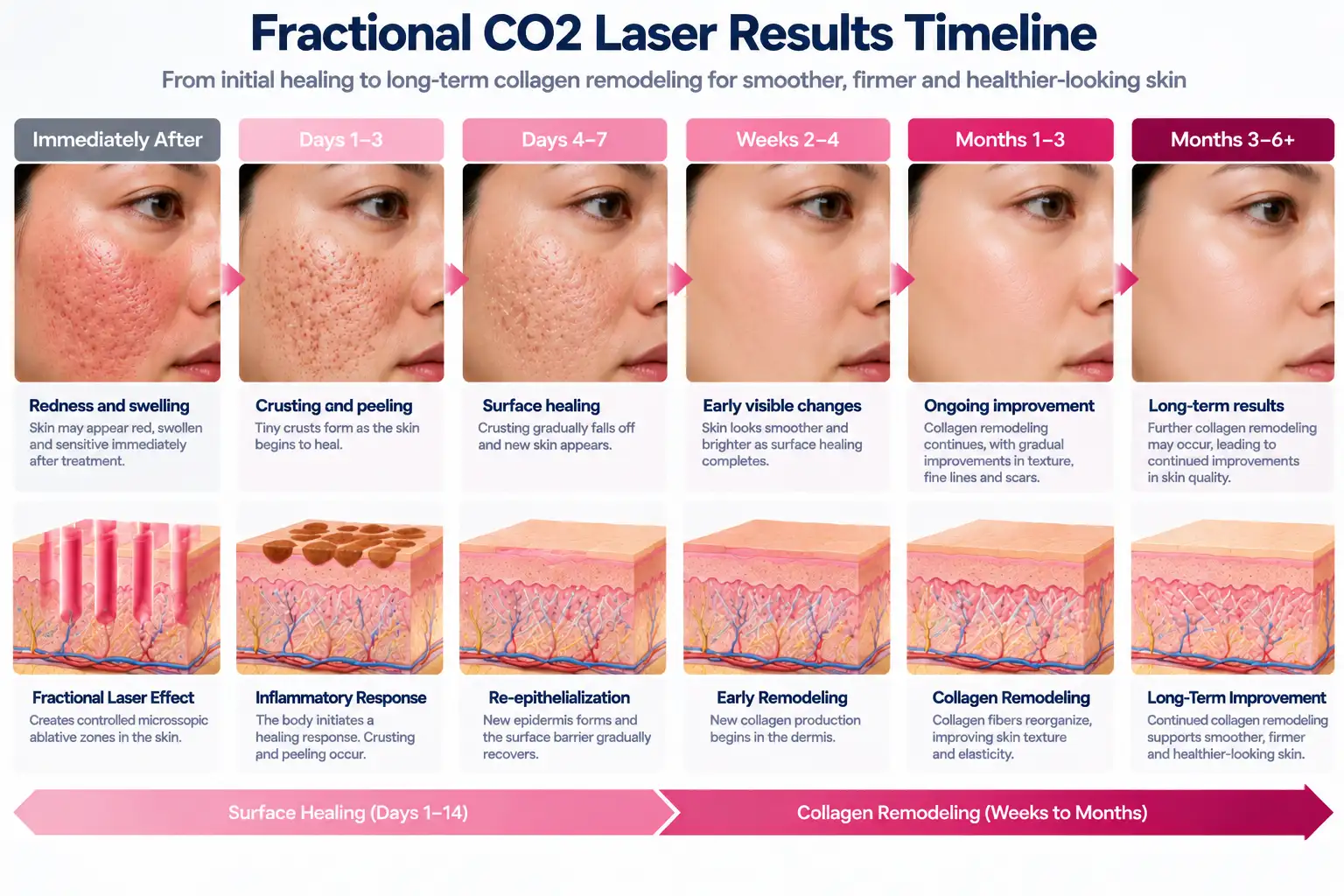
Immediately After Treatment
Immediately after fractional CO2 laser treatment, the skin may appear red, swollen, and sensitive. These reactions are associated with the controlled tissue effects produced by ablative laser energy.
This early appearance should not be interpreted as the final treatment result.
During the First Two Weeks
The skin undergoes surface healing, which may involve crusting, dryness, and peeling. Temporary redness may remain after the surface has healed.
Evaluation of long-term aesthetic improvement is generally premature during this stage.
One to Three Months After Treatment
As recovery progresses, patients may begin to notice changes in skin texture and the appearance of selected scars or fine lines.
Collagen remodeling continues during this period, so visible changes may develop gradually.
Three to Six Months and Beyond
Longer-term tissue remodeling may continue for several months. Practitioners may use standardized photographs and clinical assessments to evaluate treatment response.
The appropriate evaluation period depends on the treatment indication, procedure intensity, and individual healing response.
For a detailed explanation of the healing stages, see our Fractional CO2 Laser Recovery guide .
How Many Fractional CO2 Laser Treatments Are Needed?
The number of fractional CO2 laser sessions depends on the patient’s skin concerns, treatment objectives, scar characteristics, and response to previous procedures.
Some patients may be considered for a single treatment, while others may require multiple sessions as part of a staged treatment plan.
For Acne Scars
Acne scar treatment often requires individualized planning because scar depth, morphology, skin thickness, and tissue tethering vary.
Multiple sessions may be considered when additional improvement is desired and the skin has adequately recovered.
For Wrinkles and Skin Rejuvenation
Treatment planning for fine lines and photoaging depends on the severity of the concern and the desired degree of resurfacing.
The treating professional should determine the appropriate session schedule and treatment intensity.
Why Treatment Intervals Matter
Skin requires time to recover after ablative resurfacing. Repeating treatment before adequate healing may increase the risk of complications.
Treatment intervals should therefore be based on clinical assessment rather than a universal schedule.
What Factors Affect Fractional CO2 Laser Before and After Results?
Two patients receiving similar treatments may experience different outcomes. Several clinical and technical factors influence the final appearance.
1. Original Skin Condition
The initial severity of acne scars, wrinkles, photodamage, and skin texture irregularities affects the potential for visible improvement.
2. Acne Scar Type and Depth
Rolling, boxcar, and ice-pick scars differ in depth and underlying tissue structure.
Superficial textural irregularities and deeper tethered scars should not be expected to respond identically to fractional resurfacing.
3. Laser Energy and Treatment Density
Treatment parameters influence the distribution and intensity of tissue effects.
Energy, pulse characteristics, fractional density, and the number of passes should be selected according to the treatment indication and individual skin characteristics.
4. Skin Phototype and Pigmentation Risk
Skin phototype and a history of pigmentation changes are important considerations when planning ablative resurfacing.
Post-inflammatory hyperpigmentation is a recognized risk, particularly in susceptible individuals. Appropriate patient selection and photoprotection are essential.
5. Practitioner Experience
Proper patient assessment, treatment planning, device operation, and aftercare guidance are important components of safe clinical practice.
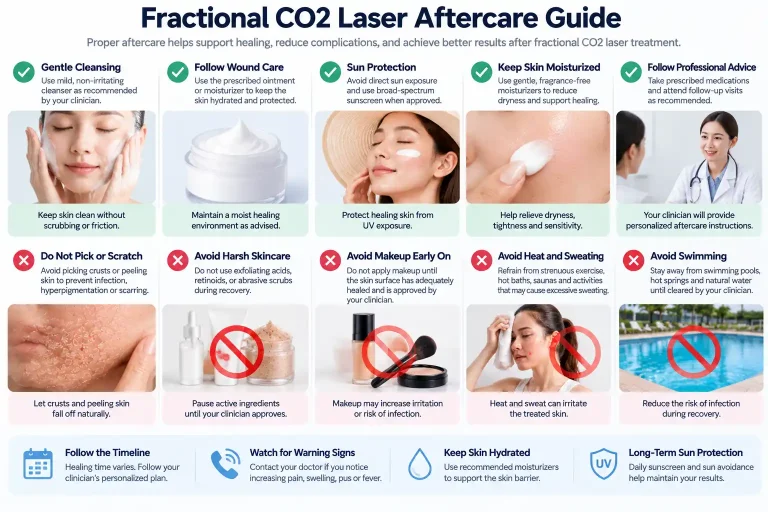
6. Post-Treatment Care
Following individualized wound-care instructions and protecting healing skin from excessive ultraviolet exposure can help reduce avoidable complications.
How to Evaluate Fractional CO2 Laser Before and After Photos
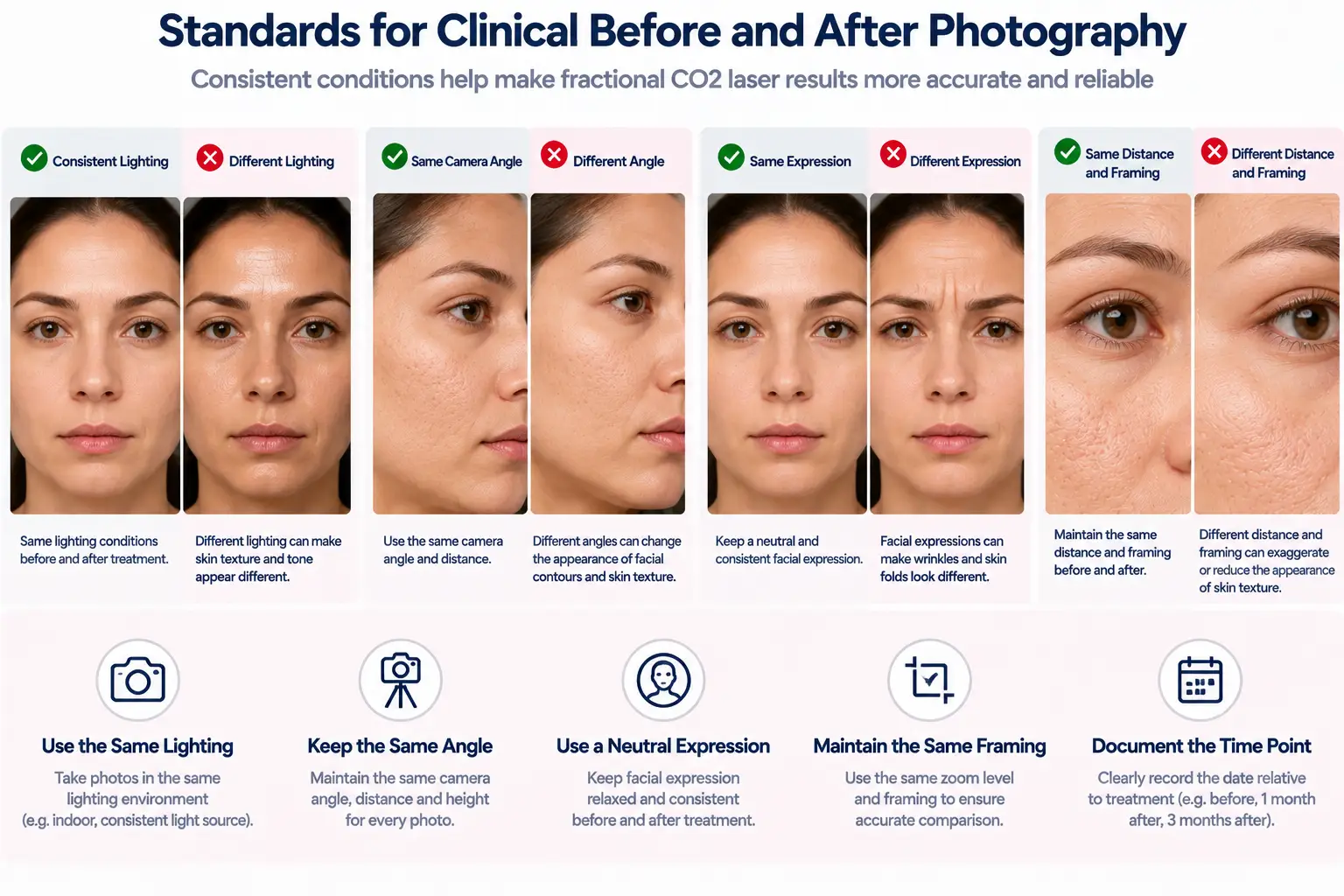
Before-and-after photographs are useful documentation tools, but they can be misleading when photography conditions are inconsistent.
Professional clinics should follow standardized photography procedures when documenting treatment outcomes.
Use Consistent Lighting
Changes in lighting can make skin texture and scar depth appear different. Use consistent lighting conditions whenever possible.
Maintain the Same Camera Angle
Facial position, camera distance, and angle should remain consistent between photographs.
Keep Facial Expressions Consistent
Facial expressions can change the appearance of wrinkles and skin folds. Neutral and consistent expressions improve comparison quality.
Document the Treatment Timeline
Each photograph should include the date relative to treatment. A photograph taken shortly after treatment should not be compared directly with one taken months later without clearly identifying the different evaluation periods.
Use Genuine Clinical Photographs
Clinics should use authentic patient photographs with appropriate consent. Images should not be digitally altered in ways that exaggerate treatment outcomes.
If multiple treatment sessions were performed, the number of sessions should be disclosed.
Fractional CO2 Laser Results vs Other Skin Treatments
Fractional CO2 laser is one of several technologies used in professional skin resurfacing and rejuvenation. Different technologies have different tissue interaction mechanisms and recovery considerations.
| Technology | Primary Mechanism | Typical Treatment Focus |
|---|---|---|
| Fractional CO2 Laser | Ablative fractional laser energy | Skin resurfacing, selected acne scars, wrinkles |
| 1550nm Fractional Laser | Non-ablative fractional optical energy | Selected textural concerns and dermal remodeling |
| 1927nm Thulium Laser | Fractional laser energy with strong epidermal water absorption | Selected superficial pigmentation and photodamage concerns |
| RF Microneedling | Needle-based radiofrequency energy | Selected dermal remodeling and skin texture concerns |
These technologies are not interchangeable. Treatment selection depends on the patient’s skin condition, clinical objectives, contraindications, and acceptable recovery requirements.
Read our related guide: Fractional CO2 Laser: How It Works, Benefits and Uses .
Professional Fractional CO2 Laser Systems for Aesthetic Clinics
For dermatology clinics, aesthetic practices, and medical equipment distributors, the evaluation of fractional CO2 laser systems involves more than their potential treatment applications.
Device configuration, treatment parameter control, laser source, scanning capabilities, technical support, and operator training are important purchasing considerations.
CO2 Star: Professional Fractional CO2 Laser System
CO2 Star is a professional fractional CO2 laser platform positioned for aesthetic clinics and medical equipment distributors.
Buyers evaluating a fractional CO2 laser system should review its available treatment configurations, technical specifications, and clinical operating requirements before making a purchasing decision.
CO2 4D: Professional CO2 Laser Platform
CO2 4D is another Cocoon Laser CO2 platform for professional aesthetic applications.
Clinics and distributors can compare the available platform configurations according to their intended treatment applications and business needs.
For product specifications, OEM cooperation, distributor opportunities, or quotations, contact the Cocoon Laser team .
Frequently Asked Questions About Fractional CO2 Laser Before and After Results
How long does it take to see fractional CO2 laser results?
Initial visible changes may become apparent after the skin surface heals. Further improvements in skin texture and selected scars may develop over the following weeks and months as tissue remodeling continues.
Are fractional CO2 laser before and after results permanent?
Treatment-related improvements may last, but they do not stop natural skin aging or prevent new skin damage. Long-term appearance depends on individual factors, ongoing skin care, and ultraviolet exposure.
Can fractional CO2 laser completely remove acne scars?
Fractional CO2 laser may improve selected atrophic acne scars, but complete removal should not be expected. Results depend on scar morphology, depth, and individual response.
How many fractional CO2 laser sessions are needed?
The number of sessions varies. Some patients may be considered for one treatment, while others may require multiple sessions. Treatment intervals should allow adequate skin recovery.
Do fractional CO2 laser results improve over time?
Some improvements may become more apparent over time because dermal remodeling continues after the initial surface healing period.
Can fractional CO2 laser improve enlarged pores?
Fractional CO2 laser resurfacing may improve the appearance of selected skin texture irregularities and enlarged pores. The degree of change varies.
What affects fractional CO2 laser before and after results?
Important factors include the original skin condition, scar depth, skin phototype, laser settings, treatment density, practitioner technique, and post-treatment care.
Are before-and-after photographs reliable?
They can provide useful visual documentation when photographs are genuine and captured under consistent conditions. Lighting, camera angle, facial expression, and treatment timing should be standardized.
Can all skin types receive fractional CO2 laser treatment?
Not every patient is an appropriate candidate for ablative fractional resurfacing. Skin phototype, pigmentation history, medical conditions, and other risk factors require professional assessment.
Does fractional CO2 laser require downtime?
Yes. Fractional CO2 laser is an ablative procedure and involves a healing period. Downtime depends on treatment intensity, treated area, and individual recovery.
Final Thoughts: Understanding Fractional CO2 Laser Results
Fractional CO2 laser before and after results can provide valuable insight into changes in acne scars, wrinkles, and skin texture following professional resurfacing.
However, treatment outcomes should always be evaluated in the context of the original skin condition, treatment parameters, number of sessions, and individual healing response.
Standardized clinical photography, realistic treatment expectations, and appropriate follow-up are essential for documenting outcomes responsibly.
For clinics and distributors exploring professional fractional CO2 laser equipment, Cocoon Laser provides CO2 platforms including CO2 Star and CO2 4D.
Contact Cocoon Laser to request product information and discuss your equipment requirements.