What Is RF Microneedling? Technology, Benefits & Applications
 “`html
Radiofrequency (RF) microneedling is an advanced aesthetic technology that combines mechanical microneedling with controlled radiofrequency energy delivery. By delivering RF energy through specialized microneedles into targeted skin layers, the technology produces localized thermal effects that can support collagen remodeling and skin rejuvenation.
RF microneedling has become an important technology in professional aesthetic practices, with applications involving skin texture, acne scars, wrinkles, and selected skin laxity concerns. This guide explains how radiofrequency microneedling works, its potential clinical applications, and the technical features clinics should evaluate when selecting an RF microneedling machine.
Quick Answer: What Is RF Microneedling?
RF microneedling (radiofrequency microneedling) is a minimally invasive aesthetic procedure that combines microneedle penetration with radiofrequency energy. Specialized needles enter the skin at controlled depths and deliver RF energy into targeted tissue, generating localized heat within the dermis.
This controlled thermal response stimulates the skin’s natural wound-healing processes and collagen remodeling. RF microneedling is commonly used in professional aesthetic treatments for acne scars, wrinkles, uneven skin texture, enlarged pores, and selected skin laxity concerns.
Unlike traditional microneedling, which relies primarily on mechanical micro-injuries, RF microneedling adds controlled thermal energy to the treatment process. Actual outcomes and recovery depend on the device, needle configuration, treatment parameters, and individual skin characteristics.
What Is RF Microneedling?
RF microneedling, also known as radiofrequency microneedling or fractional microneedle RF, is an energy-based aesthetic technology designed to deliver radiofrequency energy into the skin through small, specialized needles.
The technology combines two treatment mechanisms:
- Mechanical microneedling: Small needles penetrate the skin to create controlled micro-injuries and activate the wound-healing response.
- Radiofrequency energy: Electrical energy generates localized thermal effects within the targeted tissue, supporting collagen remodeling and tissue responses.
The combination allows practitioners to deliver energy at selected tissue depths rather than relying exclusively on energy applied from the skin surface.
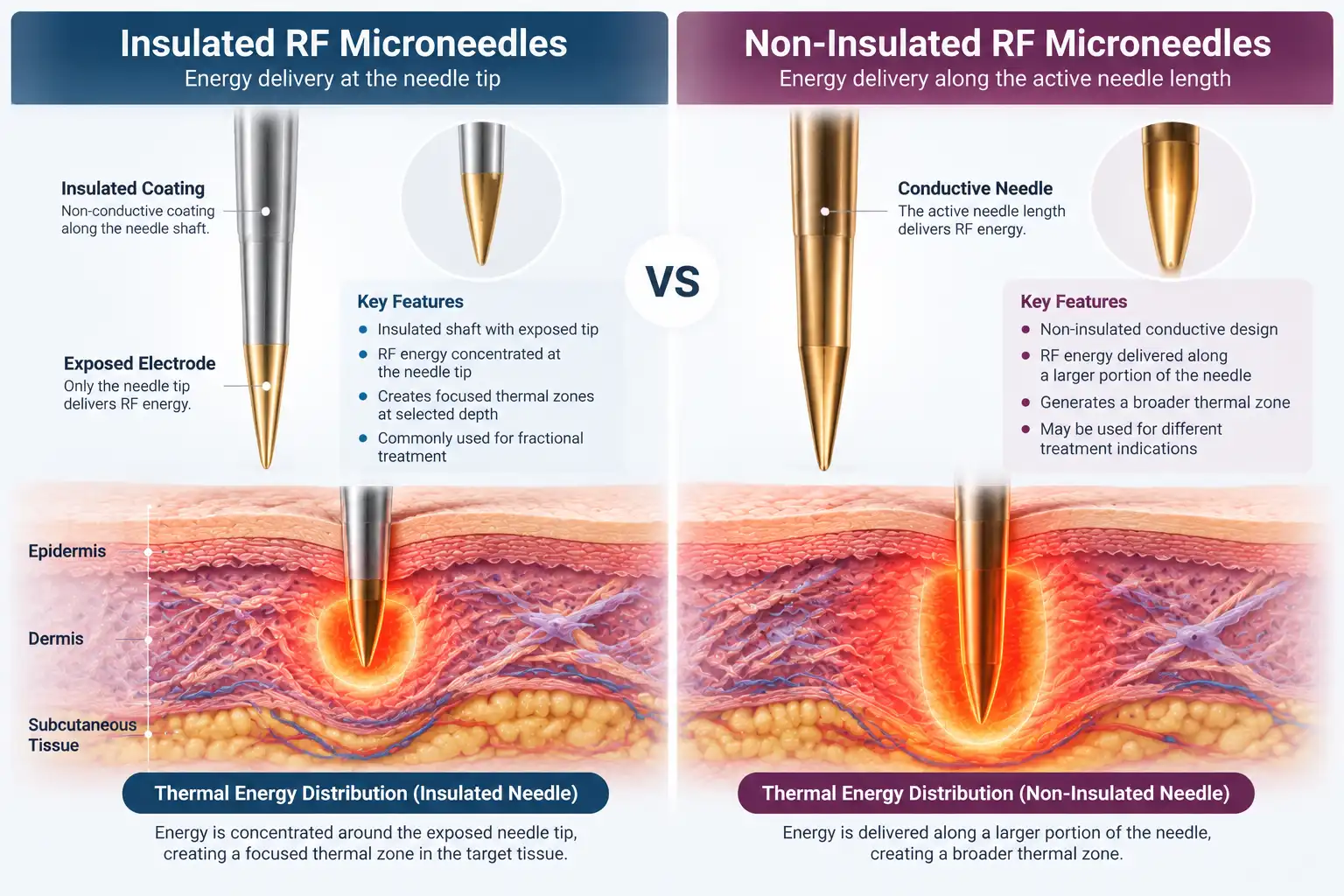
Modern RF microneedling systems may use different needle configurations, electrode arrangements, and energy delivery methods. Some devices use insulated needles, while others use non-insulated designs. These differences influence how energy is distributed within the treatment area.
RF microneedling is primarily a professional medical aesthetic technology. Device selection and treatment protocols should be based on the intended use of the specific system and appropriate professional training.
How Does RF Microneedling Work?
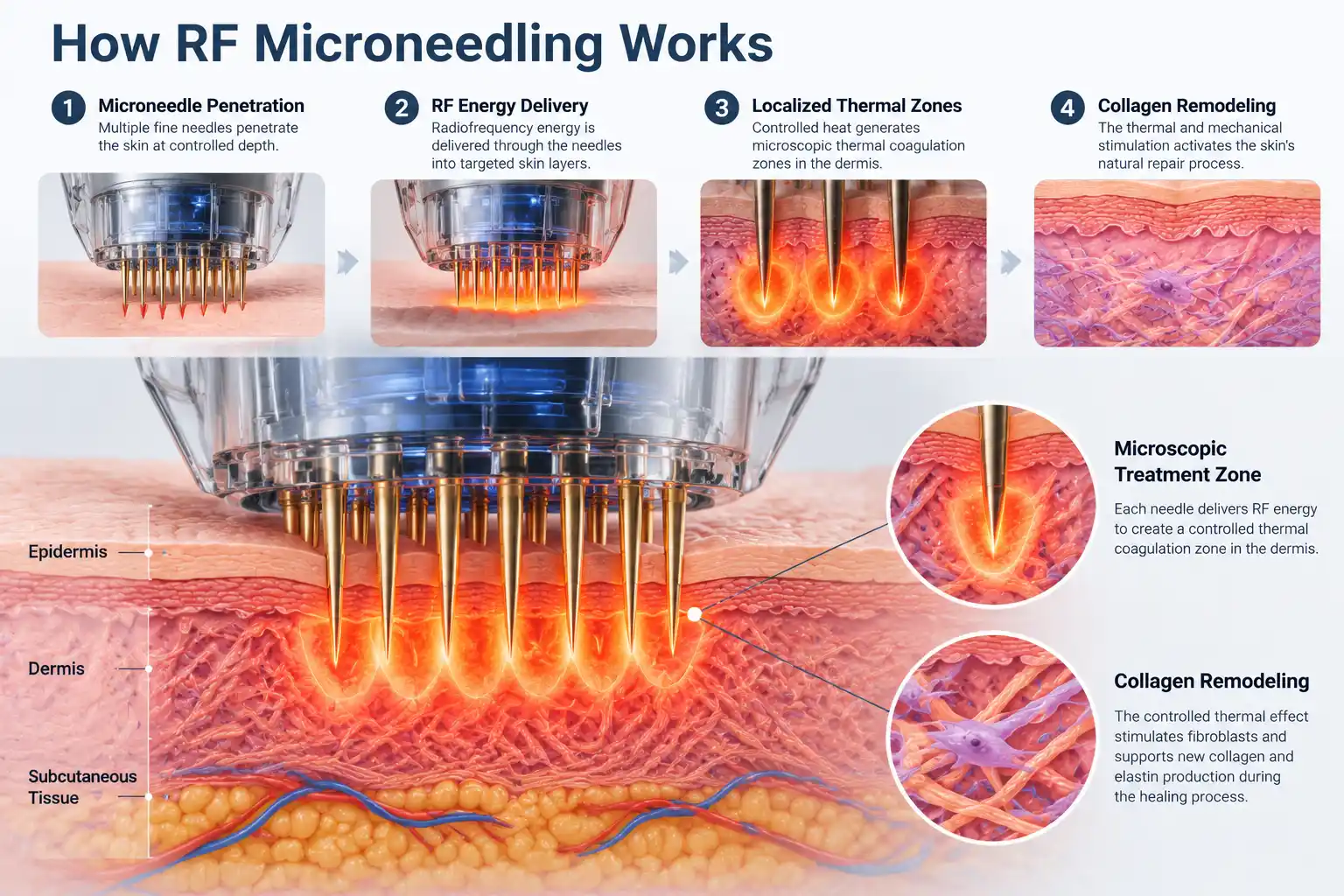
Understanding the working principle of radiofrequency microneedling requires looking at how microneedles penetrate the skin and how radiofrequency energy produces localized heating.
1. Controlled Microneedle Penetration
During treatment, a specialized handpiece positions multiple fine needles against the skin. The needles penetrate the epidermis and reach predetermined tissue depths according to the device configuration and treatment protocol.
This creates small mechanical treatment channels and initiates a controlled wound-healing response. Needle penetration depth is an important technical parameter because skin thickness and tissue structure vary across different anatomical areas.
2. Radiofrequency Energy Delivery
After or during needle penetration, the device delivers radiofrequency energy through its electrode system. The electrical current generates heat through interactions with the electrical properties of biological tissue.
Unlike laser energy, which interacts with specific optical tissue components, radiofrequency energy produces an electrothermal response. This makes RF microneedling fundamentally different from conventional optical laser treatments.
3. Formation of Localized Thermal Zones
RF energy produces localized heating around the active needle electrodes. Depending on the device design and treatment settings, this can create controlled thermal coagulation zones within the dermis.
The distribution of thermal effects depends on factors such as energy output, pulse duration, needle depth, electrode configuration, and tissue characteristics.
4. Collagen Remodeling and Tissue Response
The controlled thermal response activates biological processes associated with tissue repair and collagen remodeling.
During subsequent healing, changes in collagen organization and dermal structure may contribute to improvements in skin texture, the appearance of wrinkles, and selected skin laxity concerns.
These changes develop progressively rather than occurring immediately. The degree of improvement varies according to the treatment indication, device capabilities, treatment parameters, and individual response.
Types of RF Microneedling Technology
RF microneedling machines are not identical. Differences in needle insulation, electrode arrangement, and energy delivery architecture can influence treatment characteristics.
Insulated RF Microneedles
Insulated microneedles contain an insulating coating along much of the needle shaft, with an exposed electrode section near the tip.
This configuration is designed to concentrate radiofrequency energy delivery around the exposed electrode region. The resulting thermal distribution depends on the specific needle design and operating parameters.
Non-Insulated RF Microneedles
Non-insulated microneedles have conductive surfaces along their active needle length. Radiofrequency energy can therefore be delivered along a larger portion of the needle.
The thermal distribution differs from insulated needle systems and depends on electrode geometry, penetration depth, and energy settings.
Monopolar and Bipolar RF Delivery
RF microneedling systems may also differ in their electrical configurations.
| Technology | Energy Delivery | Technical Characteristics |
|---|---|---|
| Monopolar RF | Current flows between the active treatment electrode and a return electrode. | Energy distribution depends on the electrical circuit and tissue impedance. |
| Bipolar RF | Current flows between two electrodes within the treatment system. | Energy distribution is influenced by electrode spacing and configuration. |
These configurations should not be considered interchangeable. Buyers should evaluate the actual electrical architecture and technical documentation of each RF microneedling device.
What Are the Benefits of RF Microneedling?
The potential benefits of RF microneedling are associated with the combined effects of mechanical microneedling and radiofrequency-induced thermal stimulation.
1. Supports Collagen Remodeling
RF microneedling produces controlled thermal effects in targeted dermal tissue. The subsequent healing response involves collagen remodeling and changes in the extracellular matrix.
This mechanism is one reason the technology is used in professional procedures focused on skin texture and selected signs of skin aging.
2. Adjustable Treatment Depth
Many RF microneedling systems provide adjustable needle penetration depth. This allows trained practitioners to select treatment parameters according to anatomical areas and clinical objectives.
Adjustable depth is an important equipment feature, but it does not mean that deeper treatment is automatically more effective or appropriate.
3. Versatile Clinical Applications
RF microneedling is used in a range of professional aesthetic applications, including acne scar treatment, skin texture improvement, wrinkle reduction, and selected skin laxity procedures.
Actual indications depend on the device’s regulatory authorization, clinical evidence, and intended use.
4. Different Approach to Energy Delivery
Unlike surface-based radiofrequency treatments, RF microneedling delivers energy through electrodes positioned within the skin.
This provides a different approach to controlling the location of thermal effects compared with conventional surface RF systems.
5. Potential for Combination Treatment Strategies
In selected clinical settings, RF microneedling may be incorporated into broader aesthetic treatment strategies.
Any combination with other procedures or topical products requires appropriate clinical assessment, device-specific guidance, and consideration of treatment compatibility.
Clinical Applications of RF Microneedling
RF microneedling is used in several dermatological and aesthetic treatment areas. Its suitability depends on the specific condition, device, treatment parameters, and practitioner expertise.
1. Acne Scar Treatment
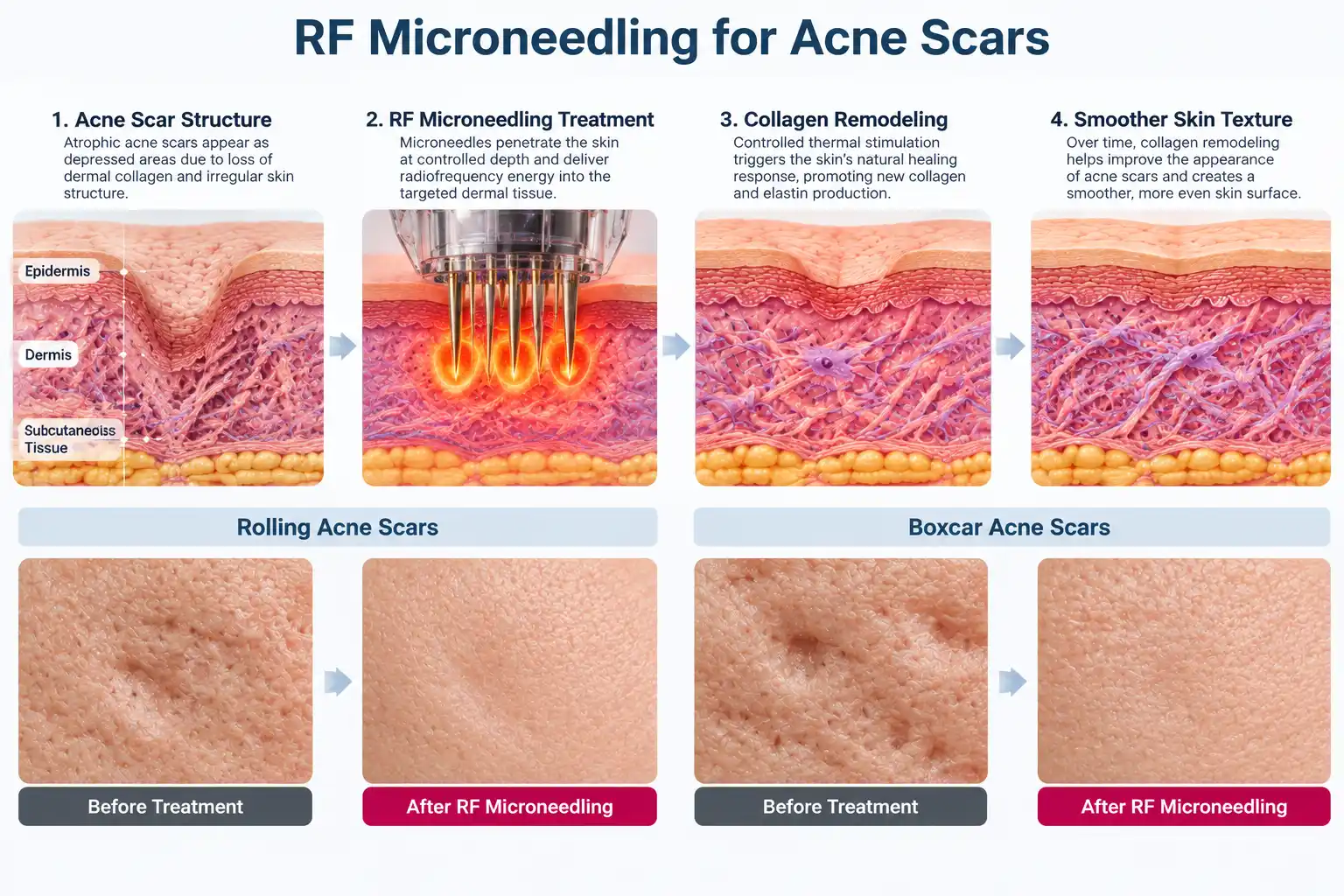
Atrophic acne scars involve structural changes in the skin, including loss of dermal tissue and irregular collagen organization.
RF microneedling can be used in selected acne scar treatment strategies by delivering controlled mechanical and thermal stimulation into the dermis.
Treatment outcomes depend on scar morphology, scar severity, skin characteristics, and the selected treatment protocol.
2. Wrinkle and Fine Line Treatment
Changes in collagen structure and dermal support contribute to the development of visible wrinkles and fine lines.
RF microneedling produces localized thermal effects that can stimulate collagen remodeling. It may therefore be considered in treatment strategies for selected facial wrinkles and skin texture concerns.
3. Skin Tightening and Mild Skin Laxity
Skin laxity can develop as collagen and elastin structures change with age and other biological factors.
RF microneedling may support improvements in the appearance of selected areas of mild skin laxity through controlled dermal heating and subsequent tissue remodeling.
The treatment should not be considered equivalent to surgical lifting, and outcomes vary between individuals and devices.
4. Enlarged Pores and Uneven Skin Texture
Enlarged pores and uneven skin texture may be associated with changes in skin structure, sebum production, and collagen support.
RF microneedling may be incorporated into professional treatment plans intended to improve overall skin texture and the appearance of enlarged pores.
5. Neck and Selected Body Areas
Certain RF microneedling platforms are designed for applications beyond the face, including selected neck and body areas.
Treatment depth, tissue thickness, device configuration, and anatomical considerations must be evaluated before selecting a protocol.
| Clinical Application | Potential Treatment Objective |
|---|---|
| Atrophic acne scars | Improve the appearance of scar texture |
| Facial wrinkles | Support collagen remodeling |
| Skin laxity | Improve the appearance of selected lax areas |
| Enlarged pores | Improve visible skin texture |
| Uneven skin texture | Support dermal remodeling |
| Selected body areas | Address specific skin texture and laxity concerns |
This table describes general clinical applications of RF microneedling technology rather than universal indications for every device.
RF Microneedling vs Traditional Microneedling
Traditional microneedling and RF microneedling both use small needles to create controlled micro-injuries in the skin. However, their energy delivery mechanisms are different.
Traditional microneedling relies primarily on mechanical stimulation. RF microneedling combines needle penetration with localized radiofrequency heating.
| Feature | Traditional Microneedling | RF Microneedling |
|---|---|---|
| Primary mechanism | Mechanical micro-injuries | Mechanical and thermal stimulation |
| Energy delivery | No RF energy | Radiofrequency energy |
| Needle function | Creates microchannels | Creates microchannels and delivers RF energy |
| Thermal effects | Not generated by RF | Localized RF-induced heating |
| Equipment | Manual or motorized needling devices | Professional RF microneedling platform |
The two approaches have different technical capabilities and treatment considerations. The appropriate option depends on the treatment objective, device, and professional assessment.
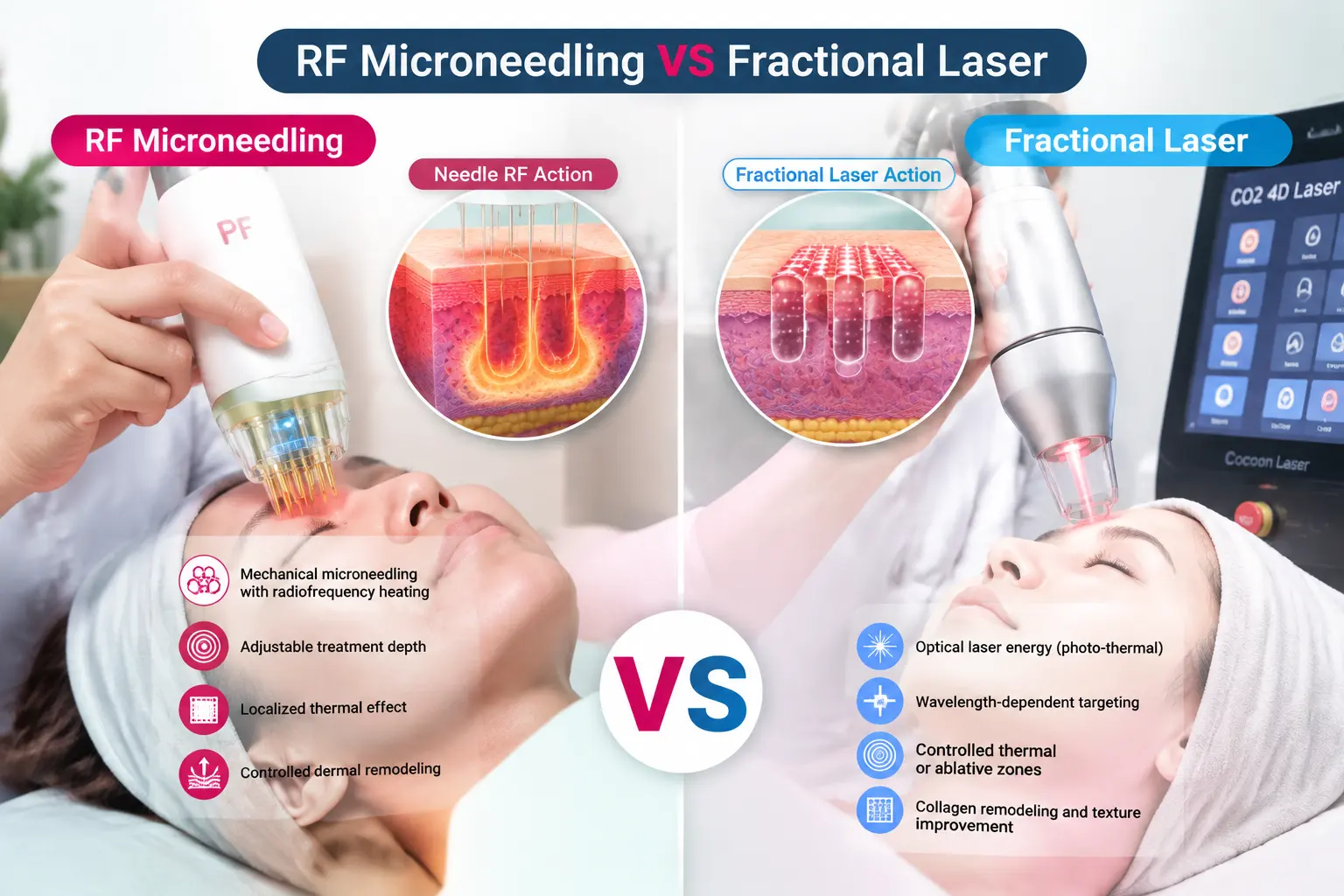
RF Microneedling vs Fractional Laser
RF microneedling and fractional laser systems are both used in professional skin remodeling procedures, but they rely on different physical mechanisms.
Fractional laser systems use optical energy to create controlled thermal or ablative treatment zones in the skin. RF microneedling uses mechanical needles to deliver radiofrequency energy into targeted tissue.
| Feature | RF Microneedling | Fractional Laser |
|---|---|---|
| Energy source | Radiofrequency | Optical laser energy |
| Delivery method | Microneedle electrodes | Laser beam scanning |
| Primary mechanism | Electrothermal tissue response | Photothermal tissue response |
| Targeting | Needle-dependent tissue depth | Wavelength and optical tissue interaction |
| Common applications | Acne scars, wrinkles, selected skin laxity | Resurfacing, scars, wrinkles, skin texture |
Neither technology is universally better. Treatment selection depends on the clinical indication, skin characteristics, acceptable recovery, and the capabilities of the specific equipment.
Explore our related Fractional CO2 Laser Technology guide for more information about optical fractional resurfacing systems.

What to Look for in an RF Microneedling Machine
Selecting an RF microneedling machine requires more than comparing advertised energy output or the number of needles.
Clinics, medical aesthetic centers, distributors, and equipment importers should evaluate the complete device architecture, treatment controls, operational workflow, and manufacturer support.
1. Adjustable Needle Depth
Needle depth is an important consideration because tissue thickness varies across facial and body regions.
Buyers should examine the available adjustment range, depth control mechanism, and consistency of needle penetration.
2. Insulated and Non-Insulated Needle Options
Needle configuration influences how RF energy is distributed within the tissue.
Review the available needle types, electrode structure, cartridge design, and compatibility with the intended treatment applications.
3. RF Energy Control
Professional RF microneedling equipment should provide clearly defined and controllable treatment parameters.
Important factors include:
- Adjustable RF energy output
- Pulse duration control
- Needle penetration depth
- Energy delivery consistency
- Electrode configuration
- Relevant safety monitoring functions
The actual adjustment range and operating specifications should always be confirmed through the manufacturer’s technical documentation.
4. Handpiece and Cartridge Design
Handpiece ergonomics and cartridge design influence treatment workflow and equipment usability.
Buyers should evaluate cartridge installation, needle alignment, handpiece weight, cable flexibility, and the availability of replacement consumables.
5. Safety Features and Device Monitoring
Safety-related engineering is particularly important for energy-based medical aesthetic equipment.
Evaluate applicable protections, electrical safety, temperature monitoring where available, fault detection, and system alarms.
6. Manufacturer Support and OEM Services
For distributors and international equipment buyers, the manufacturer’s capabilities extend beyond the hardware itself.
- Technical documentation and product specifications
- Operator training and technical assistance
- Warranty and after-sales service
- Replacement cartridges and spare parts
- OEM branding and customization options
- Regulatory documentation for the target market
Before purchasing an RF microneedling device, verify its regulatory status and intended use in the market where it will be distributed or operated. Do not assume that one device’s authorization applies to another manufacturer’s system.
RF Microneedling Safety and Considerations
RF microneedling is a professional medical aesthetic procedure, and its safety depends on appropriate device selection, treatment parameters, operator training, and patient assessment.
Common temporary treatment responses may include redness, swelling, tenderness, pinpoint bleeding, and temporary skin sensitivity.
Potential Complications
More serious complications have also been reported with certain uses of RF microneedling devices. These may include burns, scarring, unwanted fat loss, disfigurement, and nerve damage.
On October 15, 2025, the U.S. Food and Drug Administration (FDA) issued a safety communication highlighting these reported complications and advising patients and healthcare providers to understand the associated risks.
The FDA also emphasizes that RF microneedling is a medical procedure and that these devices should not be used at home.
Important Factors for Professional Practice
- Conduct appropriate patient assessment before treatment.
- Follow the specific device’s instructions for use and intended indications.
- Use appropriate needle depth and energy parameters for the treatment area.
- Maintain sterile or appropriately supplied single-use components according to device instructions.
- Provide appropriate pre-treatment and post-treatment instructions.
- Monitor treatment responses and manage complications through qualified healthcare professionals.
Device manufacturers and distributors should provide accurate technical documentation, appropriate training, and support for the intended professional applications.
Frequently Asked Questions
What is RF microneedling used for?
RF microneedling is used in professional aesthetic procedures involving atrophic acne scars, wrinkles, uneven skin texture, enlarged pores, and selected skin laxity concerns. Specific indications depend on the device and its regulatory status.
How does radiofrequency microneedling work?
Radiofrequency microneedling combines controlled needle penetration with RF energy delivery. The needles enter targeted skin layers and deliver radiofrequency energy, producing localized thermal effects that support collagen remodeling.
What is the difference between microneedling and RF microneedling?
Traditional microneedling relies primarily on mechanical micro-injuries. RF microneedling adds radiofrequency energy, producing controlled thermal effects within targeted tissue.
Is RF microneedling a laser treatment?
No. RF microneedling is not a laser treatment. It uses electrical radiofrequency energy delivered through needle electrodes, whereas laser systems use optical energy.
What is the difference between insulated and non-insulated RF needles?
Insulated needles have an insulating coating along part of the needle, concentrating energy delivery around exposed electrode sections. Non-insulated needles have conductive surfaces along their active length, resulting in different RF energy distribution patterns.
Is RF microneedling suitable for acne scars?
RF microneedling may be considered for selected atrophic acne scars. Treatment selection depends on scar type, severity, skin characteristics, and the specific device and protocol.
Is RF microneedling safe for all skin types?
RF microneedling does not rely on selective optical melanin absorption in the same way as many laser systems. However, this does not make it risk-free or automatically suitable for every skin type. Individual assessment, device selection, and treatment parameters remain important.
What should clinics consider when buying an RF microneedling machine?
Clinics should evaluate needle depth adjustment, insulated and non-insulated cartridge options, RF energy controls, handpiece ergonomics, safety features, consumable availability, regulatory documentation, warranty, and manufacturer support.
Can RF microneedling devices be used at home?
Professional RF microneedling devices should not be used at home. The FDA identifies RF microneedling as a medical procedure and recommends treatment by appropriately trained healthcare providers.
Conclusion: Understanding RF Microneedling Technology
RF microneedling combines mechanical microneedling with radiofrequency energy delivery to create controlled thermal effects within targeted skin tissue. Its applications in professional aesthetic practice include selected acne scar, wrinkle, skin texture, and skin laxity treatments.
The technology differs from traditional microneedling and fractional laser systems in its energy delivery mechanism and treatment architecture.
For clinics, distributors, and medical aesthetic equipment buyers, selecting an RF microneedling machine requires careful evaluation of needle technology, energy control, safety engineering, device documentation, and manufacturer support.
Understanding these technical differences helps professional buyers evaluate equipment more effectively and identify systems that match their clinical and business requirements.
Professional Medical Aesthetic Equipment
Looking for Professional Aesthetic Equipment?
Cocoon Laser provides professional medical aesthetic equipment and manufacturing solutions for clinics, distributors, importers, and OEM partners. Contact our team to discuss available equipment configurations, technical specifications, and cooperation opportunities.
Contact Our Team