808 Diode Laser Hair Removal: How It Works & Benefits
Diode Laser Hair Removal Technology
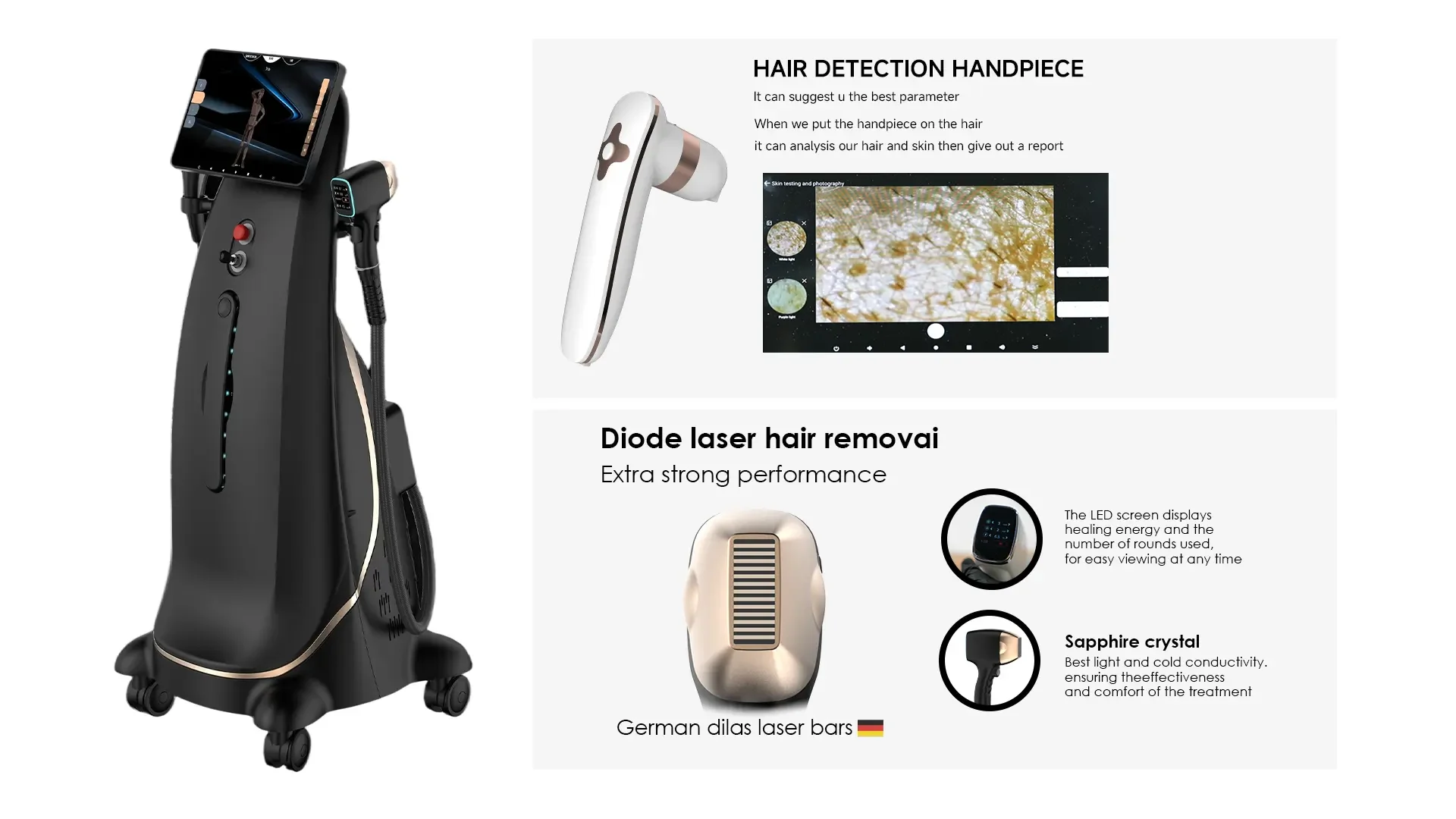
808 diode laser hair removal is one of the most widely used technologies in professional laser hair reduction. By delivering laser energy at approximately 808nm, diode systems are designed to target melanin within the hair follicle while providing a practical balance between melanin absorption and optical penetration depth.
Quick Answer
808 diode laser hair removal uses a semiconductor diode laser operating around the 808nm wavelength to deliver controlled optical energy into hair follicles. Melanin in the hair absorbs part of this energy and converts it into heat, helping damage structures responsible for future hair growth.
The 808nm wavelength has become common in professional hair removal systems because it offers a useful balance of melanin absorption, penetration depth, treatment speed and versatility. Modern professional platforms may use 808nm alone or combine it with wavelengths such as 755nm, 940nm and 1064nm.

What Is 808 Diode Laser Hair Removal?
808 diode laser hair removal is a professional light-based hair reduction technology built around a semiconductor laser with a wavelength close to 808 nanometers.
Unlike broad-spectrum technologies such as IPL, a diode laser generates light within a comparatively narrow wavelength range. The objective is to deliver sufficient energy to melanin-containing hair structures while controlling the amount of heat affecting surrounding tissue.
The basic mechanism is based on selective photothermolysis. Hair pigment absorbs laser energy, the absorbed energy becomes heat, and this thermal effect can damage follicular structures involved in hair production.
This is why the terms 808nm diode laser hair removal, 808 laser hair removal and 808nm diode laser are frequently encountered when researching professional hair removal equipment.
Why Is 808nm Used for Laser Hair Removal?
Wavelength selection is one of the fundamental engineering considerations in a professional laser hair removal system. Different wavelengths interact with melanin and tissue differently.
At approximately 808nm, diode laser energy retains useful melanin absorption while penetrating deeper than shorter visible and near-infrared wavelengths. This combination has helped establish 808nm as a core wavelength in many professional diode hair removal platforms.
It should not, however, be interpreted as a universally superior wavelength. Hair characteristics, skin pigmentation, treatment area, fluence, pulse duration, spot size, cooling and treatment technique all influence the actual clinical response.

How Does an 808nm Diode Laser Work?
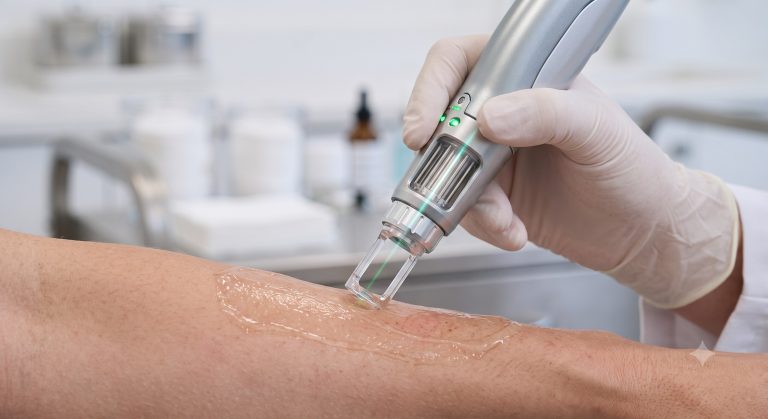
An 808nm diode laser uses semiconductor laser diodes to generate near-infrared light. During treatment, the handpiece directs this laser energy through the skin toward pigmented hair structures.
The process can be summarized in four stages:
- Laser emission: semiconductor diodes generate laser energy at approximately 808nm.
- Melanin absorption: pigment within the hair shaft and follicular structures absorbs part of the optical energy.
- Thermal conversion: absorbed light is converted into heat.
- Follicular thermal damage: controlled heating can impair structures involved in subsequent hair growth.
Effective treatment therefore involves much more than simply selecting an 808nm wavelength. Energy density, pulse duration, repetition rate, treatment technique and epidermal cooling must work together as a controlled system.
For a broader explanation of the mechanism, see our guide to how laser hair removal works .
Why Are Multiple Laser Hair Removal Sessions Needed?
An 808 diode laser does not affect every hair equally during a single session because human hair continuously moves through different stages of the growth cycle.
The major stages include anagen, catagen and telogen. Hair in the active anagen phase generally provides a more favorable target because the follicular system is actively producing hair and contains structures relevant to laser treatment.
At any given time, however, only part of the hair population is in this phase. Additional sessions allow treatment to target follicles as they enter more responsive growth stages.
You can learn more in our detailed guide to the hair growth cycle.
What Are the Benefits of 808 Diode Laser Hair Removal?
The widespread use of 808nm technology is largely related to its combination of wavelength characteristics and the engineering flexibility of diode laser platforms.
1. Balanced Wavelength Characteristics
808nm provides a practical combination of melanin absorption and optical penetration depth, making it useful as a central wavelength for professional hair reduction systems.
2. Suitable for Multiple Treatment Areas
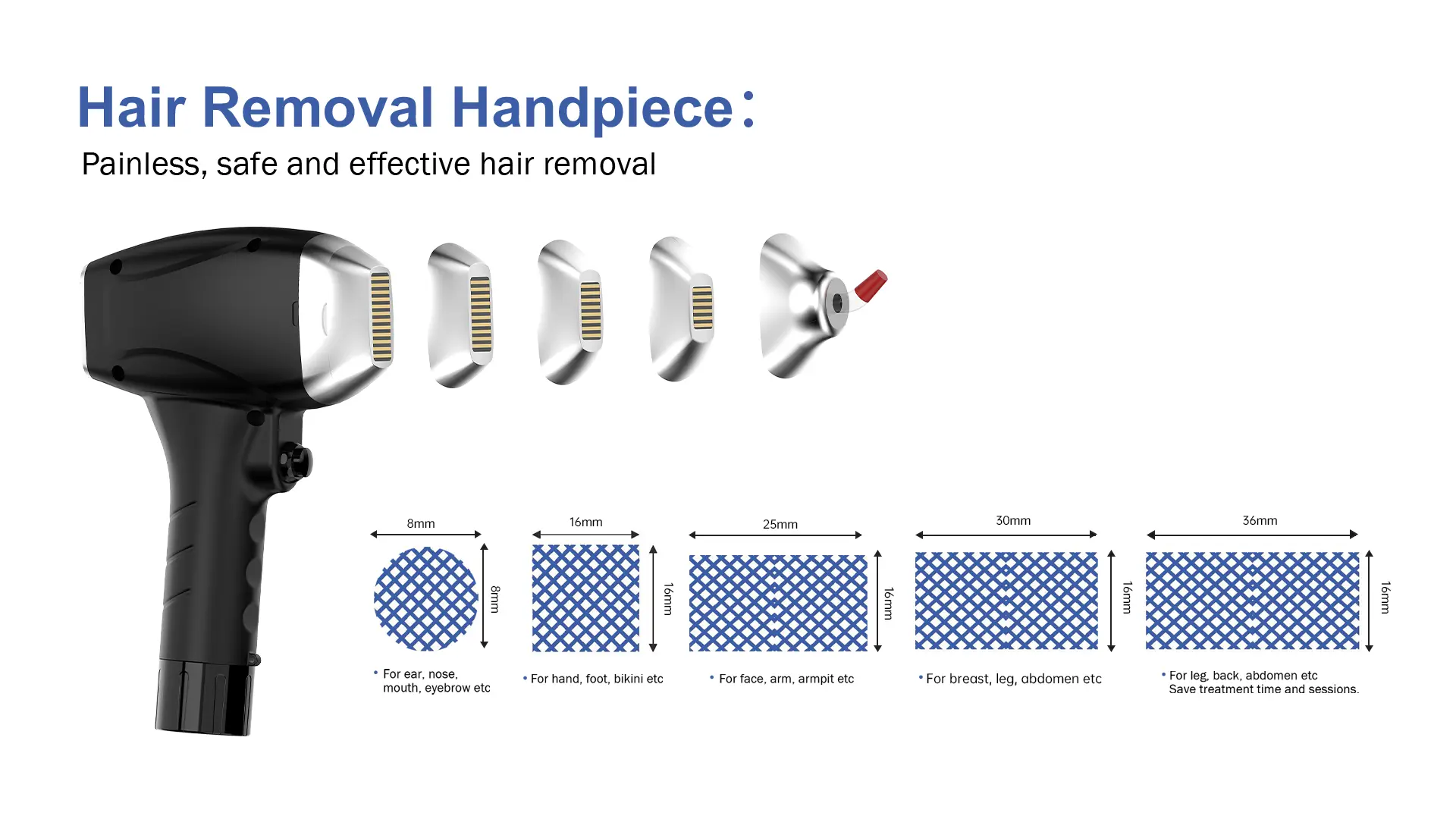
Professional diode systems can use different spot sizes and operating parameters for areas ranging from relatively small facial zones to larger regions such as the legs, back or chest.
3. High-Speed Professional Treatment
Larger spot sizes and appropriate repetition rates can help practitioners treat larger body areas efficiently. Actual treatment speed depends on the machine configuration and selected operating parameters.
4. Compatible With Professional Cooling Systems
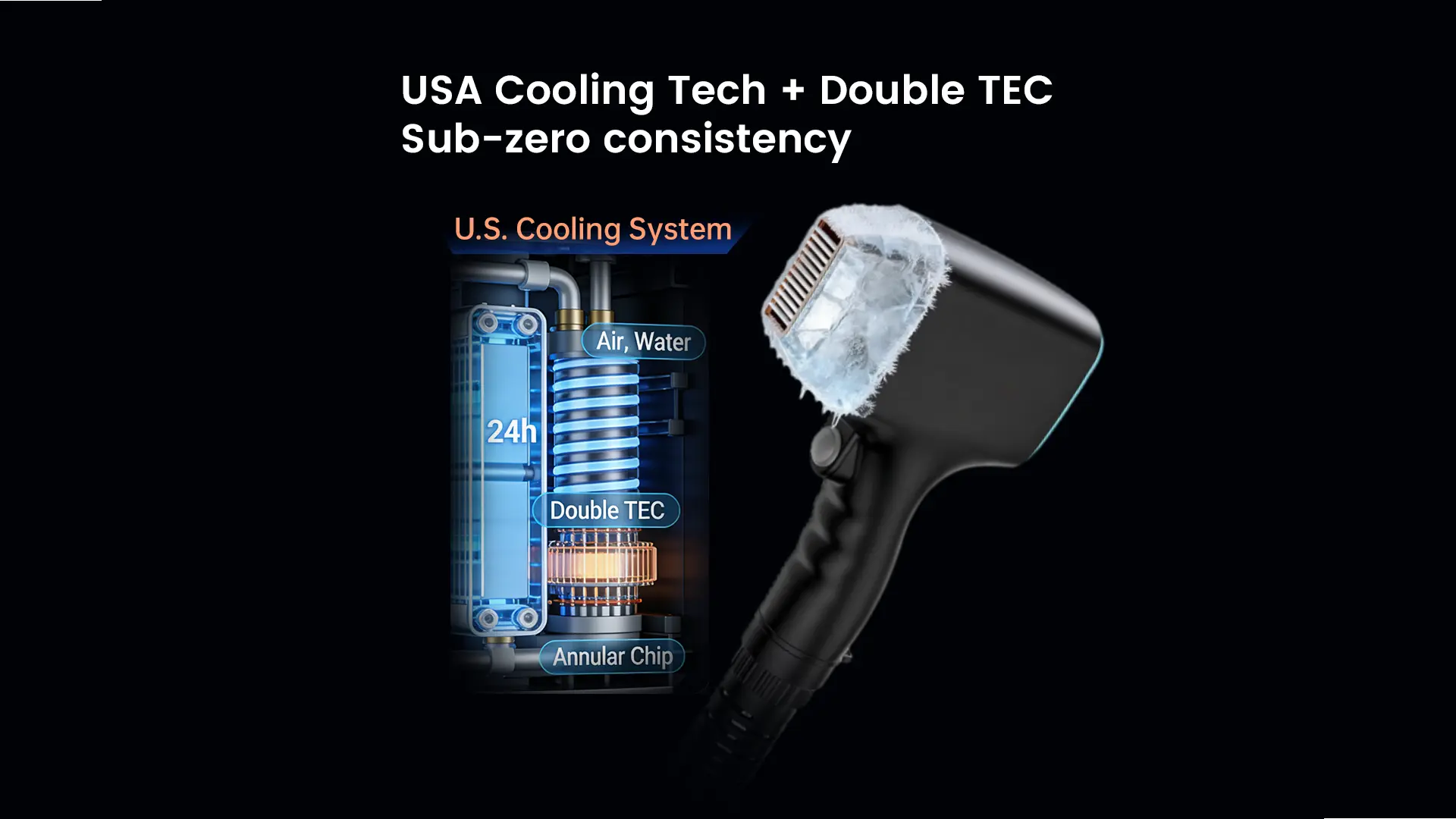
Modern diode laser handpieces frequently incorporate contact cooling or other thermal-management systems. Cooling helps manage epidermal heat during energy delivery and can improve treatment comfort.
5. Mature Professional Technology
808nm has been incorporated into professional diode laser systems for many years, and it remains an important wavelength even as newer multi-wavelength platforms have become increasingly common.
808nm vs 755nm vs 1064nm for Hair Removal
One reason modern professional diode systems increasingly use multiple wavelengths is that no single wavelength has identical optical behavior across every skin and hair condition.
| Wavelength | Relative Melanin Interaction | Relative Penetration | Role in Hair Removal Platforms |
|---|---|---|---|
| 755nm | Higher relative melanin absorption | Shallower | Useful additional wavelength for pigmented hair targets |
| 808nm | Balanced | Intermediate | Core wavelength in many professional diode systems |
| 1064nm | Lower relative melanin absorption | Deeper | Provides different optical characteristics for professional treatment planning |
These differences do not mean that a wavelength should automatically be selected based only on a simple skin-type chart. Professional treatment planning should also consider hair thickness, pigmentation, treatment area, device characteristics and operating parameters.
What About 940nm Diode Laser Technology?
Some newer diode laser platforms also incorporate approximately 940nm alongside 755nm, 808nm and 1064nm.
The additional wavelength provides another optical component between the commonly used 808nm and longer 1064nm regions. In a multi-wavelength platform, the objective is not simply to increase the number of wavelengths, but to provide a broader range of wavelength characteristics within a single professional system.
The actual output architecture and energy distribution between wavelengths varies by device, so wavelength count alone should not be used to judge machine performance.
808nm Diode Laser vs Multi-Wavelength Diode Laser
Traditional professional diode laser machines may operate primarily at 808nm. Modern platforms may instead integrate several wavelengths into the same system or handpiece.
| Feature | 808nm Diode Laser | Multi-Wavelength Diode Laser |
|---|---|---|
| Core Technology | Diode laser | Diode laser |
| Wavelength | Primarily around 808nm | Multiple wavelengths |
| Optical Characteristics | Focused around 808nm | Combines different wavelength characteristics |
| System Complexity | Relatively straightforward | More complex optical and thermal design |
| Professional Flexibility | Depends on system parameters | Potentially broader wavelength flexibility |
Neither configuration should be judged by wavelength count alone. Cooling performance, energy stability, spot size, pulse control, handpiece design and overall machine engineering remain important purchasing considerations.
Is 808 Diode Laser Hair Removal Suitable for All Skin Types?
Suitability cannot be determined from wavelength alone.
Because melanin is an important optical target in laser hair removal, epidermal pigmentation must also be considered. As skin pigmentation increases, careful parameter selection and thermal management become increasingly important.
Hair characteristics matter as well. Darker, coarser hair generally provides more melanin for laser targeting than very light, gray, white or red hair.
Professional assessment should therefore consider skin type, hair color, hair diameter, treatment area, previous response and the capabilities of the specific laser platform before treatment parameters are selected.
Does 808 Diode Laser Hair Removal Permanently Remove Hair?
A more appropriate professional description is long-term or permanent hair reduction rather than guaranteeing complete permanent removal of every treated hair.
Successful laser treatment can produce substantial and persistent reductions in hair growth, but outcomes vary between individuals and treatment areas. Hormonal factors, hair characteristics, treatment parameters and the number of sessions can all influence the response.
Maintenance treatments may also be appropriate for some individuals over time.
808 Diode Laser vs IPL Hair Removal
Although both technologies can be used for hair reduction, they are not the same type of light source.
An 808 diode laser produces laser light concentrated around a specific wavelength, whereas IPL generates broad-spectrum intense pulsed light across a range of wavelengths and uses filters to shape the emitted spectrum.
| Technology | 808nm Diode Laser | IPL |
|---|---|---|
| Light Source | Semiconductor laser diode | Broad-spectrum flashlamp |
| Wavelength Output | Concentrated around 808nm | Broad wavelength range |
| Professional Hair Removal | Widely used | Widely used |
| Energy Delivery | Laser-based | Intense pulsed light |
For a more detailed technology comparison, read IPL vs laser hair removal.
What Makes a Good Professional 808 Diode Laser Machine?
Clinics evaluating an 808 diode laser hair removal machine should look beyond wavelength and peak power claims.
Important equipment considerations include:
- Laser wavelength configuration
- Energy stability
- Pulse-duration control
- Available spot sizes
- Repetition rate
- Handpiece cooling
- Water and thermal-management architecture
- Handpiece service life
- User interface and treatment workflow
- Technical documentation
- Manufacturer support
- Training and after-sales service
A machine that performs reliably in daily clinical operation is a complete engineering system. The wavelength specification is only one component.
Clinics currently evaluating equipment can also read our professional laser hair removal machine buying guide and our comparison of the best diode laser hair removal machines for clinics .
808nm in Modern 4-Wavelength Diode Laser Systems
808nm remains important even as professional equipment moves toward multi-wavelength designs.
Instead of replacing 808nm, these platforms typically retain it as a central diode wavelength and add other wavelengths to broaden the optical characteristics available within the system.
For example, the COOLICE professional diode laser platform combines 755nm, 808nm, 940nm and 1064nm wavelengths with multiple spot sizes and a professional cooling architecture.
Its cooling system combines air cooling, water cooling, Double TEC semiconductor cooling and an annular cooling chip, with a specified cooling temperature range of −15°C to 0°C.
COOLICE also provides four spot-size options: 12×36mm, 12×25mm, 15×15mm and Ø6mm, allowing the professional system to accommodate different treatment-area requirements.
These specifications illustrate an important trend in modern professional diode systems: 808nm remains a core technology, but it can be integrated into a broader treatment platform rather than operating as the only wavelength.
Explore the COOLICE professional diode laser hair removal platform for machine specifications and configuration information.

808 Diode Laser Hair Removal Safety Considerations
Professional laser hair removal involves controlled delivery of optical and thermal energy, so correct device operation and patient assessment are essential.
Potential treatment reactions can include temporary redness, perifollicular swelling and skin sensitivity. More significant adverse effects can occur when unsuitable parameters are used or when patient-specific risk factors are not adequately considered.
Professional users should follow the device manufacturer’s instructions, applicable local regulations, appropriate eye-protection requirements, treatment protocols and relevant professional standards.
Device settings should be selected by appropriately trained professionals based on the specific system, patient assessment and intended treatment.
808nm Diode Laser Hair Removal: Key Takeaways
808 diode laser hair removal remains one of the foundational technologies used in professional laser hair reduction. Its popularity is based on a practical balance between melanin interaction and optical penetration, together with the flexibility of semiconductor diode laser engineering.
However, wavelength alone does not determine treatment quality. Cooling, pulse control, energy stability, spot size, treatment technique and patient selection all contribute to the performance of a professional system.
For clinics purchasing equipment, the more useful question is therefore not simply whether a machine uses 808nm, but how the entire laser platform is engineered around that wavelength and how reliably it can support professional treatment workflows.
Frequently Asked Questions
What is 808 diode laser hair removal?
808 diode laser hair removal uses a semiconductor laser operating at approximately 808nm to deliver energy toward melanin-containing hair structures. Absorbed laser energy is converted into heat, which can impair structures involved in hair growth.
Is 808nm good for laser hair removal?
808nm is widely used in professional diode laser systems because it provides a practical balance between melanin absorption and penetration depth. Treatment suitability and results also depend on skin type, hair characteristics, device design and operating parameters.
Is 808nm the same as a diode laser?
Not exactly. Diode laser describes the laser technology, while 808nm describes the wavelength. A diode laser can operate at 808nm or at other wavelengths such as 755nm, 940nm or 1064nm depending on its design.
What is the difference between 808nm and 810nm diode laser?
808nm and 810nm are very close wavelengths within the same near-infrared region and are both used in diode laser hair removal systems. Exact wavelength specifications depend on the laser diode architecture and manufacturer.
Is 808 diode laser better than IPL?
They are different technologies rather than universally better or worse options. An 808nm diode laser uses laser energy concentrated around a specific wavelength, while IPL uses broad-spectrum pulsed light. Device design, patient characteristics and treatment objectives should be considered when comparing them.
How many sessions are needed with an 808 diode laser?
Multiple sessions are generally required because individual hairs are at different stages of the growth cycle. The appropriate number and spacing of treatments varies according to treatment area, hair characteristics, individual response and professional protocol.
Can an 808nm diode laser permanently remove hair?
Professional laser treatment is more appropriately described in terms of long-term or permanent hair reduction rather than guaranteeing complete permanent removal of every hair. Outcomes vary among individuals.
Is a multi-wavelength diode laser better than 808nm alone?
Multi-wavelength systems provide additional wavelength characteristics, but wavelength count alone does not determine machine quality. Energy stability, cooling, pulse control, spot size, handpiece design and overall system engineering are also important.