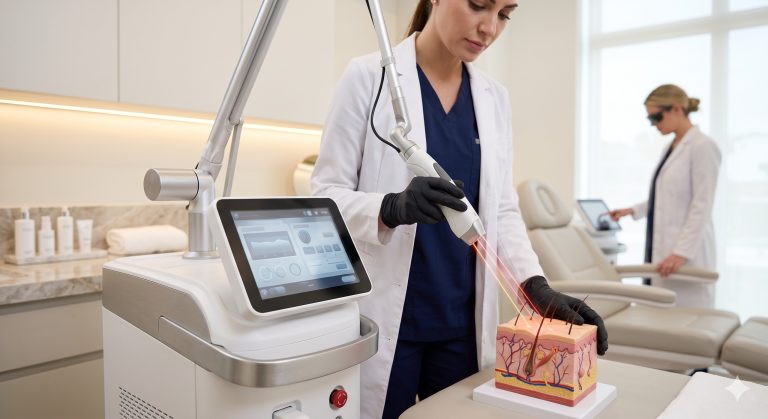
What is a 4D CO2 Laser? Demystifying the 4D Fractional CO2 Laser for Clinics
For dermatology clinics and medical spas, investing in a multi-modal workstation like a 4D CO2 laser represents a strategic shift toward maximum clinical efficacy and profitability. Moving beyond standard fractional devices, the 4D paradigm integrates four distinct operational modes: fractional ablation, deep thermal coagulation, precision surgical excision, and intimate gynecological wellness. By utilizing advanced RF-excited laser tubes and ultra-short pulse durations, these platforms overcome legacy limitations, significantly reducing downtime and the risk of Post-Inflammatory Hyperpigmentation (PIH) across the Fitzpatrick Scale. With robust hardware ensuring a high shots count, stable beam quality, and reliable TEC cooling for continuous operation, platforms from top-tier providers like Cocoon Laser guarantee rapid ROI. By consolidating multiple treatments into one Medical CE and FDA 510(k) compliant system, clinics can dramatically expand their treatment menus while optimizing operational overhead.
Beyond Traditional Resurfacing: The Evolution to 4D CO2 Technology
In the professional medical aesthetic industry, the 10,600nm carbon dioxide (CO2) wavelength has long been regarded as the gold standard for dramatic skin resurfacing and scar revision. Its unparalleled absorption by intracellular water allows for rapid tissue vaporization. However, the commercial and clinical demands of modern dermatology practices have outgrown the capabilities of standard, single-function devices.
The Limitations of Standard Fractional CO2 Systems
Historically, standard fractional CO2 systems presented several critical challenges that limited their utility and deterred potential patients:
- Uncontrolled Thermal Damage: Legacy DC-excited glass tube lasers suffer from slow pulse rise and fall times. This prolonged energy delivery causes extensive, uncontrolled heat dissipation into surrounding healthy tissue, leading to prolonged erythema and edema.
- Extended Patient Downtime: The aggressive ablative nature of older systems often necessitates 7 to 14 days of strict social isolation and intensive wound care, a barrier for modern professionals.
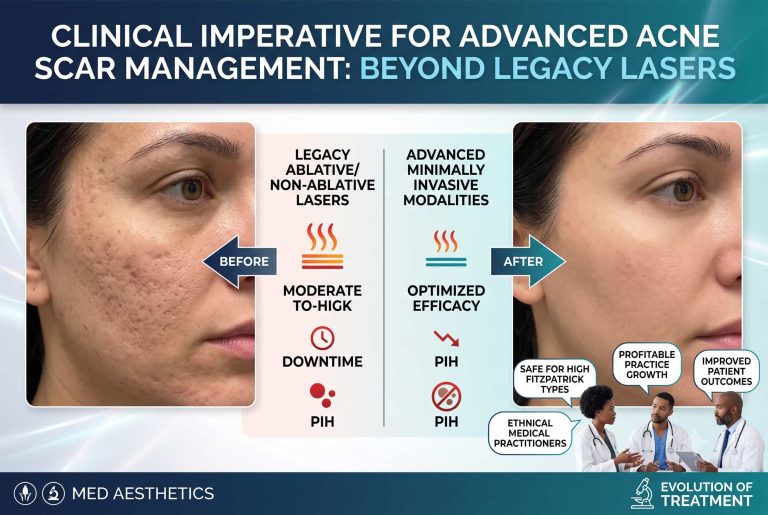
- High Risk on Darker Skin: When treating patients with Fitzpatrick Scale types IV-VI, prolonged thermal dwell times frequently trigger severe Post-Inflammatory Hyperpigmentation (PIH), making traditional CO2 lasers a high-risk modality for a significant portion of the global demographic.
Defining the “4D” Paradigm in Aesthetic Lasers
To circumvent these limitations, top-tier professional medical laser equipment manufacturers have developed the “4D” framework. In this context, “4D” is not a marketing exaggeration but a precise clinical definition indicating a Multi-dimensional Workstation.
Rather than relying on a static emission of energy, a 4D CO2 laser grants the practitioner absolute control over Pulse Duration, Pulse Shape, and Fluence. By manipulating these variables through specialized handpieces and software protocols, a single device can target distinct tissue layers with entirely different mechanisms of action.
Decoding the 4 Dimensions: A Comprehensive Clinical Arsenal
The true value of a multi-modal CO2 workstation lies in its clinical versatility. By mastering the four distinct dimensions of treatment, a clinic can address a vast array of patient indications without the need for redundant capital equipment.
Dimension 1: Fractional Ablation for Skin Resurfacing
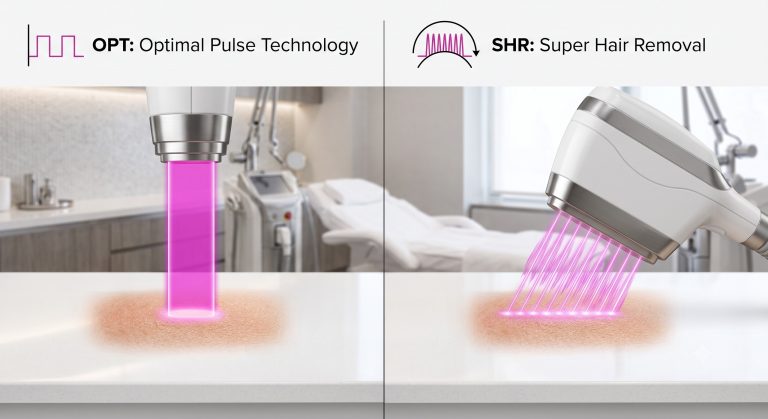
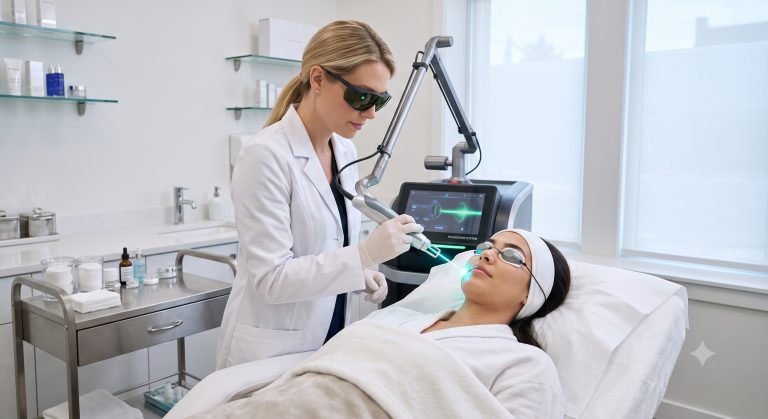
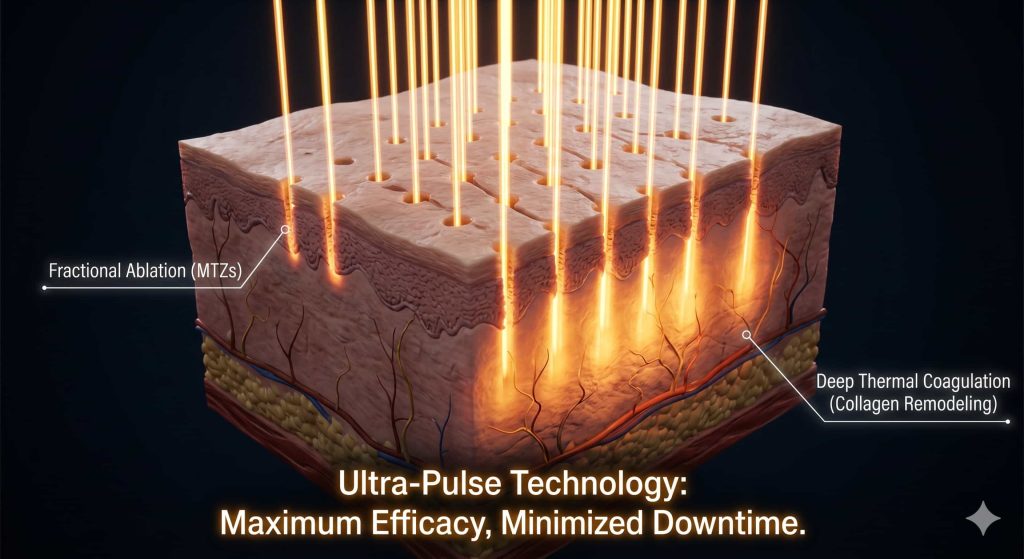
The first dimension represents the evolution of Fractional Photothermolysis. By passing the laser beam through a highly precise scanner, the energy is fractionated into hundreds of microscopic beams.
- Mechanism of Action: These beams create Microscopic Treatment Zones (MTZs)—tiny columns of vaporized tissue—while leaving the surrounding epidermal bridges entirely intact.
- Clinical Application: This mode is the ultimate solution for severe photoaging, deep rhytids, and atrophic acne scars.
- The Advantage: Because the surrounding healthy tissue facilitates rapid re-epithelialization, the healing process is exponentially faster than fully ablative resurfacing, drastically reducing the risk of infection and scarring.
Dimension 2: Deep Thermal Coagulation for Tissue Tightening
While ablation vaporizes tissue, the second dimension focuses on non-ablative Thermal Coagulation.
- Mechanism of Action: Utilizing an Ultra-pulse or super-pulse profile, the laser delivers rapid bursts of energy that bypass immediate surface vaporization, depositing high heat directly into the reticular dermis.
- Clinical Application: This targeted heat injury triggers an immediate contraction of existing collagen fibers and initiates a prolonged cascade of neocollagenesis and neoelastogenesis by stimulating fibroblasts.
- The Advantage: It provides substantial tissue tightening and skin laxity improvement with virtually zero structural damage to the stratum corneum, offering patients a highly effective “lunchtime” lifting procedure.
Dimension 3: Precision Surgical/Excisional Mode
The third dimension transforms the aesthetic device into a highly refined Photonic Scalpel.
- Mechanism of Action: By switching to a Continuous Wave (CW) or highly focused macroscopic pulse via a surgical handpiece (typically 50mm or 100mm focal length), the 10,600nm wavelength acts as an exceptionally precise cutting tool.
- Clinical Application: Dermatologists and surgeons utilize this mode for the excision of benign lesions, skin tags, seborrheic keratoses, warts, and sebaceous hyperplasia.
- The Advantage: The inherent physical properties of the CO2 laser instantly cauterize capillaries and small blood vessels as it cuts. This ensures a completely bloodless surgical field, reducing procedure times, minimizing postoperative bruising, and ensuring rapid recovery.
Dimension 4: Intimate and Gynecological Wellness
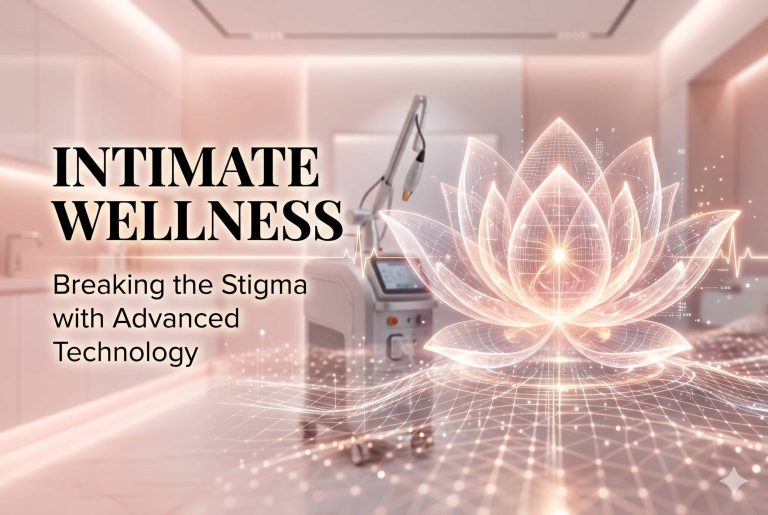
The most lucrative addition to the modern CO2 platform is the fourth dimension: specialized gynecological treatments.
- Mechanism of Action: Utilizing specialized 360° or 90° fractional vaginal probes, the laser delivers controlled, deep thermal energy to the vaginal mucosa without causing superficial ablation.
- Clinical Application: This non-surgical thermal stimulation restores the histological structure of the vaginal walls, increasing glycogen production, restoring natural pH balances, and thickening the mucosal epithelium.
- The Advantage: It is a highly effective, non-invasive treatment for mild to moderate Stress Urinary Incontinence (SUI), Vaginal Atrophy, and postpartum vaginal laxity. This allows clinics to tap into the rapidly expanding intimate wellness market.
Advanced Engineering: Why Not All CO2 Lasers are Created Equal
From a B2B procurement perspective, understanding the internal architecture of your laser is non-negotiable. The clinical outcomes described above are entirely dependent on the quality of the laser resonator and the internal cooling systems. This is where premium platforms from an established aesthetic laser supplier diverge from low-cost alternatives.
The Critical Role of RF-Excited Laser Tubes vs. DC Glass Tubes
The core engine of any CO2 laser is its tube. Buyers must be hyper-aware of the distinction between legacy Direct Current (DC) glass tubes and modern Radio Frequency (RF) excited metal tubes.
Technical Comparison: CO2 Laser Resonator Types
| Parameter | RF-Excited Metal Tube (Modern 4D Standard) | DC-Excited Glass Tube (Legacy/Low-Cost) |
| Excitation Method | Radio Frequency (RF) | Direct Current (DC) high voltage |
| Beam Quality | Exceptional (TEM00, highly uniform spot) | Poor (Irregular spot, uneven energy distribution) |
| Pulse Rise/Fall Time | Extremely rapid (Microseconds) | Slow (Causes excessive thermal leakage) |
| Power Stability | Highly stable across all output ranges | Fluctuates, leading to unpredictable clinical results |
| Hardware Lifespan | Up to 10+ years (Extremely high shots count) | 1 to 2 years (Requires frequent replacement) |
| Maintenance Cost | Low (Tubes can be refurbished) | High (Fragile glass breaks easily, gas degrades) |
Systems manufactured by Cocoon Laser exclusively utilize premium RF-excited modules. This ensures that the beam profile remains perfectly uniform, eliminating the clinical “hot spots” that cause severe patient discomfort and scarring.
Mastering Pulse Control: Super-Pulse and Ultra-Pulse Capabilities
To safely treat darker skin types (Fitzpatrick Scale IV-VI) and avoid the photothermal complications associated with legacy devices, the laser must be able to beat the tissue’s Thermal Relaxation Time (TRT).
- Thermal Relaxation Time (TRT): The time it takes for targeted tissue to lose 50% of its heat. If the laser pulse lasts longer than the TRT, heat conducts into surrounding healthy tissue (Collateral Thermal Damage).
- Ultra-Pulse Engineering: Advanced 4D systems generate ultra-short pulses (often under 0.1 milliseconds) with massive peak power. The targeted water molecules are vaporized instantly before heat can spread. While different from the photoacoustic effect seen in pico lasers, this precise photothermal action minimizes the inflammatory response that causes PIH.
- System Stability: To sustain these massive spikes in peak power without system degradation, superior internal architecture, including robust TEC Cooling (Thermo-Electric Cooling) or advanced closed-loop water cooling for the power supplies and RF drivers, is essential for continuous, high-volume clinic operation.
Strategic Business Value: The ROI of a 4D CO2 Workstation
For clinic directors and financial stakeholders, clinical efficacy must translate into a measurable Return on Investment (ROI). The 4D fractional CO2 laser is arguably the most financially efficient capital equipment investment available in the medical aesthetic sector.
Consolidating Capital Equipment and Optimizing Clinic Space
Purchasing single-indication devices creates operational bottlenecks. A clinic might invest in a standalone fractional device for scars, an electrosurgery unit for excisions, and a separate RF device for vaginal rejuvenation.
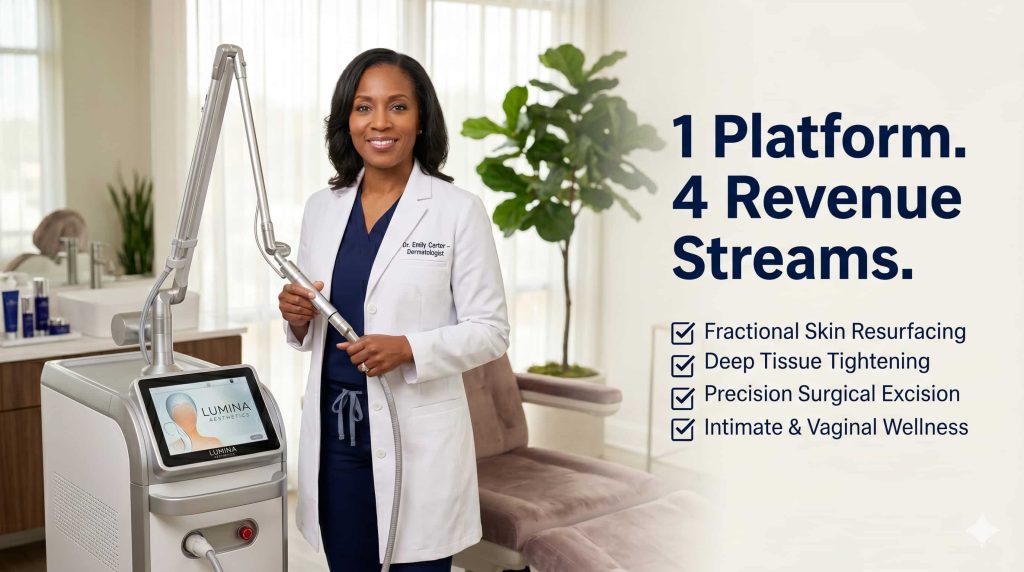
A 4D CO2 workstation consolidates these three major revenue streams into a single footprint. This dramatically reduces total capital expenditure, lowers annual maintenance contract costs, and optimizes clinic floor space—a critical metric for urban medical spas with high real estate costs.
Tailoring Downtime to Patient Lifestyles
Patient acquisition often stalls when clients cannot accommodate the recovery time of aggressive treatments. The highly adjustable nature of a 4D system allows practitioners to manipulate the density, depth, and thermal footprint of the treatment.
- The “Weekend Peel”: Low density, low energy settings for superficial brightening and texture improvement. Patients can undergo treatment on Friday and return to work on Monday.
- Deep Reconstructive Resurfacing: High density, deep penetration settings for severe acne scarring, requiring 5-7 days of recovery but delivering life-changing results in a single session.
By offering tiered recovery options, clinics can close sales with a much wider demographic, from busy executives to patients seeking dramatic, surgical-level interventions.
Capturing the Booming Intimate Wellness Market
The global market for feminine intimate wellness is experiencing exponential growth. Aging demographics, increased awareness of postpartum recovery, and a shift away from invasive surgical vaginoplasty have created a massive demand for non-surgical alternatives.
By simply switching to the vaginal handpiece, a clinic instantly opens a highly lucrative, recurring-revenue service line. Because the procedure requires zero anesthesia, boasts zero downtime, and typically requires a series of three sessions, the lifetime value of an intimate wellness patient is exceptionally high, rapidly accelerating the break-even point of the device.
Conclusion: Future-Proofing Your Aesthetic Practice with Cocoon Laser
The transition to a multi-dimensional CO2 platform is a definitive step toward clinical excellence and operational efficiency. By leveraging the four dimensions of fractional ablation, deep thermal coagulation, surgical excision, and intimate wellness, practitioners can comprehensively address the most pressing aesthetic concerns of their patient base.
Evaluating Your Next Capital Equipment Investment
When navigating the complex landscape of B2B aesthetic procurement, due diligence is paramount. Ensure that the system you select utilizes an authentic RF-excited laser tube for pulse precision and longevity. Furthermore, verify that the equipment holds rigorous international certifications, such as Medical CE and FDA 510(k), which guarantee adherence to the highest standards of medical safety and manufacturing quality.
Partner with Cocoon Laser for Clinical Excellence
Your choice of manufacturer dictates the long-term success of your practice. As a premier aesthetic laser supplier, Cocoon Laser provides state-of-the-art 4D CO2 workstations engineered with uncompromising quality, ensuring unparalleled patient outcomes and robust business growth.
Do not let outdated legacy technology limit your clinic’s potential. We invite medical directors and clinic owners to explore the comprehensive capabilities of the Cocoon Laser fractional CO2 platforms. Read our in-depth clinical laser whitepaper to review the histological data, or contact our global B2B team today to schedule an exclusive virtual demonstration and discover how a true 4D workstation can transform your practice’s ROI.
If you need more information, please click “Contact Us”.
If you want to obtain more information, please follow our official website and Facebook.