Pico Laser Before and After: Results & Timeline
Pico laser before and after results are among the most important considerations for patients evaluating picosecond laser procedures and clinics introducing this technology.
Picosecond laser systems deliver ultra-short pulses that can interact with targeted pigment and, in certain configurations, produce localized effects used in aesthetic skin rejuvenation procedures.
However, visible results do not always appear immediately. Some patients experience temporary redness or swelling before improvement becomes apparent, while others require several treatment sessions.
Before-and-after photographs can help illustrate treatment outcomes, but they should be evaluated carefully. Differences in lighting, camera settings, skin preparation, and follow-up timing can make results appear more dramatic than they actually are.
This guide explains what pico laser before and after results may look like, what changes can occur after one treatment, how outcomes develop over time, and how to evaluate clinical photographs responsibly.
Quick Answer: What Do Pico Laser Before and After Results Look Like?
Pico laser before and after results may show gradual improvement in targeted pigmentation or selected skin texture concerns, depending on the procedure, laser device, and individual response.
Immediately after treatment, the skin may appear red, swollen, or temporarily darker in certain treated areas. These early reactions should not be confused with the final treatment outcome.
For some pigment-focused procedures, visible changes may develop over subsequent weeks as the body processes fragmented pigment.
Certain fractional picosecond procedures may involve a longer period of tissue response and remodeling.
Results after one session may be subtle, and multiple treatments may be necessary. Complete clearance or a specific degree of improvement cannot be guaranteed.
What Changes Can You Expect Before and After Pico Laser Treatment?
The appearance of the skin before and after pico laser treatment depends primarily on the treatment objective.
A pigment-focused procedure has different clinical endpoints from a fractional rejuvenation procedure. As a result, the visible changes should not be evaluated using the same criteria.
Changes in Targeted Pigmentation
In suitable pigmentation procedures, picosecond laser energy can produce photoacoustic effects that contribute to the fragmentation of targeted pigment.
The treated area may initially show temporary darkening, redness, or other expected tissue responses.
Over time, some patients may notice that the targeted pigmentation becomes less prominent.
The degree of improvement depends on the pigment characteristics, clinical diagnosis, wavelength, treatment parameters, and individual skin response.
Changes in Skin Texture
Certain picosecond laser platforms include fractional delivery systems intended for selected skin rejuvenation applications.
These procedures may create localized tissue effects associated with subsequent remodeling processes.
Visible texture improvement, when achieved, may develop gradually rather than immediately after treatment.
Not every picosecond laser device offers fractional rejuvenation capabilities, and not every skin texture concern is suitable for this approach.
Changes in Overall Skin Appearance
Some patients seek pico laser procedures because they want a more even-looking complexion or improvement in selected visible skin concerns.
However, improvements in brightness, smoothness, and pigmentation should be assessed separately.
A photograph showing brighter skin does not necessarily demonstrate that a specific lesion or underlying condition has improved.
Changes That Should Not Be Mistaken for Results
Certain immediate changes are treatment reactions, not evidence of successful long-term improvement.
- Temporary redness following laser exposure.
- Localized swelling or inflammation.
- Short-term changes in skin coloration.
- Crusting or temporary darkening of treated areas.
- Changes caused by lighting, makeup, or camera exposure.
Meaningful before-and-after evaluation should take place after an appropriate follow-up interval.
Pico Laser Before and After 1 Treatment: What Is Realistic?
The search for pico laser before and after 1 treatment reflects a common question: can a single session produce a noticeable difference?
The answer depends on the condition being treated, the laser platform, the selected parameters, and the patient’s individual response.
Can You See Results After One Pico Laser Session?
Some patients may notice visible changes following a single picosecond laser session.
However, one treatment may produce only partial improvement, and some patients may not notice a meaningful change during the early follow-up period.
The absence of an immediate cosmetic improvement does not necessarily mean that the procedure was ineffective.
Likewise, an immediate visible reaction does not establish that the desired clinical outcome has been achieved.
What Might the Skin Look Like Immediately After One Treatment?
Depending on the procedure, the treated area may appear:
- Temporarily red or flushed.
- Slightly swollen or sensitive.
- Darker in selected pigment-targeted areas.
- Largely unchanged in appearance despite the treatment having been performed.
More intensive procedures may produce additional tissue responses that require specific aftercare.
Why One Session May Not Be Enough
Laser treatment is influenced by both physical tissue interactions and the body’s subsequent biological response.
Some targets require repeated treatment, and clinicians must balance potential improvement against the risk of excessive inflammation or injury.
A treatment plan should therefore be individualized rather than based on a promise of complete results after one session.
How to Evaluate Results After the First Session
The most useful assessment compares standardized photographs taken before treatment and at a clinically appropriate follow-up visit.
The practitioner should consider both visible improvement and any adverse skin response.
If further treatment is appropriate, the next session should be planned according to recovery and observed results.
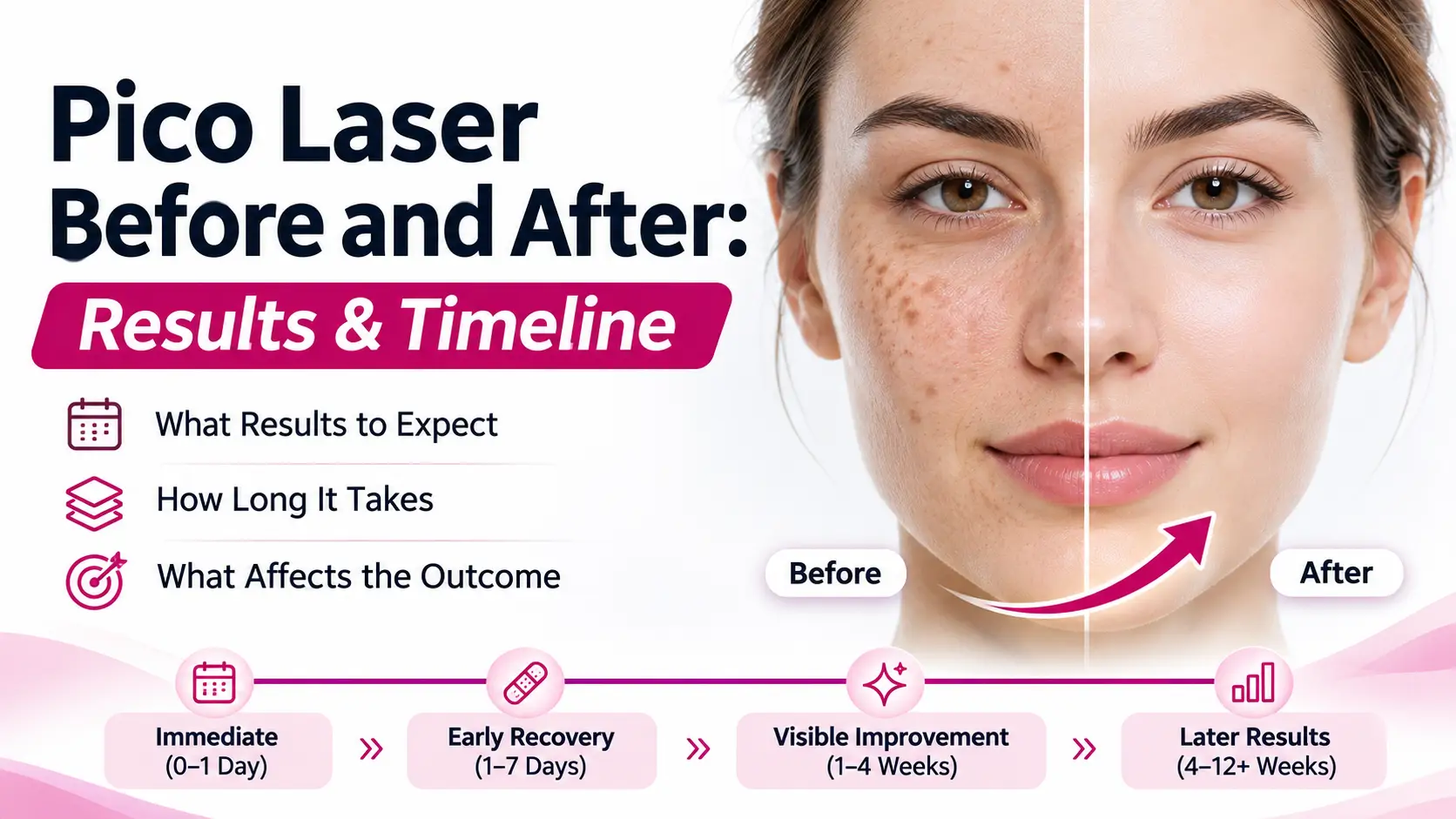
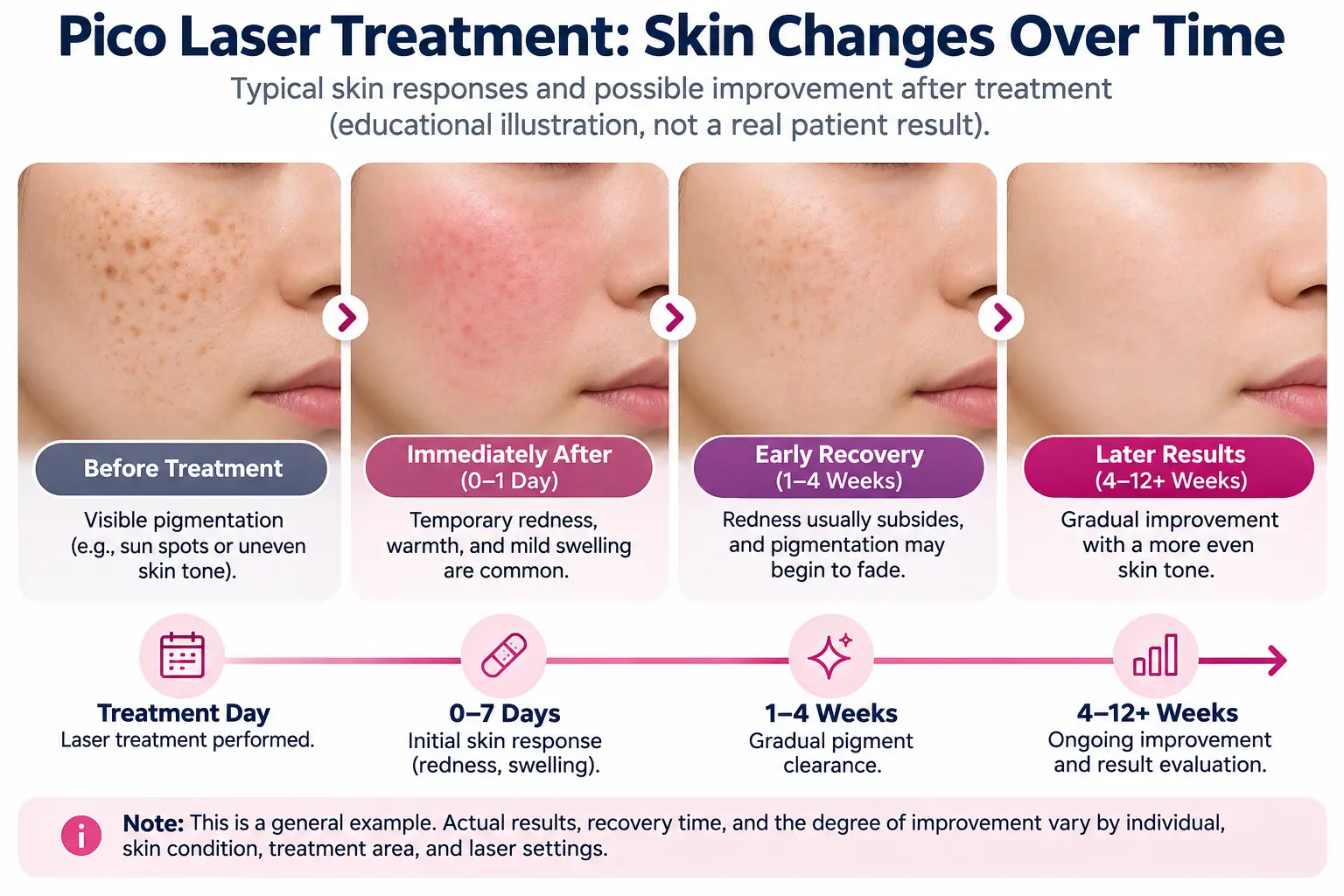
Pico Laser Results Timeline: When Will You See a Difference?
A pico laser results timeline helps patients understand why before-and-after changes may not be visible immediately.
The following stages are illustrative rather than a fixed recovery schedule. Actual timing depends on the treatment indication and individual response.
Immediately After Treatment
The skin may show temporary redness, swelling, warmth, or sensitivity.
Certain pigment-focused procedures may produce immediate visible tissue responses.
These changes should not be interpreted as the final result.
During the First Several Days
Early inflammation may begin to settle, although some procedures can involve crusting, blistering, or longer healing periods.
Patients should follow individualized aftercare instructions and avoid disturbing healing skin.
During the Following Weeks
Gradual pigment clearance may become more apparent after suitable pigment-targeting procedures.
The degree of visible change can vary considerably between individuals.
At Later Follow-Up Appointments
Later assessment allows practitioners to review the treatment response, identify any persistent complications, and determine whether additional sessions may be beneficial.
Certain fractional treatment outcomes may require longer follow-up because tissue remodeling is not immediate.
General Pico Laser Before and After Timeline
| Stage | Possible Appearance | What It Means |
|---|---|---|
| Before Treatment | Baseline pigmentation, texture, or other targeted concern | Establishes the reference for future comparisons |
| Immediately After | Possible redness, swelling, or other temporary responses | Reflects the early tissue response, not the final outcome |
| Early Recovery | Inflammation may settle; some procedures involve crusting or other changes | Skin healing remains an important priority |
| Following Weeks | Possible gradual improvement in targeted concerns | Biological clearance or other responses may continue |
| Later Follow-Up | More meaningful assessment of treatment outcomes | Helps guide decisions about additional sessions |
A qualified practitioner should determine the appropriate follow-up schedule based on the specific procedure and the patient’s recovery.
Why Do Pico Laser Before and After Results Vary?
Pico laser before and after results can differ significantly between patients, even when similar procedures are performed using the same type of laser technology.
Treatment outcomes are influenced by the condition being treated, individual skin characteristics, device capabilities, practitioner technique, and the body’s biological response.
1. The Type and Depth of the Target
Different pigment targets have different optical absorption characteristics, depths, and biological behaviors.
Superficial pigmentation may respond differently from pigment located deeper within the skin.
Likewise, tattoo ink particles and naturally occurring skin pigmentation are not identical treatment targets.
The underlying diagnosis should therefore guide the treatment approach and expectations.
2. Skin Phototype and Pigmentation Response
Skin phototype can influence both treatment planning and the risk of pigmentary complications.
Patients with greater epidermal melanin content may require particular care when selecting laser parameters.
Post-inflammatory hyperpigmentation or hypopigmentation can affect the final appearance of the treated area.
These possibilities should be discussed during the pre-treatment consultation.
3. Laser Wavelength and Pulse Characteristics
Picosecond laser systems are not technically identical.
Available wavelengths, pulse durations, energy delivery characteristics, and treatment accessories can vary between platforms.
The interaction between laser energy and a target depends on the complete treatment configuration, not simply the word “picosecond” in the device description.
4. Treatment Parameters and Clinical Technique
Fluence, spot size, repetition rate, treatment coverage, and other parameters can influence tissue response.
Excessive energy does not necessarily produce better cosmetic results and may increase the risk of injury.
Appropriate parameter selection requires professional training and clinical judgment.
5. Number of Treatment Sessions
A single treatment may produce partial improvement, while additional sessions may be needed to achieve a satisfactory clinical response.
However, more sessions do not guarantee better results.
The need for further treatment should be determined through follow-up assessment.
6. Aftercare and Environmental Factors
Skin protection and appropriate aftercare may influence recovery and the appearance of the treated area.
Ultraviolet exposure, irritation, and disruption of healing skin may contribute to complications.
Patients should follow individualized post-treatment instructions.
7. Individual Biological Response
Healing, pigment clearance, and tissue remodeling vary between individuals.
Two patients with similar concerns may therefore experience different outcomes or require different treatment schedules.
How to Evaluate Pico Laser Before and After Photos
Pico laser before and after photos can provide useful information about treatment outcomes, but photographs alone cannot establish clinical effectiveness.
Reliable comparisons require consistent documentation and sufficient information about the procedure.
Use Consistent Lighting
Lighting conditions can significantly change the apparent color and texture of the skin.
Bright frontal lighting may reduce the visibility of shadows and surface irregularities.
Conversely, directional lighting may emphasize wrinkles, scars, or uneven texture.
Before-and-after photographs should therefore use comparable lighting conditions whenever possible.
Keep Camera Position and Distance Consistent
Changes in camera angle, distance, focal length, and framing can influence how facial features and skin texture appear.
Standardized clinical photography helps reduce these differences.
Check the Time Between Photos
The timing of follow-up photography is essential for interpreting treatment results.
A photograph taken immediately after treatment may show temporary inflammation rather than meaningful improvement.
Later photographs may provide a more useful assessment, depending on the treatment objective.
Look for Information About Treatment Sessions
A useful clinical before-and-after comparison should identify whether the patient received one treatment or multiple sessions.
It should also indicate the follow-up interval when this information is available.
Results achieved after a treatment series should not be presented as the outcome of one session.
Be Cautious About Filters and Retouching
Digital skin smoothing, color correction, and other editing techniques can create misleading impressions of treatment effectiveness.
Clinical photographs should not be manipulated to exaggerate improvements.
Confirm That the Images Represent Real Patients
Genuine clinical before-and-after images should represent actual patient outcomes and be used with appropriate consent.
AI-generated illustrations, simulated outcomes, and stock images should never be presented as authentic treatment results.
Checklist for Reviewing Before-and-After Results
| Evaluation Factor | What to Check | Why It Matters |
|---|---|---|
| Lighting | Similar illumination in both photos | Reduces misleading differences in skin appearance |
| Camera Angle | Consistent positioning and framing | Supports a fair visual comparison |
| Follow-Up Timing | Clearly identified treatment intervals | Distinguishes early reactions from later outcomes |
| Number of Sessions | One session or a documented treatment series | Helps establish realistic expectations |
| Image Authenticity | Actual clinical photographs without misleading retouching | Improves transparency and credibility |
| Clinical Context | Condition treated and relevant procedure details | Helps interpret the observed change |
Pico Laser Results for Different Treatment Goals
The meaning of a successful pico laser before and after result depends on the treatment objective.
A reduction in visible pigment is different from an improvement in skin texture, and these outcomes should not be evaluated interchangeably.
Pigment-Focused Treatment Results
For suitable benign pigmentation concerns, the treatment goal may involve reducing the visibility of targeted pigment.
Results can vary according to pigment type, depth, skin characteristics, and the selected laser wavelength.
Certain pigmentation disorders require particularly careful management because recurrence or worsening may occur.
Tattoo Removal Results
For tattoo removal, before-and-after evaluation focuses on changes in the appearance of tattoo ink.
Ink color, composition, depth, density, and previous treatments can influence the response.
Multiple sessions are commonly required, and complete removal cannot be guaranteed.
Fractional Skin Rejuvenation Results
Certain picosecond platforms provide fractional treatment capabilities for selected aesthetic applications.
In these procedures, clinicians may evaluate changes in visible texture and other relevant skin characteristics.
Any improvement should be assessed over an appropriate follow-up period.
Why Different Applications Need Separate Guides
Each treatment objective involves different clinical considerations, expected outcomes, and potential risks.
Patients should therefore avoid applying the results of one picosecond laser procedure to an unrelated skin condition.
For a broader explanation of the technology, treatment process, and safety considerations, read our pico laser treatment guide .
How Many Sessions Are Needed for Visible Pico Laser Results?
The number of sessions needed for visible pico laser results depends on the treatment objective, target characteristics, and individual clinical response.
A single treatment may produce a noticeable change in some patients, while others require repeated procedures.
Why Multiple Sessions May Be Necessary
Certain treatment targets cannot be adequately addressed in one session.
Repeated procedures may be considered when additional improvement is clinically appropriate and the skin has recovered sufficiently.
Why More Treatments Do Not Always Mean Better Results
Increasing the number of sessions without appropriate evaluation may expose the skin to unnecessary inflammation or injury.
Treatment planning should consider both potential improvement and the cumulative risk of adverse reactions.
When Should Results Be Reassessed?
Follow-up timing should reflect the specific procedure and expected biological response.
A qualified practitioner should determine whether further treatment is appropriate based on observed results, skin recovery, and patient goals.
Why Might Pico Laser Before and After Results Be Disappointing?
Not every patient achieves the improvement they expected from pico laser treatment.
Limited results can occur for several reasons, and they do not necessarily indicate that the laser technology itself is ineffective.
Incorrect or Incomplete Diagnosis
Different skin conditions may appear similar but require different treatment strategies.
A procedure that is suitable for one condition may be ineffective or inappropriate for another.
Unrealistic Expectations
Patients may expect complete improvement after one treatment because of promotional images or simplified marketing claims.
In practice, treatment responses vary, and complete clearance may not be achievable.
Insufficient Time for Results to Develop
Some treatment effects require biological processing or tissue remodeling before visible improvement becomes apparent.
Evaluating the skin too early may lead to an inaccurate conclusion about the outcome.
Unsuitable Treatment Parameters
Laser parameters must be appropriate for the treatment target and patient characteristics.
Inappropriate settings can contribute to limited effectiveness or complications.
Post-Treatment Pigmentation Changes
Post-inflammatory hyperpigmentation or hypopigmentation may alter the appearance of the treated area.
These reactions can sometimes make the final result appear worse than the baseline condition.
When Should a Patient Seek Reassessment?
Patients should contact their treating professional if they experience unexpected worsening, persistent concerning symptoms, or complications during recovery.
Increasing pain, spreading redness, discharge, fever, or signs of impaired healing require prompt medical assessment.
A qualified practitioner can determine whether the response is within the expected recovery range or requires further evaluation.
Realistic Expectations for Pico Laser Before and After Results
Understanding realistic pico laser before and after results is essential before deciding whether to undergo treatment.
Although picosecond laser technology can provide meaningful improvement for selected indications, the outcome is influenced by the condition being treated, individual skin characteristics, and the treatment plan.
Improvement Does Not Always Mean Complete Clearance
A successful treatment may reduce the visibility of a targeted concern without eliminating it completely.
For example, pigment-focused procedures may produce partial clearance, while fractional rejuvenation treatments may improve selected skin texture concerns without restoring perfectly smooth skin.
Patients should discuss the realistic degree of improvement with their practitioner before treatment.
Results May Develop Gradually
Immediate post-treatment photographs often show temporary tissue responses rather than the final cosmetic outcome.
Depending on the indication, biological pigment clearance or tissue remodeling may continue after the initial recovery period.
Follow-up photographs should therefore be taken at intervals appropriate to the procedure.
Individual Results Cannot Be Guaranteed
Patients with similar concerns may experience different outcomes following comparable treatments.
Skin phototype, target characteristics, previous procedures, aftercare, and individual biological responses can influence the result.
A clinic should not guarantee a specific percentage of improvement or a fixed number of sessions without an appropriate clinical assessment.
Good Before-and-After Documentation Includes Limitations
Responsible clinical documentation should describe both visible improvements and relevant treatment limitations.
Where appropriate, this may include information about the number of sessions, follow-up period, residual pigmentation, and adverse reactions.
Transparent documentation helps patients develop realistic expectations and supports informed treatment decisions.
How Professional Pico Laser Equipment Influences Treatment Results
For dermatology clinics, medical aesthetic centers, and equipment distributors, evaluating pico laser before and after results also requires understanding the technology used to perform the procedure.
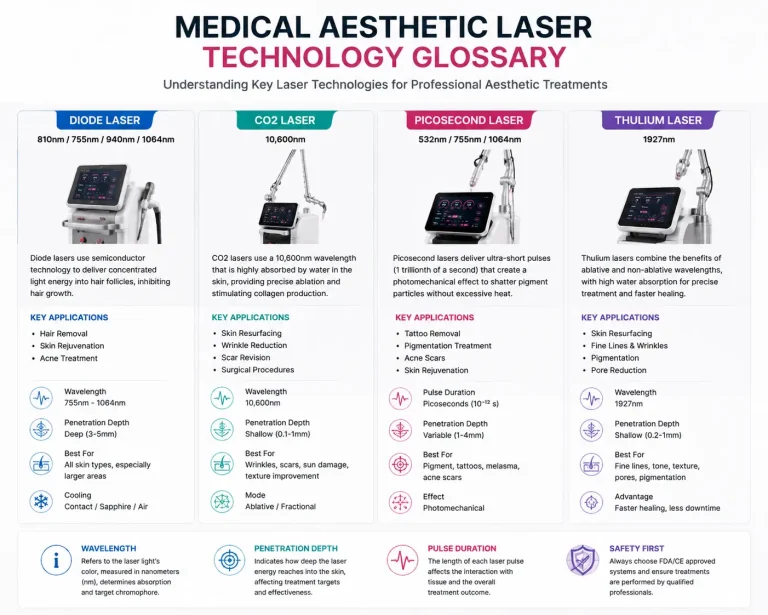
Different laser platforms may offer different wavelengths, pulse characteristics, energy delivery capabilities, and treatment accessories.
These differences can influence the available treatment options and clinical response.
Verified Picosecond Pulse Technology
Genuine picosecond laser systems deliver pulses measured in picoseconds rather than nanoseconds.
Buyers should verify the manufacturer’s documented pulse specifications instead of relying only on product names or promotional descriptions.
Wavelength Selection
Wavelength influences the absorption of laser energy by different tissue components and pigments.
Professional systems may offer multiple wavelengths, but the available configuration should be verified for each specific device.
Energy Delivery and Treatment Consistency
Stable and appropriately controlled laser output is an important consideration when evaluating professional equipment.
Clinics should review documented output characteristics, available parameter controls, and equipment maintenance requirements.
Equipment specifications alone do not establish clinical effectiveness or guarantee particular patient outcomes.
Operator Training and Clinical Protocols
The experience and qualifications of the practitioner are important factors in treatment planning.
Appropriate patient selection, parameter adjustment, eye protection, and follow-up care contribute to responsible laser treatment.
Ultra PicoMax: Professional Picosecond Laser Equipment
Cocoon Laser offers Ultra PicoMax, a professional picosecond laser platform for aesthetic equipment buyers.
Clinics and distributors considering this system should review its documented pulse characteristics, available wavelengths, operating modes, and intended applications.
The suitability of a particular configuration should be evaluated according to clinical requirements and applicable regulatory conditions.
Comparing Picosecond and Q-Switched Equipment
Professional buyers may also compare picosecond systems with conventional Q-switched Nd:YAG lasers.
Cocoon Laser’s QPeak Pro is a Q-switched Nd:YAG laser platform using nanosecond technology.
It should not be classified as a picosecond laser.
Equipment comparisons should consider the intended treatment applications, technical specifications, training requirements, and operating costs.
Request Professional Laser Equipment Information
Clinics, distributors, and international buyers can contact Cocoon Laser to request information about professional laser equipment configurations, technical documentation, and purchasing requirements.
For a broader explanation of picosecond technology, treatment procedures, potential benefits, and safety considerations, read our Pico Laser Treatment guide .
Frequently Asked Questions About Pico Laser Before and After Results
How long does it take to see pico laser results?
The timing of visible pico laser results depends on the treatment objective and individual response. Some changes may become noticeable during the following weeks, while other procedures require longer follow-up.
Can you see pico laser before and after results after one treatment?
Some patients may notice improvement after one pico laser treatment, but results are not guaranteed. Certain conditions require multiple sessions, and early skin reactions should not be mistaken for final improvement.
What does your face look like immediately after pico laser?
The treated skin may appear red, swollen, sensitive, or temporarily darker in selected areas. The response depends on the procedure and treatment parameters.
Does pico laser make your skin darker before it gets lighter?
Temporary darkening can occur after certain pigment-focused procedures. However, not every patient experiences this response, and persistent or worsening pigmentation should be assessed by a qualified healthcare professional.
Why do some pico laser before and after photos look dramatically different?
Differences in lighting, camera angle, exposure, makeup, photo editing, treatment intervals, and the number of sessions can influence the apparent improvement. Standardized clinical photography provides a more reliable comparison.
Are pico laser before and after photos reliable?
Before-and-after photos can be useful when they represent genuine patient outcomes and use consistent photography conditions. However, photographs alone cannot establish clinical effectiveness or predict another patient’s results.
How many pico laser sessions are needed for visible results?
The number of sessions varies according to the treatment indication, target characteristics, laser parameters, and individual response. A qualified practitioner should determine the appropriate treatment plan.
Can pico laser results get worse before they improve?
Some procedures produce temporary redness, swelling, crusting, or changes in pigmentation during recovery. However, unexpected worsening or concerning symptoms should be evaluated rather than assumed to be a normal stage of improvement.
Are pico laser results permanent?
The durability of pico laser results depends on the underlying condition and treatment objective. Some improvements may persist, while other concerns can recur or require additional management.
Can pico laser completely remove pigmentation?
Complete pigmentation clearance cannot be guaranteed. Results depend on the type of pigmentation, its underlying cause, skin characteristics, and treatment approach.
Does pico laser work for every skin type?
Picosecond laser treatment suitability depends on the indication, skin phototype, device, and treatment settings. Some patients have a higher risk of pigmentation changes and require additional precautions.
What should I do if I see no improvement after pico laser?
Patients should discuss their results with the treating professional. The practitioner can assess whether more recovery time is needed, whether additional sessions are appropriate, or whether another treatment strategy should be considered.
Final Thoughts: Understanding Pico Laser Before and After Results
Pico laser before and after results should be evaluated with realistic expectations and appropriate clinical documentation.
Depending on the procedure, visible changes may develop gradually rather than immediately after treatment.
Some patients may experience improvement after one session, while others require multiple treatments or achieve only partial improvement.
Before-and-after photographs are most useful when they represent authentic patient outcomes and use consistent lighting, camera positioning, and follow-up intervals.
Accurate diagnosis, appropriate laser technology, qualified practitioners, and responsible aftercare remain essential considerations.
For clinics and distributors evaluating professional picosecond laser equipment, contact Cocoon Laser to discuss available equipment configurations and technical requirements.