What Is IPL? Intense Pulsed Light Explained
What is IPL? IPL stands for Intense Pulsed Light, a light-based technology that uses broad-spectrum pulses of light for aesthetic treatments such as hair reduction, pigmentation, vascular concerns, sun damage, and skin rejuvenation. Unlike a laser, IPL does not use one fixed wavelength. Instead, it produces a broad spectrum of light that can be filtered for different treatment targets.
Although IPL is frequently called an “IPL laser,” it is technically not a laser. A laser typically produces light within a much narrower wavelength range, while an IPL system generates a broad spectrum of light that can be filtered and configured for different treatment objectives.
Understanding this distinction is important because IPL’s versatility comes from its ability to deliver selected portions of a broad light spectrum rather than relying on one fixed laser wavelength.
This guide explains what IPL is, how intense pulsed light works, how filters and pulse parameters influence treatment, which chromophores absorb the light, common professional applications, and how IPL differs from laser technology.
Quick Answer
IPL stands for Intense Pulsed Light. IPL is a non-laser light technology that uses broad-spectrum pulses of light for treatments such as hair reduction, pigmentation, vascular concerns, sun damage, and skin rejuvenation.
IPL works by filtering broad-spectrum light into selected wavelength ranges. Chromophores such as melanin and hemoglobin absorb the light and convert it into heat, producing a controlled thermal effect in the targeted tissue.
Unlike a laser, which typically uses a specific wavelength or narrow wavelength range, IPL uses multiple wavelengths. This is why one professional IPL platform can support several different aesthetic applications.
What Is Intense Pulsed Light (IPL)?
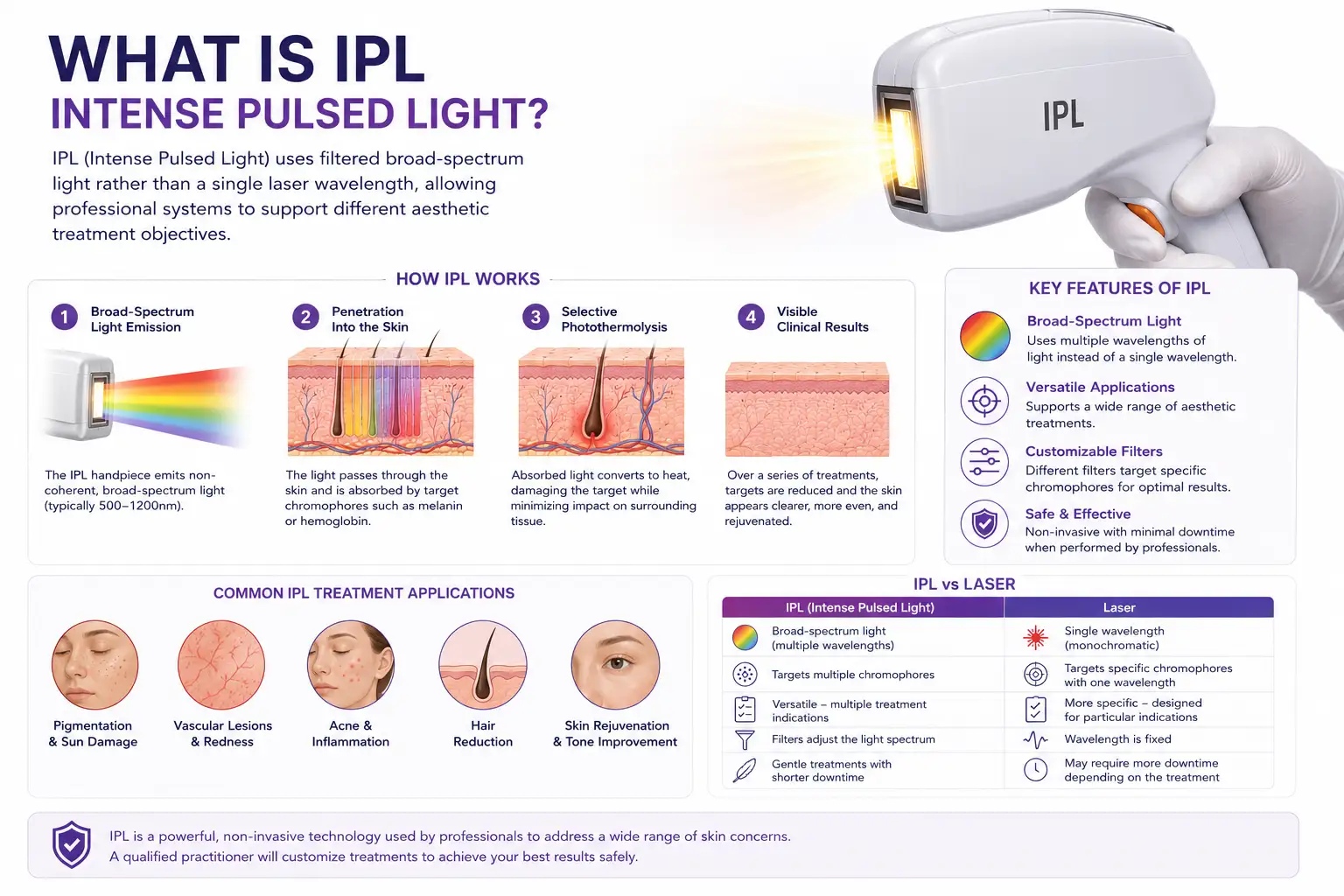
Intense Pulsed Light, or IPL, is a technology that produces short, high-intensity pulses of broad-spectrum, non-coherent light. In professional aesthetic treatments, filters are used to select portions of the emitted spectrum for different treatment targets.
The meaning of IPL is therefore different from laser technology. IPL uses a range of wavelengths, while a laser typically produces light around a much more specific wavelength or narrow wavelength range.
What Does IPL Stand For?
IPL stands for Intense Pulsed Light. The name refers to the high-intensity pulses of broad-spectrum light generated by an IPL system.
Is IPL a Laser?
No. IPL is not technically a laser.
The terms are often used interchangeably in consumer searches, but their optical characteristics are different.
| Characteristic | IPL | Laser |
|---|---|---|
| Light Source | Broad-spectrum pulsed light | Laser-generated light |
| Wavelength | Broad range selected with filters | Typically centered around a specific wavelength or narrow band |
| Coherence | Non-coherent | Coherent or highly organized laser emission |
| Treatment Selection | Filters and adjustable parameters | Primarily determined by laser wavelength and device parameters |
| Versatility | Can support multiple applications within one platform | Often optimized around the tissue interaction of the selected wavelength |
Neither technology is automatically better. A laser may offer highly wavelength-specific tissue interaction, while IPL can provide broad treatment flexibility through spectral filtering and adjustable pulse delivery.
We discuss this distinction in greater depth in our dedicated IPL vs Laser comparison.
How Does IPL Work?
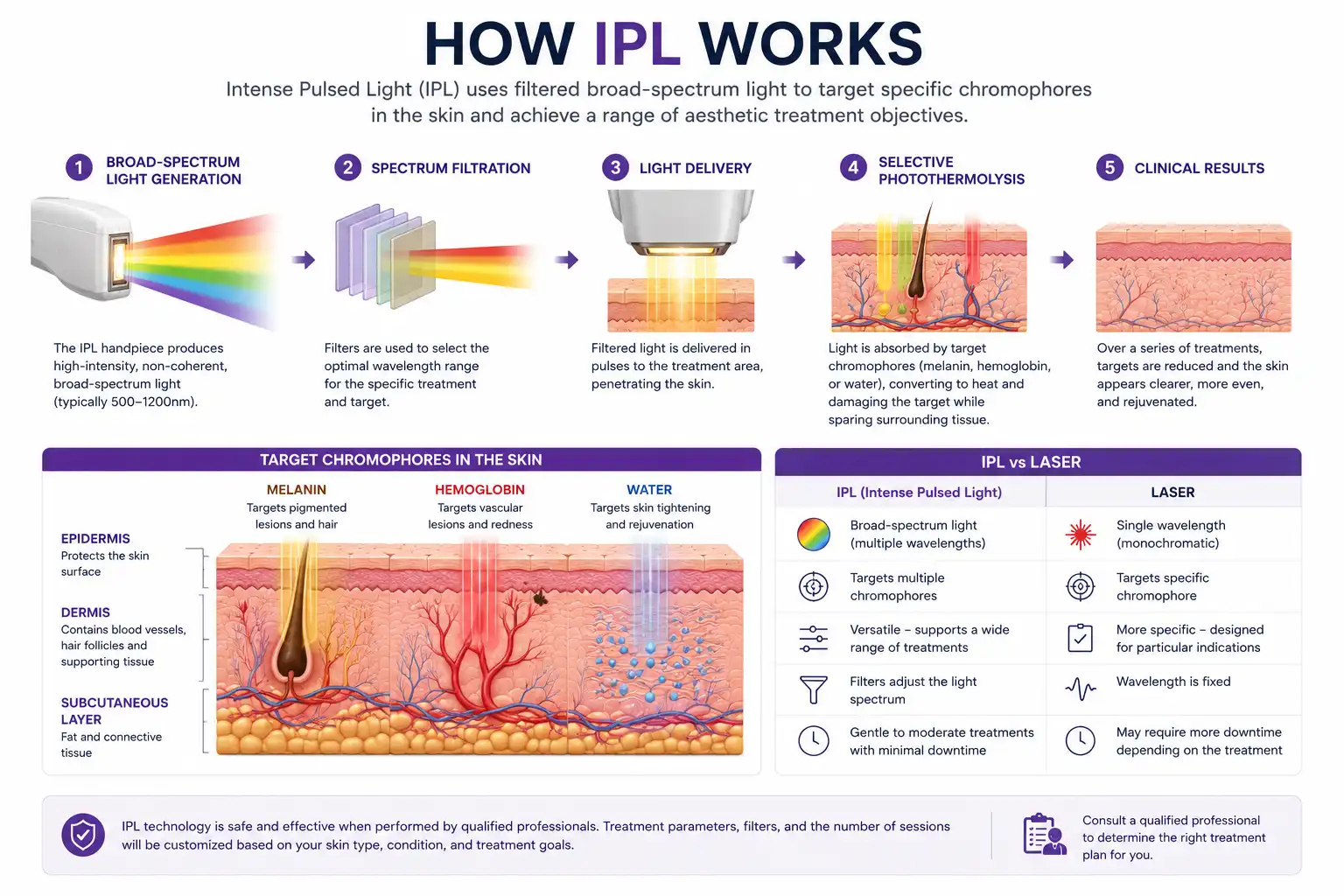
IPL works by producing an intense pulse of broad-spectrum light and directing it through an optical system toward the treatment area.
The process can be simplified into five stages:
- The IPL source generates broad-spectrum light.
- An optical filter selects the desired portion of the spectrum.
- Filtered light is delivered through the treatment handpiece into the skin.
- Target chromophores absorb selected wavelengths.
- Absorbed optical energy is converted into heat, creating a controlled thermal effect.
The practitioner adjusts treatment parameters according to the intended target, patient characteristics, treatment area, and capabilities of the specific IPL system.
IPL should therefore not be understood as simply “flashing bright light” onto the skin. Its treatment behavior depends on the relationship between the emitted spectrum, filters, chromophore absorption, pulse duration, fluence, cooling, and tissue response.
What Is Selective Photothermolysis?
An important concept behind many light- and laser-based aesthetic treatments is selective photothermolysis.
In simplified terms, the objective is to select optical and temporal treatment parameters that allow a target structure to absorb sufficient light energy and convert it into heat while limiting unnecessary thermal injury to surrounding tissue.
Three factors are particularly important:
- Wavelength: influences which chromophores absorb the light.
- Pulse duration: influences how heat is deposited and dissipated.
- Fluence: describes the optical energy delivered per unit area.
IPL adds another important variable because the emitted light covers a range of wavelengths rather than one narrow laser wavelength.
Filters and device-specific spectral characteristics therefore become central to treatment selection.
Which Chromophores Does IPL Target?
A chromophore is a component of tissue that preferentially absorbs certain wavelengths of light.
Two particularly important chromophores in aesthetic IPL applications are melanin and hemoglobin.
Melanin
Melanin contributes to pigmentation in the skin and hair. Light absorbed by melanin can therefore be relevant to selected pigmentation treatments and hair-reduction applications.
However, melanin is also present in normal epidermal tissue. This means skin pigmentation must be considered when selecting treatment parameters because the epidermis can compete with the intended target for optical energy.
Hemoglobin
Hemoglobin is an important optical target in selected vascular applications. Appropriate portions of the IPL spectrum may be used to create controlled thermal effects in selected visible vascular structures.
Water
Water is an important chromophore for many infrared laser technologies, including thulium and CO2 lasers. However, melanin and hemoglobin are generally more central to the conventional IPL applications discussed in this guide.
What Wavelength Does IPL Use?
IPL does not use one universal wavelength.
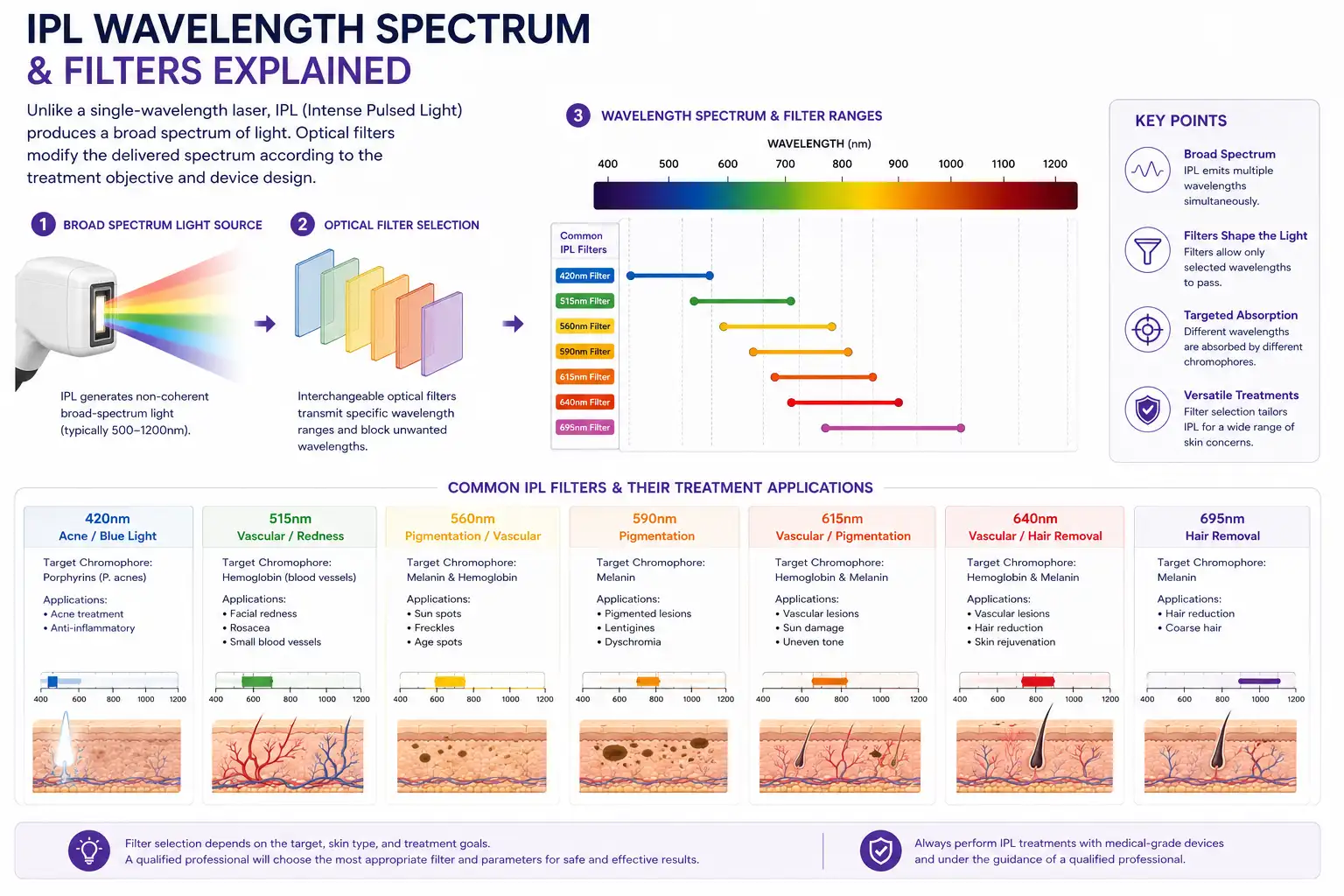
Professional IPL systems typically generate a broad optical spectrum, and filters are then used to modify which portions of that spectrum reach the skin. The exact emitted and delivered wavelength ranges vary by device.
This is one of the most important differences between IPL and wavelength-specific lasers.
For example, a diode hair-reduction system may be designed around a wavelength such as approximately 808nm, while an IPL system can deliver a broader range of wavelengths above a selected cutoff.
Therefore, asking “What wavelength is IPL?” is different from asking “What wavelength is a diode laser?”
The better question is: What spectral range and filter configuration does the specific IPL device deliver for the intended treatment?
How Do IPL Filters Work?
Filters are a fundamental component of professional IPL technology.
Rather than allowing the complete lamp spectrum to reach the skin, an IPL platform can use optical filtering to remove unwanted portions of the spectrum.
Many systems use cutoff filters. These are designed to block wavelengths below a specified region while allowing longer wavelengths to pass through.
The actual spectrum delivered to tissue is still influenced by the lamp, optical components, filter characteristics, and handpiece design.
Different filter configurations may be intended for different applications such as:
- Hair reduction
- Selected pigmentation
- Selected vascular concerns
- Photorejuvenation
Filter labels alone should not be used to assume that two IPL machines will perform identically. Overall spectral output and pulse-delivery architecture also matter.
What Parameters Control an IPL Treatment?
Professional IPL treatment depends on more than the filter.
Important device parameters can include:
Fluence
Fluence describes the optical energy delivered per unit area, commonly expressed in joules per square centimeter (J/cm²).
Pulse Duration
Pulse duration influences how quickly energy is delivered and how thermal energy accumulates and dissipates within the target and surrounding tissue.
Pulse Structure
Depending on the system, IPL energy may be delivered as a single pulse or divided into multiple sub-pulses separated by controlled intervals.
Filter or Spectral Range
The optical filter influences which portion of the IPL spectrum is delivered toward the skin.
Spot Size
Treatment-window dimensions influence coverage, workflow, and optical delivery characteristics.
Cooling
Contact cooling, sapphire cooling, gel, or other device-specific cooling strategies may help manage epidermal temperature and patient comfort.
The interaction among these parameters is more important than evaluating any single specification in isolation.
What Is IPL Used For?
Professional IPL systems can support multiple aesthetic applications depending on their spectral output, filters, pulse characteristics, cooling, intended use, and regulatory status.
Common application categories include:
- Hair reduction
- Selected superficial pigmentation
- Photodamage
- Selected visible vascular concerns
- Photorejuvenation
- Uneven-looking skin tone
- Selected redness-related concerns
These applications should not be treated as universal indications for every IPL machine. Clinics should verify the intended use and capabilities of the specific platform.
IPL for Hair Reduction
Hair reduction is one of the most familiar applications of IPL technology.
In this application, selected wavelengths within the IPL spectrum are absorbed by melanin associated with the hair structure. The absorbed optical energy is converted into heat, creating a controlled thermal effect intended to impair the structures involved in future hair growth.
Because melanin is also present in the epidermis, treatment planning must account for the relationship between hair pigmentation and skin pigmentation.
Hair-growth cycles are also important because not every hair is in the same biological stage at the same time. This is one reason professional light-based hair-reduction programs commonly involve multiple treatment sessions.
IPL hair reduction should also be distinguished from wavelength-specific diode laser hair removal. We will compare these technologies separately in our IPL vs Diode Laser Hair Removal guide.
IPL for Pigmentation
Selected pigmentation concerns represent another important IPL application.
Melanin absorbs portions of visible and near-infrared light. When an appropriate IPL spectrum and treatment parameters are selected, controlled thermal effects may be created within selected pigmented targets.
Potential treatment objectives may include selected superficial discoloration and visible photodamage.
However, not every dark spot is the same condition, and not every pigmentation concern is appropriate for IPL.
Pigmentation type, depth, skin phototype, recent sun exposure, previous pigmentary response, and diagnosis can all influence treatment suitability.
This becomes particularly important for complex recurrent conditions such as melasma, where aggressive light-based treatment is not automatically beneficial.
IPL for Vascular Concerns
IPL can also be configured for selected vascular applications because hemoglobin absorbs portions of the emitted light spectrum.
The objective is to deliver sufficient optical energy to create a controlled thermal effect within the selected vascular target while managing exposure to surrounding tissue.
Treatment suitability can depend on factors such as:
- Vessel size
- Vessel depth
- Vessel color
- Treatment area
- Skin pigmentation
- Available spectral filters
- Pulse duration and energy settings
IPL is not interchangeable with every vascular laser. Wavelength-specific technologies may be more appropriate for particular vascular targets.
IPL for Skin Rejuvenation and Photodamage
IPL photorejuvenation generally refers to light-based treatment strategies intended to improve selected visible signs of sun exposure and uneven skin appearance.
Depending on the patient and device, treatment objectives may include improvements in:
- Selected superficial pigmentation
- Visible sun damage
- Uneven-looking tone
- Selected redness
- Overall appearance of photodamaged skin
The term “photofacial” is also commonly used in consumer and aesthetic marketing for this category of IPL treatment.
However, IPL photorejuvenation should not be confused with ablative skin resurfacing. Technologies such as fractional CO2 laser create fundamentally different tissue effects and are used for different resurfacing objectives.
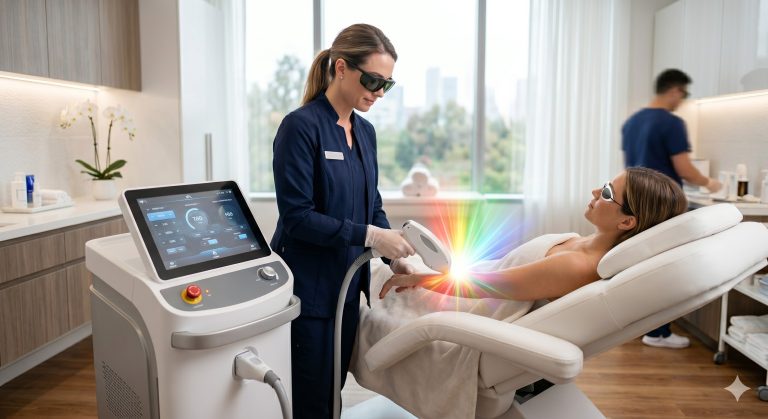
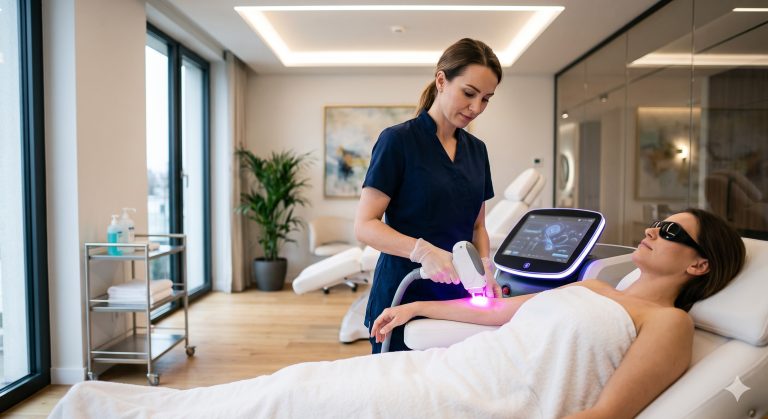
What Happens During an IPL Treatment?
A professional IPL treatment begins with an assessment of the patient’s skin, treatment concern, pigmentation characteristics, recent sun exposure, medical history, and other factors relevant to the procedure.
The exact workflow varies by device and treatment objective, but a typical IPL procedure may include:
- Assessing the treatment concern and patient suitability.
- Cleaning and preparing the treatment area.
- Selecting an appropriate filter or spectral configuration.
- Choosing fluence, pulse duration, pulse structure, and other parameters.
- Applying treatment gel or cooling where required by the system.
- Positioning the IPL handpiece against or above the treatment area as specified.
- Delivering controlled pulses across the selected treatment zone.
- Evaluating the immediate tissue response.
- Providing appropriate post-treatment instructions.
Professional IPL treatment should not rely on one standardized parameter set for every patient. The appropriate settings depend on the intended target, skin characteristics, treatment area, device design, and operator assessment.
What Does IPL Treatment Feel Like?
The sensation experienced during IPL treatment varies according to the treatment area, fluence, pulse structure, cooling system, device design, and individual sensitivity.
Patients may experience temporary sensations such as:
- Warmth
- A brief snapping or stinging sensation
- Mild heat
- Temporary sensitivity
Professional IPL platforms may incorporate contact cooling or other thermal-management strategies to help protect the epidermis and improve patient comfort.
Comfort should not be used as the only indication of treatment effectiveness. A more painful treatment is not automatically a more effective treatment.
IPL Before and After: What Results Can You Expect?
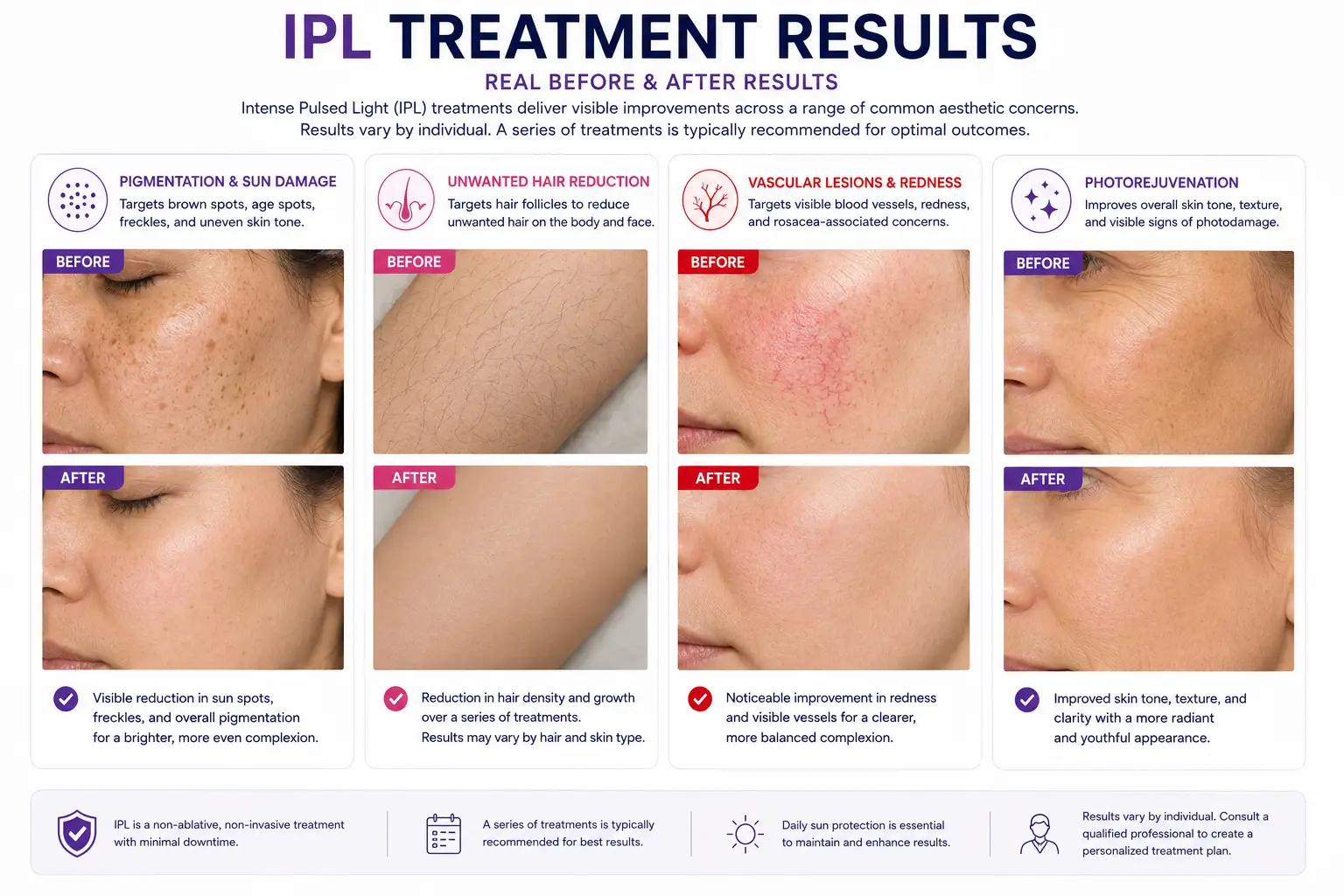
IPL before-and-after results depend on the original treatment objective. A pigmentation treatment should not be evaluated in the same way as hair reduction or a vascular procedure.
After IPL for Pigmentation
Selected superficial pigmented areas may temporarily appear darker following treatment before visible changes develop during recovery.
Over time, appropriately treated superficial discoloration may become less noticeable, although the response depends on the type and depth of pigmentation.
After IPL for Hair Reduction
Treated hair does not necessarily disappear immediately. Changes may become apparent over time as treated hairs shed and subsequent hair growth is evaluated.
Multiple sessions are commonly required because hairs are not all in the same growth stage at one time.
After IPL for Vascular Concerns
Selected visible vascular targets may change in appearance following treatment. The response depends on factors including vessel characteristics, treatment area, parameters, and device capabilities.
After IPL Photorejuvenation
Results may be assessed through changes in visible photodamage, uneven-looking pigmentation, selected redness, and overall skin appearance.
Before-and-after photographs should use consistent lighting, camera settings, angle, distance, and follow-up timing whenever possible.
How Many IPL Treatments Are Needed?
There is no universal number of IPL sessions that applies to every treatment.
The number and spacing of treatments can depend on:
- The treatment indication
- Severity or extent of the concern
- Patient characteristics
- Hair-growth cycle for hair-reduction procedures
- Pigment or vessel characteristics
- Treatment intensity
- Device capabilities
- Clinical protocol
- Response to previous sessions
Hair reduction, for example, commonly requires a treatment series because the biological growth cycle means not every hair presents the same treatment opportunity during one session.
Other IPL applications may also involve multiple sessions depending on the desired result and response.
Treatment planning should therefore be individualized rather than promising a fixed result after a predetermined number of procedures.
Does IPL Have Downtime?
IPL is commonly associated with relatively limited downtime compared with more intensive ablative resurfacing procedures, but this does not mean every IPL treatment has no recovery period.
Temporary responses may include:
- Redness
- Mild swelling
- Warmth
- Temporary sensitivity
- Temporary darkening of selected pigmented areas
- Temporary changes around treated vascular targets
The intensity and duration of these responses vary according to the treatment, parameters, device, treatment area, and patient.
IPL should therefore not be marketed as universally requiring “zero downtime.”
IPL Side Effects and Risks
IPL delivers thermal energy into biological tissue and is not risk-free.
Expected temporary treatment responses and possible adverse effects vary according to the device, treatment indication, parameters, operator technique, and patient.
Potential effects may include:
- Temporary redness
- Swelling
- Sensitivity
- Temporary pigment darkening
- Post-inflammatory hyperpigmentation
- Hypopigmentation in some circumstances
- Blistering or burns if inappropriate energy is delivered
- Other unwanted pigmentary or skin responses
Eye protection is also an important component of professional light-based treatment. Operators should follow device-specific safety instructions and applicable professional standards.
Can IPL Cause Hyperpigmentation?
Yes, unwanted pigmentary changes can occur after IPL treatment.
Post-inflammatory hyperpigmentation may be a particular consideration when inflammation stimulates additional melanin production following treatment.
Factors that may influence risk include:
- Baseline skin pigmentation
- History of post-inflammatory hyperpigmentation
- Recent tanning or significant sun exposure
- Treatment intensity
- Inappropriate parameter selection
- Active inflammation
- Inadequate photoprotection after treatment
This is one reason professional patient assessment and careful parameter selection are important, particularly when IPL is being used for pigment-related applications.
Can IPL Be Used on Different Skin Types?
IPL treatment planning becomes more complex as epidermal melanin competes with the intended target for light absorption.
This is particularly relevant because melanin is an important chromophore for both hair reduction and many pigmentation treatments.
Professional assessment may consider:
- Skin phototype
- Baseline epidermal pigmentation
- Recent sun exposure
- History of tanning
- History of pigmentary reactions
- Target characteristics
- Available filters
- Pulse duration
- Fluence
- Cooling capability
Device capabilities vary, so a statement that “IPL works safely on all skin tones” should not be generalized across every platform and protocol.
For hair reduction in particular, wavelength-specific technologies such as diode or Nd:YAG lasers may offer different treatment characteristics that should be considered when evaluating darker skin phototypes.
IPL vs Laser: What Is the Difference?
The fundamental difference between IPL and laser technology is the nature of the light source.
IPL produces broad-spectrum, non-coherent pulsed light. Optical filters are used to shape the delivered spectrum according to the treatment objective.
A laser produces light centered around a much more specific wavelength or wavelength range. The selected wavelength determines important aspects of its interaction with tissue chromophores.
| Technology | Light Delivery | Key Characteristic |
|---|---|---|
| IPL | Broad-spectrum pulsed light | Filter-based versatility |
| Diode Laser | Wavelength-specific laser output | Commonly used for hair reduction |
| Picosecond Laser | Wavelength-specific ultrashort laser pulses | Commonly associated with tattoo and pigment applications |
| 1927nm Thulium Laser | Wavelength-specific fractional laser delivery | Relatively superficial fractional treatment profile |
| 10,600nm CO2 Laser | Wavelength-specific laser output | Ablative resurfacing capability |
Because the technologies have different optical and tissue-interaction characteristics, the question should not simply be whether IPL or laser is better. The more useful question is which technology best matches the intended treatment target.
See our dedicated IPL vs Laser: What’s the Difference? guide for a complete comparison.
IPL vs Diode Laser for Hair Reduction
IPL and diode laser can both be used within professional hair-reduction strategies, but their optical delivery is fundamentally different.
IPL delivers a filtered range of wavelengths, while a diode laser is designed around one or more specific laser wavelengths.
Professional diode systems may use wavelengths around 755nm, 808/810nm, 940nm, 1064nm, or combinations of wavelengths depending on the platform.
Important comparison factors include:
- Skin phototype
- Hair color and thickness
- Target depth
- Spot size
- Pulse duration
- Cooling
- Treatment speed
- Energy stability
- Operator workflow
This comparison deserves its own page because users searching IPL vs diode laser generally have a different intent from users simply asking what IPL is.
Read our IPL vs Diode Laser Hair Removal comparison for more detail.
IPL vs Thulium Laser for Pigmentation
IPL and 1927nm thulium laser can both appear in professional pigmentation-treatment discussions, but they use different optical mechanisms.
IPL uses filtered broad-spectrum light, with melanin acting as an important chromophore in selected pigmentation applications.
Approximately 1927nm thulium laser interacts strongly with tissue water and is commonly delivered fractionally to create a relatively superficial treatment profile.
Therefore, these technologies should not be treated as interchangeable simply because both may be considered for pigmentation-related concerns.
Pigment type, pigment depth, skin characteristics, treatment mechanism, downtime, and device-specific capabilities all influence technology selection.
Learn more about the wavelength in our 1927nm Thulium Laser guide.
IPL vs Fractional CO2 Laser
IPL and fractional CO2 laser occupy substantially different positions in aesthetic skin treatment.
IPL is generally used for selected pigmentation, vascular appearance, photodamage, and other light-based treatment objectives.
A 10,600nm fractional CO2 laser can create ablative microscopic treatment zones and is more directly associated with intensive resurfacing, selected acne scars, wrinkles, and textural remodeling.
A patient with superficial sun-related discoloration may therefore have a very different technology requirement from a patient whose primary concern is atrophic acne scarring.
Clinics should choose technology according to the treatment mechanism required rather than assuming all skin-rejuvenation devices perform similar functions.
What Is OPT IPL?
OPT is commonly used in the aesthetic-device market to describe optimized pulse approaches within IPL technology.
The general objective is to improve control over how optical energy is delivered during a pulse or sequence of pulses rather than changing IPL into a fundamentally different type of light source.
In other words, OPT should generally be understood as an IPL pulse-delivery approach, not as a separate laser wavelength.
However, terminology and implementation can vary among manufacturers. Buyers should therefore evaluate the actual pulse waveform, energy stability, parameter controls, and device documentation rather than relying only on an “OPT” marketing label.
We explore this technology separately in our OPT vs IPL: What’s the Difference? guide.
What Is SHR?
SHR, commonly expanded as Super Hair Removal, is a term used for hair-reduction approaches that typically emphasize repeated light delivery and gradual thermal accumulation rather than relying only on isolated higher-intensity pulses.
SHR implementations vary among professional devices. Some are based on IPL technology, while terminology may also be used more broadly in the aesthetic-device market.
Important variables can include:
- Repetition rate
- Energy per pulse
- Pulse structure
- Movement technique
- Cooling
- Treatment-area coverage
SHR should therefore not be interpreted as one universal wavelength or identical treatment protocol across every machine.
See our dedicated What Is SHR Hair Removal? guide for a detailed explanation.
IPL vs OPT vs SHR: What’s the Difference?
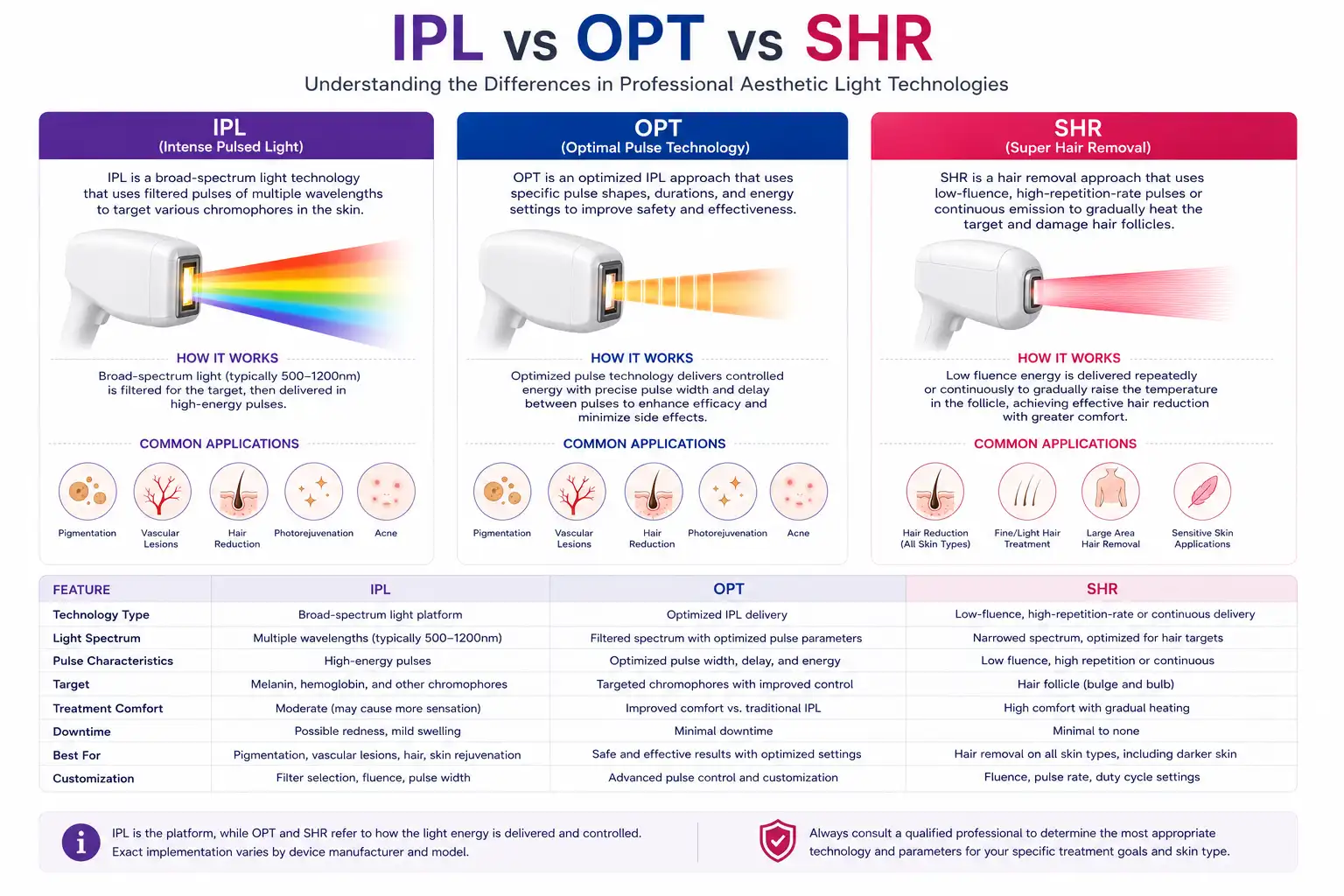
IPL, OPT, and SHR are frequently grouped together in professional aesthetic equipment, but they do not necessarily describe three completely separate light technologies.
| Term | What It Generally Describes | Important Point |
|---|---|---|
| IPL | Intense Pulsed Light platform | Broad-spectrum pulsed light filtered for different applications |
| OPT | Optimized pulse-delivery approach used with IPL systems | Implementation and terminology can vary by manufacturer |
| SHR | Hair-reduction delivery approach often emphasizing repeated lower-energy pulses and thermal accumulation | Not one universal wavelength or identical protocol |
This distinction is particularly important for clinics purchasing equipment. A machine labeled “IPL + OPT + SHR” does not necessarily contain three independent energy technologies.
Buyers should examine what the platform actually changes between modes, including pulse waveform, repetition rate, fluence range, filter configuration, cooling, and software control.
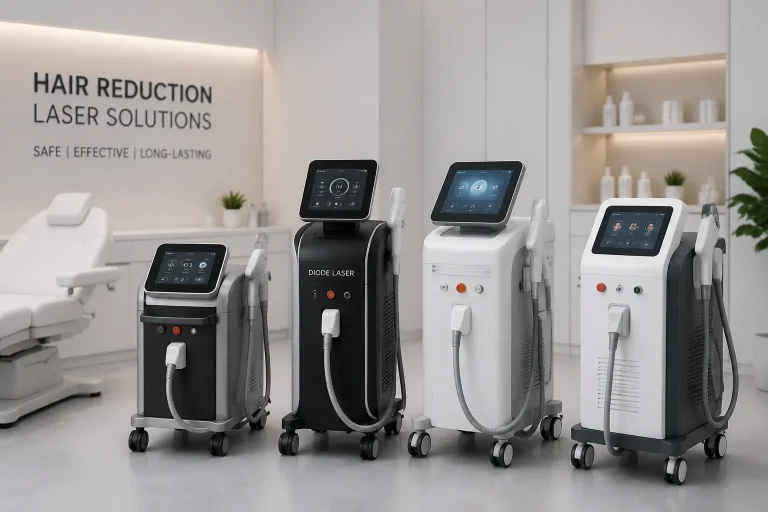
What Should Clinics Look for in a Professional IPL Machine?
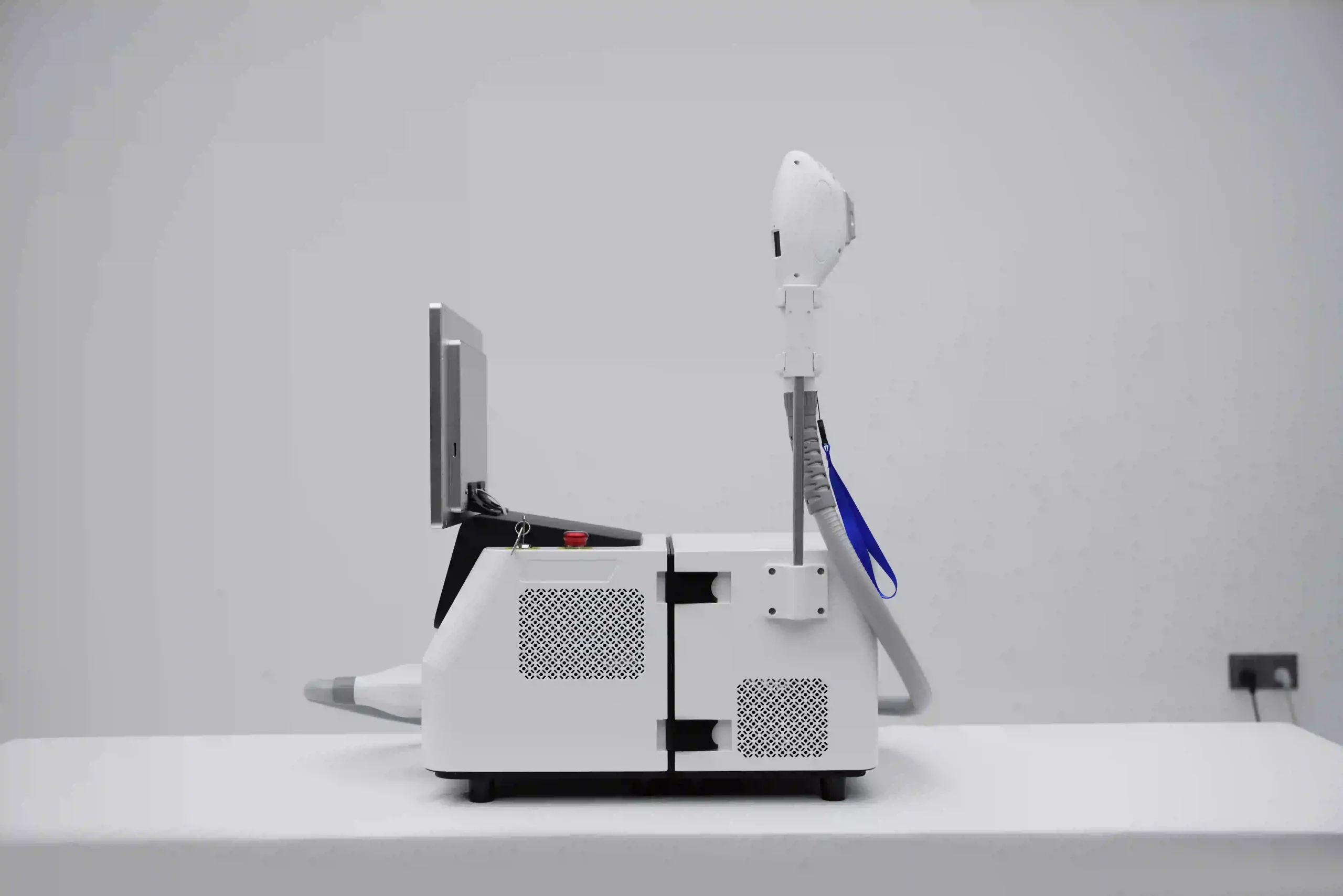
A professional IPL machine should be evaluated as a complete optical and clinical platform rather than according to maximum energy or the number of treatment modes advertised.
Important purchasing considerations can include:
- Delivered spectral range
- Available filters
- Filter quality and consistency
- Fluence adjustment
- Pulse-width adjustment
- Single- and multi-pulse capabilities
- Pulse waveform and energy stability
- Repetition rate
- Spot size
- Handpiece ergonomics
- Cooling technology
- Lamp or light-source service life
- Consumable requirements
- User interface
- Treatment presets and parameter flexibility
- Training
- Technical support
- Warranty
- Maintenance requirements
- Device documentation
- Applicable regulatory status
- OEM/ODM and distributor support where required
Clinics should also determine whether they primarily need IPL for hair reduction, pigmentation, vascular applications, photorejuvenation, or a combination of these services.
The best machine for one treatment portfolio may not be the best configuration for another.
IPL Machine vs Laser Machine: Which Should a Clinic Buy?
IPL can be attractive to clinics seeking one platform capable of supporting several light-based applications, while a wavelength-specific laser may offer a more specialized treatment mechanism for a particular target.
For example:
- A clinic focused heavily on hair reduction may compare professional IPL with dedicated diode laser platforms.
- A pigmentation-focused practice may compare IPL with picosecond or fractional thulium technologies depending on the conditions being treated.
- A clinic focused on acne scars and intensive resurfacing may require fractional CO2 rather than treating IPL as a substitute.
The purchasing decision should therefore begin with the clinic’s treatment portfolio rather than with a technology label.
Frequently Asked Questions About IPL
What does IPL stand for?
IPL stands for Intense Pulsed Light, a broad-spectrum light technology used in professional aesthetic treatments.
Is IPL the same as laser?
No. IPL produces broad-spectrum, non-coherent pulsed light, while lasers generally produce light centered around a much more specific wavelength or narrow wavelength range.
How does IPL work?
IPL generates broad-spectrum light that is filtered and delivered to the skin. Selected wavelengths are absorbed by chromophores such as melanin or hemoglobin, where optical energy is converted into heat to create controlled thermal effects.
What is IPL used for?
Depending on the device and its intended use, IPL may be used for selected hair reduction, pigmentation, vascular appearance, photodamage, and photorejuvenation applications.
What wavelength is IPL?
IPL does not have one universal wavelength. It produces a broad spectrum, and optical filters are used to modify the wavelengths delivered to the treatment area. Exact spectral ranges vary by device.
Does IPL permanently remove hair?
IPL is commonly used for long-term hair reduction. Results vary according to hair and skin characteristics, treatment parameters, device capabilities, biological factors, and the number of sessions. Claims of universal permanent hair removal should be treated cautiously.
Does IPL hurt?
Sensation varies by patient, device, treatment area, settings, and cooling. Patients may experience brief warmth, snapping, or stinging sensations during treatment.
How many IPL sessions are needed?
There is no universal number. The treatment indication, patient characteristics, response, device, and protocol determine how many sessions may be appropriate.
Does IPL have downtime?
Many IPL procedures are associated with relatively limited downtime, but temporary redness, swelling, sensitivity, pigment darkening, or other treatment responses may occur.
Can IPL treat pigmentation?
IPL may be used for selected superficial pigmentation and photodamage concerns. However, pigmentation has multiple causes and depths, so professional evaluation is important before treatment.
What is the difference between IPL and OPT?
IPL describes the broad-spectrum light technology. OPT is commonly used to describe an optimized approach to controlling IPL pulse delivery. Exact OPT implementation varies among manufacturers.
What is the difference between IPL and SHR?
IPL describes the light platform, while SHR commonly describes a hair-reduction delivery approach using repeated light pulses and gradual thermal accumulation. Device implementations vary.
Final Verdict: What Is IPL?
IPL, or Intense Pulsed Light, is a versatile professional light-based technology that uses filtered broad-spectrum pulses rather than one fixed laser wavelength.
Its flexibility comes from the interaction of several components: the light source, optical spectrum, filters, fluence, pulse duration, pulse structure, spot size, cooling, and treatment technique.
Melanin and hemoglobin are important chromophores in many IPL applications, helping explain why professional systems may be used for selected hair-reduction, pigmentation, vascular, photodamage, and skin-rejuvenation treatments.
IPL is not technically a laser, and it should not be considered universally better or worse than laser technology. IPL provides broad treatment versatility, while wavelength-specific lasers can offer more specialized tissue interactions for particular applications.
For clinics evaluating professional IPL equipment, the most important question is not simply whether a machine includes IPL, OPT, or SHR labels. Buyers should examine the actual optical spectrum, filters, pulse-delivery architecture, energy stability, cooling, treatment capabilities, training, technical support, documentation, and applicable regulatory status.
Understanding these fundamentals provides the foundation for comparing IPL with diode lasers, picosecond lasers, thulium lasers, fractional CO2 systems, and newer IPL delivery approaches such as OPT and SHR.
Editorial & Technical Review: This article was prepared for the Cocoon Laser professional aesthetic technology knowledge center for educational and equipment-research purposes. It does not replace individual medical assessment. Treatment suitability, parameters, contraindications, expected results, recovery, and adverse-event risks vary by patient and device. Qualified professionals should follow the intended use, instructions, training requirements, eye-protection requirements, and applicable regulations for the specific IPL system.