Achieving Superior Results: Skin Types, Indications, and Protocols for SHR (Super Hair Removal)
Introduction: The Evolution of Hair Removal in Medical Aesthetics
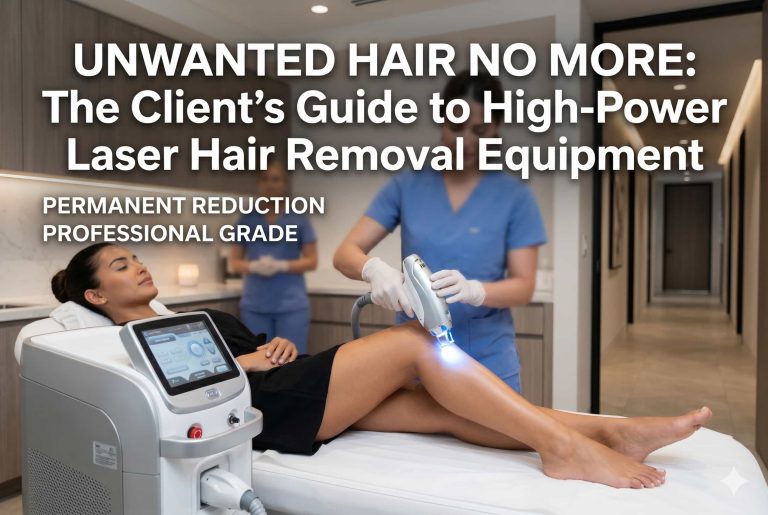
In the competitive landscape of medical aesthetics, clinics are constantly seeking technologies that deliver superior clinical outcomes while maximizing patient comfort and operational efficiency. SHR, or Super Hair Removal, represents a paradigm shift in laser hair removal, moving away from the high-energy, static pulses of traditional systems to a safer, more comfortable, and highly effective in-motion methodology . This advanced technology is not merely an incremental improvement; it is a fundamental re-engineering of selective photothermolysis, designed to meet the demands of modern, high-throughput med spas and dermatology practices.
Understanding the Mechanism: The Physics of SHR In-Motion Technology
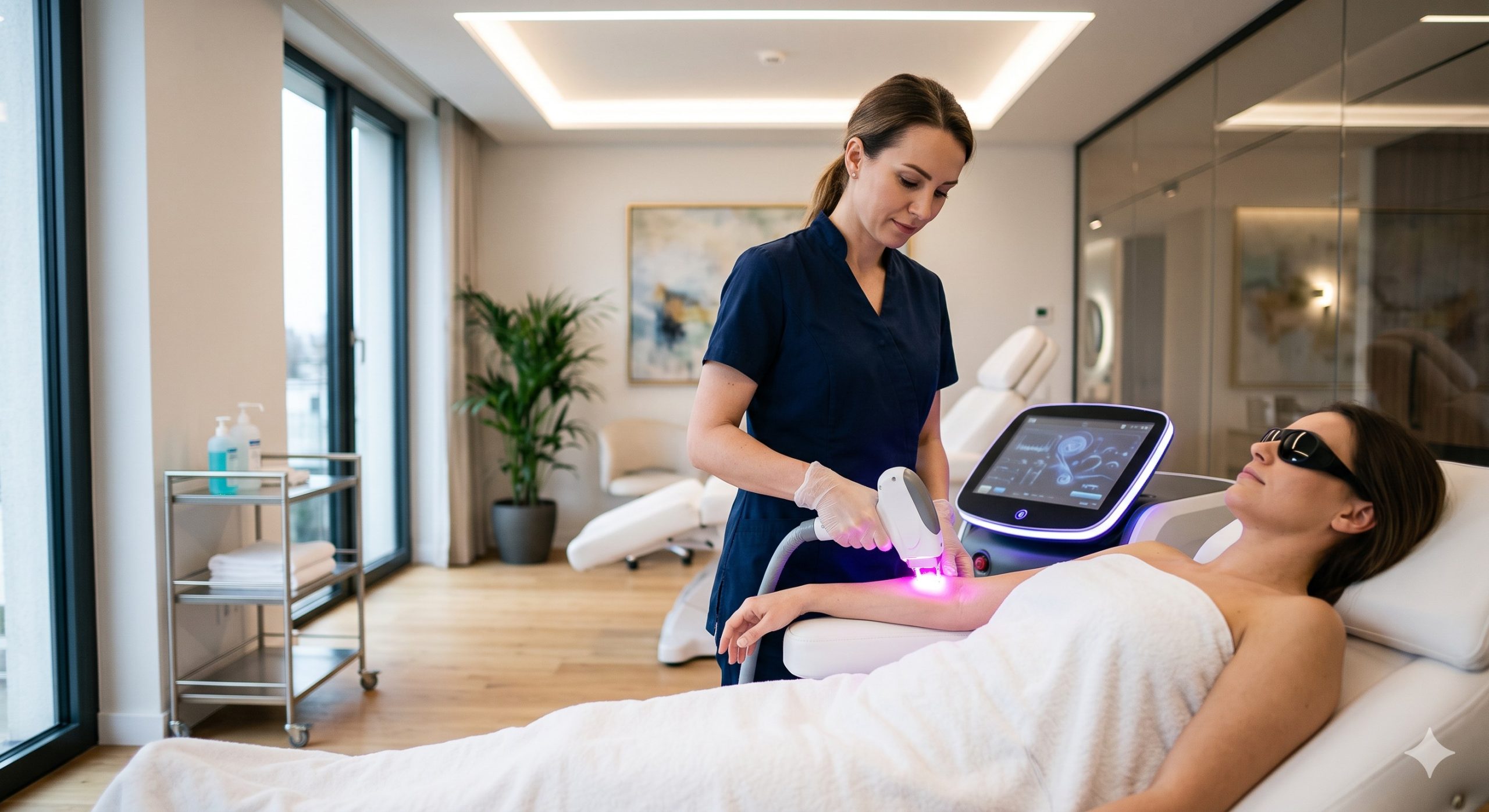
The core principle behind SHR is the application of low-fluence, high-frequency laser energy . Unlike conventional lasers that deliver a single, high-intensity pulse to a stationary spot—often causing significant pain and a risk of burns—SHR uses an ‘in-motion’ technique. The practitioner glides the laser applicator continuously over the skin, delivering rapid, low-energy pulses . This approach results in a gradual, accumulative heating of the dermis to the therapeutic temperature of 65-70°C, which is necessary for irreversible damage to the hair follicle and its stem cells . This method ensures a virtually painless experience, often described as a warm massage, and minimizes the risk of epidermal injury .
Selective Photothermolysis and Wavelength Synergy
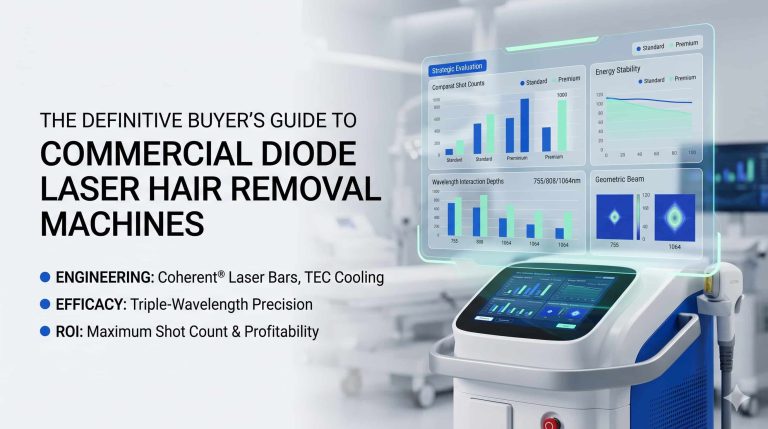
The efficacy of SHR is rooted in the principle of selective photothermolysis, where light energy is preferentially absorbed by melanin in the hair follicle. Advanced SHR devices utilize a synergistic blend of clinically-proven wavelengths to maximize this effect across a diverse patient population. The combination typically includes:
- 755nm (Alexandrite): Offers high melanin absorption, ideal for treating fine and light-colored hairs, as well as lighter skin types .
- 810nm (Diode): The ‘gold standard’ for laser hair removal, providing a balance between melanin absorption and penetration depth, making it safe and effective for a broad range of skin types, including darker skin .
- 1064nm (Nd:YAG): Possesses the deepest penetration and lowest melanin absorption, making it the safest option for Fitzpatrick skin types IV-VI, as it bypasses the epidermis to target the hair follicle deeper in the dermis .
This multi-wavelength approach allows clinicians to optimize parameters for each patient, ensuring high clearance rates without compromising safety.
Technical Specifications and Clinical Parameters
For clinic owners and medical professionals, understanding the technical specifications is crucial for evaluating device performance and treatment efficacy. SHR devices are engineered with robust components to ensure consistent, reliable output. Key parameters include:
| Parameter | Technical Specification |
|---|---|
| Laser Type / Wavelengths | 755nm (Alexandrite), 810nm (Diode), 1064nm (Nd:YAG) |
| Spot Size | Typically 15×15 mm or larger for uniform coverage |
| Frequency | 1-10 Hz, enabling rapid in-motion treatment |
| Cooling System | Sapphire Contact Cooling (e.g., ICE technology), maintaining 0-10°C |
| Regulatory Status | FDA Cleared, CE Marked, ISO 13485 certified systems |
| Energy Delivery | Low-fluence, high-repetition rate (SHR accumulative method) |
These specifications are not merely numbers; they represent the precision engineering required for safe and effective treatments. For instance, the large spot size (often around 15x15mm or larger) ensures uniform energy distribution and faster coverage, while the high frequency (1-10Hz) allows for rapid, in-motion treatments that reduce session times significantly . Advanced cooling systems, such as Sapphire ICE technology, are critical for protecting the epidermis, enabling high-energy delivery to the dermis while maintaining a skin temperature of 0-10°C for patient comfort and safety .
Indications, Protocols, and Treating Diverse Skin Types
The versatility of SHR technology is one of its greatest clinical assets. Its safety profile, validated by regulatory clearances such as FDA clearance for all skin types (I-VI) and tanned skin, allows clinics to offer treatments year-round without the seasonal restrictions often associated with other lasers .
Fitzpatrick Skin Type Protocols
To achieve optimal results, it is essential to adapt treatment protocols based on the patient’s skin type and hair characteristics. The following table provides a clinical guideline:
| Fitzpatrick Skin Type | Recommended Wavelength(s) | Clinical Considerations |
|---|---|---|
| I – III (Light Skin) | 755nm, 810nm | High efficacy with standard parameters. Alexandrite wavelength is particularly effective for fine hair. |
| IV – V (Olive to Brown Skin) | 810nm, 1064nm | Lower fluence and longer pulse widths may be required to prevent epidermal heating. 810nm diode provides a good balance. |
| VI (Dark Skin) | 1064nm | Primarily use the 1064nm wavelength to minimize epidermal melanin absorption and reduce the risk of burns or pigmentary changes. Lower fluence is recommended . |
Clinical studies have demonstrated that the SHR technique achieves high clearance rates (86-91%) comparable to traditional lasers but with significantly less pain and a lower risk of adverse effects, particularly on darker skin types . This makes SHR an indispensable tool for clinics serving a diverse, multi-ethnic clientele.
Clinical Outcomes and Business ROI
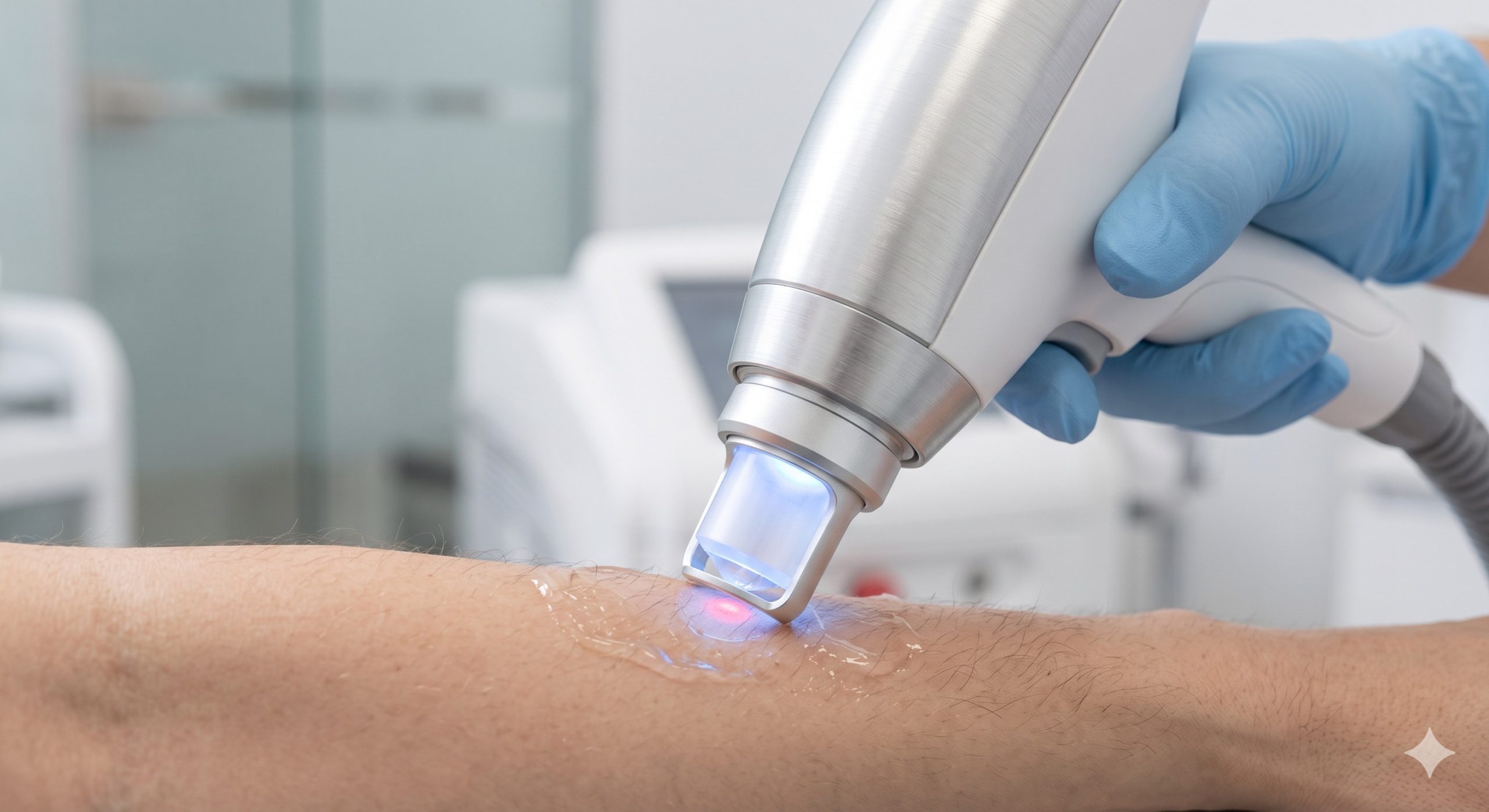
From a clinic business perspective, SHR technology is a powerful driver of profitability and patient loyalty. The ‘in-motion’ technique enables dramatically faster treatment times, often reducing a full-leg session from 45 minutes to just 15-20 minutes. This allows clinics to increase patient throughput, offering high-ticket services without overbooking the schedule . The virtually painless experience, combined with a robust safety profile, leads to higher patient satisfaction, greater retention, and more word-of-mouth referrals. Clinics have reported achieving up to 95% clearance of stubborn hair with just 3-4 sessions, underscoring the treatment’s efficacy and ability to deliver tangible, long-lasting results .
Conclusion: The Future of Hair Removal
SHR In-Motion technology has established a new benchmark for clinical excellence in laser hair removal. By integrating advanced multi-wavelength capabilities, precision engineering, and a patient-centric approach to safety and comfort, it offers a superior solution compared to legacy technologies. For medical aesthetic clinics and dermatology practices, investing in FDA-cleared, CE-certified SHR systems is not merely an equipment upgrade; it is a strategic decision that enhances clinical outcomes, expands patient demographics, and maximizes return on investment. It represents a commitment to delivering the highest standard of care in a rapidly evolving industry.