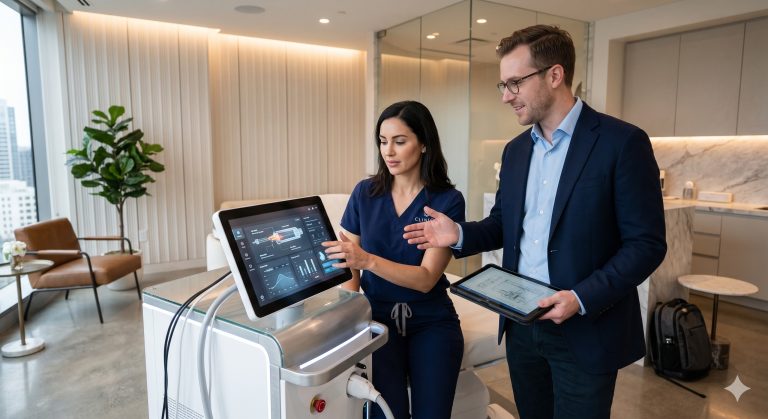
Selective Photothermolysis FAQ: Expert Answers for Aesthetic Clinics & Dermatologists
Overview
Selective photothermolysis is the scientific principle that powers modern aesthetic lasers—allowing clinicians to destroy targeted chromophores (melanin, hemoglobin, or ink) without damaging surrounding tissue. For B2B clinic owners and dermatologists, understanding this mechanism directly impacts treatment safety, patient outcomes, device ROI, and regulatory compliance. This FAQ addresses pre-sales, clinical, and post-sales technical questions for high-intent buyers.
Frequently Asked Questions
Q1: Is selective photothermolysis safe for all Fitzpatrick skin types (I-VI)?
Yes, but only with wavelength-selective devices featuring dynamic cooling or long-pulse durations. For Fitzpatrick IV-VI, higher melanin content increases epidermal competition. A 1064nm Nd:YAG laser with contact cooling (e.g., sapphire tip at -5°C to 0°C) or a 755nm diode with an integrated cryogen spray minimizes thermal injury to the basal layer. Avoid high-fluence, short-pulse 532nm or 755nm lasers on dark skin without real-time epidermal temperature monitoring.
Q2: How does contact cooling protect the epidermis during selective photothermolysis?
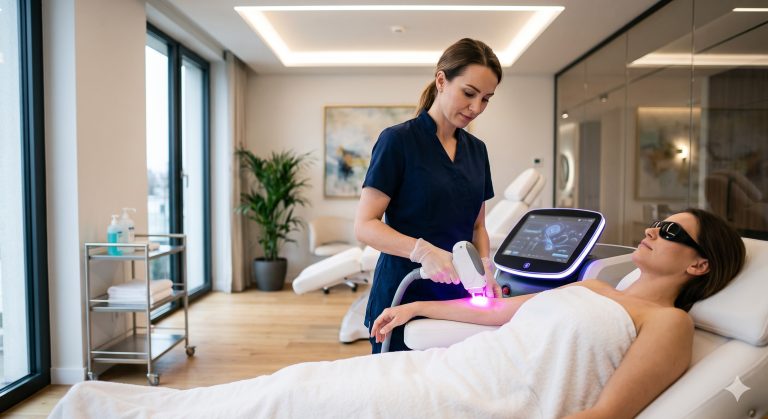
Contact cooling preserves the epidermis by extracting heat from the superficial layer before thermal relaxation completes. A sapphire or metal tip at 0°C to 4°C is pressed against the skin milliseconds before the laser pulse. This creates a reverse temperature gradient: the epidermis remains below 45°C (no blistering) while the targeted vessel or follicle reaches 65-75°C. Clinical protocols recommend continuous cooling for vascular lesions and pre-cooling for pigmented lesions.
Q3: What is the typical handpiece shot lifespan in a medical-grade selective photothermolysis laser?
Premium handpieces deliver 1.5 to 3 million full-energy shots before reaching 80% of original output. For a busy clinic performing 20-30 treatments daily (average 500-800 shots per session), this equals 5-8 years of clinical life. Factors that reduce lifespan: operating above 30°C ambient temperature, using maximum fluence (>30 J/cm²) continuously, and skipping factory-recommended energy calibration every 6 months. Replace handpieces when shot count exceeds 2.5M or when visible output drop exceeds 15% on a power meter.
Q4: What ROI can a med spa expect when investing in a selective photothermolysis laser?
Typical payback period is 5-9 months for a single device in a mid-volume clinic. Calculation: average purchase price $35,000-$65,000 for a dual-wavelength (755nm + 1064nm) system. At $250-450 per treatment (hair removal, pigmentation, or vascular), performing 8-12 billable sessions per week yields $8,000-$21,600 monthly revenue. Low consumable cost (only cooling gel and handpiece amortization at $0.05-$0.12 per shot) means gross margins exceed 75% after month 3. B2B buyers should prioritize devices with free firmware updates and included handpiece warranties.
Q5: Does selective photothermolysis treat resistant pigments like cafe-au-lait or dermal melasma?
Yes, but with multi-wavelength synergy and longer pulse widths (10-40ms). For epidermal cafe-au-lait, 532nm or 755nm at low fluence (6-9 J/cm²) with 5ms pulse duration fragments melanosomes without post-inflammatory hyperpigmentation. For dermal melasma or nevus of Ota, stacked pulses of 1064nm (6-10 J/cm², 30-50ms) delivered every 2 seconds creates microthermal zones reaching 1-2mm depth. Laser toning protocols (low-fluence, high-repetition rate) require 6-8 sessions spaced 4 weeks apart. Avoid Q-switched nanosecond pulses on melasma—risk of rebound pigmentation exceeds 40% without adjunct topical tranexamic acid.
Q6: What medical CE and FDA regulations apply to selective photothermolysis lasers?
Class IV medical devices must comply with FDA 21 CFR Part 1040 (or IEC 60825-1 for EU) and ISO 13485:2016 for manufacturing. For clinic procurement: require a valid Medical CE certificate (Class IIb or III depending on wavelength) and, for US clinics, a 510(k) clearance with a specific intended use (e.g., K192345 for hair reduction). Post-sales compliance includes annual laser safety officer (LSO) audits, nomogram calibration verification, and maintaining treatment logs for 5 years. Non-compliant devices void malpractice insurance and risk fines up to $15,000 per violation.
Q7: How do I troubleshoot inconsistent energy output during a treatment session?
First, check the water circulation system—low flow triggers thermal cutbacks. Verify the handpiece connector pins for oxidation (clean with isopropyl alcohol). Then run a factory energy test: set fluence to 12 J/cm², 10ms pulse, 6mm spot. Use a calibrated pyroelectric meter. If deviation exceeds ±15%, recalibrate via service menu. Common fixes: replace the flashlamp every 500,000 shots (cost $120-250), clean the optical window with lens paper, or update firmware to correct pulse-stretching algorithms. For sudden zero output, inspect the foot pedal relay and door interlock switches.
Q8: Can I integrate selective photothermolysis with other aesthetic devices in one workflow?
Yes, sequential combination protocols increase average ticket value by 35-50%. Standard workflows: First, perform selective photothermolysis for hair reduction (1064nm, 25 J/cm², 30ms). Wait 15-20 minutes (tissue cooling and erythema resolution). Then apply RF microneedling or fractional resurfacing for texture improvement. Alternatively, for vascular-pigment synergy: treat telangiectasias with 585nm pulsed dye laser, then immediately layer 1064nm for overlying lentigines. Never stack two high-fluence lasers on the same site within 2 hours without active cooling—thermal summation exceeds safety thresholds. Always document device sequence and total joules delivered per cm².
Q9: What consumable costs should I budget per treatment?
Variable consumables average $2.80-$7.50 per full-face treatment (500-800 shots). Breakdown: handpiece amortization ($0.08/shot x 600 = $4.80), cooling gel or disposable sapphire windows ($1.20-2.50), distilled water for closed-loop circulation ($0.10), and disposable eye shields ($0.75). Fixed quarterly costs: flashlamp replacement ($180-300), air filter kit ($45), and calibration service ($250). Budget an additional 8-12% of device price annually for preventive maintenance. Clinics performing over 4,000 shots weekly should negotiate tiered consumable contracts directly with the OEM.