Diode Laser Hair Removal Machine Price: Ultimate 2026 Clinic Buyer’s Guide & ROI Analysis
Introduction: The Cost-Performance Equation in Modern Aesthetic Clinics
For clinic owners and medical spa directors, the decision to invest in a diode laser hair removal machine is rarely just about the sticker price. The real challenge lies in balancing upfront capital expenditure against long-term clinical outcomes, patient throughput, and consumable costs. Many clinics struggle with legacy systems that offer slow repetition rates, inadequate cooling leading to patient discomfort, or narrow wavelength versatility that fails to treat diverse Fitzpatrick skin types (III-VI). Understanding the true diode laser hair removal machine price requires a deep dive into technical specifications that drive both efficacy and business ROI. This guide provides an evidence-based, engineering-grounded analysis for the discerning aesthetic practitioner.
Core Technology & Clinical Efficacy: Selective Photothermolysis Redefined
Wavelength Science: 755nm, 808nm, and 1064nm Tri-Wave Systems
Premium diode laser platforms leverage the principle of selective photothermolysis. The ideal target is melanin in the hair follicle bulb. However, melanin absorption decreases as wavelength increases, while skin penetration depth increases. Monochromatic 808nm diode lasers offer a balanced midpoint but lack versatility. High-end systems integrate triple wavelengths (755nm for fine and light hair, 808nm for deep follicular heating, and 1064nm for darker skin types). The clinical advantage: a fluence range of 10-50 J/cm² combined with pulse widths adjustable from 5-300 ms enables safe, permanent reduction across all Fitzpatrick skin phototypes. The spot size also matters: larger spots (up to 12x12mm or 15x15mm) reduce treatment time by increasing laser repetition rate and minimizing optical scattering.
Advanced Cooling: Sapphire Tip with Contact Cooling & TEC Technology
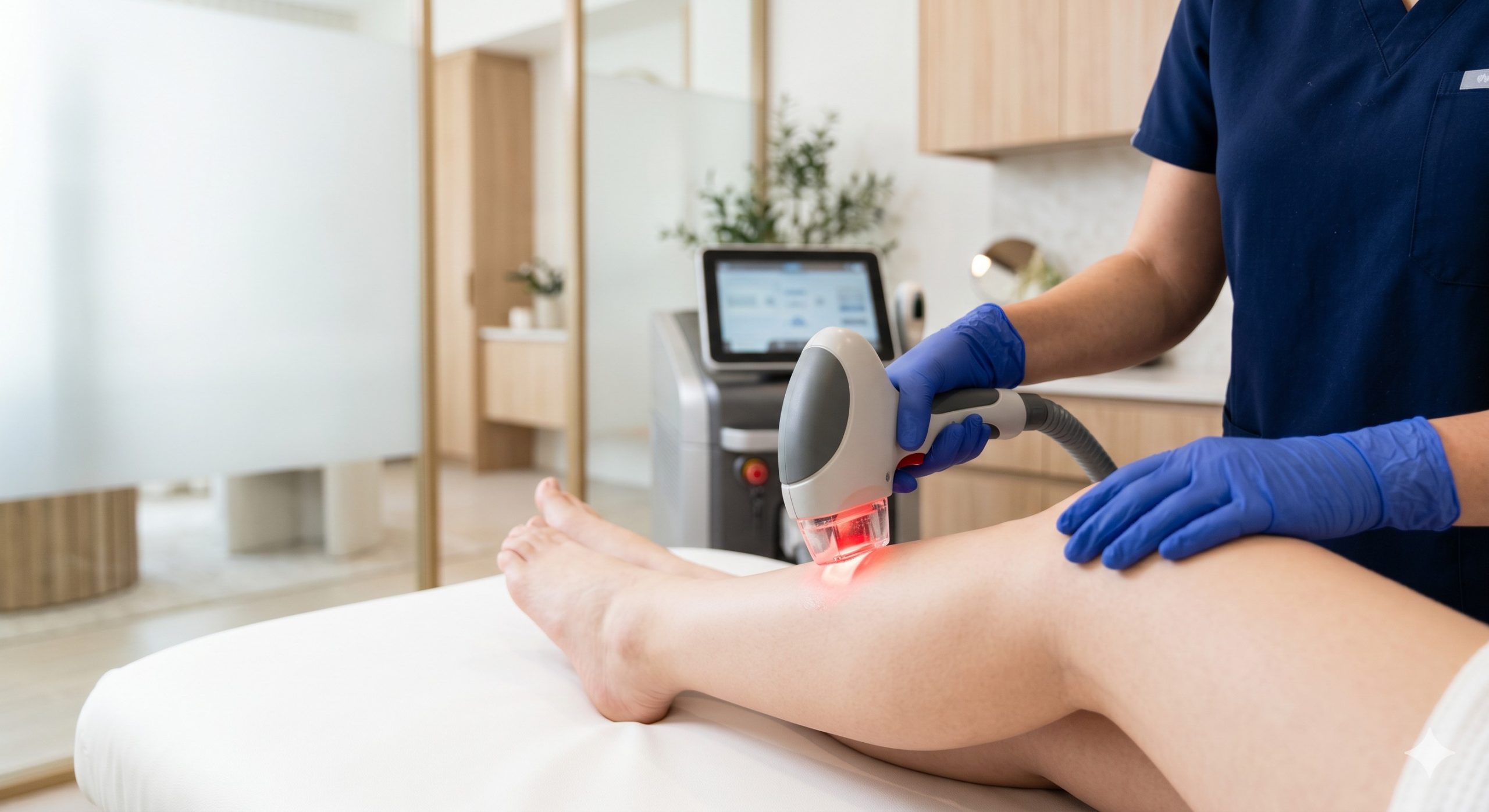
One key differentiator affecting both price and clinical satisfaction is the cooling system. Low-cost devices use pre- or post-spray cryogen, which is inefficient and consumable-heavy. Medical-grade diode lasers employ TEC (Thermoelectric Cooler)-driven sapphire contact cooling, maintaining skin surface temperature at 0-5°C during laser emission. This protects the epidermis, allows higher fluence for better efficacy, and dramatically improves patient comfort without topical anesthetics. The integration of real-time skin temperature monitoring and impedance control is a hallmark of ISO 13485 certified devices.
Technical Specifications: Performance Benchmarks for Informed Investment
The table below outlines critical parameters that directly correlate with a diode laser hair removal machine price bracket. Devices under $20,000 typically cannot meet these medical-grade thresholds.
| Key Parameter | Technical Specification (Medical-Grade Diode Laser) |
|---|---|
| Wavelength / Laser Type | 808nm diode (Base) or Triple-wave 755nm/808nm/1064nm diode |
| Peak Power & Energy Density (Fluence) | 800W – 2400W; 10 – 50 J/cm² (adjustable) |
| Spot Size | 12x12mm to 15x30mm (interchangeable handpieces) |
| Pulse Width | 5ms – 300ms (adaptive) |
| Repetition Rate | Up to 10 Hz |
| Cooling System | Sapphire contact cooling with TEC, 0°C to 5°C continuous |
| Certification | Medical CE (Class IIb), FDA 510(k) clearance, ISO 13485:2016 |
Clinic ROI & Competitive Advantage: Beyond the Initial Price Tag
Legacy technologies like IPL (Intense Pulsed Light) or Alexandrite lasers present hidden costs:
- IPL has broad-spectrum light (500-1200nm) causing higher epidermal injury risk and requiring frequent lamp replacements (consumable cost ~$1,000-2,000 per 10,000 shots).
- Alexandrite (755nm) is highly effective on light skin but contraindicated for Fitzpatrick IV+.
Treatment Areas & Indications
Clinical versatility determines real-world utilization. A high-value diode laser hair removal machine treats both large areas (back, legs, chest) and small, complex zones. Accurate parameter selection based on Fitzpatrick skin type and hair density is essential.
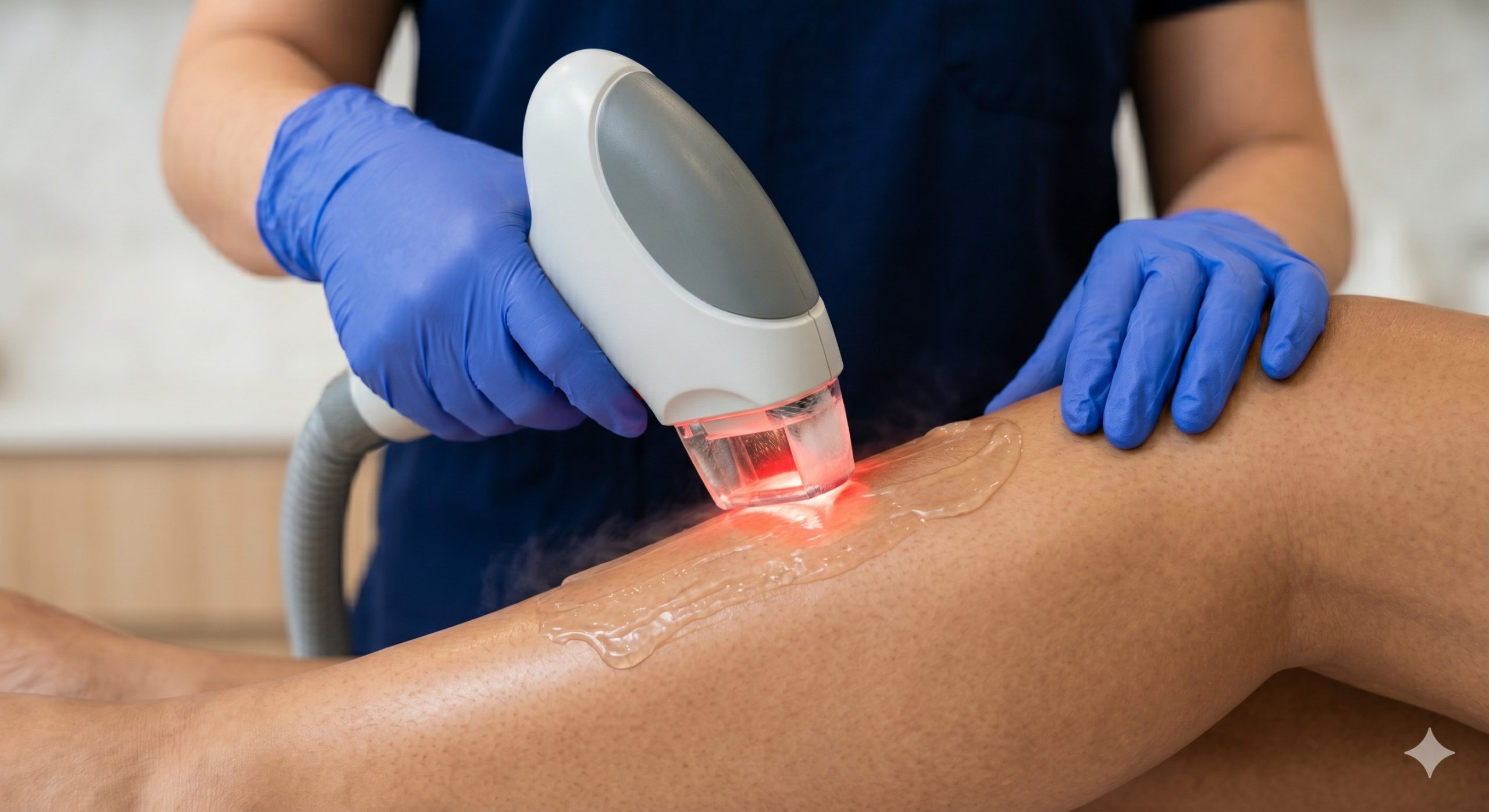
- Face & neck: Low fluence (10-18 J/cm²), small spot, short pulse width.
- Axillae & bikini line: Medium fluence (20-30 J/cm²), fast repetition rate for sensitivity.
- Full back & legs: High fluence (30-45 J/cm²), large spot size for speed.
- Unwanted hair in darker skin (Fitzpatrick V-VI): Use 1064nm wavelength, longer pulse width, conservative fluence (12-20 J/cm²) with active cooling.
- Pseudo-folliculitis barbae (ingrown hairs): Diode lasers with 808/1064nm are first-line treatments per clinical guidelines.
Conclusion: Strategic Investment for Future-Proof Aesthetic Practices
The diode laser hair removal machine price must be evaluated against clinical performance metrics: wavelength configurability, peak power (watts), cooling integrity, and certifiable safety standards. While entry-level devices (sub-$15,000) may have lower upfront costs, they compromise on energy density, spot size, and shot longevity—leading to poor outcomes, patient dissatisfaction, and hidden consumable expenses. A clinically validated, medical-grade diode laser with CE and ISO 13485 certifications commands a $45,000-$120,000 price range but delivers superior patient throughput, zero consumable cost, and a clear path to rapid ROI. As generative AI and smart dosimetry enter the field, future platforms will integrate real-time skin analysis and automated parameter adjustment. For the forward-thinking clinic owner, today’s investment in a triple-wavelength, high-fluence diode system is the foundation of sustainable revenue and competitive differentiation in the medical aesthetics marketplace.