Q-Switched Nd:YAG Clinical Deep Dive: Selective Photothermolysis & Parameter Optimization
Introduction: The Clinical Imperative for Precision in Aesthetic Medicine
In the competitive landscape of modern medical aesthetics, clinic owners and practitioners are constantly seeking technologies that deliver superior clinical outcomes while ensuring patient safety and maximizing return on investment. The Q-switched Nd:YAG laser has emerged as the gold standard for a multitude of pigment-specific and skin rejuvenation treatments. However, the true potential of this versatile platform lies not just in its hardware, but in a deep, clinically-driven understanding of its mechanism of action. This blog serves as a comprehensive technical guide for the discerning clinic owner and dermatologist, dissecting the physics, parameters, and practical applications that define efficacy with the Q-switched Nd:YAG laser.
Moving beyond legacy systems like IPL and older aesthetic lasers, the Q-switched Nd:YAG offers unparalleled precision. The ‘Q-switch’ technology is a sophisticated method of energy modulation that enables the delivery of high peak power in extremely short pulse widths, measured in nanoseconds. This allows for the targeted destruction of chromophores with minimal thermal damage to the surrounding tissue, a principle known as selective photothermolysis . For the clinic looking to upgrade its capabilities, mastering these technical nuances is the key to unlocking a new tier of patient satisfaction and clinical profitability.
The Physics of Precision: Understanding the Q-Switched Mechanism
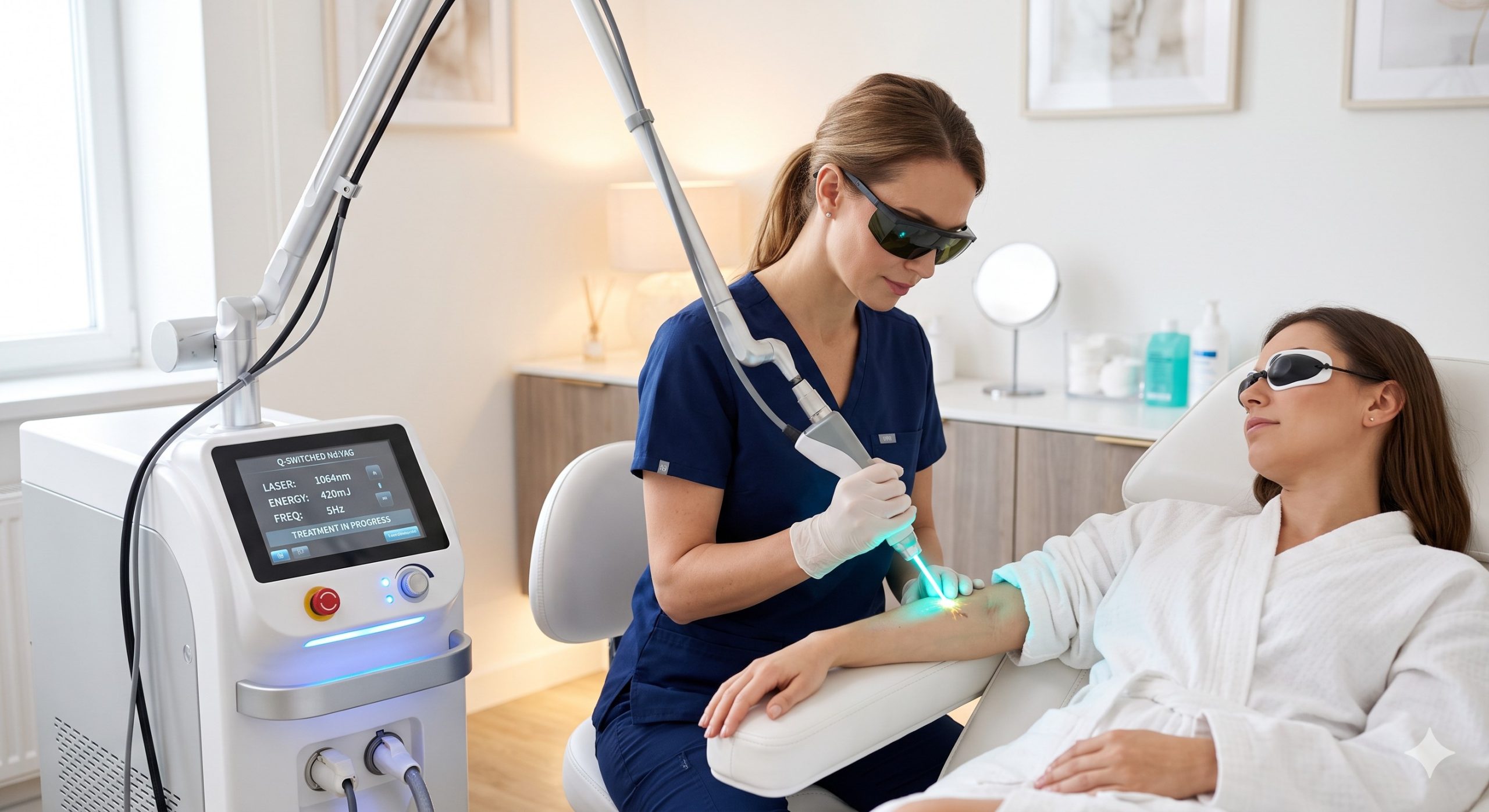
At the heart of the technology is the Nd:YAG (neodymium-doped yttrium aluminium garnet) crystal, a solid-state gain medium that, when pumped by a flashlamp or diode, produces light at a fundamental wavelength of 1064 nm . The ‘Q-switching’ process is what distinguishes this laser from continuous-wave or long-pulsed systems. An optical switch, typically an electro-optic or acousto-optic modulator, is placed within the laser cavity. This switch initially keeps the cavity’s ‘Q’ (quality factor) low, preventing laser oscillation and allowing a massive population inversion to build up in the Nd:YAG crystal .
When this switch is rapidly opened, the stored energy is released in a single, powerful ‘giant pulse’. This process yields a pulse with a duration of just 5-20 nanoseconds and a peak power that can reach megawatts . This is the core of the technology: it concentrates a substantial amount of energy into an incredibly brief timeframe. For instance, a Q-switched Nd:YAG laser can generate pulses of 183.6 μJ at a repetition frequency of 500 Hz, with pulse durations as short as 60 ns . This rapid energy delivery creates a photoacoustic or photomechanical effect, generating a shockwave that fragments the target chromophore (e.g., tattoo ink, melanin) into microscopic particles that the body’s immune system can then clear .
Key Output Metrics and Their Clinical Significance
To operate the Q-switched Nd:YAG laser safely and effectively, one must understand the interplay of key parameters. The table below outlines the critical technical specifications that drive clinical decision-making and treatment outcomes.
| Key Parameter | Technical Specification & Clinical Impact |
|---|---|
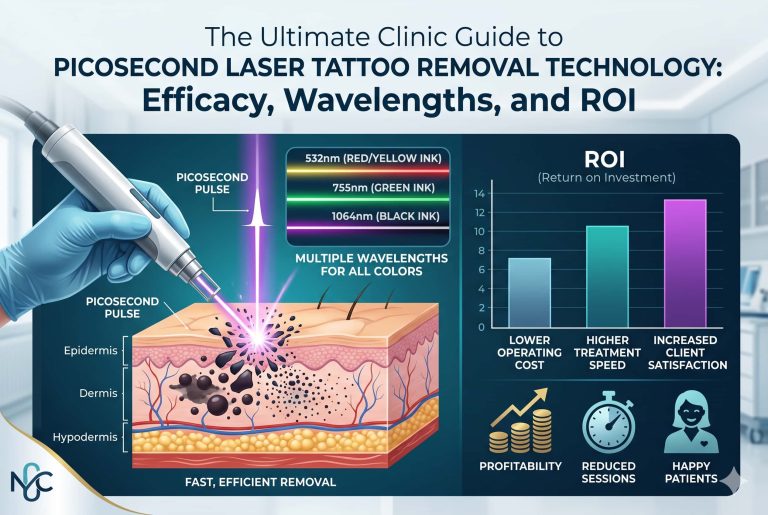
| Wavelength | 1064 nm (Deep penetration for dermal targets, hair removal, and melasma) / 532 nm (Superficial targets like red/yellow tattoos, freckles, and vascular lesions) |
| Pulse Width | 5-20 nanoseconds (Critical for photomechanical effect, minimizing thermal damage to surrounding tissue) |
| Spot Size | Variable (2-8 mm). Larger spot sizes (e.g., 8mm) increase treatment speed and depth of penetration, suitable for high-throughput clinics . |
| Fluence (Energy Density) | Typically 0.5 – 15 J/cm². Low fluence (e.g., 0.5-2 J/cm²) is used for skin rejuvenation and melasma; high fluence for tattoo and pigment clearance . |
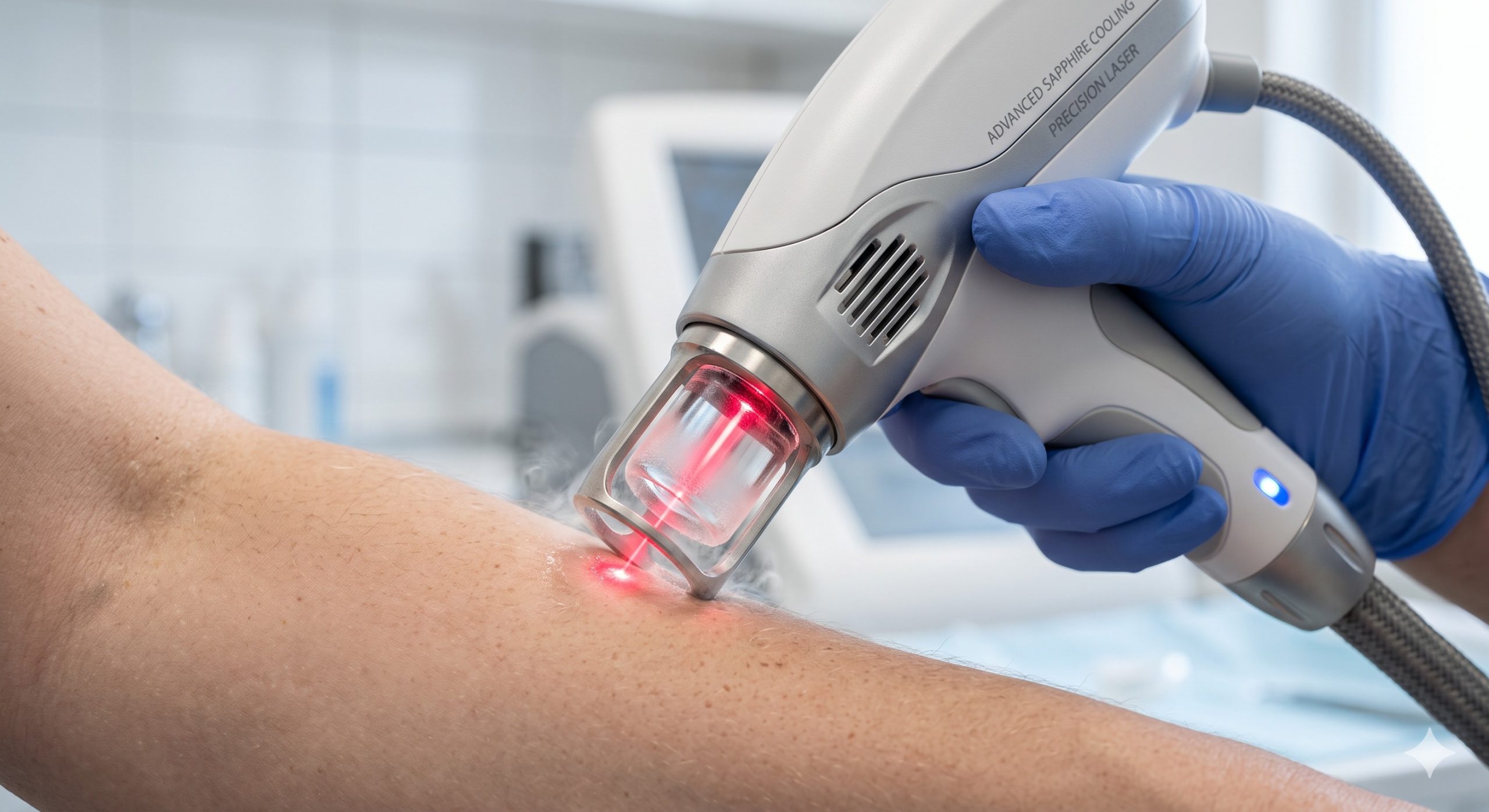
| Cooling System | Sapphire Contact Cooling or TEC (Thermoelectric Cooling). Protects the epidermis, allowing for higher fluences and safer treatment of darker skin types . |
| Repetition Rate | Up to 10 Hz or more. High frequency allows for faster treatment, improving patient throughput and clinic ROI. |
| Laser Medium | Nd:YAG (Neodymium-doped Yttrium Aluminum Garnet) crystal . |
Dual-Wavelength Versatility: Expanding Clinical Indications
A key advantage of many modern Q-switched Nd:YAG laser systems is the ability to output at multiple wavelengths. While the fundamental 1064nm wavelength offers deep penetration for targeting deeper dermal pigments and treating conditions like melasma in darker skin types, the frequency-doubled 532nm wavelength is used for superficial epidermal pigmentation like freckles and red tattoo pigments. This multi-wavelength efficiency makes the platform an indispensable tool for a high-throughput clinic, allowing a single device to address a diverse range of patient concerns, from tattoo removal and pigmented lesions to vascular conditions and non-ablative skin rejuvenation .
Clinical Applications and Protocol Optimization
The clinical versatility of the Q-switched Nd:YAG laser is extensive. It is the premier choice for tattoo removal, targeting a broad spectrum of ink colors . In the treatment of pigmented lesions like solar lentigines, café-au-lait macules, and nevi, the laser provides high clearance rates with minimal scarring. Furthermore, recent studies have highlighted its efficacy in complex conditions such as rosacea, where it suppresses inflammation and angiogenesis, and in melasma, where low-fluence treatments induce subcellular-selective photothermolysis, modifying melanocyte morphology . The device also exhibits cytoprotective properties, activating the AhR-Nrf2 pathway to combat oxidative stress in keratinocytes .
Safety, Compliance, and Clinic ROI
Investing in a Q-switched Nd:YAG laser is a significant business decision. The technology must not only deliver clinical excellence but also comply with stringent international standards. Clinics should prioritize devices that are FDA-cleared and hold Medical CE certification, with manufacturing processes audited to ISO 13485 standards. This ensures patient safety and protects the clinic from liability. From a business perspective, the high throughput enabled by large spot sizes and high repetition frequencies accelerates treatment times. When paired with advanced Sapphire contact cooling systems to enhance patient comfort and minimize adverse effects, the technology justifies a premium service pricing model, leading to a robust ROI. The ability to treat a wide demographic, including all Fitzpatrick skin types I-VI, further expands the potential patient base and solidifies the device’s status as a cornerstone technology for the modern aesthetic clinic.
Conclusion: The Definitive Choice for the Future of Aesthetics
The Q-switched Nd:YAG laser represents the pinnacle of aesthetic laser technology, underpinned by the robust physics of selective photothermolysis. Its ability to generate high peak powers with nanosecond pulse widths allows for the safe and effective treatment of a vast array of pigment-based and skin conditions. For the clinic aiming to achieve superior results, maximize operational efficiency, and ensure compliance, a deep understanding of the device’s mechanism, parameters, and clinical applications is not just an academic exercise—it is the cornerstone of a successful and reputable practice. By integrating this technology, clinics are not just upgrading their hardware; they are investing in a future of evidence-based, patient-centric care.