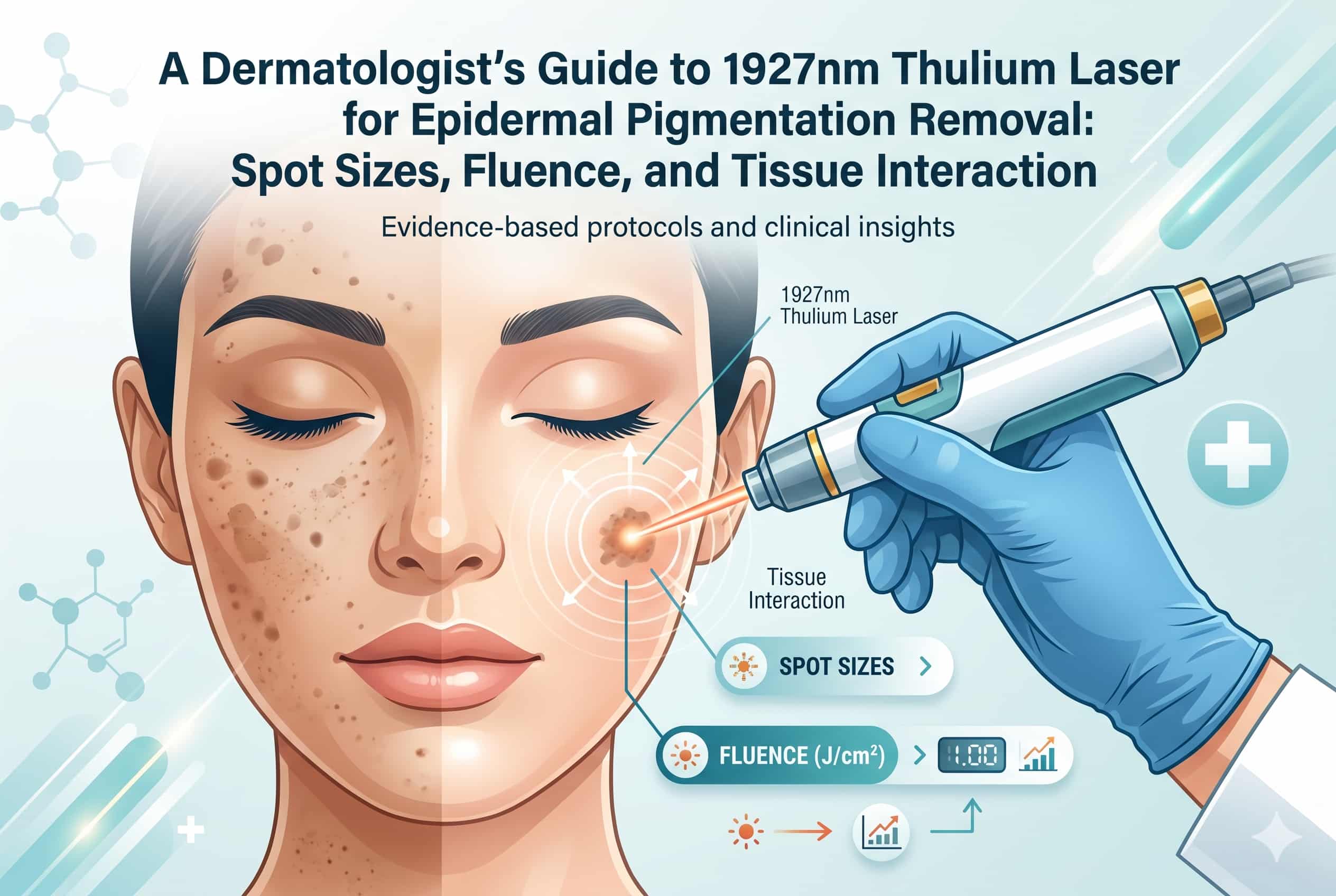
A Dermatologist’s Guide to 1927nm Thulium Laser for Epidermal Pigmentation Removal: Spot Sizes, Fluence, and Tissue Interaction
Clinical Challenges in Epidermal Pigmentation: Why Traditional Modalities Fall Short
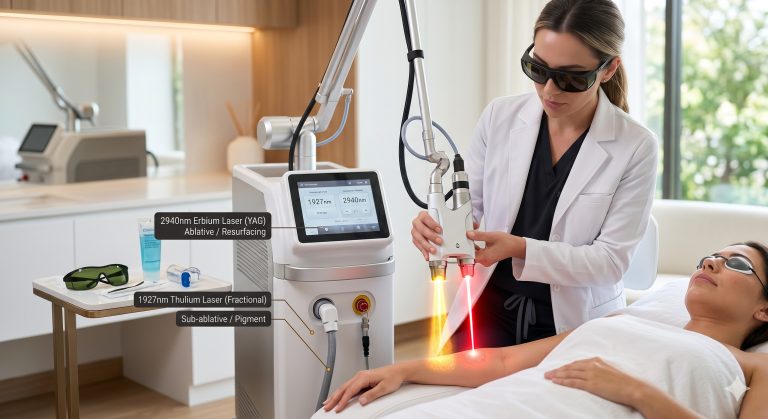
Epidermal pigmentation, including solar lentigos, ephelides, and melasma, represents a significant clinical challenge in aesthetic dermatology. While conventional treatments like IPL and topical agents often yield suboptimal results or pose risks of post-inflammatory hyperpigmentation (PIH), the 1927nm thulium laser for epidermal pigmentation removal has emerged as a superior solution. This device uniquely bridges the gap between ablative and non-ablative technologies, offering a compelling combination of efficacy, safety, and minimal downtime .
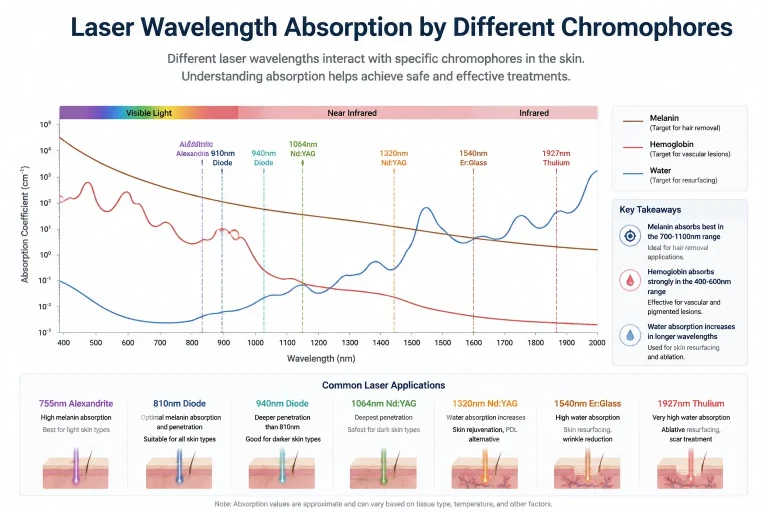
The 1927nm wavelength is strategically positioned within the near-infrared spectrum, where its primary chromophore is tissue water. This critical characteristic ensures precise, superficial tissue interaction, making it exceptionally safe for the delicate epidermal layer while effectively targeting pigmented lesions.
The Biophysical Mechanism: Selective Photothermolysis and Water Absorption
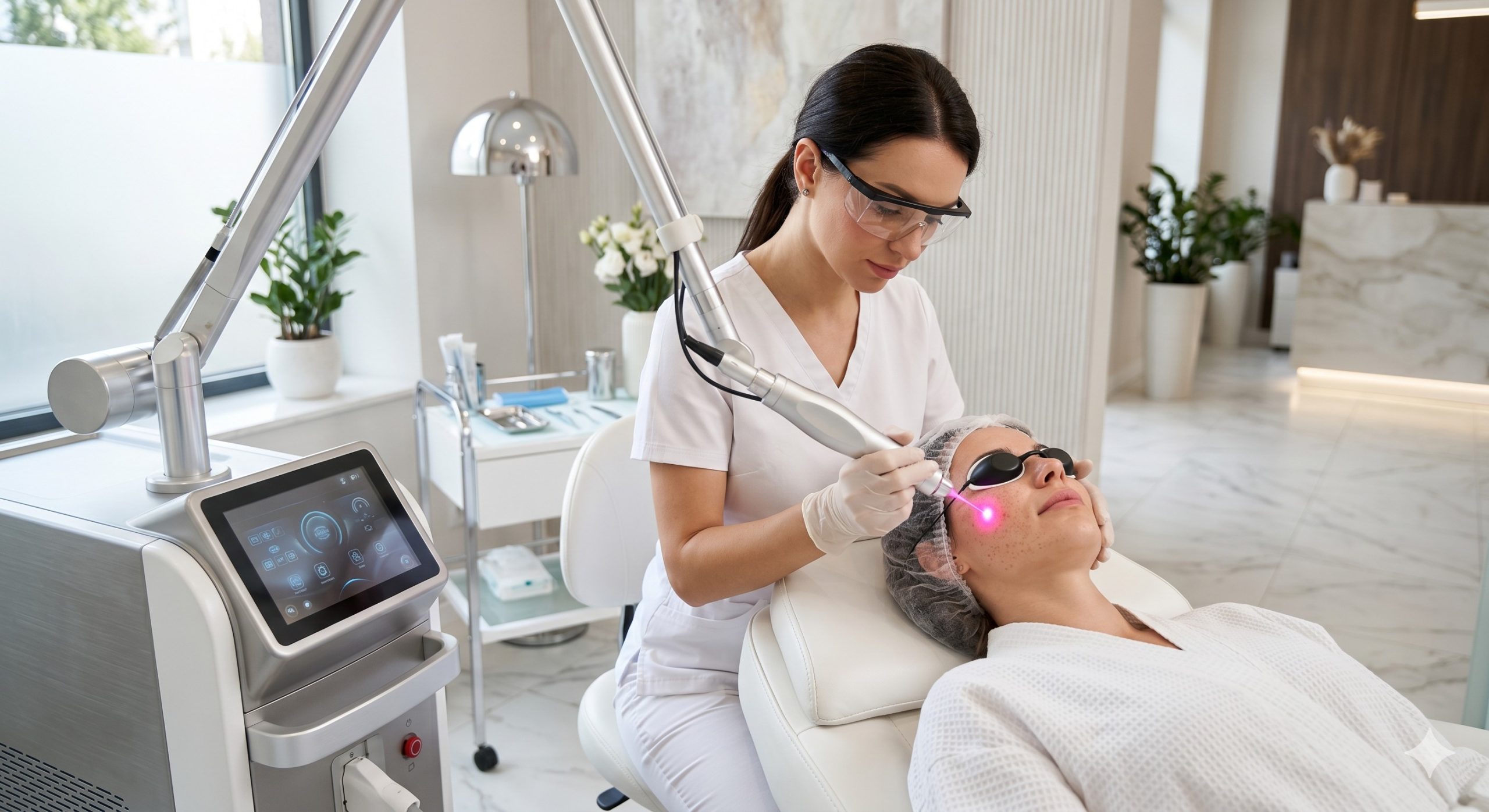
The clinical superiority of the 1927nm thulium laser is rooted in its selective photothermolysis mechanism. At a fundamental level, the device emits pulses of energy that are preferentially absorbed by water molecules within the epidermis. This targeted absorption generates localized thermal coagulation zones (MTZs) in the superficial papillary dermis .
Unlike ablative lasers which vaporize the entire treatment area, the fractional delivery of the 1927nm wavelength creates microscopic columns of coagulation while leaving surrounding tissue intact. This facilitates rapid cellular repair and collagen remodeling, resulting in significant clearance of pigmented lesions with reduced recovery time . Recent clinical trials have demonstrated that combining RFMN with 1927nm thulium laser significantly improves hyperpigmented lesions compared to RFMN alone, with objective colorimetric analysis confirming superior skin tone evening .
Clinical Efficacy: Indications and Performance Data
Treatment of Benign Pigmented Lesions
The FDA-cleared indications for the 1927nm thulium laser system include the treatment of benign pigmented lesions such as lentigos (age spots), solar lentigos (sun spots), and ephelides (freckles) . Integrative reviews and clinical case series consistently report high patient satisfaction and significant improvement in dyschromia and photoaging, with low incidence of adverse events .
For clinicians, this translates to a predictable and reproducible treatment outcome. A prospective study on Asian skin demonstrated statistically significant improvements in the melanin index and skin elasticity following three monthly sessions, with 70% of patients reporting they were satisfied or extremely satisfied with the results .
Expanding Indications: Acne and Skin Rejuvenation
Beyond pigmentation, the versatile 1927nm thulium laser has shown promise in treating active acne vulgaris. By delivering controlled thermal damage to the infundibulum and sebaceous glands, the laser effectively disrupts Cutibacterium acnes and promotes follicular remodeling. A 2024 case series reported a significant reduction in both inflammatory and non-inflammatory lesions, with overall lesion counts decreasing by 60% to 97.1% . This multi-indication capability enhances the return on investment for aesthetic clinics.
| Key Parameter | Technical Specification |
|---|---|
| Wavelength | 1927nm (Thulium-Doped Fiber Laser) |
| Laser Classification | Class 4 Surgical Laser (Product Code: GEX) |
| Max Output Power | 10W – 12W |
| Pulse Duration | 0.1 ms – 20 ms |
| Pulse Repetition Rate | Up to 445 Hz |
| Spot Size | 300 µm (Fiber Optic Delivery) |
| Cooling System | Integrated Contact Cooling (Sapphire/TEC) |
| Regulatory Clearance | FDA 510(k) Clearance, CE Marked, ISO 13485 |
Advanced Hardware and Cooling Systems: Ensuring Safety and Comfort
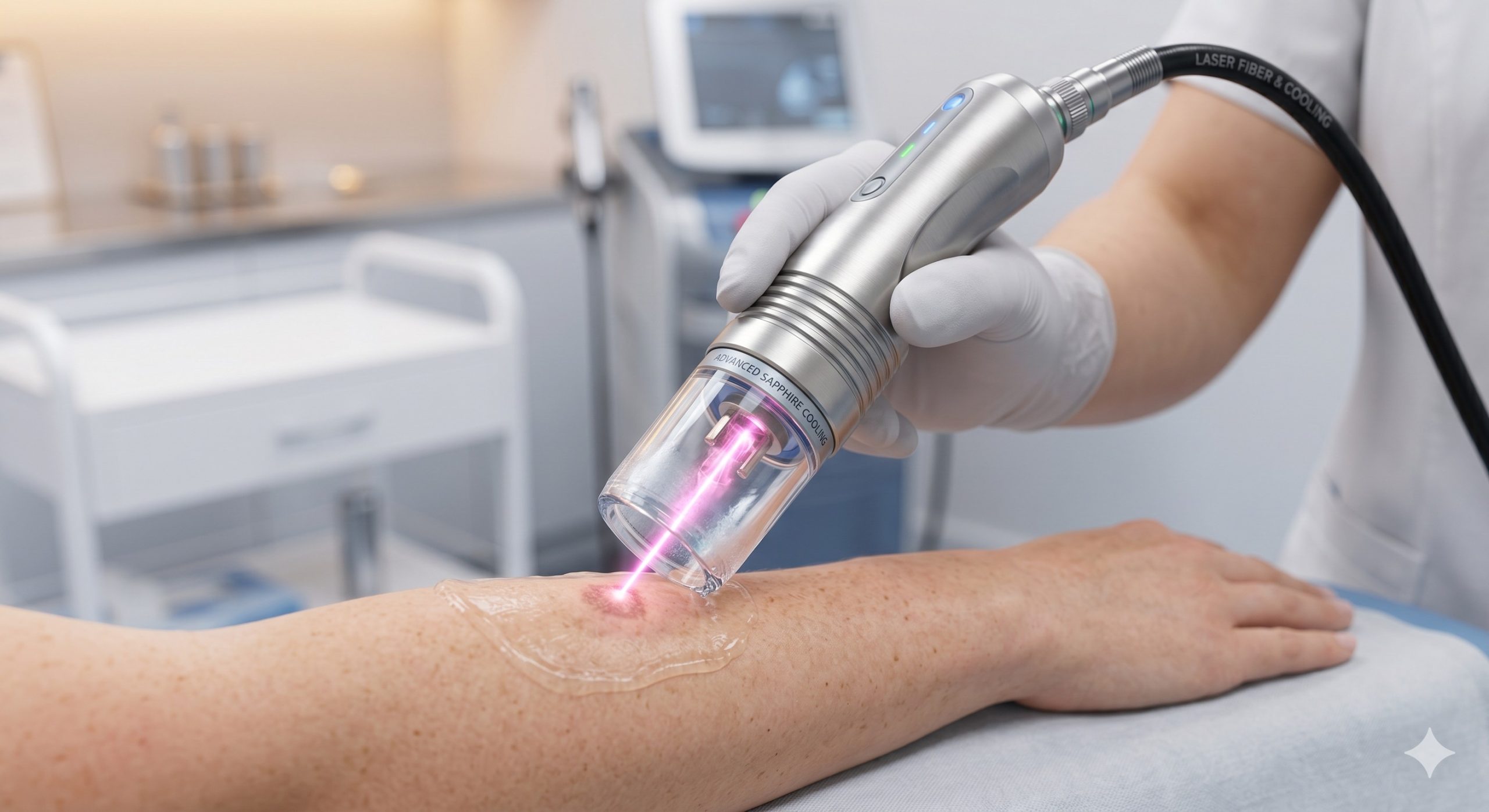
Modern 1927nm thulium laser systems incorporate sophisticated cooling mechanisms to further enhance patient safety and comfort. Integrated contact cooling systems, such as advanced sapphire or TEC cooling, protect the epidermis during energy delivery by maintaining lower surface temperatures. This is particularly critical when treating patients with higher Fitzpatrick skin types (FST IV-VI), who are at increased risk of post-inflammatory hyperpigmentation .
Histological analyses confirm that the 1927nm wavelength induces a controlled wound-healing response under an intact stratum corneum. This unique property ensures rapid re-epithelialization and minimizes the downtime typically associated with laser resurfacing .
Clinical Workflow Optimization and ROI
From a business consultancy perspective, integrating the 1927nm thulium laser into a med spa or dermatology practice significantly expands the service portfolio. The device’s proven efficacy across multiple indications—including pigmentation, acne, and photoaging—allows clinics to attract a broader patient demographic and command premium pricing for high-value treatments.
The shorter recovery time and lower incidence of adverse effects compared to Er:YAG and Alexandrite lasers translate to higher patient throughput and satisfaction, ultimately maximizing profitability . Furthermore, the availability of dual-wavelength systems combining the 1550nm and 1927nm platforms enables practitioners to treat multiple components of skin aging in a single session, further optimizing clinical workflow .
Conclusion: The Clinical Verdict
The 1927nm thulium laser for epidermal pigmentation removal represents a paradigm shift in aesthetic dermatology. Its unique water-based chromophore interaction offers an unmatched safety profile, making it a versatile and indispensable tool for modern clinics. For clinicians seeking to achieve superior clinical outcomes with minimal risk, the 1927nm thulium laser is the definitive choice.