Maximizing Med Spa Profitability: A Complete ROI Analysis of Tattoo removal laser machine ROI for clinics
Strategic Financial Planning: Why Tattoo Removal Demands a High-Performance Laser Platform
For clinic owners and medical spa directors, investing in a tattoo removal laser machine represents a significant capital expenditure (CapEx) that must deliver measurable returns. Unlike hair removal, tattoo removal requires higher peak power, precise wavelength selection, and robust epidermal cooling to achieve clinical clearance without complications. The ROI for clinics hinges on three core metrics: treatment speed (minutes per session), consumable lifespan (shots per handpiece), and patient retention (sessions per tattoo). This data-driven analysis benchmarks the financial performance of modern Q-Switched and Picosecond lasers against legacy technologies.
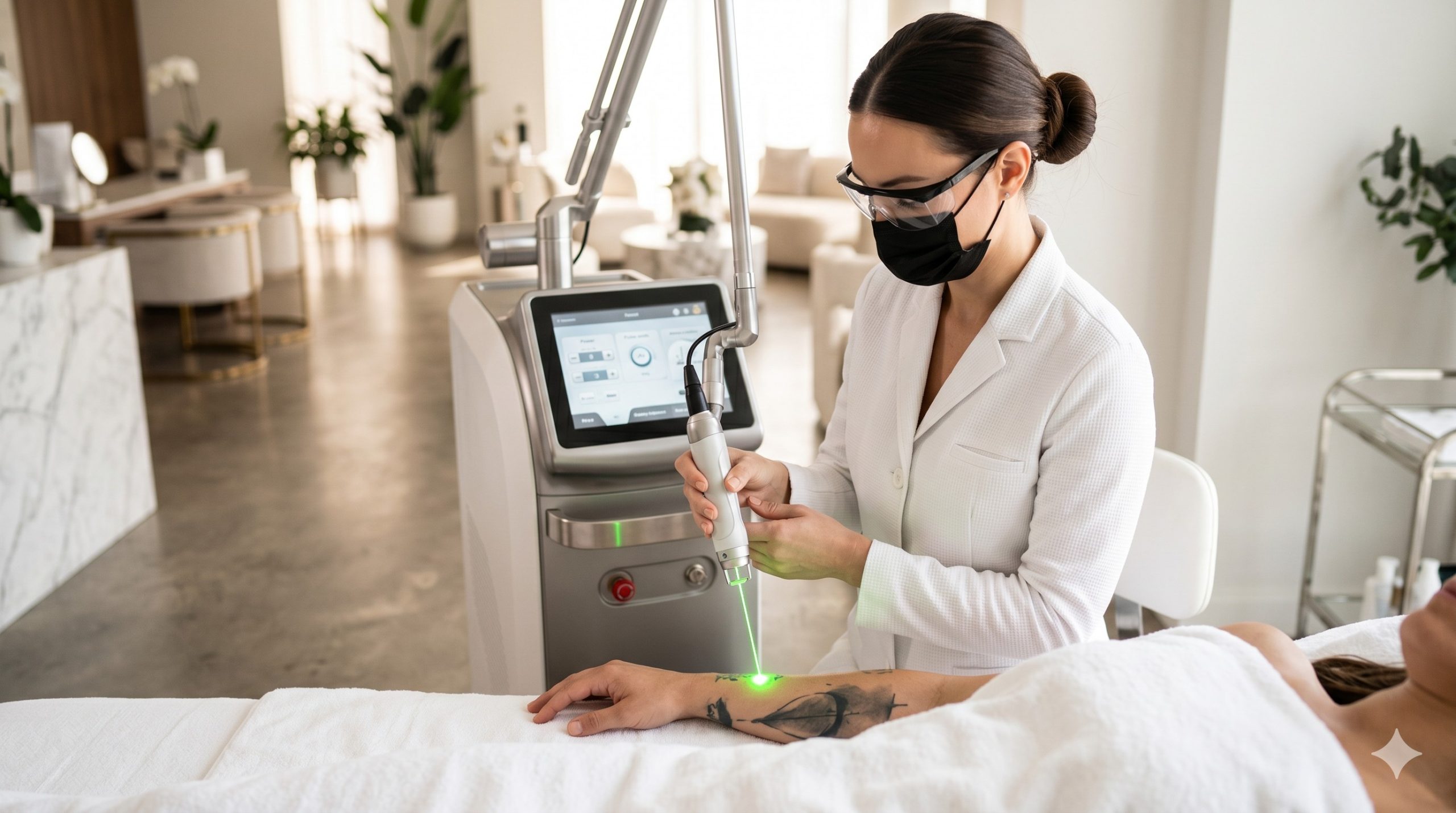
Technical Foundation: Wavelengths, Fluence, and Pulse Dynamics That Drive Clinical Outcomes
Critical Wavelengths for Ink Particle Fragmentation
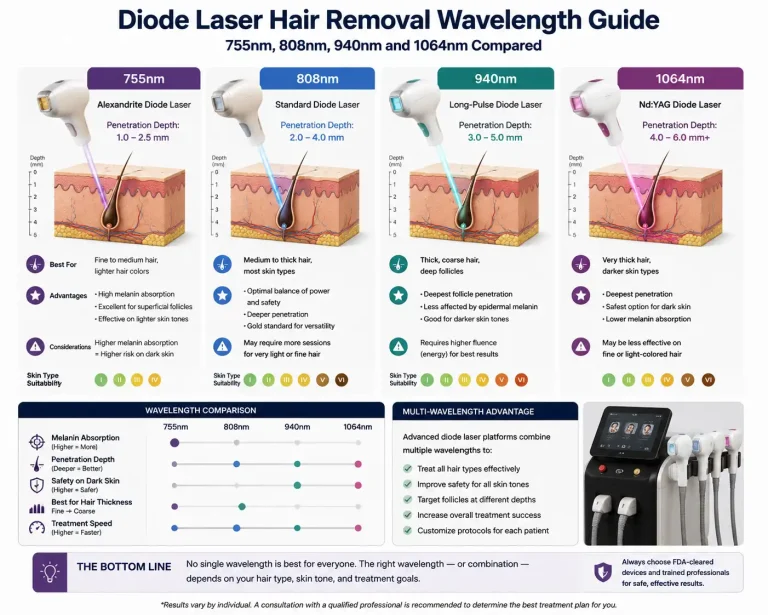
Effective tattoo removal relies on selective photothermolysis targeting chromophores in ink particles. A clinically-viable tattoo removal laser machine must integrate three essential wavelengths: 755nm (optimal for green/blue/black inks in Fitzpatrick I-III), 808nm (deep penetration for dark inks and thicker dermal deposits), and 1064nm (safest for darker skin types Fitzpatrick IV-VI and black/red inks). The energy density (fluence) should be adjustable from 0.5 to 15 J/cm², while pulse width in Q-Switched devices ranges from 5-40 nanoseconds, and picosecond variants deliver pulses below 900 picoseconds for mechanical disruption with lower thermal damage.
Spot Size and Beam Profile Efficiency
Larger spot sizes (4mm to 8mm) accelerate treatment throughput by covering more surface area per pulse. However, fluence must increase as spot size expands to maintain constant energy density. Premium systems offer spot size selectors and top-hat beam profiles for homogeneous energy distribution, reducing hot spots that cause scarring. For high-volume clinics, a machine with a maximum repetition rate of 10Hz enables faster session completion, directly improving daily patient capacity.
| Key Parameter | Technical Specification (Performance Benchmark) |
|---|---|
| Laser Type | Q-Switched Nd:YAG / Picosecond Diode (755nm, 808nm, 1064nm) |
| Pulse Width | ≤ 10 ns (Q-Switched) or ≤ 900 ps (Picosecond) |
| Fluence (Energy Density) | 0.5 – 15 J/cm² (adjustable) |
| Maximum Pulse Energy | Up to 2000 mJ at 1064nm |
| Spot Sizes | 2mm, 3mm, 4mm, 5mm, 6mm, 8mm (selectable) |
| Repetition Rate | 1 – 10 Hz |
| Cooling System | Sapphire Contact Cooling (0°C to 4°C) with TEC module |
| Handpiece Lifespan | ≥ 1.5 million shots (certified laser bar) |
| Regulatory Clearance | Medical CE (Class IIb) & FDA 510(k) |
| Manufacturing Standard | ISO 13485 |
Operational Revenue Modeling: Calculating Per-Treatment Profitability
Pricing Strategies and Market Benchmarks
Typical clinic pricing for tattoo removal ranges from $150 to $500 per session depending on tattoo size (e.g., $100-$200 for small [<5cm], $200-$400 for medium [5-15cm], $400-$1,000+ for large or multi-color tattoos). Assuming an average of $250 per session and requiring 6-10 sessions for full clearance, each patient generates $1,500-$2,500 in gross revenue. A clinic performing 8-10 tattoos per week (2 per day) achieves weekly revenue of $2,000-$2,500, or $104,000-$130,000 annually per operator station.
Consumable Cost Per Shot
High-quality tattoo removal laser machines with medical CE and FDA clearance use handpieces rated for 1-3 million shots (e.g., imported laser bars from Jenoptik or Hamamatsu). If a handpiece replacement costs $3,000-$5,000, the consumable cost per shot is $0.003-$0.005. Treating a 10cm² tattoo with a 5mm spot size (~400 shots per session) yields consumable cost of $1.20-$2.00 per session—negligible compared to revenue. Conversely, low-quality systems with 100,000-shot handpieces spike OpEx and erode margins.
Technical Specifications (Critical for Clinical Decision-Making)
Below is the benchmark specification profile for a tattoo removal laser machine optimized for clinic ROI. Ensure any device under consideration meets or exceeds these parameters, validated by ISO 13485 manufacturing standards and independent lab testing.
| Key Parameter | Technical Specification (Performance Benchmark) |
|---|---|
| Laser Type | Q-Switched Nd:YAG / Picosecond Diode (755nm, 808nm, 1064nm) |
| Pulse Width | ≤ 10 ns (Q-Switched) or ≤ 900 ps (Picosecond) |
| Fluence (Energy Density) | 0.5 – 15 J/cm² (adjustable) |
| Maximum Pulse Energy | Up to 2000 mJ at 1064nm |
| Spot Sizes | 2mm, 3mm, 4mm, 5mm, 6mm, 8mm (selectable) |
| Repetition Rate | 1 – 10 Hz |
| Cooling System | Sapphire Contact Cooling (0°C to 4°C) with TEC module |
| Handpiece Lifespan | ≥ 1.5 million shots (certified laser bar) |
| Regulatory Clearance | Medical CE (Class IIb) & FDA 510(k) |
| Manufacturing Standard | ISO 13485 |
Total Cost of Ownership (TCO) and Depreciation Analysis
CapEx, Maintenance, and Downtime
A professional tattoo removal laser machine costs between $25,000 and $80,000. Using a 5-year straight-line depreciation, annual CapEx allocation is $5,000-$16,000. Annual maintenance contracts (including calibration and cooling system checks) add $1,500-$3,000. Active cooling systems (sapphire contact or TEC-based) require periodic water circuit cleaning and coolant replacement—budget $500/year. Downtime risk is mitigated by choosing manufacturers with local service support and quick-turn handpiece replacements.
Break-Even Point and Profit Velocity
Assuming a $40,000 machine and average $200 profit per session (after subtract consumables and operator time), 200 sessions achieve break-even. At 2 sessions per day (500 working days/year), break-even occurs in under 4 months. From month 5 onward, each session contributes directly to bottom-line profit. Scaling to 3-4 sessions per day (using larger spot sizes and faster rep rates) accelerates ROI to 2.5-3 months.
Safety, Compliance, and Insurance Risk Mitigation
FDA clearance or Medical CE marking (Class IIb or III) is non-negotiable for legal clinic operation and malpractice insurance coverage. Machines lacking these certifications expose clinics to patient lawsuits, regulatory fines, and insurance claim denials. Additionally, epidermal cooling systems (sapphire windows at 0°C to 4°C) are mandatory to prevent burns, especially when treating darker Fitzpatrick skin types with higher melanin absorption. Documented pulse energy stability (≤±5% fluctuation) ensures predictable clinical outcomes and reduces the risk of paradoxical hyperpigmentation.
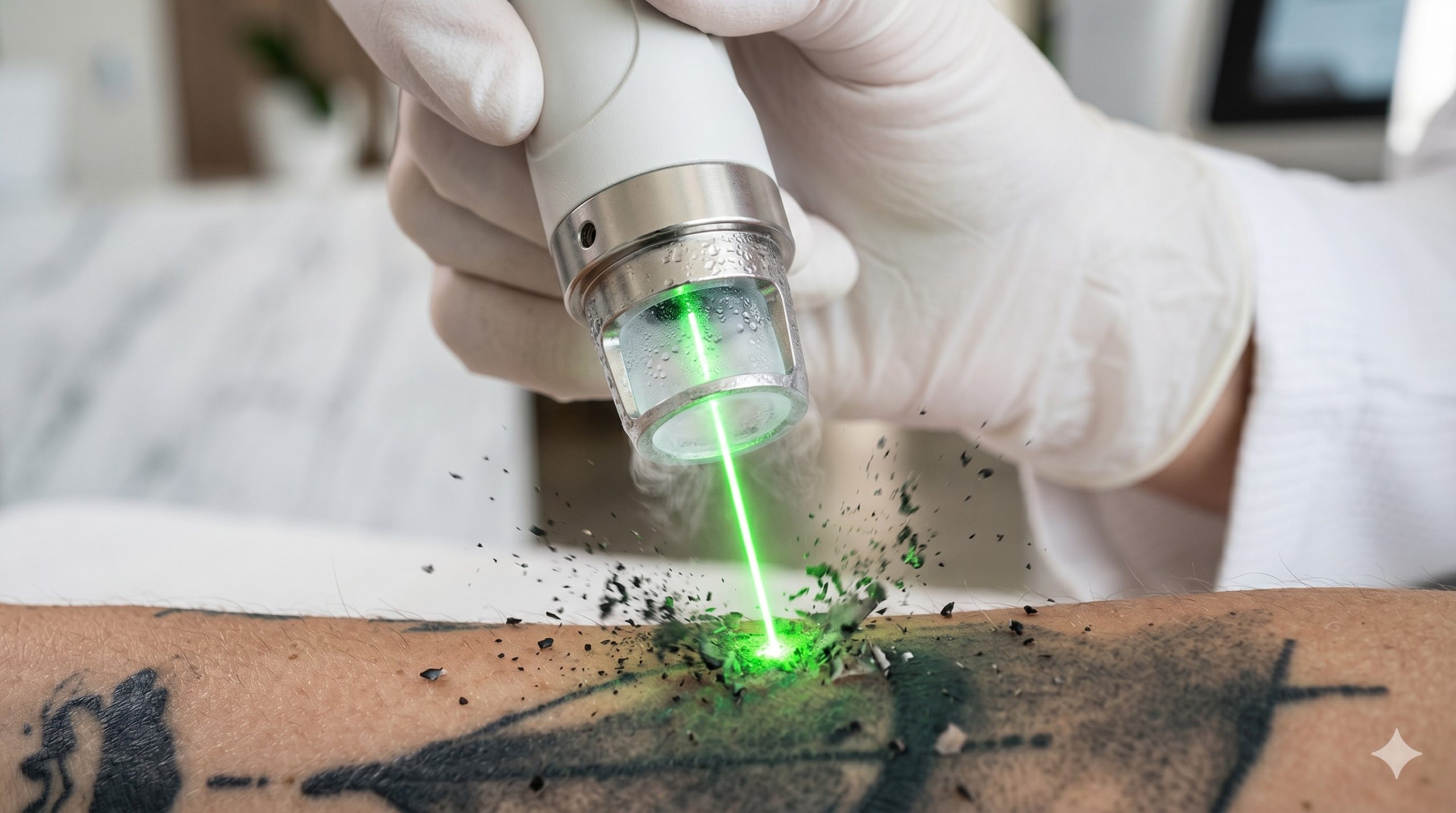
Marketing the Investment: Patient Education and Case Acceptance
To maximize ROI for clinics, the laser must be paired with a patient acquisition strategy. Create before/after galleries using your machine’s clinical results. Publish educational content on laser wavelengths for different ink colors and Fitzpatrick skin type protocols. Offer package pricing (e.g., 6 sessions for $1,200) to lock in patient commitment and improve cash flow. Highlight painless sapphire cooling as a differentiator against competitors using older technology.
Executive Verdict: Which Tattoo Removal Laser Maximizes Clinic ROI?
The optimal tattoo removal laser machine for clinics combines picosecond or high-fluence Q-Switched technology with 755nm/1064nm wavelengths, spot sizes up to 8mm, >1 million shot handpiece lifespan, and integrated contact cooling. Avoid IPL-based machines (ineffective for professional tattoos) and uncertified imports with short consumable life. Prioritize vendors offering clinical training, marketing support, and warranty terms covering at least 24 months. When deployed correctly, a high-performance laser achieves 100%+ annual ROI and becomes a core profit center in your aesthetic portfolio.
Action Step: Request a pro forma financial model from your laser supplier incorporating your clinic’s patient volume projections, pricing strategy, and regional competition analysis. Validate all technical claims against peer-reviewed dermatology literature and demand factory test reports for fluence calibration and beam uniformity.