Treating Fitzpatrick Skin Types I-VI Safely with Best Laser for Dark Skin Hair Removal Technology
Introduction: The Clinical Challenge of Treating Darker Skin Tones
For years, aesthetic clinics faced a significant clinical barrier: treating patients with Fitzpatrick Skin Types IV, V, and VI for unwanted hair was fraught with risk. High rates of post-inflammatory hyperpigmentation (PIH), epidermal burns, and paradoxical hypertrichosis plagued legacy systems. The core problem lies in the competitive absorption of laser energy by epidermal melanin. Selecting the best laser for dark skin hair removal is no longer an option but a medical necessity to ensure both efficacy and patient safety. This comprehensive guide dives into the technical metrics—wavelength, pulse duration, fluence, and cooling—that define a safe, profitable, and clinically superior device for your med spa.
The Physics of Safety: Why Wavelength Dictates Outcome
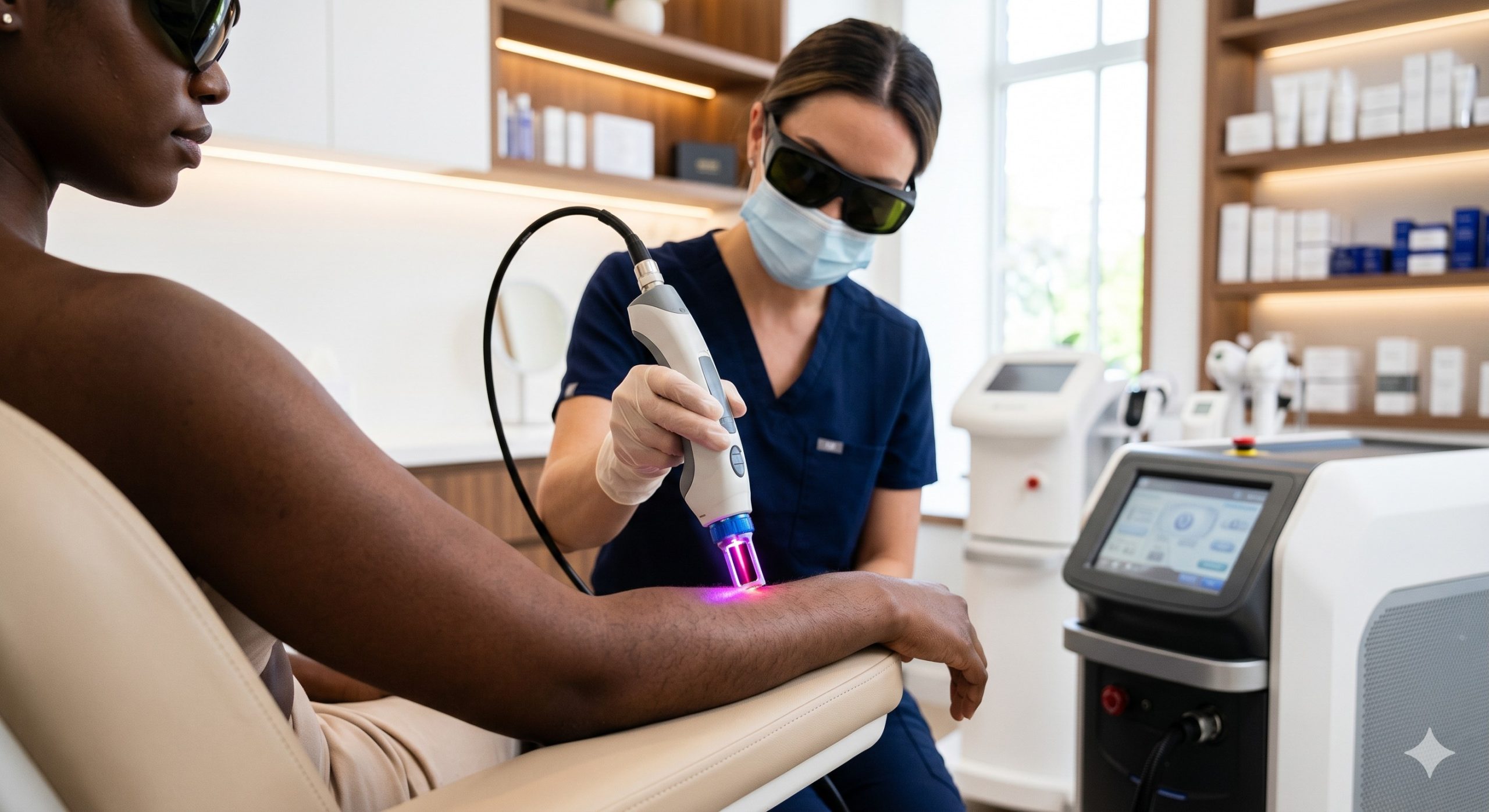
The cornerstone of safe treatment for high phototypes is the principle of selective photothermolysis. Melanozomes in the epidermis absorb light across a broad spectrum, but absorption drops significantly as wavelength increases. For dark skin hair removal, the 1064nm Neodymium-doped Yttrium Aluminum Garnet (Nd:YAG) wavelength is the undisputed gold standard due to its deeper penetration and reduced melanin absorption coefficient compared to 755nm (Alexandrite) or 808nm (Diode). While 808nm diode lasers offer a balance, pure 1064nm systems or advanced multi-wavelength platforms (755nm/808nm/1064nm) provide the necessary flexibility.
Critical Technical Metrics for Evaluation
When auditing a device claiming to be the best laser for dark skin hair removal, demand these specifications. They are non-negotiable for FDA clearance and Medical CE compliance in this specific indication.
| Key Parameter | Technical Specification for Dark Skin (Fitzpatrick IV-VI) |
|---|---|
| Optimal Wavelength | 1064nm (Nd:YAG) or Triple-Wavelength Diode (755/808/1064nm) |
| Cooling System | Sapphire Contact Cooling (0°C to +4°C) with Thermal Feedback |
| Pulse Width Range | 30ms – 60ms (Long-pulse mode) |
| Fluence / Energy Density | 10 – 18 J/cm² (titrated slowly) |
| Spot Size | 12mm – 15mm (Larger preferred for depth) |
| Regulatory Status | FDA Clearance for Fitzpatrick I-VI, Medical CE, ISO 13485 |
| Laser Bar Origin | Imported (e.g., German or US origin) for energy stability |
Epidermal Preservation: The Role of Contact Cooling
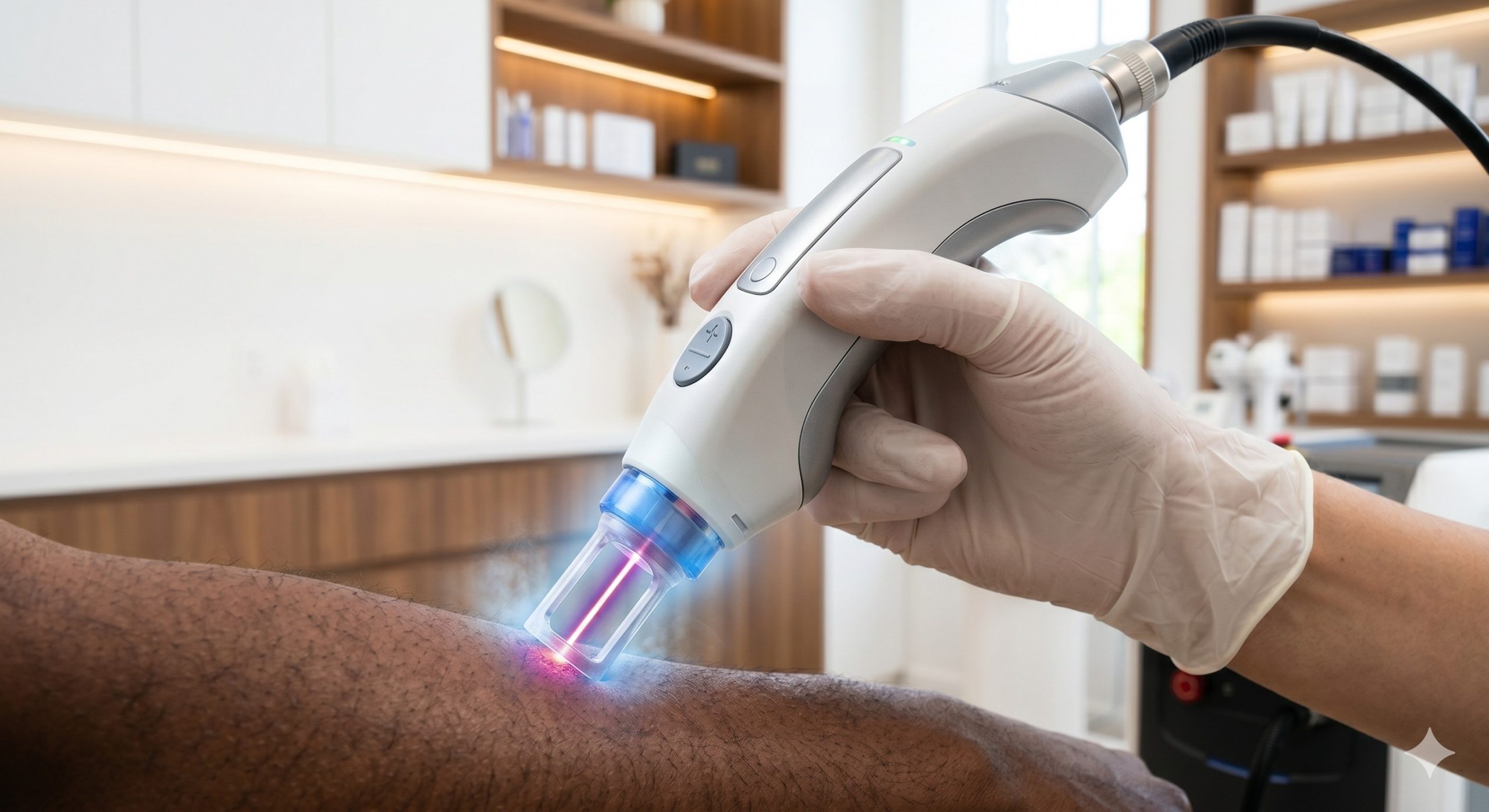
Long-pulse 1064nm alone is insufficient. To protect the basal layer, advanced Sapphire contact cooling (operating at 0°C to +4°C) is mandatory. Unlike cryogen sprays that cool post-impact, modern sapphire ICE cooling systems compress and pre-cool the epidermis, shifting the thermal damage window away from melanocytes. Look for devices with a real-time thermal sensor feedback loop that automatically adjusts fluence if skin impedance or temperature rises unsafely. This technology is the difference between a comfortable treatment and a medical liability.
Parameter Optimization Protocol for Fitzpatrick IV-VI
Even with the correct wavelength, operator technique determines success. The clinical protocol for the best laser for dark skin hair removal involves:
- Fluence (Energy Density): Start low (10-14 J/cm² for 1064nm) and titrate upwards based on immediate tissue response (perifollicular edema, not epidermal whitening).
- Pulse Width: Use longer pulse durations (30-60ms for 1064nm) to target the bulky hair follicle while allowing the epidermis to cool. Short pulses concentrate heat, increasing PIH risk.
- Spot Size: Larger spot sizes (12mm to 15mm) scatter less and penetrate deeper. Avoid small spot sizes (<8mm) on dark skin as they increase energy density at the surface.
- Test Spot Protocol: A mandatory 4-6 week wait period to assess for any pigmentary alteration before full treatment.
ROI and Business Strategy for High-Throughput Clinics
Investing in a medical-grade, multi-wavelength platform (755nm/808nm/1064nm) with a high-power diode bar (1,200W to 2,400W) allows you to capture the underserved demographic of darker skin patients who have been turned away by competitors. The average spend per full-body session for Fitzpatrick V-VI patients using 1064nm protocols can be priced at a 20-30% premium due to the specialized safety profile and longer treatment times. When calculating total cost of ownership (TCO), prioritize devices with ISO 13485 certified manufacturing and imported laser bars offering >1 million shot lifespans. This ensures your consumables cost per patient remains under $5 while achieving >85% hair reduction after 6 sessions.
Conclusion: Clinical Compliance is the Ultimate ROI
The best laser for dark skin hair removal is unequivocally a long-pulse 1064nm Nd:YAG or a top-tier triple-wavelength diode system with integrated sapphire contact cooling and validated FDA clearance for all Fitzpatrick skin types. By prioritizing safety metrics over marketing hype—focusing on wavelength, pulse width, and cooling integrity—you protect your patients, your clinic’s reputation, and your profitability. Upgrade your device portfolio to a Medical CE-certified platform that delivers quantified clinical clearance rates, and you will dominate the ethnic hair removal market segment.