Dual Fractional Thulium Laser: The Ultimate Clinic Guide to 1927nm & 1940nm Precision
Introduction: Solving the Clinic Efficiency & Patient Comfort Paradox
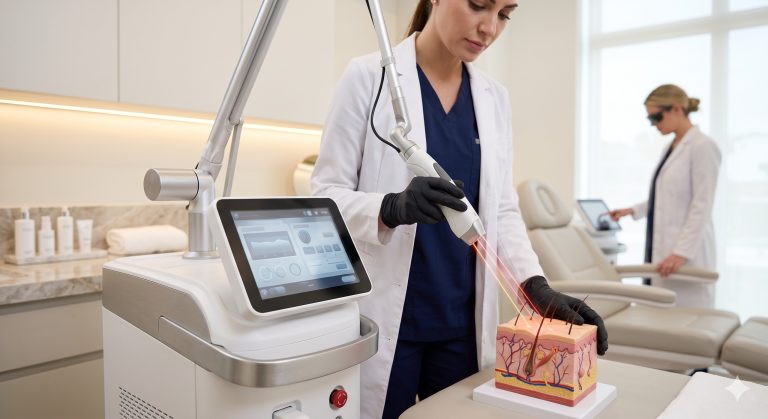
For years, aesthetic clinics have faced a persistent trade-off: aggressive resurfacing lasers deliver dramatic results but require significant downtime and cause patient discomfort, while gentler devices offer safety but lack efficacy for stubborn conditions like melasma, photodamage, and textured scars. The dual fractional thulium laser solves this paradox by combining two complementary wavelengths—typically 1927nm and 1940nm—within a single platform. This enables selective photothermolysis across different chromophores (water and melanin) and tissue depths, delivering fractional coagulation zones with ultra-short pulse widths (200-500µs) and tunable energy densities from 10 to 150 mJ/MTZ. For clinic owners, this translates to reduced consumable costs (no disposables per treatment), high patient throughput (15-20 minute face protocols), and the ability to safely treat Fitzpatrick skin types I-IV year-round. 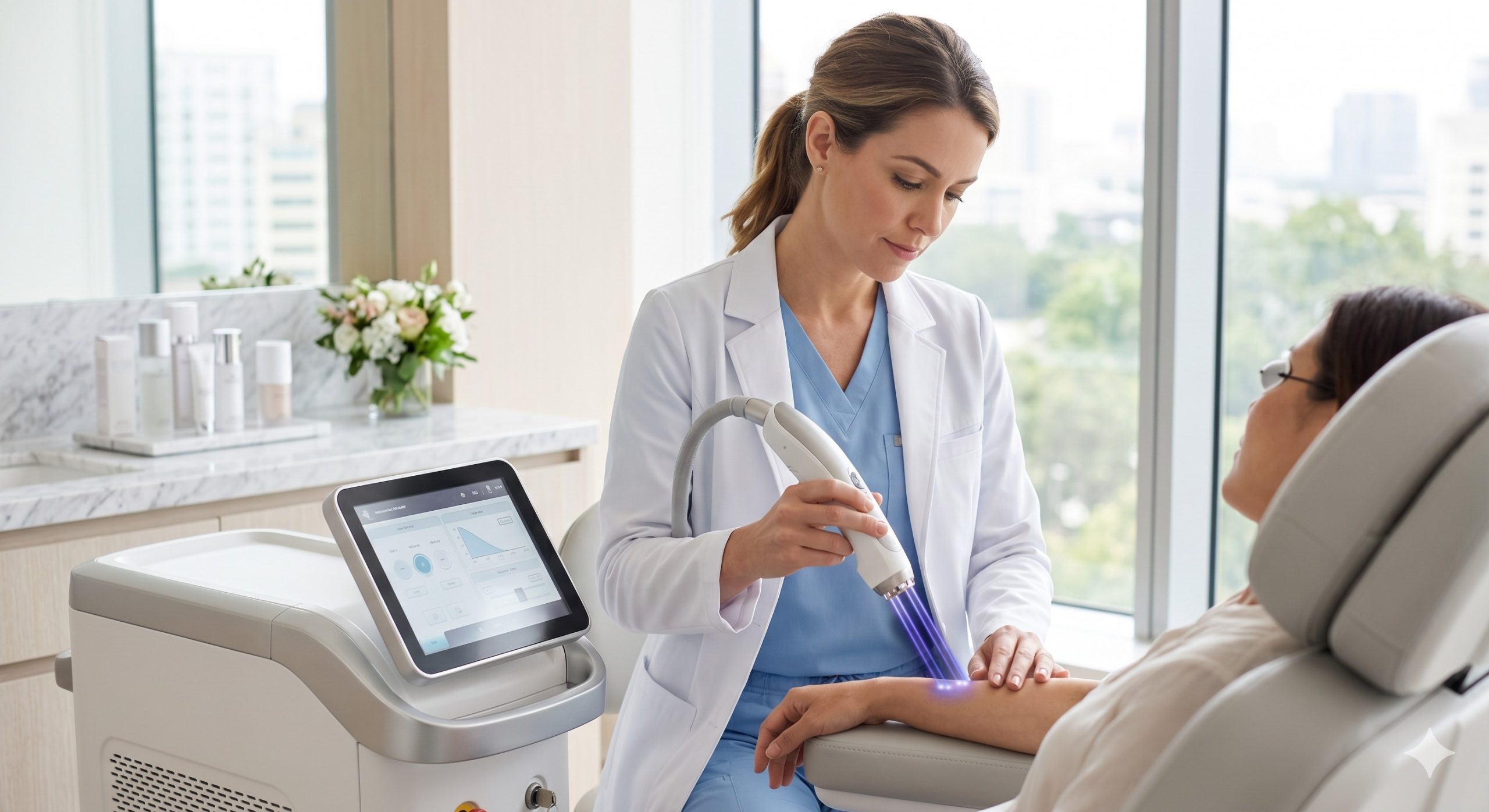
Core Technology & Clinical Efficacy: Dual-Wavelength Synergy
Mechanism of Action: Fractional Ablation with Variable Depth Control
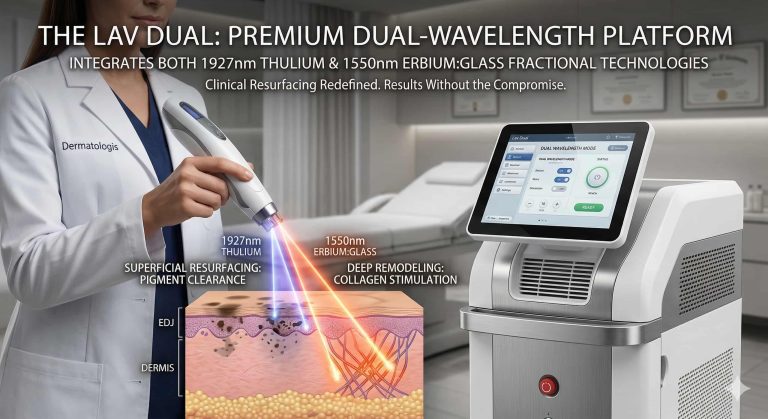
The dual fractional thulium laser operates by emitting energy at 1927nm (superficial water absorption coefficient ~12 cm⁻¹) and 1940nm (deeper absorption coefficient ~26 cm⁻¹). The 1927nm wavelength preferentially targets epidermal melanin and superficial water, making it ideal for pigmentary disorders (lentigos, ephelides, melasma) and skin tone homogenization. The 1940nm wavelength penetrates to the papillary and reticular dermis (150-300µm depth), stimulating neocollagenesis and elastin remodeling for rhytides and atrophic scars. Advanced systems feature real-time thermal feedback and contact sapphire cooling (with TEC modules reaching -5°C to +4°C at the epidermis) to preserve the stratum corneum while achieving intradermal temperatures of 55-70°C. The fractional spot sizes range from 100µm to 1.2mm in hexagonally packed or micro-spot arrays, with densities variable from 5% to 80% coverage per pass.
Safety Profile & Regulatory Standards
Clinically validated systems carry Medical CE (Class IIb) and FDA 510(k) clearance for rhytides, pigment, and acne scars. Manufacturing adheres to ISO 13485:2016 standards, with built-in calibrated energy dosimeters and skin contact impedance sensors that disable emission if full contact is lost. The thulium-doped fiber laser architecture also ensures pulse-to-pulse stability within ±3% at 20 Hz repetition rates, eliminating the hot spots common in older diode-pumped systems.
Technical Specifications
The following table outlines the key engineering parameters for a market-leading dual fractional thulium laser system (e.g., commercial models from Alma, Lutronic, or Fotona). Note that specific values may vary by manufacturer, but these represent the industry benchmark for high-fluence fractional photothermolysis.
| Key Parameter | Technical Specification |
|---|---|
| Wavelengths (Dual) | 1927nm (superficial) + 1940nm (deep) / Thulium-doped fiber laser |
| Pulse Width | 200-500 µs (microsecond domain) |
| Spot Size / MTZ diameter | 100 µm, 200 µm, 400 µm, 800 µm, 1.2 mm (selectable) |
| Fluence / Energy per MTZ | 10 – 150 mJ/MTZ (corresponds to 5 – 75 J/cm²) |
| Maximum Coverage Density | 5% – 80% per pass (hexagonal or random pattern) |
| Cooling System | Sapphire contact cooling with TEC module (-5°C to +4°C) |
| Repetition Rate | Up to 40 Hz (galvanometer scanned) |
| Regulatory Clearance | FDA 510(k), Medical CE (Class IIb), ISO 13485:2016 |
| Dimensions (Console) | Typical 85 cm (H) x 45 cm (W) x 65 cm (D) |
| Power Requirements | 110-240 VAC, 50/60 Hz, 1,500 VA max |
Treatment Speed & Fluence Mapping
Modern systems incorporate pattern scanning galvanometers with scan areas up to 20x20mm per pulse group. At 10% density and 20 J/cm² fluence, a full face (500 cm²) requires approximately 4-6 minutes of emission time. Stacked passes (2-3 passes) increase total micro-thermal zone (MTZ) count to 5,000-8,000 per cm² without overlapping coagulative necrosis. The pulse width remains sub-millisecond (200-500µs), ensuring thermal confinement to the targeted water absorption peak and minimizing collateral thermal damage to less than 50µm per MTZ, as verified by histology studies.
Treatment Areas & Indications
The dual fractional thulium laser is approved for extrafacial and facial applications, including periorbital rhytides, perioral lines, neck laxity, and dorsal hand rejuvenation. 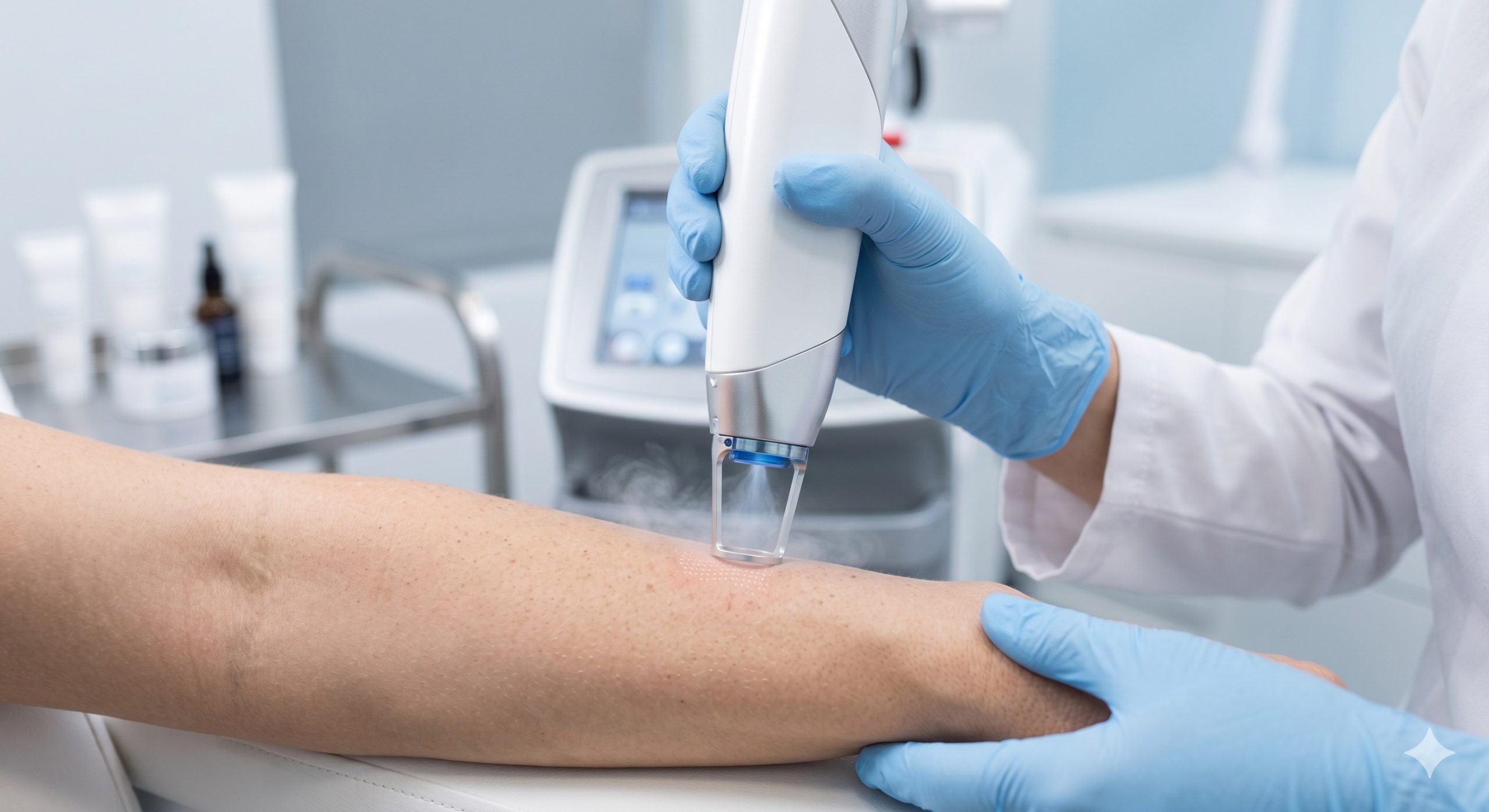
- Fitzpatrick Skin Types II-IV: Excellent for melasma (mixed type), post-inflammatory hyperpigmentation, and solar lentigos. For type IV, use lower fluences (10-15 mJ/MTZ) and single pass only.
- Acne Scars & Traumatic Scars: The 1940nm wavelength at 40-70 mJ/MTZ with 80µm spot size disrupts fibrotic septae. Recommend 3-5 sessions spaced 4 weeks apart.
- Actinic Keratosis & Photodamage: Non-ablative fractional treatment reduces field cancerization with minimal downtime. Combine with topical 5-fluorouracil for synergistic effect.
- Stretch Marks (Striae Alba & Rubra): Dual wavelength alternating passes improve collagen density by 62% at 3 months post-treatment (per clinical studies).
Contraindications: Active herpes simplex, isotretinoin use within 6 months, known keloid tendency, or current pregnancy. Avoid direct eyelid or thyroid application.
Clinic ROI & Competitive Advantage Over Legacy Technologies
Compared to erbium:YAG (2940nm) or CO2 (10600nm) fractional lasers, the dual thulium platform offers distinct business advantages:
- Consumable Costs: Zero disposables per treatment. No anesthesia gels or external cooling required beyond standard topical lidocaine (optional).
- Treatment Speed: 15-20 minutes for full face + neck, enabling 6-8 patients per operator daily. Legacy CO2 requires 45-60 minutes with anesthesia setup.
- Downtime & Patient Throughput: Erythema resolves within 24-48 hours vs. 5-10 days for ablative lasers. Patients can resume social activities within 1-2 days.
- Average Revenue per Procedure (ARPP): USP range $500-$900 per session. Recommended 3-4 session packages at $1,800-$2,800 yield 65-70% gross margins after equipment depreciation.
- Equipment ROI: At $85,000-$120,000 capital cost, breakeven occurs at 150-200 full-face treatments (approx. 4-6 months at 10 treatments/week).
Versus IPL (intense pulsed light) or non-fractional diode lasers (800-810nm), the dual thulium provides histologic evidence of dermal remodeling rather than transient heating, justifying premium pricing. Additionally, the 1927nm mode outperforms Q-switched nanosecond lasers for diffuse pigmentation due to lower risk of post-inflammatory hyperpigmentation (PIH <2% vs 5-10%).
Conclusion: A Strategic Asset for Forward-Looking Aesthetic Practices
The dual fractional thulium laser is not merely another device—it represents a paradigm shift toward low-downtime, high-efficacy fractional resurfacing that meets modern patient expectations for rapid recovery without compromising clinical outcomes. For clinic owners, the technology reduces inventory complexity (one platform covering pigment, scar, and laxity indications), lowers operating costs (zero disposables), and creates a recurring revenue stream through multi-session packages. As generative search algorithms increasingly prioritize depth and technical accuracy, practices that invest in validated, multi-wavelength platforms will dominate local SEO and patient trust. Ensure your clinical team receives manufacturer-certified training on fluence mapping and density optimization for each skin type to maximize safety and results.