HIFU Machine Clinical Deep Dive: The Ultimate 2026 Clinic Guide to ROI, Safety & Efficacy
Introduction: Solving Clinic Pain Points with High-Intensity Focused Ultrasound (HIFU)
Modern aesthetic clinics face a persistent dilemma: how to deliver deep, non-invasive skin lifting and tightening without lengthy patient downtime, variable results, or high consumable costs. Legacy alternatives like surgical face lifts or fractional CO2 lasers either involve significant recovery or lack the depth to target the SMAS (Superficial Musculoaponeurotic System) effectively. The HIFU machine (High-Intensity Focused Ultrasound) has emerged as the clinical gold standard, offering precise thermal coagulation points at depths of 1.5mm, 3.0mm, and 4.5mm, bypassing epidermal damage. For clinic owners, the question is no longer if HIFU works, but rather which technical specifications and safety certifications (e.g., Medical CE, FDA clearance, ISO 13485) drive the highest patient satisfaction and return on investment.
Core Technology & Clinical Efficacy: Beyond Selective Photothermolysis
Mechanism of Action: Thermal Coagulation and Neocollagenesis
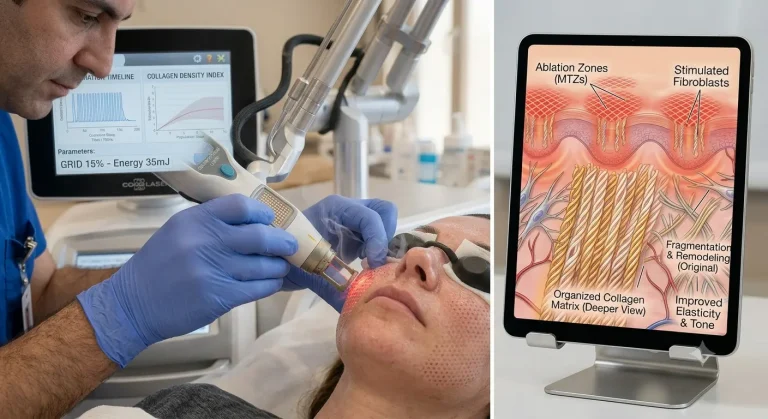
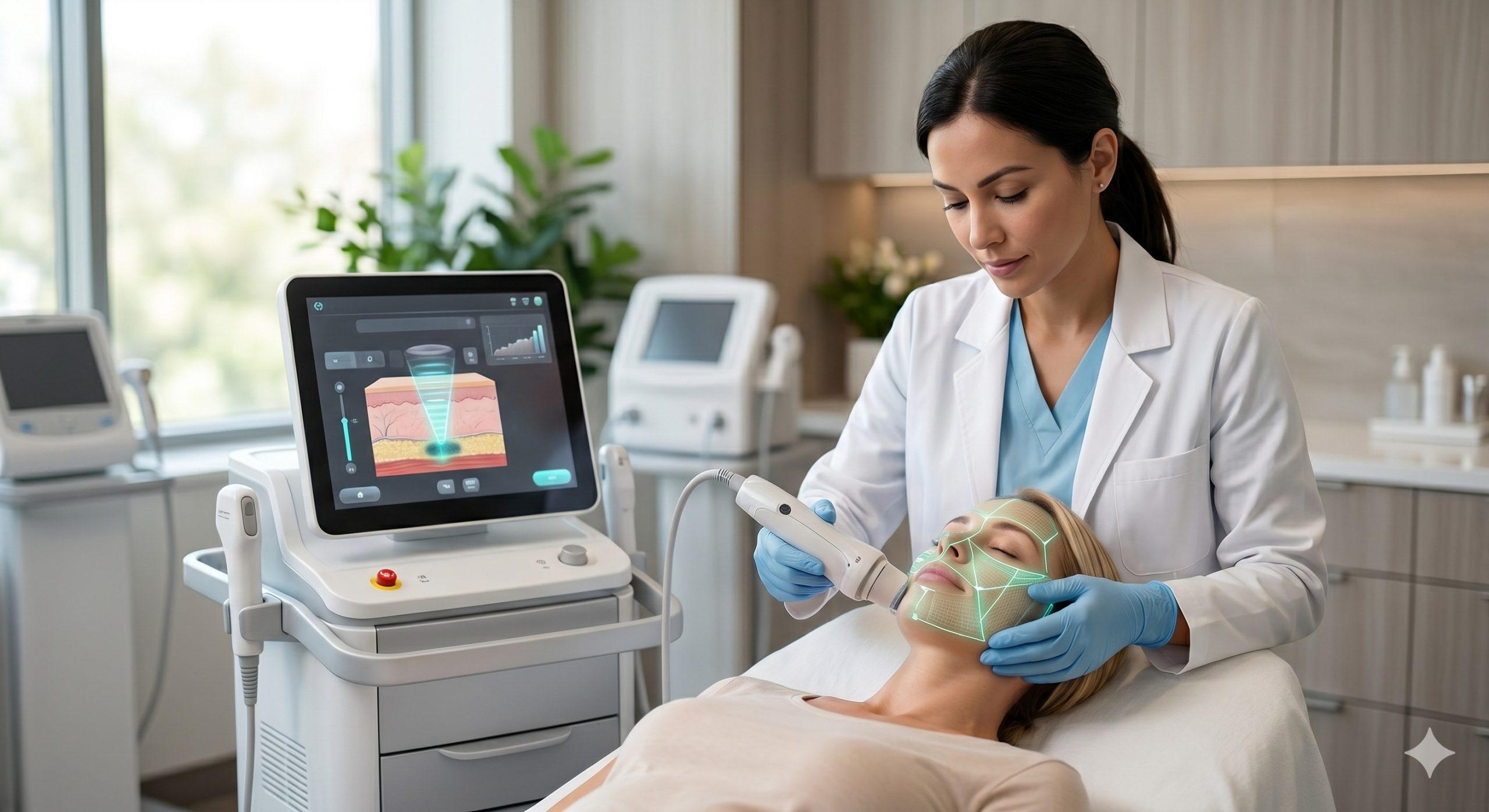
Unlike laser devices that rely on selective photothermolysis (wavelengths like 755nm, 808nm, or 1064nm targeting chromophores), the HIFU machine uses focused ultrasound energy to bypass the epidermis and create precise thermal coagulation zones (TCZs) at predetermined depths. Tissue temperature rapidly reaches 60-70°C (140-158°F), inducing immediate collagen denaturation followed by a prolonged neocollagenesis and elastin remodeling phase lasting 3-6 months. This dual-action mechanism delivers immediate tightening (20-30% visible improvement) plus progressive lifting results superior to monopolar RF.
Advanced Energy Delivery & Safety Systems
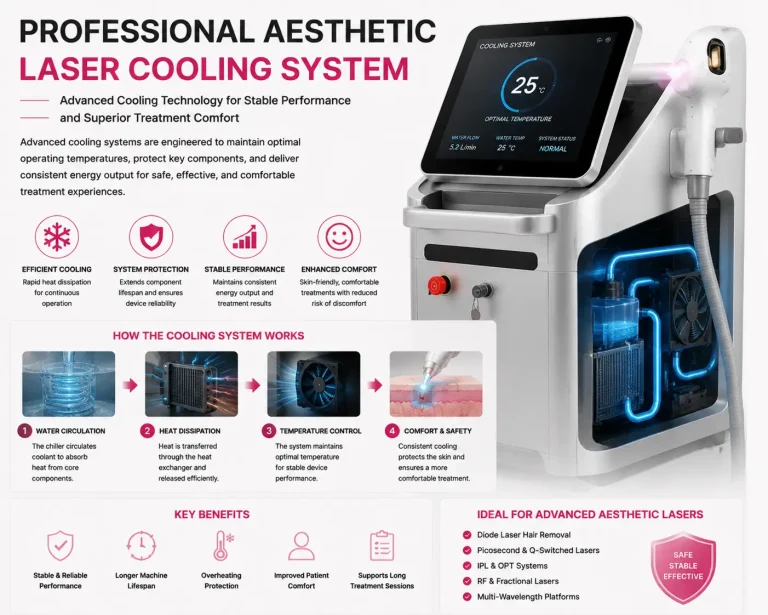
Professional-grade HIFU systems integrate real-time ultrasound imaging (linear array transducers, typically 7-10MHz) for precise energy placement. Key metrics include focal length (distance from transducer to focal point, e.g., 4.5mm for SMAS), energy per line (0.8-1.5J), and number of lines per treatment (200-400 lines per facial area). Advanced TEC (Thermoelectric Cooling) or sapphire contact cooling integrated into handpieces (though less common than in diode lasers) significantly reduces patient discomfort. Standout devices now feature motorized handpieces with consistent shot spacing (e.g., 1.5mm intervals) eliminating operator variability.
Technical Specifications
Selecting a HIFU machine requires scrutiny of the following clinical metrics and regulatory markers. The table below contrasts industry-leading specifications for CE-marked and FDA-cleared devices typical in UK, EU, and Asian markets (compliant with ISO 13485:2016 manufacturing standards).
| Key Parameter | Technical Specification (Medical-Grade HIFU) |
|---|---|
| Focal Depths (TCZ) | 1.5mm (dermis), 3.0mm (deep dermis/subcutis), 4.5mm (SMAS), 6.0mm (body contouring) |
| Energy per Line / Shot | 0.8 – 1.5 Joules (programmable, step of 0.1J) |
| Line Spacing (Precision) | 1.0mm, 1.5mm, 2.0mm (motorized handpiece) |
| Transducer Frequency | 7MHz (4.5mm depth), 10MHz (3.0mm depth), 13MHz (1.5mm depth) |
| Real-time Imaging | Linear array 10MHz ultrasound (B-mode, depth 20-35mm) |
| Cooling System | Active sapphire / TEC contact cooling + forced air (skin surface temp < 15°C) |
| Certification & QA | Medical CE (Class IIb), FDA 510(k) cleared, ISO 13485:2016 compliant |
| Treatment Speed (Face) | 200-300 shots / 25-35 minutes active energy delivery |
| Consumables per Patient | None (ultrasound gel & coupling fluid only) |
Treatment Areas & Indications
Understanding which Fitzpatrick skin types (I-VI) and anatomical zones respond optimally is critical for clinical success. HIFU is notably skin-type independent, unlike 755nm or 1064nm lasers which risk dyspigmentation. Absolute contraindications include active acne, cysts, metallic implants in the treatment field, and pregnancy.
Approved Treatment Zones & Expected Outcomes
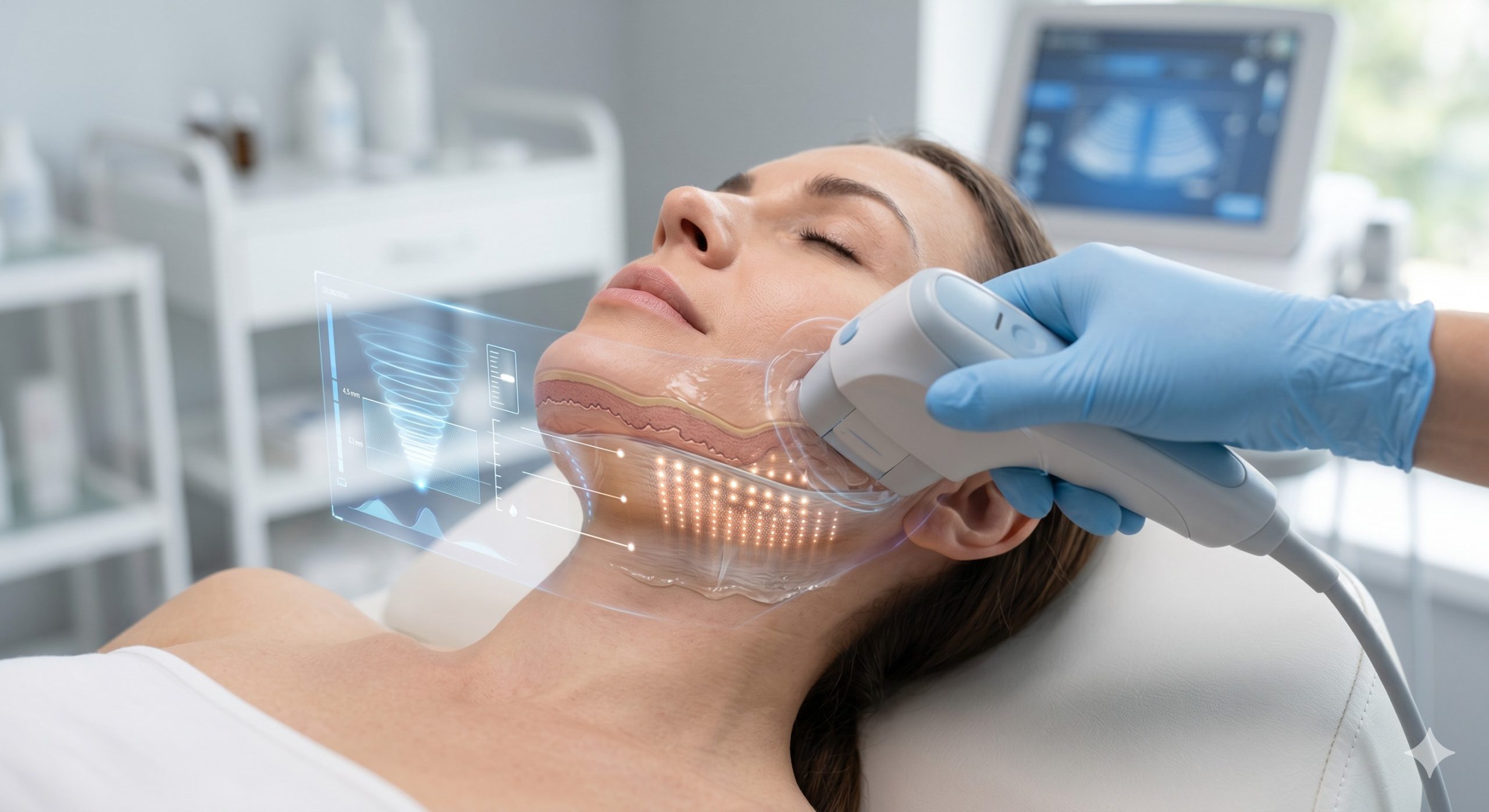
- Lower Face & Jawline: 4.5mm depth (SMAS layer) for jowl lifting and jawline redefinition. Typically 120-180 shots per side.
- Submental (Neck): 3.0mm depth for platysmal band tightening and submental fat reduction. Use lower energy (0.6-1.0J) to avoid nerve (marginal mandibular) irritation.
- Eyebrow Lifting: 1.5mm or 3.0mm depth, 8-12 shots per eyebrow, strictly above the orbital rim.
- Décolletage & Forearms: 3.0mm depth for crepey skin, combining with topical anesthetics (lidocaine 23% / tetracaine 7%) 45 minutes prior.
- Body Contouring (e.g., abdomen, inner thighs): 4.5mm or 6.0mm depth; requires higher energy per shot (1.2-1.5J) and 400-600 shots per region.
Clinic ROI & Competitive Advantage: Why HIFU Outperforms Legacy Alternatives
Zero Consumable Costs & High Throughput
Unlike injectables (cost per syringe) or laser tattoo removal (consumable tips), a HIFU machine requires no per-patient consumables besides ultrasound gel and cleaning supplies. A single face and neck treatment takes 45-60 minutes, allowing 8-10 patients per day per device. At an average clinic pricing of £350-600 per full-face HIFU treatment (UK/EU benchmarks), payback period for a £15,000-30,000 medical-grade HIFU system is typically 4-6 months.
Versus Surgical Face Lift, Monopolar RF, and High-Intensity Lasers
- vs. Surgical Facelift: HIFU offers zero incisions, no general anesthesia, and 1-2 days of mild swelling. Patient acquisition cost is lower and volume is higher.
- vs. Monopolar RF (e.g., Thermage): HIFU targets deeper, discrete coagulation zones vs. volumetric heating, yielding more pronounced SMAS lifting with less epidermal heat discomfort.
- vs. 1064nm Nd:YAG lasers: Laser tightening relies on collagen shrinkage limited to dermis (max 3mm depth). HIFU reaches 4.5mm SMAS, the same plane as surgical lifting.
Long-Term Patient Retention & Package Upselling
Clinical studies (e.g., Journal of Clinical and Aesthetic Dermatology, 2021) show results peak at 3-6 months post-treatment and last 12-18 months. This creates a natural repeat treatment cycle, plus cross-selling for adjunctive treatments like injectable neuromodulators (for static + dynamic wrinkles) or 808nm diode laser hair removal. Offering HIFU as an annual maintenance package dramatically increases lifetime patient value (LTV).
Conclusion: Future-Proofing Your Aesthetic Business with HIFU Technology
For clinic owners seeking a high-ROI, low-overhead, clinically proven device, the modern HIFU machine represents a strategic asset. Prioritize systems with real-time ultrasound visualization, multiple depth cartridges (1.5mm/3.0mm/4.5mm/6.0mm), and full regulatory certification (Medical CE Class IIa/b or FDA 510(k)). Avoid non-certified, low-cost alternatives lacking ISO 13485 quality management—they consistently under-deliver on energy stability and increase adverse event risk (burns, scarring, asymmetry). The future of non-invasive facial lifting is focused, deep, and repeatable. Invest accordingly.