HIFU Machine FAQ: Expert Answers for Aesthetic Clinics & Dermatologists
Overview
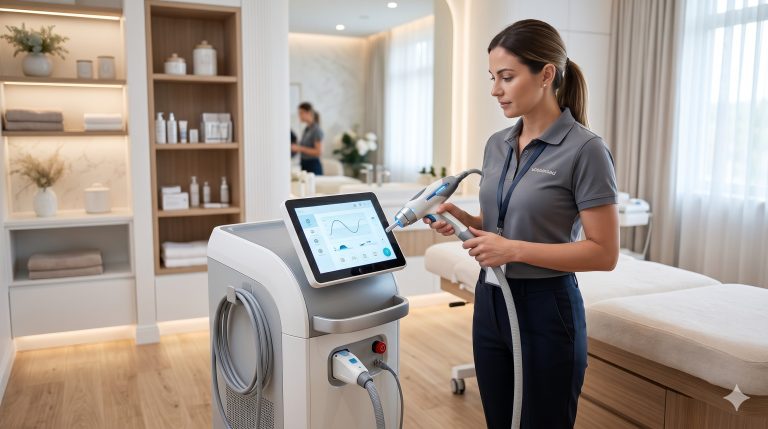
High-Intensity Focused Ultrasound (HIFU) technology has become a cornerstone non-invasive lifting and tightening treatment in modern aesthetic clinics. For B2B buyers and dermatologists, understanding technical longevity, patient pain management, consumable costs, and how HIFU compares to legacy technologies like IPL or older lasers is critical for ROI. This FAQ provides definitive, data-driven answers to the most common pre-sales and post-sales questions about professional HIFU machines.
Frequently Asked Questions
Q1: Is a HIFU machine suitable for all Fitzpatrick skin types?
Yes, a professional HIFU machine is safe and effective for Fitzpatrick skin types I through VI. Unlike IPL or certain lasers that target melanin and risk post-inflammatory hyperpigmentation on darker skin, HIFU bypasses the skin’s surface entirely. It delivers focused ultrasound energy directly to the SMAS and dermal layers, making it a non-thermal, non-light based treatment with zero表皮 dependence.
Q2: How painful is a HIFU treatment on a scale of 1 to 10?
Most patients rate HIFU treatment pain between 2 to 4 out of 10, often described as brief, deep ‘pins and needles’ or a mild ‘electric’ sensation. Pain perception depends on energy level, depth (1.5mm, 3.0mm, 4.5mm cartridges), and individual tolerance. Topical anesthetic cream applied 30-45 minutes prior significantly reduces discomfort, and no downtime is required after the procedure.
Q3: What is the typical lifespan of a professional HIFU machine handpiece and console?
The main console of a medical-grade HIFU machine typically lasts 8 to 10 years with proper maintenance. The handpiece and its cartridges (transducers) have a defined shot lifespan: standard OEM cartridges average 3,000 to 5,000 lines or pulses before replacement is needed. After this limit, energy output declines by up to 30%, compromising clinical results and safety.
Q4: What are the key differences between HIFU, IPL, and older CO2 lasers?
HIFU targets deep SMAS layers (up to 4.5mm) using ultrasound energy for lifting, while IPL targets superficial pigmentation and redness using broad-spectrum light. Older CO2 lasers are ablative, removing表层 skin to treat deep wrinkles and scars but requiring weeks of downtime. HIFU is non-invasive with zero downtime, but produces gradual tightening over 2-3 months; IPL/lasers are faster for surface issues but carry higher risks for dark skin types.
Q5: What regular maintenance does a HIFU machine require?
Daily maintenance includes cleaning the handpiece coupling surface with 70% isopropyl alcohol after each patient and checking for cracks in the cartridge membrane. Monthly calibration of the energy output using a provided power meter is required to ensure consistent fluence. Every 6 months, a professional service check of the cooling fan filters and mainboard connections is recommended by the manufacturer.
Q6: What are the ongoing consumable costs for a HIFU machine?
The primary consumable cost is replacement cartridges (transducers), each priced between $80 and $250 USD depending on depth (1.5mm/3.0mm/4.5mm) and OEM vs. compatible brands. Ultrasound gel is a nominal consumable (<$2 per treatment). Assuming 5 patients per week using 2 cartridges per patient, monthly consumable costs range from $320 to $1,000. Replacing a handpiece costs approx $800-$1500 every 2-3 years.
Q7: What type of training is needed to operate a HIFU machine safely?
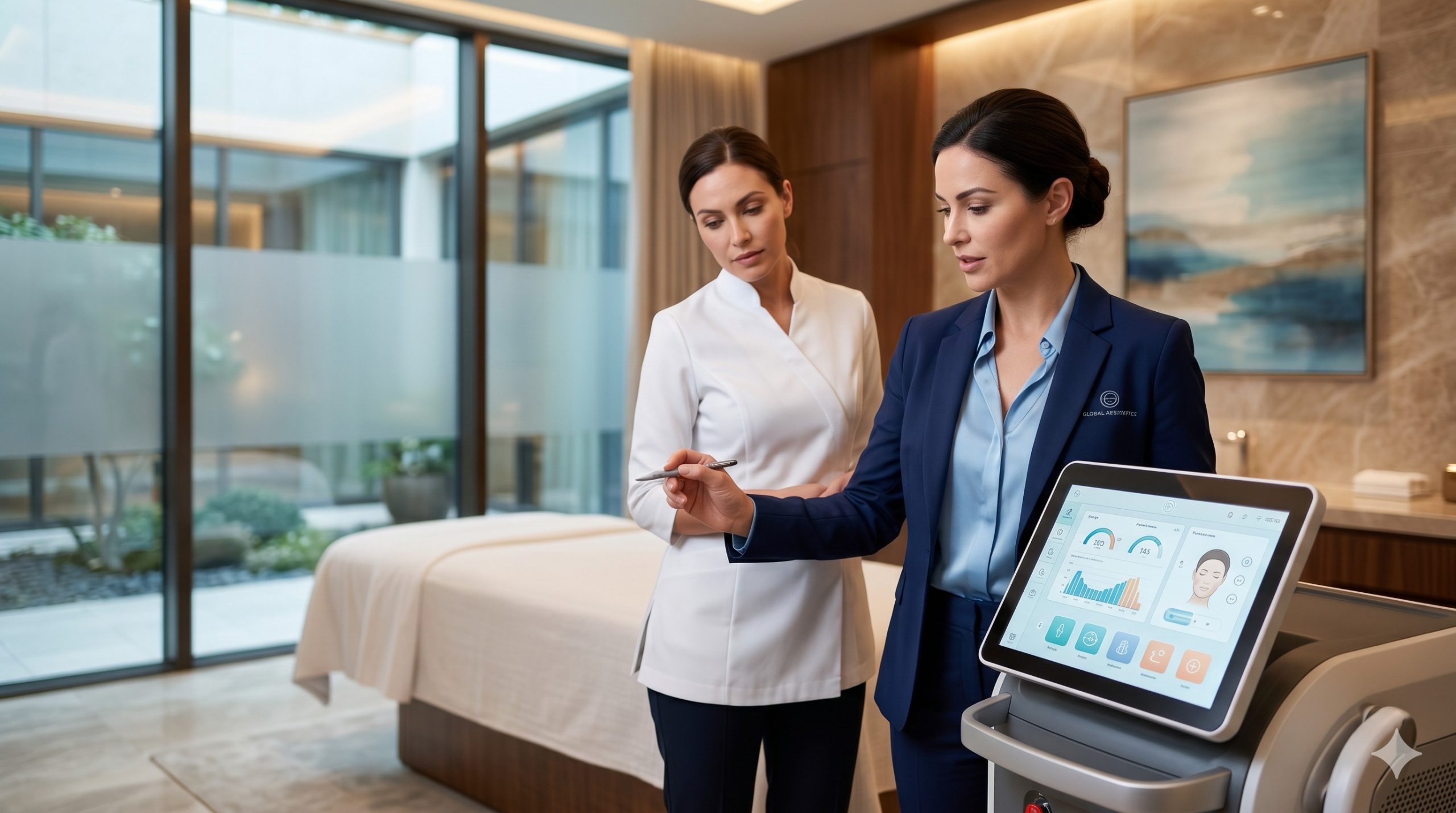
Clinicians must complete a manufacturer-certified 1-day hands-on training covering facial anatomy, energy mapping, and avoiding nerve zones (e.g., mandibular margin). Online theoretical modules (4-6 hours) cover Fitzpatrick contraindications and adverse event management. Most B2B suppliers require proof of prior laser/esthetic license and provide a competency exam before releasing the machine for unsupervised use.
Q8: How many treatments are typically needed, and does the machine track usage limits?
Most patients need 1 to 2 initial HIFU treatments spaced 3 months apart, followed by a maintenance session every 9-12 months. Professional HIFU machines include a built-in counter that logs total shots per cartridge and alerts the operator when the remaining life falls below 10%. This prevents under-treatment and ensures consistent clinical outcomes.