The Definitive Buyer’s Guide to Commercial Diode Laser Hair Removal Machines: Engineering, Efficacy, and ROI
Executive Summary
For modern aesthetic clinics and dermatology practices, investing in a commercial diode laser hair removal machine represents a critical capital expenditure that directly dictates clinical throughput and long-term profitability. This strategic guide provides a rigorous framework for evaluating premium diode platforms based on four uncompromising pillars: precise wavelength configurations (808nm single vs. 755/808/1064nm triple-wavelength arrays), absolute generator power utilizing premium optical components (such as Coherent® laser bars), advanced TEC (Thermoelectric Cooling) thermal management systems, and transparent Total Cost of Ownership (TCO) driven by maximum handpiece shot counts. By prioritizing evidence-based specifications over aggressive marketing claims, procurement directors can secure FDA/CE-compliant equipment that guarantees patient safety, eliminates unscheduled downtime, and maximizes Return on Investment (ROI).
Unpacking the Physics: Wavelengths, Fluence, and Tissue Interaction
Before evaluating hardware, it is essential to understand the underlying optical principles that dictate clinical efficacy. The foundation of modern professional laser hair removal equipment relies on Selective Photothermolysis—the precise targeting of a specific chromophore (melanin within the hair shaft and bulge) using light energy, which converts to localized thermal energy to destroy the follicle while leaving the surrounding epidermal tissue intact.
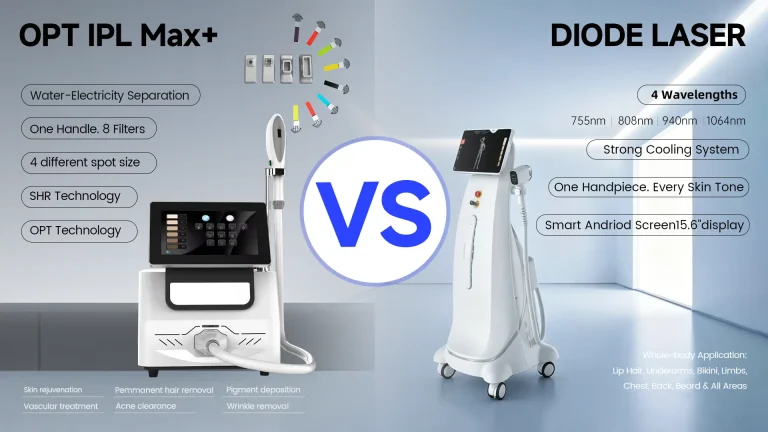
The Wavelength Debate: 808nm vs. Triple-Wavelength (755/808/1064nm) Systems
For years, the industry standard has been the standalone 808nm diode. However, the aesthetic demographic is highly diverse, necessitating a broader approach to treatment.
- The 808nm Standard: Often referred to as the “gold standard” in hair removal, the 808nm wavelength offers an optimal balance between moderate melanin absorption and deep tissue penetration. It is highly effective for standard hair types and suitable for Fitzpatrick skin types I-IV.
- The Triple-Wavelength Paradigm: Advanced commercial systems now integrate three distinct wavelengths into a single handpiece, emitting them simultaneously. This synergistic approach targets different histological depths and anatomical structures within the hair follicle (the bulge, bulb, and papilla).
| Wavelength | Equivalent Solid-State Laser | Depth of Penetration | Primary Clinical Indication |
| 755nm | Alexandrite | Shallow | Highly absorptive by melanin; ideal for fine, light-colored hair and superficial follicles (e.g., upper lip). |
| 808nm | Standard Diode | Medium | Moderate absorption; the versatile workhorse for high-speed treatment of standard hair densities (e.g., arms, legs). |
| 1064nm | Nd:YAG | Deep | Low melanin absorption, high water/hemoglobin absorption; safely bypasses the epidermis to target deep follicles in Fitzpatrick IV-VI skin. |
When reviewing procurement options, a true triple-wavelength system provides the clinical versatility required to treat a diverse patient roster without turning clients away.
Pulse Duration and TRT: Maximizing Efficacy While Preserving the Epidermis
Fluence (measured in J/cm²) is only one half of the energy equation; the other is Pulse Duration (measured in milliseconds, ms). A high-end diode laser technology must offer adjustable pulse widths that align with the Thermal Relaxation Time (TRT) of the target.
TRT is the time it takes for an object to cool down by 50% from its peak temperature. The core biological rule is: The laser pulse duration must be shorter than the TRT of the hair follicle but longer than the TRT of the epidermis. If a machine lacks precise pulse width control, the thermal energy will diffuse from the hair shaft into the surrounding tissue, causing severe thermal blistering or Post-Inflammatory Hyperpigmentation (PIH). Premium machines allow clinicians to meticulously dial in pulse widths (e.g., from 10ms to 400ms) to safely accommodate varying hair shaft diameters.
Core Hardware Architecture: Power, Cooling, and Continuous Operation
The most common question from purchasing directors is: “How many watts is a good commercial diode laser?” The answer requires looking beneath the exterior casing into the machine’s core architecture.
Generator Power and Laser Bar Quality: The Heart of the Machine
The generator power—typically ranging from 1200W, 1600W, to 2000W+—directly impacts the system’s ability to maintain stable energy delivery, especially when operating in high-speed, dynamic modes (often called In-Motion or SHR).
- Underpowered Systems (<800W): When operated at high frequencies (e.g., 10Hz), an underpowered machine spreads its available energy too thin. The fluence drops dramatically per pulse, resulting in sub-lethal heating of the follicle. This induces temporary dormancy rather than permanent destruction, leading to patient dissatisfaction and high refund rates.
- High-Power Systems (1200W – 2000W+): These systems maintain lethal fluence levels even at rapid repetition rates. This allows for genuine high-speed, continuous motion treatments without sacrificing clinical outcomes.
However, high wattage is irrelevant if the internal Laser Bars are of poor quality. The laser bars are the semiconductor diodes that actually emit the light.
- Sourcing matters: Industry-leading manufacturers exclusively source their laser bars from top-tier suppliers like Coherent® (USA) or Jenoptik (Germany).
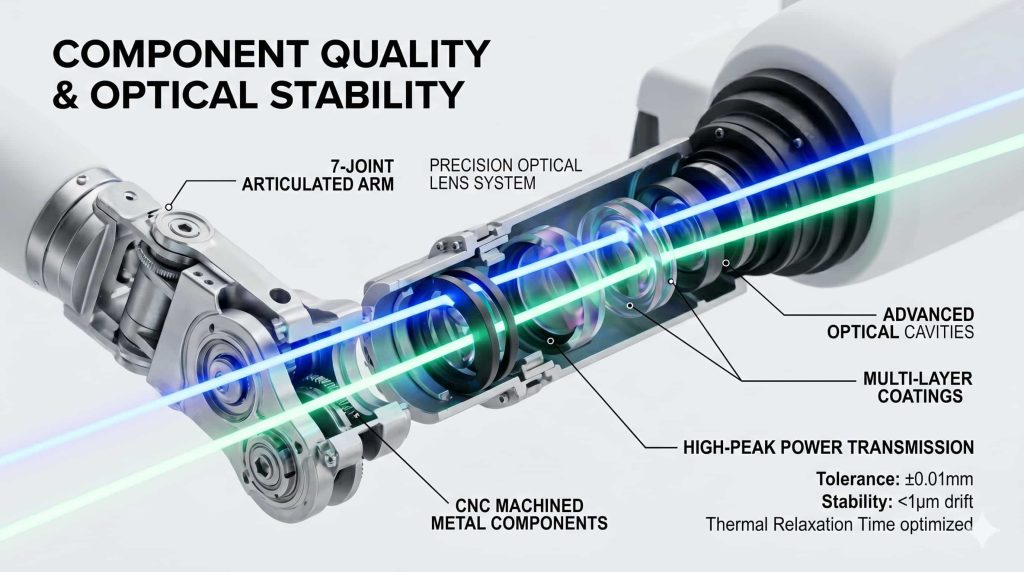
- Macro-channel vs. Micro-channel: Premium devices utilize micro-channel cooling architecture directly within the diode stack. This prevents the individual bars from experiencing thermal degradation, ensuring the optical output remains uniform and stable over millions of pulses.
Advanced Thermal Management: TEC and Sapphire Contact Cooling
A commercial diode laser is essentially an intense heat-generating engine. If the thermal management system fails, the handpiece burns out, and the clinic suffers critical downtime. Furthermore, patient comfort is the primary driver of clinic retention.
Elite systems utilize TEC (Thermoelectric Cooling). Unlike basic radiator fan setups, TEC is an active solid-state cooling technology that continuously chills the internal water circulation loop.
- Internal Stability: A robust TEC system maintains the internal deionized water temperature at a constant 20°C to 24°C, allowing the machine to run continuously for 18-24 hours without thermal shutdown.
- Epidermal Protection: This internal cooling is transferred directly to the Sapphire Contact Tip on the handpiece. Sapphire is highly conductive, allowing the tip to rapidly drop to temperatures between -5°C and 5°C. This intense contact cooling numbs the epidermis immediately before, during, and after the laser pulse is delivered, neutralizing the pain of the photothermal reaction and rendering the treatment virtually painless.
Clinical Versatility and Patient Safety Standards
In the highly scrutinized field of dermatology, minimizing risk while maximizing throughput is paramount.
Navigating the Fitzpatrick Scale: Safe Protocols for Skin Types I-VI
A sophisticated diode system must feature an intuitive, clinically validated user interface. Practitioners must be able to select the patient’s gender, treatment area, and most importantly, their Fitzpatrick Skin Type.
Treating dark skin (Types IV-VI) carries a severe risk of epidermal burns because the abundant melanin in the skin competes with the hair follicle for the laser’s energy. Advanced systems automatically adjust parameters to ensure safety:
- Lower Fluence / Longer Pulse Widths: The machine will default to a lower peak energy but deliver it over a much longer duration. This slow-heating method allows the epidermis time to dissipate heat while the thicker hair follicle accumulates lethal thermal damage.
- 1064nm Integration: As mentioned, utilizing a handpiece with blended 1064nm energy is non-negotiable for clinics with a diverse demographic, as it safely bypasses epidermal melanin.
Spot Size and Treatment Frequency (Hz): Optimizing Clinic Throughput
Time is a clinic’s most valuable inventory. The efficiency of a treatment is dictated by the handpiece’s Spot Size and the system’s Repetition Rate (Hz).
- Strategic Spot Sizes: While a small spot size (e.g., 10x10mm) is useful for facial detailing, treating a full back or bilateral legs with a small spot is an inefficient use of practitioner time. Premium suppliers provide large spot sizes (e.g., 15x30mm or larger) that cover significantly more surface area per pulse, driving the laser deeper into the dermis via optical scattering.
- High-Frequency Operation (SHR): Operating at 10Hz (10 pulses per second) enables the “In-Motion” technique. Instead of painful, static “stamp” methods, the practitioner rapidly glides the handpiece over the skin. This accumulates heat in the follicle gradually, cutting treatment times for large areas by up to 50% and doubling a clinic’s daily appointment capacity.
Calculating Total Cost of Ownership (TCO) and Profitability
B2B procurement must aggressively filter out the noise of low initial acquisition costs and focus purely on the Total Cost of Ownership (TCO). Cheap machines harbor hidden operational taxes that destroy margins.
Handpiece Lifespan and “Cost Per Shot” Analysis
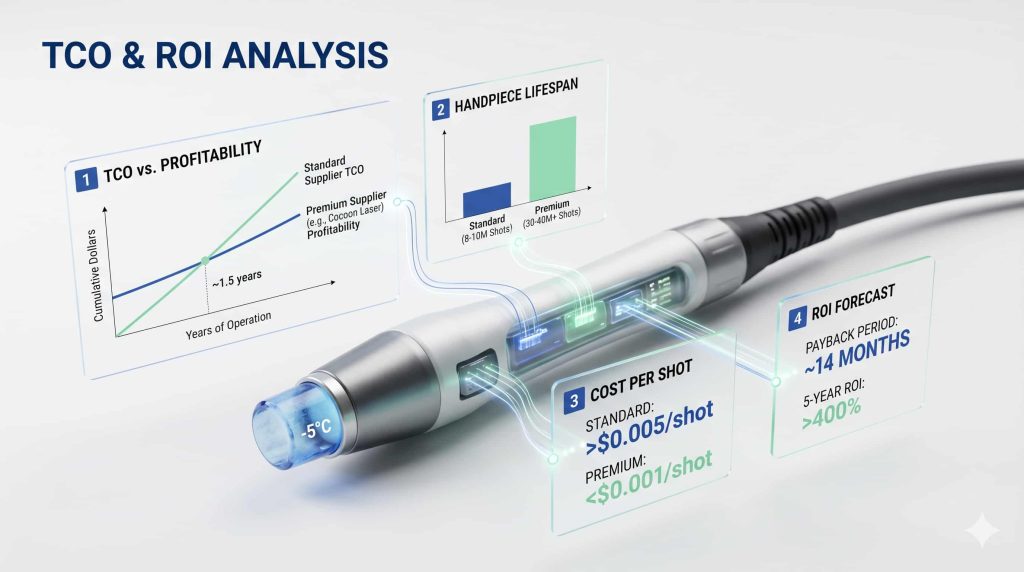
The most expensive consumable on a diode machine is the handpiece itself. The lifespan of a handpiece is measured in shot counts.
- Low-Tier Handpieces: Often aggressively priced, but utilize inferior macro-channel cooling and cheap Chinese bars. They typically fail between 5,000,000 and 10,000,000 shots.
- Premium Handpieces: Utilizing Coherent® bars and micro-channel TEC cooling, these handpieces are guaranteed to exceed 30,000,000 to 40,000,000 shots without significant energy degradation.
| Investment Metric | Low-Cost Diode Supplier | Premium Diode Supplier | Strategic Business Impact |
| Initial Acquisition | Low ($) | High ($$$) | Deceptive upfront savings vs. Capital investment |
| Guaranteed Shot Count | ~8,000,000 | >30,000,000 | Premium lifespan is 3x to 4x longer |
| Annual Handpiece Replacements | 1 – 2 times | 0 times (lasts years) | Drastically reduces ongoing consumable expenditure |
| Cost Per Shot (TCO) | High (due to frequent replacements) | Fractions of a penny | Maximizes profit margin per patient session |
By calculating the Cost Per Shot, it becomes mathematically irrefutable that investing in premium hardware yields a vastly superior financial ROI within the first 12 to 18 months of operation.
Maintenance Protocols and Mitigating Downtime
Downtime is the silent killer of clinic profitability. Every day a machine is offline means canceled appointments, refunds, and reputational damage.
Reliable machines require strict adherence to maintenance protocols:
- Water Quality: Diode lasers require pure deionized water (or highly distilled water) to prevent mineral buildup and galvanic corrosion within the micro-channels.
- Filtration Systems: High-end units utilize dual-filtration systems (resin and standard particulate filters) that must be changed biannually.
- SLA (Service Level Agreements): Procurement must demand transparent SLAs from the manufacturer. Evaluate their MTTR (Mean Time To Repair), remote diagnostic capabilities, and whether they maintain a domestic parts depot to prevent multi-week shipping delays.
Why Cocoon Laser Sets the Benchmark for Commercial Diode Systems
When applying this strict, uncompromising evaluation framework, the distinction between a mass-market vendor and a true clinical engineering partner becomes clear. Cocoon Laser stands out by engineering systems designed specifically to endure the grueling demands of high-volume aesthetic clinics.
Uncompromising Component Sourcing and Manufacturing Precision
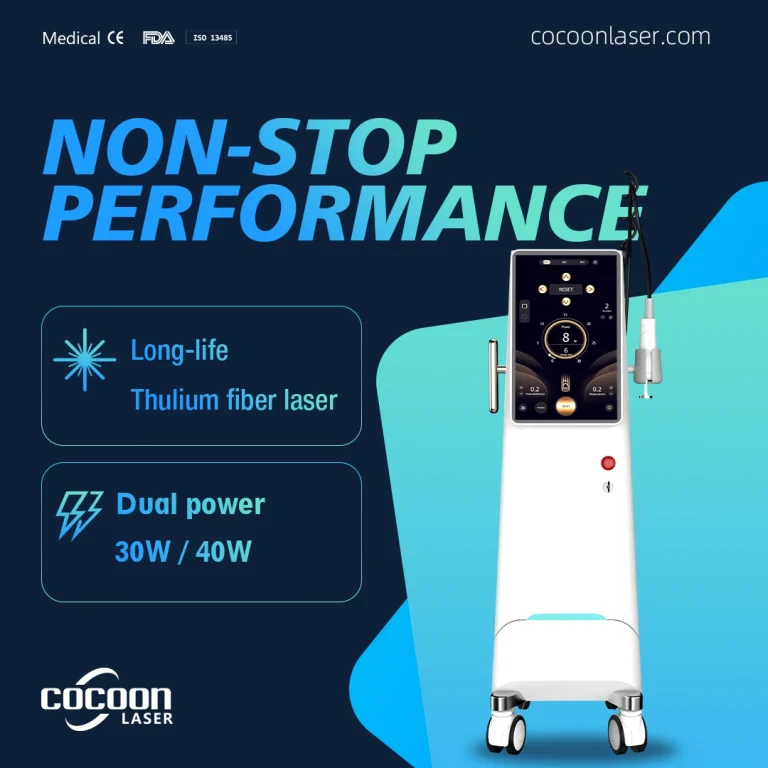
Cocoon Laser refuses to participate in a race to the bottom regarding component quality. By integrating ultra-high-wattage generators paired exclusively with genuine USA Coherent® laser bars, their platforms guarantee maximum energy stability even at 10Hz rapid-fire operation.
Furthermore, their proprietary application of TEC active cooling and deep sapphire contact chilling ensures that the equipment can handle relentless, back-to-back scheduling without overheating. This level of manufacturing precision translates directly to an extraordinary handpiece lifespan, radically lowering the TCO for medical aesthetic devices and maximizing clinic revenue.
FDA/CE Compliance and Comprehensive Post-Sales Clinical Support
In the global aesthetic market, regulatory compliance is non-negotiable. Cocoon Laser’s portfolio is backed by stringent Medical CE and FDA 510(k) clearances, proving that their devices have undergone rigorous, independent clinical safety audits.
Beyond delivering exceptional hardware, Cocoon Laser operates as a holistic B2B partner. Their post-sales infrastructure includes comprehensive onboarding, standardized clinical protocol training, and responsive technical support. This ensures that a clinic’s medical staff can immediately leverage the full clinical versatility of the equipment safely and effectively from day one.
Conclusion: The Strategic Procurement Checklist for Aesthetic Clinics
Purchasing a commercial diode laser should be a data-driven, strategic decision rather than an emotional one. Protect your capital investment by utilizing this definitive 5-step evaluation checklist:
- Verify the Laser Bars: Explicitly demand written proof of the laser bar origin (e.g., Coherent® USA) and confirm micro-channel cooling architecture.
- Confirm True Wattage: Distinguish between total machine power and the actual optical output power of the laser generator (minimum 1200W recommended for high-volume clinics).
- Test the TEC Cooling: The sapphire tip should visibly frost over and drop below 0°C within 60 seconds of activation.
- Audit the Shot Count Warranty: Do not accept verbal claims. Ensure the >30,000,000 shot lifespan is contractually guaranteed without hidden energy drop-off clauses.
- Demand Regulatory Documentation: Personally verify the authenticity of the FDA 510(k) clearance or Medical CE (MDR) certificates.
Stop losing revenue to equipment downtime and suboptimal clinical results. Elevate your clinic’s technological standard today. Contact the engineering and clinical experts at Cocoon Laser for a detailed technical consultation, complete product specification sheets, and a comprehensive TCO analysis. Ensure your practice is equipped with the industry’s most reliable and profitable hair removal technology.
If you need more information, please click “Contact Us”.
If you want to obtain more information, please follow our official website and Facebook.