Pico Laser Tattoo Removal: Process, Results & Recovery
Pico laser tattoo removal is a professional laser procedure designed to break down tattoo ink particles using extremely short pulses of laser energy.
Picosecond laser technology has become an important option in modern tattoo removal because its rapid energy delivery can generate strong photoacoustic effects within suitable ink pigments.
However, removing a tattoo is rarely a single-session procedure. Results depend on tattoo color, ink composition, depth, density, skin characteristics, and the laser wavelengths available.
Even with professional picosecond technology, complete tattoo clearance cannot be guaranteed.
This guide explains how pico laser tattoo removal works, what happens during treatment, how many sessions may be needed, expected fading, recovery, and possible complications.
Quick Answer: How Does Pico Laser Tattoo Removal Work?
Pico laser tattoo removal uses ultra-short laser pulses to fragment tattoo ink particles within the skin. The body’s biological processes may then gradually clear some of the fragmented pigment.
The procedure typically requires multiple treatment sessions, separated by appropriate recovery intervals.
Black ink often responds well to suitable laser wavelengths, while certain colored pigments can be more difficult to treat.
Possible side effects include redness, swelling, blistering, temporary pigmentary changes, and less commonly scarring.
A qualified practitioner should assess the tattoo and skin before recommending treatment.
What Is Pico Laser Tattoo Removal?
Pico laser tattoo removal is a form of laser-assisted tattoo clearance using pulse durations measured in picoseconds.
One picosecond equals one trillionth of a second. These extremely short pulses deliver energy rapidly to selected pigment targets.
When tattoo ink absorbs sufficient laser energy, rapid mechanical stress can contribute to pigment fragmentation.
The fragmented particles may subsequently be processed through the body’s immune and clearance mechanisms.
This process takes time, which helps explain why tattoo fading may continue between sessions.
Why Tattoo Ink Is Difficult to Remove
Professional tattoos introduce pigment into the dermis, beneath the outer epidermal layer of the skin.
Tattoo particles can remain within dermal cells and surrounding tissue for many years.
Effective laser removal requires appropriate interaction with these pigments while limiting unnecessary injury to surrounding skin.
What Makes Picosecond Technology Different?
Conventional Q-switched tattoo removal lasers commonly use nanosecond pulse durations.
Picosecond systems deliver energy over shorter intervals, potentially generating different photoacoustic interactions with tattoo pigment.
However, shorter pulse duration alone does not guarantee faster or more complete removal for every tattoo.
Wavelength selection, ink composition, fluence, spot size, and treatment technique remain essential.
How Does Picosecond Laser Tattoo Removal Break Down Ink?
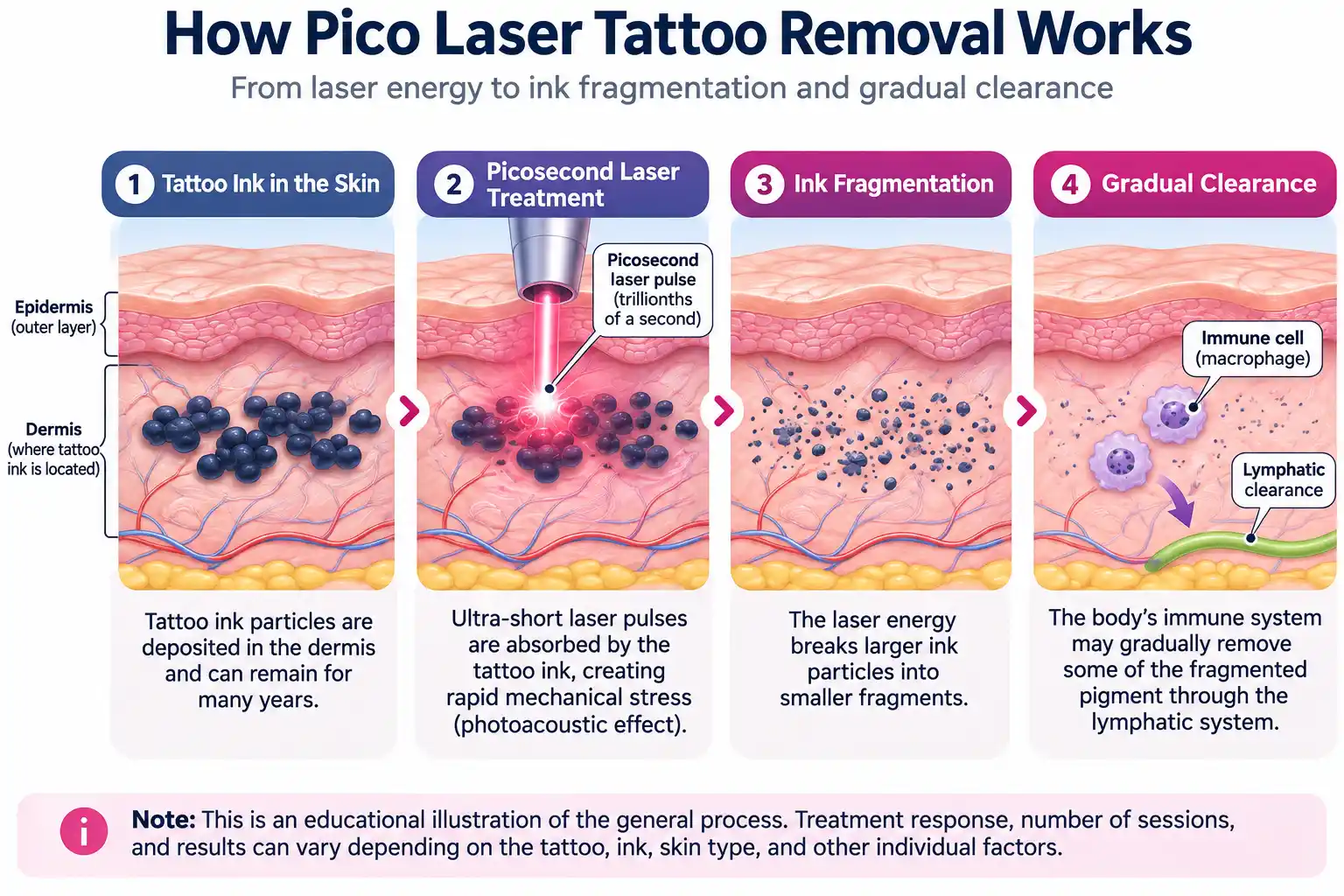
The mechanism of picosecond laser tattoo removal involves optical absorption, rapid energy deposition, mechanical stress, and subsequent biological pigment clearance.
Step 1: Laser Energy Reaches the Tattoo Pigment
The practitioner selects an appropriate wavelength based on the tattoo pigment and available laser system.
Laser light travels through the skin, where some of its energy may be absorbed by targeted ink particles.
Step 2: Rapid Energy Delivery Produces Photoacoustic Effects
Picosecond pulses deposit energy within an extremely short period.
Rapid absorption can generate localized pressure changes and mechanical stress around suitable pigment targets.
Step 3: Ink Particles Fragment
These interactions may break larger tattoo pigment aggregates into smaller fragments.
The response depends on the optical and physical properties of the ink.
Step 4: Biological Clearance Occurs Over Time
Following treatment, immune cells and other biological processes may gradually transport or clear some fragmented pigment.
This clearance is not immediate and can vary between patients.
Why Multiple Treatments Are Usually Necessary
A single laser session may not adequately fragment or clear all tattoo pigment.
Some ink particles may be located at different depths, while others may respond poorly to the available wavelengths.
Additional sessions may be considered after sufficient skin recovery and reassessment.
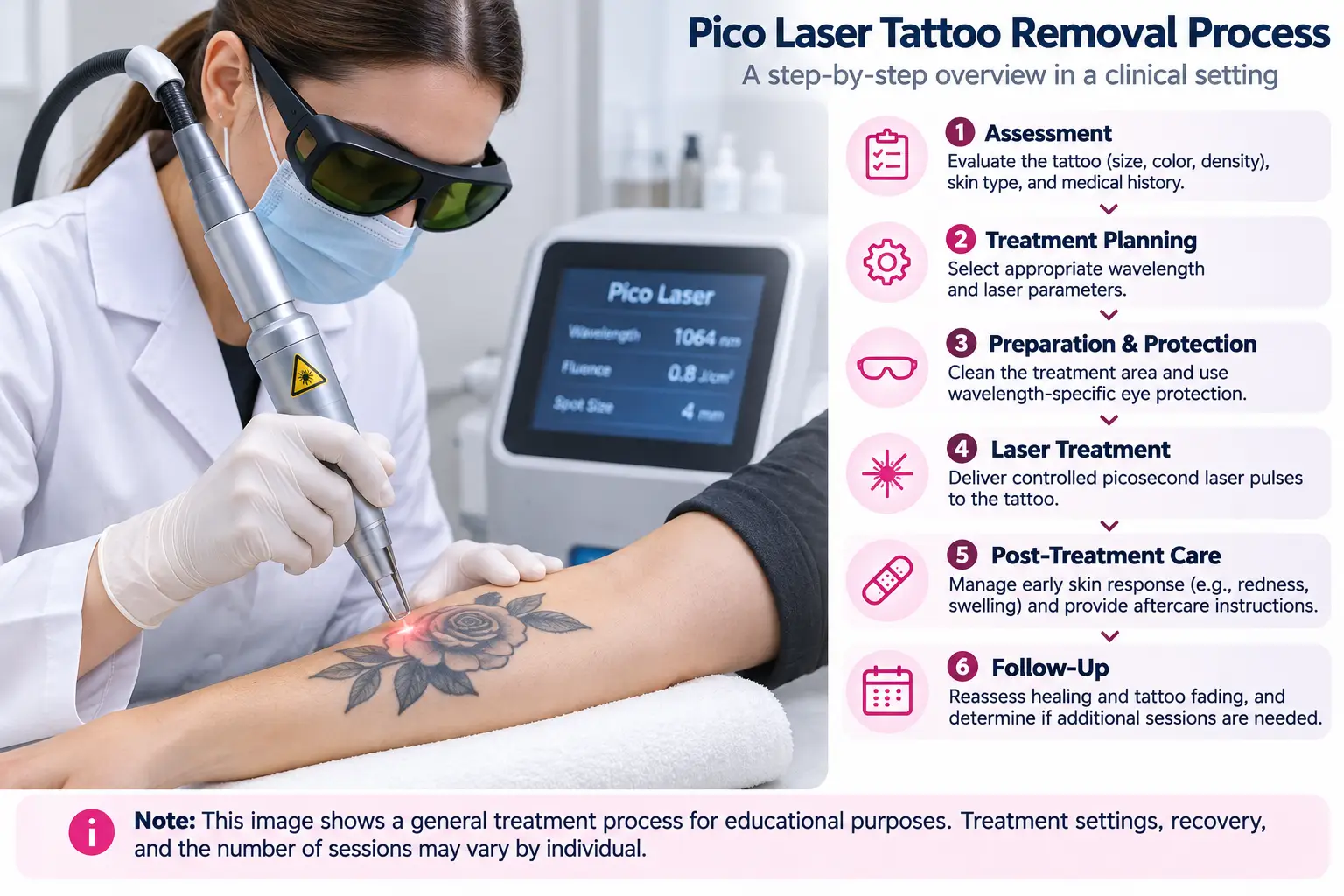
Pico Laser Tattoo Removal Process: Step by Step
Professional pico laser tattoo removal requires careful assessment, suitable equipment, appropriate safety measures, and individualized aftercare.
1. Tattoo and Skin Assessment
Before treatment, the practitioner evaluates the tattoo’s location, colors, approximate age, density, and previous treatment history.
The patient’s skin phototype, medical history, scarring tendency, and healing characteristics should also be considered.
Certain cosmetic tattoo pigments can darken after laser exposure. This possibility requires specific consideration.
2. Treatment Planning
The practitioner selects a suitable laser wavelength and other treatment parameters according to the tattoo and patient.
Available wavelengths differ between laser platforms, and no single wavelength is ideal for every ink color.
3. Skin Preparation and Eye Protection
The treatment area is prepared according to the clinical procedure.
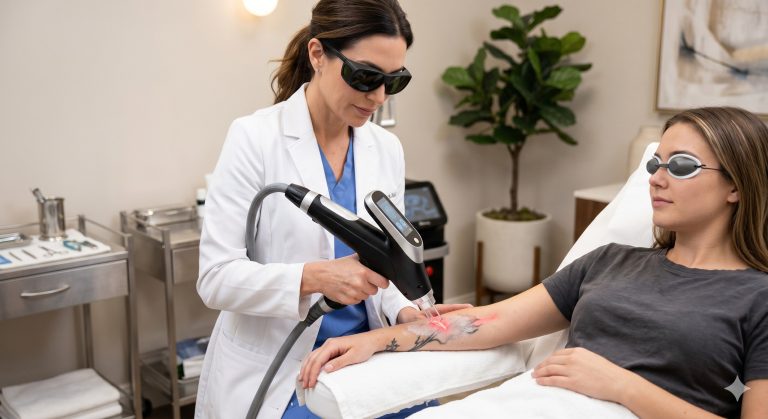
Appropriate wavelength-specific protective eyewear is essential for patients and personnel.
Pain-management measures may be considered according to the treatment and patient needs.
4. Laser Treatment
The practitioner delivers controlled laser pulses to the tattoo.
Some treatments produce immediate whitening or frosting of the treated area.
This temporary response does not mean that the tattoo has been completely removed.
The operator monitors the tissue response and follows appropriate treatment endpoints.
5. Immediate Post-Treatment Care
After treatment, the skin may appear red, swollen, or sensitive.
The practitioner provides wound-care and skin-protection instructions based on the observed tissue response.
6. Follow-Up Assessment
Follow-up visits allow the practitioner to evaluate healing and tattoo fading.
Further sessions should be scheduled according to recovery and treatment response, rather than an inflexible timetable.

How Many Pico Laser Tattoo Removal Sessions Are Needed?
One of the most common questions about pico laser tattoo removal is how many treatment sessions are required to achieve noticeable fading or substantial tattoo clearance.
There is no universal number of sessions that applies to every tattoo. Some tattoos respond more readily, while others require a longer treatment course or may never disappear completely.
Can Pico Laser Remove a Tattoo in One Session?
Complete tattoo removal after a single picosecond laser session is uncommon, particularly for professional tattoos containing substantial pigment.
A single treatment may produce visible fading, but the degree of improvement depends on the tattoo and the patient’s individual response.
Patients should be cautious about advertisements promising complete tattoo removal in one treatment.
What Determines the Number of Sessions?
Several characteristics influence the number of pico laser tattoo removal sessions that may be necessary.
- Tattoo color: Different ink pigments absorb different laser wavelengths.
- Ink density: Tattoos with heavy pigment deposits may require additional treatment.
- Tattoo depth: Ink distributed at different depths can respond differently.
- Professional or amateur tattoo: Professional tattoos often contain more densely deposited pigment.
- Skin phototype: Skin pigmentation influences treatment planning and complication risk.
- Tattoo location: Anatomical location may influence the rate of pigment clearance.
- Previous removal treatments: Earlier laser procedures and associated tissue changes can affect subsequent treatment.
- Available laser wavelengths: The equipment must provide suitable wavelengths for the targeted pigments.
How Many Sessions Do Professional Tattoos Usually Require?
Professional tattoos commonly require multiple laser sessions because pigment may be densely deposited and distributed throughout the dermis.
Some treatment courses involve six or more sessions, while difficult tattoos may require substantially more.
These figures are broad clinical examples, not predictions for an individual patient.
A qualified practitioner should provide an individualized assessment rather than guarantee a fixed number of sessions.
How Long Should You Wait Between Sessions?
Pico laser tattoo removal sessions are generally separated by several weeks or longer to allow skin recovery and biological pigment clearance.
An interval of approximately six to eight weeks is used in some treatment protocols, although longer intervals may be appropriate.
The ideal schedule depends on healing, the tattoo, treatment response, and clinical judgment.
More frequent treatment does not necessarily produce faster overall clearance and may increase the risk of complications.
Pico Laser Tattoo Removal Results: What Should You Expect?
Pico laser tattoo removal results develop gradually and vary significantly between tattoos.
The goal is to reduce the visibility of targeted ink, but the degree of clearance depends on pigment characteristics, available wavelengths, treatment technique, and individual response.
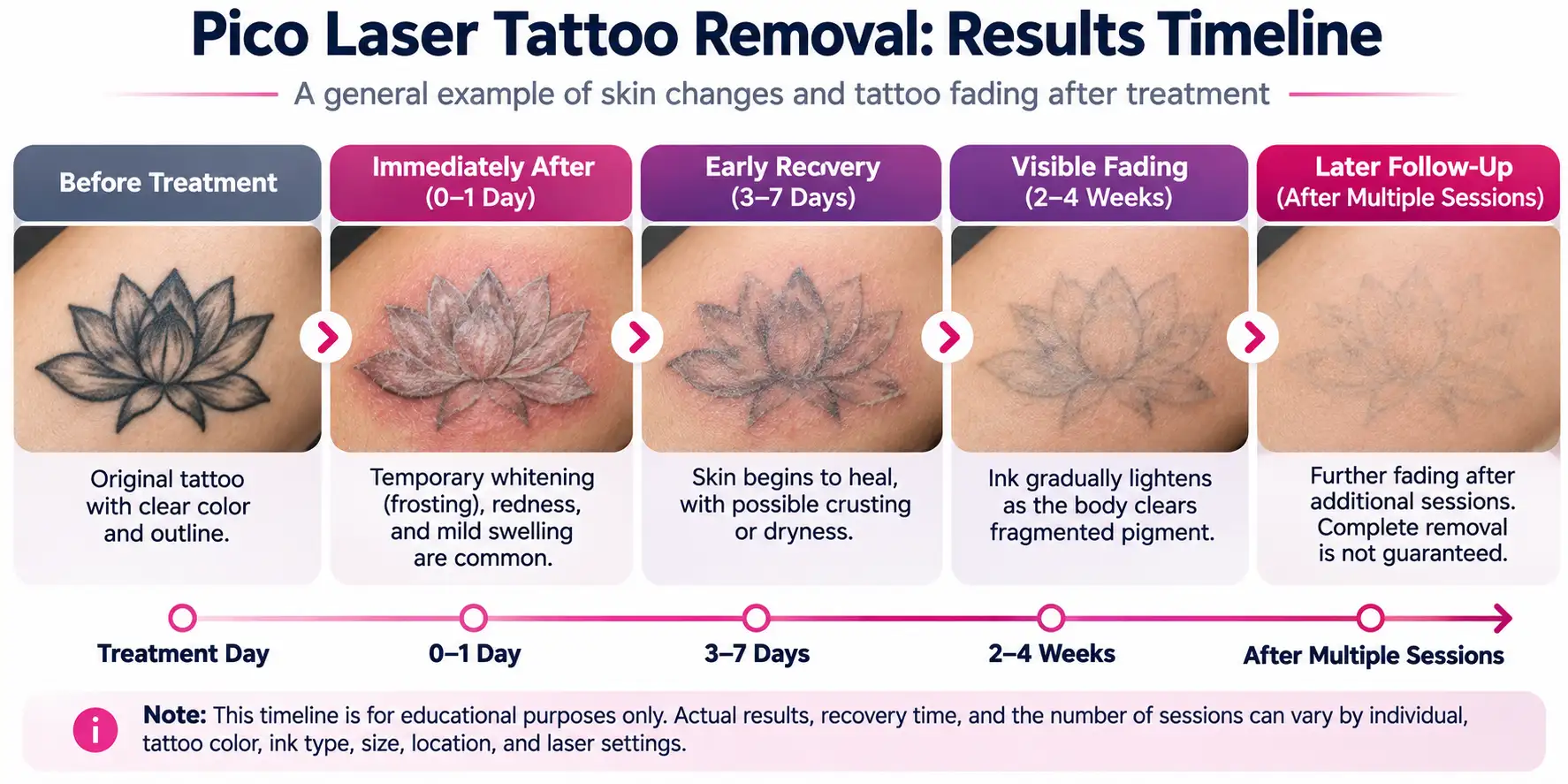
What Happens Immediately After Treatment?
Some patients experience an immediate whitening or frosting response in the treated area.
This temporary appearance is associated with rapid changes in the treated tissue and does not mean the tattoo ink has disappeared.
Redness, swelling, tenderness, and other inflammatory responses may also occur.
When Does Tattoo Fading Become Visible?
Visible fading may develop over the weeks following a treatment session.
The body’s biological clearance mechanisms continue to process fragmented pigment after the laser procedure has ended.
Some tattoos show noticeable changes relatively early, while others respond more gradually.
Can a Tattoo Disappear Completely?
Substantial tattoo clearance is possible in selected cases, but complete removal cannot be guaranteed.
Residual ink, pigmentary changes, or pre-existing tattoo-related scarring may remain.
Some pigments may respond poorly to available wavelengths or undergo unexpected color changes.
What Do Pico Laser Tattoo Removal Before and After Results Show?
Authentic before-and-after photographs may demonstrate progressive tattoo fading over multiple sessions.
Reliable comparisons should identify the number of treatments, follow-up intervals, and relevant clinical circumstances.
Lighting, camera angle, skin preparation, and image editing can affect the apparent result.
Clinics should use genuine patient photographs with appropriate consent and avoid presenting simulated images as clinical evidence.
General Tattoo Removal Results Timeline
| Stage | Possible Appearance | Clinical Consideration |
|---|---|---|
| Before Treatment | Original tattoo color, density, and appearance | Document the baseline condition |
| Immediately After | Possible frosting, redness, and swelling | Early tissue response is not final clearance |
| Early Recovery | Inflammation may settle; blistering or crusting can occur | Follow appropriate wound-care instructions |
| Following Weeks | Possible gradual fading of tattoo ink | Biological pigment clearance may continue |
| Later Sessions | Additional fading may become visible | Reassess progress and remaining pigment |
Which Tattoo Colors Can Pico Laser Remove?
Tattoo ink color is an important factor in pico laser tattoo removal because pigments absorb different wavelengths of laser light.
A laser wavelength that works well for one pigment may be less effective for another.
Black and Dark Tattoo Ink
Black tattoo ink absorbs a broad range of visible and near-infrared wavelengths.
It often responds well to suitable tattoo removal laser systems.
However, clearance still depends on ink density, depth, treatment history, and other factors.
Red and Orange Tattoo Ink
Certain red and orange tattoo pigments may respond to suitable green laser wavelengths, such as 532 nm.
Actual response depends on the pigment formulation and the available laser system.
Blue and Green Tattoo Ink
Blue and green tattoos can be more challenging when the available laser system does not provide a suitable wavelength.
Certain professional laser platforms offer additional wavelengths that may improve the ability to target selected blue or green pigments.
However, no single wavelength can reliably remove every pigment formulation.
Yellow, White, and Flesh-Colored Ink
Some yellow, white, and flesh-colored pigments are particularly difficult to treat with laser energy.
Certain pigments containing metal compounds may darken after laser exposure.
Cosmetic tattoos and permanent makeup require special consideration because their pigment composition may be uncertain.
Tattoo Color and Wavelength Considerations
| Tattoo Color | General Laser Consideration | Important Limitation |
|---|---|---|
| Black / Dark | Often targeted with suitable near-infrared wavelengths, including 1064 nm | Dense or deep ink may require multiple sessions |
| Red / Orange | Selected pigments may respond to 532 nm | Response varies with pigment composition |
| Blue / Green | May require additional suitable wavelengths | Difficult to treat with some laser platforms |
| Yellow / White | Often challenging laser targets | Limited response or unexpected darkening is possible |
| Cosmetic / Flesh-Colored | Requires careful pigment assessment | Paradoxical darkening can occur |
This table provides general educational information rather than a treatment protocol.
The appropriate wavelength and procedure must be determined by a qualified practitioner.
Does Pico Laser Tattoo Removal Hurt?
Pico laser tattoo removal can cause discomfort, although the intensity varies between patients and treatment areas.
Some patients describe the sensation as repeated snapping or stinging against the skin.
What Affects Treatment Discomfort?
- The location and sensitivity of the tattooed area.
- Tattoo size and pigment density.
- Laser parameters and treatment duration.
- Individual pain tolerance.
- Available pain-management measures.
Is Picosecond Tattoo Removal Less Painful?
Shorter laser pulse duration does not automatically mean that a procedure will be painless.
Discomfort depends on multiple factors, including the energy delivered, anatomical location, and individual sensitivity.
Patients should not assume that picosecond technology eliminates the need for pain management.
Can Pain Be Reduced?
Depending on the procedure, clinicians may consider suitable cooling techniques, topical anesthetics, or other pain-management approaches.
These measures should be selected by the treating professional.
Pico Laser Tattoo Removal Recovery: What Happens After Treatment?
Pico laser tattoo removal recovery depends on the tattoo, laser settings, skin characteristics, and individual healing response.
Although some patients experience relatively limited downtime, others may develop blisters, crusting, or more pronounced inflammation.
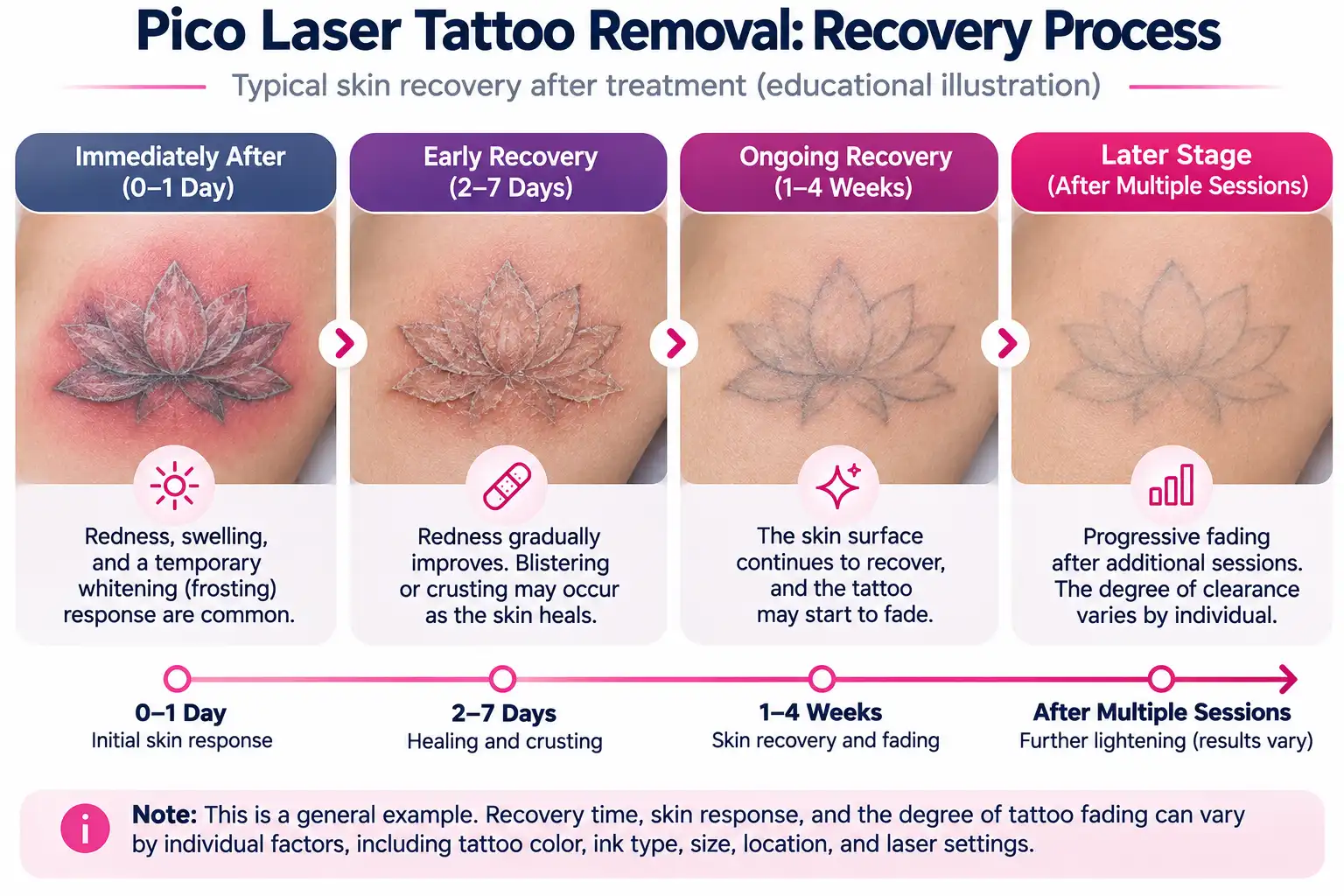
Immediately After Treatment
Common early responses may include redness, swelling, warmth, and tenderness.
Temporary frosting or whitening may also occur.
During the First Several Days
Redness and swelling may gradually improve as the skin heals.
Some patients develop blistering, crusting, or localized irritation.
These reactions require appropriate wound care and monitoring.
During the Following Weeks
Surface healing may progress while biological pigment clearance continues.
Tattoo fading may become more apparent during this period.
Visible recovery and pigment clearance do not necessarily occur at the same rate.
When Is the Skin Ready for Another Session?
Additional treatment should be considered only after adequate recovery and professional reassessment.
Persistent inflammation, open wounds, or other complications may require postponement.
Pico Laser Tattoo Removal Aftercare
Appropriate aftercare is important for protecting the treated skin and reducing avoidable complications.
Patients should follow the instructions provided by their treating professional because wound-care requirements can vary.
Keep the Treatment Area Clean
Follow the practitioner’s recommendations for gentle cleansing and skin protection.
Avoid unnecessary friction or aggressive cleaning of the treated area.
Do Not Pick Blisters or Crusts
Blisters and crusts should not be deliberately opened, scratched, or removed.
Disturbing healing tissue can increase the risk of infection, pigmentation changes, and scarring.
Protect the Skin from Sun Exposure
Ultraviolet exposure may contribute to unwanted pigmentary changes during recovery.
Patients should follow professional guidance regarding sun avoidance, protective clothing, and appropriate sunscreen use once the skin condition permits.
Avoid Irritating Products and Activities
Products or activities that cause friction, irritation, or unnecessary heat may interfere with recovery.
Patients should ask their practitioner when it is safe to resume normal skincare, exercise, swimming, and other activities.
Recognize Warning Signs
Patients should seek medical evaluation if they experience increasing pain, spreading redness, purulent discharge, fever, or other concerning symptoms.
Unexpected skin darkening, persistent pigment loss, or abnormal scarring should also be assessed by a qualified professional.
General Aftercare Checklist
| Aftercare Area | General Recommendation |
|---|---|
| Skin Cleansing | Follow individualized gentle cleansing instructions |
| Blisters / Crusts | Avoid picking or disturbing healing tissue |
| Sun Protection | Minimize unnecessary UV exposure and follow professional skin-protection guidance |
| Skincare Products | Avoid irritating products until medically appropriate |
| Activities | Confirm when exercise, swimming, and other activities can resume |
| Follow-Up | Attend recommended assessments before further treatment |
Pico Laser Tattoo Removal Side Effects and Risks
Pico laser tattoo removal is a medical aesthetic procedure that can cause temporary skin reactions and, less commonly, more significant complications.
Although picosecond technology delivers extremely short laser pulses, it does not eliminate the risks associated with laser-tissue interactions.
Redness and Swelling
Temporary redness, swelling, warmth, and tenderness are possible after treatment.
These reactions may improve as the treated skin heals, although their duration varies between patients.
Blistering and Crusting
Blisters and crusts may develop following certain tattoo removal procedures.
Patients should follow professional wound-care instructions and avoid deliberately opening blisters or removing crusts.
Post-Inflammatory Hyperpigmentation
Post-inflammatory hyperpigmentation occurs when inflammation contributes to increased pigmentation in the skin.
It may be more concerning in patients with darker skin phototypes or a history of pigmentary complications.
Hypopigmentation
Hypopigmentation refers to a reduction in normal skin pigmentation.
Laser exposure may affect normal pigment-producing structures, potentially causing lighter areas of skin.
Some pigmentary changes may persist for extended periods.
Scarring and Skin Texture Changes
Scarring is a possible complication of tattoo removal, particularly when excessive tissue injury or impaired healing occurs.
Some tattoos may also contain pre-existing scar tissue that becomes more visible as the ink fades.
Paradoxical Tattoo Ink Darkening
Certain cosmetic tattoo pigments, including some flesh-colored and white pigments, may darken after laser exposure.
This reaction can complicate subsequent removal attempts.
Permanent makeup and tattoos with uncertain pigment composition require careful assessment.
Infection and Delayed Healing
Skin disruption may increase susceptibility to infection.
Increasing pain, spreading redness, discharge, fever, or delayed healing should prompt medical evaluation.
Eye Injury
Direct or reflected laser exposure can cause serious eye injury.
Appropriate wavelength-specific protective eyewear, operator training, controlled treatment environments, and equipment safety procedures are essential.
How Can Tattoo Removal Risks Be Reduced?
- Obtain an appropriate tattoo and skin assessment before treatment.
- Select suitable laser wavelengths and parameters.
- Use properly maintained professional equipment.
- Ensure appropriate eye protection and laser safety procedures.
- Follow individualized wound-care instructions.
- Allow adequate recovery between sessions.
- Monitor for complications and seek timely medical assessment when necessary.
Pico Laser vs Q-Switched Laser for Tattoo Removal
Picosecond and Q-switched nanosecond lasers are both used in professional tattoo removal.
Their main technical distinction is pulse duration, although wavelengths, energy delivery, and treatment configurations also differ between devices.
Picosecond Laser Technology
Picosecond systems deliver pulses measured in trillionths of a second.
Their rapid energy delivery can generate strong photoacoustic interactions with suitable tattoo pigment targets.
Q-Switched Nanosecond Laser Technology
Conventional Q-switched laser systems commonly deliver pulses measured in nanoseconds.
These systems have an established role in tattoo removal and selected pigmentation procedures.
Is Pico Laser Better for Tattoo Removal?
Some clinical studies have reported advantages for particular picosecond laser configurations or tattoo pigments.
However, available evidence does not establish that every picosecond device is superior to every nanosecond system for all tattoos.
Tattoo color, ink composition, skin characteristics, available wavelengths, and treatment technique remain important.
Picosecond vs Q-Switched Tattoo Removal Comparison
| Feature | Picosecond Laser | Q-Switched Nanosecond Laser |
|---|---|---|
| Pulse Duration | Picoseconds | Nanoseconds |
| Primary Pigment Interaction | Rapid energy delivery with strong photoacoustic effects | Photoacoustic and photothermal effects, depending on parameters |
| Tattoo Removal | Used for selected tattoo pigments | Established option for selected tattoo pigments |
| Wavelength Options | Depend on device configuration | Depend on device configuration |
| Number of Sessions | Varies by tattoo and treatment response | Varies by tattoo and treatment response |
| Possible Side Effects | Redness, blistering, pigmentary changes, scarring | Redness, blistering, pigmentary changes, scarring |
Neither technology guarantees complete tattoo removal. The appropriate system should be selected according to the patient, tattoo, and available clinical evidence.
Who Is a Suitable Candidate for Pico Laser Tattoo Removal?
Pico laser tattoo removal may be appropriate for individuals seeking professional reduction or removal of unwanted tattoo ink.
However, suitability must be determined through an individual clinical assessment.
Patients with Realistic Expectations
Suitable candidates should understand that tattoo removal often requires multiple sessions.
Complete clearance cannot be guaranteed, and residual pigment or skin changes may remain.
Patients with Healthy Skin at the Treatment Site
Active infections, significant inflammation, or impaired skin integrity may require treatment to be postponed.
The practitioner should evaluate the skin before proceeding.
Patients Able to Follow Aftercare Instructions
Appropriate wound care, skin protection, and follow-up are important components of the treatment process.
Patients should understand the recovery requirements before beginning a treatment course.
Who May Require Additional Precautions?
- Individuals with a history of keloid or abnormal scarring.
- Patients with active skin infections or inflammation.
- Individuals with significant pigmentary complications after previous procedures.
- Patients taking medications that may affect photosensitivity or healing.
- Individuals with cosmetic tattoos containing uncertain pigment formulations.
- Patients with relevant medical conditions affecting wound healing.
Pregnancy and other circumstances in which elective procedures may be deferred should be discussed with a qualified healthcare professional.
The treating practitioner should explain the expected benefits, limitations, alternative approaches, and potential risks before obtaining informed consent.
Professional Picosecond Laser Equipment for Tattoo Removal
For dermatology clinics, aesthetic treatment centers, and medical equipment distributors, selecting professional tattoo removal equipment requires careful technical evaluation.
The effectiveness of a laser platform depends on more than its advertised pulse duration.
Important Equipment Considerations
- Verified pulse duration: Confirm documented picosecond or nanosecond performance.
- Available wavelengths: Review compatibility with different tattoo pigment characteristics.
- Energy output: Evaluate documented performance and parameter controls.
- Spot size: Consider available treatment coverage and beam characteristics.
- Safety systems: Review protective measures and operating requirements.
- Regulatory documentation: Verify applicable approvals, registrations, and intended uses for the destination market.
- Training and support: Consider maintenance, technical assistance, and operator training.
Ultra PicoMax by Cocoon Laser
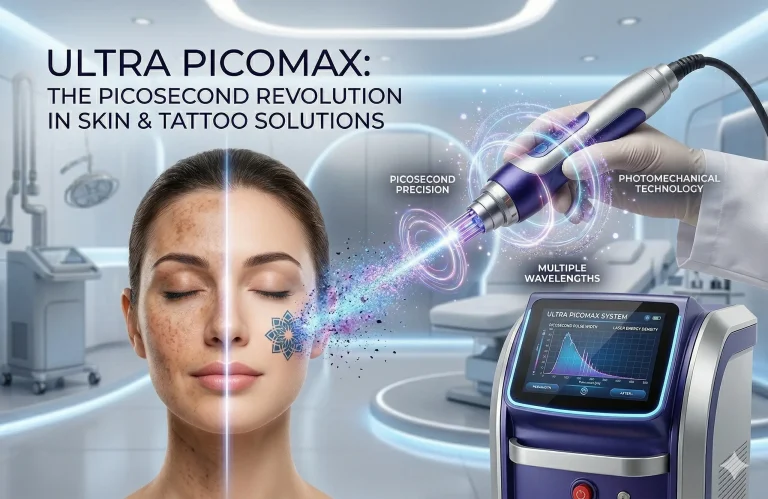
Cocoon Laser offers Ultra PicoMax, a professional picosecond laser platform for aesthetic equipment buyers.
Clinics and distributors considering this system should review its documented wavelengths, pulse characteristics, available treatment modes, and intended applications.
The suitability of a particular configuration for tattoo removal should be confirmed against technical documentation and applicable regulatory requirements.
QPeak Pro: Q-Switched Nd:YAG Technology
Cocoon Laser also offers QPeak Pro, a professional Q-switched Nd:YAG laser platform.
QPeak Pro operates with nanosecond Q-switched technology rather than picosecond pulses.
These are distinct technology categories and should not be described interchangeably.
Request Technical Information
Clinics and international distributors can contact Cocoon Laser to discuss available laser configurations, technical documentation, and purchasing requirements.
For an introduction to picosecond laser technology beyond tattoo removal, see our Pico Laser Treatment guide .
Frequently Asked Questions About Pico Laser Tattoo Removal
Does pico laser tattoo removal work?
Picosecond lasers can be effective for removing or reducing selected tattoo pigments. Results depend on ink characteristics, available wavelengths, skin type, and treatment technique. Complete clearance is not guaranteed.
How many sessions does pico laser tattoo removal take?
Most professional tattoos require multiple sessions. Some treatment courses involve six or more procedures, while difficult tattoos may require additional sessions. Individual results vary.
Can pico laser remove a tattoo completely?
Complete removal may be possible in selected cases, but it cannot be guaranteed. Residual ink, pigmentation changes, or pre-existing scarring may remain.
Is pico laser tattoo removal painful?
Treatment can cause a snapping or stinging sensation. Discomfort varies according to tattoo location, laser parameters, and individual sensitivity. Appropriate pain-management measures may be considered.
How long does pico laser tattoo removal take to heal?
Recovery depends on the procedure and individual healing response. Redness and swelling may improve during early recovery, while blistering or crusting can require additional healing time.
How long should I wait between pico laser tattoo removal sessions?
Treatment sessions are usually separated by several weeks or longer. Some protocols use approximately six to eight weeks, but the appropriate interval depends on recovery and clinical assessment.
Can pico laser remove colored tattoos?
Certain colored tattoo pigments may respond to suitable laser wavelengths. However, blue, green, yellow, white, and cosmetic pigments can present additional challenges.
Is pico laser better than Q-switched laser for tattoo removal?
Picosecond and Q-switched nanosecond lasers have different pulse characteristics. Some studies suggest advantages for specific picosecond applications, but no technology is universally superior for every tattoo.
Can pico laser tattoo removal cause scars?
Scarring is a possible complication, particularly when excessive tissue injury or impaired healing occurs. Appropriate treatment and aftercare help reduce avoidable risks.
Does tattoo ink disappear immediately after pico laser treatment?
No. Temporary whitening or frosting may appear immediately, but biological pigment clearance generally develops over time. Tattoo fading may continue during the following weeks.
Can pico laser tattoo removal make a tattoo darker?
Certain pigments, particularly some cosmetic tattoo inks, may undergo paradoxical darkening after laser exposure. Pigment assessment is important before treatment.
Is pico laser tattoo removal safe for darker skin?
Treatment suitability depends on skin phototype, tattoo characteristics, wavelength, and laser parameters. Patients with darker skin may have a higher risk of pigmentary complications and require careful professional assessment.
Final Thoughts on Pico Laser Tattoo Removal
Pico laser tattoo removal uses ultra-short laser pulses to fragment targeted tattoo pigment.
The body’s biological processes may gradually clear some of the fragmented ink over the following weeks.
Multiple sessions are commonly necessary, and the degree of tattoo clearance depends on pigment characteristics, skin type, device capabilities, and treatment technique.
Patients should understand the potential risks, recovery requirements, and limitations before undergoing treatment.
For clinics and distributors evaluating professional picosecond laser equipment, contact Cocoon Laser to request technical information and discuss purchasing requirements.