RF Microneedling vs CO2 Laser: Differences & Benefits
Quick Answer: RF Microneedling vs CO2 Laser
RF microneedling and fractional CO2 laser treatments are two different technologies used in professional aesthetic practices for skin rejuvenation, texture improvement, and selected scar treatments.
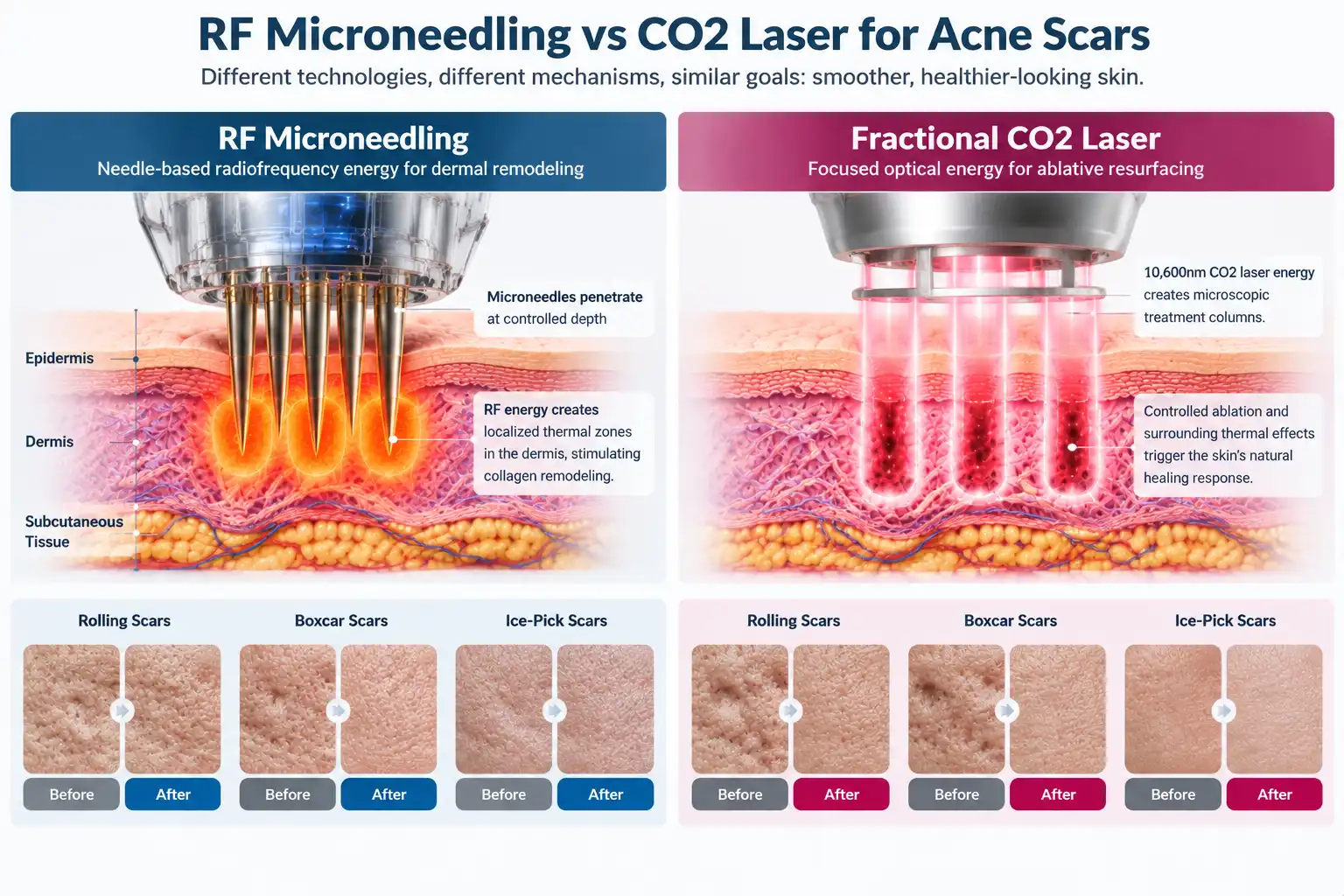
RF microneedling uses fine needle electrodes to deliver radiofrequency energy into targeted skin layers, producing controlled thermal effects within the dermis.
Fractional CO2 laser uses 10,600nm laser energy to create controlled microscopic treatment zones through tissue ablation and thermal effects.
The main difference is their energy delivery method: RF microneedling uses needle-based radiofrequency delivery, while fractional CO2 laser uses optical energy. Neither technology is universally better. The appropriate choice depends on treatment goals, skin characteristics, device capabilities, and acceptable recovery time.
What Is RF Microneedling?
RF microneedling combines traditional microneedling with radiofrequency energy. The treatment system uses fine needles to penetrate selected skin depths and deliver controlled electrical energy into targeted tissue.
The resulting thermal effects may stimulate tissue remodeling and collagen-related responses. Different RF microneedling platforms use different needle configurations, energy delivery methods, and treatment controls.
How RF Microneedling Works
During treatment, a specialized handpiece places multiple fine needles into the skin. Radiofrequency energy is then delivered through the needle electrodes according to the selected treatment parameters.
- Needles penetrate the selected treatment depth.
- Radiofrequency energy generates localized thermal effects.
- Controlled tissue responses initiate a healing process.
- Collagen remodeling may contribute to gradual changes in skin texture and firmness.
Treatment depth, needle insulation, energy settings, and pulse duration influence how energy is distributed within the tissue.
What Is Fractional CO2 Laser Treatment?
Fractional CO2 laser treatment uses a 10,600nm carbon dioxide laser to create microscopic treatment columns in the skin.
CO2 laser energy is strongly absorbed by water in biological tissue. This interaction allows the system to produce controlled tissue ablation and surrounding thermal effects.
How Fractional CO2 Laser Works
Unlike traditional full-field resurfacing, fractional CO2 systems distribute laser energy into multiple microscopic treatment zones while leaving surrounding tissue untreated.
- Laser energy is delivered in a fractional pattern.
- Water absorption produces localized tissue ablation.
- Thermal effects extend around the treatment zones.
- The skin initiates a healing and remodeling response.
Fractional density, energy, pulse duration, and treatment pattern influence the overall treatment effect and recovery requirements.
RF Microneedling vs CO2 Laser: Main Differences
Although both technologies are used in professional skin rejuvenation, their energy sources, delivery mechanisms, and tissue interactions are different.
| Comparison | RF Microneedling | Fractional CO2 Laser |
|---|---|---|
| Energy source | Radiofrequency | 10,600nm laser energy |
| Delivery method | Needle electrodes | Optical laser beam |
| Primary tissue interaction | Localized electrical heating | Water absorption and tissue ablation |
| Epidermal interaction | Depends on needle configuration and technique | Fractional ablative treatment zones |
| Common applications | Skin texture, selected acne scars, skin laxity | Skin resurfacing, wrinkles, selected acne scars |
| Recovery | Varies by device and treatment intensity | Varies by fractional density and treatment intensity |
| Consumables | Needle tips may be disposable | Depends on system design and accessories |
RF Microneedling vs CO2 Laser: Which Has Better Benefits?
Both RF microneedling and fractional CO2 laser treatments are used to address selected signs of skin aging, acne scars, and uneven skin texture. However, their benefits are associated with different tissue interactions and treatment approaches.
RF microneedling combines controlled needle penetration with radiofrequency heating, while fractional CO2 laser delivers optical energy to produce microscopic ablative and thermal treatment zones.
Benefits of RF Microneedling
- Dermal remodeling: Localized radiofrequency heating may stimulate collagen remodeling in targeted tissue.
- Adjustable needle penetration: Many devices allow practitioners to select needle depths according to treatment objectives and anatomical considerations.
- Skin texture improvement: May help improve the appearance of selected acne scars, fine lines, and uneven skin texture.
- Skin laxity applications: Some RF microneedling systems are used for selected mild skin laxity concerns.
Benefits of Fractional CO2 Laser
- Fractional skin resurfacing: Creates microscopic ablative treatment zones to support surface renewal and tissue remodeling.
- Wrinkle treatment: May improve the appearance of selected facial wrinkles and fine lines.
- Acne scar applications: Commonly used in professional resurfacing strategies for selected atrophic acne scars.
- Skin texture: Can address irregular surface texture through controlled ablative resurfacing.
Neither technology consistently produces better results for every patient. The most appropriate treatment depends on the underlying skin concern, scar type, skin characteristics, acceptable recovery, and the specific equipment and treatment protocol.
RF Microneedling vs CO2 Laser for Acne Scars
Acne scar treatment is one of the most important clinical applications when comparing RF microneedling vs fractional CO2 laser.
Atrophic acne scars develop when the skin loses structural support during the healing process. Different scar patterns, including rolling, boxcar, and ice-pick scars, may require different treatment approaches.
RF Microneedling for Acne Scars
RF microneedling delivers radiofrequency energy through needle electrodes into selected dermal layers. The combined mechanical and thermal response may support collagen remodeling and gradual improvement in the appearance of certain atrophic scars.
Treatment effectiveness depends on scar morphology, treatment depth, device design, energy settings, and the number of sessions.
Fractional CO2 Laser for Acne Scars
Fractional CO2 laser uses 10,600nm energy to create controlled microscopic ablation zones in the skin. The surrounding thermal response and subsequent healing process can contribute to improvements in selected acne scars and surface irregularities.
Fractional CO2 resurfacing may be considered when treatment objectives include visible surface texture improvement, but recovery requirements and pigmentation risks must be evaluated.
| Factor | RF Microneedling | Fractional CO2 Laser |
|---|---|---|
| Primary approach | Needle-based dermal heating | Fractional ablative resurfacing |
| Skin surface effects | Needle punctures with device-dependent thermal effects | Microscopic ablative treatment zones |
| Scar applications | Selected atrophic acne scars | Selected atrophic acne scars and surface irregularities |
| Recovery considerations | Depends on treatment intensity and device | Often more involved with ablative resurfacing protocols |
| Selection factors | Scar type, skin characteristics, treatment depth | Scar type, skin characteristics, ablation settings |
Deep or tethered scars may require additional procedures rather than energy-based treatment alone. A qualified professional should assess scar morphology before recommending a treatment plan.

RF Microneedling vs CO2 Laser for Skin Rejuvenation
Skin rejuvenation includes multiple treatment objectives, such as improving the appearance of fine lines, wrinkles, uneven texture, and selected skin laxity concerns.
RF Microneedling for Skin Tightening
RF microneedling is frequently discussed in connection with collagen remodeling and selected skin tightening applications. Localized radiofrequency heating may contribute to gradual changes in dermal structure and the appearance of skin firmness.
The treatment should not be considered a replacement for surgical lifting procedures, particularly when significant skin laxity is present.
Fractional CO2 Laser for Skin Resurfacing
Fractional CO2 laser is commonly associated with skin resurfacing because its wavelength interacts strongly with water-containing tissue.
Controlled ablation and thermal effects can support improvements in skin surface texture and selected signs of photoaging.
When comparing these technologies, clinics should distinguish between treatment objectives focused primarily on dermal remodeling and those requiring more direct surface resurfacing.
For professional buyers, Cocoon Laser offers fractional CO2 laser platforms, including the CO2 4D and CO2 Star product lines. Device specifications and available configurations should be reviewed before selecting a system.
RF Microneedling vs CO2 Laser: Recovery and Downtime
Recovery is an important consideration when evaluating RF microneedling and fractional CO2 laser treatments.
Both procedures can produce temporary skin reactions, but their recovery patterns differ because of their treatment mechanisms.
Recovery After RF Microneedling
Temporary redness, swelling, tenderness, and pinpoint bleeding may occur after RF microneedling. Recovery varies with the device, needle depth, energy settings, treatment area, and individual response.
Some treatment protocols involve relatively short visible recovery periods, while more intensive procedures may require additional time.
Recovery After Fractional CO2 Laser
Fractional CO2 laser produces microscopic ablative treatment zones, which can result in redness, swelling, crusting, peeling, and temporary skin sensitivity.
More intensive fractional CO2 resurfacing protocols may require longer recovery than lighter RF microneedling treatments. However, direct downtime comparisons should account for treatment intensity rather than technology name alone.
| Recovery Factor | RF Microneedling | Fractional CO2 Laser |
|---|---|---|
| Redness | Possible | Common |
| Swelling | Possible | Possible |
| Pinpoint bleeding | Possible | Not the defining treatment effect |
| Crusting or peeling | May occur | More characteristic of ablative resurfacing |
| Recovery duration | Device- and protocol-dependent | Depends strongly on resurfacing intensity |
Patients should follow individualized post-treatment instructions provided by their treating professional, including guidance on cleansing, skincare, sun protection, and when to seek medical review.
RF Microneedling vs CO2 Laser for Darker Skin Types
Skin phototype and the tendency to develop post-inflammatory hyperpigmentation are important considerations for both technologies.
RF microneedling does not rely on selective optical absorption by melanin in the same way as certain laser treatments. This can make it a relevant option for selected patients with darker skin.
However, RF microneedling still creates mechanical and thermal tissue injury and can cause pigmentation changes or other complications.
Fractional CO2 laser also requires careful patient selection and parameter adjustment, particularly where the risk of post-inflammatory hyperpigmentation is elevated.
Neither procedure should be described as universally safe for every skin tone. Treatment decisions should account for skin history, previous pigmentation responses, recent sun exposure, treatment intensity, and professional expertise.
Safety Considerations: RF Microneedling vs Fractional CO2 Laser
Both RF microneedling and fractional CO2 laser are professional procedures with potential complications. Appropriate operator training, patient selection, device maintenance, and treatment protocols are essential.
RF Microneedling Risks
RF microneedling can cause temporary redness, swelling, tenderness, and skin sensitivity. More serious complications have also been reported, including burns, scarring, unwanted fat loss, and nerve damage.
The U.S. FDA issued a safety communication in October 2025 concerning serious complications reported with certain uses of RF microneedling devices.
Fractional CO2 Laser Risks
Fractional CO2 laser treatment may involve prolonged redness, post-inflammatory hyperpigmentation, hypopigmentation, infection, scarring, and other adverse tissue responses.
Risk depends on treatment parameters, skin characteristics, practitioner technique, infection prevention, and post-treatment care.
Clinics should follow the specific device’s instructions for use and applicable regulatory requirements. Patients should receive professional assessment and informed discussion of the expected benefits and potential risks.
Which Technology Should Aesthetic Clinics Choose?
Choosing between RF microneedling and fractional CO2 laser equipment requires an understanding of both clinical objectives and business requirements.
Consider the Treatment Portfolio
Clinics should first identify the treatment categories they intend to offer, such as acne scar management, skin resurfacing, wrinkle treatment, or selected skin tightening procedures.
RF microneedling and fractional CO2 laser have overlapping applications, but they should not be considered identical technologies.
Evaluate Equipment and Consumable Costs
RF microneedling systems may require disposable needle cartridges, depending on the equipment design and treatment protocol.
Fractional CO2 laser systems have different maintenance and accessory requirements. Buyers should compare the total cost of ownership rather than purchase price alone.
Review Training and After-Sales Support
Professional equipment selection should also consider technical training, warranty coverage, replacement parts, service responsiveness, and device documentation.
Regulatory status and permitted indications must be verified for the intended country or market.
Professional Fractional CO2 Laser Equipment from Cocoon Laser
For clinics and distributors evaluating fractional laser technology, Cocoon Laser provides professional CO2 laser equipment for medical aesthetic applications.
The following platforms can be considered when researching fractional CO2 laser equipment. Actual technical specifications, treatment capabilities, and available configurations should be confirmed with the manufacturer.
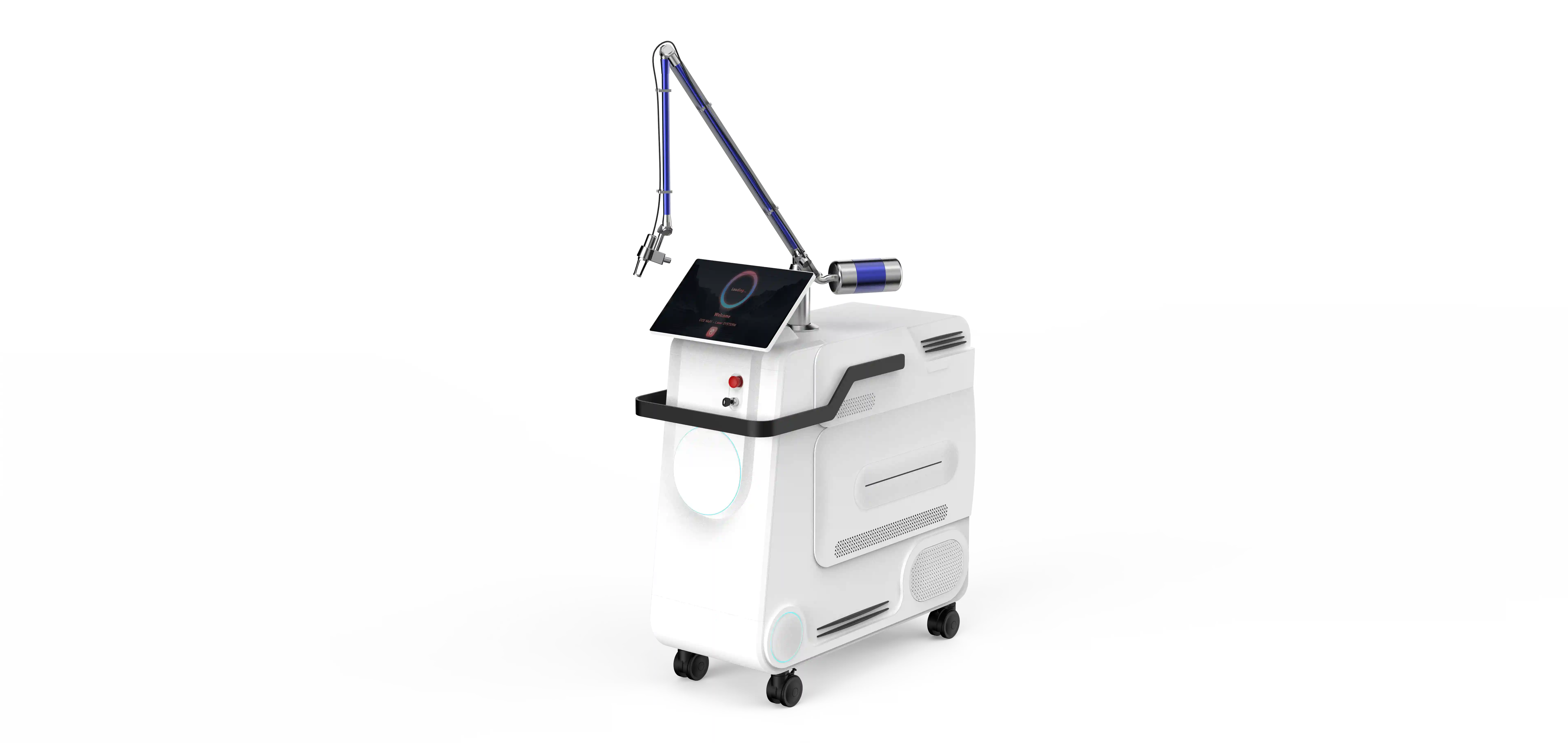
CO2 4D Fractional Laser
Explore the CO2 4D platform when evaluating professional fractional CO2 laser systems for aesthetic treatment applications.
Request CO2 4D Specifications
CO2 Star Fractional Laser
Explore the CO2 Star platform as another option when comparing professional fractional CO2 laser equipment.
Request CO2 Star SpecificationsProduct images above use planned WordPress media paths. Replace them with verified equipment photographs before publishing.
RF Microneedling vs CO2 Laser: Which Is Better?
There is no universal winner when comparing RF microneedling and fractional CO2 laser. Each technology addresses different treatment objectives and offers distinct tissue interaction characteristics.
RF microneedling may be considered when treatment objectives involve controlled dermal radiofrequency delivery, selected acne scars, and skin laxity concerns.
Fractional CO2 laser may be more appropriate when the primary objective involves ablative skin resurfacing, selected acne scars, wrinkles, and surface texture irregularities.
| Treatment Objective | Technology to Evaluate |
|---|---|
| Dermal radiofrequency delivery | RF Microneedling |
| Selected skin laxity concerns | RF Microneedling |
| Ablative skin resurfacing | Fractional CO2 Laser |
| Selected atrophic acne scars | Both technologies may be considered |
| Surface texture irregularities | Fractional CO2 Laser |
| Skin rejuvenation | Both, depending on treatment objectives |
For aesthetic clinics, the decision should consider the patient population, treatment portfolio, operator expertise, equipment capabilities, consumable costs, and expected treatment workflow.
Frequently Asked Questions
Is RF microneedling better than CO2 laser?
Neither technology is universally better. RF microneedling delivers radiofrequency energy through needle electrodes, while fractional CO2 laser produces controlled ablative treatment zones. The appropriate option depends on the skin concern, treatment objectives, and individual characteristics.
Is CO2 laser more effective than RF microneedling for acne scars?
Both technologies may be used for selected atrophic acne scars. Fractional CO2 laser is commonly used for ablative resurfacing, while RF microneedling provides needle-based radiofrequency delivery. Scar morphology and treatment parameters influence the expected outcome.
Which treatment has less downtime, RF microneedling or CO2 laser?
RF microneedling may involve shorter visible recovery periods than more intensive fractional CO2 resurfacing. However, downtime depends on treatment intensity, device characteristics, and individual skin response.
Can RF microneedling and CO2 laser be used together?
Some professional treatment plans may incorporate different energy-based procedures. However, combining treatments requires careful consideration of treatment intervals, skin recovery, contraindications, and potential cumulative tissue injury. A qualified professional should determine whether a combined approach is appropriate.
Is RF microneedling safer for darker skin than CO2 laser?
RF microneedling does not rely on melanin-selective optical absorption in the same way as certain lasers, but it can still cause burns, pigmentation changes, and other complications. Fractional CO2 laser also requires careful assessment because of the risk of post-inflammatory hyperpigmentation. Neither treatment is automatically suitable for every skin phototype.
Does CO2 laser stimulate collagen?
Fractional CO2 laser creates controlled ablative and thermal treatment zones. The subsequent wound healing response involves tissue remodeling and collagen-related changes. The extent of response depends on treatment parameters and individual factors.
Can RF microneedling replace fractional CO2 laser?
RF microneedling cannot be considered a direct replacement for fractional CO2 laser because their energy delivery mechanisms and tissue effects differ. The appropriate technology depends on whether the treatment objective involves dermal radiofrequency heating or ablative skin resurfacing.
What should clinics consider when buying a CO2 laser machine?
Clinics should evaluate laser specifications, fractional delivery capabilities, adjustable treatment parameters, handpiece design, cooling requirements, system reliability, training, warranty, technical support, and regulatory documentation for the intended market.
Final Verdict: RF Microneedling vs CO2 Laser
RF microneedling and fractional CO2 laser are distinct aesthetic technologies with overlapping but different applications.
RF microneedling uses needle electrodes to deliver radiofrequency energy into selected skin layers, making it relevant to professional dermal remodeling and selected skin rejuvenation procedures.
Fractional CO2 laser uses 10,600nm optical energy to produce controlled ablative and thermal treatment zones, making it an established technology for professional skin resurfacing applications.
For clinics and medical aesthetic equipment buyers, understanding these differences is essential when developing a treatment portfolio and evaluating professional equipment.
Rather than selecting equipment based on popularity alone, buyers should compare the actual technology, system capabilities, treatment requirements, operating costs, and manufacturer support.
Professional Fractional CO2 Laser Systems
Explore Cocoon Laser CO2 Equipment
Looking for professional fractional CO2 laser equipment for your aesthetic clinic or distribution business?
Cocoon Laser offers professional CO2 laser platforms, including CO2 4D and CO2 Star. Contact our team to discuss equipment specifications, available configurations, OEM options, and wholesale cooperation.
Request Product Specifications