Does Laser Hair Removal Hurt? Pain Levels & Cooling
The 1927nm thulium laser is a fractional laser technology used in dermatology and medical aesthetics for skin resurfacing, pigmentation management, and improvements in photoaged skin. Its wavelength is strongly absorbed by water, allowing controlled thermal treatment of relatively superficial skin layers.
Unlike conventional ablative CO2 resurfacing, non-ablative fractional thulium treatments are designed to create microscopic thermal injury while largely preserving the skin surface. This approach can offer a different balance of clinical improvement, treatment intensity, and recovery time.
Interest in thulium fiber laser technology has grown among dermatologists, aesthetic practitioners, and equipment buyers seeking additional options for pigmentation, uneven skin tone, and superficial skin rejuvenation.
However, not every 1927nm laser system is identical. Treatment results, downtime, safety, and clinical applications depend on device design, energy delivery, fractional coverage, treatment settings, patient selection, and operator expertise.
This guide explains how 1927nm thulium laser technology works, its principal benefits and applications, how it compares with other resurfacing technologies, and what professional buyers should consider when evaluating a 1927nm thulium laser machine .
Quick Answer: What Is a 1927nm Thulium Laser?
A 1927nm thulium laser is a water-absorbing laser technology commonly used for non-ablative fractional skin resurfacing. It delivers laser energy at a wavelength of 1927 nanometers, creating controlled microscopic thermal treatment zones in superficial skin tissue.
These thermal effects initiate a healing response that may improve uneven pigmentation, photoaging, skin texture, and certain superficial signs of aging.
Compared with aggressive ablative resurfacing, non-ablative fractional 1927nm treatment generally involves less surface disruption, although redness, swelling, roughness, pigmentary changes, and downtime can still occur.
Key Takeaways
- Wavelength: 1927 nanometers in the infrared spectrum.
- Laser medium: Thulium-doped fiber in thulium fiber laser systems.
- Primary chromophore: Water within skin tissue.
- Common treatment approach: Non-ablative fractional resurfacing.
- Primary applications: Photoaging, uneven pigmentation, skin texture, and selected pigmentation-related concerns.
- Key advantage: Superficially focused fractional thermal treatment with generally less surface disruption than ablative resurfacing.
- Important limitation: Results and risks depend on the specific device, treatment protocol, skin type, and clinical indication.
What Is a 1927nm Thulium Laser?
A 1927nm thulium laser is an infrared laser system that uses a wavelength of approximately 1.927 micrometers to interact with water in biological tissue.
In medical aesthetics, 1927nm systems are commonly associated with fractional non-ablative skin resurfacing .
Instead of treating the entire skin surface uniformly, fractional delivery creates numerous microscopic treatment zones separated by surrounding tissue that receives less direct thermal exposure.
This fractional pattern is intended to support tissue recovery while allowing targeted thermal effects in the treated skin.
Why Is the 1927nm Wavelength Important?
The wavelength of a laser influences how its energy interacts with different components of skin.
At 1927nm, water is a major absorbing component. This produces a relatively superficial pattern of energy deposition compared with certain other non-ablative fractional wavelengths.
This characteristic helps explain why 1927nm fractional laser technology is frequently considered for superficial photodamage and pigmentation-related concerns.
The exact depth and distribution of thermal injury cannot be determined from wavelength alone. Pulse characteristics, energy, treatment density, and device architecture also influence tissue response.
Is a Thulium Laser an Ablative or Non-Ablative Laser?
The term thulium laser describes a laser technology, not one universal treatment mode.
Many dermatologic 1927nm systems operate in a non-ablative fractional mode, producing microscopic thermal treatment zones without intentionally removing a continuous layer of skin.
However, device design and operating parameters matter. Some systems may produce different degrees of surface disruption or thermal injury.
For this reason, the term “non-ablative” should be applied to a verified treatment mode rather than assumed for every device marketed as a thulium laser.
What Is a Fractional Thulium Laser?
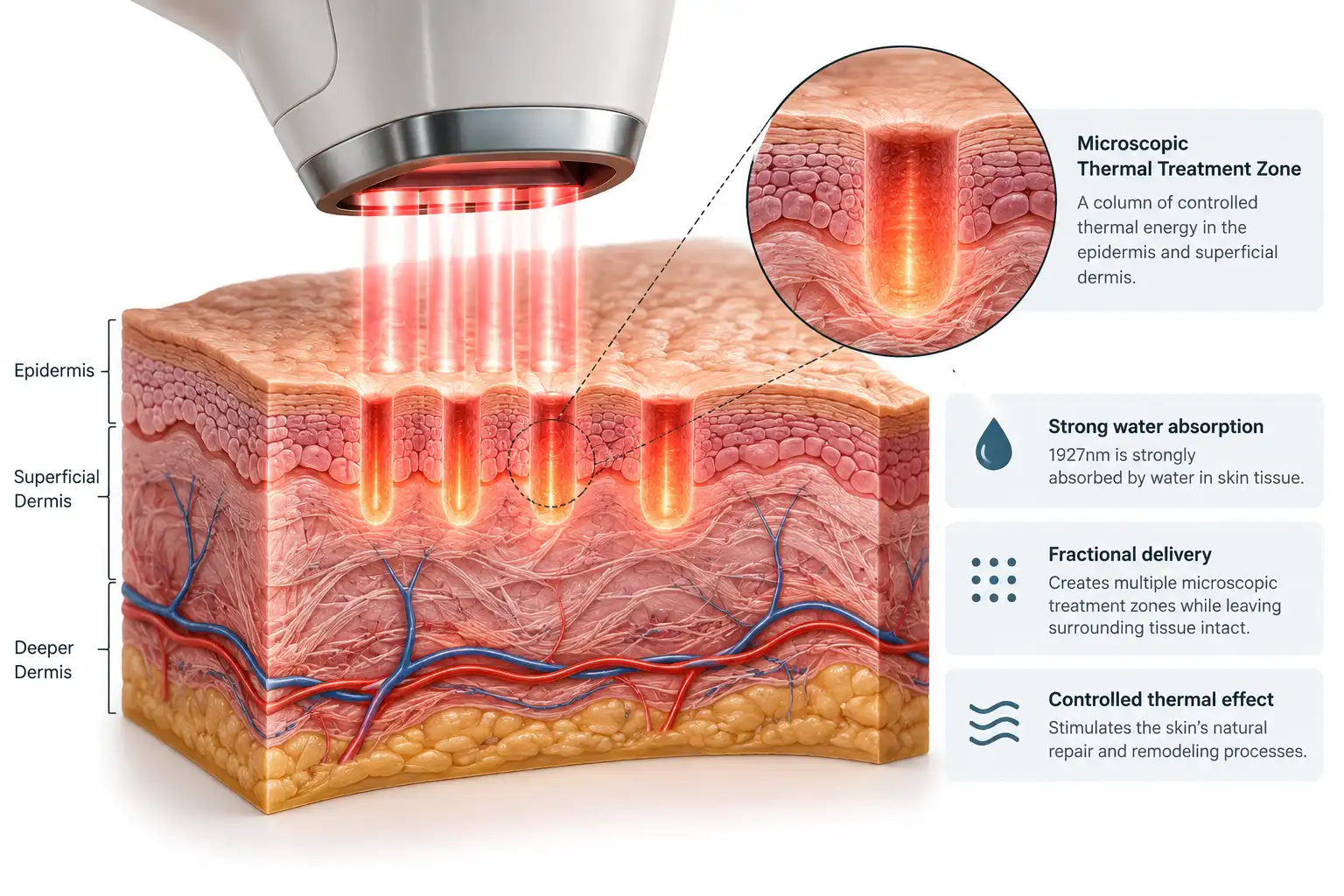
A fractional thulium laser delivers energy in a patterned arrangement of microscopic treatment zones rather than exposing the entire treated area to the same energy.
Fractional delivery can help balance therapeutic thermal effects with preservation of surrounding tissue.
The size, spacing, density, and depth of these zones depend on the specific laser platform and treatment settings.
How Does a 1927nm Thulium Laser Work?
The working principle of a 1927nm thulium fiber laser involves the absorption of infrared laser energy by water-containing skin tissue.
This interaction converts optical energy into heat, producing controlled thermal effects within the treatment area.
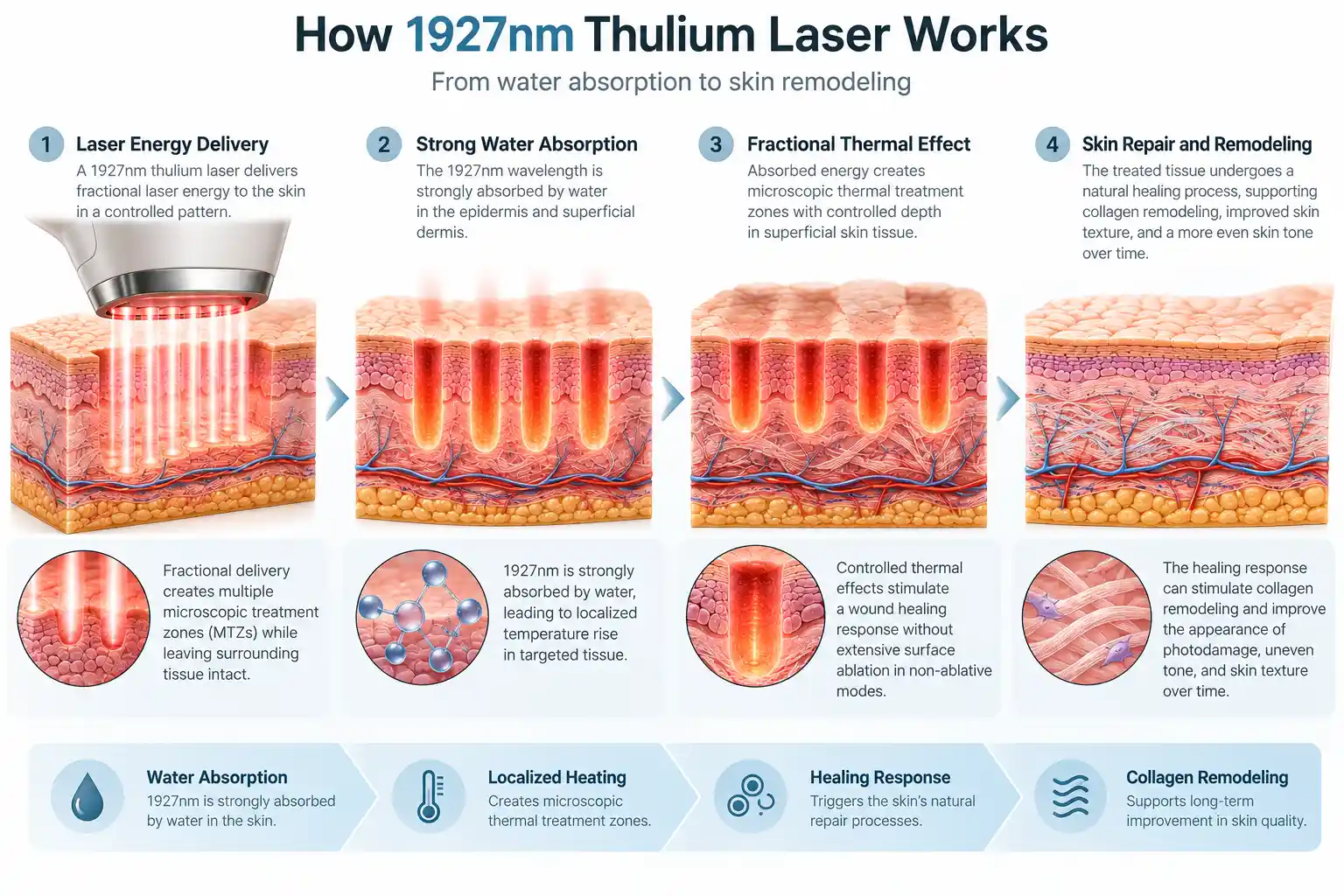
Step 1: The Laser Generates 1927nm Infrared Energy
A thulium-doped fiber laser generates light near the 1927nm wavelength.
The laser system directs this energy toward the skin through its optical delivery system.
The delivery method varies between manufacturers and device configurations.
Step 2: Water in the Skin Absorbs the Energy
Water is the primary chromophore for 1927nm laser energy.
When the energy reaches the skin, water-containing tissue absorbs a substantial portion of the delivered light.
The absorbed energy is converted into thermal energy.
This mechanism differs from pigment-targeting lasers that primarily rely on melanin absorption.
Step 3: Fractional Thermal Zones Are Created
In fractional treatment modes, the device distributes energy into microscopic treatment zones.
These zones experience controlled thermal effects, while adjacent tissue receives less direct exposure.
The fractional pattern is an important feature of the treatment approach because it influences both tissue response and recovery.
Step 4: The Skin Initiates a Healing Response
Controlled thermal injury activates biological repair processes.
These processes may include epidermal renewal, tissue remodeling, and changes in collagen organization.
The extent of remodeling varies with treatment intensity, patient characteristics, and healing response.
Step 5: Skin Appearance May Improve Over Time
As the skin recovers, some patients may experience improvements in superficial pigmentation, uneven tone, fine texture, or signs of photoaging.
Improvement is not immediate or guaranteed. Multiple sessions may be recommended depending on the indication and clinical protocol.
Certain pigmentation disorders, including melasma, can recur or worsen after inappropriate treatment. Careful diagnosis and patient selection are therefore essential.
Key Characteristics of 1927nm Thulium Laser Technology
Understanding the technical characteristics of 1927nm laser technology is useful for clinicians evaluating treatment options and professional buyers comparing equipment.
| Parameter | Characteristic | Clinical Significance |
|---|---|---|
| Wavelength | 1927nm | Infrared wavelength with strong water absorption |
| Laser medium | Thulium-doped fiber | Generates the treatment wavelength in fiber-based systems |
| Primary chromophore | Water | Enables thermal interaction with water-containing tissue |
| Common treatment mode | Non-ablative fractional | Creates microscopic thermal zones while largely preserving surrounding tissue |
| Treatment emphasis | Superficial skin resurfacing | Relevant to photoaging and selected pigmentation concerns |
| Tissue response | Controlled thermal injury and repair | May support epidermal renewal and tissue remodeling |
| Recovery | Protocol-dependent | Often less surface disruption than aggressive ablative resurfacing, but downtime remains possible |
| Safety considerations | Thermal injury, pigmentary changes, eye hazards | Requires appropriate patient assessment, training, and laser safety controls |
Why Is Water Absorption Important?
The water absorption characteristics of 1927nm laser energy help determine where heat is deposited within skin tissue.
This makes the technology distinct from lasers that primarily target pigment or blood vessels.
However, strong water absorption also means that excessive energy delivery can cause unwanted thermal damage.
Appropriate settings and treatment technique remain essential.
Why Does Fractional Delivery Matter?
Fractional treatment distributes energy into discrete microscopic zones.
This can help preserve surrounding tissue and support recovery.
Nevertheless, higher treatment density or intensity can increase inflammation, downtime, and complication risk.
Fractional technology should therefore be understood as a controlled energy-delivery approach, not a guarantee of safety.
What Are the Benefits of a 1927nm Thulium Laser?
The 1927nm thulium laser benefits are primarily associated with its strong absorption by water and its ability to deliver controlled fractional thermal energy to relatively superficial skin tissue.
This makes the technology useful for selected dermatologic and aesthetic indications, particularly those involving superficial photodamage, uneven pigmentation, and skin texture.
The degree of improvement depends on the patient’s condition, skin phototype, treatment settings, number of sessions, and the specific laser system.
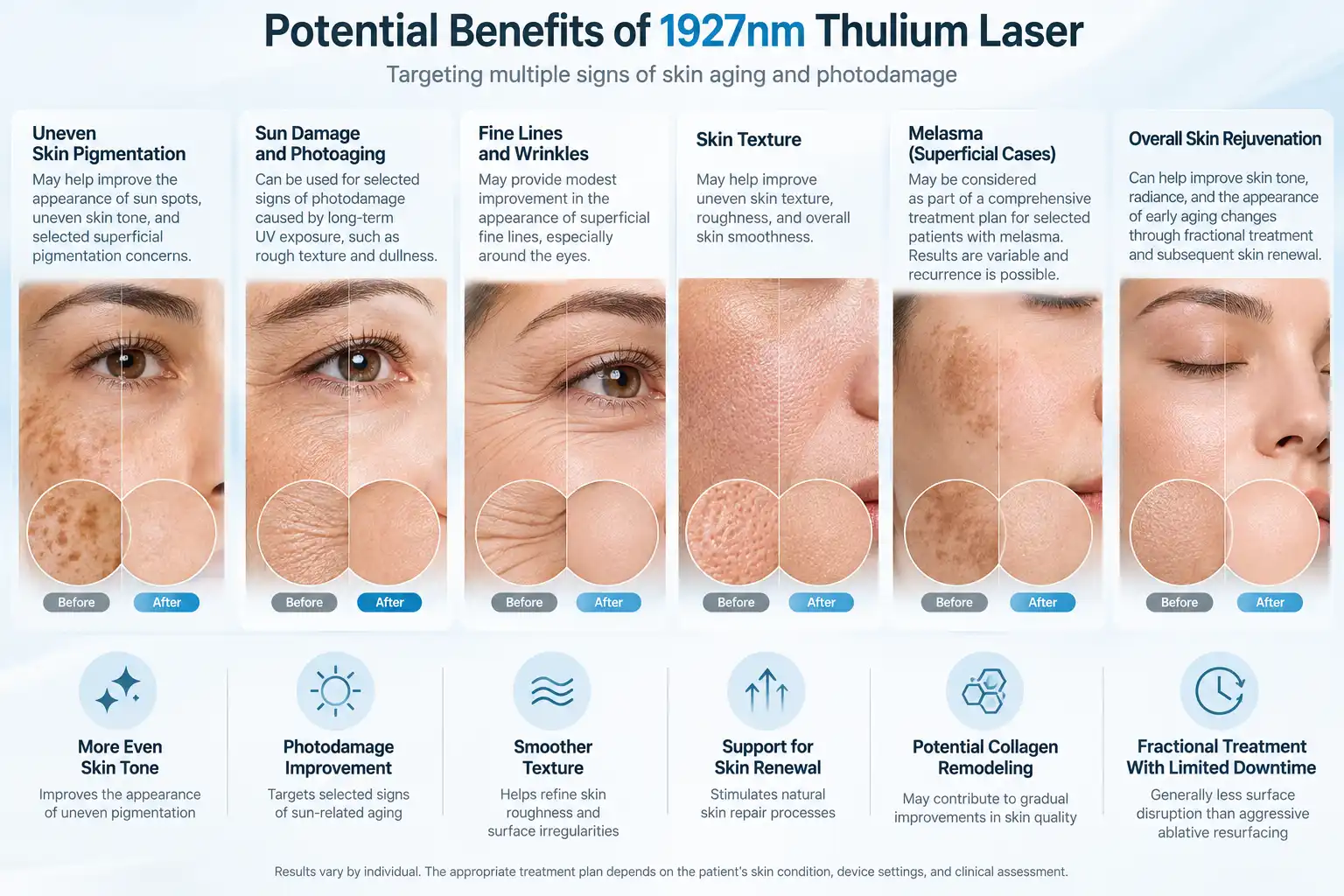
1. Improvement in Uneven Skin Pigmentation
One of the most frequently discussed applications of a 1927nm fractional thulium laser is the treatment of selected superficial pigmentation concerns.
Fractional thermal treatment can promote epidermal renewal and contribute to the improvement of certain pigmentation irregularities.
Potential applications include selected cases of sun-related pigmentation and uneven skin tone.
However, different pigmentation disorders have different causes. A treatment suitable for one condition may be inappropriate for another.
Accurate diagnosis is essential before choosing laser treatment.
2. Treatment of Superficial Photodamage
Repeated ultraviolet exposure can contribute to visible skin changes, including uneven pigmentation, rough texture, and fine lines.
A 1927nm thulium laser may be used as part of a professional treatment strategy for selected signs of photoaging.
Its relatively superficial thermal effects can be relevant to epidermal photodamage.
Nevertheless, the laser does not reverse every consequence of sun exposure, and ongoing photoprotection remains important.
3. Improvement in Skin Texture
Uneven skin texture may result from aging, environmental exposure, or previous inflammatory conditions.
Fractional 1927nm laser treatment may help improve selected superficial textural irregularities through controlled thermal injury and subsequent tissue remodeling.
The technology should not be assumed to produce the same results as more aggressive resurfacing procedures.
4. Improvement in Selected Fine Lines
Some patients may experience modest improvements in superficial fine lines following fractional non-ablative laser treatment.
These effects may relate to epidermal renewal and dermal remodeling.
However, deeper wrinkles and significant skin laxity generally require a different treatment strategy or combination approach.
5. Fractional Treatment With Limited Surface Disruption
A key characteristic of non-ablative fractional thulium treatment is the preservation of much of the surrounding skin tissue.
Compared with aggressive ablative resurfacing, this approach may involve less visible surface injury and a shorter recovery period.
This does not mean that treatment is painless or requires no downtime.
Redness, swelling, roughness, temporary darkening, and post-inflammatory pigmentation remain possible.
6. Adjustable Fractional Treatment Parameters
Professional fractional thulium laser systems may provide adjustable energy and treatment density, depending on the device.
These controls can allow trained operators to tailor treatment to different clinical objectives and patient characteristics.
The available adjustment range and actual clinical performance must be verified for each machine.
1927nm Thulium Laser Applications in Dermatology and Aesthetic Medicine
The 1927nm thulium laser applications most relevant to dermatology involve controlled fractional treatment of superficial skin tissue.
Its clinical applications should be considered individually because pigmentation disorders, photoaging, scarring, and other skin conditions do not respond in the same way.
1927nm Thulium Laser for Pigmentation
A 1927nm thulium laser for pigmentation may be considered for selected superficial pigmentary concerns after professional evaluation.
The wavelength primarily interacts with tissue water rather than directly targeting melanin as its principal chromophore.
Its effects on pigmentation are associated with fractional thermal treatment, epidermal turnover, and subsequent skin renewal.
The suitability of treatment depends on the type and depth of pigmentation.
Pigmented lesions should be evaluated before cosmetic treatment to exclude conditions requiring medical investigation.
1927nm Thulium Laser for Sun Spots and Photodamage
Sun-related pigmentation is a common reason patients seek aesthetic skin treatments.
Fractional 1927nm laser treatment may improve the appearance of certain benign sun-related pigmentation changes.
However, not every dark spot is caused by sun exposure, and not every pigmented lesion should be treated cosmetically.
Dermatologic assessment is particularly important when lesions are new, changing, irregular, or otherwise suspicious.
1927nm Thulium Laser for Melasma
1927nm thulium laser for melasma is a topic of clinical interest because melasma often involves persistent and recurrent facial pigmentation.
Some clinical studies have investigated non-ablative fractional 1927nm treatment for selected patients with melasma.
Improvements have been reported in certain treatment settings, but results are variable and recurrence is possible.
Importantly, melasma is a chronic pigmentary disorder that can be aggravated by inflammation and inappropriate energy-based treatments.
Laser treatment is therefore not universally recommended as first-line management for melasma.
Photoprotection, topical therapies, and other dermatologist-directed approaches often form the foundation of melasma management.
When fractional laser treatment is considered, clinicians must carefully evaluate skin phototype, pigmentation history, treatment risks, and the possibility of recurrence.
1927nm Thulium Laser for Skin Rejuvenation
The term 1927nm thulium laser skin rejuvenation generally refers to the use of controlled fractional thermal energy to improve selected signs of aging and photodamage.
Treatment objectives may include improved skin tone, smoother texture, and reduced appearance of superficial fine lines.
The degree of improvement varies, and deeper structural aging changes may not respond sufficiently to superficial fractional treatment.
1927nm Thulium Laser for Fine Lines and Wrinkles
Fine lines associated with superficial photoaging may improve following certain fractional laser protocols.
However, 1927nm treatment should not be presented as a universal solution for deep wrinkles, pronounced laxity, or advanced facial aging.
Clinical treatment planning should reflect the depth and nature of the patient’s concerns.
1927nm Thulium Laser for Acne Scars
Fractional laser technologies are used in the management of selected acne scars, but different wavelengths have different treatment characteristics.
Because 1927nm fractional treatment emphasizes relatively superficial tissue, it may not be the preferred standalone approach for deep atrophic acne scars.
More deeply acting fractional technologies or combination treatments may be considered depending on scar morphology and clinical assessment.
The evidence for 1927nm treatment should not be generalized to every type of acne scarring.
1927nm Thulium Laser for Enlarged Pores
Some patients seek fractional laser treatment to improve the appearance of enlarged pores and uneven texture.
Tissue remodeling may contribute to a smoother appearance in selected cases.
However, pore size is influenced by multiple factors, including genetics, sebaceous activity, and skin structure.
A 1927nm thulium laser cannot permanently eliminate pores, and outcomes should be described realistically.
1927nm Thulium Laser Applications: Clinical Overview
The following table summarizes common clinical discussion areas for 1927nm fractional laser technology.
It does not establish regulatory clearance or approved indications for any specific laser machine.
| Application | Potential Role | Important Consideration |
|---|---|---|
| Superficial photodamage | May improve selected signs of sun-related skin damage | Results depend on the condition and treatment protocol |
| Uneven pigmentation | May improve selected superficial pigmentation concerns | Accurate diagnosis is essential |
| Melasma | Investigated as an adjunctive treatment in selected patients | Recurrence and post-inflammatory pigmentation are important risks |
| Skin texture | May improve superficial textural irregularities | Improvement varies by treatment intensity and skin condition |
| Fine lines | May provide modest improvement in selected superficial lines | Limited effect on deeper wrinkles |
| Acne scars | Possible role in selected superficial texture concerns | Not necessarily appropriate for deep atrophic scarring |
| Enlarged pores | May improve overall texture appearance | Pores cannot be permanently eliminated |
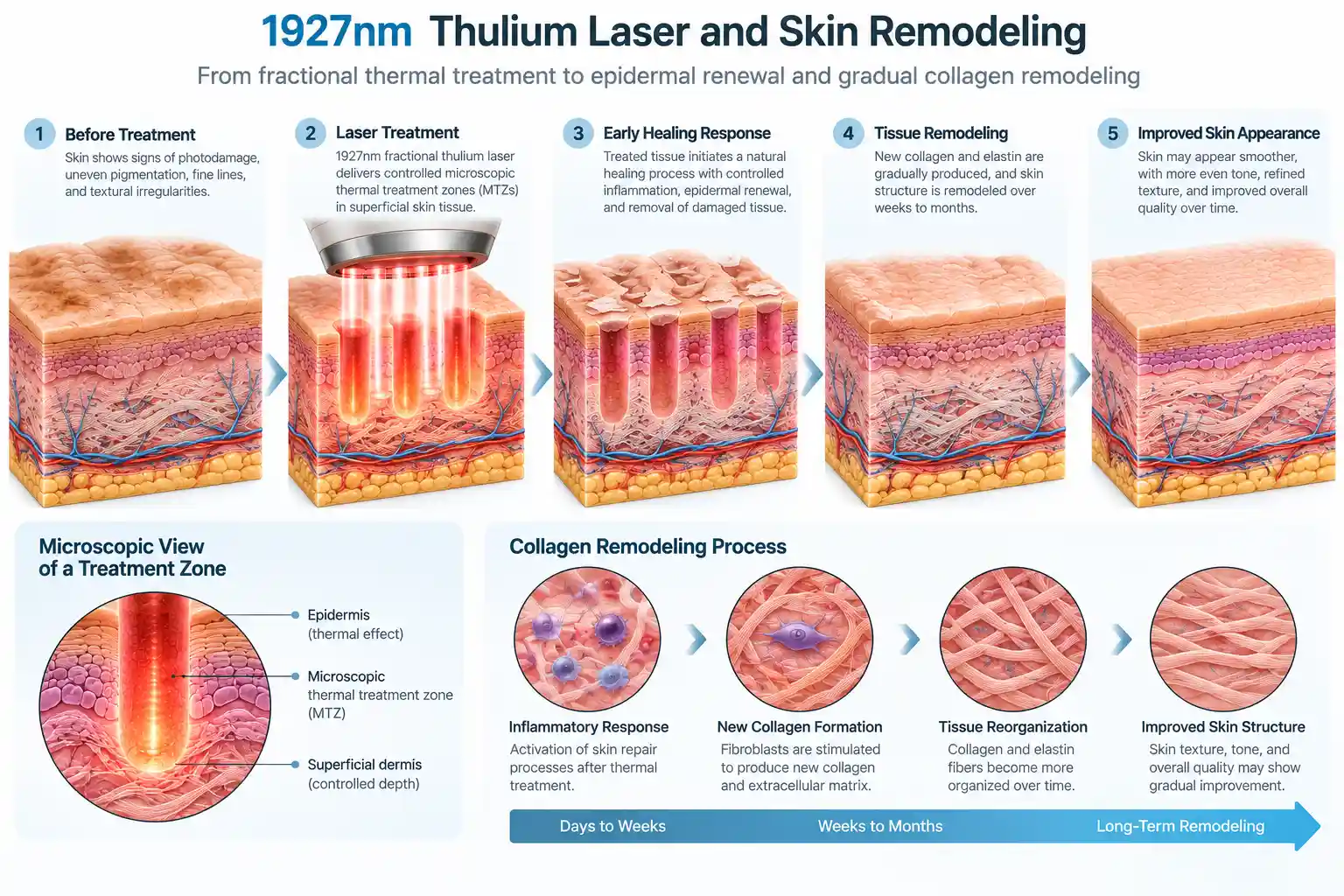
Does a 1927nm Thulium Laser Stimulate Collagen Production?
Fractional laser treatments can trigger biological repair processes associated with tissue remodeling.
A 1927nm thulium laser produces controlled thermal effects that may influence collagen remodeling as part of the healing response.
However, the magnitude and clinical significance of collagen changes depend on treatment parameters and tissue depth.
How Thermal Treatment Influences Skin Remodeling
Controlled thermal injury can activate cellular signaling involved in wound healing and extracellular matrix remodeling.
These processes may contribute to gradual changes in skin texture and appearance.
The response is not identical across patients or laser systems.
Is 1927nm Better for Collagen Than Other Fractional Lasers?
Not necessarily. Different fractional wavelengths produce different patterns of tissue absorption and thermal injury.
The 1927nm wavelength is often selected for relatively superficial treatment objectives.
Other fractional technologies may be more appropriate when deeper dermal remodeling is the primary clinical goal.
Comparing laser systems requires consideration of more than wavelength alone.
Pulse characteristics, energy delivery, fractional density, treatment technique, and patient selection all influence results.
How Long Does Collagen Remodeling Take?
Tissue remodeling is a gradual biological process.
Visible improvements may develop over weeks or months following treatment, depending on the clinical objective and individual response.
No universal timeline applies to every patient or every 1927nm treatment protocol.
Who May Benefit From 1927nm Thulium Laser Treatment?
The suitability of 1927nm thulium laser treatment depends on the patient’s skin condition, medical history, treatment goals, and risk factors.
Patients seeking improvement in selected superficial pigmentation concerns, photodamage, or uneven texture may be candidates for professional evaluation.
Patients With Superficial Photodamage
Individuals with certain sun-related skin changes may benefit from an assessment of fractional laser resurfacing options.
The choice of treatment depends on the nature of the photodamage and the patient’s overall skin condition.
Patients Seeking Improvement in Uneven Skin Tone
Selected patients with benign superficial pigmentation may be considered for 1927nm fractional treatment.
However, pigmentation must be accurately diagnosed before treatment.
Patients With Mild Textural Changes
Patients with relatively superficial skin texture concerns may be evaluated for non-ablative fractional resurfacing.
More pronounced scarring or deeper structural changes may require different technologies or combination approaches.
Patients Who May Require Additional Caution
Certain patients may have an increased risk of adverse reactions or require modifications to treatment planning.
Examples include individuals with a history of post-inflammatory hyperpigmentation, active skin infection, recent significant sun exposure, impaired wound healing, or other relevant medical conditions.
Darker Fitzpatrick skin phototypes require careful consideration of pigmentary risks.
Suitability should be assessed by an appropriately trained healthcare professional rather than determined from skin tone alone.
1927nm Thulium Laser vs Other Fractional Laser Technologies
Understanding how a 1927nm thulium laser compares with other fractional laser technologies is important for dermatologists, aesthetic practitioners, and professional equipment buyers.
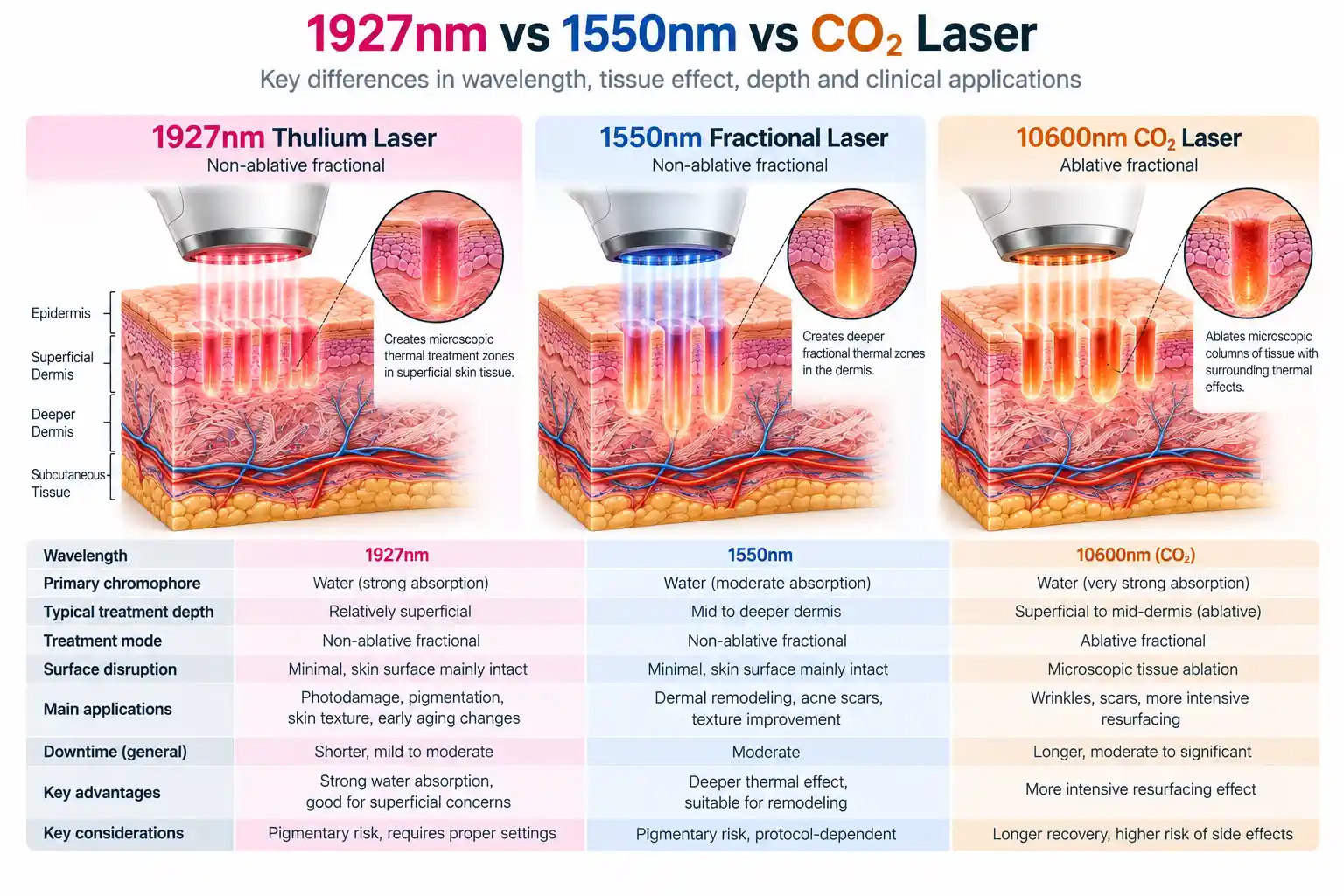
The 1927nm thulium laser, 1550nm fractional laser, and 10600nm CO2 laser all use light energy to produce controlled effects in skin tissue. However, they differ in water absorption, treatment depth, tissue response, and typical clinical applications.
No single wavelength is universally better. The appropriate technology depends on the treatment indication, patient characteristics, desired clinical endpoint, and acceptable recovery period.
1927nm Thulium Laser vs CO2 Laser
A common comparison is 1927nm thulium laser vs CO2 laser . Both technologies interact strongly with water-containing tissue, but they are commonly used for different resurfacing objectives.
Fractional 1927nm thulium systems are generally associated with non-ablative treatment of relatively superficial skin tissue.
Fractional CO2 lasers, operating at approximately 10600nm, are typically ablative resurfacing systems that vaporize microscopic columns of tissue while producing surrounding thermal effects.
Because fractional CO2 treatment involves tissue ablation, it can provide substantial resurfacing effects for selected wrinkles, scars, and textural concerns.
However, more intensive ablative treatments may involve greater downtime and a higher risk of certain complications.
By comparison, non-ablative fractional 1927nm treatment generally produces less surface disruption.
This distinction does not mean that 1927nm treatment is automatically safer or more appropriate for every patient.
1927nm vs 1550nm Fractional Laser
Another important comparison is 1927nm vs 1550nm fractional laser .
Both wavelengths are commonly used in non-ablative fractional resurfacing systems.
However, water absorbs 1927nm energy more strongly than 1550nm energy.
As a result, 1927nm fractional treatment generally emphasizes relatively superficial tissue, while 1550nm fractional systems can produce deeper microscopic thermal treatment zones under appropriate operating conditions.
The 1927nm wavelength is frequently considered for superficial photodamage and pigmentation-related concerns.
The 1550nm wavelength is often used for selected dermal remodeling objectives, including certain scars and textural irregularities.
These differences are general tendencies rather than fixed clinical rules.
Treatment depth depends on energy delivery, fractional density, optical design, and other device-specific parameters.
1927nm vs 1064nm Nd:YAG Laser
A 1064nm Nd:YAG laser is fundamentally different from a 1927nm thulium laser in its optical interaction with skin tissue.
The 1064nm wavelength has relatively lower melanin absorption than many shorter near-infrared wavelengths and can penetrate more deeply into skin.
Depending on pulse duration and system design, 1064nm Nd:YAG lasers are used for different applications, including hair reduction and selected vascular or pigment-related treatments.
The 1927nm wavelength, by contrast, primarily relies on water absorption and is commonly associated with fractional skin resurfacing.
These systems should not be considered interchangeable simply because both are medical aesthetic lasers.
Fractional Laser Technology Comparison Table
| Feature | 1927nm Thulium | 1550nm Fractional | 10600nm CO2 |
|---|---|---|---|
| Common treatment mode | Non-ablative fractional | Non-ablative fractional | Ablative fractional |
| Primary chromophore | Water | Water | Water |
| Typical treatment emphasis | Relatively superficial photodamage and pigmentation concerns | Dermal remodeling, selected scars, and skin texture | Ablative resurfacing, selected scars, and wrinkles |
| Surface disruption | Generally limited in non-ablative modes | Generally limited in non-ablative modes | Microscopic tissue ablation occurs |
| Treatment depth | Relatively superficial under comparable fractional conditions | Can produce deeper thermal zones | Depends strongly on ablation settings and device design |
| Recovery considerations | Often shorter than aggressive ablative resurfacing | Protocol-dependent | May require more extensive wound care and downtime |
| Important risks | Erythema, pigmentation changes, burns, infection | Erythema, pigmentation changes, burns, infection | Infection, prolonged erythema, pigment changes, scarring |
Important: This comparison describes common technology characteristics, not the specifications or approved indications of a particular device.
What Happens During a 1927nm Thulium Laser Treatment?
A professional 1927nm thulium laser treatment generally involves patient assessment, skin preparation, controlled laser energy delivery, and post-treatment care.
The precise workflow varies by device, clinical indication, and local professional requirements.
Step 1: Clinical Consultation and Skin Assessment
Before treatment, the practitioner evaluates the patient’s skin condition, medical history, and treatment goals.
Important considerations may include skin phototype, pigmentation history, recent sun exposure, previous procedures, and medications.
Pigmented lesions should be appropriately assessed before cosmetic laser treatment.
Step 2: Skin Preparation
The treatment area is prepared according to the clinical protocol.
This may involve cleansing the skin and removing products that could interfere with treatment.
Appropriate wavelength-specific laser eye protection must be used by the patient and relevant personnel.
Step 3: Comfort Management
Some patients experience warmth, stinging, or discomfort during fractional laser resurfacing.
The practitioner may use suitable comfort measures according to the treatment protocol.
Topical anesthetics, when clinically appropriate, require professional assessment and correct use.
Patients should not independently apply excessive quantities of numbing medication before treatment.
Step 4: Fractional Laser Energy Delivery
The practitioner delivers laser energy using the system’s treatment handpiece.
Fractional delivery produces microscopic thermal treatment zones within the targeted skin tissue.
Treatment parameters are selected according to the device instructions, clinical indication, and patient characteristics.
The practitioner monitors skin response throughout the procedure.
Step 5: Immediate Post-Treatment Assessment
After laser delivery, the treated skin is evaluated for expected and unexpected reactions.
Temporary redness, warmth, swelling, and a rough skin texture may occur.
The practitioner provides individualized aftercare instructions and explains which symptoms require follow-up.
1927nm Thulium Laser Downtime and Recovery
1927nm thulium laser downtime varies according to treatment intensity, fractional coverage, patient characteristics, and the specific laser system.
Non-ablative fractional treatment often involves less visible surface injury than aggressive ablative resurfacing.
However, this does not mean that recovery is immediate or that all patients can resume every activity without restrictions.
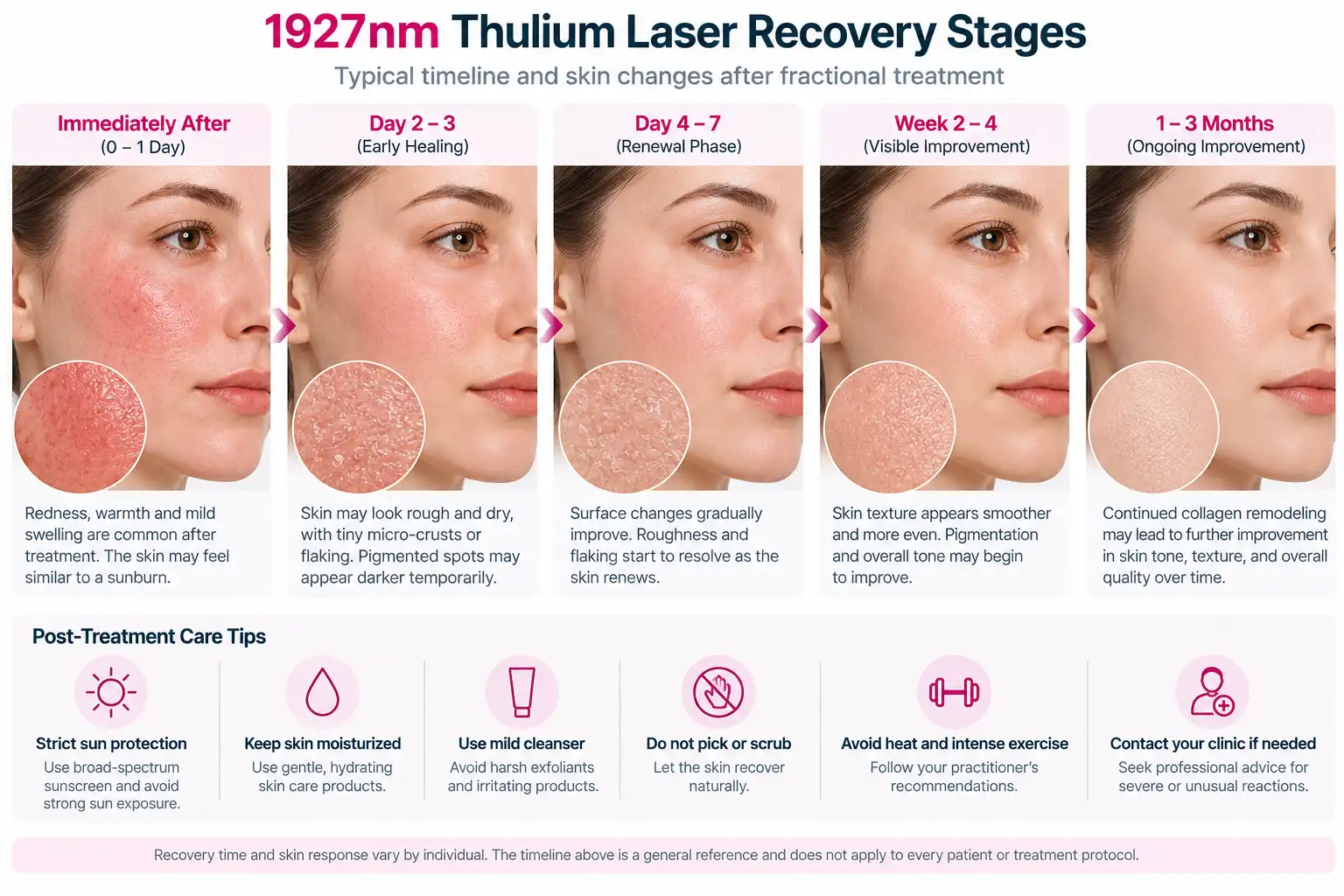
Immediately After Treatment
Patients may experience redness, warmth, mild swelling, or a sensation similar to a sunburn.
The severity depends on the treatment protocol and individual response.
During the First Several Days
Some patients develop temporary skin roughness, dryness, or visible darkening of treated superficial pigmentation.
Fine surface changes may become noticeable as the skin recovers.
Patients should follow their practitioner’s instructions rather than attempting to accelerate exfoliation through aggressive scrubbing or peeling.
When Can Patients Return to Normal Activities?
Return to work and everyday activities depends on treatment intensity and the patient’s response.
Some patients may resume many routine activities relatively quickly after less intensive treatment.
Others may need additional recovery time, particularly after higher-density or more intensive protocols.
Patients should obtain individualized guidance regarding makeup, exercise, heat exposure, and skin care products.
When Are Results Visible?
Improvements in superficial pigmentation or skin texture may become noticeable as the skin recovers.
Tissue remodeling can continue over a longer period.
The timing and extent of visible improvement vary by indication and treatment protocol.
Multiple sessions may be required to achieve the desired clinical outcome.
1927nm Thulium Laser Aftercare: What Patients Should Know
Appropriate aftercare is an important part of fractional laser treatment.
Post-treatment instructions should be individualized according to the laser system, treatment intensity, and patient condition.
Protect the Skin From Sun Exposure
Sun protection is particularly important after laser resurfacing because treated skin may be more vulnerable to irritation and pigmentation changes.
Patients should follow professional guidance regarding sun avoidance, protective clothing, and appropriate broad-spectrum sunscreen.
Use Gentle Skin Care
Gentle cleansing and appropriate moisturizing may help support skin comfort during recovery.
The practitioner should advise when patients can resume their normal skin care routine.
Avoid Unnecessary Irritation
Patients may be advised to temporarily avoid harsh exfoliants, irritating products, and other activities that could aggravate treated skin.
Specific restrictions depend on the treatment protocol.
Do Not Pick or Aggressively Exfoliate
Temporary roughness or surface changes can occur after fractional laser treatment.
Picking, scratching, or aggressive exfoliation may increase irritation and the risk of unwanted skin changes.
Know When to Contact the Clinic
Patients should contact their treating professional if they experience severe or worsening pain, blistering, spreading redness, unusual discharge, or other concerning symptoms.
Prompt assessment is important when complications are suspected.
1927nm Thulium Laser Side Effects and Potential Risks
Although 1927nm fractional thulium laser treatment can be appropriate for selected patients, it is not risk-free.
The likelihood of complications depends on patient selection, device performance, treatment settings, operator expertise, and aftercare.
Common Temporary Reactions
Temporary reactions may include redness, swelling, warmth, dryness, roughness, and discomfort.
These reactions should be evaluated in the context of the treatment protocol and expected clinical response.
Post-Inflammatory Hyperpigmentation
Post-inflammatory hyperpigmentation (PIH) is an important potential complication of energy-based skin treatments.
It can occur when inflammation stimulates changes in skin pigmentation.
Patients with darker skin phototypes or a history of pigmentary complications may require additional caution.
However, individual risk cannot be determined by phototype alone.
Hypopigmentation
Unwanted lightening of the skin can occur following certain laser injuries or inflammatory reactions.
This possibility reinforces the importance of appropriate treatment selection and energy delivery.
Burns, Blistering, and Scarring
Excessive thermal injury may cause burns, blistering, or tissue damage.
In some cases, significant injury can result in scarring.
These complications require appropriate medical assessment.
Infection and Delayed Healing
Disruption of the skin barrier and treatment-related inflammation can contribute to infection risk in certain circumstances.
Patients with relevant medical conditions or impaired healing may require additional evaluation.
Melasma Recurrence or Worsening
Melasma can be particularly challenging because inflammation and heat may contribute to pigmentary changes.
Although some studies have investigated 1927nm fractional treatment for melasma, improvement is not guaranteed and recurrence remains possible.
Treatment should be considered within a comprehensive, dermatologist-directed management plan.
Is a 1927nm Thulium Laser Safe?
A 1927nm thulium laser can be used within professional dermatologic treatment protocols when the patient, device, and treatment parameters are appropriately selected.
However, no laser wavelength guarantees safety for every patient or clinical indication.
Safety depends on multiple interacting factors.
Patient Selection
Appropriate patient assessment helps identify potential contraindications, pigmentary risks, and conditions requiring additional medical evaluation.
Operator Training
Professional training is essential for understanding laser-tissue interaction, device operation, treatment endpoints, and complication management.
Device Performance and Maintenance
Reliable energy delivery, functioning safety controls, appropriate calibration, and regular maintenance contribute to safe device operation.
Laser Eye Protection
The 1927nm wavelength presents an optical radiation hazard.
Appropriate protective eyewear must be selected according to the laser wavelength, exposure conditions, and applicable safety requirements.
Ordinary glasses or generic protective eyewear should not be assumed to provide adequate protection.
Clinical Protocols and Risk Management
Practitioners should follow the manufacturer’s instructions for use, applicable regulations, and appropriate clinical protocols.
Treatment decisions should be based on clinical assessment rather than promotional claims such as “completely painless,” “zero downtime,” or “100% safe.”
Regulatory Status
Regulatory authorization is device-specific and jurisdiction-specific.
A 1927nm wavelength alone does not establish FDA clearance, CE conformity, or authorization for a particular clinical indication.
Clinics and distributors should verify the exact device model, intended use, documentation, and applicable regulatory status before purchase or clinical deployment.
How to Choose a 1927nm Thulium Laser Machine for Your Clinic
Choosing a professional 1927nm thulium laser machine requires more than comparing wavelengths or advertised treatment benefits.
Dermatology clinics, medical spas, distributors, and aesthetic equipment buyers should evaluate the complete laser platform, including its energy delivery, fractional treatment controls, clinical documentation, safety features, and long-term service support.
Although different machines may operate at the same nominal wavelength, their treatment characteristics and practical performance can differ substantially.
1. Verify the Laser Wavelength and Technology
The first consideration is whether the device actually delivers laser energy at the specified 1927nm wavelength.
Buyers should verify the laser source, wavelength specification, and optical delivery method through manufacturer documentation.
A system marketed as a thulium laser should not be assumed to have the same treatment characteristics as every other 1927nm platform.
2. Evaluate Fractional Energy Delivery
Fractional delivery is central to many dermatologic applications of 1927nm thulium lasers.
Professional buyers should understand how the device distributes laser energy across the treatment area.
Important questions include whether the system supports adjustable treatment density, energy settings, and application patterns.
The availability and range of these features must be confirmed for the specific model.
3. Compare Energy and Pulse Controls
Energy delivery characteristics influence the thermal response produced within tissue.
Depending on the device, relevant specifications may include pulse energy, pulse duration, repetition frequency, and treatment density.
Buyers should request clearly defined technical specifications rather than relying solely on promotional descriptions.
Higher advertised power does not automatically indicate better clinical results or greater safety.
4. Assess Treatment Handpiece Design
Handpiece design can influence treatment workflow, operator ergonomics, and consistency of energy delivery.
Clinics should consider the handling characteristics, treatment coverage, maintenance requirements, and available accessories.
Demonstrations and device-specific documentation can help determine whether a platform is suitable for the intended workflow.
5. Review Cooling and Comfort Features
Patient comfort is an important consideration in professional fractional laser treatment.
Some systems or clinical protocols may incorporate cooling or other comfort-management measures.
Buyers should verify which comfort features are actually included in the device and whether they are appropriate for its treatment mode.
Cooling should not be treated as a substitute for appropriate energy settings or clinical judgment.
6. Verify Clinical Documentation and Intended Use
Before purchasing a fractional thulium laser machine , clinics should review the manufacturer’s instructions for use, intended indications, contraindications, warnings, and clinical documentation.
Marketing descriptions should be distinguished from officially authorized indications.
A device’s regulatory status must be verified for the exact model and destination market.
7. Consider Maintenance and After-Sales Support
A professional laser system is a long-term equipment investment.
Buyers should evaluate warranty coverage, spare parts, technical assistance, training availability, maintenance requirements, and repair procedures.
For international distributors, the availability of technical documentation and reliable manufacturer communication may be particularly important.
8. Evaluate OEM and ODM Requirements
Distributors considering OEM or ODM aesthetic laser equipment should clarify customization requirements before placing an order.
Potential considerations include branding, interface language, product documentation, packaging, training, and regional compliance requirements.
Customization availability depends on the manufacturer and the specific equipment model.
Professional 1927nm Thulium Laser Machine Buying Checklist
The following checklist can help clinics and distributors compare potential equipment suppliers.
| Evaluation Area | What to Verify | Why It Matters |
|---|---|---|
| Wavelength | Confirm actual 1927nm output and laser source | Establishes the basic optical technology |
| Treatment mode | Verify fractional delivery and whether treatment is non-ablative | Influences tissue response and treatment planning |
| Energy controls | Review pulse and energy specifications | Supports appropriate device evaluation |
| Treatment patterns | Confirm available patterns and density controls | Influences treatment coverage and workflow |
| Handpiece | Evaluate ergonomics, accessories, and maintenance | Affects usability and operating requirements |
| Safety features | Review interlocks, warnings, and protective requirements | Supports professional risk management |
| Regulatory documentation | Verify model-specific documentation for the destination market | Helps assess legal market access and intended use |
| Training | Confirm available operator training and instructions | Supports appropriate clinical implementation |
| After-sales service | Review warranty, parts availability, and repair support | Affects long-term ownership costs |
| OEM/ODM | Confirm supported customization options | Relevant to distributor and private-label projects |
Exploring Professional 1927nm Thulium Laser Equipment
For aesthetic clinics and medical equipment distributors, understanding the underlying technology is an important step before selecting a professional laser system.
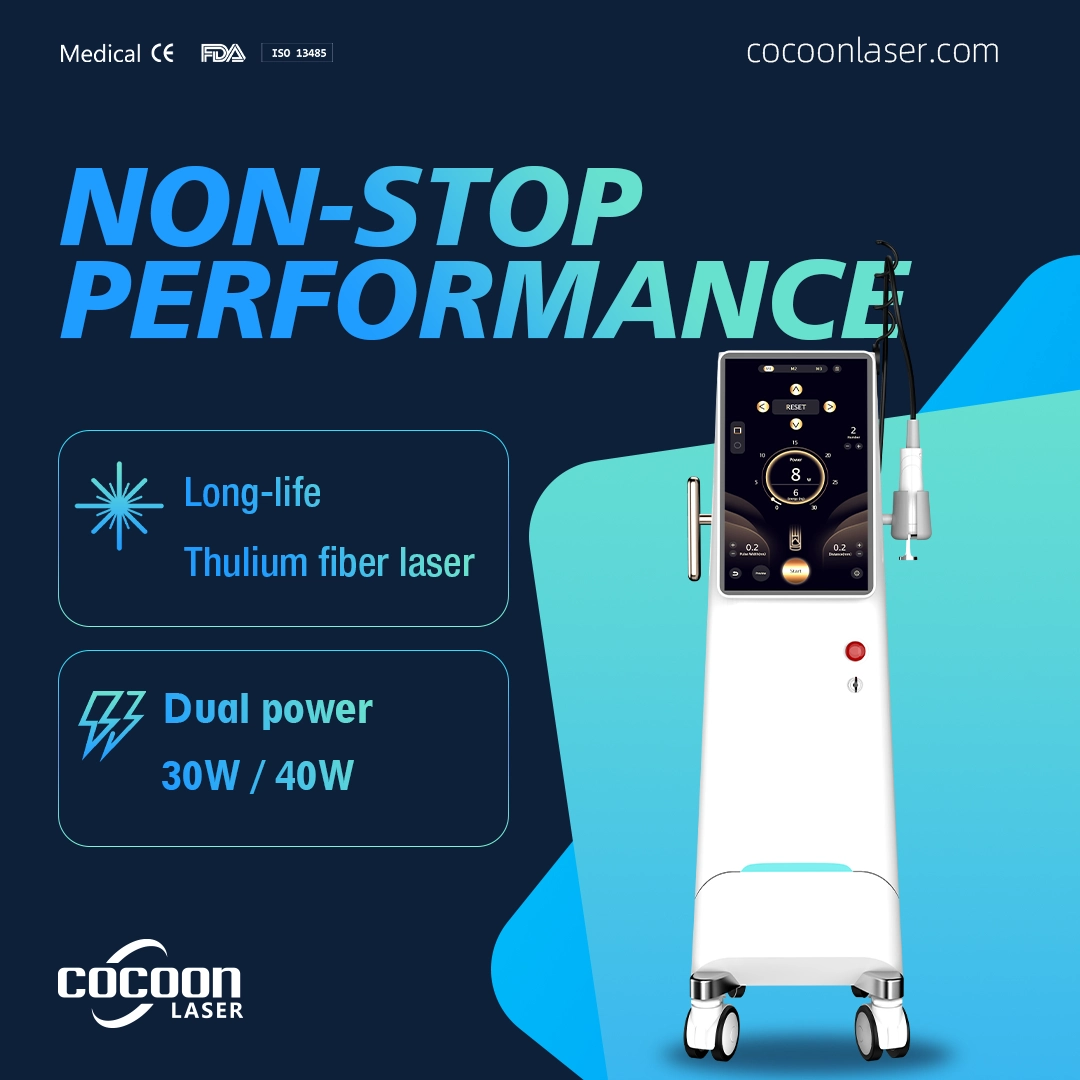
Cocoon Laser provides information about professional aesthetic laser technologies, including fractional laser platforms and equipment considerations for international buyers.
Buyers evaluating a 1927nm thulium laser machine should compare the specific product documentation, intended applications, treatment features, and available technical support.
For product information and equipment inquiries, visit Cocoon Laser .
Before purchasing, request the latest model specifications, relevant documentation, training information, and commercial terms directly from the supplier.
Frequently Asked Questions About 1927nm Thulium Lasers
1. What is a 1927nm thulium laser used for?
A 1927nm thulium laser is commonly used in non-ablative fractional resurfacing for selected superficial pigmentation concerns, photodamage, and skin texture improvements.
Actual indications depend on the specific device and its regulatory authorization.
2. How does a 1927nm thulium laser work?
It delivers infrared laser energy that is strongly absorbed by water in skin tissue.
Fractional delivery creates microscopic thermal treatment zones that stimulate a healing response.
3. Is a 1927nm thulium laser ablative?
Many dermatologic 1927nm systems use non-ablative fractional treatment.
However, the treatment mode must be verified for the specific laser platform.
4. What are the main benefits of a 1927nm thulium laser?
Potential benefits include improvement in selected superficial pigmentation, uneven skin tone, photodamage, and textural irregularities.
Results vary and are not guaranteed.
5. Can a 1927nm thulium laser treat melasma?
Some clinical studies have investigated 1927nm fractional treatment for melasma.
However, melasma can recur or worsen, and laser treatment is not universally appropriate.
Dermatologist-directed management is essential.
6. Is 1927nm thulium laser treatment painful?
Patients may experience warmth, stinging, or discomfort during treatment.
The intensity depends on treatment settings, patient sensitivity, and comfort measures.
7. How much downtime does a 1927nm thulium laser require?
Recovery varies by treatment intensity and patient response.
Temporary redness, swelling, dryness, and roughness may occur.
There is no universal downtime for all 1927nm treatment protocols.
8. How many 1927nm thulium laser sessions are needed?
The number of sessions depends on the condition being treated, treatment intensity, and clinical response.
Some treatment plans involve multiple sessions. The appropriate schedule should be determined by the treating professional.
9. How long do 1927nm thulium laser results last?
The duration of improvement depends on the indication, treatment response, sun exposure, and ongoing skin care.
Pigmentation concerns may recur, particularly when underlying triggers remain.
10. Is a 1927nm thulium laser safe for dark skin?
Suitability for darker skin phototypes requires careful clinical evaluation.
Post-inflammatory hyperpigmentation and other complications are possible.
Wavelength alone does not establish safety for every skin type.
11. What is the difference between 1927nm and 1550nm lasers?
The 1927nm wavelength is more strongly absorbed by water and generally emphasizes relatively superficial tissue treatment.
The 1550nm wavelength can produce deeper fractional thermal zones under appropriate conditions.
Both technologies have different clinical roles.
12. Is 1927nm thulium laser better than CO2 laser?
Neither technology is universally better.
Non-ablative fractional 1927nm treatment is often considered for superficial photodamage and pigmentation concerns.
Ablative fractional CO2 treatment may be considered for more intensive resurfacing objectives.
The appropriate choice depends on the patient and clinical goal.
13. Does a 1927nm thulium laser stimulate collagen?
Fractional thermal treatment can trigger tissue repair and remodeling processes.
However, the degree of collagen remodeling varies with treatment depth, energy delivery, and individual response.
14. Can a 1927nm thulium laser remove acne scars?
A 1927nm fractional laser may have a role in selected superficial texture concerns.
However, it is not necessarily the preferred standalone technology for deep atrophic acne scars.
15. What should clinics consider before buying a 1927nm thulium laser machine?
Clinics should evaluate the wavelength, fractional delivery, energy controls, safety features, clinical documentation, regulatory status, training, maintenance, and after-sales support.
Device-specific specifications should be verified before purchase.
16. Are all 1927nm thulium laser machines the same?
No. Machines operating at the same nominal wavelength can differ in energy delivery, fractional patterns, user interface, safety systems, and clinical documentation.
Buyers should compare complete systems rather than wavelength alone.
Final Verdict: Is 1927nm Thulium Laser Technology Worth Considering?
The 1927nm thulium laser is an important fractional resurfacing technology in modern dermatology and medical aesthetics.
Its strong interaction with tissue water and relatively superficial thermal treatment characteristics make it relevant to selected pigmentation, photodamage, and skin texture concerns.
Compared with aggressive ablative resurfacing, non-ablative fractional 1927nm treatment may offer a different balance of skin improvement and recovery.
However, it should not be regarded as a universal replacement for CO2, 1550nm fractional, or other aesthetic laser technologies.
Each wavelength and device platform has distinct optical characteristics, treatment objectives, and clinical limitations.
For clinics and distributors, selecting a 1927nm thulium laser machine requires careful evaluation of technical specifications, intended use, safety controls, clinical documentation, and supplier support.
The most appropriate laser technology is the one that matches the clinical indication, patient characteristics, and verified capabilities of the treatment system.
References and Further Reading
The following resources provide background information about laser safety, fractional resurfacing, and dermatologic laser technologies.
- PubMed: 1927nm Thulium Laser Research
- PubMed: 1927nm Fractional Laser and Melasma
- PubMed: 1927nm and 1550nm Fractional Laser Research
- U.S. Food and Drug Administration: Medical Devices
- American Society for Laser Medicine and Surgery
These links are general research and regulatory resources. They do not establish approval, clinical effectiveness, or safety of any specific Cocoon Laser product.