Fractional CO2 Laser Machine Price Guide 2026
For dermatology clinics, medical spas, hospitals, distributors, and OEM/ODM buyers.
Published by Cocoon Laser · Updated October 2026
How much does a fractional CO2 laser machine cost in 2026? The answer depends on the laser source, power output, scanning technology, included handpieces, manufacturer, regulatory documentation, and after-sales service. Two machines advertised as 40W fractional CO2 lasers can have very different purchase prices and ownership costs.
This guide explains current equipment price ranges, the differences between glass-tube and RF-excited systems, and how clinics can compare quotations. It also introduces Cocoon Laser’s CO2 Star and CO2 4D professional platforms.
Quick Answer: How Much Is a Fractional CO2 Laser Machine?
Professional fractional CO2 laser equipment can range from a few thousand dollars to more than $60,000.
Publicly advertised factory-direct systems can start around US$3,000–$6,000. More extensively configured professional RF-excited systems are commonly advertised across approximately US$6,000–$20,000, while established branded and locally supported medical platforms may cost US$20,000–$60,000 or more.
These are broad research ranges, not a standardized market price or a Cocoon Laser quotation. They are not directly comparable unless the laser source, accessories, regulatory status, delivery terms, training, and service package are equivalent.
Fractional CO2 Laser Machine Price Comparison in 2026
The following tiers are useful for preliminary budgeting. Equipment prices overlap because manufacturer-direct quotations, distributor packages, used equipment, and premium branded systems may include very different levels of support.
| Equipment Category | Indicative Price (USD) | Typical Characteristics | Buyer Considerations |
|---|---|---|---|
| Entry-Level Systems | $3,000–$6,000 | Basic fractional scanning; glass or lower-cost RF configurations depending on supplier | Verify source type, output testing, safety, and service |
| Professional B2B Systems | $6,000–$12,000 | Selected RF-excited platforms, articulated arms, and expanded treatment options | Compare included handpieces, technical data, and warranty |
| Advanced Clinic Packages | $12,000–$30,000 | More extensive accessories, distribution support, training, or established platforms | Check local service, installation, and regulatory documentation |
| Premium Branded Systems | $30,000–$60,000+ | Established brands and potentially more extensive clinical and service infrastructure | Compare evidence, local support, financing, and ownership costs |
Budget tiers are illustrative, not fixed industry classifications. Actual listings may fall outside these ranges. Used equipment and special promotions should be evaluated separately.
What Determines the Price of a Fractional CO2 Laser Machine?
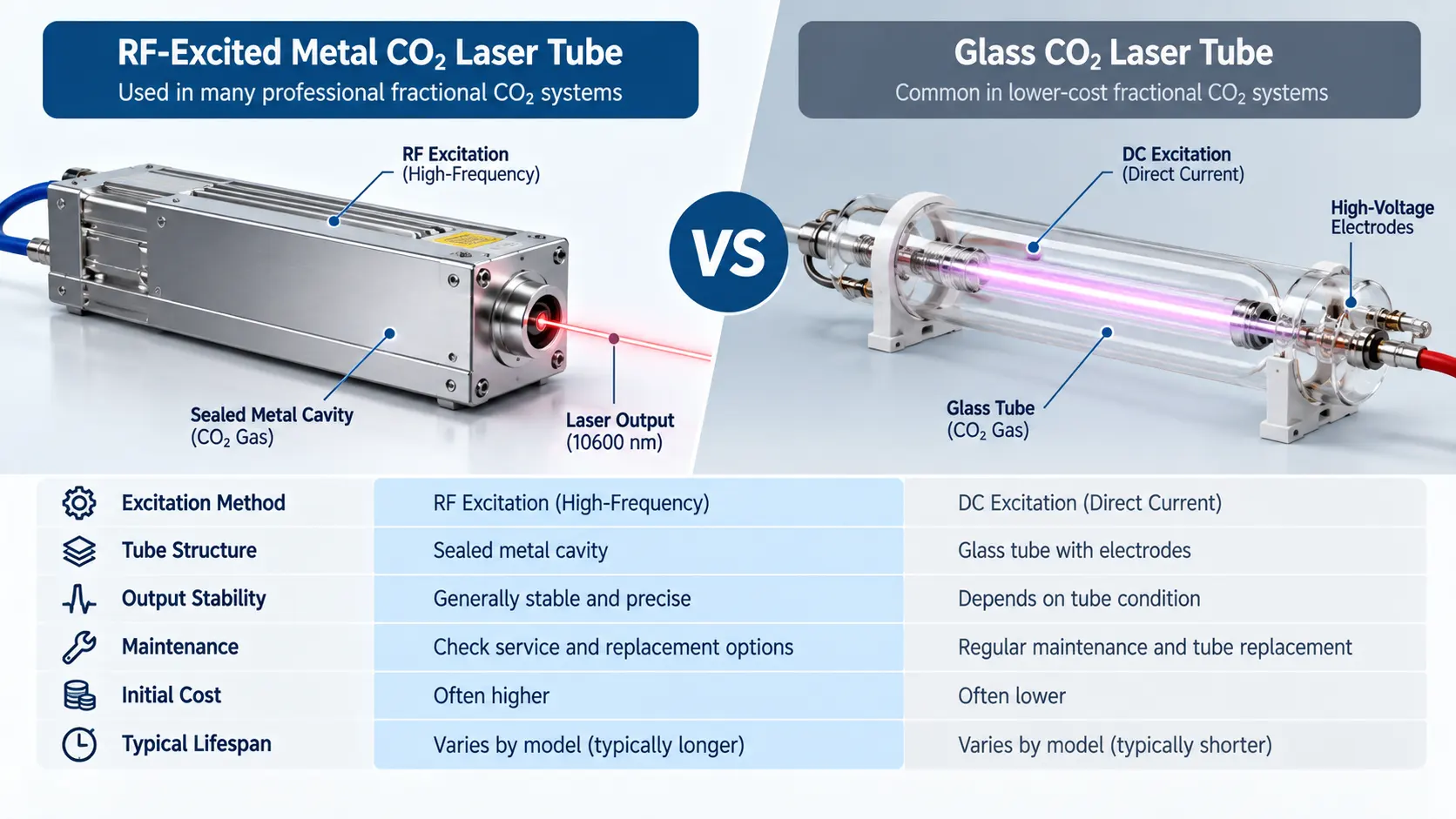
1. RF-Excited Metal Tube vs. Glass Laser Tube
Laser source design is one of the main reasons fractional CO2 machine prices differ. Professional systems may use RF-excited sealed laser sources, while lower-cost equipment may use DC-excited glass tubes.
RF-excited systems are often selected for their compact design and output-control characteristics. Glass-tube systems can have a lower initial equipment cost, but maintenance requirements, replacement availability, beam characteristics, and output stability must be evaluated for the specific model.
Buyers should not assume every RF system has a longer service life or better treatment results without supporting data. Request manufacturer specifications, maintenance intervals, warranty coverage, and replacement costs.
2. Laser Output Power
Fractional CO2 equipment may be marketed with output ratings such as 30W, 40W, 60W, or higher. Greater rated power does not automatically mean better clinical outcomes.
Buyers should examine the usable energy range, pulse characteristics, spot size, scanning accuracy, beam quality, and stability of the delivered output. A properly specified 40W system may be more appropriate for a clinic than a higher-powered device with inadequate documentation or support.
3. Fractional Scanning Technology
Fractional scanners deliver laser energy in patterns of microscopic treatment zones. Scanner design, available shapes, density controls, and treatment-area settings can affect equipment versatility and cost.
Compare actual scanning controls rather than relying on the number of preset graphics advertised.
4. Treatment Modes and Handpieces
Some CO2 platforms support both fractional resurfacing and selected surgical applications. Additional specialty handpieces or gynecology configurations may increase the quoted equipment price.
Such functions must be evaluated against the exact device labeling and the destination market’s permitted indications. An accessory being available does not automatically establish regulatory authorization for its intended procedure.
5. Brand, Distribution, and Technical Support
International manufacturer-direct purchases and locally distributed equipment can have different cost structures. A distributor package may include local training, installation, warranty service, and access to replacement parts.
Direct purchasing may offer more flexibility for experienced importers and distributors, but the buyer must clarify who is responsible for technical support, import compliance, and service.
6. Regulatory Documentation
Device registration, conformity assessment, testing, labeling, and technical documentation may affect commercial costs.
Verify the exact model and intended use in your market. A supplier’s general quality certificate is not equivalent to device-specific marketing authorization.
RF CO2 Laser vs. Glass Tube: Which Is Better Value?
| Factor | RF-Excited CO2 Source | Glass CO2 Tube |
|---|---|---|
| Initial price | Often higher | Often lower |
| Source construction | Typically sealed RF-excited design | Typically DC-excited glass design |
| Output performance | Depends on source and optical design | Depends on source and optical design |
| Maintenance | Check serviceability and replacement cost | Check replacement frequency and alignment requirements |
| Best purchasing approach | Evaluate performance, warranty, and total cost | Evaluate initial savings against maintenance and downtime |
The better-value choice depends on the intended clinical application, documented performance, service availability, and expected workload—not simply the tube material.
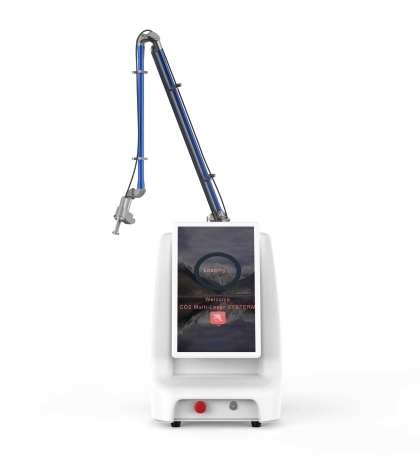
CO2 Star: Professional 40W Fractional CO2 Laser Platform
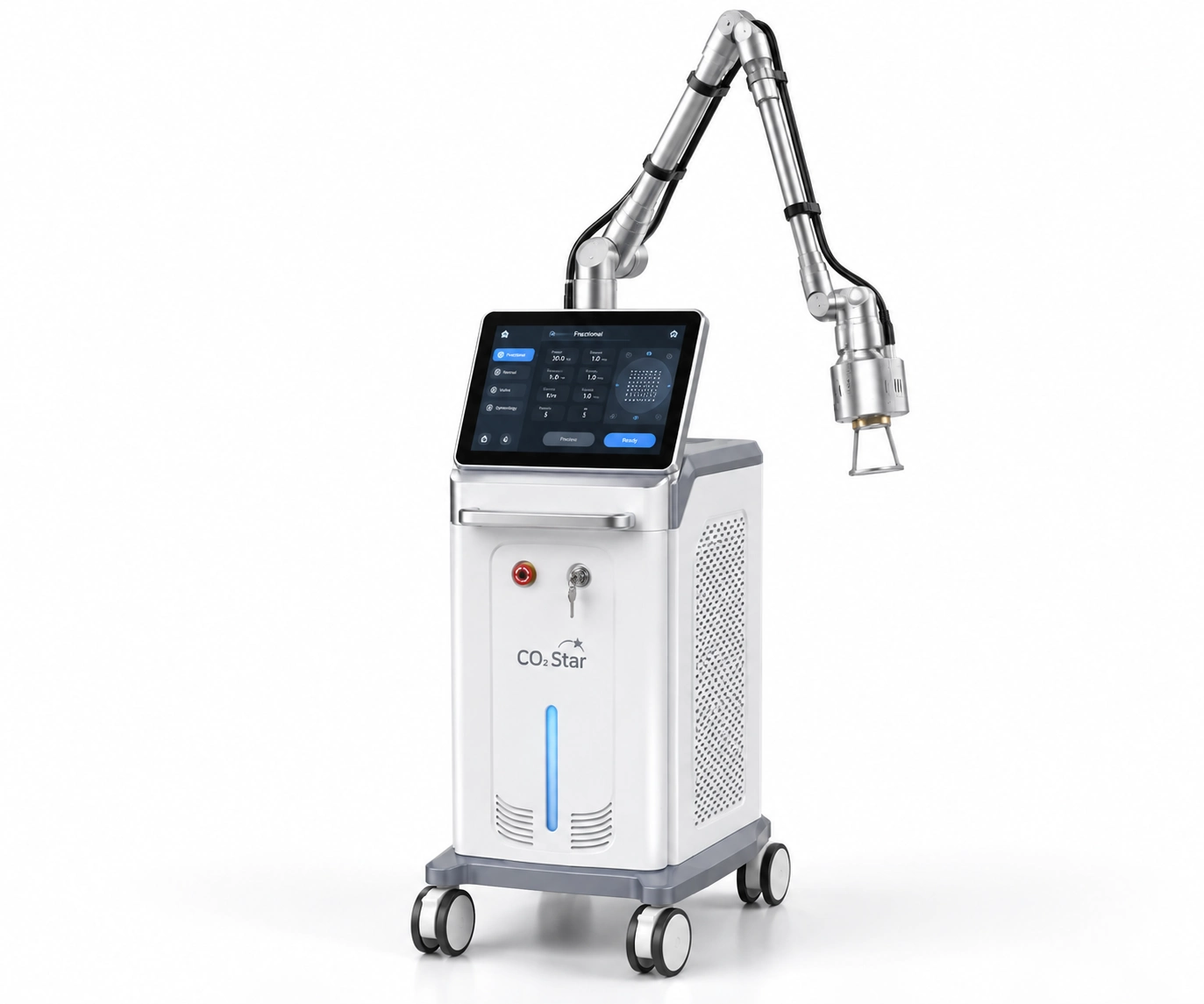
CO2 Star
CO2 Star is a 10600nm fractional CO2 laser platform developed for professional dermatology, aesthetic medicine, and selected surgical applications.
Its supplier documentation describes a 40W RF-excited laser source, seven-joint articulated arm, four operating modes, and nine applicator options.
- Wavelength: 10600 nm
- Maximum rated power: 40W
- Laser source: RF-excited CO2
- Beam delivery: Seven-joint articulated arm
- Operating modes: Fractional, Normal, Vulva, Gynecology
- Applicators: Nine options listed in product documentation
- Price: Available by quotation
Specifications are supplier-provided. Mode availability, included applicators, and legally permitted applications must be confirmed for the exact configuration and destination market.
CO2 4D: Multi-Mode Fractional CO2 Laser Equipment
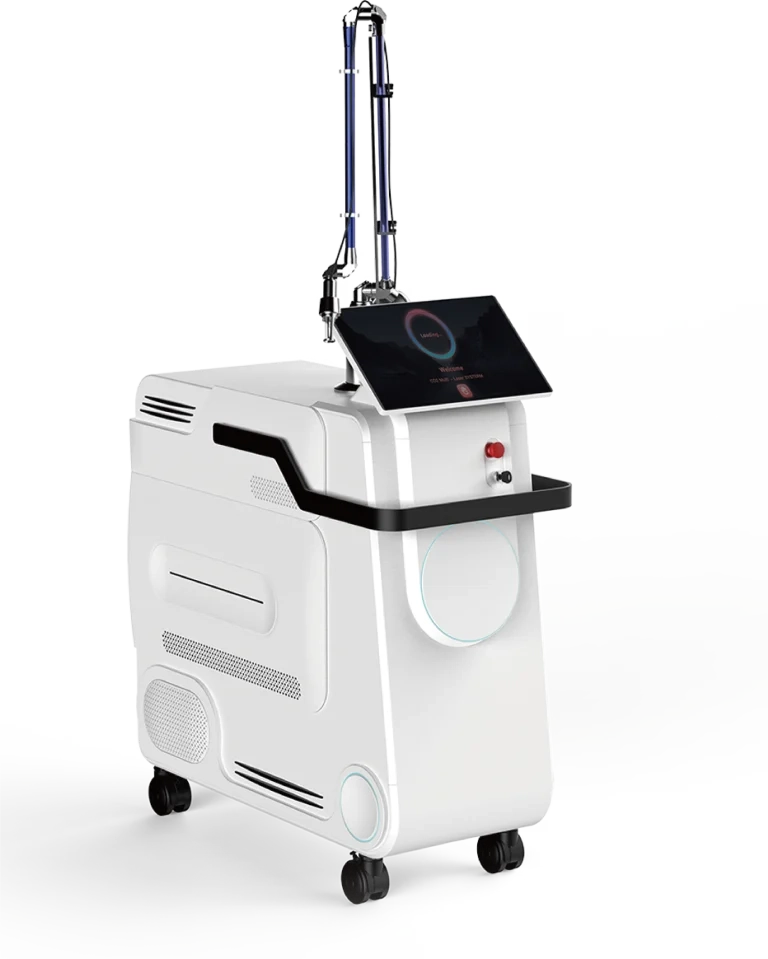
CO2 4D
CO2 4D is another professional fractional CO2 laser platform in Cocoon Laser’s equipment portfolio. It is positioned for clinics and B2B buyers seeking multiple treatment modes and applicator configurations.
Supplier documentation lists a 10600nm laser, 40W RF-excited source, seven-joint articulated arm, four treatment modes, nine applicators, and built-in smoke-exhausting functionality.
- Wavelength: 10600 nm
- Maximum rated power: 40W
- Laser source: RF-excited CO2
- Operating modes: Four
- Applicators: Nine options listed
- Additional feature: Built-in smoke-exhausting system
- Price: Available by quotation
CO2 Star vs. CO2 4D: Which Machine Should You Quote?
Both systems are positioned as professional 10600nm fractional CO2 platforms. Buyers should request model-specific quotations rather than assuming one machine is more expensive or technically superior.
| Feature | CO2 Star | CO2 4D |
|---|---|---|
| Wavelength | 10600 nm | 10600 nm |
| Laser source | 40W RF-excited | 40W RF-excited |
| Articulated arm | Seven-joint | Seven-joint |
| Operating modes | Four listed | Four listed |
| Applicator options | Nine listed | Nine listed |
| Smoke exhaust | Confirm supplied configuration | Built-in system listed |
| Commercial pricing | Request quotation | Request quotation |
Ask Cocoon Laser for the complete accessory list, technical documentation, warranty, and configuration-specific prices to determine which model better fits your purchasing requirements.
What Additional Costs Should Clinics Budget For?
The purchase price is only part of the investment. Total ownership costs may include equipment delivery, installation, consumables, maintenance, staff training, and business interruption during repairs.
Shipping and Import Charges
International freight, insurance, customs duties, taxes, and destination handling.
Installation and Training
Equipment commissioning, staff instruction, and required professional training.
Accessories and Replacement Parts
Handpieces, scanner components, optics, filters, and other model-specific parts.
Maintenance and Downtime
Preventive service, repair logistics, laser source servicing, and lost appointment capacity.
Safety Infrastructure
Wavelength-specific eyewear, appropriate plume evacuation, signage, and room controls.
Regulatory and Insurance Costs
Applicable registrations, inspections, insurance, and local compliance requirements.
How to Calculate Fractional CO2 Laser Total Cost of Ownership
A useful purchasing calculation includes the initial equipment investment and all expected operating costs over a defined period.
Equipment Price + Shipping and Import Costs + Installation and Training + Maintenance and Parts + Financing Costs + Downtime Costs − Residual Value
Consider the following hypothetical example. These figures are not actual Cocoon Laser prices or a forecast of operating costs.
| Illustrative Cost Item | Three-Year Budget (USD) |
|---|---|
| Machine purchase | $9,000 |
| Freight and import costs | $1,500 |
| Installation and training | $1,000 |
| Maintenance and parts | $2,400 |
| Other operating-related costs | $1,100 |
| Illustrative three-year total | $15,000 |
This simplified example excludes financing, taxes not included above, downtime, and residual value. Actual expenses can differ substantially.
Is a Fractional CO2 Laser Machine Profitable for a Clinic?
Profitability depends on patient demand, legally permitted services, treatment pricing, staffing, consumables, maintenance, and the clinic’s existing operating costs.
A machine with more treatment modes does not automatically produce more revenue. A clinic must have qualified staff, suitable patients, and sufficient demand for the intended procedures.
Illustrative Break-Even Calculation
Suppose a clinic allocates $15,000 to the machine and related ownership costs, and estimates a contribution margin of $250 per completed treatment after direct variable costs.
$15,000 ÷ $250 = 60 treatments
This is a simplified planning example, not an earnings forecast. It does not account for all fixed overhead, taxes, financing, refunds, complications, or variations in demand.
Should You Buy Directly From a Manufacturer?
Buying directly from an international equipment supplier may suit experienced clinics, importers, and distributors that can manage logistics, technical verification, and local regulatory responsibilities.
Purchasing through an authorized local distributor may offer advantages such as accessible training, installation, and on-site service. The right option depends on the support package, not simply the quoted machine price.
| Purchasing Factor | Direct B2B Supplier | Local Distributor |
|---|---|---|
| Pricing | Configuration-based international quotation | May include regional services and support |
| OEM/ODM | May offer branding and configuration options | Usually focused on established product lines |
| Training | Confirm remote or on-site arrangements | Confirm local availability |
| Maintenance | Review spare parts and repair logistics | Review local service coverage |
| Import responsibilities | Must be clearly assigned | May be handled by the regional supplier |
Fractional CO2 Laser Machine Buying Checklist
Before Requesting or Accepting a Quotation
- Confirm the legal manufacturer and exact model
- Request the official technical specification sheet
- Verify RF or glass laser source construction
- Check measured output and operating modes
- Review scanner patterns and spot-size controls
- Confirm the complete applicator and handpiece list
- Verify model-specific regulatory documentation
- Clarify operator training and laser safety requirements
- Request warranty and spare parts information
- Confirm shipping terms, lead time, and payment conditions
- Check OEM/ODM customization options if needed
- Compare total ownership cost rather than price alone
How to Request an Accurate Fractional CO2 Laser Quote
Suppliers can prepare a more useful quotation when buyers provide the intended equipment configuration and purchasing requirements.
Include your business type, destination country, intended applications, quantity, accessory requirements, and whether OEM/ODM branding is needed.
We are interested in purchasing a professional fractional CO2 laser machine. Please provide quotations for CO2 Star and CO2 4D, including technical specifications, available handpieces, regulatory documentation, warranty, shipping options, and lead time to our destination country.
Common Mistakes When Comparing Fractional CO2 Laser Prices
Comparing Incomplete Quotations
One quotation may include only the base machine, while another includes additional handpieces, training, and delivery. Compare equivalent packages.
Assuming Higher Wattage Means Better Results
Rated output power alone does not establish treatment precision, beam quality, or clinical effectiveness.
Ignoring Laser Source Maintenance
Ask about the expected maintenance schedule, repair options, and replacement cost of the actual laser source.
Overlooking Regulatory Status
A low purchase price is not useful if the equipment cannot legally be imported, marketed, or used for the intended procedure.
Buying Unnecessary Accessories
Extra modes and handpieces add value only when the clinic can legally and competently use them and has sufficient patient demand.
Frequently Asked Questions
What is the average fractional CO2 laser machine price?
There is no single reliable global average. Public listings show entry-level systems at a few thousand dollars, with professional and premium platforms reaching tens of thousands of dollars. Compare complete quotations rather than relying on a single average.
How much does a 40W fractional CO2 laser machine cost?
Public listings for selected 40W systems span several thousand dollars and can exceed $10,000 depending on the laser source, handpieces, distribution channel, and service package. A 40W rating alone is insufficient for an accurate quote.
Are RF CO2 laser machines more expensive than glass-tube systems?
RF-excited systems often have higher initial prices, although real quotations overlap. Compare source specifications, maintenance, output performance, and warranty before deciding.
How much does CO2 Star cost?
CO2 Star pricing is available from Cocoon Laser by quotation. Provide your destination country, required configuration, quantity, and accessory needs for a more accurate commercial offer.
What is the difference between CO2 Star and CO2 4D?
Both are listed as 10600nm professional fractional CO2 platforms with 40W RF-excited laser sources. Buyers should compare exact accessories, operating configurations, documentation, service, and pricing.
Can distributors order OEM fractional CO2 laser machines?
Some professional equipment suppliers offer OEM/ODM services. Branding options, minimum quantities, legal manufacturer responsibilities, and destination-market requirements should be confirmed in writing.
What is the most important specification when buying a fractional CO2 laser?
No single specification determines the best choice. Laser source performance, pulse controls, scanning accuracy, regulatory suitability, and after-sales support should be evaluated together.
Does the quoted machine price include shipping and training?
Not necessarily. Ask for an itemized quotation showing the equipment, accessories, freight, installation, training, warranty, and any excluded costs.
Final Verdict: How Much Should You Budget for a Fractional CO2 Laser?
The fractional CO2 laser machine price in 2026 varies substantially across equipment categories and purchasing channels. Entry-level listings can start at a few thousand dollars, while advanced professional and premium branded platforms may require much larger budgets.
The most useful comparison is not simply the lowest advertised price. Evaluate laser source design, verified output performance, included accessories, legally permitted applications, service arrangements, and total cost of ownership.
For professional buyers evaluating Cocoon Laser equipment, CO2 Star and CO2 4D are two 10600nm, 40W RF-excited fractional CO2 platforms worth comparing by their exact configurations and commercial terms.
Request a Fractional CO2 Laser Machine Price Quote
Contact Cocoon Laser to compare CO2 Star and CO2 4D configurations, available accessories, OEM/ODM requirements, technical documentation, and shipping arrangements.
Request a Quotation →