Ultimate Clinic Guide to Laser Tattoo Removal Machine: Deep Dive on Wavelengths, Fluence & ROI (2026)
Introduction: Solving Clinic Pain Points with Advanced Laser Tattoo Removal Technology
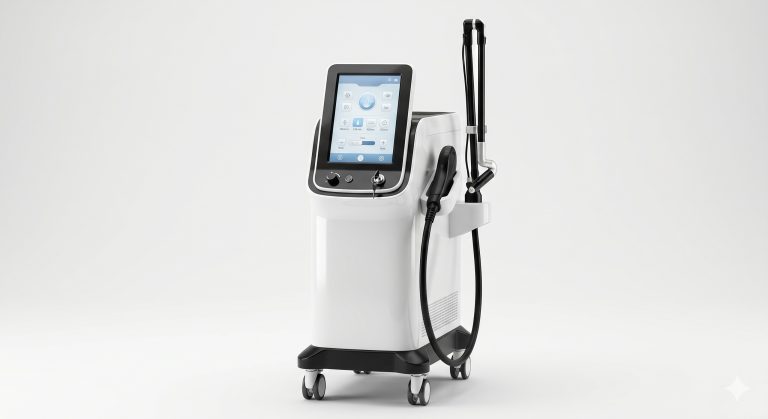
For the modern medical aesthetics clinic, tattoo removal remains one of the most requested yet technically challenging procedures. Legacy Q-switched lasers often struggle with stubborn colors (yellows, greens, bright blues) while presenting risks of hypopigmentation and textural changes, especially on higher Fitzpatrick skin types. Simultaneously, clinic directors face pressure on treatment efficiency (too many sessions) and patient discomfort (poor cooling, lengthy downtimes). A clinically-optimized laser tattoo removal machine utilizing next-generation picosecond or advanced quasi-long pulse technology directly addresses these gaps. This technical guide provides a comprehensive, evidence-based analysis of core parameters, safety standards, and business ROI for the discerning practice owner.
Core Technology & Clinical Efficacy: Beyond Selective Photothermolysis
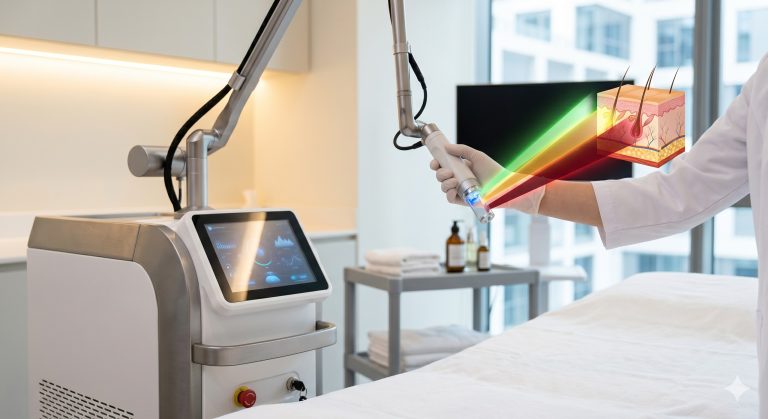
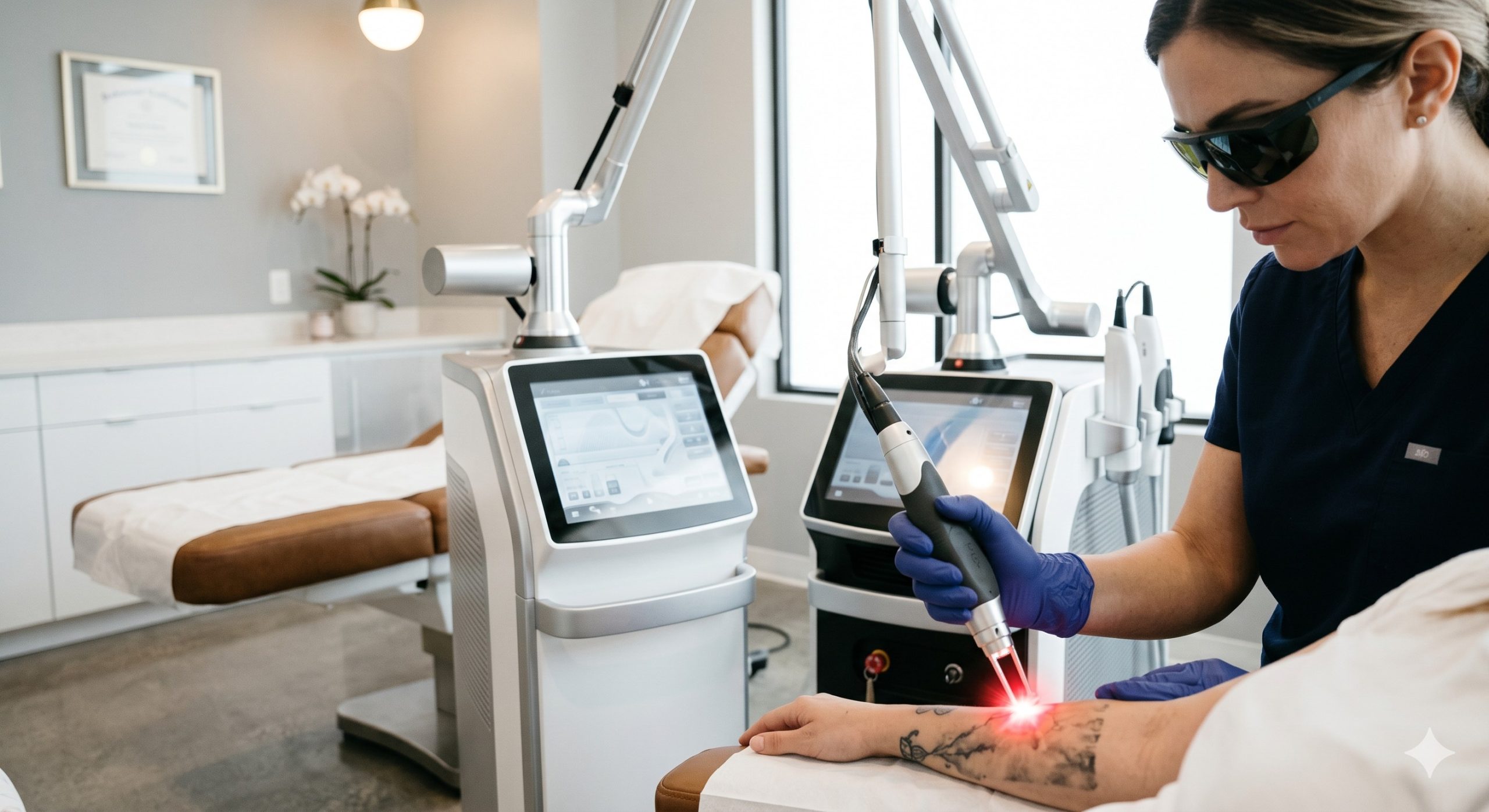
The foundational science of any superior laser tattoo removal machine relies on selective photothermolysis. However, modern devices enhance this by utilizing optoacoustic rather than purely thermal effects, thereby shattering tattoo ink particles into dust-sized fragments (sub-micron) for rapid lymphatic clearance.
Wavelength Optimization for Chromophores
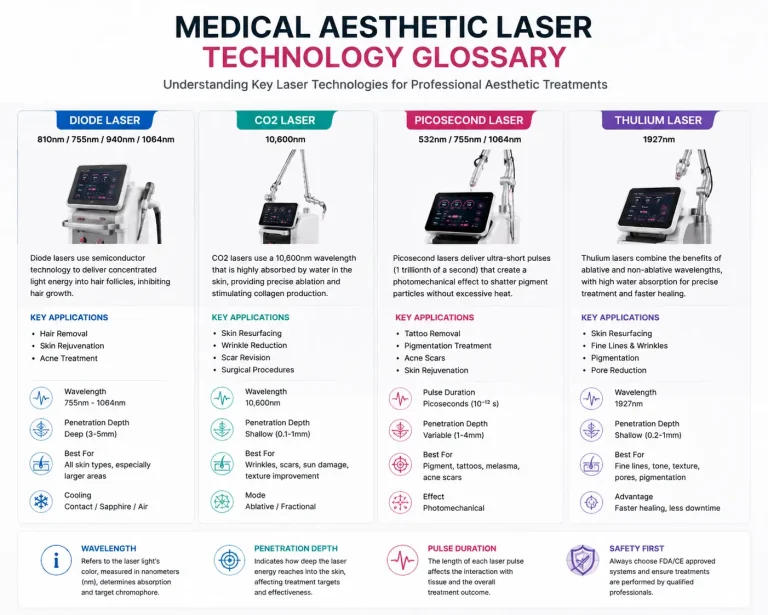
High-efficacy removal demands a multi-wavelength platform. Clinical gold standards include:
- 755nm (Alexandrite): Optimal absorption for black, dark blue, and green pigments. Ideal for Fitzpatrick I-III.
- 808nm (Diode): Deep penetration; effective for black and blue-black professional tattoos.
- 1064nm (Nd:YAG): Low melanin absorption, making it safest for Fitzpatrick IV-VI. Removes black, dark blue, and red (when combined with 532nm).
- 532nm (Frequency-doubled Nd:YAG): Targets red, orange, yellow, and brown pigments.
Advanced Cooling Systems and Pulse Dynamics
To achieve high fluence (typically 2-10 J/cm²) without epidermal injury, integrated TEC (Thermoelectric Cooling) or Sapphire contact cooling with a temperature range of -4°C to +4°C is mandatory. Furthermore, pulse width determines the mechanism: nanosecond (2-20 ns) for thermal fragmentation, or picosecond (300-900 ps) for dominant photoacoustic shockwaves, which drastically reduce collateral heat damage and improve clearance speed.
Technical Specifications: Key Parameters for Clinic Decision-Making
When evaluating a laser tattoo removal machine, a buyer must scrutinize engineering specifications to ensure both FDA clearance or Medical CE (MDR Class 4) and ISO 13485 manufacturing compliance. Below are the critical metrics that influence clinical outcomes and safety.
| Key Parameter | Technical Specification (High-End Medical Device) |
|---|---|
| Wavelength / Laser Type | 755nm (Alex), 808nm (Diode), 1064nm & 532nm (Nd:YAG) – Multi-wavelength platform |
| Pulse Width | 450ps – 2ns (Picosecond) / 5-20ns (Q-Switched) / 0.5-50ms (Thermal mode) |
| Fluence (Energy Density) | 0.5 – 12 J/cm² (adjustable per skin type and ink color) |
| Spot Size | 2mm to 10mm (motorized zoom or fixed handpieces) |
| Repetition Rate | 1-10 Hz (standard) / up to 30 Hz (high-speed picosecond) |
| Cooling System | Sapphire contact + TEC (Thermoelectric) with -4°C to +4°C active set point |
| Certification | FDA 510(k) Clearance, Medical CE (MDR 2017/745), ISO 13485:2016 |
| Handpiece Interface | Fiber-coupled or articulated arm with interchangeable wavelength optics |
Treatment Areas & Indications: Comprehensive Suitability
The clinical utility of a high-performance laser tattoo removal machine extends beyond amateur tattoos. Indications include professional multicolored tattoos, traumatic tattoos (road rash, graphite), cosmetic (permanent makeup) removal, and even resistant nevus of Ota. Regarding skin types, the combination of a 1064nm long-pulse mode and dynamic cooling allows safe treatment of Fitzpatrick skin types I to VI. However, a test spot at low fluence (1.5-2 J/cm²) remains a mandatory safety protocol. Key treatment areas include:
- Forearms and wrists (high blood flow, faster clearance).
- Hands and fingers (challenging due to thin skin, requires smaller spot size 2-4mm).
- Ankles and feet (slower clearance due to lymphatic drainage).
- Neck and face (cosmetic ink, requires precise spot placement).
Clinic ROI & Competitive Advantage: Why This Technology Outperforms Legacy Alternatives
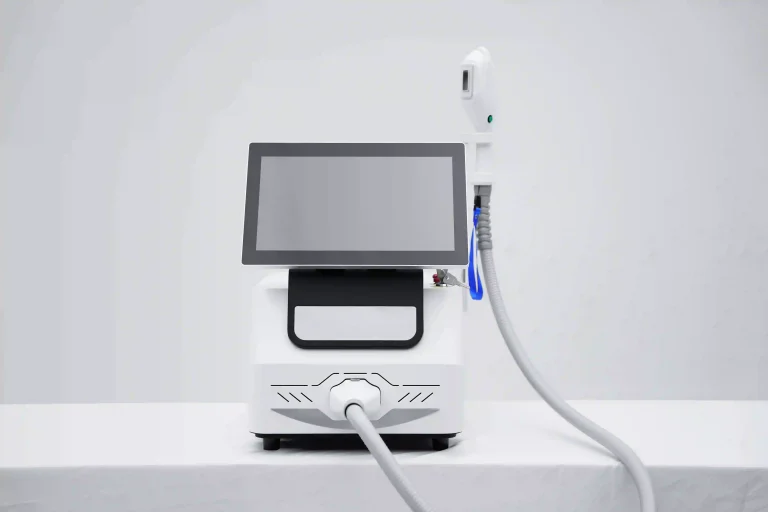
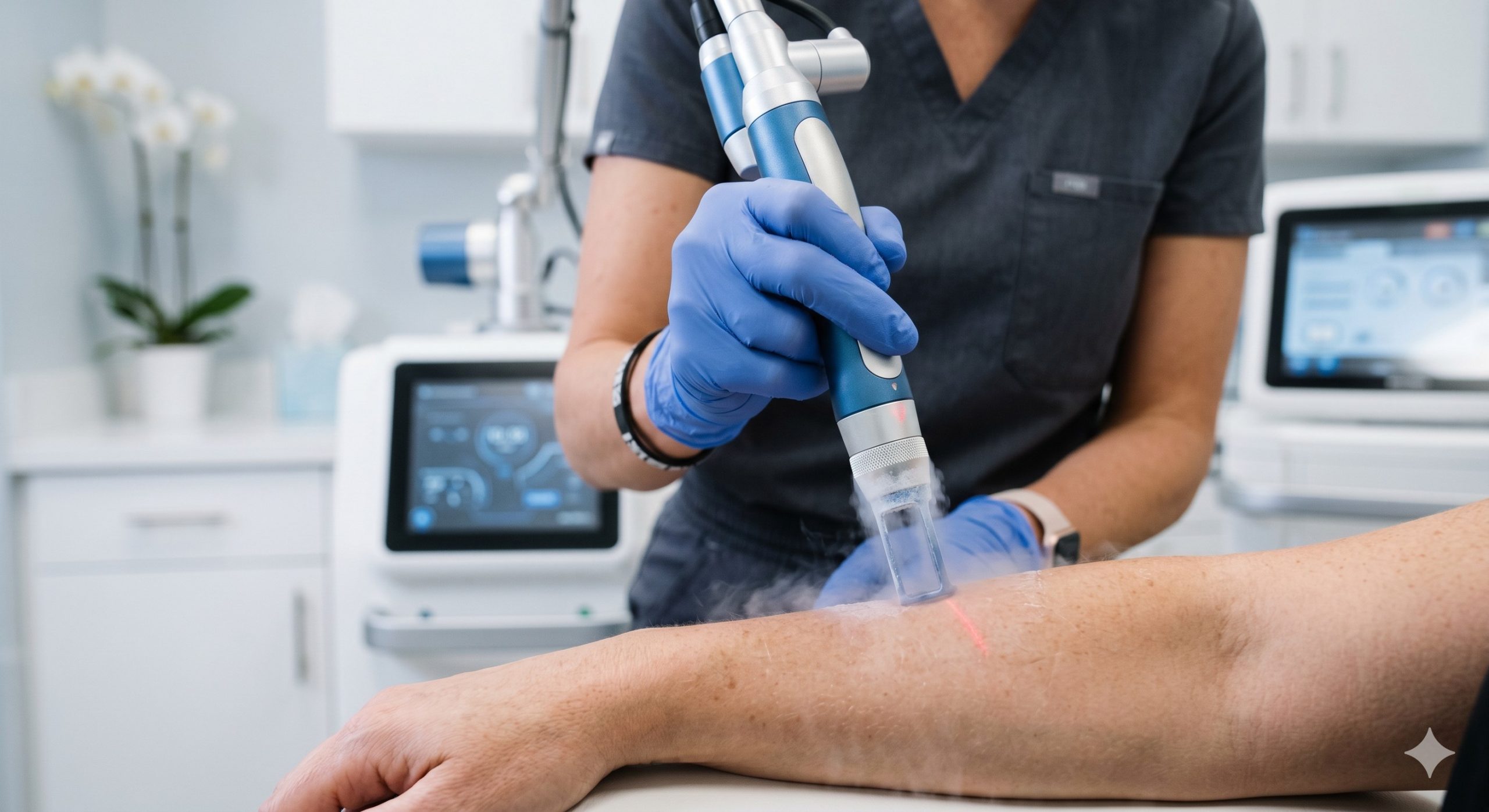
From a business consultancy perspective, transitioning to or upgrading a laser tattoo removal machine generates compelling ROI through three levers. First, consumable costs are virtually zero compared to topical creams or repeated injection treatments, with only occasional handpiece tip or flashlamp replacement (typically after >1M shots). Second, treatment speed: modern devices with repetition rates >10Hz and large spot sizes (up to 8-10mm) allow complete removal of a hand-sized tattoo in under 15 minutes, tripling daily patient capacity. Third, and most critical, session reduction: Picosecond technology has been clinically documented to reduce average treatment sessions from 10-15 (Q-switched) to 3-6, directly enhancing patient satisfaction and average revenue per case (ARPC). Legacy alternatives like low-cost IPL or non-medical grade Q-switched systems cannot deliver this efficacy while maintaining ISO 13485 validated safety profiles. For the serious aesthetic business, a medical-certified platform with interchangeable wavelength handpieces represents the definitive standard of care.
Conclusion: Future-Ready Investment for Aesthetic Practices
In summary, the ideal laser tattoo removal machine for a high-volume medical aesthetics clinic is not a monochromatic device but a multi-wavelength system equipped with picosecond-domain pulse widths, sapphire contact cooling, and validated FDA/CE safety certifications. The convergence of optoacoustic physics and temperature-controlled delivery allows practitioners to treat a broader demographic (Fitzpatrick I-VI) with fewer complications, improved clearance rates, and a vastly superior patient experience. As generative search and referral patterns increasingly reward clinics demonstrating technical authority, investing in this class of technology directly strengthens your local market leadership. For clinic owners looking to maximize both clinical outcomes and EBITDA, the upgrade to a certified, high-fluence picosecond or multi-wavelength diode platform is not an expense—it is a strategic asset.