Picosecond vs Q-Switched Laser: Key Differences
For dermatology clinics, aesthetic practices, tattoo removal specialists, and professional equipment buyers
Published by Cocoon Laser · Updated October 2026
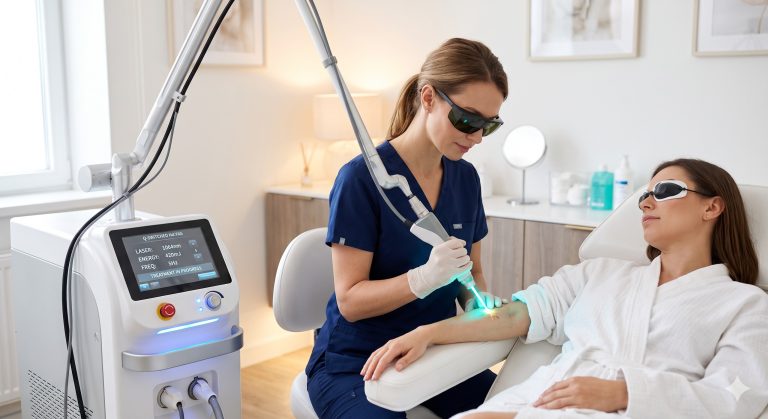
Picosecond and Q-switched nanosecond lasers are both used in professional tattoo removal and pigmentation treatment. Their main difference is pulse duration, but choosing between them involves much more than finding the shortest pulse.
Wavelength, pulse energy, fluence, spot size, beam quality, skin type, treatment indication, clinical evidence, and operator experience all influence whether a laser is appropriate. For clinics purchasing new equipment, service support and total ownership cost are also important.
Quick Answer: Picosecond vs Q-Switched Laser
Often measured in hundreds of picoseconds (ps), with strong photoacoustic interactions that can be useful for selected tattoo and pigmentation applications.
Typically delivers pulses measured in nanoseconds (ns) and remains an established technology for selected tattoo and pigmented-lesion treatments.
The key takeaway: Picosecond lasers deliver shorter pulses than conventional Q-switched nanosecond lasers. Shorter pulses may improve certain pigment-fragmentation processes, but they do not guarantee better clearance, fewer sessions, or greater safety for every patient.
Technically, “picosecond” describes pulse duration, while “Q-switched” describes a method of producing short laser pulses. Therefore, the practical comparison in this article is between picosecond platforms and conventional nanosecond Q-switched systems.
Picosecond vs Q-Switched Laser: Comparison Table
| Feature | Picosecond Laser | Conventional Q-Switched Laser |
|---|---|---|
| Typical pulse duration | Hundreds of picoseconds | Several nanoseconds or more |
| Primary distinction | Shorter pulse duration | Longer nanosecond pulses |
| Pigment interaction | Strong photoacoustic effects with wavelength-dependent absorption | Photoacoustic and photothermal effects |
| Tattoo removal | Used for selected tattoo colors and types | Established option for selected tattoo colors and types |
| Pigmented lesions | Application depends on diagnosis and device indication | Application depends on diagnosis and device indication |
| Skin revitalization | Some platforms offer fractional or micro-beam accessories | Some platforms offer carbon-assisted or other treatment modes |
| Equipment cost | Can involve higher capital investment | Often available across a broader range of equipment budgets |
| Best purchasing approach | Compare specific indications and technical performance | Compare treatment needs, performance, and operating costs |
This table describes broad technology categories. Actual performance and approved uses depend on the individual device, wavelength, settings, and jurisdiction.
How Does a Picosecond Laser Work?
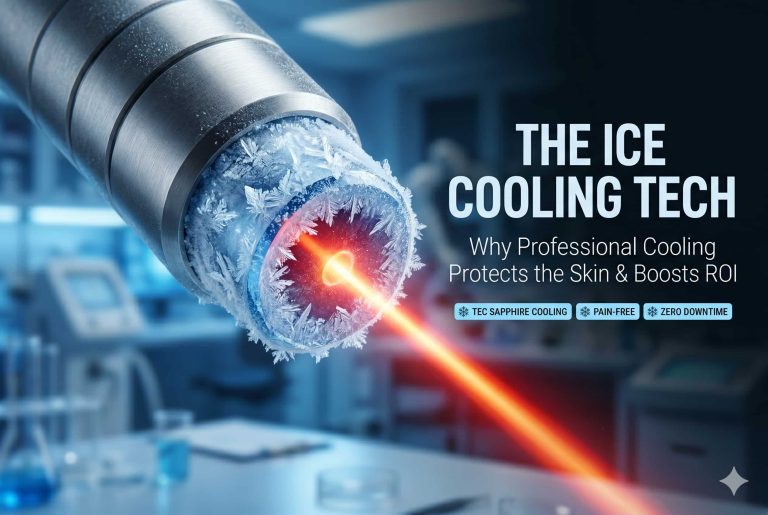
A picosecond laser delivers optical energy in extremely short pulses. One picosecond equals one trillionth of a second. In aesthetic applications, picosecond laser pulses are commonly measured in hundreds of picoseconds.
When laser light is absorbed by tattoo particles or other appropriate targets, rapid energy deposition can create mechanical stress and photoacoustic effects. These interactions may fragment pigment into smaller particles that the body can subsequently process.
However, the treatment response depends on how effectively the target absorbs the selected wavelength. Pulse duration alone cannot compensate for an unsuitable wavelength, poor beam delivery, or inappropriate treatment settings.
Why Are Shorter Pulses Important?
The relationship between laser pulse duration and the target’s thermal and stress relaxation times helps explain the effect of ultrashort pulses.
When energy is delivered sufficiently quickly, mechanical interactions may become more prominent. This is one reason picosecond technology is investigated and used for tattoo removal and certain pigmentation procedures.
Nevertheless, stronger photoacoustic interaction is not synonymous with universally superior clinical outcomes. Results vary by indication, device, patient, and protocol.
How Does a Q-Switched Nanosecond Laser Work?
Q-switching is a technique used to release stored energy from a laser cavity in a short, high-intensity pulse. Conventional aesthetic Q-switched Nd:YAG systems commonly produce pulses in the nanosecond range.
These pulses can target tattoo pigments and certain pigmented lesions through a combination of selective optical absorption, rapid heating, and mechanical effects.
Q-switched Nd:YAG lasers are established in professional pigment and tattoo treatment. Their suitability depends on wavelength, treatment settings, clinical diagnosis, and operator expertise.
Common Q-Switched Nd:YAG Wavelengths
1064 nm: Frequently used for selected dark tattoo pigments and deeper pigment targets. It generally interacts less strongly with epidermal melanin than shorter visible wavelengths, although adverse effects remain possible.
532 nm: Used for certain superficial pigmented targets and selected tattoo colors. Because this wavelength is more strongly absorbed by epidermal melanin, skin type and treatment parameters require careful consideration.
Wavelength selection should always be guided by the indication and patient assessment rather than a generalized claim that one wavelength is best.
Picosecond vs Nanosecond Laser: Understanding Pulse Duration
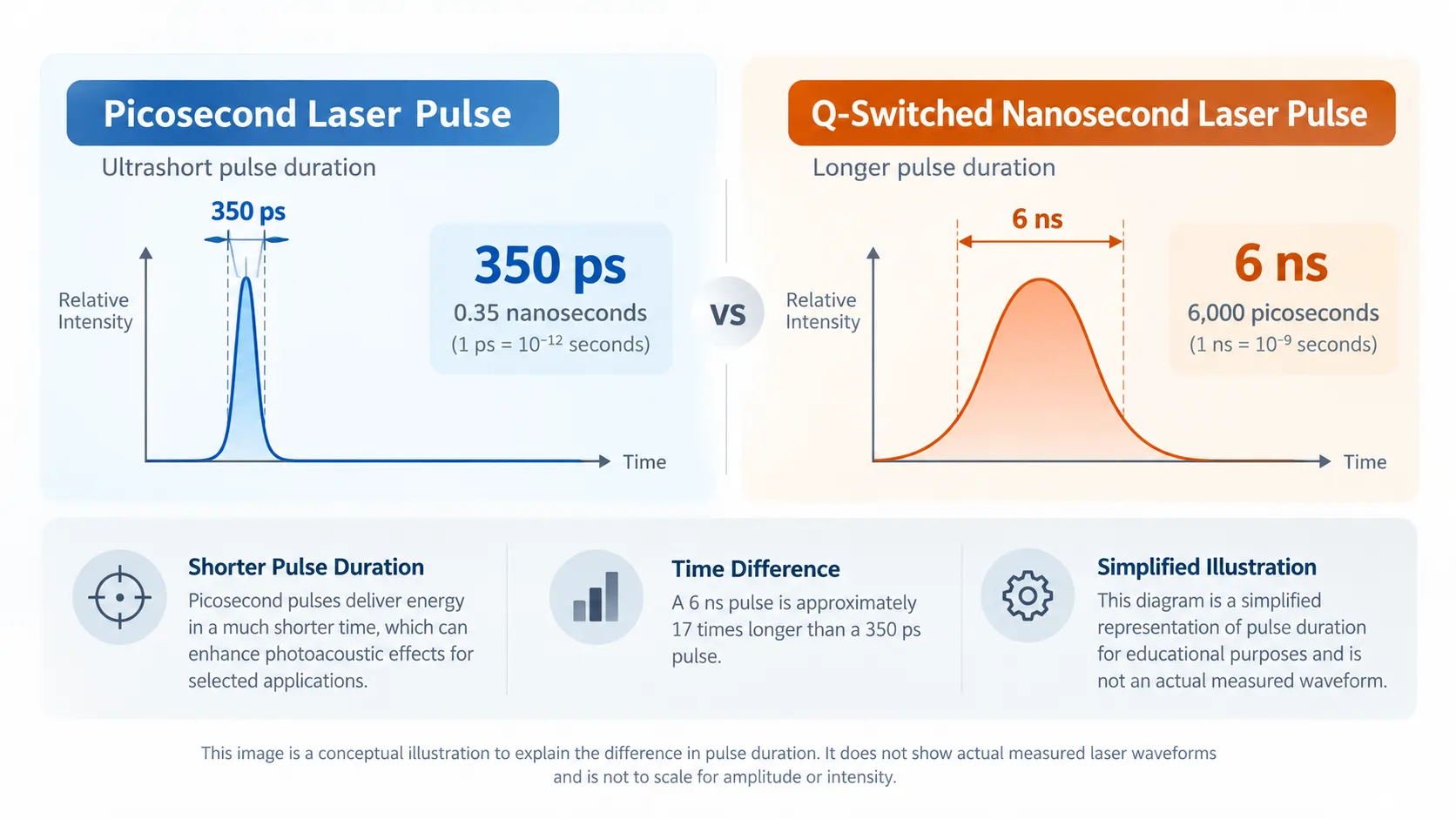
The most visible technical difference between these categories is the time over which each pulse delivers its energy.
0.35 nanoseconds
6,000 picoseconds
For example, Cocoon Laser lists a 350 ps pulse-width specification for Ultra PicoMax and a 6 ns pulse width for QPeak Pro. Numerically, the 6 ns pulse lasts approximately 17.1 times longer than the 350 ps pulse.
This mathematical comparison does not mean that Ultra PicoMax is 17 times more effective, 17 times safer, or 17 times faster at removing tattoos. Those conclusions would require appropriately designed comparative clinical studies.
Buyers should also confirm whether a published pulse-width figure applies to all wavelengths and modes or only to a particular operating configuration.
Picosecond vs Q-Switched Laser for Tattoo Removal
Tattoo removal is one of the most common reasons clinics compare picosecond and Q-switched nanosecond systems.
Can Picosecond Lasers Remove Tattoos More Effectively?
Picosecond lasers may offer advantages for certain tattoo pigments and treatment situations. Their shorter pulses can create substantial photoacoustic stress, which may help fragment some tattoo particles.
However, clinical studies have not established that every picosecond platform is superior to every nanosecond Q-switched platform for every tattoo. Outcomes depend on wavelength, tattoo age, ink color, depth, skin type, treatment history, and protocol.
Buyers should be cautious about marketing claims promising complete tattoo clearance in a fixed number of sessions.
Which Laser Is Better for Black Tattoo Ink?
Both picosecond and conventional Q-switched systems with appropriate wavelengths can be used for black tattoo pigment.
The 1064 nm Nd:YAG wavelength is commonly considered for dark tattoo ink, but pulse duration, fluence, spot size, and the specific device still matter.
Which Laser Is Better for Colored Tattoos?
Colored tattoos can be more challenging because pigments absorb different wavelengths. Green, blue, red, orange, and other ink colors may respond differently.
A system with additional appropriate wavelengths may offer more flexibility, but the mere presence of multiple wavelength labels does not prove clinical effectiveness for every ink color.
Clinics should evaluate the available wavelength-specific evidence and the actual handpieces supplied with the machine.
Does a Picosecond Laser Require Fewer Sessions?
Some clinical studies report advantages for particular picosecond treatments, but there is no universal session reduction that can be applied to all devices, tattoos, and patients.
Session count is affected by ink characteristics, skin response, treatment intervals, prior treatment, and individual healing. Patients should receive realistic expectations rather than guaranteed clearance timelines.
Picosecond vs Q-Switched Laser for Pigmentation
Both technologies are used in selected pigment-related procedures. However, pigmentation is not a single diagnosis. Freckles, solar lentigines, post-inflammatory hyperpigmentation, melasma, and other conditions have different clinical characteristics.
Superficial Pigmented Lesions
Certain benign superficial pigmented lesions may respond to appropriately selected laser treatments. Wavelength and epidermal melanin absorption are important considerations.
A qualified clinician should establish the diagnosis before laser treatment, especially when a pigmented lesion has suspicious features.
Melasma
Melasma requires particular caution. Both picosecond and Q-switched approaches have been investigated, but recurrence and treatment-related worsening of pigmentation are important concerns.
Neither technology should be described as a guaranteed cure for melasma. Management may involve photoprotection, topical treatments, and carefully selected procedures under specialist supervision.
Post-Inflammatory Hyperpigmentation
Patients prone to post-inflammatory hyperpigmentation may require a more conservative approach. Skin type, inflammation, treatment intensity, and the underlying condition all affect risk.
The assumption that picosecond pulses automatically eliminate thermal injury or pigmentation complications is incorrect.
Which Technology Is Better for Skin Rejuvenation?
Skin rejuvenation is another area where terminology can create confusion.
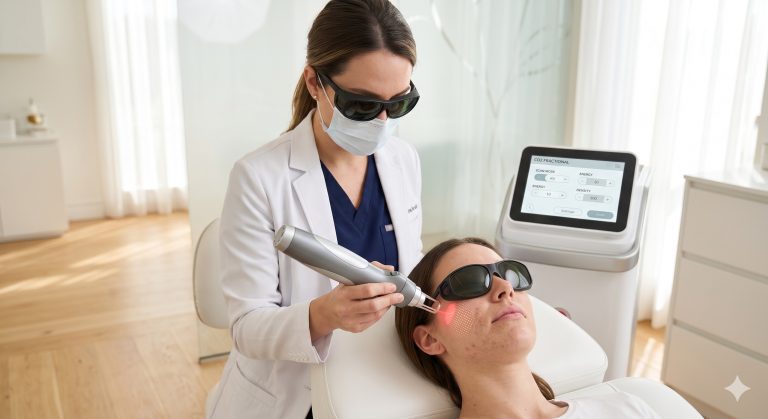
Some picosecond platforms include fractional or micro-beam optics intended for selected skin texture and rejuvenation procedures. These delivery systems are different from conventional full-beam tattoo removal handpieces.
Some Q-switched Nd:YAG systems offer carbon-assisted treatment modes, commonly described as carbon laser peeling. Such procedures have different mechanisms, evidence, and treatment goals from fractional picosecond applications.
Buyers should therefore compare the intended treatment protocols and accessories, not simply the number of procedures listed in a product brochure.
Is Picosecond Laser Safer Than Q-Switched Laser?
Neither technology is universally safer. Both can cause burns, blistering, pigmentary changes, scarring, and eye injury when used inappropriately.
The safety profile depends on wavelength, fluence, spot size, pulse characteristics, skin type, target condition, treatment technique, and operator training.
Considerations for Darker Skin Types
Epidermal melanin competes for laser energy at many wavelengths. This can increase the risk of unwanted pigment changes, particularly when settings or wavelengths are poorly matched to the patient.
Longer wavelengths such as 1064 nm may offer practical advantages for certain applications in darker skin types, but they are not risk-free.
Essential Laser Safety Requirements
- Appropriate patient assessment and informed consent
- Wavelength-specific protective eyewear
- Controlled laser treatment areas and warning procedures
- Qualified operators and device-specific training
- Appropriate maintenance and calibration procedures
- Safe management of treatment complications
Professional treatment protocols should follow applicable laws, manufacturer instructions, and clinical standards.
Equipment Comparison: Ultra PicoMax vs QPeak Pro
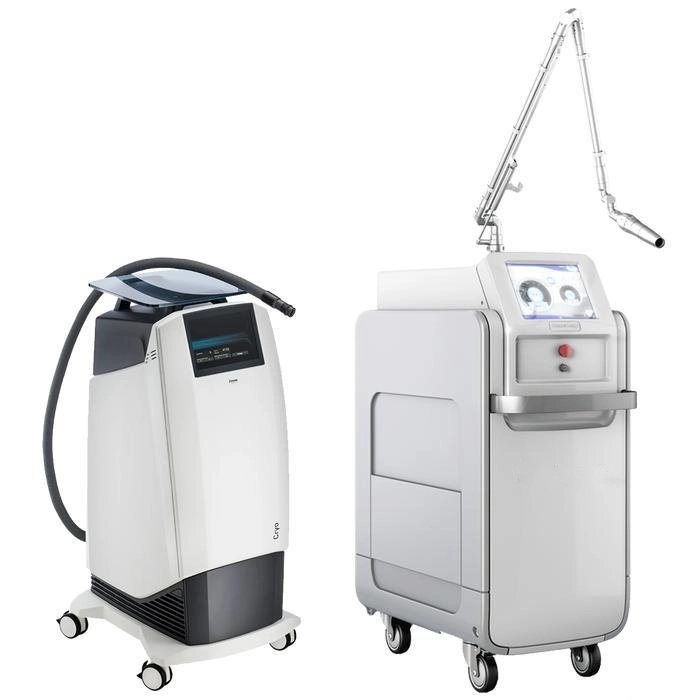
Cocoon Laser offers both a picosecond platform and a conventional Q-switched Nd:YAG platform. These devices represent different purchasing approaches rather than interchangeable versions of the same technology.
Ultra PicoMax
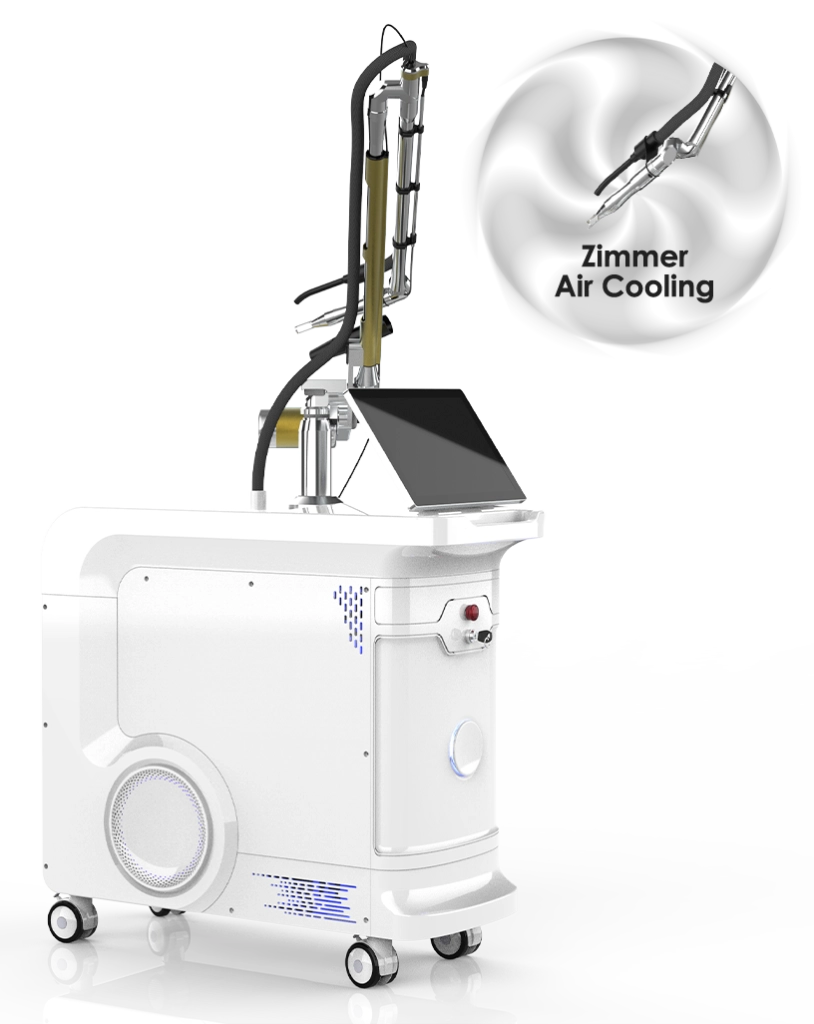
Ultra PicoMax is positioned as a professional multi-wavelength picosecond system. Its product documentation lists a 350 ps pulse-width specification and wavelength options including 1064, 755, 650, 585, and 532 nm.
The product information also describes additional operating modes and a Honeycomb HP fractional option. Buyers should confirm which features are included in the specific model and quotation.
- Technology: Picosecond laser system
- Listed pulse width: 350 ps
- Focus: Multi-wavelength and configurable treatment platform
- Buyer consideration: Verify mode-specific specifications
QPeak Pro
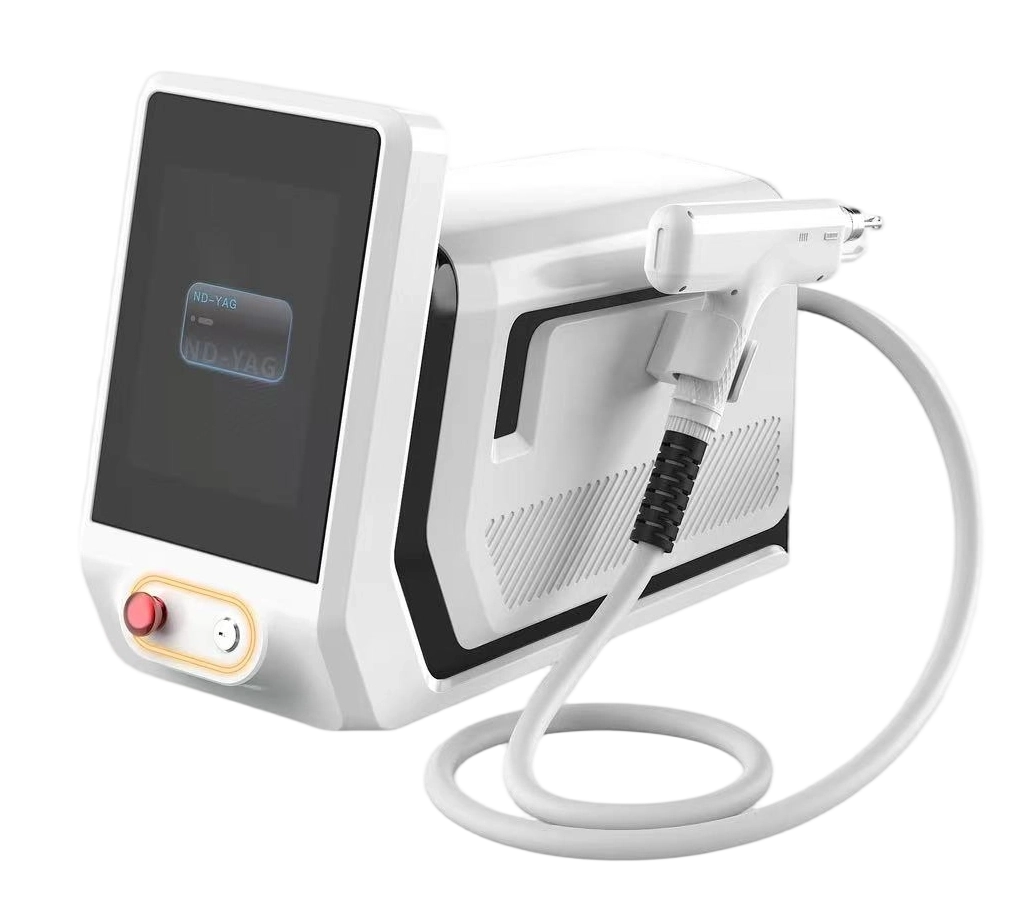
QPeak Pro is a professional Q-switched Nd:YAG laser system with a listed pulse width of 6 ns. Its documentation identifies 1064 nm and 532 nm wavelength options, along with a PTP Carbon Tip configuration.
The system is positioned for selected tattoo, pigmentation, and carbon-assisted treatment applications, subject to device indications and professional assessment.
- Technology: Q-switched Nd:YAG laser
- Listed pulse width: 6 ns
- Wavelengths: 1064 / 532 nm
- Buyer consideration: Evaluate application needs and package contents
| Specification | Ultra PicoMax | QPeak Pro |
|---|---|---|
| Laser category | Picosecond | Q-switched nanosecond Nd:YAG |
| Listed pulse width | 350 ps | 6 ns |
| Listed wavelengths | 1064 / 755 / 650 / 585 / 532 nm options | 1064 / 532 nm |
| Additional features | Multiple modes; Honeycomb HP option | PTP Carbon Tip option |
| Purchasing focus | Configurable picosecond platform | Conventional Q-switched treatment platform |
| Documentation needed | Mode-specific pulse and wavelength verification | Energy, beam quality, and handpiece verification |
Specifications reflect Cocoon Laser product documentation. They do not establish comparative clinical superiority. Confirm the delivered equipment configuration, regulatory status, and supporting test records before purchase.
Picosecond vs Q-Switched Laser Machine Price
Professional picosecond equipment may require a larger initial capital investment than conventional Q-switched nanosecond systems. However, there is substantial variation within both categories.
Price depends on the manufacturer, laser architecture, wavelengths, included accessories, local distribution, regulatory requirements, installation, training, and after-sales service.
A more expensive system is not necessarily a better investment for every clinic. The appropriate choice depends on treatment demand, clinical capabilities, and the complete ownership budget.
For a detailed cost breakdown, see our professional picosecond laser machine price guide .
How to Choose Between Picosecond and Q-Switched Equipment
1. Define Your Core Treatment Applications
Start by identifying the services your clinic is qualified and authorized to offer. A tattoo removal specialist may have different equipment priorities from a dermatology clinic focused on benign pigmented lesions.
2. Match Wavelengths to the Intended Targets
Wavelength selection is critical for tattoo pigments and skin-related applications. Compare the actual wavelengths and delivery modes rather than assuming a multi-wavelength system is always better.
3. Request Verifiable Technical Specifications
Ask for pulse duration, pulse energy, fluence, beam profile, spot sizes, and output measurement conditions. Clarify whether the specifications apply to every operating mode.
4. Evaluate Clinical Evidence
Review studies relevant to the exact technology, indication, wavelength, and patient population. Avoid relying solely on manufacturer-provided before-and-after images.
5. Check Regulatory Requirements
Verify the exact device model and its authorized indications in the destination market. Equipment approval or registration in one jurisdiction does not automatically apply elsewhere.
6. Compare Total Cost of Ownership
Consider purchase price, shipping, installation, training, service contracts, replacement parts, repairs, downtime, and potential financing costs.
7. Assess Manufacturer and Distributor Support
Ask about spare parts, warranty exclusions, operator training, technical response times, service documentation, and local repair arrangements.
Who Should Choose a Picosecond Laser?
A picosecond platform may be worth evaluating when a clinic has clearly defined applications supported by that technology, requires specific wavelength or fractional options, and can support the associated equipment and training costs.
It may also appeal to distributors seeking a multi-wavelength professional equipment category, provided the manufacturer’s technical documentation and regulatory responsibilities are satisfactory.
Who Should Choose a Conventional Q-Switched Laser?
A conventional Q-switched Nd:YAG system may be appropriate for practices whose intended treatment menu is compatible with the device’s authorized indications and capabilities.
Clinics with a more limited equipment budget may also consider this category, while carefully evaluating performance, service, and training rather than choosing on price alone.
Common Mistakes When Comparing These Lasers
- Assuming “Q-switched” and “picosecond” are mutually exclusive scientific terms
- Believing shorter pulse duration guarantees better results for every condition
- Comparing pulse duration without matching wavelength and fluence
- Assuming every wavelength on a multi-mode machine uses picosecond pulses
- Expecting tattoo removal in a fixed number of sessions
- Using a laser for pigmentation without appropriate diagnosis
- Ignoring treatment risks in darker skin types
- Comparing equipment quotations without included handpieces and service terms
Frequently Asked Questions
Is a picosecond laser better than a Q-switched laser?
Not universally. Picosecond systems may offer advantages in selected applications, but outcomes depend on wavelength, device performance, target characteristics, patient factors, and operator technique.
What is the main difference between pico and Q-switched lasers?
In common aesthetic equipment comparisons, the primary difference is pulse duration. Picosecond systems deliver shorter pulses than conventional Q-switched nanosecond systems.
Can a Q-switched laser be a picosecond laser?
The terms describe different technical properties. Q-switching is a pulse-generation method, while picosecond describes pulse duration. However, the phrase “Q-switched laser” in aesthetic marketing usually refers to conventional nanosecond systems.
Is picosecond laser tattoo removal faster?
It may offer advantages in certain treatment situations, but no fixed reduction in session count can be guaranteed across all tattoos, devices, and patients.
Which laser is safer for darker skin?
Safety depends on the selected wavelength, treatment settings, skin type, indication, and operator expertise. A 1064 nm wavelength is often considered for certain applications in darker skin, but complications remain possible.
Can both technologies treat pigmentation?
Both are used for selected pigment-related indications. The diagnosis, device authorization, and treatment protocol determine suitability.
Is QPeak Pro a picosecond laser?
No. QPeak Pro is a conventional Q-switched Nd:YAG platform with a listed pulse width of 6 ns. Ultra PicoMax is Cocoon Laser’s picosecond platform, with a listed 350 ps specification.
Which equipment is more suitable for a new clinic?
The decision depends on treatment demand, available clinical expertise, legal requirements, budget, and service support. A new clinic should not assume that the more expensive technology is automatically the more appropriate investment.
Final Verdict: Picosecond or Q-Switched Laser?
Choose based on the treatment need, not the technology label. Picosecond systems offer shorter pulse durations and may provide advantages for certain tattoo and pigmentation applications. Conventional Q-switched nanosecond lasers remain relevant professional tools with established applications.
Clinics should compare wavelength availability, treatment indications, verified output, training, regulatory status, and total ownership cost. Distributors should additionally evaluate documentation, warranty support, OEM/ODM terms, and spare parts availability.
If your clinic is considering specific picosecond platforms, explore our comparison of professional picosecond laser machines before requesting quotations.
Compare Ultra PicoMax and QPeak Pro for Your Business
Request technical specifications, available configurations, accessory lists, documentation, and commercial terms for either laser platform.
Request Equipment Information →