How to Repair a Damaged Skin Barrier: Signs & Recovery
Does your skin suddenly feel tight, dry, irritated, or uncomfortable even after applying moisturizer? You may be experiencing symptoms associated with a disrupted skin barrier.
The skin barrier plays an essential role in keeping moisture inside the skin and limiting exposure to environmental irritants. When this protective function becomes compromised, everyday skincare products may cause stinging, redness, or discomfort.
Understanding how to repair a damaged skin barrier begins with identifying possible triggers and simplifying your skincare routine.
Quick Answer: How Do You Repair a Damaged Skin Barrier?
To help repair a damaged skin barrier, stop using irritating exfoliants, switch to a gentle cleanser, apply a fragrance-free moisturizer containing barrier-supporting ingredients, and protect your skin from excessive sun exposure.
Ingredients such as ceramides, glycerin, petrolatum, and dimethicone may help reduce moisture loss and improve skin comfort.
Mild irritation may improve within days, but more significant barrier disruption can take longer to recover. If symptoms persist, worsen, or include severe pain or inflammation, consult a dermatologist.
What Is the Skin Barrier?
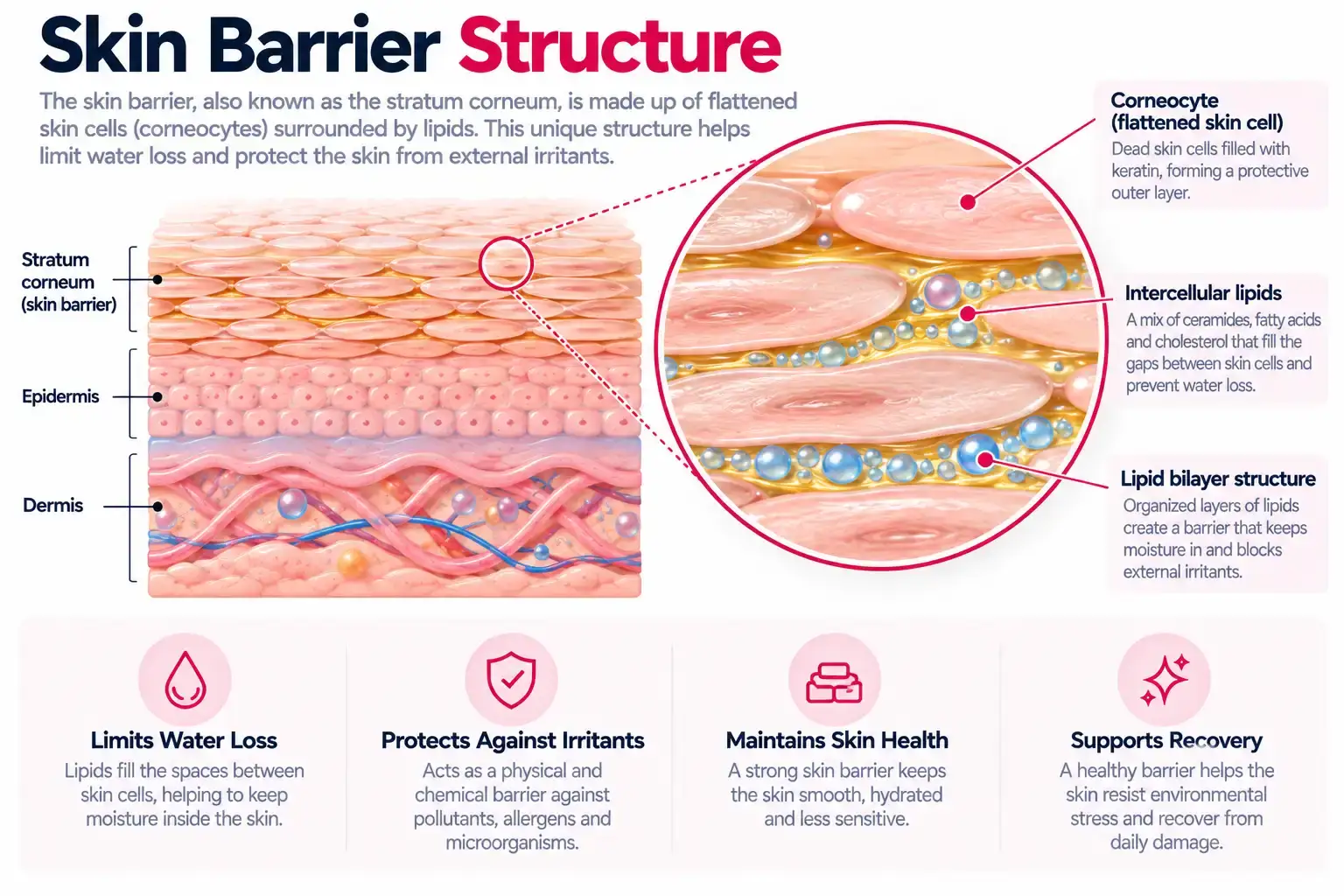
The skin barrier refers primarily to the outermost layer of the epidermis, called the stratum corneum. It helps protect the body from external irritants while reducing excessive water loss.
This protective layer is often described using a brick-and-mortar analogy.
- Bricks: Corneocytes, which are flattened cells forming the outer skin layer.
- Mortar: Intercellular lipids, including ceramides, cholesterol, and fatty acids.
Together, these components support the skin’s structural integrity and help maintain hydration.
What Does a Damaged Skin Barrier Look Like?
A damaged or disrupted skin barrier does not always have one specific appearance. Symptoms can vary depending on the cause, severity, and individual skin characteristics.
Common Signs of a Damaged Skin Barrier
- Persistent dryness or tightness
- Rough or flaky skin texture
- Stinging after applying skincare products
- Increased sensitivity to cleansing
- Redness or visible irritation
- Itching or discomfort
- Difficulty tolerating previously familiar products
These symptoms are not exclusive to barrier damage. Allergic contact dermatitis, eczema, rosacea, and other conditions may produce similar symptoms.
If you are experiencing sudden skin reactivity, read our guide to why skin suddenly becomes sensitive .
What Causes Skin Barrier Damage?
Skin barrier disruption can occur when external stressors or inflammatory conditions interfere with the protective function of the outer skin.
1. Over-Exfoliation
Frequent use of exfoliating acids or abrasive scrubs may increase irritation, particularly when combined with other active ingredients.
Glycolic acid, salicylic acid, and other exfoliating ingredients can be beneficial when used appropriately, but excessive application may cause dryness, redness, and stinging.
2. Harsh Cleansing
Strong cleansing products, frequent washing, hot water, and aggressive rubbing may remove surface lipids and contribute to skin dryness.
3. Environmental Conditions
Cold weather, low humidity, wind, and excessive sun exposure may aggravate dry or sensitive skin.
4. Irritating Skincare Ingredients
Retinoids, exfoliating acids, fragrances, and certain acne treatments can cause irritation in susceptible individuals.
The likelihood of irritation depends on the ingredient, concentration, application frequency, and individual skin tolerance.
5. Underlying Skin Conditions
Conditions such as atopic dermatitis are associated with changes in skin barrier function.
Persistent redness, itching, or inflammation may require medical assessment rather than cosmetic skincare adjustments alone.
6. Recent Cosmetic Procedures
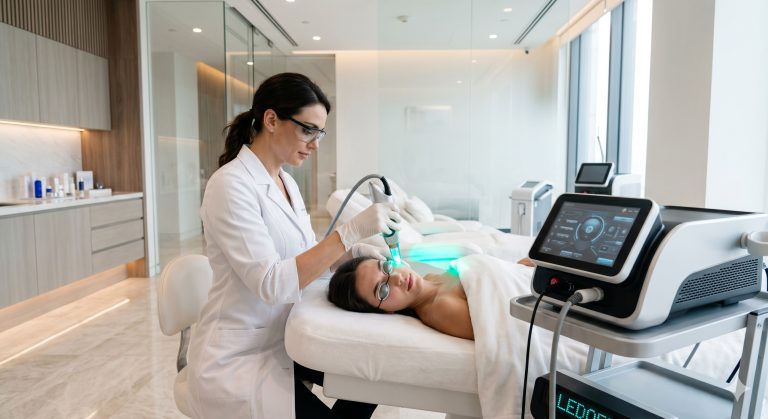
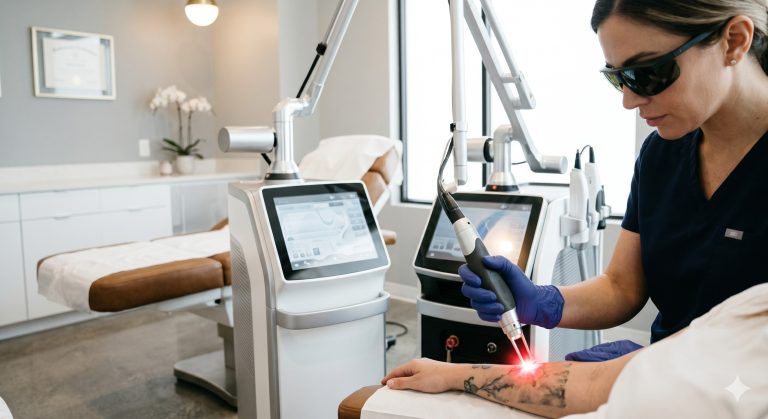
Chemical peels, laser resurfacing, microneedling, and certain other procedures intentionally affect the skin and may temporarily increase sensitivity.
Recovery and aftercare requirements depend on the procedure performed. Always follow the treating clinician’s instructions.
How to Repair a Damaged Skin Barrier: 7 Practical Steps
Repairing a damaged skin barrier usually involves reducing exposure to potential irritants, supporting moisture retention, and giving the skin time to recover. The most effective approach depends on what caused the irritation.
If your symptoms are mild and appear related to skincare overuse or environmental dryness, the following steps may help. However, eczema, allergic contact dermatitis, infections, and other skin conditions may require specific medical treatment.
Step 1: Stop Over-Exfoliating Your Skin
One of the first steps in repairing an irritated skin barrier is to stop unnecessary exfoliation.
Chemical exfoliants and physical scrubs can increase discomfort when the skin is already inflamed or dry. Temporarily pause nonessential exfoliating products if they appear to be contributing to your symptoms.
Products to review include:
- Glycolic acid and other AHA exfoliants
- Salicylic acid and other BHA exfoliants
- Exfoliating pads and peeling solutions
- Facial scrubs and abrasive cleansing brushes
- Frequent at-home chemical peels
Exfoliation is not inherently harmful. The problem occurs when the product, concentration, or frequency exceeds what your skin can tolerate.
Step 2: Switch to a Gentle Cleanser
A gentle cleansing routine can help reduce additional irritation while your skin recovers.
Look for a cleanser that is:
- Fragrance-free
- Non-abrasive
- Suitable for dry or sensitive skin
- Comfortable to use without persistent stinging
Avoid very hot water, aggressive rubbing, and repeated cleansing when it is not necessary.
For some people with very dry skin, rinsing with lukewarm water in the morning and using a gentle cleanser in the evening may be sufficient. Individual needs vary with skin type, sunscreen use, and daily activities.
Step 3: Apply a Barrier-Supporting Moisturizer
Moisturizing is one of the most useful supportive measures for dry skin with impaired barrier function.
A suitable moisturizer can help reduce transepidermal water loss, improve hydration, and relieve tightness.
Look for formulas containing ingredients such as ceramides, glycerin, petrolatum, or dimethicone. Creams and ointments may provide greater protection against moisture loss than lightweight lotions, although the best choice depends on individual tolerance.
Apply moisturizer after cleansing and reapply as needed when the skin feels dry.
If a moisturizer consistently causes burning, stop using it and consider a simpler formulation.
Step 4: Reduce Exposure to Irritating Ingredients
During an active irritation episode, a complicated skincare routine can make recovery more difficult.
Consider temporarily avoiding nonessential products that cause discomfort, including fragranced products, strong exfoliants, and certain cosmetic active ingredients.
Retinoids and acne treatments may also cause irritation, especially when first introduced or used too frequently.
If you are using prescription skincare medication, contact your prescribing clinician before changing the treatment plan.
Step 5: Protect Your Skin From UV Exposure
Excessive ultraviolet exposure can aggravate skin inflammation and contribute to further damage.
Use shade, protective clothing, and a broad-spectrum sunscreen with SPF 30 or higher when appropriate.
Some individuals with irritated skin tolerate mineral sunscreens containing zinc oxide or titanium dioxide better than certain other formulations.
However, no sunscreen is universally non-irritating. Choose a product your skin tolerates and seek professional advice if all sunscreens cause significant discomfort.
Step 6: Avoid Unnecessary Friction and Heat
Mechanical friction and excessive heat may worsen discomfort in already irritated skin.
Avoid rough towels, aggressive facial massage, harsh cleansing brushes, and prolonged exposure to very hot water.
Gently pat your face dry rather than rubbing it.
Step 7: Reintroduce Skincare Products Gradually
Once irritation has settled, you may be able to gradually return to a more complete skincare routine.
Introduce one nonessential product at a time, allowing enough time to observe your skin’s response before adding another.
If a particular ingredient repeatedly causes a rash, swelling, or significant irritation, avoid further exposure and consult a dermatologist.
Suspected allergic contact dermatitis may require professional patch testing rather than repeated experimentation at home.
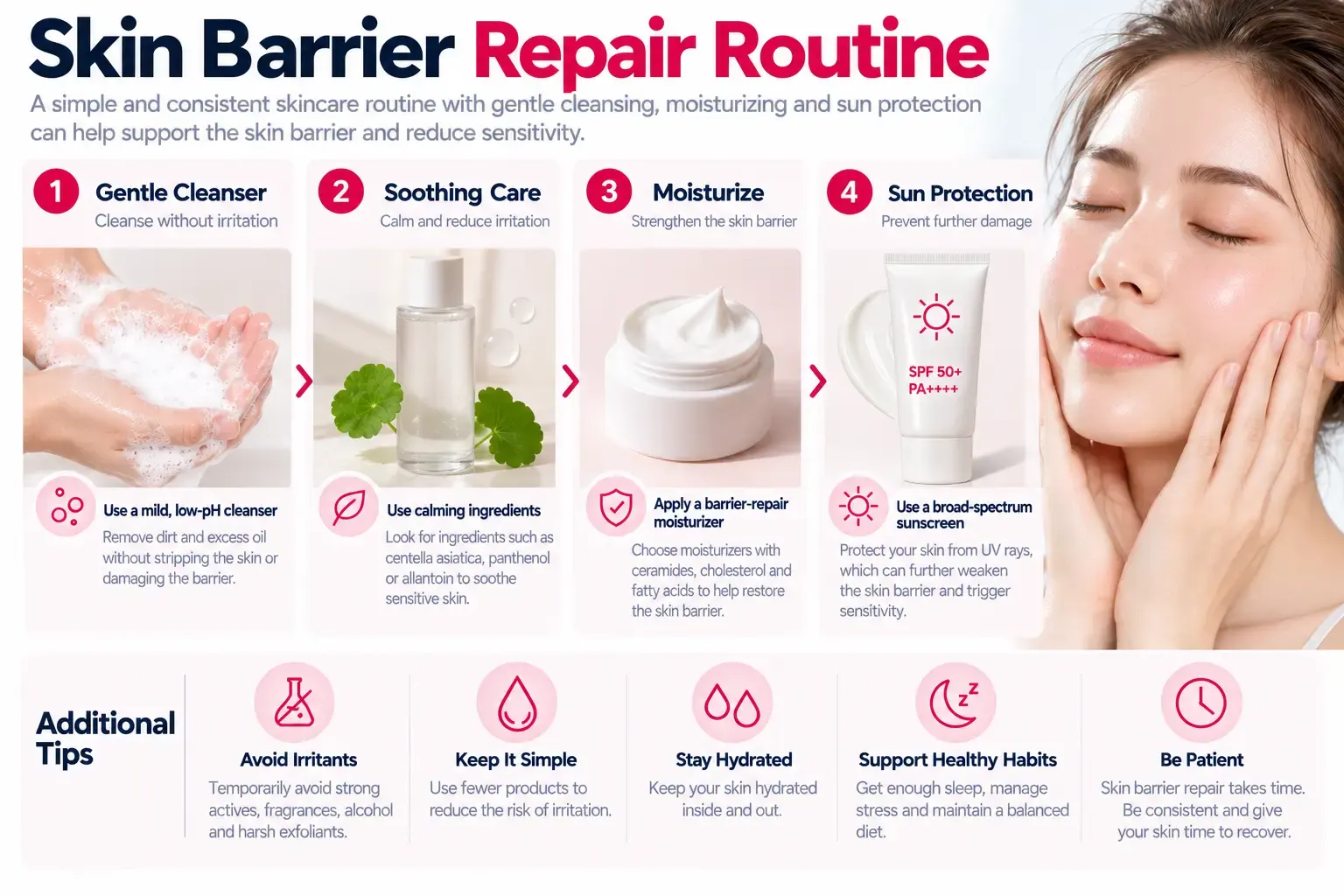
Morning and Night Skin Barrier Repair Routine
A damaged skin barrier does not necessarily require an elaborate collection of skincare products. A basic routine is often easier to tolerate and makes it simpler to identify potential triggers.
Morning Routine for a Damaged Skin Barrier
- Cleanse gently if needed. Use lukewarm water or a mild cleanser, depending on your skin’s needs.
- Apply moisturizer. Choose a fragrance-free cream or lotion that does not cause persistent stinging.
- Apply sunscreen. Use a well-tolerated broad-spectrum SPF 30 or higher product when appropriate.
Night Routine for a Damaged Skin Barrier
- Remove sunscreen and makeup gently. Avoid aggressive rubbing or unnecessary repeated cleansing.
- Apply a suitable moisturizer. Focus on hydration and reducing moisture loss.
- Use additional occlusive protection if needed. For very dry areas, a small amount of plain petrolatum may help reduce water loss, provided the product is appropriate for your skin and is well tolerated.
| Step | Morning | Evening |
|---|---|---|
| Cleansing | Gentle cleansing if needed | Gentle cleanser |
| Moisturizer | Fragrance-free moisturizer | Moisturizer or suitable cream |
| Sun protection | Broad-spectrum SPF 30+ | Not needed indoors at night |
| Exfoliating products | Avoid while actively irritated | Avoid while actively irritated |
| Optional occlusive | As needed | As needed for dry areas |
Best Ingredients for Skin Barrier Repair
When selecting products for skin barrier support, focus on ingredients with established moisturizing, humectant, or skin-protective functions.
The most useful formulation is not necessarily the one with the longest ingredient list. Product tolerance and the overall formula are important considerations.
Ceramides
Ceramides are naturally occurring lipids found in the stratum corneum. They help maintain the structure and function of the skin barrier.
Moisturizers containing ceramides may help support hydration and barrier function, particularly in dry or eczema-prone skin.
Glycerin
Glycerin is a humectant that attracts and helps retain water in the outer skin layers.
It is commonly included in moisturizers designed for dry and sensitive skin.
Petrolatum
Petrolatum is an occlusive ingredient that helps reduce water loss from the skin.
It may be useful for protecting dry, irritated areas, although it should be used according to individual skin needs and product instructions.
Dimethicone
Dimethicone is a silicone-based ingredient frequently used as a skin protectant.
It can help reduce moisture loss and improve the feel of moisturizers.
Colloidal Oatmeal
Colloidal oatmeal is used in certain skincare products formulated to soothe dry or itchy skin.
It may be helpful for some individuals with mild irritation, although allergic reactions or individual intolerance are still possible.
Hyaluronic Acid
Hyaluronic acid is a humectant that can help improve skin hydration.
It may be a useful component of a moisturizing formula, but it does not independently treat every cause of skin barrier disruption.
Niacinamide
Niacinamide is a form of vitamin B3 used in many skincare formulations.
Some studies suggest that niacinamide may support skin barrier function. However, certain formulations or concentrations can cause irritation in sensitive individuals.
If your skin is actively stinging, prioritize a simple moisturizer that you already tolerate rather than introducing multiple new active ingredients.
Skin Barrier Repair Ingredients Comparison
| Ingredient | Main Function | Considerations |
|---|---|---|
| Ceramides | Support barrier lipid function | Common in barrier-focused moisturizers |
| Glycerin | Attracts and retains moisture | Useful humectant for dry skin |
| Petrolatum | Reduces moisture loss | Rich, occlusive texture |
| Dimethicone | Skin protection and moisture retention | Common in creams and lotions |
| Colloidal oatmeal | Helps soothe dry, itchy skin | Check individual tolerance |
| Hyaluronic acid | Supports hydration | Often combined with other moisturizers |
| Niacinamide | May support barrier function | Some formulas may sting irritated skin |
What Ingredients Should You Avoid While Repairing Your Skin Barrier?
There is no universal list of ingredients that everyone with sensitive skin must avoid. However, products that are causing irritation should be discontinued or reviewed with a healthcare professional.
During an active irritation episode, consider temporarily pausing nonessential:
- Strong exfoliating acids
- Abrasive facial scrubs
- High-frequency exfoliating treatments
- Fragranced products that trigger irritation
- Retinoid products that are causing discomfort
- New cosmetic treatments that may increase inflammation
Do not assume that all active ingredients are permanently unsuitable for your skin. Some may be reintroduced later with professional guidance and an appropriate application schedule.
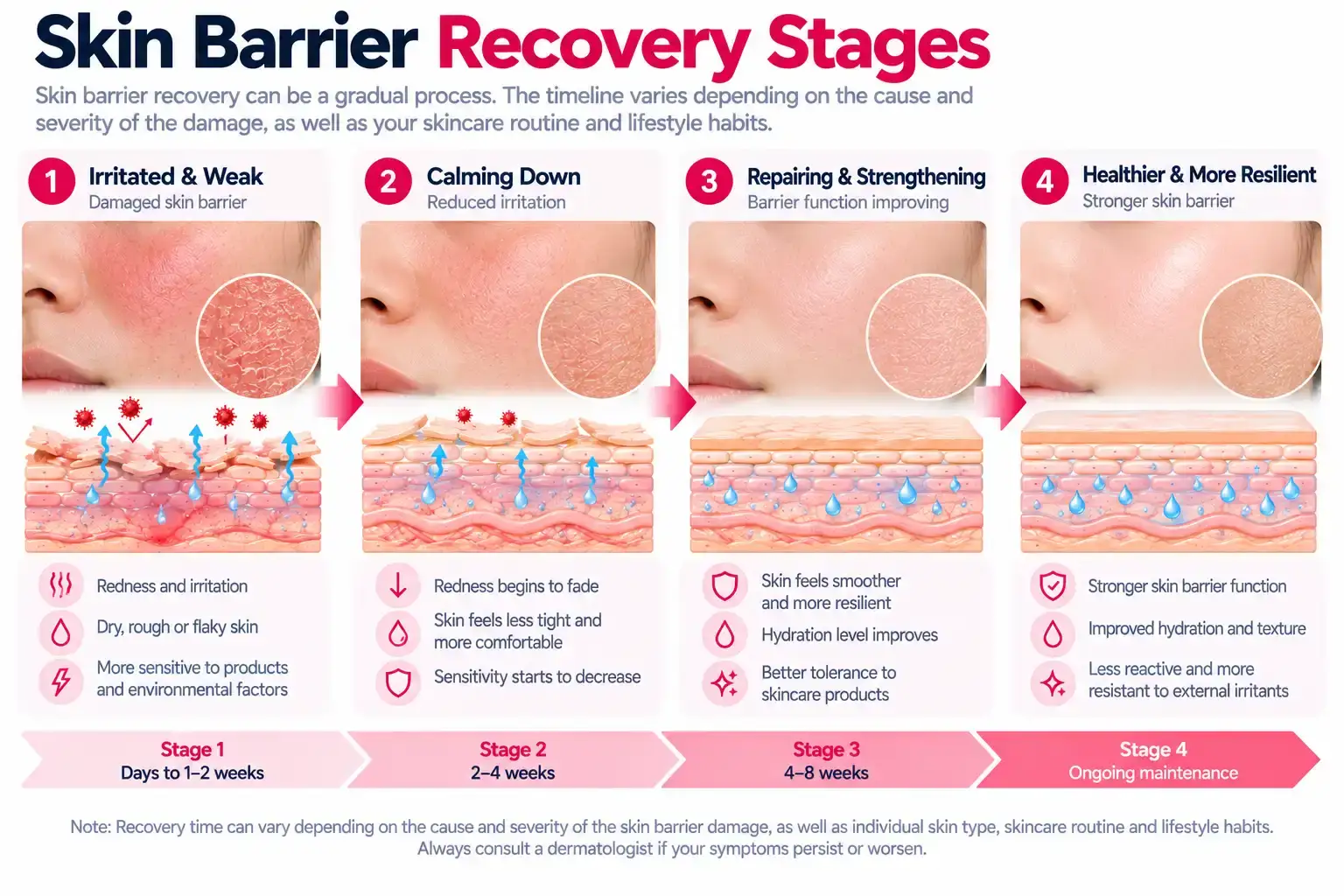
How Long Does It Take to Repair a Damaged Skin Barrier?
Skin barrier recovery time varies considerably. It depends on the cause of disruption, the severity of irritation, individual skin characteristics, and whether the triggering exposure continues.
Mild irritation caused by temporary overuse of skincare products may begin improving within several days after the suspected trigger is removed.
More substantial disruption may take weeks to improve, while chronic inflammatory skin conditions may require ongoing management.
Early Recovery: Reducing Irritation
During the initial recovery period, the priority is to reduce exposure to irritating products and support skin hydration.
Some people notice less tightness or stinging after simplifying their skincare routine.
Continued Recovery: Improving Skin Comfort
As irritation settles, the skin may gradually become more comfortable during cleansing and moisturizing.
Dryness, flaking, and redness may improve at different rates.
Longer Recovery: Addressing Underlying Conditions
If symptoms are caused by eczema, contact dermatitis, or another dermatological condition, moisturizer alone may not be sufficient.
Appropriate medical treatment and avoidance of identified triggers may be necessary.
Signs Your Skin Barrier May Be Recovering
- Reduced tightness after cleansing
- Less frequent stinging from tolerated products
- Improved skin hydration
- Less visible dryness or flaking
- Improved comfort during your normal routine
These improvements may suggest that irritation is resolving, but they do not prove that skin barrier function has fully normalized.
If symptoms persist, worsen, or repeatedly return, consult a dermatologist to determine whether an underlying condition requires treatment.

How to Tell if Your Skin Barrier Is Healing
If you have simplified your skincare routine and started using gentle, moisturizing products, you may wonder whether your skin barrier is actually recovering.
Skin barrier recovery does not always produce dramatic visible changes. Instead, improvement is often reflected in how your skin feels and responds to everyday activities.
1. Your Skin Feels Less Tight After Washing
A reduction in tightness after cleansing may indicate improved skin hydration and less irritation.
However, tightness can also depend on the cleanser, water temperature, and environmental conditions.
2. Skincare Products Cause Less Stinging
When your skin is irritated, even familiar moisturizers may produce a stinging sensation.
If previously tolerated products become comfortable again, this may suggest that irritation is improving.
Do not deliberately apply products that previously caused a significant reaction just to test whether your skin has recovered.
3. Dryness and Flaking Begin to Improve
As hydration improves and inflammation settles, dry patches and visible flaking may gradually decrease.
Persistent scaling or itching, however, may indicate an underlying condition such as eczema or contact dermatitis.
4. Redness and Irritation Become Less Noticeable
Reduced redness may be another sign of improvement, especially when irritation was caused by excessive exfoliation or harsh skincare products.
Persistent facial redness or repeated flushing may require evaluation for rosacea or other inflammatory skin conditions.
5. Your Skin Tolerates a Simple Routine More Comfortably
One practical indicator of progress is the ability to cleanse, moisturize, and protect your skin without recurring discomfort.
However, improvement in symptoms does not necessarily prove that the skin barrier has completely returned to its previous condition.
Can a Damaged Skin Barrier Repair Itself?
Yes. The skin has natural mechanisms that help restore its protective barrier after mild disruption.
The epidermis continually renews itself, and the outer skin layers contain lipids and other components that contribute to barrier maintenance.
When irritation is mild and the underlying trigger is removed, the skin may gradually regain normal comfort and protective function.
However, recovery can be delayed when exposure to irritants continues or when an underlying inflammatory condition is present.
Does Moisturizer Actually Repair the Skin Barrier?
Moisturizers support barrier recovery by improving hydration and reducing water loss.
Certain formulations also contain lipids such as ceramides that help support the structure and function of the outer skin layers.
Moisturizer does not independently treat every possible cause of barrier disruption.
For example, allergic contact dermatitis may require identification and avoidance of an allergen, while eczema may require additional medical treatment.
Can You Repair Your Skin Barrier Overnight?
A moisturizer or protective ointment may provide noticeable relief from dryness or tightness after a single application.
However, temporary improvement in comfort should not be confused with complete restoration of barrier function.
Recovery time varies according to the cause and severity of the disruption.
Damaged Skin Barrier vs. Dehydrated Skin: What’s the Difference?
A damaged skin barrier and dehydrated skin are related concepts, but they are not identical.
Dehydrated skin refers to a condition in which the skin has insufficient water content. It may feel tight, look dull, or show more noticeable fine lines.
Barrier disruption involves impairment of the skin’s protective function and may contribute to increased water loss, irritation, and sensitivity.
Both conditions can occur together, and their symptoms often overlap.
| Feature | Damaged Skin Barrier | Dehydrated Skin |
|---|---|---|
| Main issue | Impaired protective barrier function | Insufficient skin water content |
| Possible symptoms | Dryness, stinging, redness, irritation | Tightness, dullness, fine dehydration lines |
| Common contributors | Irritants, over-exfoliation, inflammatory skin conditions | Dry environments, inadequate moisturizing, increased water loss |
| Can occur together? | Yes | Yes |
| General care approach | Reduce irritation, moisturize, address underlying causes | Support hydration and reduce water loss |
Because the symptoms overlap, it is not always possible to distinguish the two conditions based on appearance alone.
Common Skin Barrier Repair Mistakes to Avoid
Some skincare habits may unintentionally prolong irritation or interfere with recovery.
Using Too Many Repair Products
Applying several new serums, creams, and treatments simultaneously can make it difficult to identify which product is helping or causing irritation.
A simple, well-tolerated routine is often preferable during active recovery.
Continuing Strong Exfoliation
Rough or flaky skin does not always need additional exfoliation.
Using scrubs or exfoliating acids on inflamed skin may worsen discomfort.
Assuming Every Reaction Is Skin Barrier Damage
Redness, burning, itching, and sensitivity can also occur with allergic contact dermatitis, rosacea, eczema, and infections.
Persistent symptoms should not be automatically attributed to barrier damage.
Choosing Products Based Only on Marketing Claims
Labels such as clean, natural, soothing, and barrier repair do not guarantee that a product will be suitable for every individual.
Fragrance-free formulas with familiar, well-tolerated ingredients may be a more practical starting point.
Expecting Instant Results
Improvement in skin comfort may occur before the underlying irritation has fully resolved.
Avoid frequently changing your routine simply because results are not immediate.
Ignoring Persistent or Worsening Symptoms
If your skin remains inflamed, develops a rash, or becomes increasingly painful, further skincare experimentation may delay appropriate treatment.
When Should You See a Dermatologist?
Mild irritation related to a recent skincare change may improve with trigger avoidance and gentle care.
However, professional evaluation is recommended when symptoms are persistent, recurring, or difficult to explain.
Consider a Dermatology Appointment If:
- Your skin remains irritated despite stopping suspected triggers.
- You experience recurring redness, itching, or inflammation.
- Multiple skincare products repeatedly cause significant reactions.
- You suspect eczema, rosacea, or allergic contact dermatitis.
- Your symptoms interfere with sleep or everyday activities.
Seek Prompt Medical Attention If:
- Redness spreads rapidly or is accompanied by fever.
- You develop severe pain, swelling, or signs of infection.
- You experience significant blistering or skin breakdown.
- A rash develops with eye pain or changes in vision.
- You experience a severe reaction after starting a new medication.
Difficulty breathing, faintness, or sudden swelling of the tongue or throat may indicate a severe allergic reaction and requires emergency medical care.
Frequently Asked Questions About Skin Barrier Repair
What is the fastest way to repair a damaged skin barrier?
The most useful approach is to identify and remove potential irritants, simplify your skincare routine, and use a gentle moisturizer that your skin tolerates.
There is no single product that can guarantee immediate barrier restoration.
How do I know if my skin barrier is damaged?
Possible signs include dryness, tightness, flaking, stinging, redness, and increased sensitivity to skincare products.
However, these symptoms are not specific to barrier damage. Persistent symptoms may require dermatological evaluation.
How long does it take for a damaged skin barrier to heal?
Mild irritation may begin improving within several days after removing the suspected trigger.
More significant disruption or underlying inflammatory conditions may require weeks of care or specific medical treatment.
Can I use vitamin C while repairing my skin barrier?
Some vitamin C formulations, particularly acidic products, may sting irritated skin.
If your skin is actively inflamed or reacting to products, consider temporarily pausing nonessential vitamin C products until symptoms have settled.
Can I use retinol with a damaged skin barrier?
Retinol and other retinoids can cause dryness and irritation, especially during initial use or with frequent application.
If your skin is actively irritated, stop nonessential cosmetic retinol products and seek professional guidance before restarting.
Consult your prescriber before changing a prescription retinoid regimen.
Is hyaluronic acid good for a damaged skin barrier?
Hyaluronic acid is a humectant that helps support hydration.
It may be useful as part of a moisturizing formulation, but it does not independently treat all causes of barrier damage.
Can a damaged skin barrier cause acne?
Barrier disruption and acne can occur together, and some acne treatments may contribute to dryness or irritation.
However, acne has multiple contributing factors, and barrier damage alone should not be assumed to explain every breakout.
Should I stop all skincare products to repair my skin barrier?
Not necessarily. Gentle cleansing, moisturizing, and sun protection may remain useful.
Focus on removing products that are causing irritation rather than abandoning all supportive skincare.
Can I have a facial or laser treatment with a damaged skin barrier?
Elective cosmetic procedures should generally be postponed when the skin is actively irritated, inflamed, or experiencing unexplained symptoms.
A qualified practitioner should evaluate the skin and determine whether treatment is appropriate.
Final Verdict: How to Repair a Damaged Skin Barrier
Repairing a damaged skin barrier begins with identifying potential causes of irritation and reducing unnecessary stress on the skin.
A gentle cleanser, well-tolerated moisturizer, appropriate sun protection, and temporary avoidance of irritating products may help support recovery.
Ingredients such as ceramides, glycerin, petrolatum, and dimethicone can play useful roles in maintaining hydration and reducing moisture loss.
However, not every case of redness or sensitivity is caused by barrier damage. Persistent or worsening symptoms may require professional diagnosis and treatment.
The goal is not to use more skincare products. It is to create conditions that allow your skin to recover while addressing the underlying cause.
Medical References and Further Reading
- American Academy of Dermatology: Dry Skin Care
- American Academy of Dermatology: Eczema
- NHS: Contact Dermatitis
- MedlinePlus: Skin Conditions
Medical Disclaimer: This article provides general educational information and is not a substitute for professional medical advice, diagnosis, or treatment. Consult a qualified healthcare professional if you have persistent, severe, or unexplained skin symptoms.