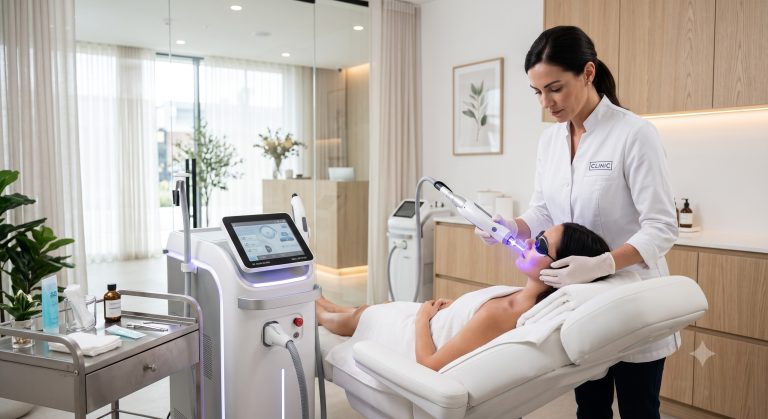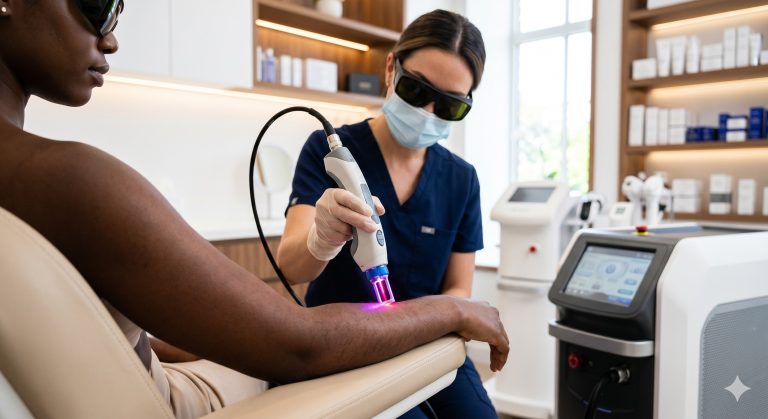
What Is SHR Hair Removal? How SHR Technology Works
SHR, commonly expanded as Super Hair Removal, is a professional hair-reduction approach that typically uses repeated light pulses and gradual thermal accumulation rather than relying only on isolated high-energy pulses.
SHR is often associated with IPL systems, although the term is used differently by different aesthetic-device manufacturers.
Instead of treating SHR as one fixed wavelength or one universal machine type, it is more accurate to understand it as a light-delivery strategy that may change repetition rate, pulse energy, movement technique, and thermal accumulation.
This guide explains what SHR hair removal is, how SHR technology works, how it differs from conventional IPL and wavelength-specific laser hair reduction, which treatment parameters matter, and what clinics should evaluate when comparing professional SHR systems.
Quick Answer
SHR hair removal is a light-based hair-reduction approach that typically uses repeated lower-energy pulses delivered at a relatively high repetition rate.
Rather than relying entirely on one high-intensity pulse, SHR commonly aims to build heat gradually within the treatment area while the handpiece is moved repeatedly across the skin.
Many SHR platforms are based on IPL technology, which means they use broad-spectrum intense pulsed light rather than one fixed laser wavelength. However, the exact implementation varies by device.
SHR should therefore not be treated as a universal wavelength, and the label alone does not prove that two machines will perform in the same way.
What Does SHR Stand For?
In the professional aesthetic equipment market, SHR commonly stands for Super Hair Removal.
The term generally describes a hair-reduction strategy that emphasizes:
- Repeated light pulses
- Relatively lower energy per individual pulse
- Higher repetition rates
- Continuous or repeated handpiece movement
- Gradual thermal accumulation
- Active skin cooling
However, SHR is not a standardized energy category in the same way that “808nm diode laser” or “1064nm Nd:YAG laser” identifies a particular wavelength family.
Different manufacturers may implement SHR using different pulse structures, spectral ranges, software algorithms, repetition rates, or movement protocols.
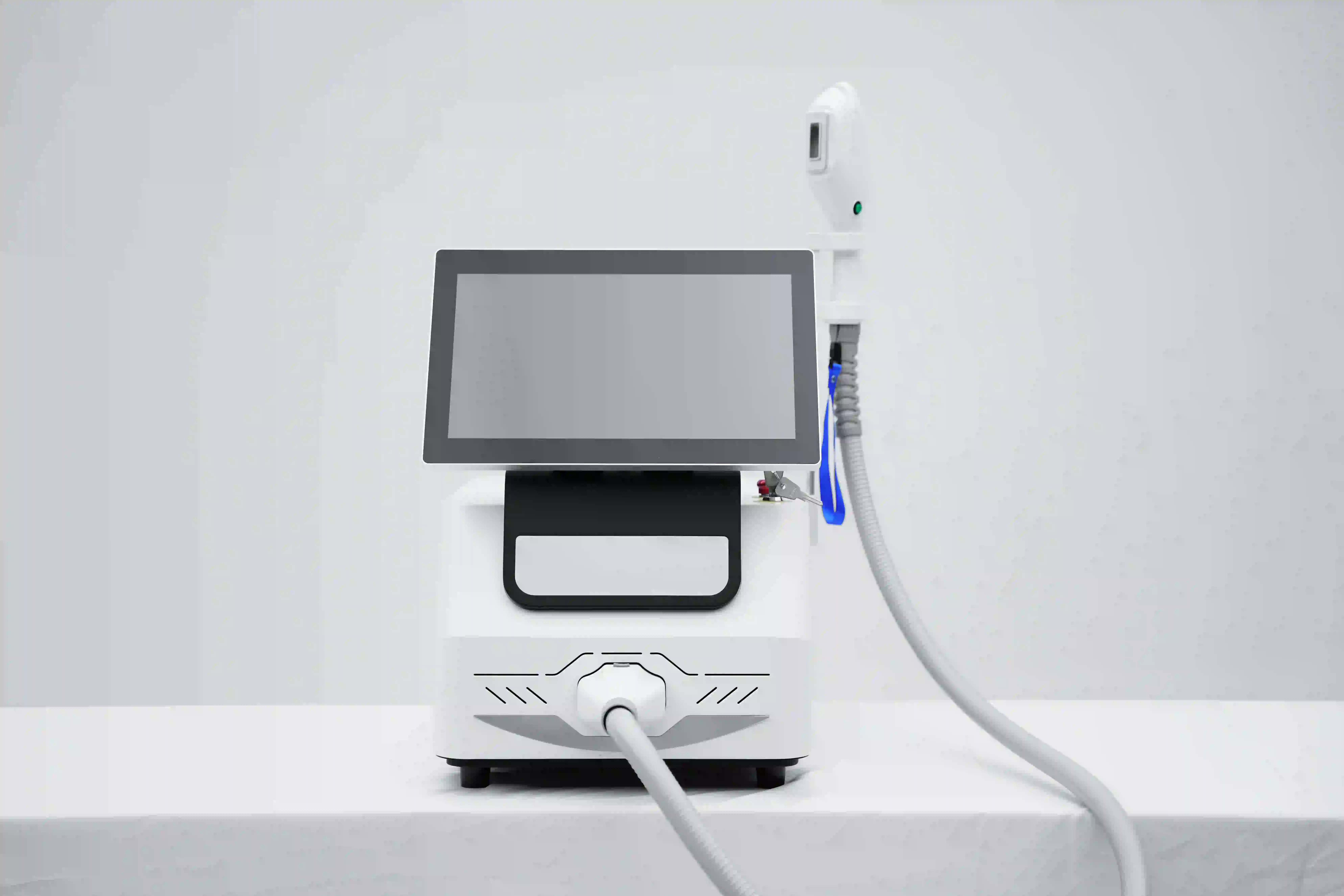
Is SHR a Laser?
Not necessarily.
One of the most common misunderstandings is that SHR is automatically a type of laser.
In many professional aesthetic systems, SHR is implemented using IPL, or Intense Pulsed Light.
IPL produces broad-spectrum pulsed light rather than one specific laser wavelength. SHR may modify how that light is delivered during hair-reduction treatment.
Some manufacturers may also use similar terminology around other light-based systems, so buyers should verify the actual energy source rather than relying only on the SHR label.
For the fundamentals of IPL technology, see What Is IPL? How Intense Pulsed Light Works.
How Does SHR Hair Removal Work?
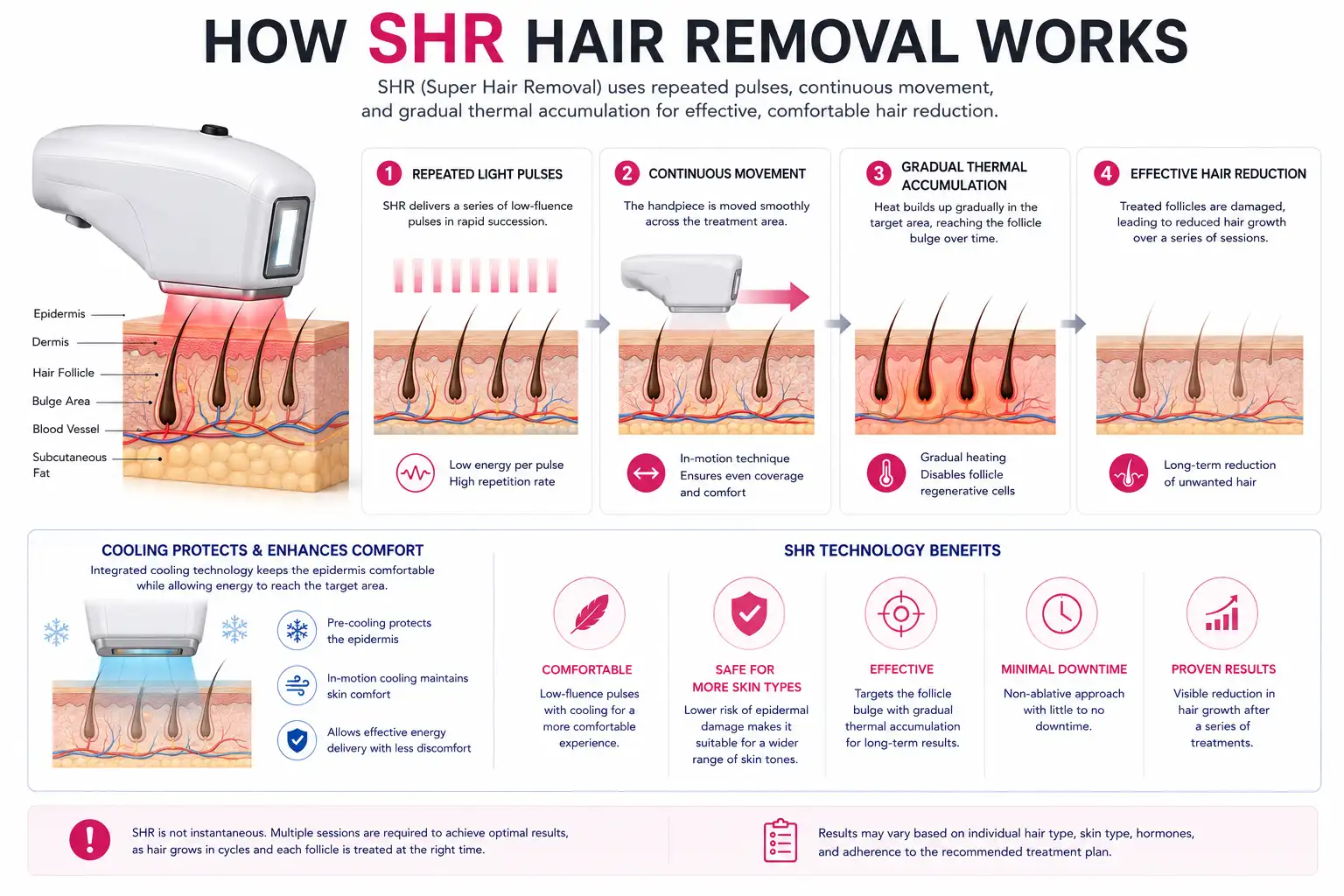
SHR hair removal is generally based on controlled light absorption and thermal accumulation within the treatment area.
A simplified SHR treatment process may look like this:
- The handpiece delivers repeated pulses of light.
- The operator moves the handpiece continuously or repeatedly across the treatment area.
- Melanin associated with hair structures absorbs part of the optical energy.
- Repeated pulses gradually raise temperature within targeted tissue.
- Cooling helps manage epidermal temperature and patient comfort.
- The accumulated thermal effect is intended to impair structures involved in future hair growth.
The important distinction is that SHR often distributes treatment energy across multiple passes or pulses instead of delivering the complete thermal dose in one isolated pulse.
How Does SHR Target Hair?
Melanin is an important chromophore in many professional hair-reduction technologies.
Light absorbed by melanin is converted into heat. The treatment objective is to create sufficient thermal effects within hair-associated structures while limiting unwanted injury to surrounding tissue.
SHR differs from some conventional high-fluence treatment approaches because the desired thermal effect may be created through repeated energy delivery and heat accumulation.
The actual biological response depends on multiple factors, including:
- Hair color
- Hair thickness
- Hair depth
- Skin pigmentation
- Optical spectrum or wavelength
- Energy per pulse
- Pulse duration
- Repetition rate
- Number of passes
- Treatment speed
- Cooling
Does SHR Use Selective Photothermolysis?
SHR hair reduction still relies on controlled light-tissue interaction, but its delivery strategy may differ from the classic concept of producing the desired thermal effect with one carefully selected pulse.
In conventional selective photothermolysis, treatment design considers factors such as:
- Wavelength
- Target chromophore
- Pulse duration
- Fluence
- Target thermal characteristics
SHR approaches may add repeated exposure and thermal accumulation as important parts of the treatment strategy.
This does not eliminate the need for careful parameter selection. Repetition rate, pulse energy, movement speed, overlap, and cooling all influence how much heat builds within the treatment area.
What Is In-Motion SHR?
Many SHR systems are used with an in-motion treatment technique.
Instead of placing the handpiece on one position, delivering a pulse, moving to the next position, and repeating, the operator moves the handpiece continuously over the treatment zone while pulses are emitted at a relatively high repetition rate.
This approach can help distribute light across a larger area over multiple passes.
Important variables include:
- Movement speed
- Repetition rate
- Energy per pulse
- Number of passes
- Overlap
- Treatment endpoint
- Cooling
Moving too quickly may reduce thermal accumulation, while excessive overlap or slow movement may increase local heat. Device-specific training is therefore important.
SHR vs Traditional IPL Hair Removal
SHR and conventional IPL may use the same broad category of light source, but the treatment delivery strategy can be different.
| Feature | SHR Approach | Traditional IPL Approach |
|---|---|---|
| Light Source | Often IPL-based | IPL |
| Energy Delivery | Repeated pulses with gradual heat accumulation | May rely more heavily on individual treatment pulses |
| Handpiece Technique | Often in-motion | Often stationary or stamp-style pulse placement |
| Repetition Rate | Often relatively high | Varies by platform |
| Energy per Pulse | May be relatively lower per individual pulse | Can use higher energy in individual pulses depending on protocol |
| Thermal Strategy | Progressive accumulation | More pulse-specific heating depending on protocol |
These differences are general rather than universal. Modern IPL platforms may offer multiple pulse modes, including both conventional and SHR-style treatment options.
This is why “SHR vs IPL” should not always be interpreted as comparing two completely different machines.
SHR vs Laser Hair Removal
The difference becomes clearer when SHR is compared with wavelength-specific laser hair-removal technologies.
SHR commonly refers to a delivery approach, often using IPL, while professional laser hair-removal platforms use specific laser wavelengths.
Common laser technologies include:
- 755nm alexandrite
- 808nm or 810nm diode
- 1064nm Nd:YAG
- Multi-wavelength diode systems
These wavelengths have different relationships with melanin, penetration, and epidermal absorption.
Therefore, a comparison between SHR and laser should consider both energy source and delivery method.
SHR vs Diode Laser Hair Removal
SHR and diode laser are commonly compared because both may be used for professional hair reduction.
The main technical difference is that a diode laser uses wavelength-specific semiconductor laser output, while SHR is often implemented using filtered broad-spectrum IPL.
| Feature | SHR | Diode Laser |
|---|---|---|
| Energy Category | Often IPL-based light delivery | Laser |
| Spectrum | Broad spectrum with filtering | Specific wavelength or wavelength combination |
| Delivery Style | Often repeated in-motion pulses | Can use stamping or in-motion approaches depending on system |
| Thermal Strategy | Often emphasizes gradual heat accumulation | Depends on pulse architecture and treatment mode |
| Main Professional Application | Hair reduction | Hair reduction |
Neither delivery method alone determines the final treatment quality.
Clinics should compare actual wavelength, pulse control, cooling, fluence, spot size, treatment speed, training, and patient population.
Is SHR Hair Removal Painless?
SHR is often marketed as “painless hair removal,” but this description should be used cautiously.
Repeated lower-energy pulses and continuous movement may create a different sensation from higher-fluence individual pulses, and effective cooling can improve treatment comfort.
However, sensation still varies according to:
- Treatment area
- Hair density
- Hair thickness
- Energy settings
- Number of passes
- Skin temperature
- Cooling performance
- Individual pain sensitivity
Patients may experience warmth, tingling, or temporary heat during treatment.
A more accurate description is that some SHR protocols are designed to support comfortable progressive heating rather than promising completely painless treatment for every patient.
What Are the Potential Benefits of SHR Hair Removal?
Depending on the platform and protocol, potential practical advantages of an SHR-style approach may include:
- Progressive thermal accumulation
- High-repetition treatment delivery
- In-motion coverage of larger areas
- Potentially comfortable treatment workflows
- Reduced dependence on one isolated high-fluence pulse
- Fast treatment of selected large body areas
- Integration into multi-function IPL platforms
These are technology and workflow characteristics rather than guaranteed clinical outcomes.
Actual performance depends on the device, optical output, patient selection, parameters, treatment technique, and operator training.
What Are the Limitations of SHR?
SHR also has important limitations that clinics should understand.
First, the term itself is not sufficiently specific to evaluate a machine.
Two devices advertised as SHR may differ substantially in:
- Light source
- Spectral output
- Filter quality
- Pulse waveform
- Maximum repetition rate
- Energy stability
- Spot size
- Cooling
- Software controls
Second, gradual heating still requires controlled technique. Incorrect movement speed, excessive overlap, inappropriate fluence, or inadequate cooling can alter the thermal response.
Third, treatment results remain influenced by hair biology. Light-based hair reduction is generally less responsive when there is insufficient melanin in the target hair.
Does SHR Work on Blonde, Gray, White, or Red Hair?
Hair color is important because many light-based hair-reduction technologies rely substantially on melanin as an optical target.
Darker hair typically contains more melanin than gray or white hair.
Very light blonde, gray, and white hairs may therefore provide insufficient melanin for reliable optical targeting with conventional melanin-dependent SHR or IPL approaches.
Red hair can also respond differently depending on pigment composition.
Marketing claims that one SHR system can reliably remove every hair color should therefore be evaluated carefully.
Can SHR Hair Removal Be Used on Different Skin Types?
Skin type is an important consideration in any light-based hair-reduction treatment because epidermal melanin can also absorb optical energy.
SHR is sometimes promoted as being suitable for a wide range of skin tones because repeated lower-energy pulses and gradual thermal accumulation may reduce dependence on one isolated high-fluence pulse.
However, suitability still depends on:
- The actual light source
- Delivered spectral range
- Filter configuration
- Skin phototype
- Baseline pigmentation
- Recent sun exposure
- Energy settings
- Pulse duration
- Repetition rate
- Cooling performance
- Operator technique
SHR should therefore not automatically be described as safe for every skin type simply because the machine includes an SHR mode.
SHR Hair Removal for Dark Skin
Darker skin requires careful treatment planning because higher epidermal melanin levels can increase competition for optical energy.
With IPL-based SHR systems, the delivered spectrum includes multiple wavelengths rather than one narrow laser wavelength. This makes filter selection, pulse parameters, cooling, and operator technique especially important.
In professional hair removal, longer-wavelength laser technologies such as approximately 1064nm Nd:YAG may also be considered for some darker skin phototypes because their tissue interaction differs from shorter wavelengths.
This does not mean SHR cannot be used in darker skin. It means the correct device and protocol should be selected according to the individual patient rather than relying on broad marketing claims.
How Many SHR Hair Removal Sessions Are Needed?
SHR hair reduction generally requires multiple treatment sessions because hair follicles are not all in the same growth stage at one time.
Hair-growth biology is one of the main reasons a single treatment cannot reliably target every hair within an area.
The number of SHR sessions may vary according to:
- Treatment area
- Hair density
- Hair thickness
- Hair color
- Growth cycle
- Hormonal influences
- Skin characteristics
- Device output
- Treatment parameters
- Response to previous sessions
Clinics should avoid guaranteeing a fixed number of sessions for every patient.
Progress is more appropriately evaluated over a treatment series and adjusted according to observed hair reduction and regrowth.
How Often Should SHR Hair Removal Be Done?
Treatment intervals depend partly on the hair-growth cycle and the area being treated.
Hair on different parts of the body can have different growth-cycle timing, which means the ideal interval may not be identical for the face, underarms, legs, back, or other treatment areas.
Treatment scheduling should also account for:
- Clinical protocol
- Previous response
- Skin recovery
- Hair regrowth
- Device instructions
More frequent treatment is not automatically more effective if the biological target is not in an appropriate stage for treatment.
SHR Hair Removal Before and After
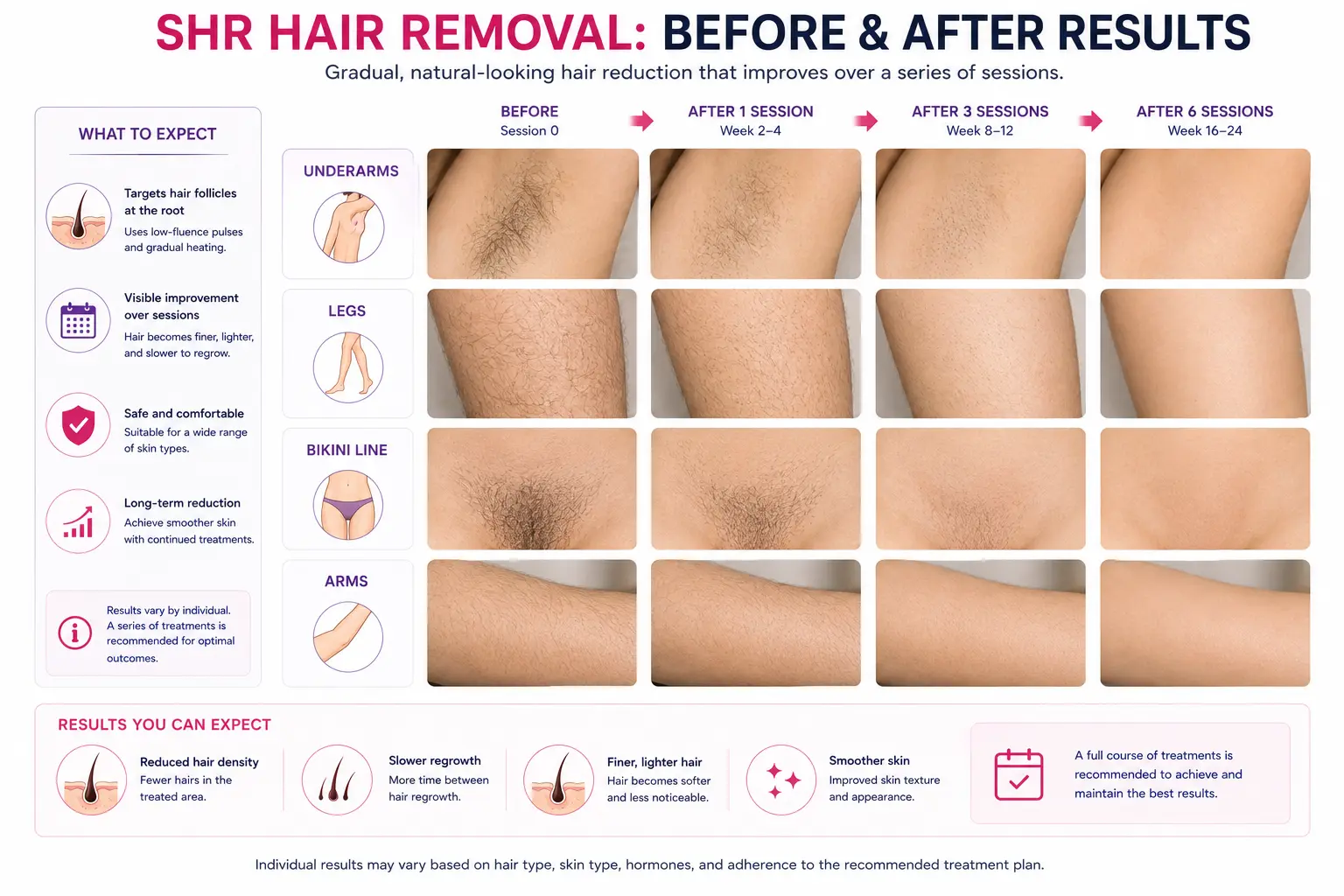
Before-and-after evaluation should focus on changes in hair density, thickness, growth speed, and overall regrowth pattern over time.
Immediately after treatment, the area may not look dramatically different.
Treated hairs can remain visible temporarily before shedding or showing altered regrowth.
Over a course of treatments, potential visible changes may include:
- Reduced hair density
- Slower regrowth
- Finer regrowing hair
- Patchier regrowth in responsive areas
- Longer intervals between noticeable regrowth
Results vary, and before-and-after photography should ideally use consistent lighting, angle, distance, and timing.
How Long Does It Take to See SHR Results?
SHR results are generally progressive rather than immediate.
Some treated hairs may shed after treatment, while longer-term reduction is evaluated across repeated sessions.
Visible improvement can depend on:
- How much melanin is present in the hair
- The growth phase of treated hairs
- Treatment parameters
- Number of completed sessions
- Hormonal factors
- Treatment area
A professional treatment plan should therefore evaluate cumulative response rather than judge effectiveness from one session alone.
Is SHR Hair Removal Permanent?
It is more accurate to describe SHR as a technology for long-term hair reduction rather than promising universal permanent hair removal.
Hair regrowth can be influenced by:
- Hormonal changes
- Age
- Genetics
- Treatment completeness
- Hair characteristics
- Underlying medical or endocrine factors
Some patients may require maintenance treatments over time.
Regulatory terminology and permitted claims can also vary by market and device, so manufacturers and clinics should use language appropriate to the specific product and jurisdiction.
Does SHR Hair Removal Have Downtime?
Many SHR hair-reduction procedures are associated with limited visible downtime, but temporary skin responses can still occur.
Possible short-term effects may include:
- Redness
- Warmth
- Mild sensitivity
- Temporary perifollicular response
- Mild swelling in some cases
The intensity of these effects depends on the treatment settings, skin characteristics, cooling, and individual response.
Claims of universally “zero downtime” should therefore be treated cautiously.
SHR Hair Removal Side Effects and Risks
SHR may use progressive heat accumulation, but it still delivers optical energy into the skin and is not risk-free.
Potential adverse effects may include:
- Excessive redness
- Swelling
- Skin irritation
- Burns or blistering if excessive heat accumulates
- Post-inflammatory hyperpigmentation
- Hypopigmentation
- Temporary pigmentary changes
- Eye injury if appropriate protection is not used
Risk may increase when treatment parameters, handpiece movement, overlap, cooling, or patient selection are inappropriate.
Operators should follow device-specific training, instructions, safety requirements, and applicable regulations.
SHR vs IPL: Are They the Same?
SHR and IPL are related, but they are not always the same term.
IPL describes the underlying broad-spectrum light technology.
SHR commonly describes a particular way of delivering light for hair reduction, often using:
- Higher repetition rates
- Repeated lower-energy pulses
- In-motion handpiece technique
- Progressive thermal accumulation
A professional IPL machine can therefore include an SHR mode while still remaining an IPL platform.
This distinction is important for equipment buyers because a machine marketed as “IPL + SHR” may not contain two independent light sources.
SHR vs OPT: What Is the Difference?
SHR and OPT are both terms commonly used around modern IPL platforms, but they generally describe different aspects of energy delivery.
SHR commonly refers to a hair-reduction strategy emphasizing repeated pulse delivery and gradual thermal accumulation.
OPT commonly refers to an optimized pulse-control approach intended to improve how IPL energy is delivered during a pulse or pulse sequence.
| Term | General Meaning | Main Focus |
|---|---|---|
| IPL | Broad-spectrum Intense Pulsed Light technology | Underlying light platform |
| OPT | Optimized pulse-delivery approach | Pulse shape and energy consistency |
| SHR | Repeated in-motion hair-reduction approach | Progressive thermal accumulation |
Exact implementation varies between manufacturers, so clinics should evaluate actual pulse architecture rather than comparing names alone.
For a dedicated comparison, see OPT vs IPL: What’s the Difference?.
SHR vs Diode Laser: Which Is Better?
Neither SHR nor diode laser is universally better for every patient or clinic.
SHR may appeal to clinics that want a flexible IPL-based platform with high-repetition in-motion hair treatment and potentially additional IPL applications.
Diode laser may appeal to clinics seeking a dedicated wavelength-specific hair-reduction platform.
Important comparison factors include:
- Patient skin types
- Hair types
- Hair-removal treatment volume
- Need for pigmentation or photorejuvenation functions
- Treatment speed
- Cooling
- Handpiece durability
- Consumable cost
- Energy stability
- Training
- Service support
A clinic focused almost entirely on hair reduction may evaluate a dedicated diode platform differently from a clinic that wants one system for both hair reduction and multiple IPL applications.
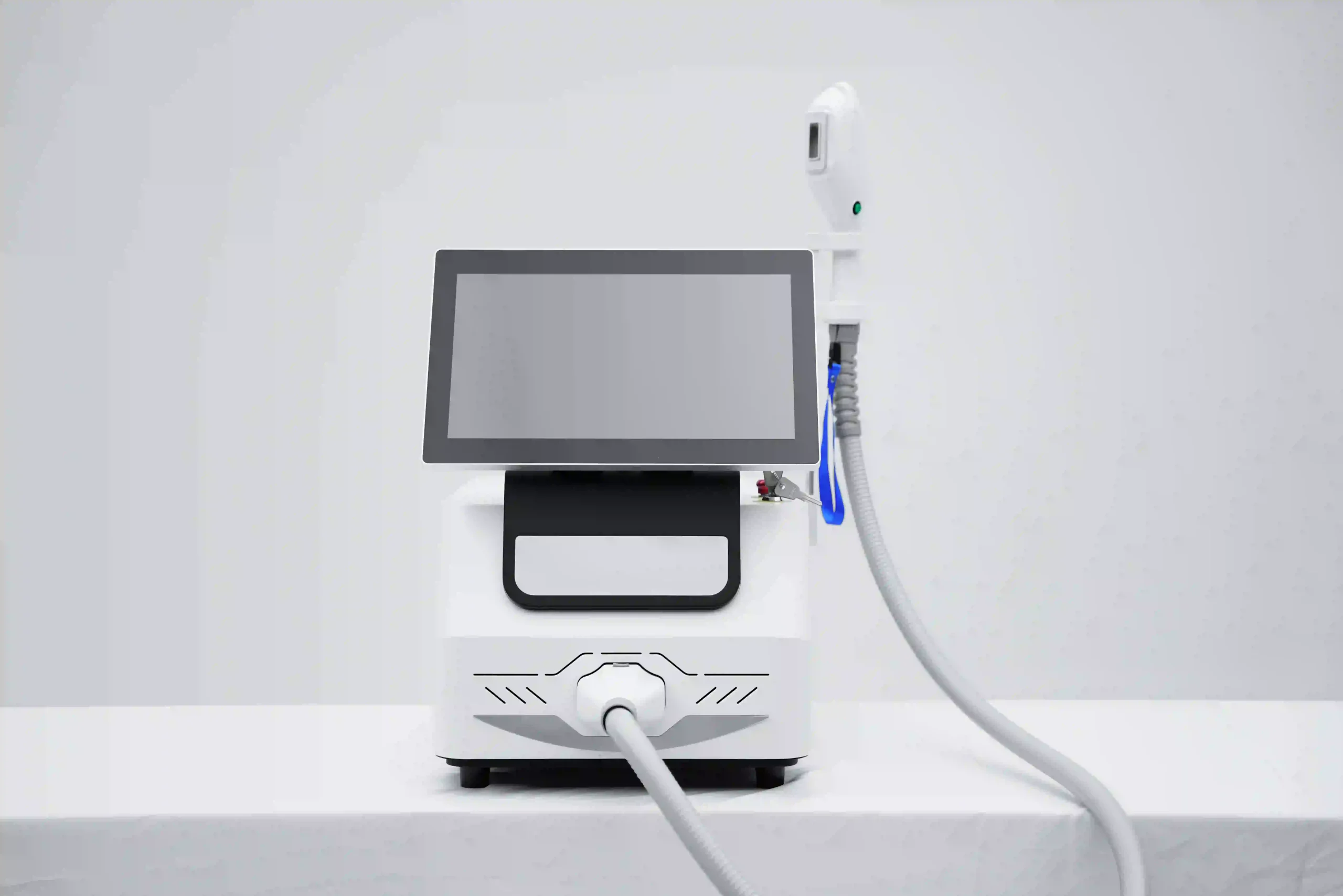
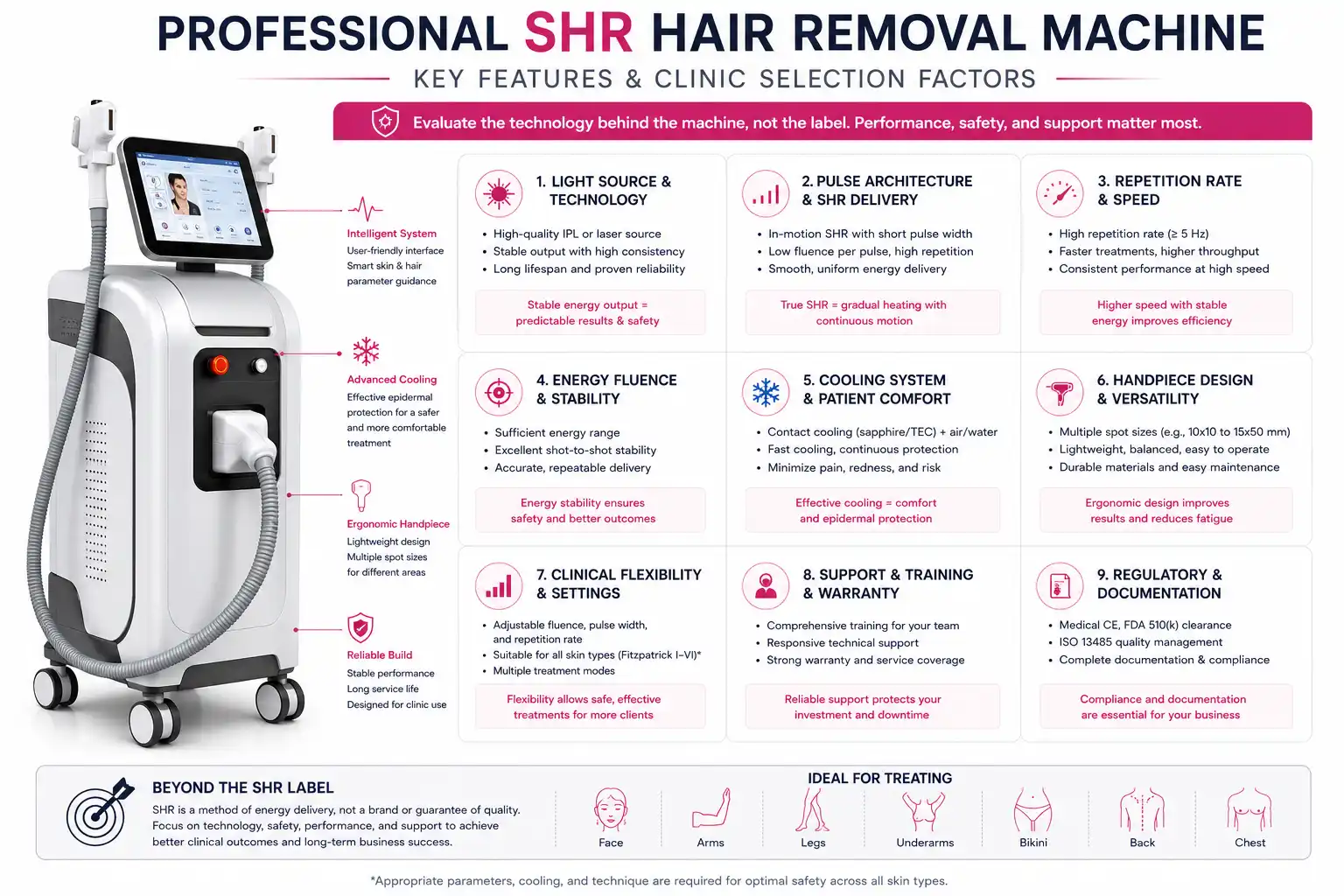
What Should Clinics Look for in an SHR Hair Removal Machine?
Clinics should avoid evaluating an SHR machine based only on a high repetition-rate number or a “painless” marketing claim.
Important specifications and purchasing factors can include:
- Actual energy source
- Delivered wavelength spectrum
- Available optical filters
- Fluence range
- Pulse duration
- Pulse waveform
- Repetition rate
- Energy stability at high repetition rates
- Spot size
- Handpiece weight and ergonomics
- Cooling technology
- Sapphire temperature control where applicable
- Lamp or energy-source life
- Consumable requirements
- User interface
- SHR and conventional IPL mode flexibility
- Treatment presets
- Training
- Technical support
- Warranty
- Maintenance
- Regulatory documentation
- OEM/ODM support where required
Particularly for an in-motion SHR platform, energy stability at repeated high-frequency operation and effective thermal management can be more meaningful than maximum fluence alone.
SHR Machine vs Dedicated Diode Laser Machine for Clinics
| Buying Consideration | IPL / SHR Platform | Diode Laser Platform |
|---|---|---|
| Core Technology | Broad-spectrum light with filters | Semiconductor laser |
| Hair Reduction | Yes | Yes |
| Other IPL Applications | Potentially pigmentation, vascular, and photorejuvenation applications depending on device | Usually more focused on hair reduction |
| In-Motion Mode | Common in SHR systems | Available on some diode systems |
| Wavelength Specificity | Broad filtered spectrum | Specific wavelength or wavelength combination |
| Best Fit | Clinics seeking multi-application versatility | Clinics prioritizing dedicated hair-reduction specialization |
The decision should be based on the clinic’s treatment mix rather than assuming that one category is automatically more advanced.
Frequently Asked Questions About SHR Hair Removal
What does SHR stand for in hair removal?
SHR commonly stands for Super Hair Removal. It generally refers to a hair-reduction approach using repeated light pulses, relatively high repetition rates, and progressive heat accumulation.
Is SHR a laser?
Not necessarily. Many SHR systems are based on IPL technology, which uses broad-spectrum intense pulsed light rather than one fixed laser wavelength.
How does SHR hair removal work?
SHR commonly delivers repeated pulses while the handpiece moves across the treatment area. Light absorbed by melanin contributes to gradual thermal accumulation intended to impair hair-growth structures.
Is SHR the same as IPL?
Not exactly. IPL describes the broad-spectrum light technology, while SHR commonly describes one treatment-delivery mode or strategy that may operate on an IPL platform.
Is SHR better than IPL?
That comparison depends on what is meant by “IPL.” A modern IPL platform may include both conventional pulse modes and SHR-style modes, so the technologies are not always separate competing systems.
Is SHR better than diode laser?
Not universally. SHR may provide versatile IPL-based treatment options, while diode lasers provide wavelength-specific hair-reduction technology. Device quality, patient population, cooling, parameters, and clinic requirements are more important than the label alone.
Is SHR hair removal painless?
SHR protocols may be designed for progressive and potentially comfortable heating, but individual sensations vary. Completely painless treatment should not be guaranteed.
Does SHR work on dark skin?
Some SHR protocols may be used across a range of skin phototypes, but suitability depends on the actual device, spectrum, filters, settings, cooling, and patient characteristics. Professional assessment remains necessary.
Does SHR permanently remove hair?
SHR is more appropriately described as a technology for long-term hair reduction. Regrowth and maintenance requirements vary between patients.
How many SHR sessions are needed?
Multiple sessions are commonly required because hair grows in cycles. The appropriate number depends on the treatment area, hair characteristics, patient, device, and response to treatment.
Does SHR work on white or gray hair?
Conventional SHR relies substantially on melanin-related optical targeting. White and gray hairs contain little or no melanin and may therefore respond poorly to melanin-dependent light-based hair reduction.
What is an in-motion SHR treatment?
In-motion SHR involves moving the handpiece repeatedly across the treatment area while delivering pulses at a relatively high repetition rate, allowing heat to accumulate progressively over multiple passes.
Final Verdict: What Is SHR Hair Removal?
SHR hair removal is best understood as a professional hair-reduction delivery approach rather than one specific laser wavelength.
Many SHR systems use IPL technology and combine repeated lower-energy pulses, relatively high repetition rates, in-motion handpiece techniques, controlled thermal accumulation, and active cooling.
This approach can provide a different treatment workflow from conventional stationary IPL pulses, but the SHR label alone does not determine device quality or treatment performance.
Clinics should evaluate the actual light source, optical spectrum, pulse architecture, energy stability, repetition rate, cooling, spot size, handpiece design, clinical protocols, training, service support, and applicable regulatory documentation.
For patients, treatment suitability and results depend on factors such as hair color, hair thickness, skin characteristics, growth cycle, biological influences, device parameters, and the number of sessions completed.
Understanding SHR in this way also makes the relationship between IPL, OPT, SHR, and diode laser technology much clearer: IPL describes an underlying light platform, OPT generally refers to pulse optimization, SHR commonly refers to a progressive hair-removal delivery strategy, and diode laser represents a separate wavelength-specific laser technology.
Editorial & Technical Review: This article was prepared for the Cocoon Laser professional aesthetic technology knowledge center for educational and equipment-research purposes. It does not replace individual medical assessment. Treatment suitability, parameters, contraindications, expected outcomes, recovery, and adverse-event risks vary by patient and device. Qualified professionals should follow the intended use, device instructions, operator training requirements, eye-protection procedures, and applicable regulations for the specific IPL, SHR, or laser system.