Laser Hair Removal Machine Distributor FAQ: Expert Answers for Aesthetic Clinics & Dermatologists
Overview
Choosing the right laser hair removal machine distributor is a critical decision for any medical spa, dermatology clinic, or aesthetic center. This FAQ addresses the most common pre-sales and post-sales concerns from B2B buyers—covering everything from Fitzpatrick skin type compatibility and handpiece lifespan to regulatory compliance, ROI calculations, and technical support protocols. Read on for expert answers designed to help you make a confident, informed investment.
Frequently Asked Questions
Q1: Is a diode laser hair removal machine suitable for all Fitzpatrick skin types (I-VI)?
Yes, a modern diode laser hair removal machine with a wavelength of 810nm or triple-wavelength technology (755nm, 810nm, 1064nm) is safe and effective for all Fitzpatrick skin types I through VI. The key is the integration of advanced contact cooling (sapphire tip at -5°C to 0°C) and adjustable pulse durations. For darker skin (V-VI), the 1064nm wavelength bypasses melanin in the epidermis, reducing the risk of burns or hyperpigmentation while still targeting the hair follicle. Always request clinical evidence and spot test protocols from your distributor.
Q2: What is the typical handpiece lifespan of a professional laser hair removal machine?
The typical handpiece lifespan is 500,000 to 1,000,000 full-power shots, equivalent to 2-4 years of clinical use in a busy med spa (15-20 treatments daily). After this threshold, energy output may drop below 80% of original fluence, affecting clinical efficacy. Reputable laser hair removal machine distributors provide a handpiece shot counter in the UI and offer discounted replacement handpieces rather than requiring a full new machine purchase.
Q3: What training and after-sales technical support does a B2B distributor provide?
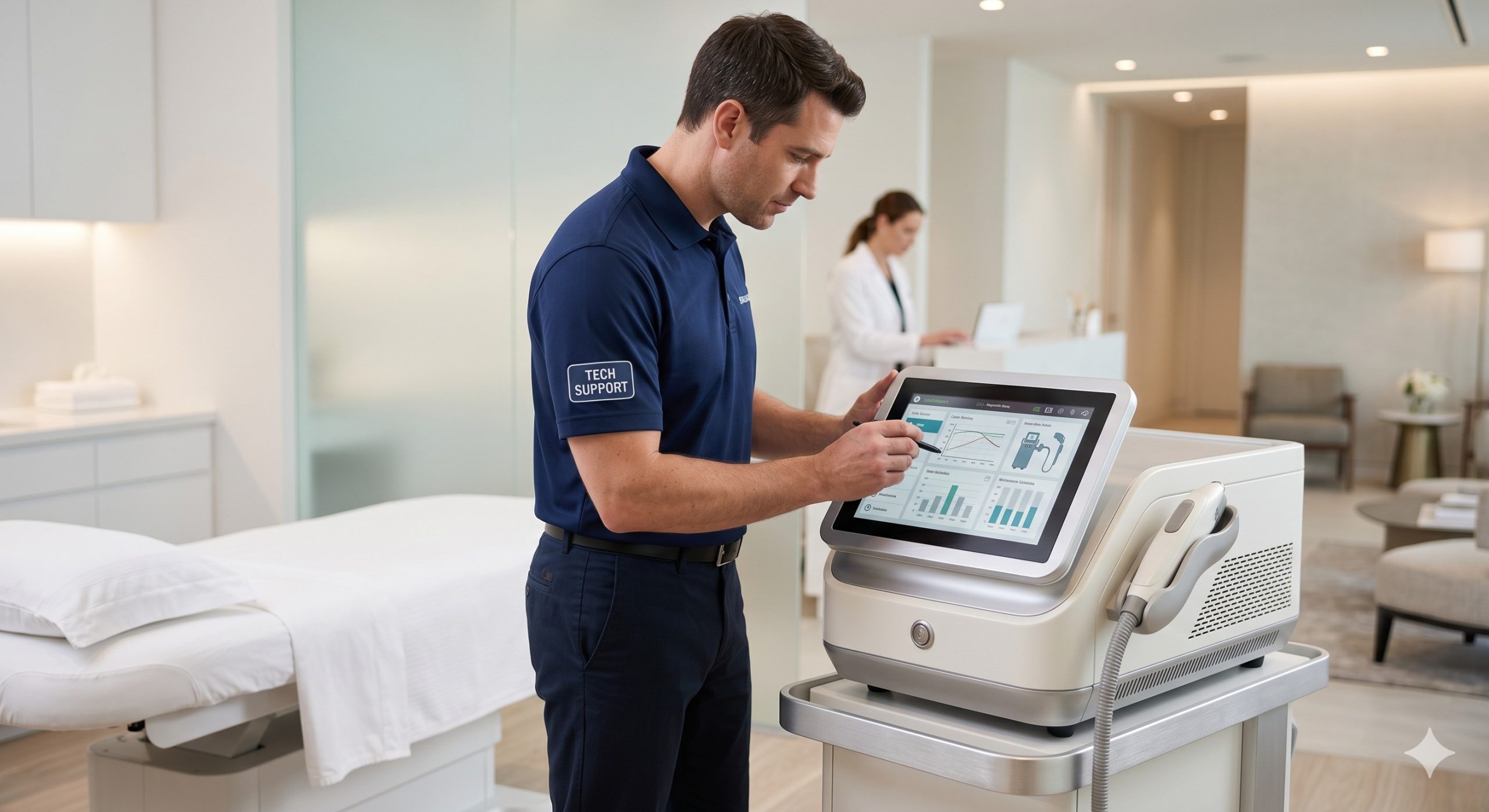
A qualified distributor provides comprehensive technical training including: (1) On-site or virtual clinical operation training on parameters, spot size selection, and patient assessment; (2) Remote troubleshooting via video call or dedicated support portal; (3) Spare parts availability (sapphire windows, water pumps, laser bars) within 48-72 hours; (4) Annual calibration and maintenance protocols. Avoid distributors who offer only a warranty without hands-on technical support—this is the #1 cause of clinic downtime.
Q4: What safety certifications should a laser hair removal machine have for clinic compliance?
Your laser hair removal machine must carry valid medical-grade certifications: FDA 510(k) clearance (USA), CE marking (Europe, MDR Class IIb), and ISO 13485 for manufacturing quality control. Additionally, the device should meet IEC 60825-1 (laser product safety) and include a key switch, emergency stop, and patient eye protection. Ask your distributor for a Declaration of Conformity and verify the CE certificate is issued by a Notified Body—not a self-declaration. Without these, your clinic insurance may be invalidated.
Q5: How do I calculate ROI for a laser hair removal machine in my clinic?
Calculate ROI using: (Average treatment price x weekly treatments) – (Financing cost + consumables + service contract) = weekly gross profit. For example: a $25,000 diode machine with 500,000 shots lifespan. At $150 per full leg treatment and 20 treatments/week, weekly revenue = $3,000. After $500/week operational costs, payback period is 10-12 weeks. Distributors should provide a full cost-per-shot breakdown including electrical consumption, cooling fluid replacement, and handpiece amortization. A positive ROI typically appears within 3-6 months for high-traffic clinics.
Q6: Does the machine require a water circulation system, and what maintenance is involved?
Professional high-power laser hair removal machines (above 1000W) use an internal closed-loop water circulation system with a chiller or radiator to cool the laser bars and handpiece. Maintenance includes: checking coolant levels monthly, replacing distilled water every 6-12 months, and cleaning air filters on the chiller unit every 90 days. Some newer air-cooled diode lasers (300-600W) eliminate water maintenance entirely but have lower max fluence for darker skin types. Ask your distributor for a detailed maintenance log template.
Q7: What is the difference between buying from a distributor vs. directly from a manufacturer?
A distributor offers local regulatory compliance (CE/FDA documentation in your language), in-country technical support, spare parts warehousing, and clinical training—often with shorter response times. Direct manufacturer purchasing may reduce upfront cost by 10-20%, but you risk 2-4 week shipping delays for repairs, import/customs compliance burdens, and no on-site training. For clinics without a biomedical engineer on staff, a reputable laser hair removal machine distributor is the lower-risk choice.
Q8: What warranties and service level agreements (SLAs) should I demand?
Minimum acceptable warranty: 2 years on the laser machine (laser bars, power supply, mainboard) and 1 year on the handpiece (excluding sapphire window wear). For the SLA, demand: (1) 48-hour remote diagnosis; (2) Replacement handpiece shipped within 72 hours; (3) On-site service within 7 business days if your city has a technician. Avoid distributors offering only ‘return-to-base’ warranty requiring you to ship the heavy main unit—logistics costs often exceed the repair value.