HIFU (High-Intensity Focused Ultrasound) is an advanced energy-based aesthetic
technology that uses focused ultrasound waves to create controlled thermal
effects at specific tissue depths. It is widely used in modern aesthetic
treatments for skin tightening, lifting, and selected body contouring applications.
Unlike traditional ultrasound imaging systems, aesthetic HIFU devices
are designed to deliver focused energy precisely into targeted areas, supporting
natural tissue remodeling processes.
For aesthetic clinics and medical professionals, understanding how HIFU
works is essential when selecting professional treatment equipment and
developing effective treatment protocols.
Key Takeaways
HIFU stands for High-Intensity Focused Ultrasound.
HIFU uses focused ultrasound energy to create controlled thermal effects
at selected tissue depths.
The technology is commonly used for skin tightening, lifting, and body
contouring applications.
HIFU works through tissue remodeling rather than surgical removal or volume
replacement.
Different HIFU systems may vary in energy delivery, cartridge depth, and
clinical applications.
What Is HIFU?
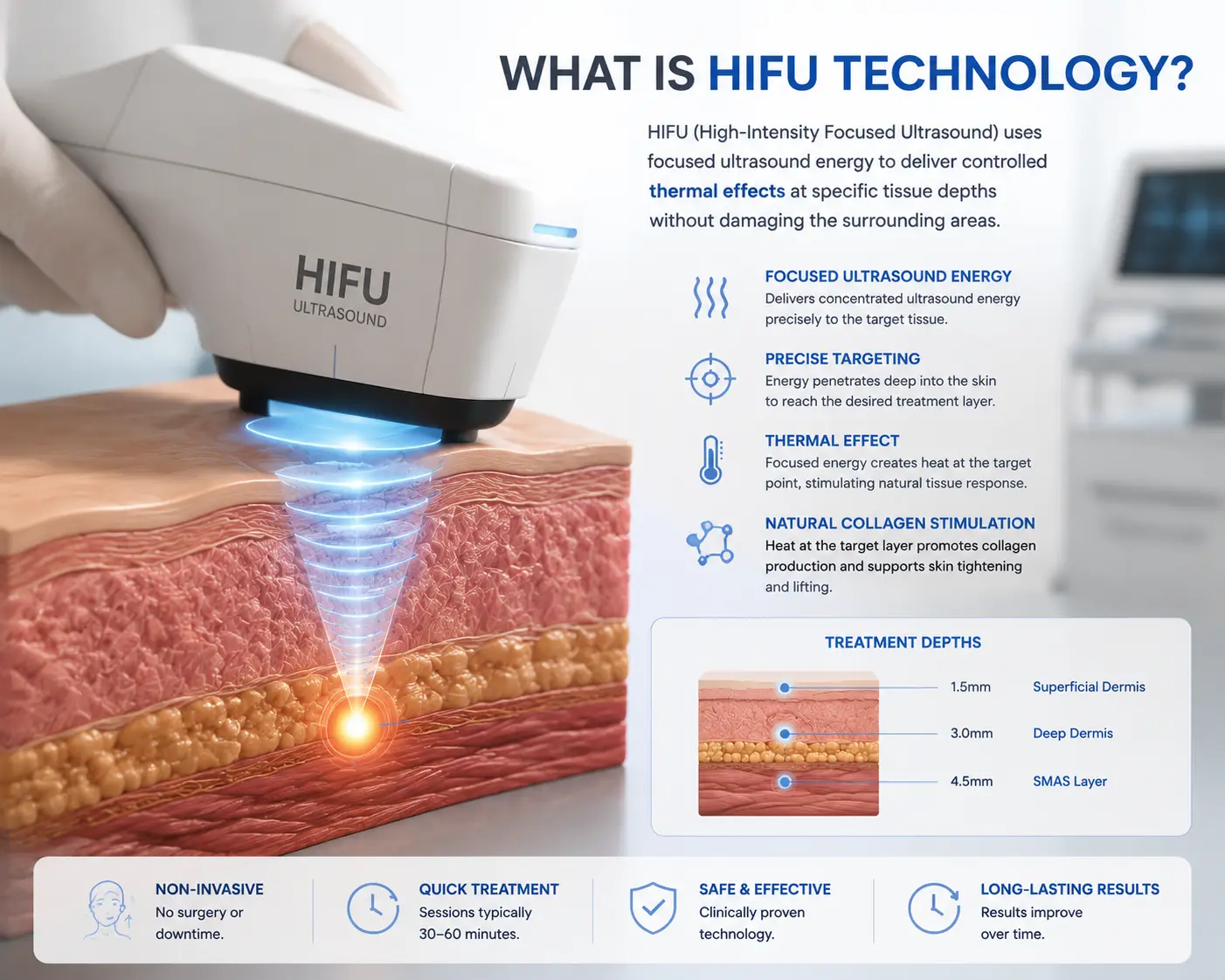
HIFU stands for High-Intensity Focused Ultrasound. It is a non-invasive
aesthetic technology that uses concentrated ultrasound energy to deliver
controlled energy into specific tissue layers.
The principle behind HIFU is similar to using a magnifying glass to focus
sunlight into a precise point. Instead of spreading energy across a large
area, HIFU concentrates ultrasound energy at selected depths.
This focused energy creates localized thermal effects that can stimulate
biological responses within treated tissues.
HIFU uses focused ultrasound energy to deliver controlled thermal effects
at specific tissue depths.
What Does HIFU Stand For?
HIFU is the abbreviation for:
Letter
Meaning
H
High
I
Intensity
F
Focused
U
Ultrasound
The term describes the technology principle: high-intensity ultrasound
energy is focused into targeted areas to create controlled effects.
How Does HIFU Work?
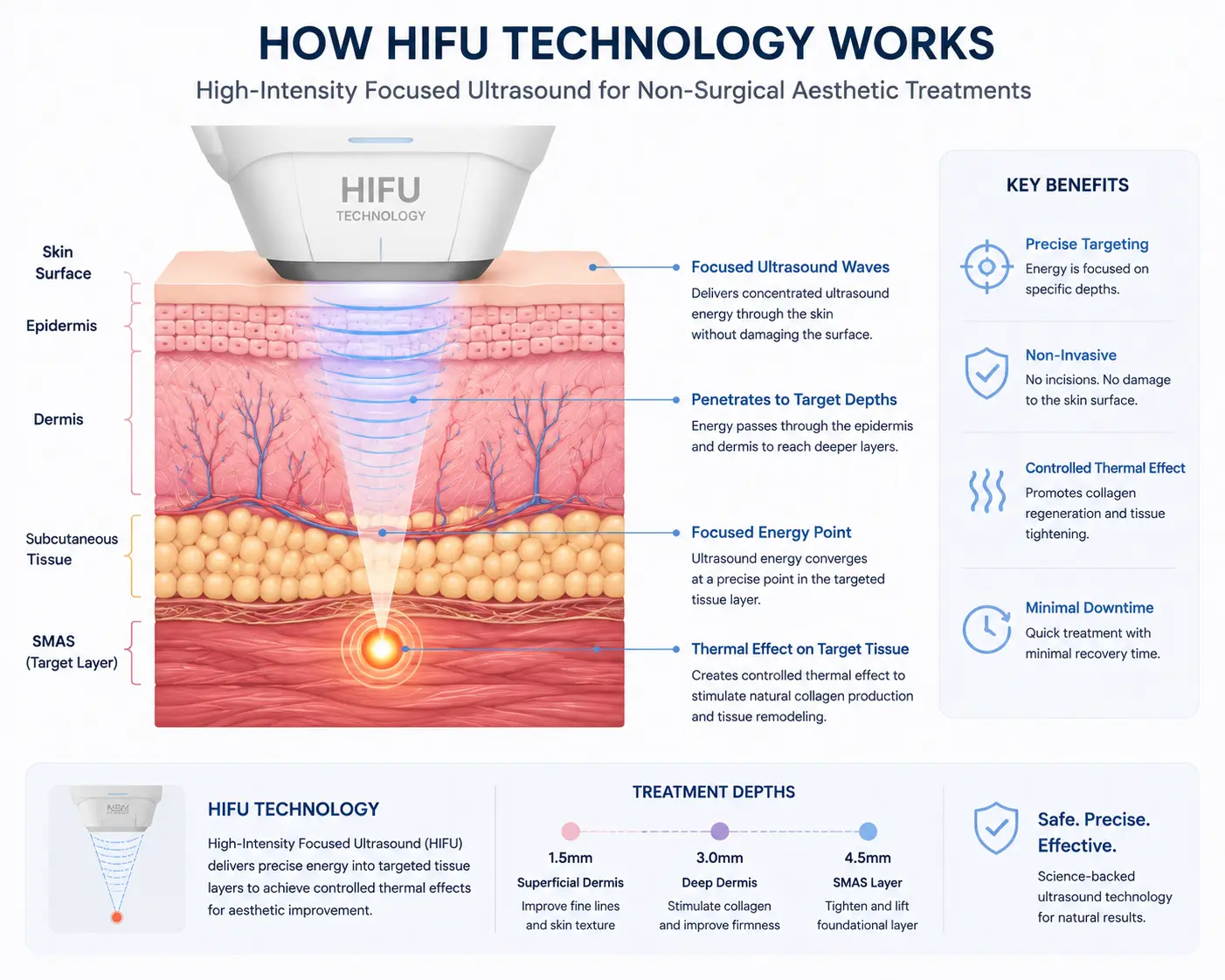
HIFU works by delivering high-intensity ultrasound energy into precisely
selected tissue depths. The ultrasound waves are focused at specific points
beneath the skin, creating controlled thermal effects without damaging
surrounding tissues.
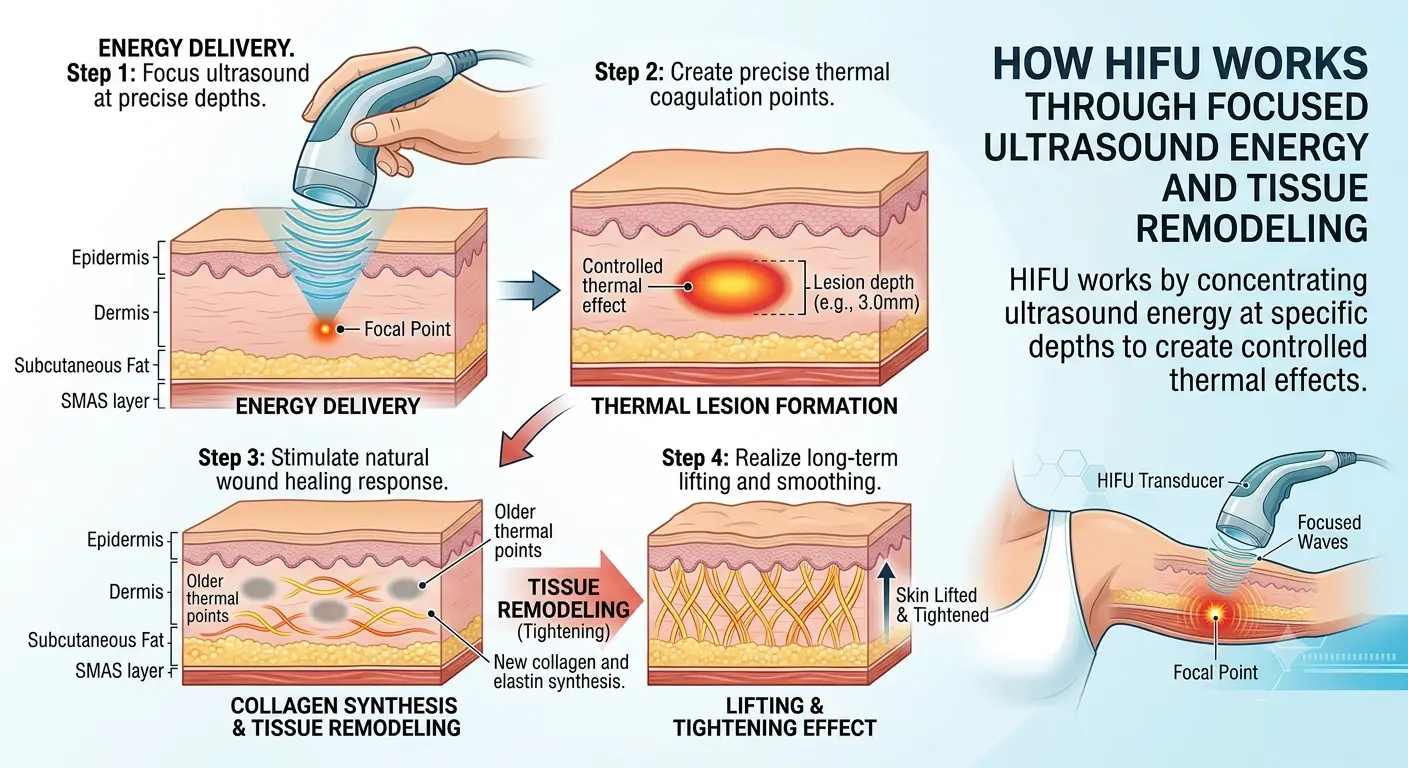
The basic principle involves three key processes:
Focused ultrasound energy delivery
Controlled thermal effect formation
Natural tissue remodeling response
HIFU works by concentrating ultrasound energy at specific depths to create
controlled thermal effects.
1. Focused Ultrasound Energy Delivery
Unlike traditional ultrasound that spreads energy across a wider area,
HIFU technology concentrates acoustic energy into a precise focal point.
When ultrasound waves converge at the target depth, energy intensity increases
at that specific location, allowing controlled treatment of selected tissue
layers.
Key Characteristics of HIFU Energy
Non-invasive energy delivery through the skin surface.
Precise targeting of selected depths.
Controlled energy output based on treatment parameters.
Minimal impact on surrounding tissue when properly applied.
2. Controlled Thermal Effect Formation
When focused ultrasound energy reaches the target point, it creates a
localized increase in temperature. This controlled thermal effect is an
important part of how HIFU stimulates tissue responses.
The treatment parameters, including energy level, depth, and pulse settings,
determine how energy is delivered during a procedure.
Important:
Professional HIFU systems require appropriate energy settings and treatment
protocols to achieve safe and consistent results.
3. Natural Tissue Remodeling and Collagen Response
Following controlled thermal stimulation, the body begins natural repair
and remodeling processes. These biological responses may involve changes
related to collagen structure and tissue firmness.
Because tissue remodeling occurs gradually, HIFU results are typically
not immediate. Improvement develops over time as the body responds to treatment.
Factors Affecting HIFU Results
Individual tissue characteristics.
Treatment area.
Device specifications.
Energy parameters.
Professional treatment technique.
HIFU Treatment Depth Explained
One of the important characteristics of HIFU technology is its ability
to deliver energy at different tissue depths depending on cartridge design
and treatment requirements.
Different treatment depths allow practitioners to select appropriate energy
delivery based on the target area and aesthetic objective.
Treatment Depth
Target Area
Typical Application
Superficial Layers
Upper skin tissues
Skin quality and tightening applications
Intermediate Depths
Dermal and connective tissue layers
Collagen-related remodeling
Deeper Tissue Layers
Selected deeper structures
Lifting and contour improvement applications
HIFU vs Traditional Ultrasound: What's The Difference?
Although both technologies use ultrasound waves, their purposes and energy
delivery methods are different.
Feature
Traditional Ultrasound
HIFU
Main Purpose
Imaging and diagnostic applications
Focused energy delivery for aesthetic or therapeutic applications
Energy Distribution
Designed for imaging signals
Concentrated at selected focal points
Primary Function
Visualization
Controlled tissue stimulation
The key difference is that HIFU is designed to concentrate ultrasound
energy for a specific effect rather than simply producing images of internal
structures.
HIFU Applications in Aesthetic Medicine
HIFU technology is widely used in aesthetic medicine because it provides
a non-invasive approach for targeted energy delivery. Depending on the
device design and treatment protocol, HIFU may be applied to different
areas including facial skin tightening, body contouring, and skin rejuvenation.
The effectiveness of HIFU treatments depends on multiple factors, including
device specifications, energy parameters, treatment area, and individual
patient characteristics.
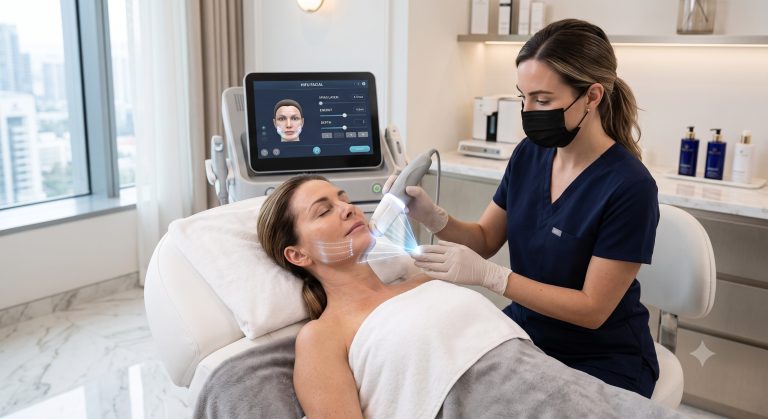
1. HIFU for Facial Skin Tightening
One of the most recognized applications of HIFU technology is non-surgical
facial skin tightening. By delivering focused ultrasound energy into targeted
tissue layers, HIFU supports controlled tissue stimulation.
Aesthetic clinics commonly use HIFU treatments for concerns related to
skin firmness, facial contour definition, and age-related changes in skin
elasticity.
Common Facial Treatment Areas
Jawline
Cheek area
Neck
Lower face
Forehead and brow area (depending on device indications)
2. HIFU for Body Contouring
Beyond facial applications, HIFU technology is also used in selected body
contouring treatments. Body-focused HIFU systems are designed to deliver
energy into larger treatment areas according to specific clinical objectives.
In body contouring applications, HIFU may be used as part of treatment
programs focused on improving tissue firmness and overall body appearance.
Common Body Treatment Areas
Abdomen
Arms
Thighs
Waist area
Other areas requiring aesthetic contour improvement
Important:
HIFU is not a replacement for weight loss programs or surgical procedures.
Its role depends on the treatment objective and device specifications.
3. HIFU for Skin Rejuvenation
HIFU is also incorporated into skin rejuvenation strategies because controlled
energy delivery may support natural tissue responses.
Unlike surface-based treatments, HIFU focuses energy at selected depths,
allowing practitioners to target specific tissue layers based on treatment
goals.
Potential Applications Include
Improving the appearance of skin firmness.
Supporting facial contour definition.
Enhancing overall skin appearance.
Complementing other aesthetic treatments.
Benefits of HIFU Technology
HIFU has become an important technology in aesthetic medicine because
it provides several advantages compared with traditional surgical approaches.
Potential Benefits
Explanation
Non-invasive approach
Energy is delivered through the skin without surgical incisions.
Targeted energy delivery
Focused ultrasound allows controlled treatment at selected depths.
Versatile applications
Used in facial and selected body aesthetic treatments.
Minimal downtime
Many HIFU treatments are designed for convenient clinical workflows.
Natural-looking improvement
Changes typically develop gradually through tissue responses.
Limitations of HIFU Technology
Although HIFU is a valuable aesthetic technology, understanding its limitations
is important for realistic expectations.
HIFU does not change bone structure.
HIFU does not replace surgical lifting procedures.
Results vary depending on individual factors.
Treatment outcomes depend on device quality and professional operation.
Not every aesthetic concern is suitable for HIFU treatment.
HIFU vs RF: What's The Difference?
HIFU and Radio Frequency (RF) are two popular energy-based technologies
used in modern aesthetic treatments. Although both may be used for skin
tightening and body contouring applications, they work through different
energy mechanisms.
Feature
HIFU
RF
Energy Type
Focused ultrasound energy
Radio frequency electromagnetic energy
Energy Delivery
Concentrated at selected focal points
Generates controlled thermal effects in tissues
Primary Target
Specific tissue depths
Skin and connective tissue
Main Application
Lifting, tightening, tissue remodeling
Skin firmness and collagen-related improvement
Treatment Style
Precise focused energy delivery
Broad-area thermal treatment
Neither technology is universally better. The appropriate choice depends
on treatment goals, treatment area, device specifications, and professional
assessment.
How Clinics Choose a Professional HIFU Machine?
For aesthetic clinics, selecting a HIFU machine requires evaluating more
than the technology name. Professional users should consider treatment
capability, device reliability, operational efficiency, and manufacturer
support.
1. Treatment Applications
Clinics should first define their primary treatment goals, such as facial
lifting, skin tightening, body contouring, or comprehensive aesthetic services.
2. Energy Delivery System
Different HIFU systems may vary in energy output, cartridge design, treatment
depth options, and control systems. These factors influence how the device
can be applied in clinical workflows.
3. Treatment Flexibility
Professional clinics often prefer platforms that support multiple treatment
areas and customizable parameters rather than single-purpose solutions.
4. Safety and User Experience
Important considerations include energy control, treatment monitoring,
ergonomic design, and operational convenience.
5. Manufacturer Capability
For distributors and international clinics, manufacturer experience, technical
support, training, and after-sales service are important factors when selecting
aesthetic equipment.
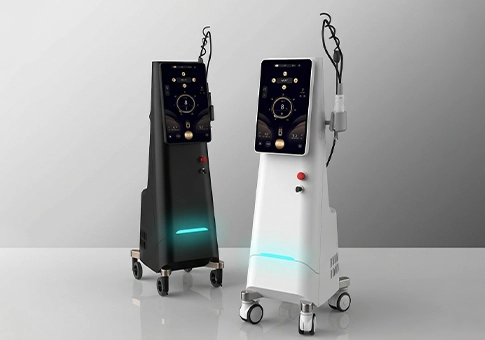
AI 360 HIFU: Advanced Multifunctional Aesthetic Platform
As aesthetic clinics increasingly demand versatile treatment solutions,
multifunctional platforms that combine different technologies are becoming
an important development trend.
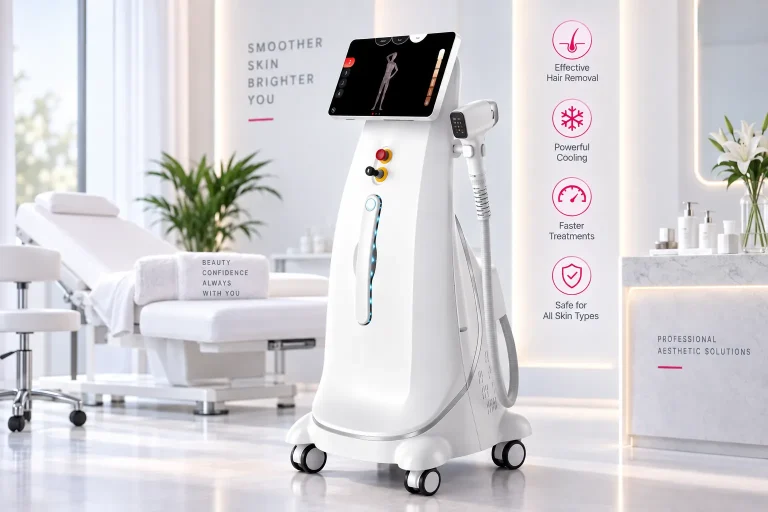
AI 360 HIFU integrates HIFU, RF, and EMS technologies into one professional
aesthetic system, allowing clinics to provide more comprehensive body contouring
and skin tightening solutions.
Integrated Technology Platform
Technology
Purpose
HIFU
Focused ultrasound energy for tissue remodeling and tightening applications
RF
Controlled thermal energy for skin firmness support
EMS
Electrical muscle stimulation for body conditioning programs
Designed for Professional Clinics
A multifunctional HIFU platform allows clinics to expand treatment options
while improving workflow efficiency through integrated technology.
For aesthetic distributors and clinics, systems combining multiple technologies
can provide greater flexibility when developing modern body contouring
services.
Explore AI 360 HIFU Technology
Future Trends of HIFU Technology
The future development of HIFU technology is moving toward greater precision,
improved treatment comfort, and smarter clinical operation.
1. Multifunctional Platforms
Modern clinics increasingly prefer systems that combine multiple technologies
to address different aesthetic needs.
2. Intelligent Treatment Management
Advanced aesthetic equipment is expected to include improved interfaces,
treatment monitoring, and workflow optimization features.
3. Personalized Treatment Approaches
As aesthetic medicine becomes more individualized, flexible treatment
parameters and customized protocols will become increasingly important.
Conclusion: Understanding HIFU Technology
HIFU (High-Intensity Focused Ultrasound) is an advanced energy-based aesthetic
technology that uses focused ultrasound waves to create controlled thermal
effects at selected tissue depths.
By delivering precise ultrasound energy, HIFU supports natural tissue
remodeling processes and is widely used in modern aesthetic applications
including skin tightening, lifting, and selected body contouring treatments.
Although HIFU provides valuable non-surgical treatment options, results
depend on many factors including device technology, treatment parameters,
professional operation, and individual response.
For aesthetic clinics, understanding how HIFU works and how it differs
from other technologies such as RF is essential when selecting professional
equipment and developing effective treatment solutions.
Frequently Asked Questions
What does HIFU stand for?
HIFU stands for High-Intensity Focused Ultrasound. It refers to a technology
that uses concentrated ultrasound energy delivered to specific tissue depths.
How does HIFU work?
HIFU works by focusing ultrasound energy at selected depths to create
controlled thermal effects. These effects stimulate natural tissue responses
and remodeling processes.
What is HIFU used for?
HIFU is commonly used in aesthetic applications including skin tightening,
lifting treatments, skin rejuvenation, and selected body contouring procedures.
Is HIFU a surgical treatment?
No. HIFU is a non-invasive energy-based technology that delivers focused
ultrasound energy through the skin without surgical incisions.
How is HIFU different from RF?
HIFU uses focused ultrasound energy delivered to specific depths, while
RF uses electromagnetic energy to create controlled thermal effects within
tissues.
Can HIFU tighten loose skin?
HIFU is commonly used for skin tightening applications because focused
ultrasound energy may support tissue remodeling and firmness improvement.
Can HIFU remove body fat?
HIFU is not primarily designed as a fat removal technology. Its main aesthetic
applications are related to tissue tightening and remodeling.
How long do HIFU results last?
Results vary depending on individual factors, treatment area, device specifications,
and lifestyle factors. Professional consultation is recommended for realistic
expectations.