What Is Selective Photothermolysis?
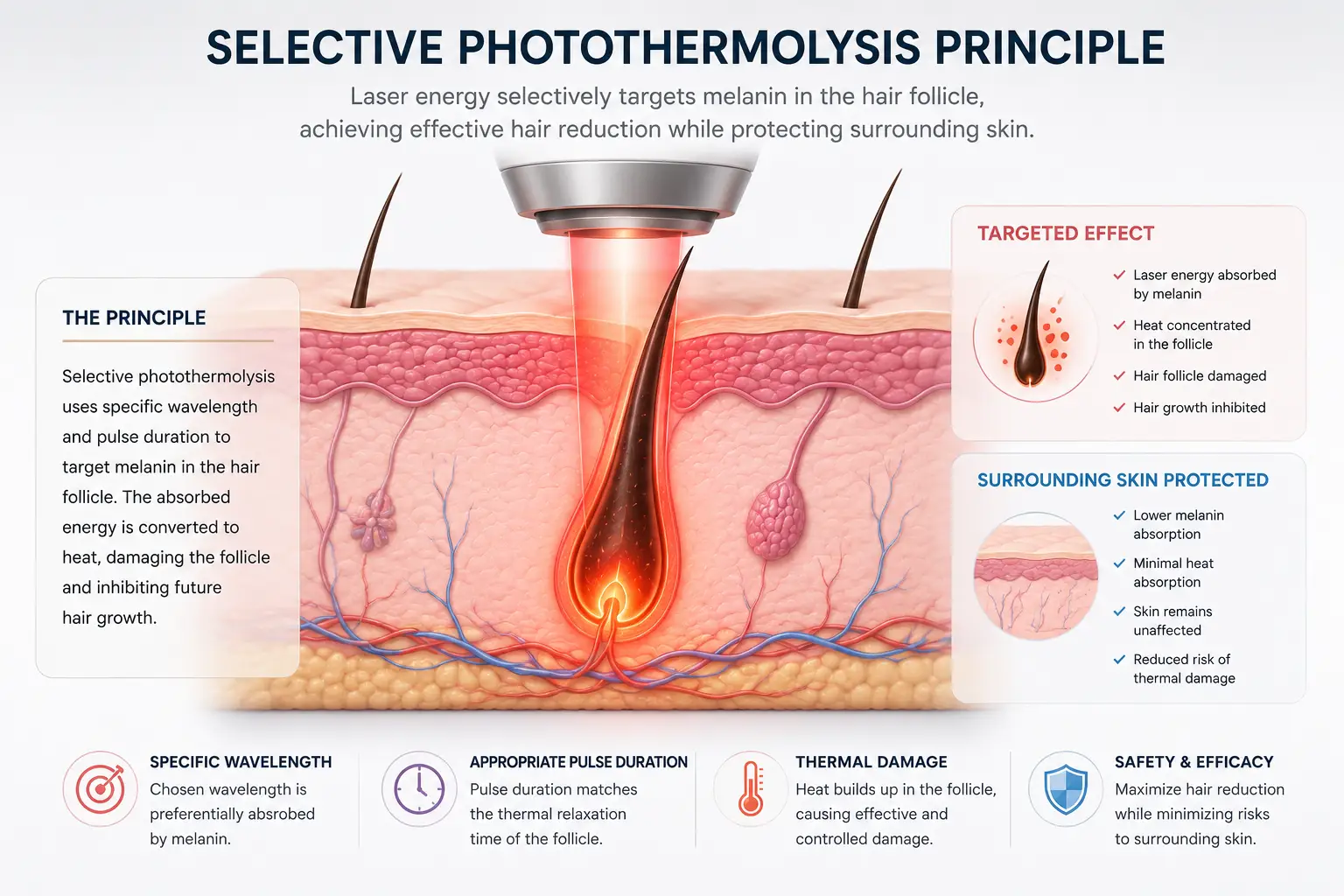
Selective photothermolysis is the fundamental scientific principle behind many modern laser aesthetic treatments, including laser hair removal, pigmentation treatment, and skin resurfacing. It describes how specific wavelengths of light energy can selectively target specific tissues while minimizing damage to surrounding structures.
Understanding selective photothermolysis helps explain why different laser technologies, such as diode laser, Alexandrite laser, and Nd:YAG laser, use different wavelengths and treatment parameters for specific applications.Key Takeaways
- Selective photothermolysis allows lasers to target specific tissues using controlled light energy.
- Laser wavelength determines which chromophore absorbs the energy.
- Pulse duration and energy density influence thermal effects.
- Laser hair removal works by targeting melanin inside hair follicles.
- Different laser technologies use different wavelengths based on treatment goals.
What Does Selective Photothermolysis Mean?
Selective photothermolysis is a laser treatment principle introduced to describe how light energy can selectively heat a specific target tissue without significantly affecting surrounding areas. The term consists of three parts:| Term | Meaning |
|---|---|
| Selective | Targeting a specific structure or chromophore. |
| Photo | Related to light energy. |
| Thermolysis | Heat-induced destruction or thermal effect. |
The Science Behind Selective Photothermolysis
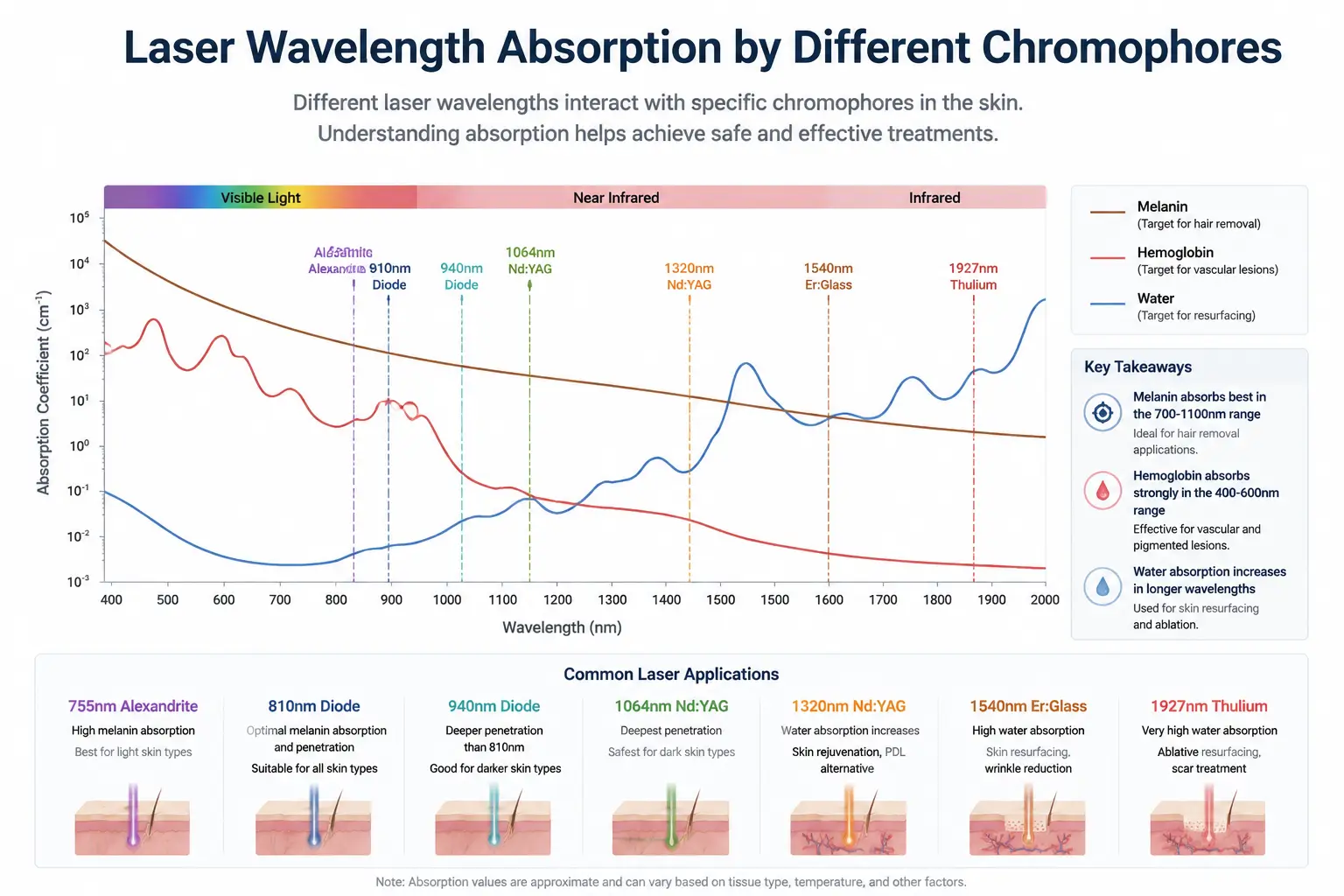
Laser energy interacts with biological tissues through absorption by specific molecules called chromophores. A chromophore is a structure that absorbs light energy. In aesthetic laser treatments, common chromophores include:- Melanin
- Hemoglobin
- Water

Three Key Factors of Selective Photothermolysis
Successful laser treatment depends on selecting appropriate energy parameters. Three important factors determine how laser energy interacts with tissue.1. Wavelength
Wavelength determines which chromophore absorbs the laser energy and how deeply the energy penetrates into tissue. For example:- 755nm Alexandrite laser targets melanin with strong absorption characteristics.
- 808nm diode laser provides balanced penetration and absorption.
- 1064nm Nd:YAG laser provides deeper penetration characteristics.
2. Pulse Duration
Pulse duration refers to the time period during which laser energy is delivered. Proper pulse duration helps control thermal effects on the target tissue.3. Energy Density
Energy density determines the amount of laser energy delivered to a specific area. Appropriate energy settings are essential for effective and controlled treatments.How Selective Photothermolysis Works in Laser Hair Removal
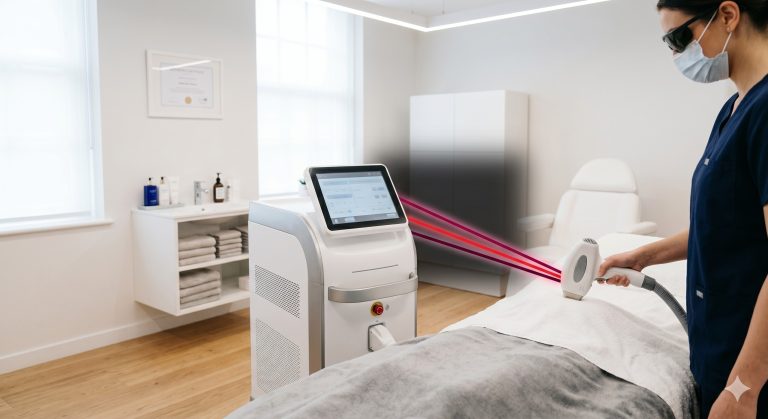
Laser hair removal is one of the most common applications of selective photothermolysis. The principle allows laser energy to selectively target melanin inside hair follicles while reducing unnecessary effects on surrounding skin tissue. The laser wavelength is selected because melanin absorbs specific wavelengths of light. When the laser energy reaches the hair follicle, the absorbed light energy is converted into heat, creating a controlled thermal effect.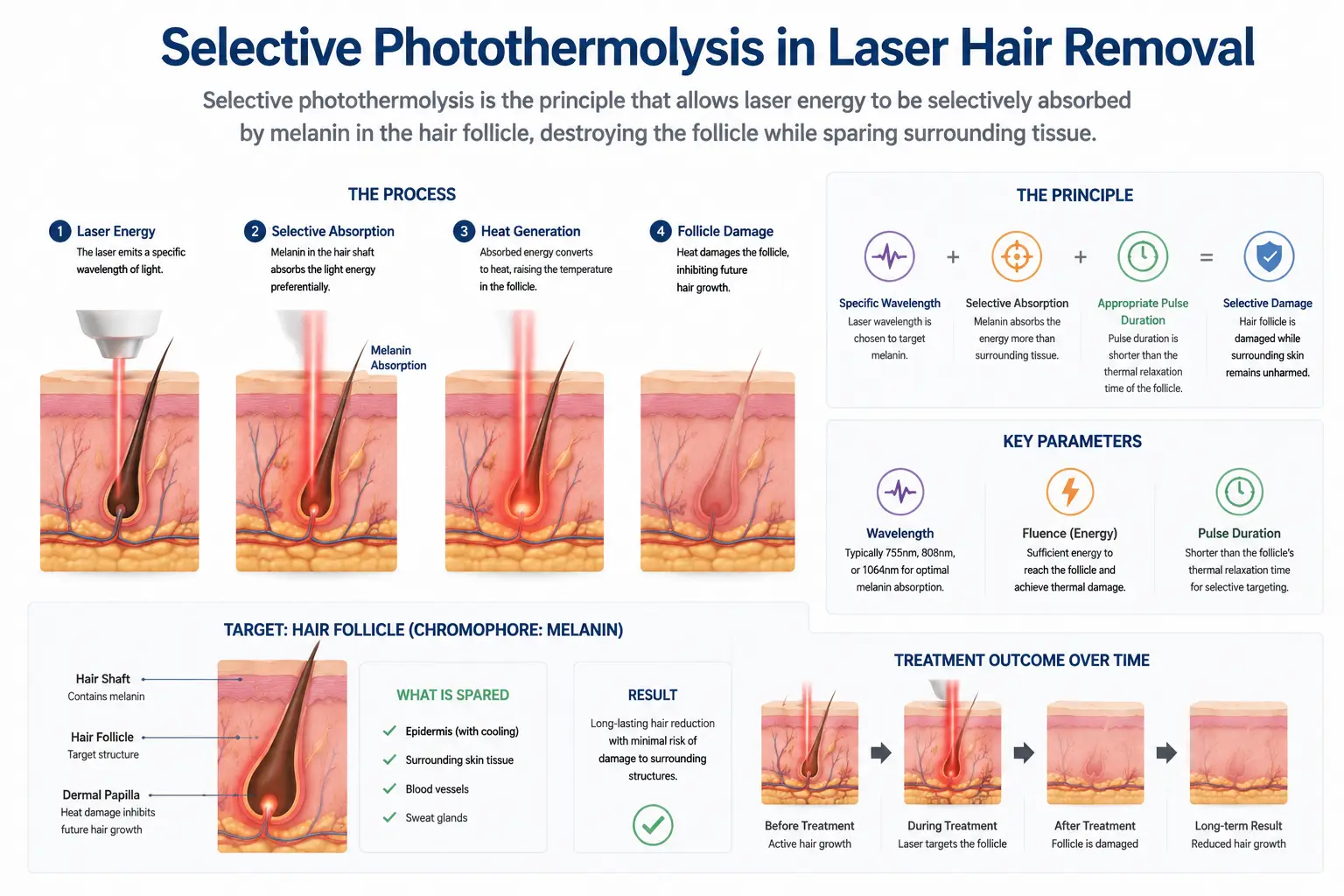
Step-by-Step Process of Laser Hair Removal
| Step | Process |
|---|---|
| 1. Laser Energy Delivery | The laser device emits controlled light energy at a selected wavelength. |
| 2. Melanin Absorption | Melanin in the hair shaft and follicle absorbs the laser energy. |
| 3. Heat Conversion | Absorbed light energy converts into thermal energy. |
| 4. Follicle Thermal Effect | Controlled heat affects structures responsible for hair growth. |
| 5. Hair Reduction Response | The follicle’s ability to produce hair is reduced. |
Why Is Melanin the Target in Laser Hair Removal?
Melanin is the primary chromophore targeted in laser hair reduction because it naturally absorbs specific wavelengths of light. Hair follicles contain melanin, which allows laser systems to deliver energy selectively to the hair structure. However, because skin also contains melanin, professional laser systems must carefully balance wavelength selection, energy level, and pulse duration.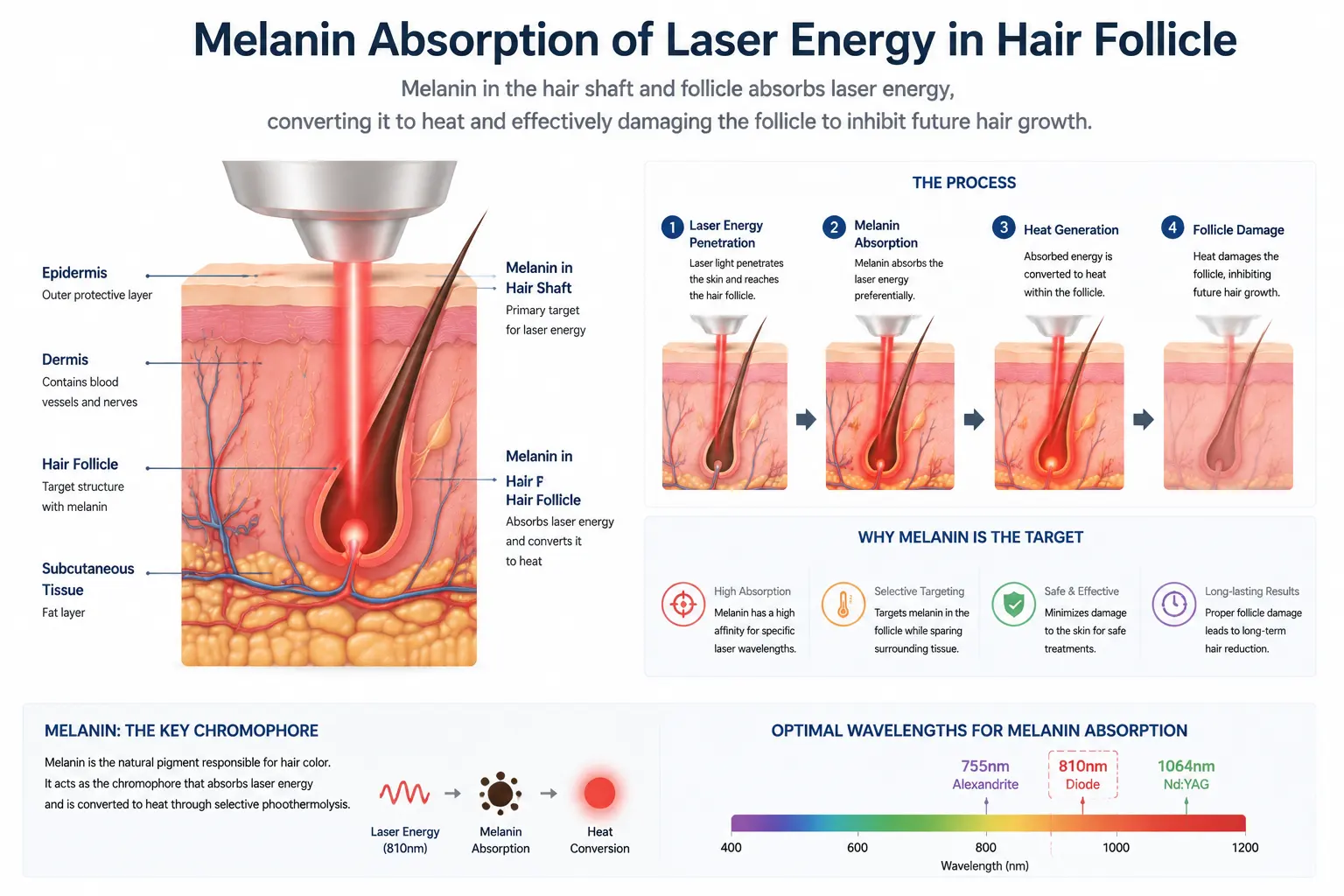
Selective Photothermolysis and 808nm Diode Laser
808nm diode laser technology is one of the most widely used examples of selective photothermolysis in professional hair reduction systems. The diode laser wavelength is designed to provide a balance between melanin absorption and penetration depth, allowing energy to reach hair follicles while supporting controlled treatment parameters.Why Diode Laser Uses 808nm
- Provides suitable interaction with hair follicle melanin.
- Offers balanced penetration characteristics.
- Supports professional treatment flexibility.
- Widely adopted in aesthetic clinics worldwide.
Selective Photothermolysis in Different Laser Technologies
Different aesthetic laser technologies apply the principle of selective photothermolysis by using different wavelengths and targeting different chromophores.| Technology | Wavelength | Main Target/Application |
|---|---|---|
| Alexandrite Laser | 755nm | Melanin targeting for hair reduction applications |
| Diode Laser | 808nm | Professional hair reduction treatments |
| Nd:YAG Laser | 1064nm | Long wavelength laser applications |
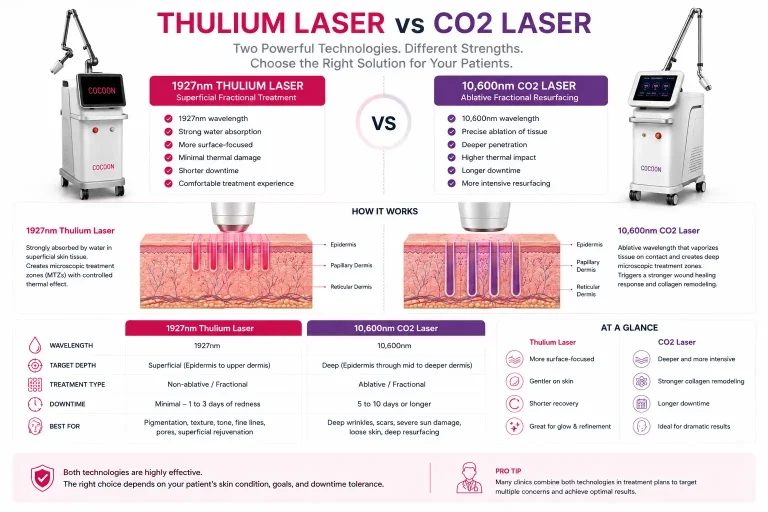
| CO2 Laser | 10600nm | Water absorption for skin resurfacing |
Applications of Selective Photothermolysis Beyond Hair Removal
Although selective photothermolysis is widely known for laser hair removal, the same scientific principle is used in many other aesthetic laser applications.Pigmentation Treatments
Certain laser systems target pigment-related chromophores by selecting appropriate wavelengths that interact with melanin.Vascular Treatments
Some laser technologies target hemoglobin within blood vessels through selective light absorption.Skin Resurfacing
CO2 and fractional laser systems use wavelength characteristics that interact strongly with water in skin tissue.Why Selective Photothermolysis Matters for Professional Laser Devices
Selective photothermolysis is not only a scientific concept but also an important foundation for designing professional aesthetic laser devices. Manufacturers must carefully balance wavelength, pulse duration, energy output, and cooling technology to achieve controlled treatment performance. For aesthetic clinics and equipment buyers, understanding this principle helps explain why different laser systems are designed for different applications.1. Wavelength Selection Determines Treatment Target
The wavelength is one of the most important design factors in laser technology because different wavelengths interact with different chromophores. Professional laser manufacturers select wavelengths according to the intended application.| Laser Technology | Wavelength | Primary Chromophore | Common Application |
|---|---|---|---|
| Alexandrite Laser | 755nm | Melanin | Hair reduction |
| Diode Laser | 808nm | Melanin | Professional hair reduction |
| Nd:YAG Laser | 1064nm | Melanin with longer wavelength characteristics | Hair reduction applications |
| CO2 Laser | 10600nm | Water | Skin resurfacing |
1. Wavelength Selection Determines Treatment Target
The wavelength is one of the most important design factors in laser technology because different wavelengths interact with different chromophores. Professional laser manufacturers select wavelengths according to the intended application.| Laser Technology | Wavelength | Primary Chromophore | Common Application |
|---|---|---|---|
| Alexandrite Laser | 755nm | Melanin | Hair reduction |
| Diode Laser | 808nm | Melanin | Professional hair reduction |
| Nd:YAG Laser | 1064nm | Melanin with longer wavelength characteristics | Hair reduction applications |
| CO2 Laser | 10600nm | Water | Skin resurfacing |
3. Cooling Technology Supports Treatment Comfort
Cooling systems are an important component of modern laser devices because they help manage heat at the skin surface during treatment. Professional hair reduction systems commonly integrate cooling technologies such as:- Contact cooling
- Water cooling
- Air cooling
- Combination cooling systems
Selective Photothermolysis in IPL vs Laser Technology
Both IPL and laser systems use light energy principles, but they differ in how energy is delivered.| Feature | Laser Technology | IPL Technology |
|---|---|---|
| Light Source | Single wavelength laser energy | Broad-spectrum light |
| Energy Control | Highly specific wavelength targeting | Multiple wavelengths within a range |
| Common Applications | Hair reduction, pigmentation, resurfacing | Hair reduction, skin rejuvenation |
| Target Selection | More specific chromophore targeting | Broader light interaction |
How Clinics Select Laser Technology Based on Application
Professional clinics usually select laser technology based on the treatment purpose, patient requirements, and business positioning.| Treatment Goal | Common Technology Consideration |
|---|---|
| Hair Reduction | Diode laser, Alexandrite laser, Nd:YAG laser |
| Skin Resurfacing | Fractional CO2 laser, Er:YAG laser |
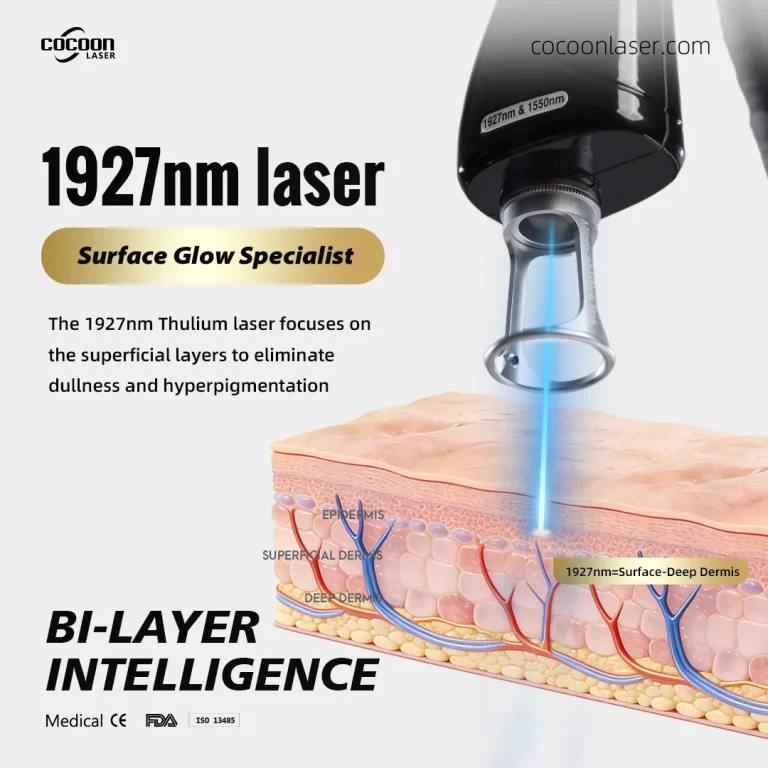
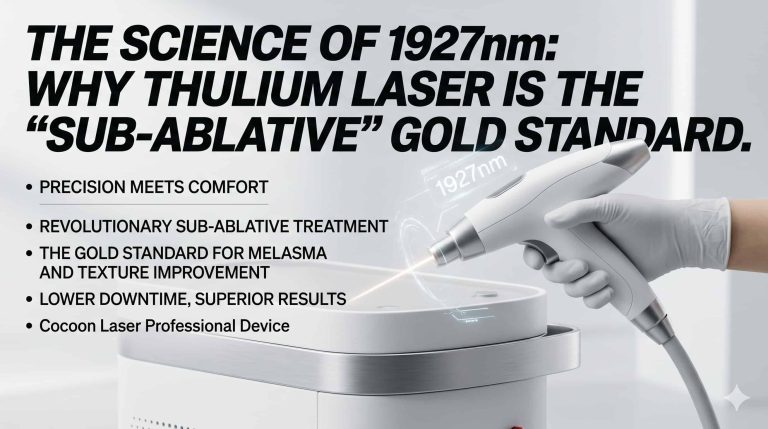
| Pigmentation Treatment | Pico laser, Q-switched laser, Thulium laser |
| Skin Tightening | HIFU, RF technology |