A Dermatologist’s Guide to co2 laser treatment protocols for severe acne scarring: Spot Sizes, Fluence, and Tissue Interaction
Introduction: The Clinical Challenge of Severe Atrophic Acne Scarring
For the medical aesthetic practitioner, managing severe atrophic acne scarring remains one of the most persistent clinical challenges. Unlike active acne, these scars represent a permanent structural alteration of the dermal architecture, often necessitating intervention at significant tissue depths to achieve meaningful remodeling. The fractional CO2 laser, operating at the 10,600 nm wavelength, has emerged as the gold standard for treating moderate to severe atrophic scarring, primarily due to its profound collagen stimulation and resurfacing capabilities . However, the balance between clinical efficacy and patient safety, particularly regarding downtime and post-inflammatory hyperpigmentation (PIH), is dictated by a deep understanding of photothermolysis and parameter optimization.
This guide provides a comprehensive, data-driven examination of CO2 laser protocols for severe acne scarring, focusing on the technical metrics that drive clinical outcomes. We will explore the critical parameters of fluence, spot size, and pulse width, drawing on peer-reviewed clinical data to establish a framework for safe and effective treatment.
Understanding the Mechanism: Selective Photothermolysis and Fractional Ablation
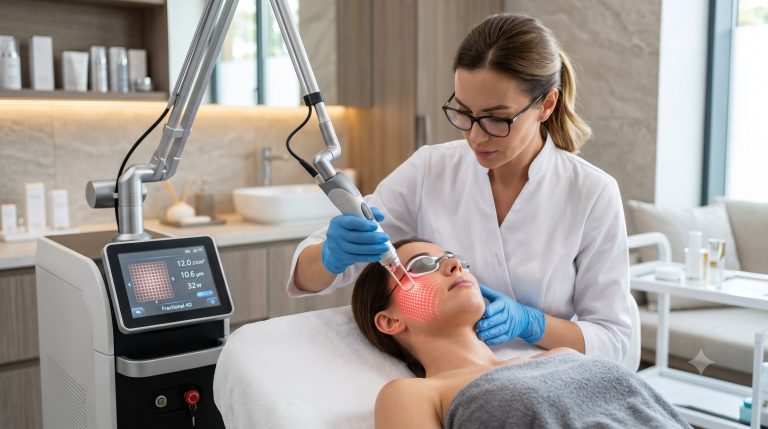
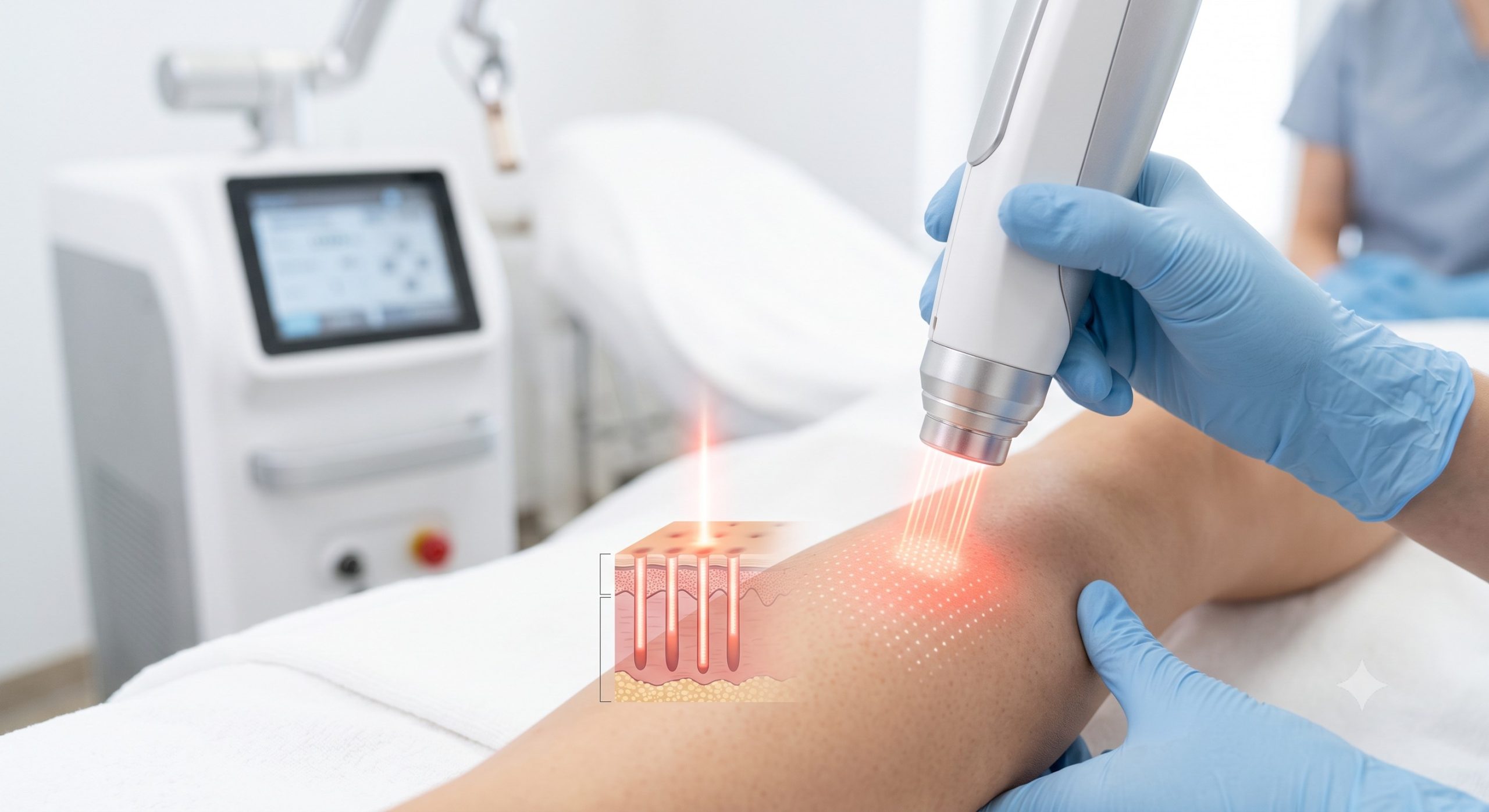
The efficacy of the CO2 laser in scar revision is rooted in the principle of selective photothermolysis. The 10,600 nm wavelength is highly targeted towards water, the primary chromophore in skin tissue . In a fractional ablative system, the laser energy is delivered in a grid of microscopic columns, creating microthermal zones (MTZs) of ablation and coagulation. This controlled injury spares the surrounding healthy tissue, facilitating rapid re-epithelialization and significantly reducing downtime compared to traditional fully ablative techniques .
The depth of tissue penetration and the degree of thermal damage are determined by the device settings. For severe atrophic scars, which often extend deep into the dermis, a higher fluence (energy per unit area) is typically required to achieve adequate subdermal heating and collagen denaturation, which subsequently stimulates the neocollagenesis necessary for scar elevation and textural improvement .
Critical Laser Parameters for Severe Scarring
To achieve consistent clinical results, the practitioner must meticulously calibrate the treatment parameters. The following outlines the key variables and their clinical implications.
- Wavelength: 10,600 nm (Carbon Dioxide Laser). This wavelength has a high absorption coefficient in water, making it ideal for ablative resurfacing.
- Fluence (Energy per MTZ): Typically ranges from 20 mJ to 100 mJ per MTZ. Higher fluences (e.g., 40-100 mJ) are effective for deep, pitted scars but increase the risk of PIH . A study on Asian patients (Fitzpatrick III-IV) utilized a pulse energy of 25 mJ per microbeam , while protocols for more severe scarring may range up to 30-40 mJ .
- Density (Coverage): Expressed as MTZ/cm² or percentage of skin coverage. This determines the intensity of the resurfacing. Treatment densities range from 600 to 1,600 MTZ/cm² . For patients with darker skin types, lower densities (e.g., 15-20%) are recommended to minimize thermal damage and the risk of PIH .
- Pulse Width (Dwell Time): The duration the laser beam is applied to the tissue, often expressed in microseconds (µs) or milliseconds (ms). Shorter pulse widths (e.g., <1 ms) create more precise ablation with a thinner zone of coagulation, which can be advantageous for safer healing .
- Spot Size: The diameter of the microbeam, typically around 300 µm . This size determines the depth of penetration; larger spot sizes can penetrate deeper, aiding in dermal remodeling.
| Key Parameter | Technical Specification | Clinical Significance |
|---|---|---|
| Wavelength | 10,600 nm (CO2) | High absorption in water; primary target for ablative resurfacing |
| Fluence (Energy/MTZ) | 20-40 mJ (Moderate); 40-100 mJ (Deep Resurfacing) | Determines depth of tissue ablation and thermal damage |
| Density (Coverage) | 600 – 1,600 MTZ/cm² (15-20% coverage) | Controls intensity of resurfacing; lower density reduces risk of PIH |
| Pulse Width (Dwell Time) | 0.04 ms – 1.5 ms (1000-1500 µs) | Shorter pulses minimize coagulation zone for safer healing |
| Treatment Interval | 6-8 weeks | Time required for collagen remodeling and resolution of erythema |
Evidence-Based Clinical Protocols for Severe Acne Scarring
Protocols must be tailored to the patient’s skin type, scar morphology, and tolerance for downtime. The following frameworks are based on evidence from clinical studies and represent industry standards.
Protocol for Moderate to Severe Atrophic Scars (Fitzpatrick Skin Types I-IV)
- Device: Fractional CO2 Laser.
- Parameters:
- Fluence: 20 – 40 mJ/MTZ.
- Total Density: 600 – 1,600 MTZ/cm².
- Dwell Time: 1000 – 1500 µs.
- Number of Passes: 1-3 passes, depending on scar depth and clinical endpoint .
- Treatment Interval: 6–8 weeks to allow for complete collagen remodeling and resolution of erythema .
- Expected Downtime: 5-10 days of erythema, edema, and crusting.
Protocol for High-Risk Patients (Fitzpatrick Skin Types IV-VI)
- Device: Fractional CO2 Laser with aggressive epidermal cooling.
- Parameter Considerations: It is crucial to reduce the density and fluence to minimize the risk of PIH. A study on Asian patients used 28 J/cm² with a 20% coverage . Another protocol for patients with skin types III-V used 25 mJ/MTZ with a density of 400 MTZ/cm² .
- Recommended Strategy: Lower energy (20-25 mJ/MTZ) and lower density (15-20% coverage) with a longer interval between passes and treatment sessions .
Managing Complications and Optimizing Safety
While fractional CO2 lasers have a superior safety profile compared to older fully ablative devices, complications such as prolonged erythema, PIH, and infection remain a concern . Pre- and post-treatment care are critical to mitigating these risks.
Pre-Treatment Preparation
Patients should be evaluated for a history of keloid scarring or poor wound healing. Topical anesthesia (e.g., lidocaine 2.5%, prilocaine 2.5%) is typically applied for 60 minutes prior to the procedure . For patients with a history of HSV-1, antiviral prophylaxis is indicated.
Post-Treatment Care
- Immediate Phase (24-72 hours): Application of occlusive ointments (e.g., petrolatum) to prevent desiccation and promote re-epithelialization. Cold compresses can help reduce edema .
- Secondary Phase (Week 1-2): Gentle cleansing and strict avoidance of sun exposure with broad-spectrum SPF 30+ sunscreen .
Combination Therapy: The Next Frontier in Scar Revision
For the most challenging scars, particularly rolling scars with significant fibrous tethering, CO2 laser monotherapy may be insufficient. Emerging evidence supports combining fractional CO2 laser with subcision. The Subdermal Laser-Assisted Scar Subcision (SLASS) technique utilizes a 1470 nm fiber to release fibrotic bands prior to CO2 resurfacing, producing significant ECCA grade reductions (from 172 to 79.4 in one study) with minimal additional downtime .
Clinical Outcomes and Data-Driven Efficacy
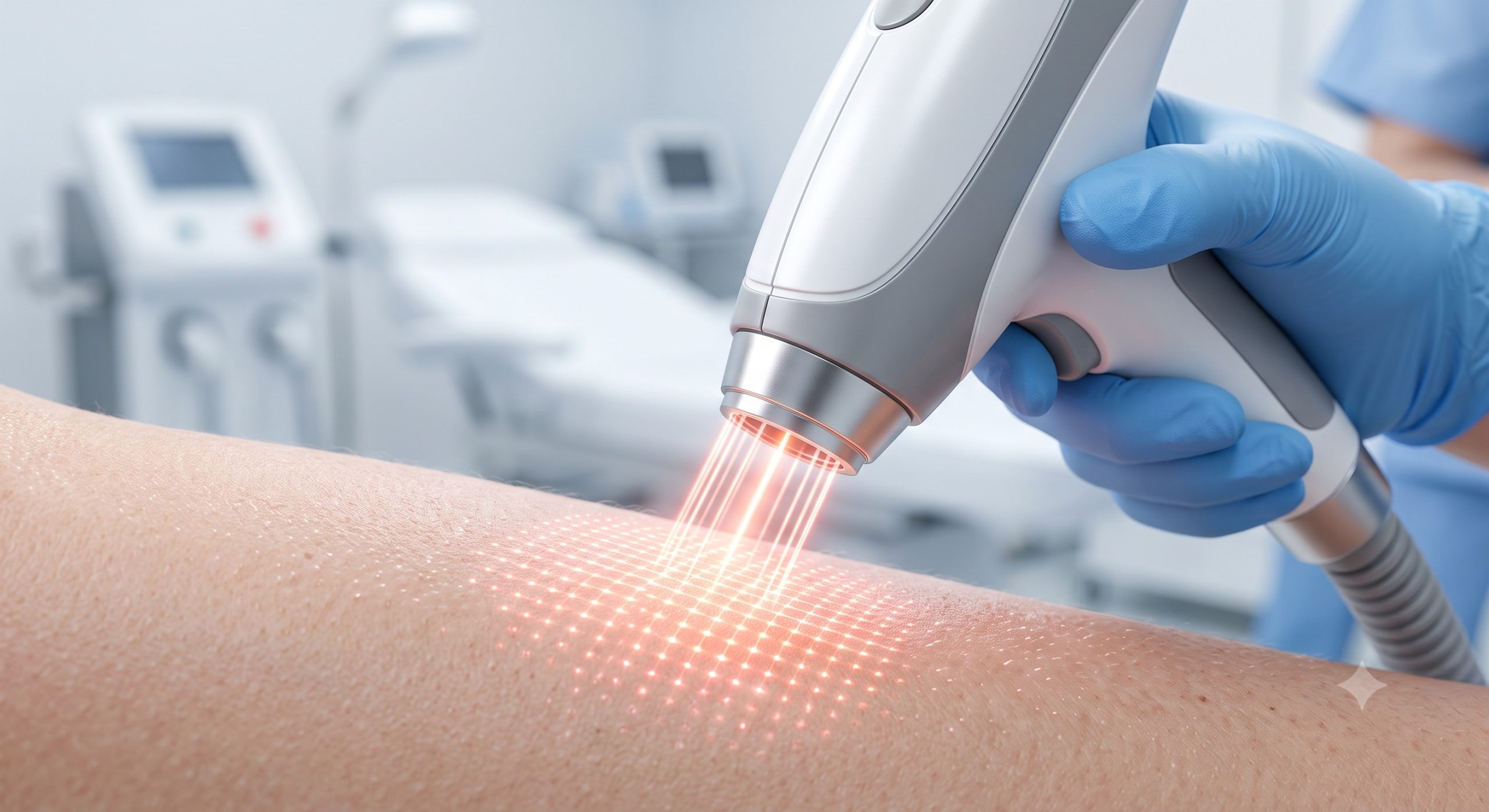
Quantifiable evidence supports the robust efficacy of well-executed CO2 laser protocols. A recent study utilizing a novel four-step approach reported a 46% reduction in ECCA scores in Fitzpatrick III-IV patients, with 85% (17/20) achieving over 50% clinical improvement . Additionally, patient satisfaction is consistently high, with a mean subjective improvement score of 7 out of 10 in a study combining subcision and CO2 therapy .
These data underscore that when practitioners wield precise control over wavelength, fluence, and spot size, CO2 laser therapy offers a highly effective, safe, and satisfying solution for patients suffering from severe acne scarring. The key to success lies in the technical proficiency of the operator and the strategic customization of protocols based on individual patient needs.
Conclusion: The Gold Standard in Practice
The CO2 laser remains an unparalleled tool for the treatment of severe atrophic acne scarring. Mastery of this device requires not just an understanding of the hardware, but a deep appreciation of the physics of light-tissue interaction. By carefully selecting parameters—from spot size and pulse width to fluence and density—and by integrating adjunctive procedures like subcision, the clinician can achieve transformative outcomes while minimizing the risk of adverse events. As technology evolves, the future of acne scar management will continue to refine these parameters, enhancing both efficacy and patient comfort for all skin types.