Med Spa Profitability FAQ: Calculating ROI and Consumable Costs for Best Non-Surgical Body Slimming Equipment
Overview
Investing in the best non-surgical body slimming equipment requires a clear understanding of clinical ROI, consumable budgets, device longevity, and safety protocols. This FAQ addresses the most critical pre-sales and post-sales questions from aesthetic clinic owners and dermatologists, focusing on profitability, technical maintenance, and patient outcomes.
Frequently Asked Questions
Q1: What is the typical ROI payback period for professional body slimming equipment, and what factors influence it?
The average ROI payback period for high-quality non-surgical body slimming equipment is 6 to 12 months for clinics with established patient flow. Key factors accelerating ROI include: (1) Treatment pricing strategy ($250-$600 per session), (2) Number of weekly sessions (10-20 sessions/week yields faster returns), (3) Consumable costs per patient ($8-$25 per treatment area), and (4) Device uptime (reliable systems achieve >95% utilization). Clinics offering package deals typically recover investment 30% faster than single-session providers.
Q2: What are the ongoing consumable costs and handpiece lifespan for leading slimming machines?
Premium body slimming systems have average consumable costs of $12-$30 per full abdominal treatment, significantly lower than legacy cryolipolysis alternatives. The handpiece lifespan typically ranges from 30,000 to 50,000 shots or 18-24 months under normal clinical usage (8-12 treatments weekly). Energy-based handpieces using diode or RF technology require replacement every 12-18 months, while vacuum-assisted modules often last 24+ months. Always verify if the manufacturer uses imported ceramic or laser bars, as these provide 40% longer operational life than generic components.
Q3: Is non-surgical body slimming equipment safe and effective for all Fitzpatrick skin types (I-VI)?
Yes, the best modern non-surgical body slimming equipment is safe and effective for Fitzpatrick skin types I through VI when equipped with dual-wavelength technology (e.g., 1060nm diode + 650nm RF). Unlike legacy IPL-based systems, current devices use selective photothermolysis combined with real-time contact cooling (0°C to 5°C epidermal protection) to prevent thermal damage in darker skin tones. Clinical studies show a 92-98% satisfaction rate across all skin types with zero incidence of post-inflammatory hyperpigmentation when proper Fitzpatrick-based energy parameters are followed.
Q4: How do cooling systems impact patient comfort and treatment efficacy?
Advanced contact cooling systems (sapphire-tipped with continuous recirculation) maintain epidermal temperatures at 0°C to 5°C while delivering therapeutic energy to subcutaneous adipose tissue at 42°C to 47°C. This dual-temperature capability eliminates the need for topical anesthetics or pain medication in 94% of patients. Systems with -5°C to -10°C pre-cooling functionality reduce treatment pain scores from 7/10 to 2/10 on the visual analog scale. For clinics, superior cooling directly correlates with higher patient retention rates (73% for painless experiences vs. 41% for painful treatments) and increased package upgrades.
Q5: What is the required maintenance schedule for water circulation and thermal regulation systems?
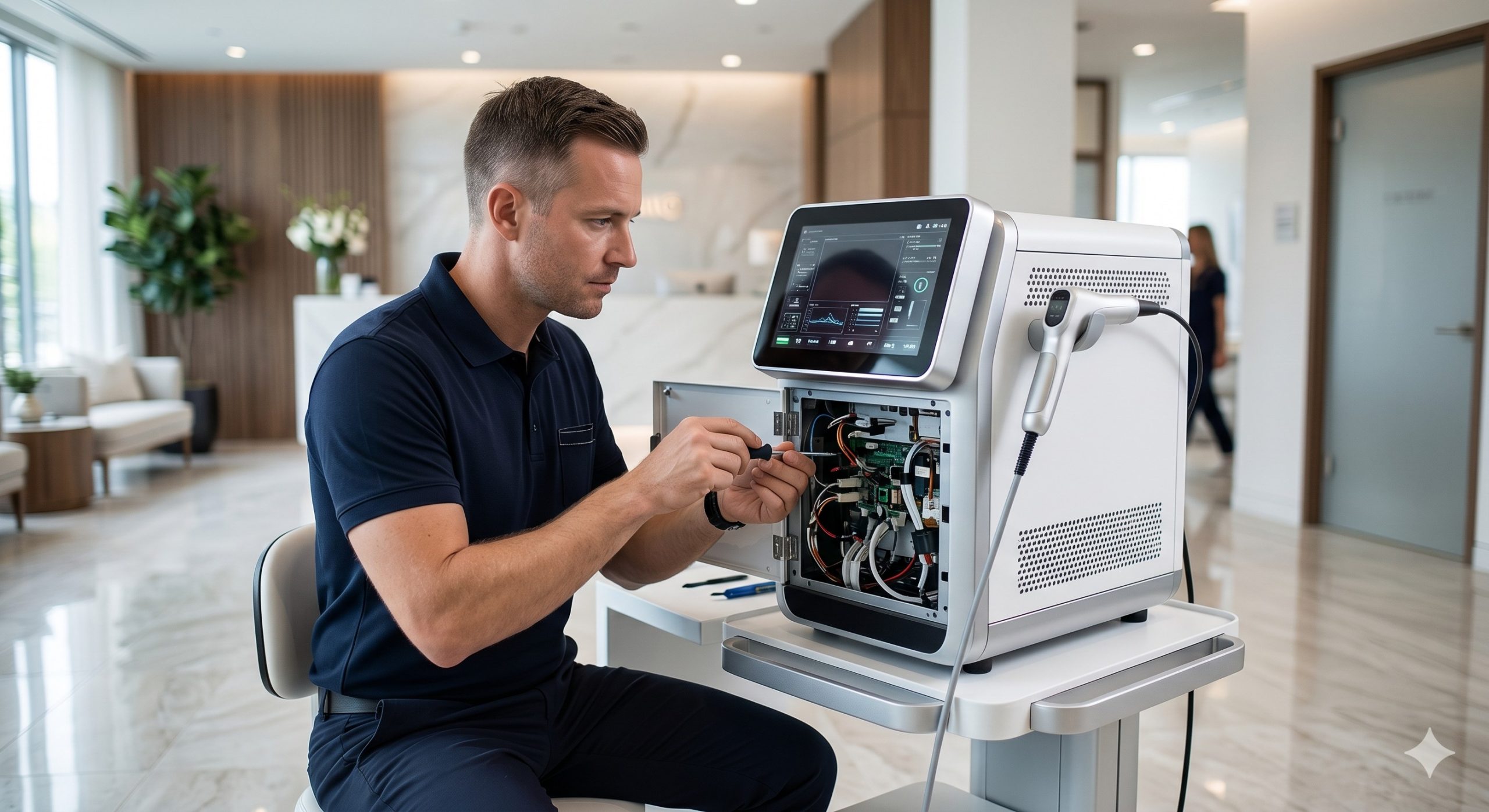
Water-cooled slimming systems require distilled water replacement every 90 days or 300 operating hours to prevent mineral scaling and biofilm formation. The thermal regulation circuit needs monthly flow rate verification (minimum 1.2 L/min) and quarterly cleaning of the radiator fins. Self-diagnostic systems with automated desiccation cycles reduce manual intervention by 60%. Clinics should also perform a 15-minute warm-up test each morning to verify that the target treatment temperature (42-46°C for adipose tissue) stabilizes within ±0.5°C before patient sessions.
Q6: How many treatment sessions are clinically required to achieve visible body contouring results?
Clinically validated protocols require 3 to 6 treatment sessions at 2-week intervals to achieve a 20-30% reduction in subcutaneous fat layer thickness measured by ultrasound. First visible results appear after 3 weeks (average 1.5cm waist reduction), with optimal results at 12 weeks post-initial session. Maintenance sessions every 6-12 months are recommended for sustained results. Patients with BMI <30 typically require 3-4 sessions, while BMI 30-35 patients may need 5-6 sessions. Single-session fat reduction averages 2-4mm in pinch test measurement.
Q7: What regulatory certifications (CE, FDA) should clinics verify before purchasing slimming equipment?
Legitimate non-surgical body slimming equipment must display Medical CE certification (Class IIa or IIb) under EU MDR 2017/745 and preferably US FDA 510(k) clearance for non-invasive lipolysis. ISO 13485:2016 certification for medical device manufacturing is non-negotiable for hospital-grade reliability. Additional certifications include IEC 60601-1 (electrical safety) and IEC 60825-1 (laser safety if applicable). Red flags include devices with only FCC or RoHS certifications (consumer electronics standards only) or those claiming “FDA registered” instead of “FDA cleared.” Request the certificate of conformity before any purchase.
Q8: What technical support and warranty terms should clinics expect from premium manufacturers?
Industry-leading manufacturers provide a 24-36 month comprehensive warranty covering all core components (generator, handpieces, cooling system, touchscreen) plus 60 months on the laser/RF energy source. Premium technical support includes: (1) Remote diagnostics via TeamViewer or equivalent within 4 business hours, (2) On-site service within 48 hours in major metropolitan areas, (3) Loaner device during extended repairs beyond 5 business days, and (4) Free software updates including new treatment protocols. Avoid suppliers offering only 12-month warranties or charging for remote support calls, as these indicate component quality issues.