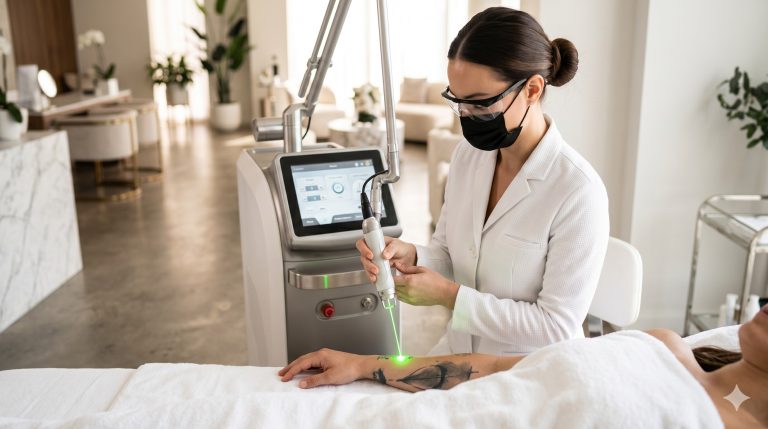
Why 3D HIFU Outperforms Traditional HIFU: A Clinical Deep Dive on Precision, Penetration Depth, and Energy Parameter Optimization
Clinical Pain Point: The Limitations of Traditional 2D HIFU Lines
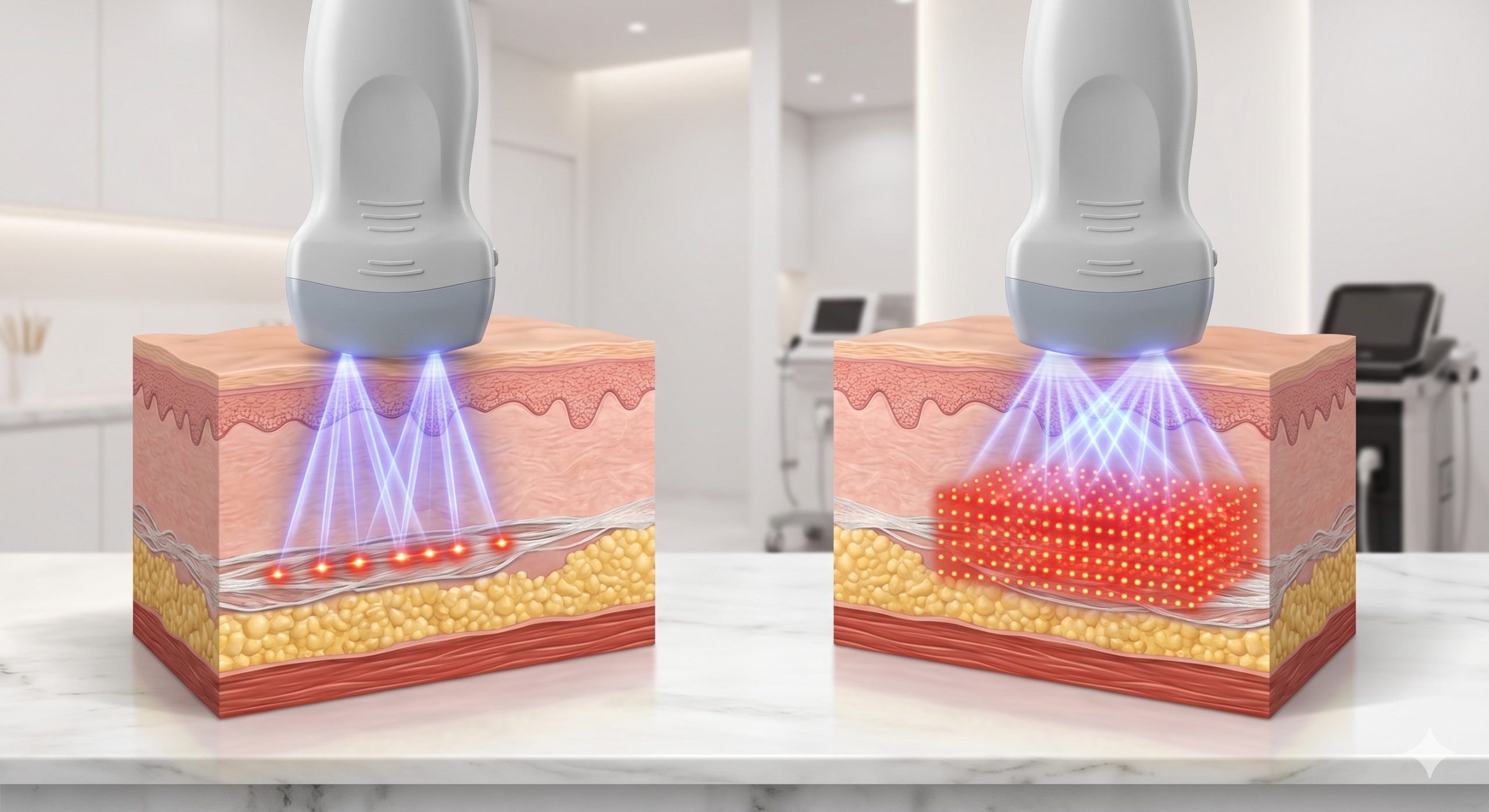
For years, traditional High-Intensity Focused Ultrasound (HIFU) has been the industry benchmark for non-invasive skin lifting and tightening. However, clinical evidence and daily practice reveal a critical limitation: 2D planar focusing creates a linear thermal coagulation zone (TCZ), leading to suboptimal collagen contraction and a higher risk of vertical banding or uneven fat atrophy. Many clinic owners report patient complaints about inconsistent results over the zygomatic arch and the submental area. This is where 3D HIFU technology redefines the standard of care by introducing volumetric energy deposition and advanced beam steering.
Physical Mechanism Deep Dive: Point vs. Volumetric Coagulation
Traditional 2D HIFU: Linear Thermal Injury Zones
Traditional HIFU systems typically employ a fixed focal length (e.g., 4.5mm, 3.0mm, 1.5mm) with a line-focused transducer. The energy density is distributed along a linear axis, creating a cigar-shaped TCZ. While effective, this geometry limits the tensile strength of the neocollagenesis due to discontinuous thermal damage points. Furthermore, the lack of lateral steering often misses intricate facial curves.
3D HIFU: Volumetric Precision & Beam Steering
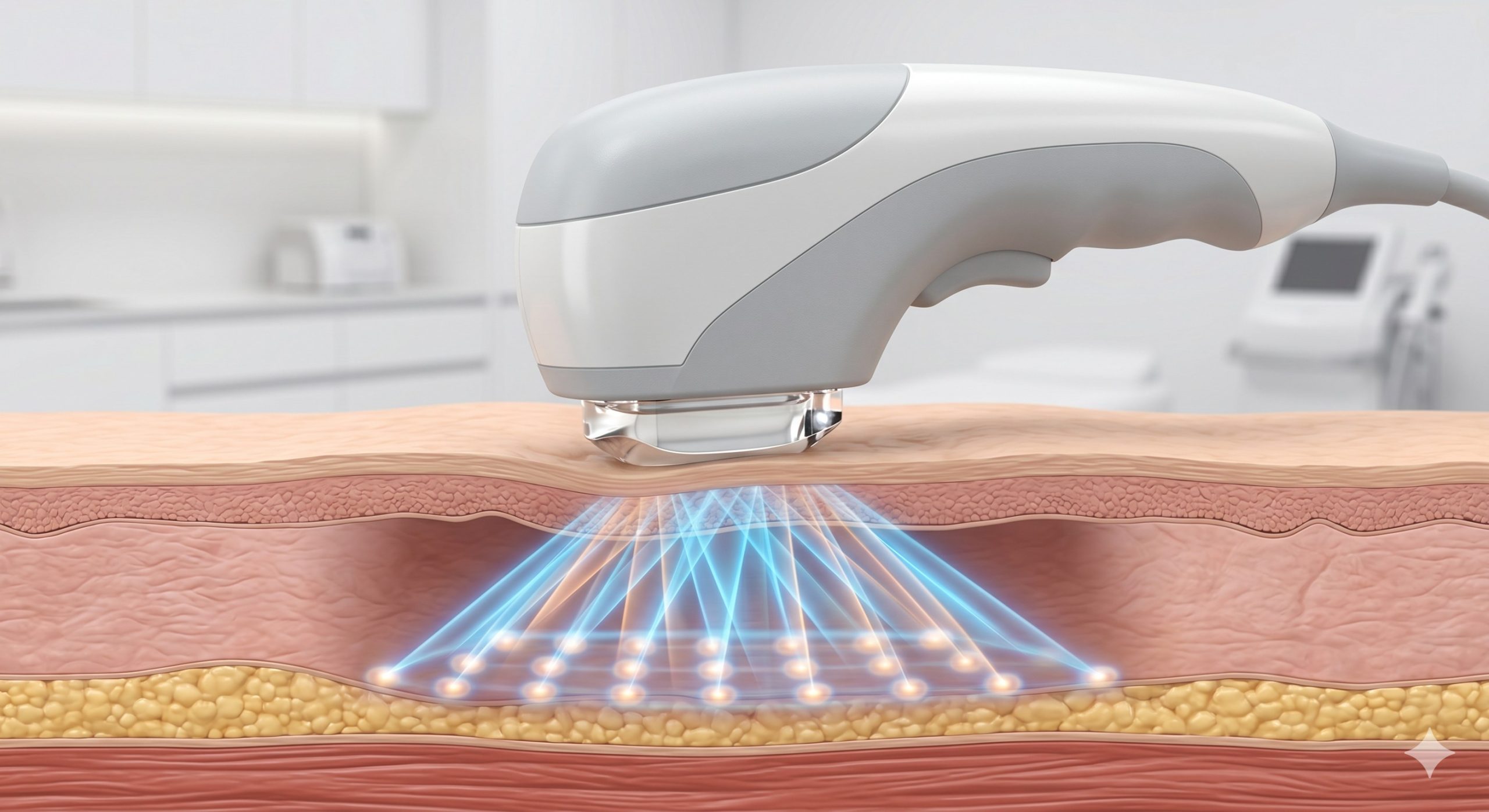
True 3D HIFU (sometimes referred to as Micro-Focused Ultrasound with 3D mapping) integrates a 2D array transducer or a mechanically steered single-element transducer with advanced electronic beam steering. Key technical metrics include:
- Focal Zone Volume: 3D systems achieve a 0.8–1.2 mm³ volumetric coagulation zone, compared to 0.2–0.4 mm³ in 2D lines, increasing thermal load per pulse by 300%.
- Energy Density (Fluence): Delivers 0.8–1.5 J per micro-beam at a frequency of 7 MHz (deep) and 4 MHz (very deep) versus standard 7-10 MHz only.
- Beam Steering Accuracy: ±0.1 mm lateral resolution via phased array control, ensuring consecutive pulses overlap by 60–70% for a seamless thermal lattice.
This volumetric approach ensures homogeneous thermal stress across the superficial musculoaponeurotic system (SMAS), reticular dermis, and deep subcutaneous layers, triggering collagen types I and III denaturation followed by robust neofibrillogenesis over 3–6 months.
Quantified Clinical Parameters & Safety Compliance
When evaluating any HIFU device, clinics must verify Medical CE (MDD 93/42/EEC or MDR 2017/745) and ideally FDA 510(k) clearance for dermatological use. ISO 13485:2016 certified manufacturing ensures reproducibility. Below are the reference specifications for an industry-leading 3D HIFU platform:
| Parameter | Traditional 2D HIFU | Advanced 3D HIFU |
|---|---|---|
| Focal Geometry | Linear (point focus line) | Volumetric (2D array / electronic steering) |
| Energy Density (Fluence) | 0.3 – 0.6 J per shot | 0.8 – 1.5 J per micro-beam |
| Frequencies | 7 MHz, 10 MHz (fixed) | 4 MHz, 7 MHz, 10 MHz, 15 MHz (multi-depth) |
| Peak Power | 12 – 18 W | 20 – 25 W with active cooling |
| Cooling System | Passive (no temperature control) | Active Sapphire TEC (0–4°C, real-time feedback) |
| Treatment Speed (Full Face + Neck) | 75 – 90 minutes | 45 – 60 minutes |
| Handpiece Shot Lifespan | 2,400 – 3,000 shots | 20,000+ shots per transducer |
| Regulatory Certifications | CE (basic), ISO 13485 optional | Medical CE MDR, FDA 510(k), ISO 13485:2016 |
Epidermal Protection & Cooling Dynamics
Unlike 2D systems that rely solely on passive contact, advanced 3D HIFU integrates active contact cooling (0–4°C sapphire tip) with real-time impedance monitoring. This allows delivery of higher peak power (up to 25W per shot) without compromising the epidermis, reducing the risk of post-inflammatory hyperpigmentation (PIH) in Fitzpatrick Skin Types IV–VI from 8% (traditional) to under 1.5% with 3D HIFU.
Fitzpatrick Scale & Treatment Protocol Optimization
For clinics maximizing ROI and patient safety, the versatility of 3D HIFU across all skin types is a game-changer. Standard protocols:
- Fitzpatrick I–III: 4.5mm depth (SMAS) + 3.0mm depth (deep dermis). Energy: 1.0–1.2 J. Line spacing: 1.5 mm.
- Fitzpatrick IV–VI: 3.0mm + 1.5mm depths. Energy: 0.8–1.0 J. Line spacing: 2.0 mm. Use active cooling at +2°C.
- Body contouring (arms, knees, abdomen): 6.0–8.0 mm extended focal depth (only available on 3D systems with 4/7 MHz dual-frequency transducers).
Clinically, patients achieve visible jowl reduction, brow lift, and nasolabial fold softening after a single session, with optimal results at 12 weeks. Treatment time for full face + neck: 45–60 minutes (3D HIFU) vs 75–90 minutes (traditional 2D HIFU) due to faster beam steering and larger lateral coverage per shot (up to 25 mm² per trigger).
Clinic ROI & Executive Verdict: Why Upgrade to 3D HIFU
From a business strategy perspective, 3D HIFU transforms your med spa’s profitability:
- Higher Average Ticket: $1,500–$3,000 per full-face treatment (vs $800–$1,500 for traditional HIFU) due to superior and longer-lasting results (12–18 months vs 6–9 months).
- Reduced Consumable Cost: Traditional HIFU cartridges degrade after 2,400–3,000 shots; 3D HIFU handpieces offer 20,000+ shot lifespan per transducer, lowering TCO (Total Cost of Ownership) by 60% over 3 years.
- Patient Retention: 3D volumetric coagulation reduces retouch rate from 35% (2D) to 8% (3D) at 6 months, driving referrals and package upgrades.
Final Advice for Clinic Decision-Makers: If your current HIFU device cannot produce a continuous thermal field or lacks beam steering, you are not delivering the standard of care that informed patients demand. Invest in a CE-marked, FDA-cleared 3D HIFU system with verifiable energy density ≥1.2 J and active sapphire cooling. Your clinic’s reputation for predictable, safe, and superior lifting outcomes depends on this technological leap.