The Ultimate Clinic Guide to Non-ablative skin resurfacing downtime: Efficacy, Wavelengths, and ROI
Introduction: The ‘Lunch Break’ Laser Paradox and Patient Expectations
For the modern medical aesthetics clinic, the single biggest barrier to closing a skin rejuvenation sale is fear of social downtime. While patients desire the collagen remodeling results of a fractional laser, they refuse the ‘crusting, oozing, and peeling’ associated with ablative resurfacing. This creates a clinical demand for non-ablative skin resurfacing downtime that fits the ‘lunch break’ promise. However, under-promising clinical efficacy to maintain safety erodes patient retention and lifetime value (LTV). This guide analyzes the physics, Fitzpatrick-specific protocols, and clinic ROI of true non-ablative fractional technology (1,440nm-1,550nm) versus intense pulsed light (IPL) and low-fluence ablative devices. We will focus on Medical CE and FDA-cleared parameters for predictable, minimal-downtime outcomes.
Physical Mechanism: Selective Photothermolysis Without Epidermal Breakage
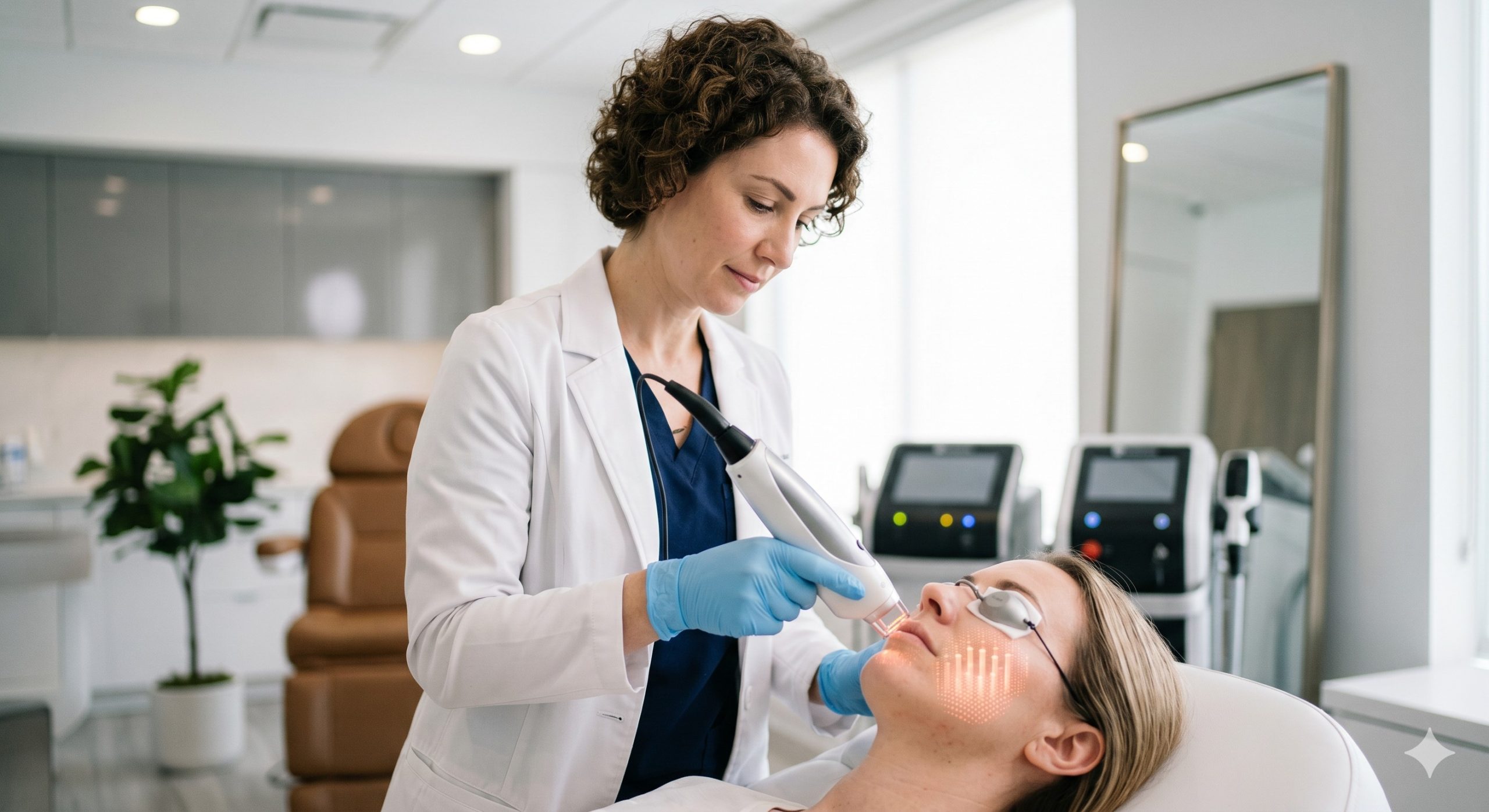
The clinical definition of non-ablative skin resurfacing downtime relies on maintaining an intact stratum corneum while delivering thermal injury to the dermis. Unlike ablative lasers (10,600nm CO2 or 2,940nm Er:YAG) which vaporize water, non-ablative wavelengths (1,440nm, 1,545nm, 1,550nm, or 1,927nm) target water in the dermis without disrupting the epidermal barrier. The result: micro-necrotic zones (MNZs) deep in the tissue, triggering neocollagenesis with only erythema and mild edema on the surface. For the clinic, this translates to a 1- to 3-day social downtime vs. 7-14 days for ablative procedures. However, efficacy depends entirely on fluence (mJ/MNZ) and density (%). Low-density protocols (5-10% coverage) produce ‘zero downtime’ but minimal results; therapeutic density (20-40%) requires robust epidermal cooling to prevent burns.
Critical Metrics for Tissue Interaction
When evaluating a device for non-ablative skin resurfacing downtime, insist on seeing the following validated output metrics:
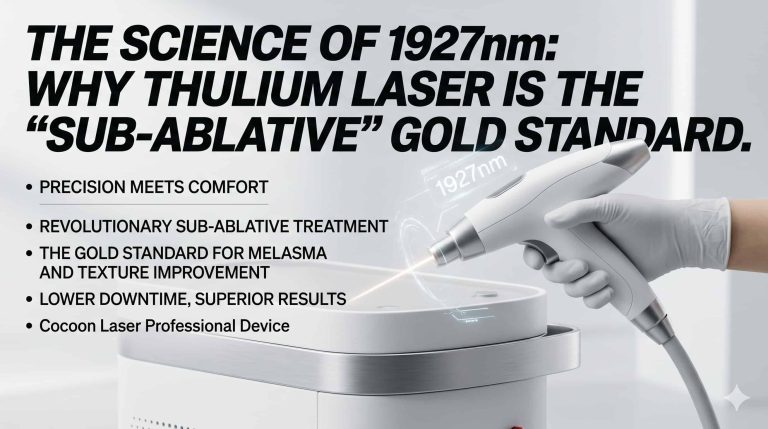
- Wavelength(s): 1,540nm (Er:Glass) or 1,927nm (Thulium). The 1,927nm wavelength has a higher water absorption coefficient, offering faster pigment clearance but slightly longer erythema (2-3 days).
- Spot Size / Scan Area: Fractionated spot sizes of 100-200 microns. Larger scan areas (15mm x 15mm) reduce treatment time for full-face resurfacing.
- Fluence per Microbeam: Typically 5-40 mJ. Higher fluence (30-40 mJ) drives deeper collagen remodeling but requires active cooling.
- Cooling System: Integrated Sapphire contact cooling or cryogen spray (dynamic cooling) is mandatory to maintain an epidermal temperature below 45°C.
Technical Specifications for Predictable Downtime
Clinics must audit device specifications against ISO 13485 manufacturing standards. The following table outlines core parameters that directly correlate with non-ablative skin resurfacing downtime outcomes:
| Key Parameter | Technical Specification for Minimal Downtime |
|---|---|
| Wavelength / Laser Type | 1,540nm Erbium:Glass or 1,927nm Thulium Fiber (Non-ablative Fractional) |
| Pulse Width / Exposure | 0.1 – 10 ms (Fractionated micro-pulses) |
| Fluence per Microbeam | 5 – 40 mJ (adjustable, Fitzpatrick dependent) |
| Treatment Density | 5% – 40% coverage (Low density = zero downtime, high density = therapeutic) |
| Cooling System | Sapphire contact cooling (-5°C to +5°C) or dynamic cryogen spray (DCD) |
| Spot Size / Scan Area | 100-200 µm microbeams; up to 15 x 15 mm scan area |
| Regulatory Status | FDA 510(k) cleared for rhytids & pigmentation; Medical CE Class IIb; ISO 13485 manufacture |
| Handpiece Durability | 10+ million shots (non-consumable, no per-patient tip cost) |
Fitzpatrick Skin Typing and Safety Protocols
The primary risk in non-ablative skin resurfacing downtime is post-inflammatory hyperpigmentation (PIH), not burns. For Fitzpatrick Skin Types IV-VI, aggressive stacking of pulses or high density (>30%) can overwhelm melanocytes. The clinical protocol to maintain minimal downtime includes:
- Fitzpatrick I-III: Fluence up to 40 mJ, density 30-40%, 2 passes. Downtime = 48 hours of erythema.
- Fitzpatrick IV-VI: Fluence 15-25 mJ, density 15-20%, 1 pass with delayed second pass (4 weeks). Downtime = 24-48 hours mild edema, no crusting.
Pre-treatment with hydroquinone 4% or kojic acid for 2-4 weeks is strongly recommended for Type IV+ to mitigate PIH risk, directly protecting the clinic from liability.
Comparative Efficacy: Non-Ablative vs. IPL vs. Micro-Needling
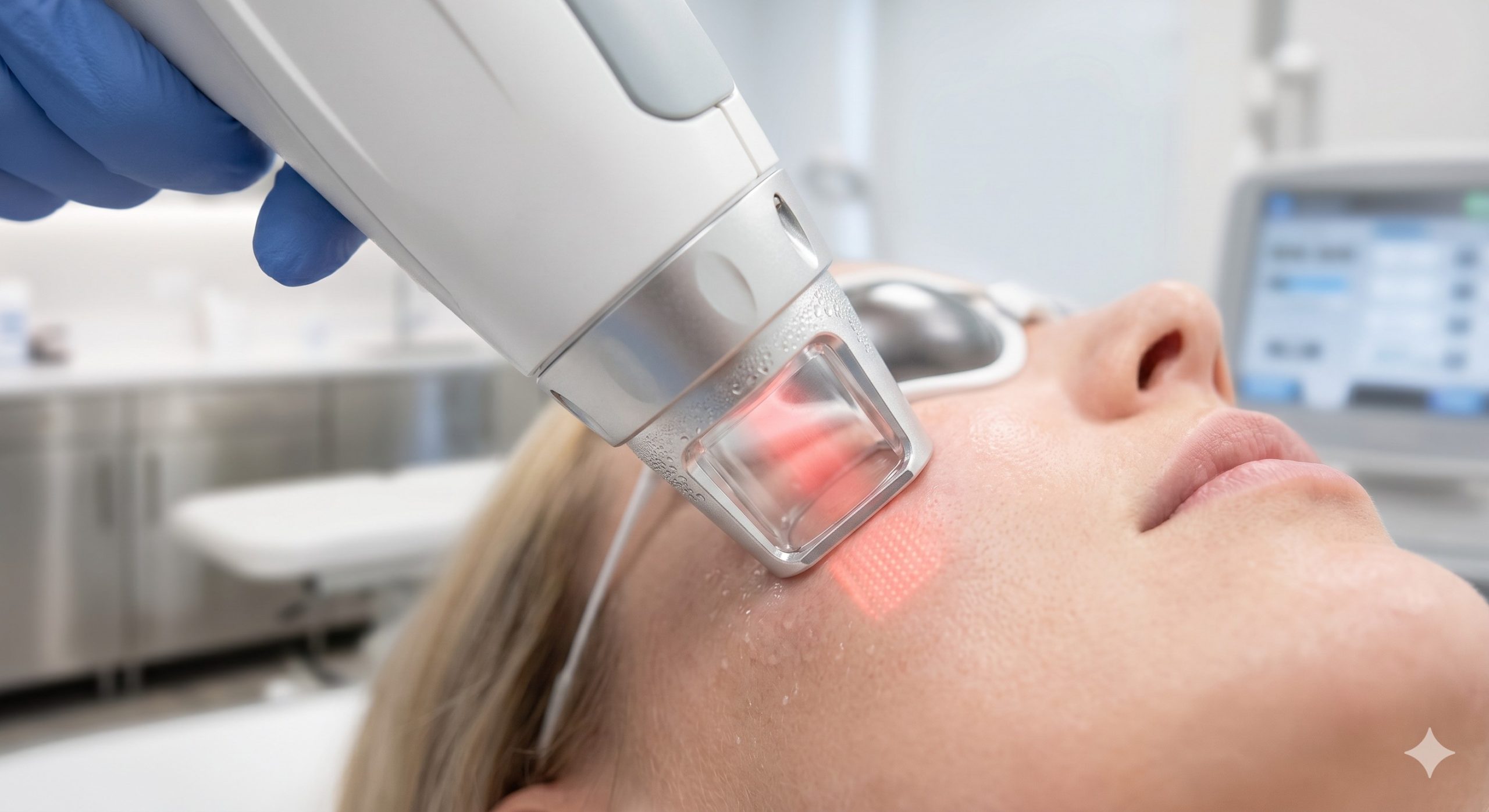
IPL delivers non-ablative broadband light but lacks fractional depth, limiting collagen contraction to superficial dermis (0.3-0.5mm). True non-ablative fractional lasers (NAFL) reach 0.8-1.5mm depth. For acne scars and rhytids, NAFL outperforms IPL by a factor of 3x in clinical clearance rates (60-75% improvement after 3 sessions vs. 25-35% for IPL). Compared to micro-needling, NAFL offers superior epidermal tightening and melasma control (with low-fluence 1,927nm protocols). However, micro-needling has zero thermal downtime; NAFL has 48 hours of ‘sandpaper’ texture. Clinics should position non-ablative skin resurfacing downtime as the ‘sweet spot’ for patients wanting visible results without bandaging.
Clinic ROI and Pricing Strategy for Minimal Downtime
The premium pricing for non-ablative skin resurfacing downtime comes from ‘high throughput’ scheduling. Because patients require only 1 day of social avoidance (no makeup for 12-24 hours, but can return to work immediately with tinted sunscreen), clinics can book 3-4 sessions per room daily. At an average price of $600-$1,200 per full-face session, a diode or Er:Glass device with a 10-million shot handpiece life (non-consumable) generates a return on investment (ROI) of under 4 months for a $60,000 capital expenditure. Key profitability drivers:
- Package conversion: 3-session packages ($1,500-$3,000) upfront improve cash flow.
- Combination therapy: Same-day stacking with non-ablative skin tightening (monopolar RF) increases ticket size without adding downtime.
- Consumables: Avoid devices requiring single-use tips; look for auto-calibrating handpieces with verified shot counts per Medical CE standards.
Conclusion and Clinical Pathway Summary
Non-ablative skin resurfacing downtime is not a single number but a protocol-dependent outcome. By selecting a FDA-cleared fractional device with validated 1,540nm or 1,927nm wavelengths, integrated Sapphire cooling, and precise fluence/density controls, your med spa can deliver measurable collagen remodeling (validated by biopsy) with a strict 1-2 day social pause. For maximum patient satisfaction, pre-treat Fitzpatrick IV+ with melanin suppressants, set realistic expectations of 3-4 sessions for acne scarring, and market the ‘weekend recovery’ advantage over ablative lasers. This positions your clinic as the authority in high-efficacy, low-inconvenience aesthetics.