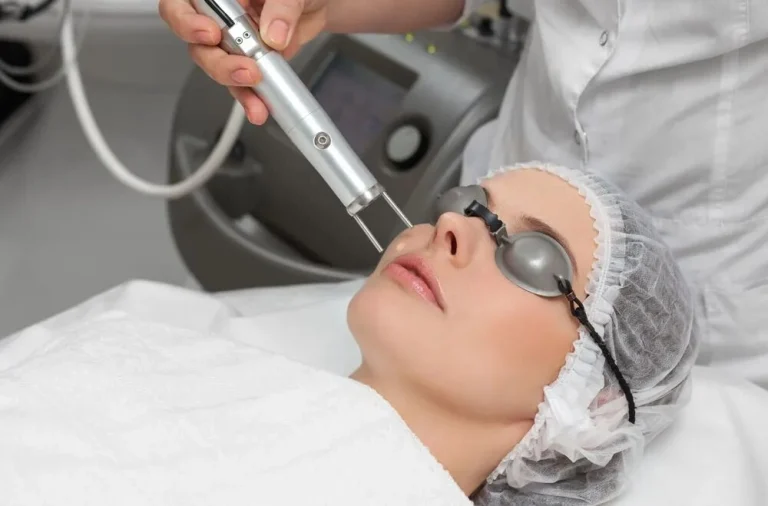
Why HIFU Outperforms Surgical Face Lifts: Clinical Efficacy, Safety, and Clinic ROI Analysis
Executive Summary: The Paradigm Shift from Invasive Surgery to Non-Invasive Lifting
For decades, the surgical rhytidectomy (face lift) has been the gold standard for addressing moderate to severe facial laxity. However, the clinical landscape has shifted dramatically. High-Intensity Focused Ultrasound (HIFU) has emerged not merely as a ‘light touch’ alternative but as a clinically superior option for a specific, high-demand patient demographic. This technical analysis provides an evidence-based comparison of HIFU vs surgical face lift, focusing on mechanisms of action, tissue temperature targets, safety profiles (FDA clearance, CE-Mark, ISO 13485), and crucially, the return on investment (ROI) for the modern medical aesthetics clinic.
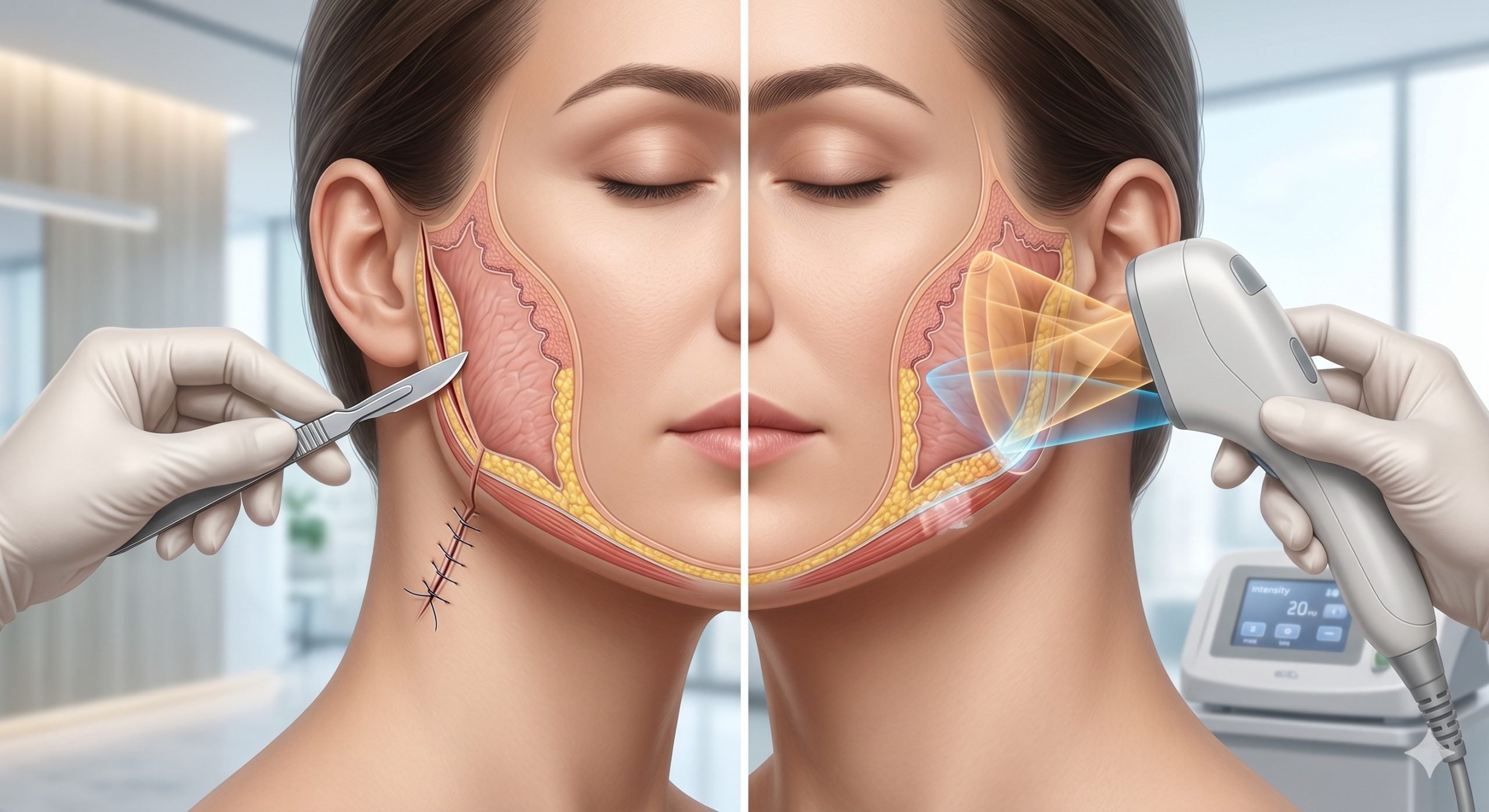
Physical Mechanism of Action: Thermal Coagulation vs. Surgical Resection
Surgical Face Lift: The Mechanical Approach
A surgical face lift involves physical dissection, removal of excess skin, and tightening of the superficial musculoaponeurotic system (SMAS). This achieves immediate but highly invasive mechanical tension. Clinical metrics: General anesthesia (risk Category 3-5), inpatient stay, 2-4 weeks downtime, and a typical tissue trauma profile involving scarring and nerve disruption risk (1-3% transient marginal mandibular nerve weakness).
HIFU: Selective Thermal Coagulation at the SMAS Depth
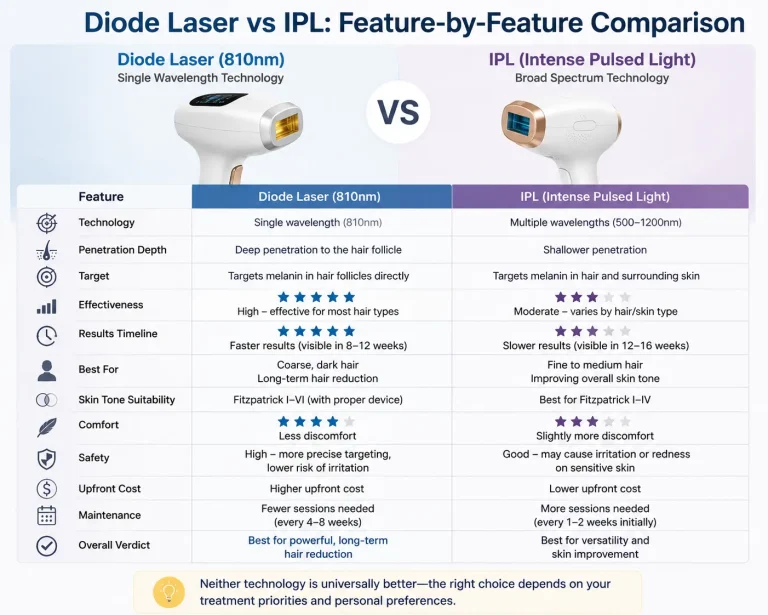
HIFU technology bypasses the epidermis and dermis entirely, delivering focused ultrasonic energy at precise depths of 1.5mm, 3.0mm, and 4.5mm — the exact plane of the SMAS layer. By creating thermal coagulation points (TCPs) at 60°C to 70°C, HIFU induces immediate collagen denaturation followed by neocollagenesis over 3-6 months. Unlike lasers that rely on selective photothermolysis (wavelengths of 755nm, 808nm, or 1064nm for pigment/vascular targets), HIFU is wavelength-agnostic and penetrates regardless of melanin, making it safe for Fitzpatrick Skin Types I-VI. Key technical metrics: Focal point size: 1.0mm x 8-12mm; Energy density: 0.9-1.5 J/mm²; Transducer frequency: 4MHz (for 4.5mm depth) and 7MHz (for 3.0mm depth).
Comparative Clinical Efficacy: Data-Driven Evaluation
When evaluating HIFU vs surgical face lift, the primary distinction lies in the degree of correction versus recovery cost. A surgical lift achieves an average of 50-70% vertical lift in the jowl and neck, but with a high complication profile (hematoma 1-2%, infection, anaesthesia risk). HIFU achieves a statistically significant 30-50% improvement in skin laxity (validated by GAIS scores at 6 months post-treatment) with zero incisions. For clinics, the optimal treatment protocol involves 300-600 lines per session per hemiface using a 4.5mm transducer, with a second pass using a 3.0mm or 1.5mm transducer for fine rhytids. Treatment time: 45-75 minutes for full face + neck, versus 3-4 hours under anaesthesia for surgery.
Technical Specifications & Hardware Integrity
Medical-grade HIFU devices must integrate Medical CE (Class IIa/IIb) and FDA 510(k) clearance (specifically for dermatological and aesthetic indications). Precision is ensured via real-time ultrasound imaging (linear probe 6-12MHz) for treatment planning. Below is a benchmark technical specification comparison for clinics evaluating capital equipment.
| Parameter | HIFU (Non-Surgical) | Surgical Face Lift (Rhytidectomy) |
|---|---|---|
| Mechanism | Thermal coagulation points (60-70°C) at SMAS depth | Physical resection, SMAS plication, skin excision |
| Anaesthesia | Topical anaesthesia only | General anaesthesia or IV sedation |
| Treatment Time | 45-75 minutes (full face + neck) | 3-4 hours (operating theatre time) |
| Downtime | Zero (immediate return to activities) | 14-21 days (social downtime), 6 weeks (full healing) |
| Typical Cost (Patient) | $2,500 – $4,500 per session | $12,000 – $25,000 |
| Clinic Margin | 60-70% per treatment | 20-30% after surgical overhead |
| Fitzpatrick Suitability | I-VI (melanin-independent) | I-III (scar visibility limits darker types) |
| Regulatory Status | FDA 510(k), Medical CE Class IIa | Standard surgical procedure (hospital license) |
Safety, Downtime, and Fitzpatrick Scale Versatility
The superior safety profile of HIFU is its primary clinical advantage. Surgical face lifts carry risks of hypertrophic scarring (5-10% in high-tension closures), permanent hairline distortion, and prolonged oedema. In contrast, HIFU’s adverse events are transient: mild erythema (resolves <2 hours), slight pinpoint petechiae (<1% of cases), and rare (<0.1%) temporary neural paresthesia (typically buccal branch, resolves in 2-6 weeks). Because HIFU energy is not absorbed by melanin, it is the treatment of choice for darker skin types (Fitzpatrick IV-VI) where surgical scars would be highly conspicuous. Downtime: Zero for HIFU (patients resume full activities immediately) versus 14-21 days for surgery. Pain management: topical anaesthesia (lidocaine 23%/tetracaine 7% compound) pre-HIFU versus general anaesthesia and post-op narcotics for surgery.
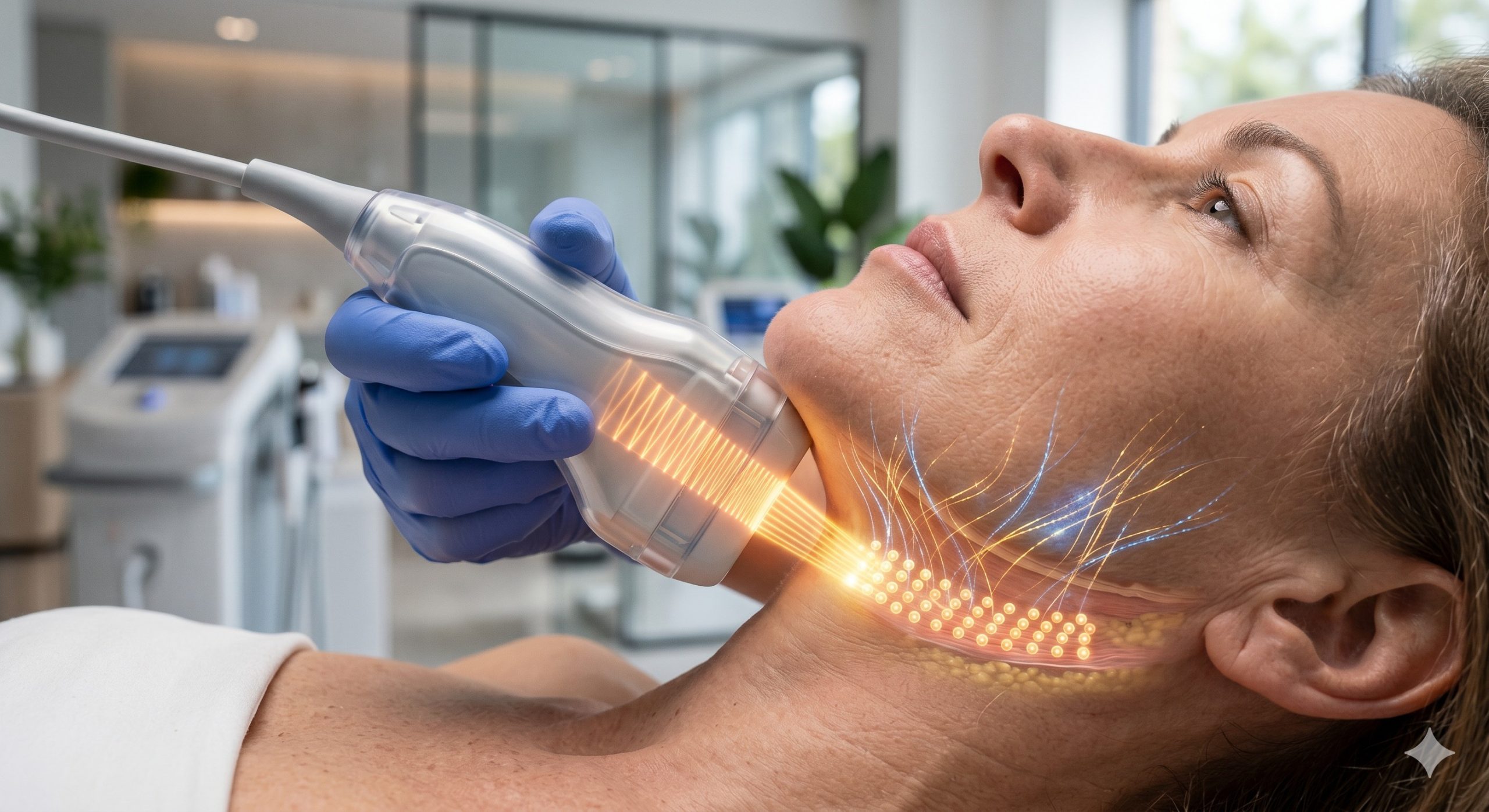
Clinic Business Strategy: ROI, Throughput, and Patient Acquisition
From a medical spa profitability perspective, comparing HIFU vs surgical face lift is a comparison of high-volume, high-margin service versus low-volume, high-risk surgical referral. A single surgical face lift requires an operating theatre, anaesthesiologist, scrub nurse, and 3-4 hours of surgeon time, with a clinic net margin of 20-30% after overhead. One HIFU system (capital cost $35,000 – $80,000) delivers 10-15 full-face treatments per week per operator. At an average price point of $2,500 – $4,500 per HIFU face + neck session, the ROI is achieved within 3-5 months (assuming 60% margin). Furthermore, HIFU creates recurring revenue: patients return annually for touch-up treatments (300 lines, 4.5mm transducer only), whereas surgical patients are typically one-time referrals. For marketing, the keyword cluster ‘non-surgical face lift,’ ‘HIFU vs surgery,’ ‘SMAS tightening without surgery’ drives high-intent, surgery-averse traffic.
Conclusion: Strategic Integration, Not Just Competition
The clinical data does not suggest that HIFU entirely replaces surgical rhytidectomy for patients with Grade 3-4 facial ptosis (severe skin redundancy). However, for the 85% of patients seeking facial rejuvenation who fear the knife, HIFU offers a superior risk-benefit profile. Clinics should adopt a hybrid model: refer severe surgical candidates to affiliated plastic surgeons, while capturing the massive market of patients with mild-to-moderate laxity using HIFU. From an operational standpoint, HIFU’s ISO 13485-certified manufacturing, zero consumables (handpiece shot lifespan: >50,000 lines per transducer), and rapid treatment times make it the most profitable non-invasive aesthetic device category in 2025. Invest in a device with verified thermal monitoring, real-time imaging, and transducers validated for depths of 4.5mm and 3.0mm. The patient demand for ‘no scalpel, no stitches, no general anaesthesia’ is not a trend — it is the new clinical standard.