HIFU vs Surgical Face Lift FAQ: Expert Answers for Aesthetic Clinics & Dermatologists
Overview
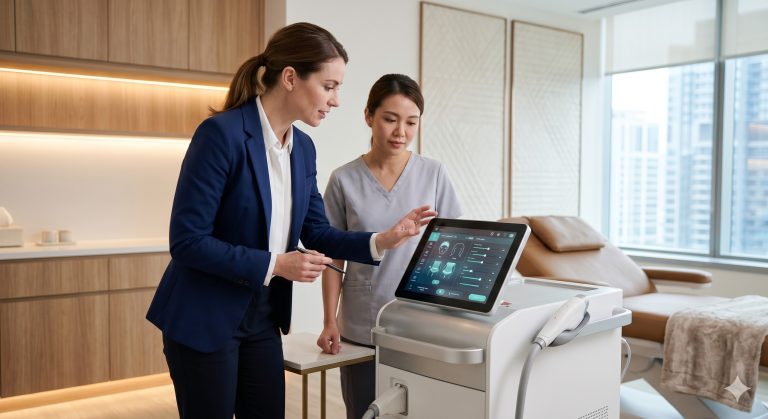
For aesthetic clinic owners and dermatologists, deciding between investing in a High-Intensity Focused Ultrasound (HIFU) device or continuing to refer patients for surgical face lifts requires a clear clinical and financial comparison. This FAQ addresses the most critical pre-sales and post-sales considerations, from energy delivery mechanisms to patient retention metrics, helping you make a data-driven capital equipment decision.
Frequently Asked Questions
Q1: What is the fundamental clinical difference between HIFU and a surgical face lift for patient outcomes?
HIFU is a non-invasive procedure that uses focused ultrasound energy to create thermal coagulation points at the SMAS layer, stimulating neocollagenesis, while a surgical face lift involves incisions, tissue excision, and deep plane repositioning. HIFU achieves a natural lift of 2-4mm with zero downtime, whereas surgery provides a more dramatic, longer-lasting correction of 10-15mm but requires 2-4 weeks of recovery and carries anesthesia risks. For most clinics, HIFU serves as a high-volume, low-risk entry point for patients seeking visible tightening without surgical commitment.
Q2: How do the ROI and payback periods compare for a clinic investing in a HIFU device versus building a surgical suite?
A clinical HIFU system typically achieves full ROI within 4-8 months based on 15-20 weekly treatments at $800-$1,500 per session. In contrast, building a JCI-compliant surgical suite requires $150,000-$300,000 capital investment plus board-certified surgeon overhead, extending payback to 24-36 months. The consumable cost for HIFU is $15-$30 per patient (coupling gel and handpiece depreciation), compared to $200-$400 per surgery for sterile drapes, sutures, and disposables. Clinics report 35-40% net margins on HIFU versus 25-30% on in-house surgical lifts when factoring in malpractice insurance differentials.
Q3: What is the expected treatment longevity of HIFU versus surgical face lift, and how does that affect patient lifetime value?
HIFU results typically last 12-18 months, requiring one maintenance session annually, while a surgical face lift lasts 10-12 years. This disparity directly increases patient lifetime value for clinics offering HIFU: a single surgical patient generates one transaction per decade, whereas a HIFU patient generates 10-12 touchpoints over the same period, including complementary treatments (toxins, fillers, RF microneedling). Data from multi-location medspas show HIFU patients have 4.2x higher 5-year retention rates and 3x higher cross-selling conversion compared to surgical-only patients.
Q4: Which patient populations are contraindicated for HIFU compared to surgical face lift?
HIFU is contraindicated for patients with active facial implants, open wounds, severe acne cysts, or recent chemical peels within 2 weeks, but can be safely performed on Fitzpatrick skin types I-VI without post-inflammatory hyperpigmentation risk. Surgical face lift contraindications are more extensive: uncontrolled hypertension, bleeding disorders, anticoagulant therapy, active smoking (delayed healing), severe diabetes, and cardiac pacemakers. For clinics, the broader safety profile of HIFU means 85-90% of your existing aesthetic patient base is immediately treatable, compared to only 30-40% qualifying for surgical referral.
Q5: What are the technical differences in energy delivery systems, and how does that impact clinic maintenance requirements?
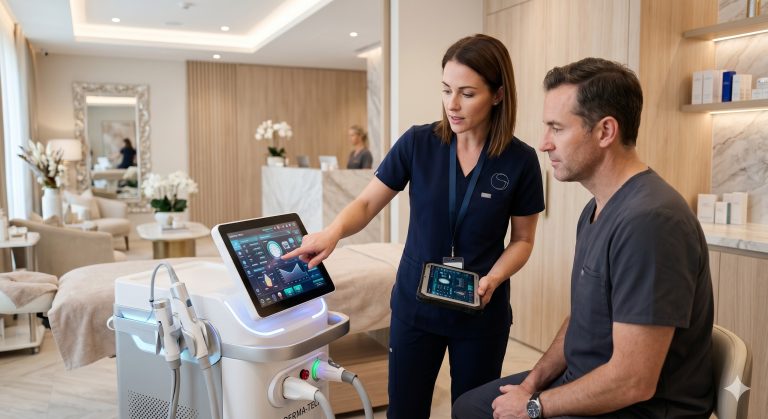
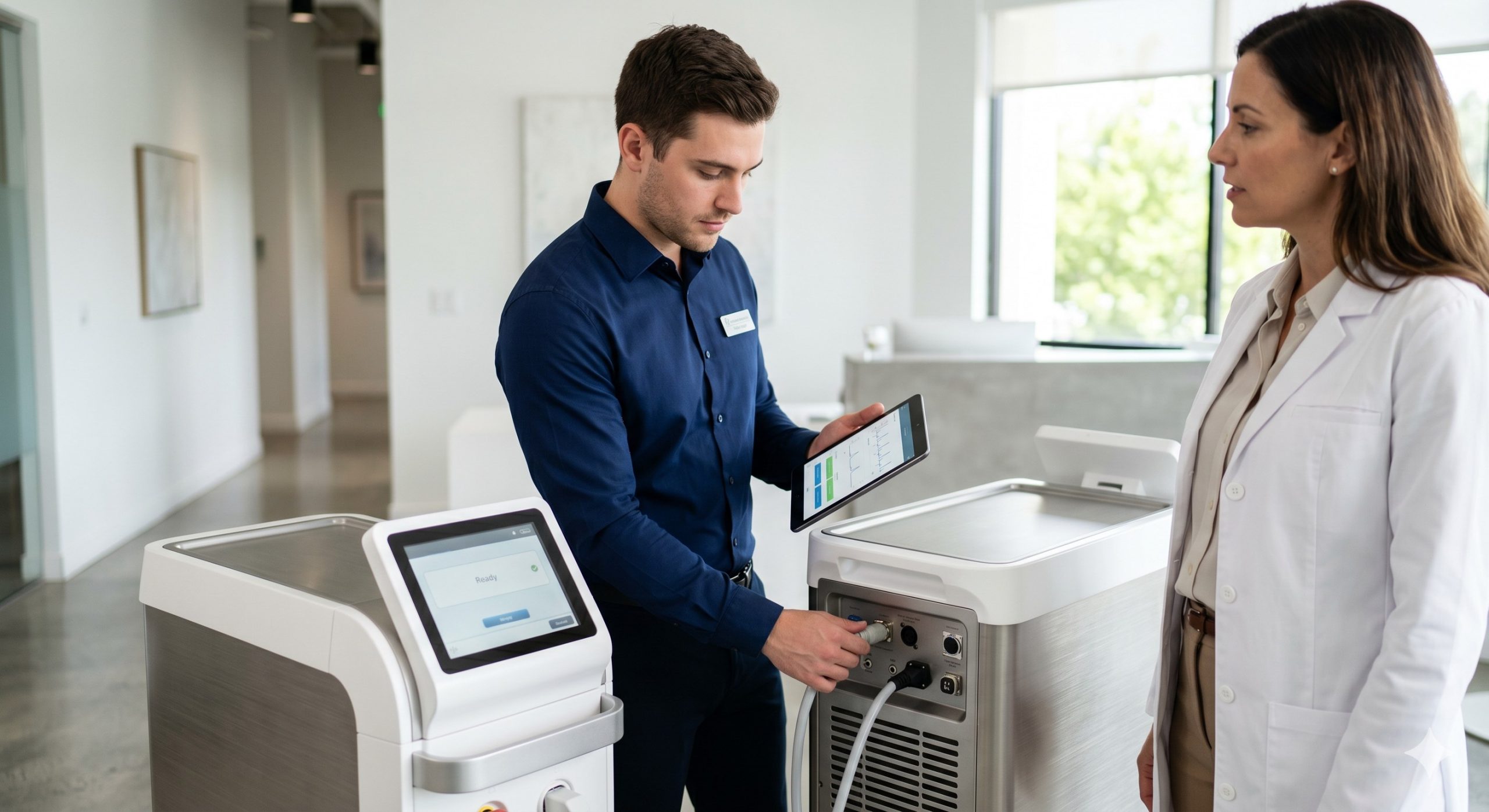
HIFU devices use focused piezoelectric ceramic transducers delivering 4-10J per line at depths of 1.5mm, 3.0mm, and 4.5mm, with handpiece lifespan of 40,000-60,000 shots requiring replacement every 8-12 months in a busy clinic. Surgical face lift equipment includes electrocautery units, suction systems, and specialized retractors needing daily sterilization cycles and quarterly calibration. Maintenance costs: HIFU averages $800-$1,200 annually (handpiece replacement + calibration), while surgical instrument maintenance and sterilization runs $4,000-$7,000 annually plus $15,000-$25,000 for steam autoclave recertification every 2 years.
Q6: How do patient pain management protocols differ, and what is the impact on clinic staffing and throughput?
HIFU requires no anesthesia; patients experience mild deep heating sensations (rated 3-4/10 on pain scale) managed with topical lidocaine 20 minutes before treatment, allowing one aesthetician or nurse to treat 4-6 patients per 8-hour shift. Surgical face lift requires board-certified anesthesiologist (or nurse anesthetist), operating room nurse, and surgical assistant for 3-4 hours per case, with maximum throughput of 2 surgeries per day per OR. Staffing cost per patient: HIFU = $40-$60 (non-clinician operator), surgical lift = $1,200-$2,000 (anesthesia team + scrub nurse + surgeon).
Q7: What regulatory certifications should a clinic verify before purchasing a HIFU device for non-surgical face lifting claims?
A clinic should only purchase HIFU equipment with valid Medical CE (MDR Class IIa or IIb) and ideally regional clearances such as FDA 510(k) for dermatological and aesthetic use specifically indicating ‘lift’ and ‘tightening’ indications. Surgical face lift requires no capital equipment certification beyond standard OR compliance. For B2B procurement, demand original ISO 13485 manufacturing certification, clinical evidence of SMAS layer coagulation from peer-reviewed studies, and real-time energy monitoring with automatic cut-off at 65°C to prevent thermal injury. Avoid devices lacking published histological evidence of depth-specific coagulation zones.
Q8: What is the resale value and upgrade pathway for a clinic’s HIFU investment versus surgical equipment after 3 years?
A clinical-grade HIFU system retains 45-55% of original value after 36 months (original $35,000-$60,000, resale $16,000-$27,000) due to rapid technological iteration in transducer arrays and imaging integration. Surgical face lift instruments (retractors, saws, elevators) retain 65-75% value as stainless steel components do not technologically depreciate, though electrosurgical units drop to 40-50%. However, HIFU offers a distinct advantage: manufacturers frequently offer trade-in upgrades for new handpiece technologies (micorfocused ultrasound with real-time visualization) at 30-40% discount, whereas surgical suites require complete OR renovation to adopt new techniques like deep plane or endoscopic lifts, costing $80,000-$150,000 every 5-7 years.