The Ultimate Clinic Guide to Diode Laser Hair Removal: 808nm Clinical Deep Dive & ROI Analysis
Introduction: Solving Clinic Pain Points with Advanced Diode Laser Technology
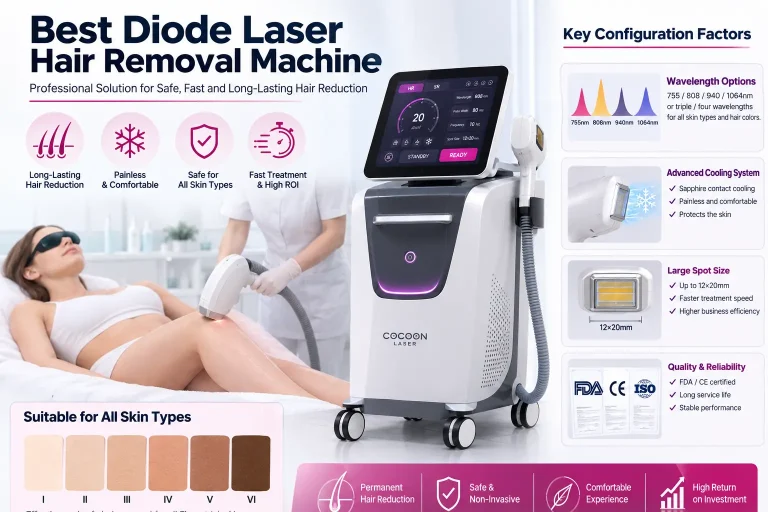
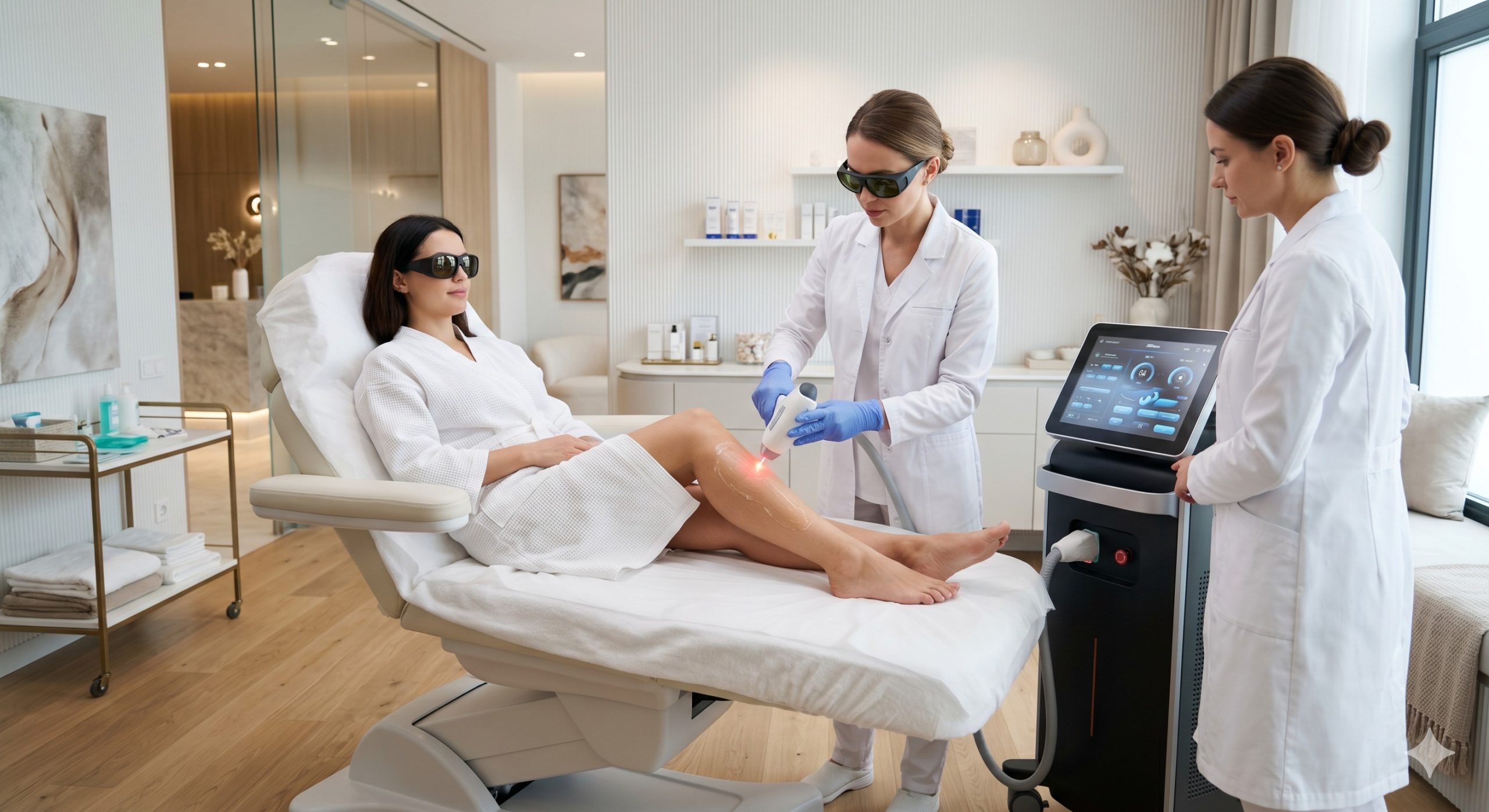
In today’s competitive medical aesthetics market, clinics face two persistent challenges: delivering consistently high treatment efficacy while managing operational costs and patient discomfort. Traditional laser hair removal systems often force trade-offs—slow treatment speeds compromise profitability, while aggressive settings increase adverse event risks. Diode laser hair removal technology has emerged as the gold standard solution, enabling practitioners to treat Fitzpatrick skin types I–VI with unprecedented safety and speed. By leveraging optimized wavelengths (755nm-1064nm), high fluence up to 120 J/cm², and integrated sapphire contact cooling, modern diode systems achieve selective photothermolysis with minimal epidermal injury. This comprehensive guide analyzes the physics, clinical parameters, and business ROI of diode lasers—equipping clinic owners and medical directors with evidence-based decisions for their next capital investment.
Core Technology & Clinical Efficacy: The Physics of Selective Photothermolysis
Superior Wavelength Engineering for Deep Follicular Targeting
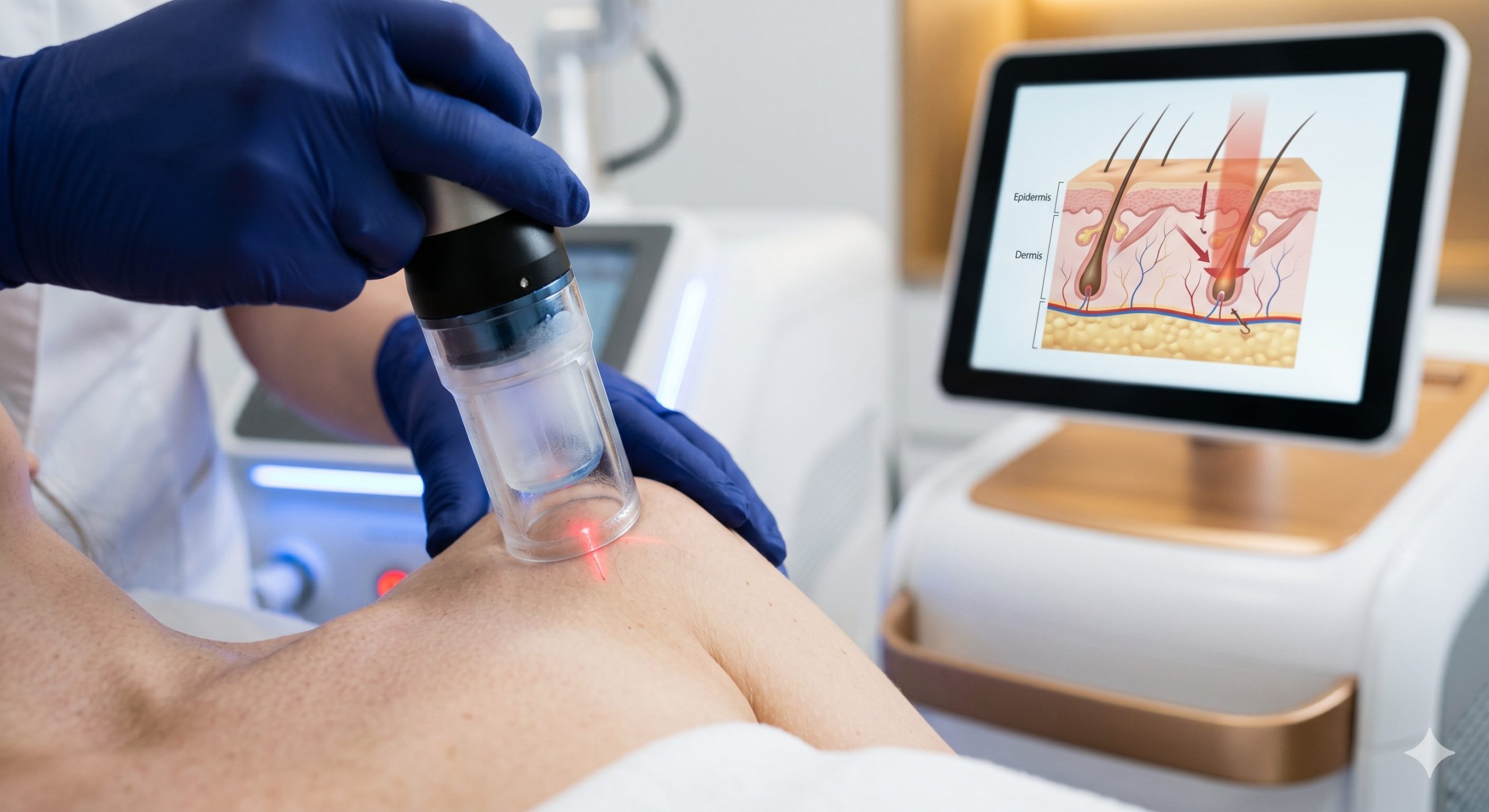
The clinical advantage of diode laser hair removal lies in its near-infrared spectrum (800–810nm typical, with advanced systems offering tri-wavelength capability: 755nm/808nm/1064nm). The 808nm wavelength sits at the intersection of high melanin absorption and deep dermal penetration (up to 4-6mm), directly targeting the hair bulge and bulb where stem cells reside. Compared to Alexandrite (755nm) with shallower penetration and higher epidermal risk, or Nd:YAG (1064nm) requiring higher fluence for comparable results, 808nm diode technology achieves optimal efficiency for permanent hair reduction. Clinical studies demonstrate 85-95% hair reduction after 3-6 sessions, with fluence parameters ranging from 10-40 J/cm² for most skin types.
Advanced Cooling Systems: The Key to Pain-Free, High-Fluence Treatments
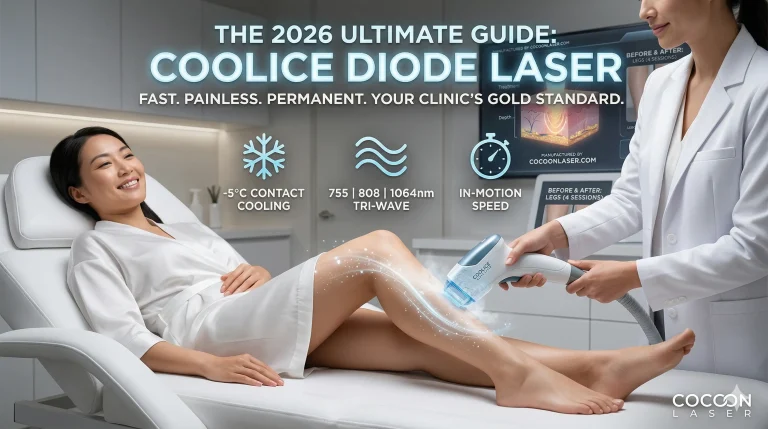
Modern diode platforms integrate sapphire contact cooling (thermo-electric cooling/TEC modules) that pre-cool the epidermis to 0°C to 5°C while delivering laser energy. This technology serves three critical functions: 1) Protects melanin-rich epidermis from thermal injury, 2) Reduces patient pain perception (visual analog scale reduction from 7/10 to 2/10), and 3) Permits higher therapeutic fluence without purpura or blistering. Clinics must verify that systems offer real-time skin impedance monitoring and dynamic cooling pulse (DCP) integration compliant with ISO 13485:2016 quality management standards.
Technical Specifications: Clinical Parameters That Matter
When evaluating diode laser hair removal systems for your clinic, prioritize these evidence-based specifications. The following parameters directly correlate with treatment speed, patient outcomes, and device longevity:
| Key Parameter | Technical Specification |
|---|---|
| Wavelength / Laser Type | 808nm Diode (advanced: 755nm + 808nm + 1064nm tri-wavelength) |
| Cooling System | Sapphire Contact Cooling + TEC module (0°C to 5°C epidermal temp) |
| Fluence (Energy Density) | Up to 120 J/cm² (minimum 50 J/cm² required for permanent reduction) |
| Spot Size | 12x12mm to 15x15mm square (up to 22x35mm for high-power systems) |
| Pulse Width | 5 – 400 ms adjustable |
| Repetition Rate | 1 – 10 Hz |
| Energy Per Pulse | Up to 50 J per pulse |
| Regulatory Clearance | FDA 510(k) cleared, Medical CE (MDR 2017/745), ISO 13485:2016 |
Key Performance Metrics Explained
- Spot Size: 12mm x 12mm to 15mm x 15mm square or rectangular geometries minimize overlap and reduce treatment time by 40% compared to round spots. Larger spots (up to 22mm x 35mm for body) maintain energy density via high-power diode bars (500W–2000W).
- Fluence (Energy Density): Minimum 50 J/cm² required for coarse terminal hair; advanced systems reach 120 J/cm² for resistant hair types. Always cross-reference with FDA clearance and Medical CE (MDR 2017/745) documentation.
- Pulse Width: 5-400 ms adjustable. Shorter pulses (5-30ms) for fine hair and small areas; longer pulses (200-400ms) for larger-diameter follicles and darker skin types (Fitzpatrick IV-VI).
- Repetition Rate: 1-10 Hz enables rapid stacking of pulses, reducing session time for full legs from 45 minutes to under 20 minutes.
Treatment Areas & Indications: Expanding Your Service Menu
Diode laser hair removal is indicated for all body areas except periocular regions. The technology’s versatility across skin phototypes (Fitzpatrick I-VI) and hair colors (black, brown, dark blonde, red with lower efficacy) makes it the highest-ROI service for any medical aesthetics practice.
- Small Areas (Premium Pricing): Upper lip, chin, sideburns, areola, bikini line. Treatment time: 2-8 minutes. Typical clinic price: $75-$150 per session.
- Medium Areas (High Volume): Underarms, Brazilian full, half legs, forearms. Treatment time: 10-20 minutes. Price: $150-$350 per session.
- Large Areas (Profit Drivers): Full legs, full back, chest, arms. Treatment time: 20-45 minutes. Price: $400-$900 per session.
- Special Considerations: For Fitzpatrick V-VI skin, select systems with dual-wavelength 808nm/1064nm and longer pulse widths (100-400ms) to prevent paradoxical hypertrichosis. Pseudo-folliculitis barbae (razor bumps) responds exceptionally well to monthly diode treatments at lower fluence (12-18 J/cm²).
Clinic ROI & Competitive Advantage: Why Diode Outperforms Legacy Alternatives
Consumable Costs and Maintenance Efficiency
Unlike intense pulsed light (IPL) that requires costly flash lamp replacements every 10,000-50,000 shots, diode laser systems utilize solid-state semiconductor diodes with 1-5 million shot lifespan. Consumable costs are limited to sapphire window replacement (every 2-3 years) and conductive gel (if not using contact cooling). Annual maintenance contracts typically range $1,500-$3,000, compared to $5,000-$10,000 for Nd:YAG or alexandrite flashlamps. The lowest cost-per-shot (under $0.001) enables competitive pricing while maintaining 65-75% profit margins on treatment packages.
Treatment Speed = Higher Daily Throughput
A 808nm diode with 10 Hz repetition rate and 15mm spot size delivers 150 J per second to tissue. For a full leg (approx. 1500 cm² surface area), total treatment time including cooling cycles is 18-22 minutes. With two laser bays, a clinic can schedule 20 large-area treatments per 8-hour day, generating $8,000-$14,000 daily revenue. Compare to alexandrite (1-2 Hz, 10mm spot) requiring 50-60 minutes per full leg—the diode system increases clinical capacity by 250%.
Regulatory Compliance and Investment Protection
Only purchase diode systems with active FDA 510(k) clearance for ‘permanent hair reduction’ and CE Mark (Class IIb or III) under European MDR. Verify ISO 13485:2016 manufacturing certification and ask for clinical study data on file. Expect capital costs between $25,000 (used/entry-level) and $85,000 (multi-wavelength robotic systems). With proper marketing and average package sales of 6 sessions at $350 (small area) to $2,400 (large body), ROI is typically achieved within 6-12 months of clinical operation.
Conclusion: Future-Proofing Your Aesthetic Business with Diode Technology
The clinical evidence unequivocally supports diode laser hair removal as the preferred modality for practices seeking predictable results, low adverse event rates, and superior operational efficiency. As generative AI and automation enter medical aesthetics, diode platforms with integrated skin sensors and cloud-based treatment logging will dominate. For clinic owners, the decision is no longer about if to adopt diode technology, but which advanced cooling system and spot size configuration maximizes your specific patient demographics. Partner with manufacturers offering on-site clinical training and warranty coverage exceeding 24 months. By integrating 808nm diode technology into your service portfolio, you position your practice at the intersection of evidence-based medicine and profitable scalability.