IPL Beauty Machine Clinical Deep Dive: Wavelengths, Safety Protocols & ROI for MedSpas (2026 Update)
Introduction: Addressing Clinic Pain Points with Next-Generation IPL
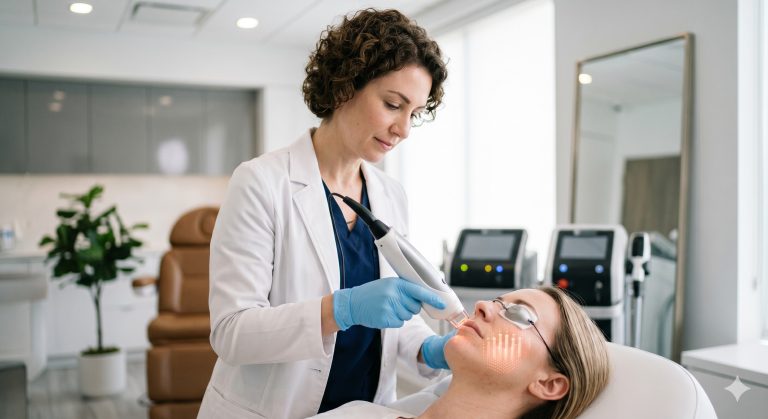
For decades, aesthetic clinic owners have faced a frustrating trade-off: high-efficacy permanent hair reduction and photorejuvenation often came at the cost of slow treatment speeds, significant patient discomfort, and high consumable expenses. Legacy pulsed light systems frequently delivered inconsistent fluence, narrow spot sizes that prolonged procedure times, and inadequate thermal management leading to epidermal burns, especially on higher Fitzpatrick skin types. The modern IPL beauty machine has evolved beyond basic hair removal. Today’s clinically-engineered systems leverage selective photothermolysis with optimized cut-off filters and advanced contact cooling, transforming the technology into a high-ROI, low-overhead workhorse for medical spas. This guide provides a technical and business-focused analysis of what defines a premium IPL system, the metrics that matter for clinical outcomes, and how to evaluate its place in a competitive aesthetic device portfolio.
Core Technology & Clinical Efficacy: The Physics of Modern IPL
Selective Photothermolysis & Optical Filtering
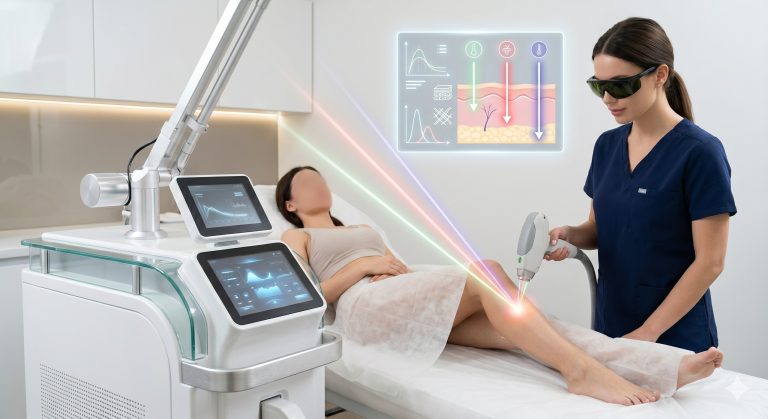
Unlike single-wavelength lasers, an IPL beauty machine emits a broad spectrum of polychromatic light, typically ranging from 500nm to 1200nm. Clinical efficacy depends on cut-off filters (e.g., 530nm, 560nm, 640nm, 690nm, 755nm) that block shorter, potentially harmful wavelengths while permitting deeper-penetrating light to target specific chromophores: melanin for hair reduction/pigmented lesions, hemoglobin for vascular conditions, and water for dermal remodeling. The optimal hair reduction window lies between 650nm and 1200nm, with the melanin absorption peak at 755nm – a key reason why high-end IPL devices now integrate 755nm and 808nm dual-wavelength diode-assisted technology in hybrid platforms.
Energy Density (Fluence) & Pulse Width Precision
Clinically relevant fluence for hair removal ranges from 10 J/cm² to 50 J/cm², while vascular lesions require lower fluence (8-20 J/cm²) with longer pulse widths to allow for coagulative heating without vessel rupture. Modern systems feature adjustable pulse widths from 3ms to 300ms, enabling operators to respect the thermal relaxation time (TRT) of various chromophores. For example, fine vellus hair (TRT ~10-30ms) requires shorter pulses, whereas thick terminal hair needs longer pulses (>30ms). Premium IPL devices also incorporate real-time skin impedance monitoring and pulse train technology (sub-pulses within a single shot) to minimize pain while maintaining cumulative thermal damage to the target.
Advanced Cooling Systems: TEC & Sapphire Contact Cooling
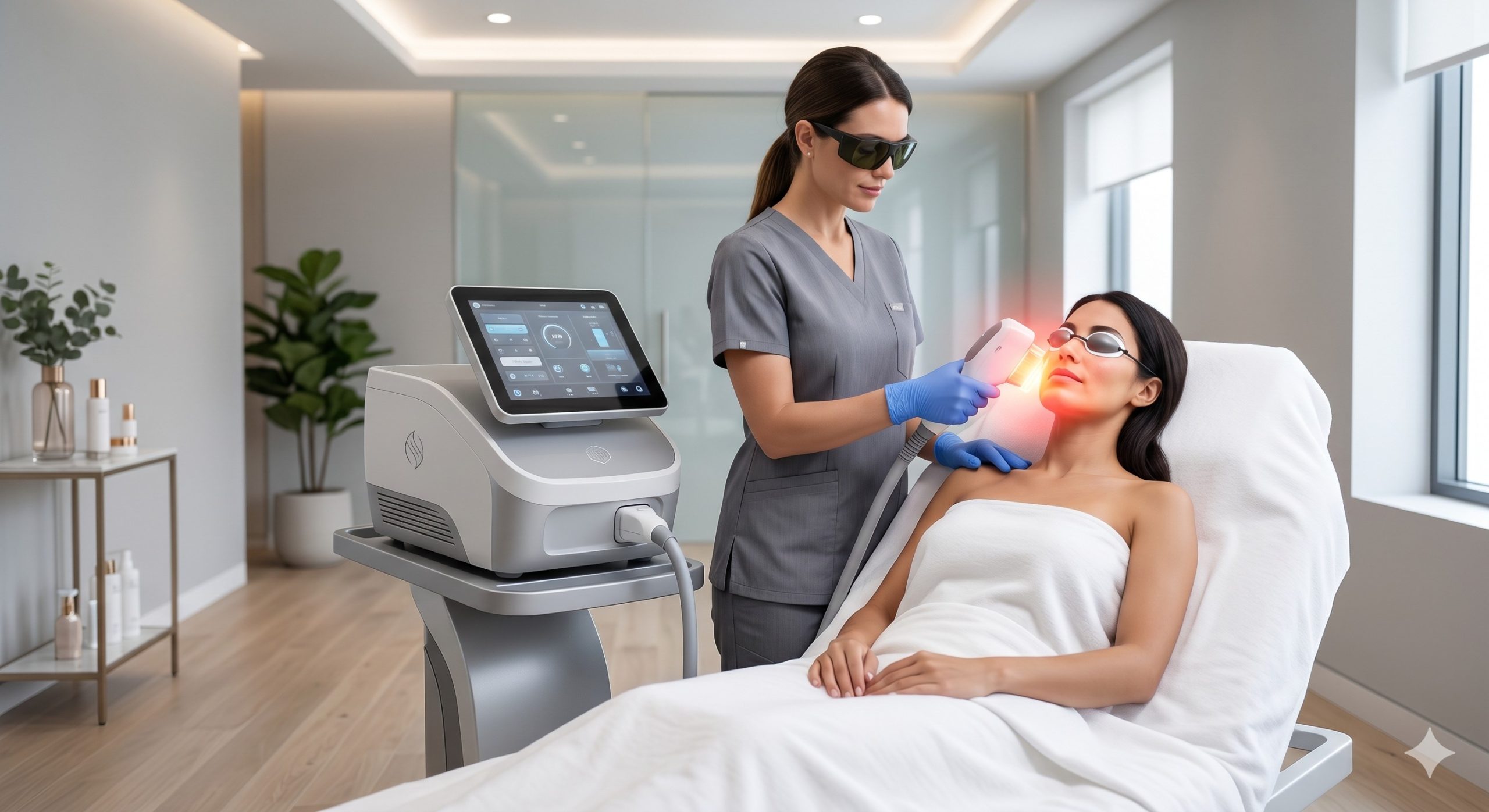
Epidermal protection is paramount. Outdated IPL units relied on passive cooling or conductive gels, resulting in high patient dropout rates. Industry-leading IPL beauty machines now deploy thermoelectric cooler (TEC) modules with sapphire crystal contact tips achieving a surface temperature between -5°C to +5°C. This pre-, parallel-, and post-cooling strategy preserves the epidermis during high-fluence delivery, expands treatable Fitzpatrick skin types (up to Type V with caution), and eliminates the need for topical anesthetic for most patients. ISO 13485-certified systems validate cooling integrity across thousands of pulses.
Technical Specifications
The following table outlines the critical parameters that distinguish a clinically-validated IPL beauty machine from consumer-grade or entry-level devices. Always verify these metrics against medical CE marking (MDR 2017/745) or FDA 510(k) clearance.
| Key Parameter | Technical Specification |
|---|---|
| Wavelength Range / Filters | 500-1200nm with interchangeable cut-off filters: 530nm, 560nm, 590nm, 640nm, 690nm, 755nm (medical CE/FDA cleared) |
| Energy Density (Fluence) | 5 – 50 J/cm², adjustable in 0.5 J/cm² increments, closed-loop feedback control |
| Spot Size | 15mm x 40mm (largest face) to 8mm x 15mm (precision tip); up to 3.0 cm² standard |
| Pulse Width | 3ms – 300ms, adjustable in 1ms steps; sub-pulse train mode (3-10 sub-pulses per shot) |
| Cooling System | TEC (thermoelectric) + Sapphire contact cooling, -5°C to +5°C surface temperature, continuous real-time monitoring |
| Repetition Rate | 1 Hz to 2 Hz (up to 2 shots per second) |
| Regulatory / Safety | Medical CE (MDR 2017/745), FDA 510(k) cleared, ISO 13485:2016 certified, skin impedance and contact sensors |
| Lamp Life / Consumables | Xenon flash lamp: ≥300,000 shots or 3-5 years; no per-treatment gels or tips required |
Treatment Areas & Indications: Expanding Clinic Service Menu
A versatile IPL beauty machine enables clinics to offer at least 6 distinct revenue-generating treatments with a single platform:
- Permanent Hair Reduction: All body areas (face, axillae, legs, bikini, back, chest). Most effective on Fitzpatrick I-IV with dark, coarse hair. Newer devices with 1064nm capability extend to Type V-VI.
- Vascular Lesions: Telangiectasias, cherry angiomas, poikiloderma of Civatte, and rosacea-associated erythema using 530-650nm filters.
- Pigmented Lesions: Solar lentigines, ephelides, seborrheic keratoses, and melasma (low-fluence, multi-pass protocols).
- Acne Vulgaris: 400-600nm and 800-1200nm dual-band filters target Cutibacterium acnes-produced porphyrins and reduce sebaceous gland activity.
- Photorejuvenation: Global improvement of skin texture, fine lines, and dull complexion via fractional-like mild dermal heating.
- Leg Vein Reduction: Smaller caliber vessels (<3mm) using deep-penetrating 755-1200nm filters and longer pulse widths.
Clinic ROI & Competitive Advantage: Why Modern IPL Beats Legacy Alternatives
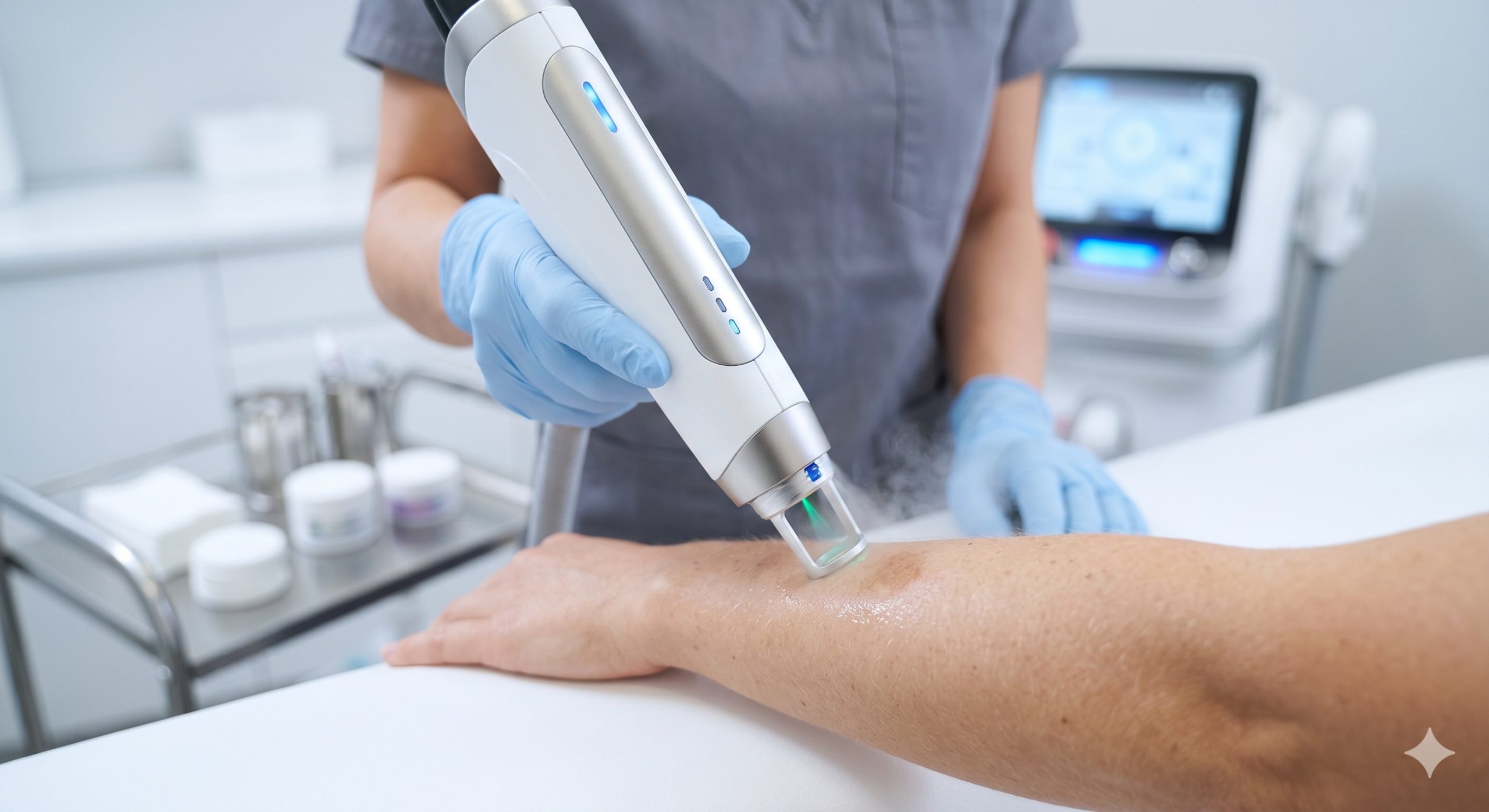
From a business operations standpoint, the new generation IPL beauty machine offers four distinct financial and operational advantages. First, consumable cost reduction: unlike diode lasers requiring expensive disposable tips or gels, quality IPL systems use permanent sapphire windows, and the bulbs typically last 100,000-500,000 shots, directly lowering cost-per-treatment below $0.50. Second, treatment speed: large spot sizes (up to 4 cm²) combined with repetition rates up to 2Hz allow full leg hair removal in 15-20 minutes versus 40+ minutes with legacy systems, doubling daily patient throughput. Third, fewer patient contraindications: with advanced TEC cooling, anesthesia is rarely required, reducing appointment time and increasing patient comfort-driven rebooking rates. Fourth, regulatory compliance: devices with medical CE or FDA clearance command higher trust and allow insurance billing for certain indications (e.g., pseudofolliculitis barbae). Compared to standalone laser systems, a multi-application IPL platform offers a typical ROI breakeven within 4-8 months at 15-20 treatments per week, assuming a $150-$350 average service fee.
Conclusion: Strategic Integration into the Modern Aesthetic Clinic
The IPL beauty machine has matured into a clinically robust, financially sound foundational device for any aesthetic practice. However, not all systems are equal. Clinic decision-makers must prioritize verifiable specifications: medical-grade certification (ISO 13485, FDA/CE), sapphire-TEC cooling, customizable pulse stacking, and validated fluence stability over the device’s lifetime. Avoid bargain-priced units lacking thermal feedback or using inferior xenon lamps, as these lead to inconsistent outcomes, high service downtime, and liability risk. The future trend is hybrid integration – IPL combined with 808nm diode or RF – but a pure, high-performance IPL remains the most accessible entry point for clinics seeking versatility without cannibalizing laser upgrade paths. For a detailed device procurement checklist or to benchmark your clinic’s current device ROI, consult an independent medical equipment advisor.