Underarm Laser Hair Removal: Cost, Pain, Sessions & Results
Educational guide to underarm treatment costs, comfort, results, and safety.
Published by Cocoon Laser · Professional aesthetic equipment supplier
Underarm laser hair removal is a popular option for people who want to reduce armpit hair growth without frequent shaving or waxing. It can produce long-lasting hair reduction, but the treatment usually requires several sessions, and results vary from person to person.
If you are considering armpit laser hair removal, you probably have several questions: How much does it cost? Does it hurt? How many sessions are necessary? Is it safe for darker skin? And will the hair eventually grow back?
This guide explains the procedure, realistic costs, treatment schedules, expected results, potential side effects, and practical preparation and aftercare tips.
Quick Answer: Is Underarm Laser Hair Removal Worth It?
Underarm laser hair removal can be worthwhile if you want long-term reduction in armpit hair growth and less frequent shaving. Many treatment plans involve approximately 6–8 sessions, although the number varies with hair growth, skin characteristics, equipment, and individual response.
For preliminary budgeting in the United States, approximately $75–$200 per session is an illustrative range, not a verified national average. Some clinics charge outside this range or offer multi-session packages.
Treatment can feel like a quick snap or brief sting. Cooling may improve comfort. The goal is lasting hair reduction rather than guaranteed permanent removal of every hair.
What Is Underarm Laser Hair Removal?
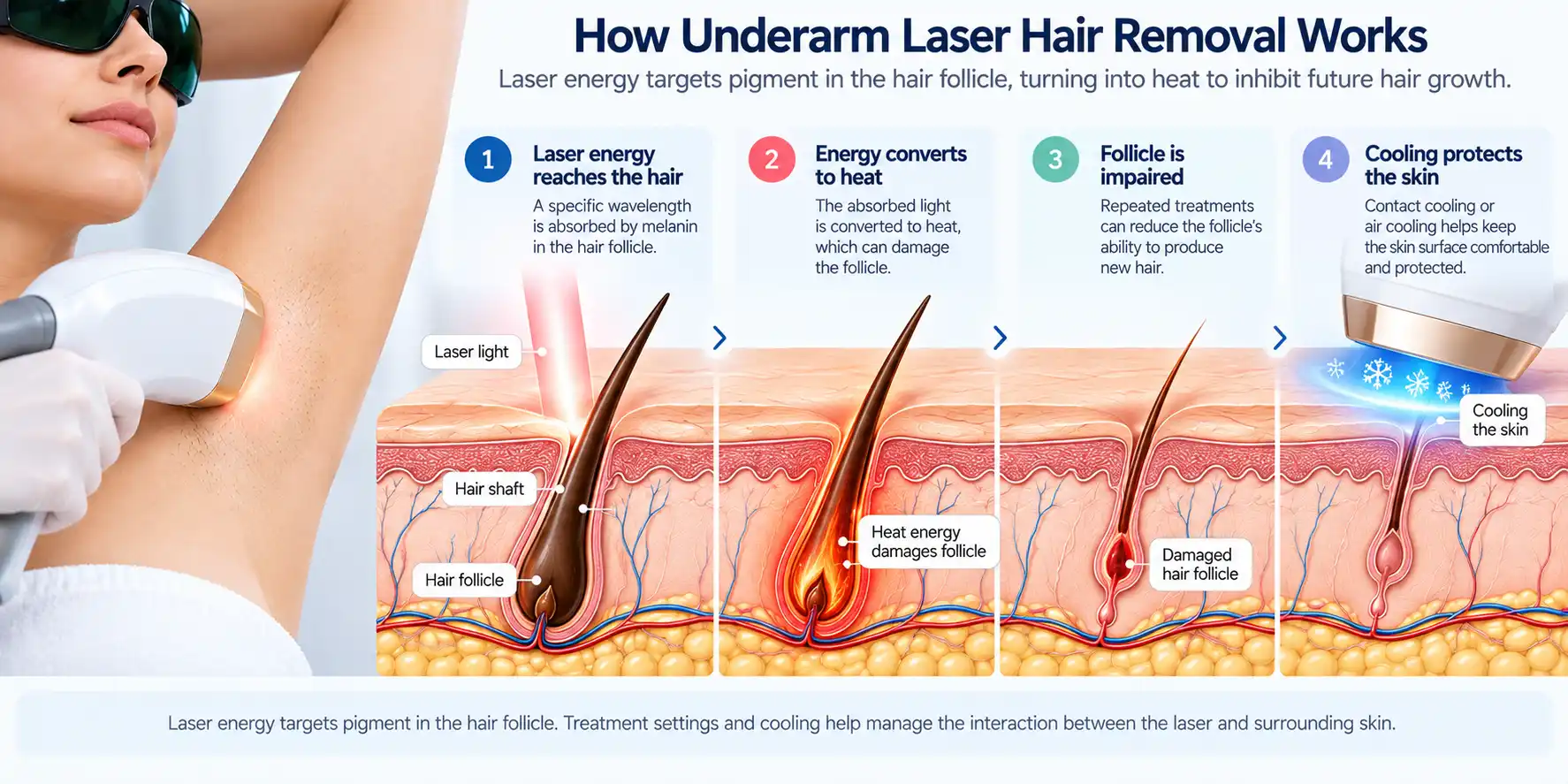
Underarm laser hair removal is a procedure that uses concentrated light to target pigment within hair follicles in the armpit region. The light is absorbed and converted into heat, which can impair the follicle’s ability to produce new hair.
This process is based on selective photothermolysis: delivering optical energy to a target while limiting unwanted damage to surrounding tissue.
Underarm hair is often relatively coarse and pigmented, characteristics that may make it responsive to appropriately selected laser treatment. However, hair color, skin phototype, hormonal influences, and device settings all affect results.
How Does the Laser Target Armpit Hair?
Hair contains melanin, a pigment that absorbs certain laser wavelengths. When enough energy reaches a suitable hair follicle, heat can damage structures involved in future growth.
The operator must balance effective follicular heating with protection of the surrounding skin. Wavelength, pulse duration, fluence, spot size, and cooling all influence that balance.
Why Is More Than One Treatment Needed?
Hair follicles are not all at the same stage of growth. Laser hair removal generally responds best to appropriately pigmented follicles during active growth, known as the anagen phase.
Because only a portion of hairs are in a favorable growth phase at any one appointment, repeated sessions help treat additional follicles over time.
How Much Does Underarm Laser Hair Removal Cost?
The cost of underarm laser hair removal varies by country, city, clinic, provider qualifications, equipment, and whether you purchase individual sessions or a treatment package.
In the United States, a preliminary planning estimate of $75–$200 per underarm session can be useful for budgeting. This is an illustrative range, not a verified nationwide price average, and it should not replace a quote from a local provider.
| Budget Scenario | Illustrative Cost | Important Note |
|---|---|---|
| One underarm session | $75–$200 | Actual prices vary by clinic |
| Six sessions | $450–$1,200 | Simple multiplication before discounts |
| Eight sessions | $600–$1,600 | Additional sessions are not always required |
| Maintenance treatment | Clinic-specific | May be needed after the initial course |
All amounts are in USD and are examples for financial planning only. They are not current offers or a statistically verified US pricing survey.
What Factors Affect Underarm Laser Hair Removal Prices?
- Location: Clinic operating costs and local market conditions differ.
- Provider qualifications: Training, medical supervision, and staffing arrangements can affect prices.
- Equipment: Professional laser systems involve purchase, maintenance, and servicing expenses.
- Package structure: Prepaid packages may offer a different price per session.
- Treatment plan: Some people need additional appointments or maintenance.
- Included services: Consultation, follow-up, and cancellation policies vary.
Are Underarm Laser Hair Removal Packages Worth It?
A multi-session package may be convenient, but compare the total cost with the price of individual appointments. Ask whether unused sessions are refundable, when the package expires, and whether maintenance visits are included.
A lower advertised price is not necessarily the best value if it excludes consultation, uses unclear treatment-area definitions, or offers limited appointment availability.
How Many Sessions Are Needed for Underarm Laser Hair Removal?
Many clinics recommend an initial series of approximately six to eight sessions. Some patients may need fewer or more, depending on hair density, growth patterns, skin type, hormonal factors, and the laser system used.
Underarm appointments are often scheduled several weeks apart. The treating professional should select the interval according to hair growth, skin recovery, device instructions, and clinical response.
What Happens After the First Session?
After the first appointment, treated hairs may appear to continue growing before gradually shedding over the following days or weeks. This process can be mistaken for immediate regrowth.
Some people notice slower or patchier growth after an early treatment. Others see more obvious changes only after several appointments.
What Results Can You Expect After Multiple Sessions?
| Stage | Possible Changes | What to Remember |
|---|---|---|
| After the first session | Some treated hairs may shed; mild temporary skin reactions are possible | Results are not immediate or uniform |
| During the treatment series | Some people notice reduced density or slower regrowth | Response differs between follicles and individuals |
| After the initial course | Long-term reduction may become more apparent | Complete removal is not guaranteed |
| Long-term follow-up | Some hair may remain or regrow | Maintenance sessions may be considered |
These stages are general descriptions, not a guaranteed progression. Your provider should evaluate actual response before recommending further treatment.
Does Underarm Laser Hair Removal Hurt?
Underarm laser hair removal can cause temporary discomfort. People commonly describe a sensation similar to a quick rubber-band snap, a brief sting, or a pulse of warmth.
The underarm region may feel sensitive because of its hair density, skin characteristics, and location. Pain tolerance also varies considerably between individuals.
What Affects the Pain Level?
- Individual sensitivity and anxiety
- Hair thickness and pigmentation
- Skin phototype and recent sun exposure
- Laser wavelength and treatment parameters
- Cooling method and skin contact
- Previous treatment experience
How Can You Make Treatment More Comfortable?
Choose a qualified provider who uses suitable equipment and explains the expected sensations. Professional systems may use contact cooling, chilled air, or other skin-cooling approaches to help manage discomfort.
Do not apply numbing creams without your provider’s approval. Incorrect use, particularly over large areas or under occlusion, can cause serious adverse effects.
Tell the operator if you experience unexpectedly intense or persistent pain. Severe pain should not be treated as proof that the laser is working better.
Is Underarm Laser Hair Removal Safe?
Underarm laser hair removal can be performed with an acceptable safety profile in appropriately selected patients when trained professionals use suitable equipment and protocols. Nevertheless, it carries risks.
Common temporary reactions can include redness, mild swelling around follicles, and skin sensitivity. Less common but potentially significant complications include burns, blisters, pigment changes, infection, and scarring.
Is It Safe for Darker Skin?
Many people with darker skin phototypes can be evaluated for professional laser hair removal. However, greater epidermal melanin absorption can increase the risk of unwanted heating with unsuitable parameters.
The operator should consider the laser wavelength, pulse duration, fluence, cooling, and the individual’s skin response. Appropriate clinical experience is particularly important.
Can Underarm Laser Hair Removal Cause Dark Spots?
Post-inflammatory hyperpigmentation or hypopigmentation can occur after laser-related irritation or injury. The risk may be influenced by skin phototype, tanning, settings, and treatment technique.
If you have a history of pigment changes or sensitive skin, discuss this during consultation. Do not assume that every existing dark patch in the underarm area is suitable for laser treatment.
Can Laser Hair Removal Cause Excessive Sweating?
Hair removal lasers primarily target pigmented hair follicles, not sweat glands. They should not be presented as treatments for excessive sweating or body odor.
If sweating or odor is your main concern, ask a healthcare professional about treatments specifically intended for those conditions.
When Should You Contact Your Provider?
Seek prompt professional advice if you develop severe pain, extensive blistering, spreading redness, signs of infection, or persistent unexpected skin changes.
Underarm Laser Hair Removal Before and After: What Changes?
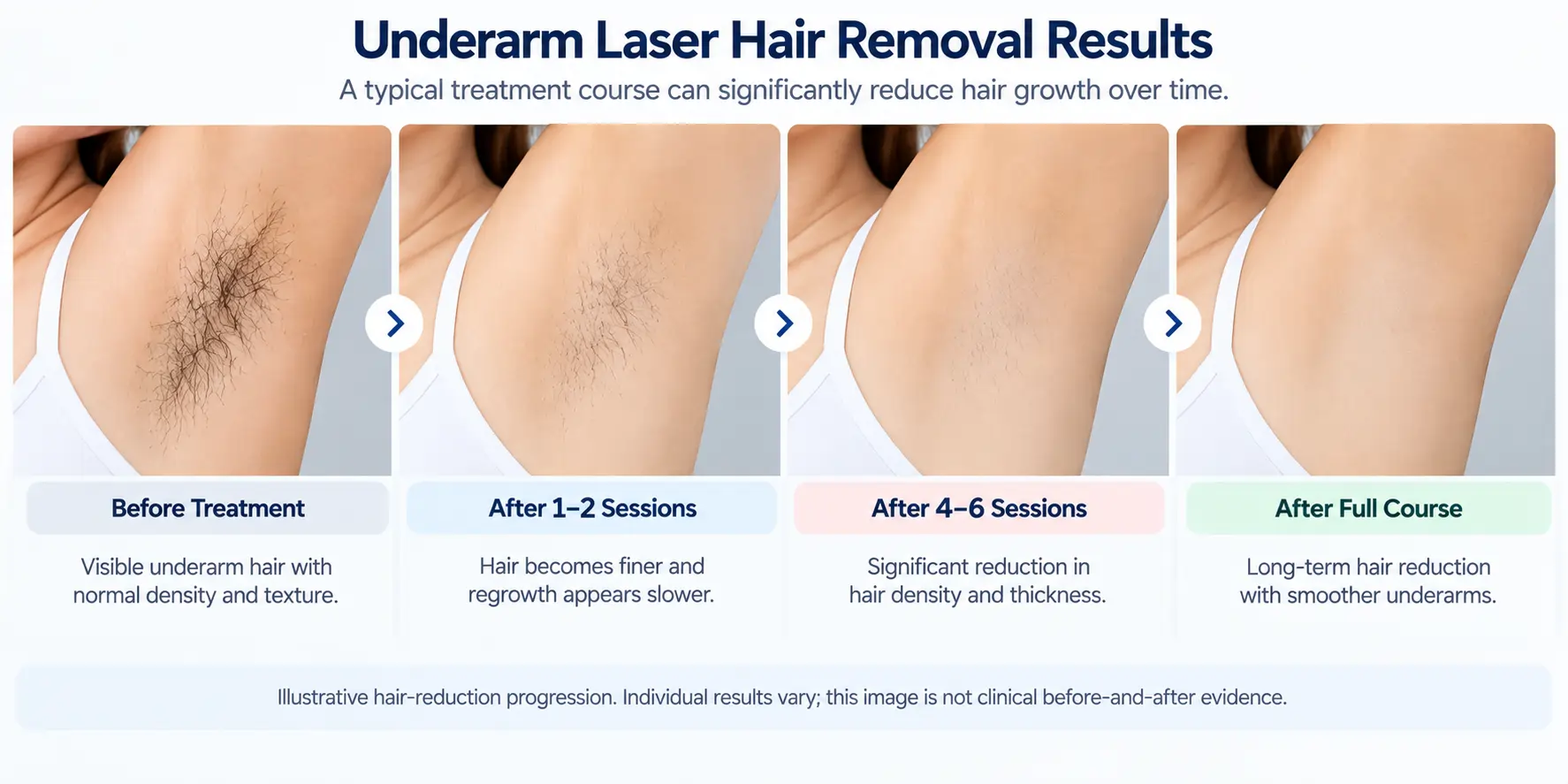
Before treatment, armpit hair may regrow quickly after shaving, requiring frequent maintenance. Following an effective treatment course, many patients notice less dense regrowth, finer remaining hair, or longer intervals between hair-removal routines.
However, before-and-after outcomes are highly individual. Photographs taken under different lighting, at different intervals, or after shaving can be misleading.
When reviewing clinic results, look for images with consistent lighting, a stated treatment schedule, and a clear explanation of whether the person received maintenance treatments.

Will Underarm Hair Grow Back?
Some hair may remain or regrow after the initial treatment course. Laser hair removal is generally described as permanent hair reduction, meaning a sustained reduction in the number of regrowing hairs, rather than guaranteed elimination of every follicle.
Hormonal changes, untreated follicles, and individual hair biology can influence long-term regrowth.
How Long Do Results Last?
Results can last for extended periods, but there is no universal timeline. Some patients maintain substantial reduction for a long time, while others benefit from occasional maintenance appointments.
A qualified provider can assess whether additional treatment is appropriate after the initial series.
How to Prepare for Underarm Laser Hair Removal
Good preparation helps the provider evaluate your skin and perform the treatment according to the device’s operating instructions.
Before Your Appointment
- Disclose relevant medical conditions, medications, and previous laser reactions.
- Report recent tanning, sun exposure, or self-tanning products.
- Avoid waxing and plucking for the period recommended by the clinic.
- Shave only according to your provider’s instructions.
- Tell the clinic about rashes, wounds, or active infections.
- Ask whether deodorant or antiperspirant should be avoided on treatment day.
- Follow any device-specific preparation instructions.
Should You Shave Your Armpits Before Laser Treatment?
Clinics commonly recommend shaving before treatment because excessive hair above the skin can absorb energy and interfere with the procedure. The exact timing varies, so follow the instructions provided by your clinic.
Can You Wear Deodorant Before the Appointment?
Many providers ask patients to arrive with clean underarms free from deodorant, antiperspirant, lotions, and other topical products. Ask your clinic for its specific preparation requirements.
Can You Wax Between Sessions?
Waxing and plucking remove the hair shaft from the follicle and may interfere with laser targeting. Shaving is generally the preferred temporary hair-removal method during a laser treatment course, once the skin has recovered and the provider permits it.
What Happens During an Underarm Laser Hair Removal Session?
- Consultation: The provider evaluates skin type, hair characteristics, treatment history, and potential contraindications.
- Preparation: The underarm area is cleaned and prepared according to the clinic protocol.
- Protection: Appropriate laser protective eyewear and other safety measures are used.
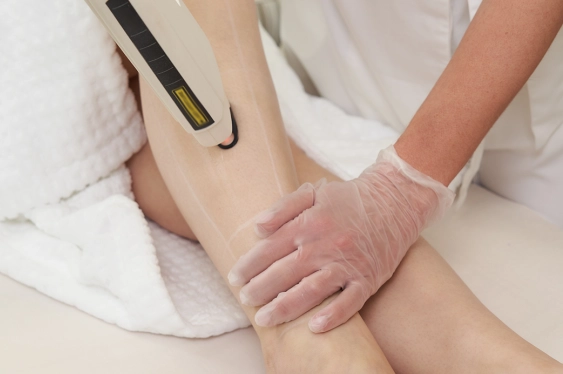
- Laser treatment: The operator applies laser pulses using parameters selected for the patient and device.
- Skin assessment: The provider evaluates the immediate response and gives aftercare instructions.
Because the underarm region is relatively small, the laser application itself may take only several minutes. The complete appointment can be longer when consultation, preparation, and aftercare are included.
Underarm Laser Hair Removal Aftercare
The underarm region experiences friction, moisture, and frequent movement. Gentle care after treatment can help avoid unnecessary irritation while the skin recovers.
What Should You Avoid After Treatment?
- Scrubbing, harsh exfoliation, or scratching irritated skin
- Very hot showers, saunas, and excessive heat until cleared by the provider
- Deodorants or fragranced products that cause stinging
- Waxing or plucking treated hair
- Tight clothing that causes substantial friction
- Unprotected sun exposure when the treated skin is exposed
When Can You Use Deodorant Again?
Follow your provider’s guidance. If the skin is red, tender, or irritated, it may be advisable to wait until the reaction settles before using potentially irritating products.
When Can You Exercise Again?
Sweat, friction, and heat may aggravate recently treated skin. Ask your clinic when it is appropriate to resume strenuous exercise, especially if you experience redness or tenderness.
Underarm Laser Hair Removal vs. Shaving vs. Waxing
| Factor | Laser Hair Removal | Shaving | Waxing |
|---|---|---|---|
| Goal | Long-term hair reduction | Temporary surface removal | Temporary removal from the root |
| Initial cost | Usually higher | Usually lower | Varies by service |
| Frequency | Initial treatment series; possible maintenance | Frequent | Repeated as hair regrows |
| Discomfort | Brief heat or snapping sensations | Usually mild, but irritation possible | Hair-pulling discomfort |
| Limitations | Cost, suitability, clinical risks | Rapid regrowth, razor irritation | Temporary results, possible irritation |
Does Laser Hair Removal Help With Ingrown Armpit Hairs?
Long-term reduction in coarse hair growth may help some people who experience shaving-related ingrown hairs. However, underarm bumps can also result from folliculitis, dermatitis, or other conditions.
Recurrent painful nodules, drainage, or scarring should be assessed by a healthcare professional rather than assumed to be simple ingrown hairs.
Which Laser Is Best for Underarm Hair Removal?
Professional hair removal clinics may use alexandrite, diode, or Nd:YAG laser systems. The most appropriate technology depends on skin phototype, hair characteristics, device capabilities, and operator expertise.
| Laser Technology | Common Wavelength | Important Consideration |
|---|---|---|
| Alexandrite | 755nm | Often considered for suitable lighter skin phototypes |
| Diode | Approximately 800–810nm in many systems | Widely used for professional hair reduction |
| Nd:YAG | 1064nm | Often considered for darker skin phototypes under suitable protocols |
Some professional diode platforms combine multiple diode wavelengths. A 1064nm diode source is not identical to a 1064nm Nd:YAG laser, despite sharing a nominal wavelength.
There is no single wavelength that is automatically best for every patient. Appropriate settings, cooling, clinical assessment, and operator training remain central to treatment safety and effectiveness.
What Should Clinics Look for in an Underarm Hair Removal Machine?
For clinic operators, an underarm hair removal system should be evaluated using documented technical performance and practical operating requirements.
Adjustable Treatment Parameters
Review fluence, pulse duration, repetition rate, and available spot sizes.
Skin Cooling
Assess cooling design, operator instructions, and skin-contact consistency.
Patient Suitability
Confirm intended indications and evidence for the clinic’s patient population.
Service and Training
Check warranty, spare parts, staff training, maintenance, and local compliance.
Cocoon Laser offers the COOLICE professional diode laser hair removal system for professional equipment buyers. Its supplier-listed configurations include 755nm, 808nm, 940nm, and 1064nm diode wavelengths and integrated cooling technology.
Clinics should confirm the exact configuration, applicable indications, regulatory status, and operator requirements before purchasing or using any device.
Who Is a Good Candidate for Underarm Laser Hair Removal?
People with coarse, dark underarm hair may be good candidates for laser hair reduction, subject to an individual assessment. Those with very light blonde, white, gray, or red hair may have a less predictable response to conventional pigment-targeting laser systems.
Skin tone alone should not determine eligibility. A qualified provider should consider the complete combination of hair characteristics, skin phototype, medical history, recent tanning, and equipment.
Who May Need to Postpone Treatment?
Active skin infections, open wounds, recent significant tanning, or certain other medical factors may require treatment to be postponed or modified. Medication history and previous adverse reactions should be discussed during consultation.
Pregnancy-related treatment policies and any other medical concerns should be reviewed with an appropriate healthcare professional.
Common Mistakes to Avoid
Expecting Permanent Removal After One Appointment
Hair grows in cycles, and multiple appointments are generally necessary for meaningful long-term reduction.
Choosing a Clinic Based Only on Price
Equipment suitability, operator training, safety protocols, and aftercare support matter as much as the advertised session price.
Waxing Between Treatments
Waxing removes hair from the follicle and can interfere with the target needed for subsequent laser sessions.
Ignoring Skin Irritation
Do not assume that significant pain, blistering, or persistent discoloration is a normal part of effective treatment.
Assuming Every Laser Works Equally on Every Skin Type
Wavelength selection, treatment settings, and operator experience should be matched to the patient.
Frequently Asked Questions
How much is laser hair removal for underarms?
As a preliminary US budgeting example, approximately $75–$200 per session may be used for planning. Actual clinic quotations and package prices vary considerably.
How many underarm laser hair removal sessions do I need?
Many initial treatment plans involve approximately six to eight sessions, but the appropriate number depends on individual hair growth and treatment response.
Does armpit laser hair removal hurt?
It can feel like a quick snap or brief sting. Cooling may improve comfort, but treatment is not guaranteed to be painless.
Is underarm laser hair removal permanent?
The goal is long-term or permanent hair reduction, not guaranteed lifelong elimination of every hair. Some regrowth or maintenance needs are possible.
How long does an underarm laser session take?
Laser application to the underarms may take only several minutes, but the total appointment also includes preparation and assessment.
Can I shave after underarm laser hair removal?
Shaving is commonly allowed once the skin has recovered and the provider approves it. Avoid shaving skin that remains irritated or tender.
Can I use deodorant after treatment?
Follow the clinic’s aftercare instructions. Products that sting or irritate recently treated skin should be avoided until the skin settles.
Can underarm laser hair removal lighten dark armpits?
Laser hair removal targets hair follicles and should not be promised as a treatment for underarm hyperpigmentation. Reducing shaving-related irritation may help some individuals, but pigmentation concerns require their own assessment.
Is underarm laser hair removal safe for dark skin?
Many people with darker skin can be evaluated for laser hair removal. Appropriate technology, conservative settings, cooling, and qualified operation are important.
Does laser hair removal stop underarm sweating?
No. Hair removal lasers are not designed to treat sweat glands or hyperhidrosis. Hair reduction should not be confused with a sweating treatment.
Can laser hair removal reduce underarm odor?
Hair reduction may change grooming routines, but laser hair removal is not an established treatment for the underlying causes of body odor. It should not be advertised as a guaranteed odor-reduction procedure.
Will my armpit hair grow back after laser treatment?
Some hair may remain or regrow. The amount and timing vary, and occasional maintenance treatments may be recommended.
Final Verdict: Is Underarm Laser Hair Removal Right for You?
Underarm laser hair removal can be a useful option for people who want less frequent shaving and long-term reduction in armpit hair growth.
Its main trade-offs are the need for multiple appointments, higher initial costs than shaving, variable results, and potential side effects. The most reliable way to determine suitability is to consult a qualified provider who can evaluate your skin and hair characteristics.
Before booking, confirm the total treatment cost, expected number of sessions, equipment used, provider qualifications, and aftercare arrangements.
Explore Professional Laser Hair Removal Technology
Cocoon Laser supplies professional diode laser hair removal systems for aesthetic clinics, medical spas, and international distributors. Explore equipment specifications and available configurations.
Explore COOLICE Equipment →