Laser Hair Removal vs Electrolysis: Complete Guide for Clinics

Quick Answer
For most professional aesthetic clinics, laser hair removal is generally the preferred technology because it provides faster treatment sessions, larger coverage areas, and better scalability for high-volume hair reduction services. Electrolysis hair removal remains a useful option for treating individual follicles, especially for small areas or specific hair types. However, the manual one-follicle-at-a-time process makes it more difficult for clinics to scale compared with modern laser systems.| Comparison | Laser Hair Removal | Electrolysis |
|---|---|---|
| Technology | Laser energy targets multiple hair follicles simultaneously | Electrical current treats individual follicles |
| Treatment Speed | Fast and suitable for large areas | Slow due to individual follicle treatment |
| Best Application | Face, body, bikini, legs, full-body treatments | Small areas and individual hairs |
| Clinic Efficiency | High treatment capacity | Limited by manual operation |
| Professional Equipment | Diode laser systems and multi-wavelength platforms | Electrolysis devices with manual probes |
What Is Laser Hair Removal?
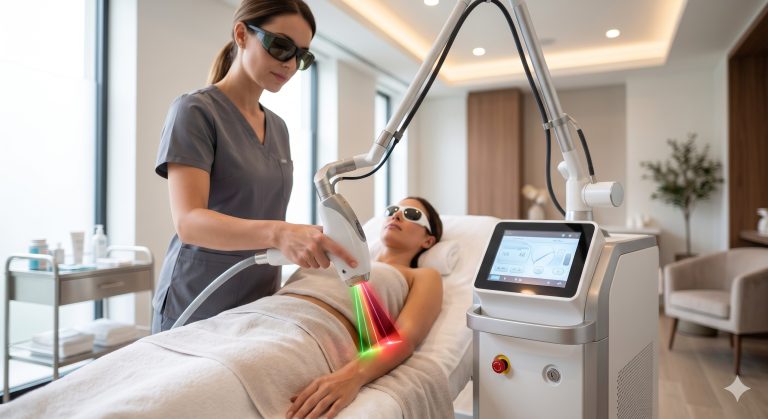
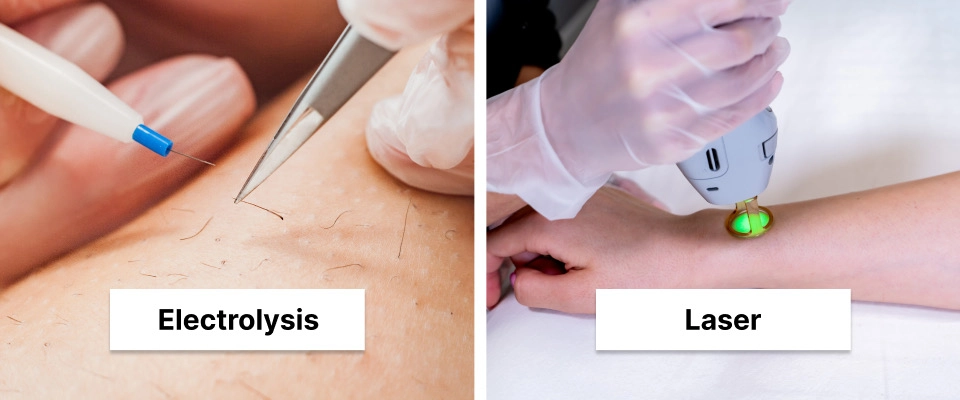
Laser hair removal is a light-based hair reduction technology that uses concentrated laser energy to target hair follicles. During treatment, laser energy is absorbed by melanin in the hair shaft and converted into heat. This thermal energy damages the follicle structure and reduces its ability to produce future hair growth. Professional clinics commonly use diode laser systems because they provide efficient energy delivery, adjustable treatment parameters, and fast coverage for different body areas.
How Does Laser Hair Removal Work?
Laser hair removal is based on the principle of selective photothermolysis. Specific wavelengths are selected to target hair pigment while minimizing energy absorption by surrounding tissues. Professional hair removal systems commonly use several wavelengths, including:- 755nm Alexandrite Laser: Often selected for lighter skin types and finer hair.
- 808nm Diode Laser: A widely used wavelength for professional hair reduction because of its balance between penetration depth and treatment flexibility.
- 1064nm Nd:YAG Laser: Suitable for deeper penetration and commonly considered for darker skin types.
What Is Electrolysis Hair Removal?
Electrolysis hair removal is a method that uses electrical energy to destroy individual hair follicles. During electrolysis treatment, a very fine probe is inserted into each hair follicle. Electrical current is then delivered to damage the follicle and prevent future hair growth. Unlike laser hair removal, which can treat many follicles at the same time, electrolysis focuses on one follicle during each treatment process.
Advantages of Electrolysis Hair Removal
- Can precisely target individual hairs.
- Does not rely on hair pigment absorption.
- Can be useful for small treatment areas.
- Has a long history of professional use.
Limitations of Electrolysis for Clinics
- Treatment speed is slower compared with laser systems.
- Large areas require significantly more appointment time.
- Scaling high-volume services is more challenging.
- Requires intensive manual operation.
Laser Hair Removal vs Electrolysis: Understanding the Difference
Many users search for “laser hair vs electrolysis” when comparing different long-term hair reduction methods. Although both technologies target hair follicles, their working principles are completely different. Laser hair removal uses concentrated light energy to target multiple follicles at the same time, while electrolysis uses electrical energy to treat individual follicles separately. The comparison between electrolysis versus laser depends on several factors, including treatment area, desired efficiency, client expectations, and clinic business goals.Laser Hair Removal vs Electrolysis: Detailed Comparison
When comparing laser hair removal versus electrolysis, clinics should evaluate both technology performance and operational efficiency. While both methods can reduce unwanted hair growth, they are designed for different treatment scenarios.| Factor | Laser Hair Removal | Electrolysis |
|---|---|---|
| Energy Source | Laser light energy | Electrical current |
| Target | Multiple hair follicles simultaneously | Individual hair follicles |
| Treatment Speed | Fast coverage for large areas | Slow individual follicle treatment |
| Common Applications | Face, legs, arms, underarms, bikini, full body | Small areas and isolated hairs |
| Clinic Workflow | Highly scalable | More operator-intensive |
| Equipment Type | Professional laser systems | Manual electrolysis devices |
Electrolysis Hair Removal vs Laser Hair Removal
The comparison between electrolysis hair removal vs laser hair removal is one of the most common questions from people researching long-term hair reduction solutions. Electrolysis hair removal works by inserting a small probe into each follicle and delivering electrical energy. Because each follicle requires individual treatment, the process is precise but time-consuming. Laser hair removal uses selected wavelengths of light energy to target pigment within hair follicles. Professional systems can treat many follicles at once, making them more efficient for larger treatment areas.Treatment Area Comparison
| Treatment Area | Recommended Technology | Reason |
|---|---|---|
| Upper Lip | Both technologies can be suitable | Small treatment area |
| Underarms | Laser hair removal | Faster treatment sessions |
| Bikini Area | Laser hair removal | Efficient coverage |
| Legs and Arms | Laser hair removal | Large area advantage |
| Individual Hair Removal | Electrolysis | Precise follicle treatment |
Laser or Electrolysis Hair Removal: Which Should Clinics Choose?
When deciding between laser or electrolysis hair removal, professional clinics should consider their target customers, treatment volume, and long-term business objectives. For clinics offering dedicated hair reduction services, laser technology is usually the preferred choice because it allows practitioners to complete more treatments in less time.Why Clinics Prefer Laser Hair Removal Systems
1. Faster Treatment Sessions
One of the biggest advantages of laser hair removal is treatment efficiency. Professional systems use optimized spot sizes and fast repetition rates to cover larger areas compared with manual electrolysis. This allows clinics to provide more appointments each day and improve overall equipment utilization.2. Better Patient Experience
Modern laser hair removal machines include advanced cooling systems designed to improve comfort during treatment. Shorter appointment times and improved treatment convenience are important factors for clients choosing professional hair reduction services.3. Higher Business Scalability
For growing aesthetic clinics, scalability is an important consideration. A professional diode laser system can support multiple treatment packages, including:- Facial hair reduction
- Underarm hair removal
- Bikini line treatments
- Leg and arm treatments
- Full-body hair reduction programs

Laser Versus Electrolysis: Business Considerations for Clinics
The comparison between laser versus electrolysis is not only about treatment effectiveness. Clinics also need to evaluate operational efficiency, revenue potential, and customer demand.Treatment Capacity
A major advantage of laser technology is its ability to treat larger areas efficiently. This makes it suitable for clinics with high client demand. Electrolysis requires more manual treatment time because every follicle is handled individually. This can limit the number of appointments a clinic can provide.Equipment Investment
Professional laser systems usually require a higher initial investment compared with electrolysis devices. However, the increased treatment capacity can provide stronger long-term business value.| Business Factor | Laser Hair Removal | Electrolysis |
|---|---|---|
| Initial Investment | Higher | Lower |
| Daily Treatment Capacity | High | Limited |
| Large Area Services | Excellent | Not ideal |
| Clinic Expansion | Easier | More difficult |
Laser Hair Electrolysis: Can Both Technologies Work Together?
Some users search for “laser hair electrolysis” when comparing different approaches to hair reduction. Although laser hair removal and electrolysis use different principles, some clinics may use both technologies depending on client needs. Laser systems are often selected for larger treatment areas, while electrolysis may be considered for specific individual hairs that require precise treatment.Diode Laser vs Electrolysis: Which Technology Is Better for Clinics?
When comparing diode laser vs electrolysis, professional clinics usually focus on treatment efficiency, patient demand, and long-term business performance. Both technologies have their own advantages. Electrolysis provides precise individual follicle treatment, while diode laser systems are designed for fast and efficient hair reduction across larger areas.| Comparison | 808nm Diode Laser | Electrolysis |
|---|---|---|
| Treatment Method | Laser energy targets hair follicles | Electrical current destroys individual follicles |
| Treatment Speed | Fast | Slow |
| Large Area Treatment | Excellent | Limited |
| Clinic Application | High-volume professional services | Small area precision treatments |
| Business Scalability | High | Lower |
Why 808nm Diode Laser Is Popular for Professional Hair Removal
Among professional laser hair removal technologies, 808nm diode laser systems are widely used by aesthetic clinics because they provide a practical balance between penetration depth, treatment speed, and versatility. The 808nm wavelength is designed to effectively target melanin in hair follicles while allowing professional operators to adjust treatment parameters according to different skin and hair characteristics.Key Advantages of 808nm Diode Laser Technology
1. Efficient Hair Follicle Targeting
The 808nm wavelength provides effective penetration into the skin, allowing energy to reach hair follicles located beneath the surface.2. Suitable for Multiple Treatment Areas
Professional diode laser systems can support a wide range of applications, including:- Face hair reduction
- Underarm treatments
- Bikini line hair reduction
- Leg treatments
- Arm treatments
- Full-body hair reduction
3. Designed for Clinic Efficiency
Compared with electrolysis, diode laser systems allow clinics to complete treatments more efficiently, making them suitable for businesses with increasing customer demand.4. Advanced Cooling Technology
Modern diode laser machines commonly integrate cooling systems to improve patient comfort during treatment.
How Clinics Should Choose a Hair Removal Technology
Choosing between laser hair removal and electrolysis depends on the clinic’s business model, target customers, and treatment goals.Choose Laser Hair Removal When:
- You want to offer full-body hair reduction services.
- Your clinic receives high treatment demand.
- You need faster appointment times.
- You want a scalable service model.
- You plan to expand your aesthetic treatment portfolio.
Choose Electrolysis When:
- You focus on very small treatment areas.
- You need individual follicle precision.
- You provide specialized hair removal services.
Common Mistakes When Choosing Hair Removal Technology
Mistake 1: Comparing Only Equipment Price
The lowest equipment price does not always represent the best investment. Clinics should evaluate treatment efficiency, reliability, maintenance requirements, and long-term service potential.Mistake 2: Ignoring Treatment Volume
A technology that works for occasional treatments may not be suitable for clinics serving many clients every week. Before choosing between laser and electrolysis, clinics should estimate expected treatment demand and appointment volume.Mistake 3: Selecting Technology Without Considering Skin Types
Professional clinics should evaluate wavelength options, energy adjustment capabilities, and cooling technology before purchasing a hair removal system.Mistake 4: Choosing a Supplier Without Technical Support
For professional aesthetic equipment, manufacturer support is an important part of long-term success. Clinics and distributors should consider:- Technical training
- Warranty support
- Spare parts availability
- OEM/ODM capability
- After-sales service
Laser Hair Removal vs Electrolysis: Frequently Asked Questions
What is the difference between laser hair removal and electrolysis?
The main difference is the treatment method. Laser hair removal uses light energy to target multiple hair follicles, while electrolysis uses electrical energy to treat individual follicles one by one.Is laser hair removal better than electrolysis?
For most aesthetic clinics, laser hair removal provides better operational advantages because it allows faster treatments and larger coverage areas. Electrolysis can still be useful for precise individual hair treatment.Which is faster: laser hair removal or electrolysis?
Laser hair removal is generally faster because one laser pulse can target many follicles simultaneously. Electrolysis requires each follicle to be treated individually.Is electrolysis versus laser a common comparison?
Yes. Many people compare electrolysis versus laser when researching long-term hair reduction options. The best choice depends on treatment area, hair characteristics, and service requirements.Is diode laser better than electrolysis?
For professional clinics, diode laser systems are often preferred because they provide faster treatment times and better scalability for commercial hair reduction services. Electrolysis may be suitable for specific individual hairs, but diode laser technology is generally more efficient for treating larger areas such as legs, arms, back, and full-body applications.Can laser hair removal and electrolysis be used together?
Yes. Some clinics may use both technologies depending on client requirements. Laser hair removal is commonly selected for larger treatment areas, while electrolysis can be considered for precise treatment of individual hairs that remain after laser sessions.Laser hair removal versus electrolysis, which one is more suitable for clinics?
For most aesthetic clinics, laser hair removal is usually the more practical choice because it supports faster treatments, higher appointment capacity, and easier service expansion. Clinics should evaluate their target market, treatment demand, and business model before selecting a technology.Does laser hair removal work better than electrolysis for large areas?
Yes. Laser hair removal is generally more suitable for large treatment areas because professional systems can target multiple follicles at the same time. Electrolysis requires individual follicle treatment, making it less efficient for large body areas.What technology should a clinic choose for professional hair reduction services?
Many professional clinics choose diode laser systems because they provide a combination of treatment efficiency, patient comfort, and business scalability. An 808nm diode laser platform is a common choice for clinics looking to provide reliable hair reduction treatments.Final Verdict: Laser Hair Removal vs Electrolysis for Clinics
Both laser hair removal and electrolysis have important roles in the hair reduction industry. Electrolysis provides precise follicle-by-follicle treatment and remains useful for specific applications. However, when comparing laser hair removal vs electrolysis from a professional clinic perspective, laser technology offers significant advantages in treatment speed, coverage area, workflow efficiency, and business scalability. For clinics planning to build or expand hair reduction services, professional diode laser systems provide a practical solution that matches modern customer expectations for faster and more convenient treatments. The best technology choice depends on your clinic’s service model, target customers, and long-term growth strategy. However, for most aesthetic practices, laser hair removal is the preferred platform for delivering scalable hair reduction services.