The Ultimate Clinic Guide to Laser Treatment for Vascular Lesions Removal: Efficacy, Wavelengths, and ROI
The Clinical & Business Challenge of Vascular Lesions
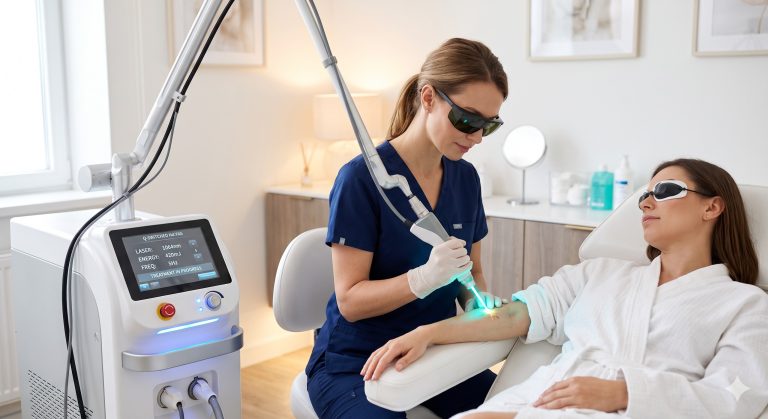
For aesthetic clinic owners and dermatologists, treating vascular lesions such as telangiectasias, spider veins (venulectasias), cherry angiomas, and port-wine stains presents a persistent challenge. Legacy systems like Intense Pulsed Light (IPL) often lack the precision and specific chromophore affinity required for selective vessel destruction, leading to suboptimal clearance rates, increased patient discomfort, and higher risks of purpura or epidermal burns. The modern solution lies in adopting dedicated, FDA-cleared or Medical CE-marked laser treatment for vascular lesions removal systems that leverage the principle of selective photothermolysis with optimized parameters. This guide provides a technical and business framework for integrating this high-demand, profitable service into your med spa or dermatology practice.
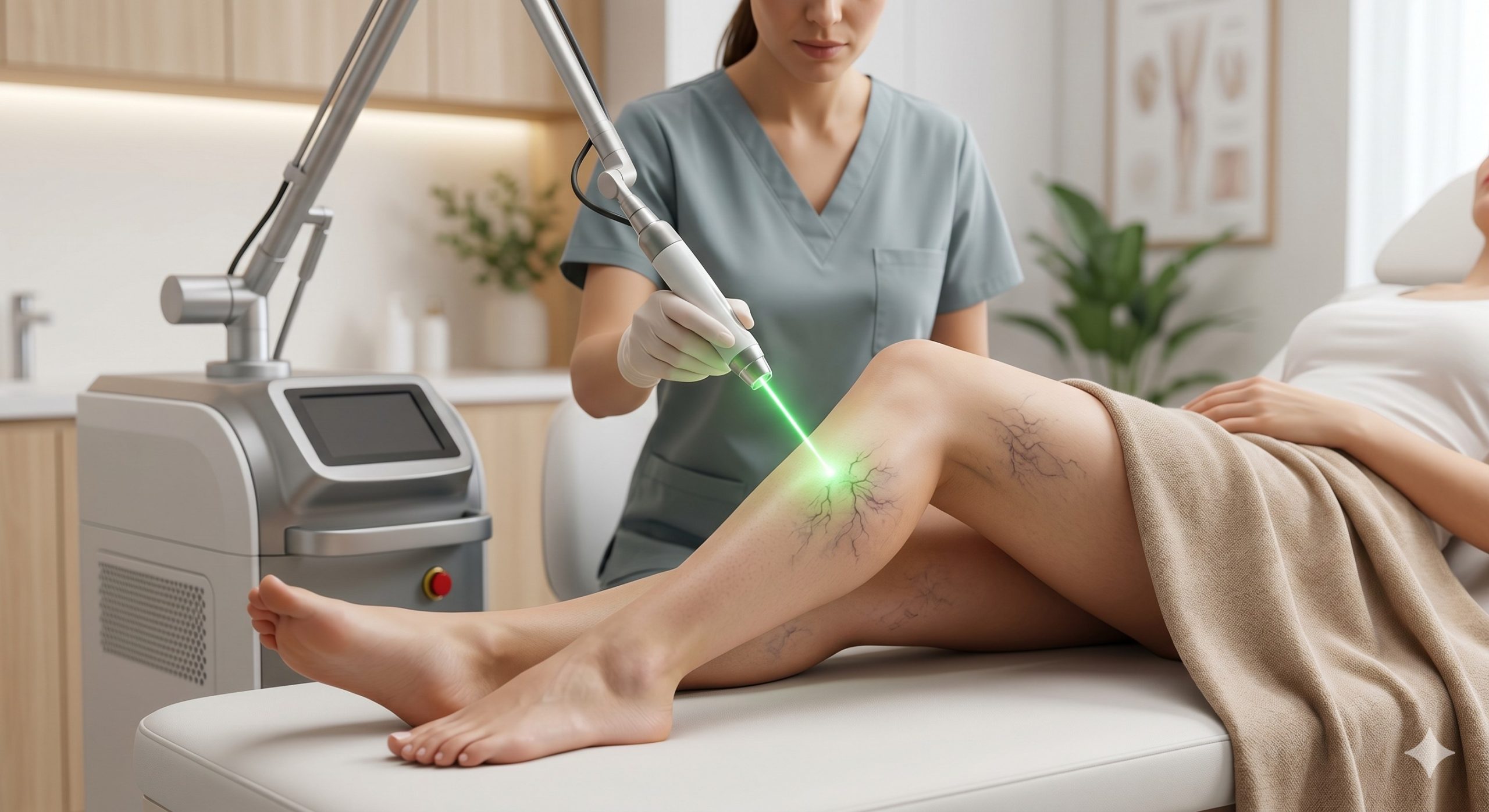
Physical Mechanism Deep Dive: Selective Photothermolysis for Hemoglobin
The efficacy of laser treatment for vascular lesions removal hinges on the precise targeting of oxyhemoglobin. The chromophore (oxyhemoglobin) has specific absorption peaks at 418nm, 542nm, and 577nm. However, to achieve the necessary depth for dermal vessels while minimizing scattering, clinical gold-standard devices utilize wavelengths with a balance of absorption and penetration. Yellow light (577nm/578nm) and pulsed dye lasers (585nm/595nm) remain the historical reference, but advanced diode and Nd:YAG technologies offer superior depth and safety for darker Fitzpatrick skin types.
Critical Wavelengths & Tissue Interaction Metrics
- 577nm – 595nm (Yellow/Dye): High oxyhemoglobin absorption. Ideal for superficial, fine telangiectasias and facial redness (rosacea). Penetration depth: ~0.5-1.2mm. Risk of purpura is moderate if pulse width is improperly set (< 0.5ms).
- 755nm (Alexandrite): Moderate hemoglobin absorption. Used for deeper, slightly larger vessels but carries higher melanin absorption risk (not ideal for Fitzpatrick IV+ without aggressive cooling).
- 1064nm (Nd:YAG): Lower hemoglobin absorption but deepest penetration (up to 5-6mm). Preferred for lower extremity spider veins (leg veins) and thick, deep vessels. Requires higher fluence and robust epidermal cooling to offset melanin competition.
- Optimized Multi-Wavelength Diode (e.g., 530nm & 1064nm): Modern medical CE-certified platforms combine a short wavelength for superficial red vessels and a long wavelength for deep blue/red leg veins, offering a versatile, single-device solution.
| Key Parameter | Technical Specification & Clinical Relevance |
|---|---|
| Optimal Wavelengths | 577nm (superficial red vessels), 595nm (facial telangiectasias), 1064nm (deep leg veins, dark skin types). Multi-diode 530nm & 1064nm offers versatility. |
| Cooling System | Sapphire contact cooling with thermoelectric (TEC) control to -4°C. Mandatory for safe epidermal protection at therapeutic fluences. |
| Fluence (Energy Density) | Facial vessels: 6-12 J/cm² (595nm). Leg veins: 100-150 J/cm² (1064nm, 6mm spot). Must be adjustable in 1-2 J/cm² increments. |
| Pulse Width | Facial: 1-20ms (short TRT). Leg veins: 30-100ms (long TRT). High-end devices offer 0.5ms to 300ms across wavelengths. |
| Spot Size | 2-12mm range. Larger spots (8-12mm) penetrate deeper and speed up treatment (critical for leg veins and large surface areas). |
| Repetition Rate | Up to 10 Hz for fast procedure times. Requires integrated energy metering for output consistency. |
| Regulatory Compliance | FDA 510(k) cleared or Medical CE (Class IIb). ISO 13485 certified manufacturing facility. |
| Handpiece Lifespan | ≥ 5 million shots (imported high-grade laser bars). Lowers total cost of ownership (TCO). |
Cooling Systems & Epidermal Protection: The Non-Negotiable Safety Layer
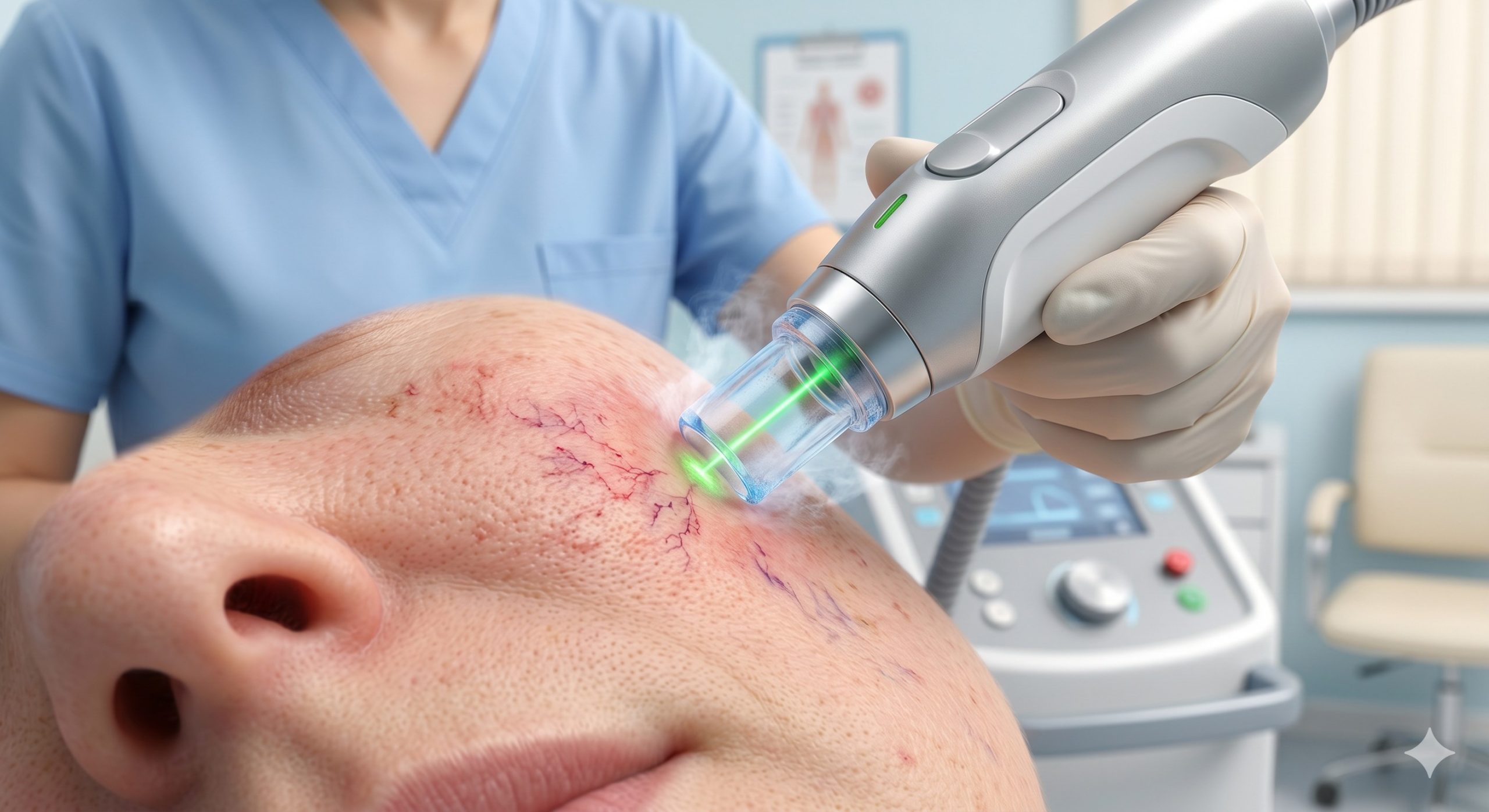
Aggressive fluence is necessary for vessel coagulation, but without protection, the epidermis (containing melanin) will absorb energy, leading to burns or dyspigmentation. Medical-grade laser treatment for vascular lesions removal systems must integrate advanced cooling. Sapphire contact cooling with adjustable temperature control (down to -4°C to +4°C) is the industry standard. Unlike cryogen spray cooling (which can be inconsistent), continuous sapphire thermoelectric cooling provides a stable thermal barrier, allowing for safe delivery of fluences up to 120-150 J/cm² (when using small spot sizes) on appropriate skin types. For leg veins, a larger spot size (6-12mm) with lower fluence (80-120 J/cm²) and long pulse width (30-60ms) on a 1064nm laser is the safest protocol.
Quantitative Technical Specifications for Clinical Decision-Making
When evaluating a device for laser treatment for vascular lesions removal, look beyond marketing claims. The following specifications directly determine clearance rates and safety:
Energy Density (Fluence) & Spot Size
Fluence (J/cm²) must be adjustable. For facial telangiectasias, start at 6-10 J/cm² (595nm, 7mm spot). For leg veins (1064nm), typical fluence ranges from 100-150 J/cm² with a 6mm spot. Larger spot sizes (10-12mm) scatter less, penetrate deeper, and accelerate treatment throughput. Ensure the device delivers consistent fluence across the entire pulse.
Pulse Width (Duration)
This is the critical parameter for safety. Vessel diameter dictates thermal relaxation time (TRT). For thin facial vessels (0.1-0.4mm), short pulse widths (1-20ms) are ideal. For larger leg veins (1-4mm), long pulse widths (30-100ms) allow heat to spread to the entire vessel wall without rupturing it (which causes purpura). A high-quality device will offer adjustable pulse widths from 0.5ms to 300ms across wavelengths.
Repetition Rate & Integrated Energy Metering
A high repetition rate (up to 10Hz) with integrated energy calibration (ISO 13485-compliant) ensures consistent output and fast procedure times. Devices without real-time energy metering risk delivering lower-than-expected fluence, reducing efficacy, or uncontrolled spikes causing injury.
Safety & Compliance: FDA, Medical CE & ISO 13485
Do not compromise on regulatory status. A genuine medical device for laser treatment for vascular lesions removal must hold FDA 510(k) clearance or a valid Medical CE Certificate (Class IIb/III). The manufacturer must comply with ISO 13485 (Quality Management Systems for Medical Devices). This ensures traceability, safety testing, and reliable performance. Using non-compliant devices exposes your clinic to malpractice lawsuits, insurance invalidation, and patient harm. Always request the Declaration of Conformity and verify the certificate’s validity.
Protocol Optimization by Fitzpatrick Skin Type
- Fitzpatrick I-III: Safe for all wavelengths. Use 585-595nm for facial redness (7-9 J/cm², 3-6ms). For leg veins, use 1064nm (100-140 J/cm², 30-60ms, 6mm spot).
- Fitzpatrick IV-V: Avoid short wavelengths (530-595nm) due to high melanin absorption risk. Strictly use 1064nm Nd:YAG with aggressive sapphire cooling (-2°C to 0°C). Start at low fluence (90-110 J/cm²) and use longer pulse widths (40-80ms). Perform a test spot and wait 4-6 weeks.
- Fitzpatrick VI: Extreme caution. Only use 1064nm with conservative parameters (100-120 J/cm², 50-80ms, 8-10mm spot). Success is limited to larger-caliber vessels. Consultation and risk documentation are mandatory.
Clinic ROI Analysis: Pricing, Throughput, and Consumables
Integrating dedicated laser treatment for vascular lesions removal offers a high-ticket recurring revenue stream. Unlike hair removal (which sees diminishing returns), vessels often require 1-3 sessions for significant clearance (70-90%). Typical US clinic pricing: $250-$600 per facial redness session; $400-$1,000+ per leg vein session.
Profitability calculation per hour: A 15-minute facial vascular session at $350 yields $1,400/hour throughput. Electrical and cooling system consumables are minimal (no gels, no disposable tips on contact-cooled devices). The primary operational expenditure is handpiece depreciation (typical shot lifespan: 1-5 million shots). A high-quality device with an imported laser bar (e.g., from Jenoptik or Coherent) will maintain fluence consistency for over 5 million pulses, reducing total cost of ownership (TCO). Avoid cheap systems with ≤500,000 shot lifespans, as replacement handpieces cost $3,000-$8,000.
Conclusion & Executive Verdict
Adopting laser treatment for vascular lesions removal is not merely an add-on service; it is a strategic move to capture a growing demographic seeking solutions for rosacea, broken capillaries, and leg veins. The optimal device for most clinics is a multi-wavelength diode (530nm + 1064nm) or a combined Nd:YAG/KTP platform with sapphire contact cooling, adjustable pulse widths (1-300ms), a spot size range of 2-12mm, and full regulatory clearance (FDA, CE, ISO 13485). Prioritize hardware quality (laser bar brand, pump diode integrity) and verified technical support. By mastering the parameters outlined in this guide, your clinic can achieve superior clinical outcomes, high patient satisfaction, and industry-leading ROI.